The Bangkok
Post at its yellow worst
28 February
2014
The Bangkok Post
is a poor newspaper - but its failure to a) understand democracy and b)
understand that there is a Thailand beyond Bangkok does it huge discredit.
This is how democracy is supposed to work trumpets the paper in the last
sentence of yesterday's editorial.
The Bangkok Post
has singularly failed to condemn the PDRC, an illegal movement that has its
sole aim of forcing a democratically elected government from office. That is
the issue that the Post should be dealing with.
There is an
irregular army already established - by the PDRC in Bangkok. The police have
been instructed not to interfere.
If there is a coup
or if the PDRC takes over Bangkok and if the government then decides to set
up its operations and ministries in for instance Chiang Mai then it is still
the government - it is still the sole body elected by the people of
Thailand. It is not a government in exile and it is not an alternative
government,
The military
government or the PDRC that try to take control of government in Bangkok
would be the government in exile - the government that is not representative
of the people.
The Bangkok Post
assume that whatever happens in Bangkok is the government as though a
government cannot function outside of the capital.
Given that Bangkok
is being strangled by anti-democracy protestors it makes sense for
democratic minded people to be considering alternatives.
A coupe government
is not a legitimate substitute for an elected government and the Post fails
to accept this is its haste to support the coup plotters.
Tone down the
rhetoric
27 Feb 2014 Bangkok Post editorial:
Thailand is one and indivisible kingdom. This is clearly stated in the first
amendment of the constitution. . So anyone who attempts to carve out
territory from the kingdom is committing sedition which is liable to severe
punishment.
In the far South, separatist groups such as the Barisan Revolusi Nasional (BRN)
and new Pattani United Liberation Organisation have, for decades, waged
unsuccessful and violent campaigns for a separate Malay-Muslim region from
the Thai state.
Although a
separate homeland or self-determination remains an aspiration, several
separatist groups, including the BRN, have agreed to peace talks brokered by
Malaysia Unfortunately, the process has been suspended since the
middle of last year.
Of late however,
there have been talks among the hardliners within the red-shirt movement,
the United Front for Democracy against Dictatorship (UDD), and some members
in the government about separatism in retaliation against what they
deem as extreme bias or injustice against the government from
charter-mandated independent organisations such as the Constitution Court
and the National Anti-Corruption Commission.
Emotions ran high at the UDD’s rally held in Nakhon Ratchasima on Sunday
which was attended by the movement’s firebrands namely caretaker Deputy
Commerce Minister Nattawut Saikuar and Jatuporn Prompan. Caretaker Interior
Minister and Pheu Thai party leader Charupong Ruangsuwan was also present.
Loose talk about
the creation of an irregular army of red shirts to protect the government
and to fight the People’s Democratic Reform Committee (PDRC), a
government-in-exile and a separate homeland found voice on the rally stage.
In his address to
the red-shirt crowd, Mr Charupong issued a threat, saying there are about 10
million guns in the hands of Thai people and these people cannot be looked
down upon.
He also reportedly
called upon the red shirts to get prepared for a make-or-break showdown
which will result in bloodshed.
It is
inconceivable how an interior minister could openly encourage people — in
this case the red-shirt followers — to prepare for a bloody confrontation
and, at the same time, condone talks about a government in exile, an
irregular army and a separate homeland for red-shirt followers.
Mr Charupong’s
conduct in this regard is unbecoming of a minister. It is indeed an irony
that the government of which he is a part has charged PDRC leaders for
sedition for leading protests to overthrow the government.
The protests have
turned the government into a lame duck, unable to find a permanent home to
do its work. Caretaker Prime Minister Yingluck Shinawatra has to keep her
daily working schedules confidential for fear of harassment from protesters.
Yet these symptoms
of a failed government are no excuse for a member of the government to
engage in activities bordering on sedition, or incitement of hatred.
Fortunately, cool
heads still prevail within the military top brass. Army chief Gen Prayuth
Chan-ocha in his capacity as the deputy director of the Internal Security
Operations Command has ordered all provincial governors to keep a close
watch on any crowd movements from both sides of the conflict which are prone
to political violence, to nip any potential violence in the bud.
Like the PDRC, the
UDD has the right to stage protests as it feels fit so long as it does not
resort to violence. It has the right to protect its beloved prime minister.
But at the same time, it has a duty to obey the law and follow rulings from
the courts of law. That is how a democracy is supposed to work.
Business Bay stages a comeback as Dubai property market picks up
27 February
2014 - The National by Lucy Barnard
Only a thin blue hoarding separates the busy shopping district of Downtown
Dubai from the new waterside office and residential area of Business Bay –
yet the two locations feel worlds apart.
Turn right along a narrow road from The Dubai Mall and you are suddenly
faced with piles of sand and heaps of junk. Shiny green glass buildings
stand next to half-finished structures of grey skeletal concrete stalled by
the downturn.
This is Business Bay, one of the areas of Dubai hit hardest by the global
financial crisis. Its master plan, drawn up in 2003, envisaged the biggest
office district in the Middle East, with towers of offices and homes along
the lines of Canary Wharf in London’s Docklands.
With the recovery in the Dubai real estate market and a new wave of optimism
hitting the city, things appear to be finally looking up for Business Bay.
And as it regenerates, the area is altering its identity – with the emphasis
shifting from office towers, giving greater weight to residential and
leisure, rather like Downtown Dubai.
Work on Business Bay started back when high office rents and low vacancy
rates prompted a building boom in office towers. Investors bought off-plan
offices, like apartments, in the hope of getting high rents.
But Business Bay was a victim of its timing. Construction work on many of
its projects was scheduled to start just as the global financial crisis hit
the emirate and many companies exited the country, leaving office space
empty.
Over time, Business Bay became known in the city as a soulless expanse of
office space and an area where a few hardy expatriates made their homes,
putting up with unmade roads and taxi drivers’ bafflement in return for
cheap rents in luxuriously built apartments. Local agents estimate that
apartments in Business Bay rent for about 25 per cent less than similar
apartments in Downtown Dubai.
From a vantage point on the shore of the Dubai Creek extension, one can make
out clusters of completed sleek glass buildings including the 0-14 Tower, or
Swiss Cheese Tower; the world’s tallest hotel, JW Marriott Marquis; and Blue
Bay Tower, looming over empty plots of sand and construction sites, many of
which remain stalled.
One Monday morning this month, 24 cranes were within sight from one spot in
the Business Bay area. About half of them were moving, reflected perfectly
in the grey waters of the partially completed waterway.
Schemes such as Iris Bay, a striking 32-storey grey and white reclining
half-disc that resembles an iPod speaker, and KM Properties’ 19-storey B2B
office tower appear half-completed, remaining stalled at the same stage of
construction they were years earlier.
On the other hand, work continues apace at Damac’s 22-storey Bay’s Edge
tower, what will be a huge gold-coloured, D-shaped block of 220 furnished
apartments. The site, a stone’s throw from The Dubai Mall, is a hive of
activity with dozens of men in blue boiler suits toiling away, moving
diggers and huge black pipes.
Bay’s Edge is just one of five stalled office projects in Business Bay that
Damac is in the process of converting into serviced apartments, some of
which had already started construction, while others were in the design
stage.
Meanwhile, work finally appears to have also restarted at Omniyat’s The Pad
development, a 24-storey reclining block designed to look like a classic
early 2000s media player. Work on the project, which was originally started
in 2008 when the scheme was known as “the iPod”, has reached a height of
about 12 storeys.
When they were initially launched, both projects were described by their
developers as being in Business Bay. However, when they were launched the
second time they were marketed as being in Downtown or the Burj Area.
“Over the past year to 18 months we have started to see a return to
construction activity at Business Bay,” says Craig Plumb, the head of
research at the surveying firm Jones Lang LaSalle’s Dubai office. “However,
this is led by the residential and hospitality sectors, which means that the
nature of the area is starting to change from a district that had been
planned to be predominantly offices, to one where there are far more
apartments and hotels. At the moment we are working on at least two schemes
that have changed from office towers into apartment blocks.”
“We are already starting to see schemes in areas that could really be
classified as being in Business Bay being described as Downtown, and we
expect to see that trend continuing,” Mr Plumb adds.
And it looks like construction at Business Bay is set to speed up this year.
On February 2, Arabtec announced that the Abu Dhabi Government-owned
investment company Aabar had awarded it a contract to build three mixed-use
towers in Business Bay as part of a wider contract to build 37 towers in
Dubai and Abu Dhabi at a cost of more than Dh22 billion. Construction will
begin in the next two months and is expected to be completed by 2020,
Arabtec said.
Certainly local tradespeople are reporting an increase in business in the
area.
“Business here is definitely getting better,” says Omron Shebli, the general
manager at The View Cafe, which looks out over Business Bay from the top of
Ubora Tower. On a Monday at lunchtime, the cafe was largely empty; Mr Shebli
suggested things would pick up later in the day.
“I’ve been here one year and eight months. Trade started slowly but business
is definitely picking up. In the evenings now we are full, as more people
are coming here after work and more people are living here in the new
towers,” he said.
Mohammed Benour works at the flower shop between Ubora and Churchill Towers.
“I think there is quite a buzz here now and we get quite a few people coming
to buy flowers, especially on Thursdays and Fridays,” he says. “After two
years when all these new developments like Mohammed bin Rashid City start to
happen and work on the 2020 Expo starts to happen, then I think the place
will really come into its own and we will have many more customers.”
But office workers in the area are not so sure. Co-workers Tarek Hendi,
Hesham Awwad and Ahmed Suwi were having lunch in a bustling Marad Restaurant
in Business Bay.
“This place will happen over time, but at the moment I wouldn’t be tempted
to move here,” says Mr Hendi. “If I didn’t work here then I wouldn’t come
here.”
“This place would be more convenient for single people,” adds Mr Awad.
“There are no schools close by and a lot of the places to go are still under
development. It’s not like Dubai Marina or JLT, which are a lot more
developed and have more things to do, more restaurants.”
Get Ready for a Bloody end-game in Thailand
27 February 2014 Bloomberg Business Week - Joshua Kurlantzick
Clashes in Thailand between anti-government protestors and security forces
have intensified. Over the past weekend, unidentified gunmen sprayed bullets
at anti-government protestors in eastern Thailand, killing a five-year-old
girl, and someone apparently launched two grenade attacks in Bangkok. Since
the current round of demonstrations started last November, 21 people have
been killed and hundreds injured in Thailand. The country has basically
functioned without an effective government for months, the once-teflon
economy is sputtering, and Thais are preparing for the violence to get
worse. The leader of the demonstrations has vowed to hunt down Prime
Minister Yingluck Shinawatra, the protestors have been electrified by the
turn of events in Ukraine, and all sides appear to be taking more
confrontational positions.
Although Thailand’s cycle of political instability seems to have gone on
forever—the genesis of the unrest dates back roughly a decade—the chaos in
Bangkok is likely to end soon. The government has appointed hard-line
ministers to the top security positions, the powerful army chief has for the
first time issued a warning to the demonstrators, and the protestors have
upped their violent rhetoric and seemingly armed themselves with heavier
weapons. The denouement in Bangkok, coming shortly, is not likely to be
pretty.
The divide in Thai society dates to the early 2000s, when former Prime
Minister Thaksin Shinawatra, Yingluck’s brother, became the nation’s first
leader to unite the rural poor and use their combined votes to dominate
Parliament. Protests in 2005 and 2006 by members of the Bangkok elite,
worried at their loss of power and also furious at Thaksin’s venal and at
times brutal rule, led to a coup in 2006. Since then the country has been
caught in a never-ending cycle of protest by elites, toppling of pro-Thaksin
governments, brief installations of pro-elite governments, and then
counter-protests by Thaksin supporters and the election of pro-Thaksin
governments.
None of the cycles of protest and counter-protest have ended in solutions
that resolved Thailand’s class and regional divides; the protests led to
temporary fixes that only emboldened the other side to fight harder. Worse,
none of the cycles of protest have ended without serious violence.
The Yingluck government has been reticent to crack down on the protests,
even when demonstrators have taken over government ministries. Yingluck
feared that any crackdown could spark a coup because the military’s leaders
seemed to side with the conservative and royalist demonstrators and against
the more populist government. In addition, other powerful elements of
Thailand’s conservative and royalist “deep state” warned against a
crackdown. The country’s courts have ruled that the government cannot block
demonstrators from entering state property and cannot use any force against
demonstrations, even though protestors have attacked police. Yingluck also
faces a controversial impeachment case before the courts and a national
anti-corruption commission.
Now the government’s fear of a coup is fading. Although the army commander
is a staunch conservative and probably supports the demonstrators, the
army’s ranks and mid-level officers have, behind the scenes, applied
enormous pressure on military leaders not to intervene and to publicly
rebuke protestors for using violent tactics. Under intense pressure, the
army commander this week issued such a rebuke.
Buoyed by the army’s public stance—and by every Western country’s tacit
support of the government, in sharp contrast to the situation in Ukraine or
Venezuela—Yingluck has appointed hard-line ministers to run the public order
campaign. Chalerm Yubamrung, director of the government’s Center for
Maintaining Peace and Order (CMPO), is known as one of the toughest
political operators. And this week, retired general Panlop Pinmanee said the
government has approached him about possibly joining the CMPO; Panlop
masterminded a harsh crackdown on insurgents in southern Thailand a decade
ago.
Meanwhile, the demonstrators’ own story has become increasingly divorced
from reality as their leaders feed activists a paranoid and fantastic
narrative full of hateful invective. One Thai commentator, Merisa
Skulsuthavong, has compared the protestors’ rhetoric to a magical realism
Thai soap opera in which a hero swoops in with no warning and rescues the
day. Some protestors think Thailand’s aged and ailing king will play the
heroic role, stepping into the fray to dismiss the government. But the royal
family is divided and the king has made no public moves.
Though fantastic, this narrative has become accepted by large portions of
the Bangkok middle class because the demonstrators have media outlets that
essentially echo their message. The echo chamber encourages ever more
violent tactics. It also seems likely that in recent weeks, some military
men unhappy with the armed forces’ decision to stay on the sidelines have
quietly joined the demonstrations, or may have provided protestors with
arms.
How will Thailand’s stand-off end? Not like Ukraine, where protestors
enjoyed the support of the West and the government foolishly employed
extreme violence, undermining ousted President Viktor Yanukovych’s own
support base and his democratic credentials. Although Western countries do
not openly support Yingluck, every Western embassy has called for respect
for the democratic process. This essentially supports the government’s
current position because protestors want to block elections and halt
democracy. And though the government has put hard-liners in place, the
history of the past 10 years shows that Shinawatra governments, though often
venal, do not employ the harshest possible crackdown tactics in Bangkok.
They are more attuned to their fragile prospects for survival than, say,
Yanukovych or previous elite-led Thai governments such as the one that
oversaw the killing of at least 90 people during pro-Thaksin protests in
Bangkok in 2010.
Instead, Yingluck’s government probably will slowly strangle the protest
movement. It will do so by closing one protest location after the next while
peeling off some of the more moderate supporters of the protests in
Bangkok’s business and political communities. Without support from the king
and the leaders of the army, and lacking the broad base of demonstrations in
places like Venezuela, the protests will eventually dwindle. Ultimately,
some demonstrators may join in a new round of elections designed to replace
the recent flawed elections Yingluck called. Even if the courts and other
agencies of Thailand’s deep state successfully remove Yingluck and other top
members of her party, it has a deep bench of potential replacements.
Before any such ending, bloodshed will increase. The leaders of the protest
and the government, per Thai tradition, probably will remain untouched, even
if they oversee violence and outright executions. As the police and some
troops close protest sites, expect the demonstrators to increasingly open
fire on security forces—some protestors now openly carry assault rifles
inside sacks of grain and corn—and to utilize grenades and other homemade
explosives. Some policemen will be unable to restrain themselves as
well—renegade policemen seem to have already attacked protestors with brutal
force. As the standoff mounts, police leaders with limited control over
their men in ordinary times will be unable to stop renegade policemen from
beating or shooting protestors.
Instead of one massive, bloody battle such as took place on the last day of
the 2010 Bangkok violence, when parts of the central business district
burned to the ground and the army peppered demonstrators with thousands of
rounds of live fire, the city is more likely to see the equivalent of a
low-level insurgency for months as protests are squeezed. Such an
insurgency—though once unimaginable in a cosmopolitan and normally peaceful
capital like Bangkok, as if Damascus popped up central Paris—is already
occurring. Armed men linked to the demonstrators are stockpiling weapons for
a prolonged campaign that will continue, even if the protestors’ main rally
sites are cleared.
In addition, both pro- and anti-Thaksin groups seem to be assembling lists
of targeted politicians and activists to be wiped out through targeted,
Beirut-style executions, a trend that’s likely to continue, even as the
large demonstrations recede. It will be a long time before Bangkok can again
be truly called the City of Angels, its traditional Thai name.
Kurlantzick is Senior Fellow for Southeast Asia at the Council on
Foreign Relations and author of Democracy in Retreat: The Revolt of the
Middle Class and the Worldwide Decline of Representative Government.
What the
government isn't telling you about Bangkok
26 February 2014 Lindsay Murdoch for the Sydney Morning Herald
Bangkok: I write this after a night of gun battles across the Thai capital.
The Australian government’s smartraveller.gov.au advisory for travellers
doesn’t say it. But it’s time to speak bluntly: Do not enter or go near
anti-government protest sites in Bangkok. And do not travel around the city
late at night.
Every day for the past week I have seen tourists, including Australians,
wandering through protest areas, seemingly oblivious to the dangers. Some of
them had children with them.
As the sun rises across Bangkok this morning the extent of the night’s
battles remains unreported. It was too dangerous for journalists to venture
on to the dark streets.
But since last Friday there have been dozens of reports of violent incidents
and at least six grenade attacks that left four children dead and more than
60 people injured.
The worst attack was on Sunday night in the middle of Bangkok’s commercial
and tourist centre. A five-year-old boy and his six-year-old sister were
killed. and almost 30 people were injured, some seriously.
The area is near several of Bangkok’s largest five-star hotels and ritzy
shopping malls popular with tourists. One of them, Central World shopping
centre, was largely destroyed when it was firebombed during bloodshed in
2010.
Since then the United Nations Children’s Fund (UNICEF) has urged the Thai
authorities, anti-government protesters and parents to protect children by
keeping them away from all protest sites.
Bijaya Rajbhandari, UNICEF’s representative in Thailand, said areas within
and around protest barricades should become “child free zones” to ensure
there are no further fatalities or injuries among children.
Some countries have warned their citizens to stay away from Bangkok. Hong
Kong even issued a “black'' (severe) warning for Thailand (Bangkok), which
prompted criticism from tourism operators that it had gone too far.
Thailand’s Tourism Ministry reports that tourist arrivals in January dropped
by 1 million from the same time last year, costing the country millions of
dollars in lost revenue.
Australia's smartraveller.gov.au advisory for Thailand has not been updated
since February 19. It says travellers should exercise a “high degree of
caution” in Thailand, one of the most popular travel destinations for
Australians.
“We continue to advise travellers to avoid all protest sites and surrounding
areas, political rallies and processions through Bangkok and in other
locations, political events and large-scale public gatherings due to the
risk of further violence and terrorism,” it says.
It should read “do not enter” the sites under any circumstances.
Since protests began last November, 21 people have died and more than 800
have been injured. Thailand's military has warned that the country could
face collapse unless urgent action is taken to end escalating violence.
Asked about not updating the travel advisory, a spokeswoman for the
Department of Foreign Affairs said: "We believe the travel advice remains
appropriate at this time." She said the advice is kept under close review
and "we will promptly reissue the travel advice as required."
Thai unrest continues in Bangkok
25 February
2014
There is gunfire
in central Bangkok tonight - and there was gunfire and small explosions last
night in Bangkok and further away in Roi-et.
The unrest
continues but is largely forgotten about by the international media for whom
the Ukraine has quickly become a much bigger story.
The rally site of
the People’s Democratic Reform Committee (PDRC) at Silom was rocked by bomb
and gun attacks throughout last night leaving five people slightly injured.
The injured who included two PDRC guards were admitted to Chulalongkorn
hospital for primary treatment and later discharged.
PDRC guards said the explosion started from about 1.00 a.m. and ended before
dawn today. Throughout almost four hours of tension, bomb explosions and
gunshot fires were heard sporadically around the protected area of security
guards while protesters inside were not hurt. Gunshots were heard near
Saladaeng intersection and explosions were heard near the Chulalongkorn
hospital on the Henri Dunant road.
Police are not
allowed near these PDRC sites who have their own so-called security guards;
this morning they were stopping entry into the Lumphini park after gunshots
were heard near Gate 4.
In Roi-et a
grenade was hurled at a group of teenagers at traditional I-saan concert
early Tuesday, fatally injuring three and severely injuring 25 others,
police said. The attack occurred at 3:30 am at a concert in a temple fair in
Roi Et's Suvarnabhumi district.
This appears to not be related to the political protests but is believed to
be result of a gang battle.
With the courts
banning the government from taking action to clear the protest sites and the
police told not to take any action it appears that significant parts of
central Bangkok are controlled by the PDRC's own security. They are for
instance controlling access to the metro and BTS at Silom with their own
'check points.' They also tell people where they can drive or walk, they
will look into bags, and frisk whoever they want. They are neither police or
army. This cannot be right.
Tonight gunshots
have been heard at Pratunam, Rajprasong, Pathumwan (Chalermpao intersection)
and Chulalongkorn.
Bangkok cannot be
far away from an overnight curfew - except that the courts have taken away
the authority of the government to take action under an emergency decree.
Another Thai
airline start-up and R update!
24 February
2014
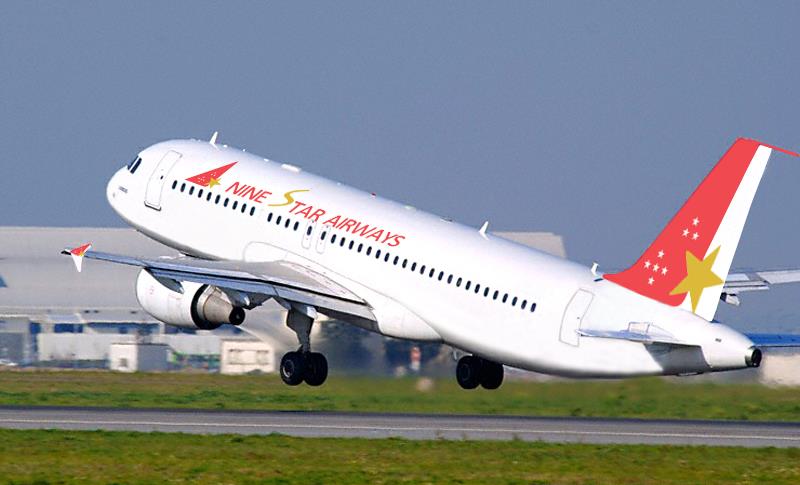
Nine Star Airways
(Bangkok Suvarnabhumi) is a new Thai carrier claiming to offer premium
charter operations using two ex-Vietnam Airlines (VN, Hanoi) A320-200s (cn
648 and cn 650) initially. The start-up aims to focus on the domestic Thai,
Middle East, China and India markets with long term plans to acquire a
B767-300 for Hajj flights to and from Saudi Arabia.
The web site is
here - www.9-air.com
I am not sure what
a premium charter service is. But their two A320s both have 180 seats which
is standard high density all economy LCC seating so don't expect too much.
Meanwhile R
Airlines is back up and operating - although the web site says that the
flights are actually operated by
Skyview Airlines. The airline has acquired an A321 (a first in
Thailand). It is their only operational plane.
The hour of
Kiev and Europe
24 February
2014 -
The Financial Times
Twenty-five years after the fall of the Berlin Wall, Europe again echoes to
the sound and fury of revolution. Back in 1989 the collapse of the wall
heralded the end of the cold war. Much of central and eastern Europe escaped
Soviet hegemony and walked peacefully into the embrace of the European
Union. The insurrectionary drama unfolding in Ukraine is still in its early
days. Several acts lie ahead. But even when set against the epic events of
1989, its historic significance cannot be dismissed. This is a moment of
immense opportunity – and immense danger – for Ukraine, for the EU and for
Russia. More than any single moment since the collapse of the Soviet bloc,
the revolution that began in Kiev heralds “the hour of Europe”.
Anyone contemplating the revolutionary developments in Kiev and the toppling
of President Viktor Yanukovich must start by reflecting on what it signifies
for Ukraine and its 46m people. The country separated peacefully from the
dying Soviet Union in 1991, renounced nuclear weapons and seamlessly moved
to independence. Hopes of a democratic future for the country were high,
especially after the 2004 Orange Revolution. But in the intervening years
the country has been led by a cynical, corrupt leadership that has taken
Ukraine today to the brink of economic meltdown. The fall at the weekend of
the Moscow-backed Yanukovich – toppled by his own political ineptitude as
much as anything else – now gives Ukraine a fresh opportunity to become a
functioning democratic state.
However, the Ukrainian revolution has political implications that go well
beyond its borders. For a quarter of a century this huge territory perched
precariously between the EU and Russia has been the object of a geopolitical
contest between the Kremlin and the west. In 2008 President George W Bush
made a clumsy attempt to tip that contest decisively in the west’s favour,
seeking to draw two former Soviet states – Ukraine and Georgia – into the
US-led Nato alliance. President Vladimir Putin responded with force. He drew
a line under any new attempt to weaken Russian influence in its near abroad,
road-blocking the Nato applications and invading Georgia. But the Maidan
revolution now offers a second chance for all parties to reconsider the
status of Ukraine on the faultline of Europe. If Ukraine can be drawn into
the economic and political community of Europe without alarming Russia, this
would be an immense achievement for European values and for the
international standing of the EU.
Such a development, however, will require the co-operation of Mr Putin. And
this is why events in Kiev bring both extraordinary opportunity and
extraordinary danger. For Mr Putin has never left any doubt about his
nostalgic vision to restore Russia to its status as a great power. Central
to this vision is the idea of forging a Eurasian Union, an international
commercial and political network of former Soviet states. The loss of
Ukraine to the west in any form would scupper that, and more. It would be
seen by many in the Kremlin as a body blow, given the centuries of historic
ties between Russia and Ukraine. Far from agreeing to a shift in Ukraine’s
status, Mr Putin might therefore revert to type, plunging Russia’s neighbour
into a bitter and destructive war.
The overwhelming task for European and American leaders must be to convince
the Kremlin that this is not how Ukraine’s story should unfold. Western
leaders must spell out how Ukraine – an ethnically diverse country
straddling Russia and the eastern borders of the EU – can enjoy a special
position in Europe. The US and EU should unveil a vision of a democratic
Ukraine that becomes a fully independent state, mutually respectful to both
Russia and the EU and forging close economic relations with both. It is a
vision in which Ukraine would be able to set out on a long-term path to join
the EU as a fully fledged member. But like Finland, another Russian
neighbour, this is a country that must also remain unaligned in east-west
security terms, and stay firmly out of Nato.
Forging a common international vision for the future of a democratic Ukraine
is now the most urgent task of western diplomacy. It will require political
leadership of the highest order. Here, President Barack Obama must act with
urgency, ridding himself of the inclination to lead from behind, a worrying
trait he demonstrated over Syria and Libya. Relations between the White
House and the Kremlin are fraught at best and the vaunted “reset” of 2008
has come to little. Now is the time to re-engage at the highest level.
All this will require leadership from three sets of actors. The first group
are Ukraine’s national leaders. While the entire opposition may rejoice at
the undignified exit of Mr Yanukovich, the reality is that they are still
heavily divided. The opposition has credible mainstream leaders in the form
of Arseniy Yatsenyuk, the former economy minister, and Vitali Klitschko, the
boxing champion. However, elements on the nationalist right do not regard
themselves as subordinate to these figures. It is vital that all these
political forces – together with Yulia Tymoshenko, the somewhat tarnished
heroine of the 2004 Orange Revolution – come together in a spirit of
national unity to ensure there are free and fair elections on the designated
date of May 25.
Secondly, there are important financial responsibilities that fall on the
west, notably the EU, US and International Monetary Fund. The EU
miscalculated last year by delivering a “take it or leave it” offer of an
association agreement with Ukraine, without offering Kiev badly needed cash
to help staunch its debt crisis. The EU and IMF must learn from that
mistake. The urgent task is to offer a financial aid package that helps to
stabilise the country. True, there are serious obstacles. Much of the
Ukrainian elite seems to have been implicated in gross corruption. Future
financial aid will therefore have to be conditional. But western leaders
must avoid repeating the errors made early in the Arab spring, when the US
and its allies did not think imaginatively enough about economic assistance
for post-revolutionary governments struggling with new realities.
Finally, a special responsibility falls on Mr Putin. The hope must be that
the Russian president recognises quickly that his options are limited. This
is not 1956 in Hungary, or 1968 in Czechoslovakia when the Kremlin crushed
popular uprisings with brutal force. A vicious military response by Moscow
to the revolution in Kiev would see Russian troops battling insurrection
everywhere. Mr Putin could of course resort to more underhand tactics. He
might cut off gas shipments to Ukraine as he did in 2006 and 2009, or impose
trade embargoes. He could seek to weaken the coherence of the Ukrainian
state by asserting full Russian control over Crimea. But none of this will
alter a basic truth: former President Yanukovich, the designated Kremlin
ally, is a busted flush. He could seek another protégé. But as a strategist,
Mr Putin must know his gambit of turning Ukraine into a Russian satellite is
unworkable. Permanently destabilising the country is a tactic, not a policy.
Whether Mr Putin is prepared to accept this reality or is planning to fight
on remains unclear. This is why a concerted western response is so
important. Not just by the US but also the EU. Throughout the past decade
the EU’s effectiveness as an international actor has been battered by the
eurozone crisis, its political will sapped by economic austerity and by
growing public disaffection with the entire European project. Yet events in
Ukraine have demonstrated how much the EU matters for millions of people
living beyond its borders.
Throughout recent weeks protesters in Maidan Square in Kiev have wrapped
themselves not only in the blue and yellow flags of Ukraine but also in the
blue and yellow stars of the EU flag. The EU has come to represent
democracy, freedom and decent, if not perfect, governance. These are
universal values. Over the past week, Ukrainians have shown they are
prepared to sacrifice their lives for those values in the hope of a better
future. In 1989 western leaders and an enlightened Kremlin leader recognised
the new reality. History deserves to repeat itself.
EK responds as delays continue
23 February
2014
Emirates
eventually posted a note on facebook at about 10.00am on Sunday (really
folks - this should have been posted yesterday even if it was a weekend!).
It is a bit like
EK switched off for the weekend - which is a mistake in a business that
operates 24/7.
"Severe fog in
Dubai on 22 & 23 February 2014 has caused the delay of numerous Emirates
flights arriving and departing at Dubai International Airport. We are
assisting affected passengers with the rebooking of connecting flights.
Emirates urges customers to check their flight status on http://bit.ly/1fbvF5f
for the latest information regarding their flights
Emirates apologises for the inconvenience caused. The safety of our
passengers and crew is of utmost importance and will not be compromised."
Meanwhile after no
messages all day yesterday Dubai Airports woke up to the problem and sent a
tweet at midday today saying:
Dubai Airports@DubaiAirports
46 mins: Thick fog disrupted operations at DXB yesterday causing flight
diversions & delays.We thank our customers for their patience &
understanding
Strange that EK
mentions fog on 23 February. There was no fog this morning and I was up
early enough to check.
Meanwhile the
complaints continue on twitter as a number of flights are still delayed and
passengers miss connections due to delayed flights and need to be re-booked.
It is worth noting
that FlyDubai (@flydubai) has been on twitter since April 2011 without one
single tweet; they have 2,604 followers. The @flydubai timeline shows that
the airline has also had major customer service problems as a result of
yesterday's fog.
What happens
when things go wrong at EK
22 February
2014
There was a heavy
overnight and morning fog at Dubai's international airport. It was expected
and airplanes carried extra fuel in expectation of longer holds or
diversions.
Given that delays
were likely to departures and arrivals it would have been reasonable to
ensure that as many ground staff and management from Dubai Airports, DNATA
and Emirates were available at the airport and in the transit terminal to
assist passengers with delayed flights and connections.
I learned a lesson
many years ago that you cannot monitor a crisis - you have to take hold of
it and manage it. I did a poor job that day. And learned the hard way. EK,
DNATA and Dubai Airports appear uncoordinated and ill-prepared.
Messages on
twitter and elsewhere suggest that the airport was badly under-prepared. Of
course this was also a Saturday - perhaps the busiest day of the week at the
airport; but also the first day of the weekend for employees not on shift
work.
Here are just some
of the comments on twitter. Almost all of these are sent to the dormant
@emirates twitter account....none will be replied to as the account has sent
just one message in the last two years to say it was "coming soon."
But all must be
well as the Dubai Media Office issued the following tweet this evening : "#Dubai_Achievements
(Emirates Airline) a major international aviation player & a model for
quality control" - not the most thoughtful of timing. Which is rather
typical of Dubai.
As a friend of
mine will tell you it is all about communication. And on a day like this you
cannot stop communicating. Even saying you do not know or have no further
information is still communicating. Also worth noting that at times like
this twitter can be your friend if you use it effectively - or in Emirates
case if you use it at all.
So here is a
collection of the comments on twitter (all are wasted breath/effort of
course!):
@emirates Dubai
airport a disaster today - everything delayed - shocking and general just
horrendous experience- and in business class
@emirates just
arrived in chennai after the most horrendous journeys -2.5 hrs on runway in
Dubai
@emirates Your
behaviour today at Dubai International airport was unprofessional and not
worthy of a compagny of your importance. Because of so called weather
reason. You are a 3th prtcl able to take off planes in foggy weather. And
the staff was surely not enough and kinda annoyed to help the people be
rerouted. Cheers
I hate how u treat
ur passengers @emirates
Worst experience
with @emirates Still stranded at Colombo airport. @emirates failed to
provide a hotel even after 6 hrs. No food, no water
@emirates awful
customer service, no information, no refreshments, some in people in queues
for 5 hours with no information. Shame on you.
If this was my
home nation, I would have sued @emirates tonight. Very bad service, respect
of 12 years, lost in within seconds. @IssLeader
@emirates worst
service ever.no coordination whatsoever. my mom is left in the airport for
15 hours because the plane was delayed in beirut
@emirates I had
the worst experience in my life today and it was with emirates airline
This is now
ridiculous. @emirates I am so fed up, upset and annoyed right now. Your
systems do not work in this situation.
@emirates ..the
worst day ever your customer service and lack if integrity, compassion and
understanding to you gold members is unbelievable
Emirates, the
worst company in term of quality of service when fog !!!
@emirates shocking 6 hours delay on today's EK124 flight???
Still waiting
@emirates, our flight was scheduled to land 12 hrs ago and take off was 10
hrs ago. Still queuing.
@emirates horrible
service in Dubai airport !
Fog induced chaos
in Dubai airport. Help...Where's the logistics guy? @emirates
@DubaiAirports
@emirates can you help the people stuck waiting around outside the emirates
connections desks? No one knows what's going on
@emirates Peter at
J9 transfer desk is working hard for your passengers, maybe you should get
him some help?
Dear @emirates:
This is getting ridiculous at #dubaiairport! Waiting for some info for hours
already!!
Hughe delay flight
EK148
Crazy delays at #dubaiairport!
Really unprofessional service from @emirates at the transfer desk!
Annoying!!!
@emirates. Looks
like people are waiting on plane for 5h+ in Dubai. Is it the best airplane
company? Not sure… I know some worse but…
@emirates have
been disgraceful here, sat in the airport for 4 hours and still don't know
when we are flying
@emirates I don't
think your customer service could have been any worse! Thanks for being
absolutely useless!!!!
Still stuck in the
plane @emirates for now 4 hours. Next time I will bring some food with me.
Otherwise you i will get biscuits!!
Nearly five hours
waiting on the tarmac at Dubai airport waiting to depart for my weekend
break @emirates #EmiratesAirline #NotHappy
Here here RT
@jAmiEHaRt31: Stuck in Dubai airport. Missed connection. No communication
whatsoever. Sort it out @emirates. #bolloxed
Shame on you
@emirates. Five hours on the tarmac in Dubai. Cannot but expect full refund
#emirates
@emirates am
shocked at the lack of organisation. No information, sat on your plane for
nearly 19 hours and now three hours in a queue
@emirates When
will airlines learn to give customers information. Stood at check in at Cape
Town for 2 hours !!! #PoorService
Massive delays at
Dubai airport due to fog. Surprising how bad @emirates customer service has
been on ground. Lots of very angry people.
Retweeted
Here here RT
@jAmiEHaRt31: Stuck in Dubai airport. Missed connection. No communication
whatsoever. Sort it out @emirates. #bolloxed
On the plus side
at least @emirates are doing everything they can to sort it!! #ohwait #donefuckall
@emirates have
been disgraceful here, sat in the airport for 4 hours and still don't know
when we are flying
@emirates not
impressed with service at Dubai airport, do you not normally man your
service desks? A lot of angry people here...
@emirates nothing
short of shambolic service in Dubai ! Travelling with 20 junior sportsman ,
no service , no idea !! Please explain ???
Stuck In @emirates
flight for 3 hours because of lack of tractors to pull us out this is bad.
Serouisly @emirates do something.
@emirates Flight
delayed from Khi to Dxb. Rubbish customer service. Should have travelled
with @Etihad. #fail #customerservice
@emirates Fog at
Dubai airport this morning. Half a day delay in reaching Amsterdam.
@emirates you are
truly the worst airlines, your staff need to all be fired!!!
someone please
sort #emiratesairline out. Trapped in a plane for three hours with no food
and no answer as to why it's not taken off yet.
Meanwhile on
facebook:
So bottom Line
I've been stuck for the past fucking 8h in a plane in dubai's airport and
the plane was grounded!! And now they told us that we have to get out of the
plane and we're stuck here!!!!!! Fuck emirates!!!!
And the
occasional good news:
Nice, @emirates giving me 30CHF food voucher for 3:15hrs delay in GVA! Hey @FlySWISS
you only got me £5 when same happened at LCY!
@BrisbaneAirport
@emirates the captain and crew excellent for such a long delay they also
endured. Pity it takes 45 mins for duty free.
Gulf News -
not exactly telling the full story.
Dubai: Heavy fog that blanketed Dubai on Saturday morning disrupted
flights at Dubai international airport.
A spokesman of Emirates airline said the company booked hotel rooms for
passengers whose flights were affected.
The old is new
again in EK economy
21 February
2014
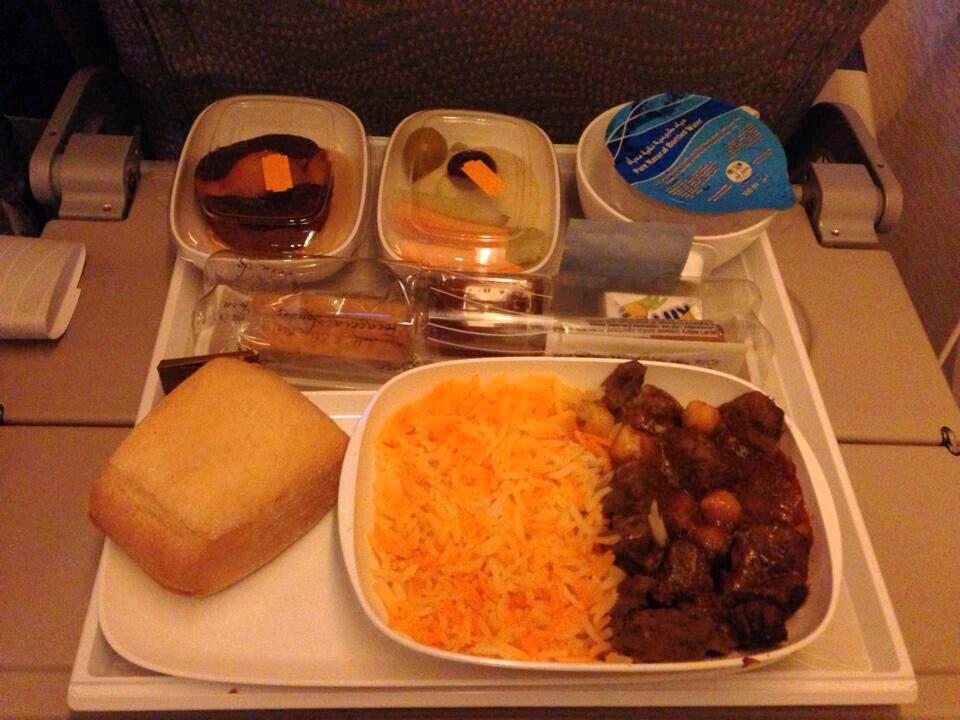
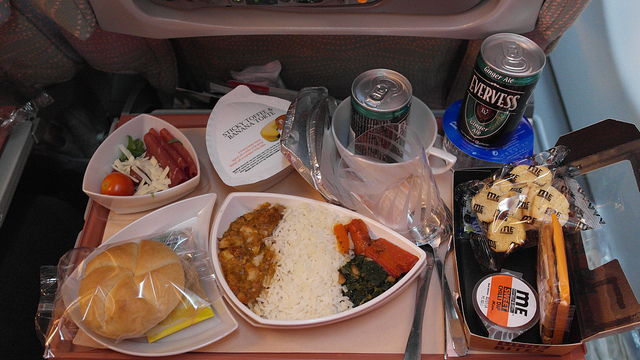
From Sunday Emirates will revert to the old style of service in economy
- but with the new catering trays. The new smaller trays that give you no
space at all to store the pile of debris that seems to be part of every
airline meal.
The new meal tray
is on the left above.
The new service
should have worked. The idea was that the cart would also carry drinks and
that you might then get a drink with your meal instead of well after you
have finished the hot meal.
The trouble is
that staff were not trained in the new meal delivery and many crew never
bothered to review the online instructions and guidance. The result;
confusion; cold meals; cold bread; hungry passengers; complaints.
So now it is back
to the old service with one crew dragging the meal cart and a second crew
the drinks cart. They start together but the meals are far quicker to serve
than the drinks. It iwll be even more obvious now as each cart holds more of
the new trays so more passengers can be served.
What a waste of
hours of meetings; preparation of leaflets, pictures and training materials.
EK will say we
listened to the passengers and fixed the problem. But they have not - they
have just reverted to the earlier problem that they were trying to fix.
Other airlines do not have this problem. Cathay, Thai and Austrian are three
that know how to serve a drink with the meal rather than at the end of the
meal.
Etihad finds
there is no smoke without fire
21 February
2014
Multiple fires on
an Etihad flight suggesting a potential arsonist onboard has raised concerns
over safety and whether the airline put commercial interest before the
safety of its passengers.
According to
passengers who contacted the media and on twitter multiple fires were lit in
the aircraft’s toilets on the flight from Melbourne to Abu Dhabi. Flight
EY461 was diverted to Jakarta after smoke was seen coming from two of
toilets on the plane.
After security checks at the Indonesian capital the passengers were told
immigration issues meant they had to reboard the plane, and en route to Abu
Dhabi, at least one other fire broke out; many comments suggest two more
fires. After the fourth fire the cabin crew manned doors so no breakfast was
served. At this point pilot explained why there would be no breakfast.
The total number of fires has been reported to AP as five.
“The plane after landing in Jakarta had all economy class passengers
disembark for a security check — the fires were in the economy section of
the plane. All passengers were then put back on the plane,” said one
passenger. Caroline Martens, a Norweigan seated in the middle of the plane,
said lighters and matches were confiscated before passengers were allowed to
re-board. It does amaze me that passengers are still allowed to take
lighters onto an airplane.
But since all the
passengers reboarded the flight the culprit was also allowed back on the
plane. The question is whether Etihad’s decision to fly onto Abu Dhabi was
correct.
On landing at Abu
Dhabi Emirati authorities held 12 people as part of their investigation. No
one has been arrested.
Norwegian professional golfer Caroline Martens, who was flying home from
competing in the Australian Masters golf tournament, told Norwegian radio
and television public broadcasting company NKR that a fire was started on
board ‘‘directly while we were above the sea’’.
‘‘After a few hours I noticed that it smelled like smoke ... but I thought
everything was fine and just fell asleep,’’ she said.
‘‘About two hours after I woke up as the fire alarm went off again.’’
Ms Martens, 27, said there was a fire in one of the toilets and smoke
billowing out of another.
After the plane landed in Jakarta, the golfer said all passengers and crew
were searched by local police, but no culprit was found.
‘‘Thus we were all sent on a plane again without knowing who had done it. It
is just not nice to know that someone will set fire to the aircraft you will
be travelling with,’’ Martens said.
‘‘I’m just very happy to be on the ground again.’’
Another passenger, Dale Henderson, described how he the fire alarm went off
in one of the middle toilets when what is believed to be a cigarette was
thrown into a toilet waste bin.
He said a second fire started in the rear toilets and "this time it was a
goer, flames and all."
He said the staff were quick to extinguish the flames.
One Instagram user wrote: ‘‘Try having someone set the plane on fire, in two
different places, having to emergency land in Jakarta, get back on after
hours of investigations, for the IDIOT to set three more fires in three more
toilets while mid-air and nowhere to land!!!!!’’
Etihad is an airline that responds very poorly to criticism; an airline that
tries to keep any potential bad news out of the media and off social
commentary sites. But in this case they might benefit from being more open
with details about the flight and the actions taken by the airline.
Was
she robbed?
21 February
2014

The judges played
a homer in Sochi today awarding the ladies skating gold to the Russian
skater Adelina Sotnikova over Korean Kim Yuna.
One of the nine
judges who picked a young Russian skater over two more refined competitors
for the Olympic gold medal Thursday night was suspended for a year for
trying to fix an event at the 1998 Winter Olympics in Nagano.
And another is the wife of the former president and current general director
of the Russian figure skating federation. Another Olympics, another huge
skating controversy involving the countries of the former Soviet Union.
The issue of inflated scores for the Russians has been a hot topic of
conversation at these Olympic Games, and the women's figure skating long
program Thursday night renewed the debate. Adelina Sotnikova of Russia was
the surprising winner of the gold medal, upsetting reigning Olympic gold
medalist Yuna Kim of South Korea and Italy's Carolina Kostner.
STUNNER: Sotnikova beats Kim for gold medal
"It's sad that I just presumed Sotnikova was going to get a boost (in
points) because this was in Russia," former U.S. Olympic figure skating
coach Audrey Weisiger said in a phone interview. "Isn't it sad that I
automatically thought that? Not one person in skating I've talked to said
that's the way it should have gone."
"I was surprised with the result," Joseph Inman, a top U.S. international
judge who was on the women's panel at the 2002 Olympics, said in a telephone
interview.
REACTION: Did judges make the right call?
"That's not fair to see Carolina and Yuna, who have great skating skills and
had great skating tonight -- good jumps, nice presence on the ice, maturity,
expression -- could be six points behind somebody who has tremendous skill
but is just coming out of juniors," said Gwendal Peizerat, the 2002 ice
dancing gold medalist from France, who is a television commentator here.
"Compared to Carolina, compared to Yuna, something has happened."
The nine judges for the short and long programs are chosen by draw from a
pool of 13, with eight of the judges only working one event or the other.
Judges from the United States, South Korea, Great Britain and Sweden were
not chosen to work the women's long program after being on the women's short
program panel the night before.
AMERICANS: Gold takes fourth, Wagner stays strong
Two of their replacements were Ukrainian Yuri Balkov, who was kicked out of
judging for a year after being tape-recorded by a Canadian judge trying to
fix the Nagano ice dancing competition, and Alla Shekhovtseva, a Russian
judge who is married to Russian federation general director Valentin Pissev.
The two other new long program judges were from Estonia and France, which
was the country that conspired with Russia to try to fix the pairs and ice
dancing competition at the 2002 Olympic Games in Salt Lake City.
"The (judging) panel made me wish that the United States and Canada had
split up into many different countries," said choreographer Lori Nichol, who
works with Kostner and fourth-place finisher Gracie Gold of the United
States, among others. "It certainly was a different panel tonight."
She was referring to the fact that in the days of the Soviet Union, only one
judge represented the entire country, all its republics. Now, judges from
several former Soviet republics can be on one panel, as was the case
Thursday night.
In other words, the Cold War is alive and well in the Olympic figure skating
venue.
Change.org has an online petition calling for an "Open Investigation
into Judging Decisions of Women's Figure Skating and Demand Rejudgement at
the Sochi Olympics" - in less than a day this has been electronically signed
by over 1.5million people.
Ukraine torn apart
21 February
2014
Dozens were killed
today in Kyiv (Kiev) as the short-lived Ukraine ‘truce’ was shattered.
Reports put today's death toll at approximately 75. Hundreds have been
injured.
Ukrainian police fire at protesters in Kiev – video
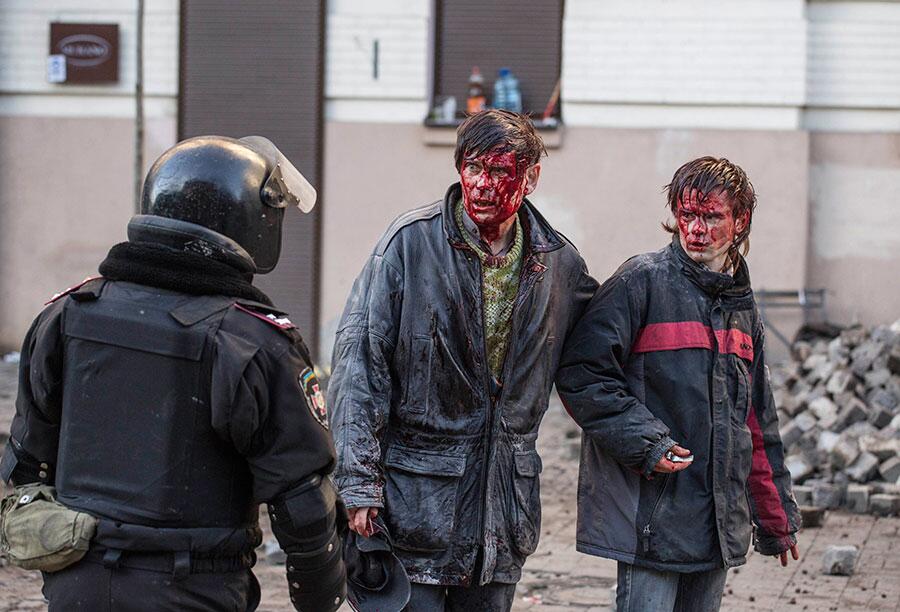
How did the
Ukraine sink into this nightmare of violence. Last autumn, it would have
been barely conceivable that the new year would find Ukraine on the verge of
civil war. Ukraine had declared, voted for and embraced independence from
the dying Soviet Union without bloodshed in 1991. It had celebrated and
survived the Orange revolution in 2004-2005, forcing the re-run of a rigged
election and escaping violence, if only just. And four years ago, it
transferred power in a passably-run election to current President, Viktor
Yanukovych.
The confrontations have spread beyond the capital. But why the fighting?
The eastern part of the country may look culturally, economically and in its
religious Orthodoxy, towards Russia, and the mainly Catholic western part —
centred in Lviv — towards Poland and Europe, but everyone is more mixed up
than this simple division would suggest. More to the point, polls have never
shown that Ukrainians have any appetite, even in the east, either for
seceding or, still less, for returning to Russia’s administrative embrace.
Over the past four months it has evolved from a contest between alternative
visions for Ukraine’s future — orientated to the east or the west — into an
internal struggle against the corruption, mismanagement and general
inadequacy of the Kiev government. The calls are not for Yanukovych to
change his mind, but for him to go.
The parallels with
Thailand are all too obvious.
To many Ukrainians, the EU still stands — unrealistically, EU citizens may
think — as a cypher for clean government, law and order, and high living
standards. One example: 1990: Polish GDP = Ukrainian GDP. 2013: Polish GPD =
3x larger. However, the conflict has become an all-Ukrainian conflict,
precipitating a potentially revolutionary situation. It can no longer be
controlled, if ever it could be, by outside forces, whether Russia or the EU.
Sadly both the EU
and the Russians seem to think this is an East v West conflict with at stake
- all or nothing, Europe or Russia. If Russia wants to present a new, modern
face to the world, it needs to see Ukraine not just as an independent
country, but as a borderland to both east and west.
But Putin wants
more than anything to be seen as a strong leader. Giving ground in Ukraine
will not weaken Russia but may weaken Putin.
Meanwhile the US
has stepped up the rhetoric and the White House is "outraged" by Ukrainian
troops firing on their own people. Strange how there is no comment when the
same thing happens in Bahrain, where of course the US Fifth fleet based.
Geopolitical hypocrisy at its worst.
The end is
coming for Yingluck
20 February
2014
It maybe the
world's slowest ever coup; but it is coming. Yingluck Shinawatra's Puea Thai
government is on its last legs; the sheer persistence and elite influence of
the opposition will bring down her government. What happens then and how the
red shirted supporters primarily in the north of Thailand respond is the big
unknown.
For two years
Yingluck led her administration while walking a tight-rope. And she did a
capable job. Above all else she kept the army happy. She managed
international affairs capably and Thailand unusually was relatively stable.
The amnesty bill
was a mistake; though the government quickly withdrew it. But is was the
catalyst. Maybe behind the scenes the Suthep-led protestors had been
building up their war-chest. They are clearly well-funded and organised.
The Suthep mob
(calling themselves the PDRC) is a strange mix; including hi-so Bangkok
residents; some upwardly mobile members of Bangkok's white collar workforce,
royalists, older Democrat party supporters and a combination of
whistle-blowers and enforcers from the south of Thailand. There may even be
a few idealists who think that Suthep really wants to eliminate corruption
from Thailand.
Today there is a
fleet of shiny new tractors bringing farmers into Bangkok who say that they
are heading for Bangkok airport. These are not red shirt farmers but funded
by Suthep and his supporters. How much disruption can they cause?
On the streets of
Bangkok PDRC is well-funded, well dug-in, well- armed. Their tactics have
evolved to focus on strangling the government without overthrowing it.
Behind the scenes the push is for Thaksin Shinawatra to do a deal that would
remove the Shinawatras from politics and allow an agreed name to form a
government leading to a revision of the constitution. The other hope is that
if Thaksin agrees to some form of compromise then Thailand would avoid a new
red shirt uprising.
So we have the
longest coup in history as the democrats and courts grind the government
down through the Election Commission, the National Anti Corruption
Commission etc.
But the reality is
that Thaksin cannot give up power. It is the only card that he has.
But how much more
can Yingluck take - the vitriol and hatred directed at her and her family
should embarrass everyone involved. It is gross. It is personal. Just awful.
And it must be taking an enormous emotional and physical toll.
In Suthep's latest
tirade earlier today he reportedly referred to Yingluck’s son as a ‘future
orphan’ whose paternity is questionable. Suthep needs to be locked up.

Here is
BangkokPundit on Suthep's hate speech: "Suthep only suggests there
is doubt over the paternity of Yingluck’s child as if it to suggest Yingluck
was sleeping around so it is not known who the father is. This is not some
slip of the tongue, but then again this is not the first time Suthep has
talked about Yingluck’s child on stage and it is unlikely to be the last
time .Not a word of criticism in either the Bangkok Post or The Nation (yet)
either…"
Whatever happens
it will be claimed as a victory for the protestors. But it will be a huge
blow for democracy not just in Thailand but in SE Asia. It will not solve
Thailand's problems. And there is still the question of the succession,
which no one can or will discuss in Thailand but is key in understanding the
current crisis.
Qatar Airline's
2014 expansion
19 February
2014
Qatar Airways on
Tuesday announced the launch of a new daily all premium Business Class
service from its hub in Doha to London Heathrow.
The new service will be the first of its kind in the Middle East, starting
from May 15, with an Airbus A319 aircraft fitted with an all Business Class
seating configuration offering 40 seats.
Qatar Airways currently operates five daily flights to London Heathrow and
the additional sixth all Business Class daily service will step up the
frequency on the Doha – London Heathrow route from 35 to 42 weekly services.
Qatar Airways will
launch routes to eight new destinations during 2014 including Sharjah (UAE)
from March 1; Dubai World Central (UAE) from March 1; Philadelphia (US) from
April 2; Larnaca (Cyprus) from April 29; Istanbul Sabiha Gokcen Airport
(Turkey) from May 22; Edinburgh (Scotland) from May 28; Miami (US) from June
10 and Dallas/Fort Worth (US) from July 1.
Switzerland’s
crossbow: The referendum on Europe's freedom of movement will have big
consequences
16 February 2014
The Economist
The Swiss have had a reputation for doughty independence since the days of
William Tell. He was made to shoot an apple off his son’s head with his
crossbow; in revenge, he killed the tyrannical overlord and ignited a
successful revolt against the Habsburgs. This week the bolt struck at the
European Union, when the Swiss voted for restrictions on Europe’s
much-cherished free movement of people. To surging anti-EU and
anti-immigrant parties, the referendum on February 9th was a victory for
Switzerland’s “braggart spirit of freedom”, as Friedrich Schiller called it
in his play about Tell. The Swiss government and business elite have been
transfixed by a decision both opposed. The European establishment is
scrambling to respond.
Switzerland is a member neither of the EU nor of the looser European
Economic Area (EEA) that includes Norway, Iceland and Liechtenstein.
Nevertheless a web of more than 100 bilateral treaties binds the Swiss
tightly into the “four freedoms” of movement underpinning the EU’s single
market: of goods, services, people and capital. The repudiation of any one
of these puts in question Switzerland’s ability to benefit from the others.
And the vote has an impact well beyond the Alps.
To begin with, it confirms EU leaders’ fear of referendums. They also worry
that it might inspire radicals of left and right who are expected to do well
in May’s European election. In Britain, France and the Netherlands polls
suggest populists may come first or second. In Norway (a member of the EEA,
but not the EU), the right-wing Progress Party, part of the ruling
coalition, wants a referendum to curb immigration. François Fillon, a former
French prime minister, is among those wanting to emulate the Swiss in
placing annual limits on immigrants. The fate of Switzerland also has
implications for David Cameron, who wants to renegotiate Britain’s
membership of the EU and put the result to a referendum by 2017. Curbing the
freedom of movement has become one of his demands. British Eurosceptics see
Switzerland as an example of how Britain could thrive outside the EU.
So the EU’s leaders face a dilemma. Should they come down hard on the Swiss,
make an example of them to uphold a fundamental EU principle and tell them
(and the British) that they cannot cherry-pick EU membership? Or should they
act softly for fear of causing a populist avalanche? For now the tactic has
been to threaten worrying but still-unspecified “consequences”, while
avoiding a full-blown confrontation. One reason to wait is that, although
Swiss voters have spoken, their precise wishes on several complex issues can
only be guessed at. The Swiss federal government has three years to turn the
constitutional amendment into legislation setting quotas for immigrants,
regardless of nationality, including cross-border commuters.
The drama will be played out over several acts. The immediate questions are
whether the existing freedom to work in Switzerland will be extended to the
newest EU member, Croatia, and whether transitional quotas on migrants from
most of the EU will be scrapped, as planned, this year. The referendum
forbids the government from concluding contrary treaties, so it will
probably not dare to sign a new protocol to include Croatia. That means it
will almost certainly be shut out of the EU’s Erasmus programme of student
exchanges between European universities and from Horizon 2020, the EU’s
scientific-research programme which benefits Swiss establishments.
The second act will concern negotiations on an “institutional framework”
between Switzerland and the EU to strengthen the monitoring and enforcement
of single-market rules. This is a demand from Brussels, and a prerequisite
for plans to incorporate Switzerland fully into the EU’s electricity market.
Talks on both have now been suspended.
The climax will come when the Swiss government drafts its new laws by the
end of the year. It has some wiggle-room, as quotas should take account of
the “global economic interests of Switzerland”. The Swiss could, in theory,
set a higher ceiling than the current level of immigration; or they could
set an overall cap without specifying one for EU citizens. But the likeliest
outcome is that the Swiss will, sooner or later, breach the freedom of
movement provisions agreed in 1999. Under a guillotine clause, such a breach
would annul six other economic agreements struck at the time. Other accords
such as Switzerland’s participation in the Schengen passport-free travel
zone may also come apart.
Schiller’s verdict
Far from firing a crossbow-shot for freedom, Swiss voters have ended up
harming themselves. Their economy is far more dependent on trade with the EU
than vice versa; their world-leading companies rely on skilled foreign
workers; and proportionately more Swiss live in the EU than the other way
around. It is also hard to feel sorry for wealthy Swiss, who seem keener to
take Europe’s tax-dodging money than its people. For the most part the Swiss
gripe is not about poor, distant immigrants but about rich neighbours
driving up house prices and clogging the motorways. The referendum was won
only narrowly, with a majority of 50.3%, and revealed the country’s dividing
lines. French-speaking cantons voted against the referendum, while German-
and Italian-speaking ones mostly voted for; cities were against, while rural
communities little affected by immigrants were in favour.
The EU should not treat the vote as an act of treason, but neither should
Eurosceptics celebrate too soon. It is one thing for the Swiss to reject the
rules of a club they refused to join; another for EU countries to wreck
their own union. Schiller put it starkly: Tell shot the cruel Austrian
governor in self-defence, but the killing of the emperor by his nephew, Duke
John, was murder, a “crime of blood-imbued ambition”.
Is this our future view?
14 February
2014
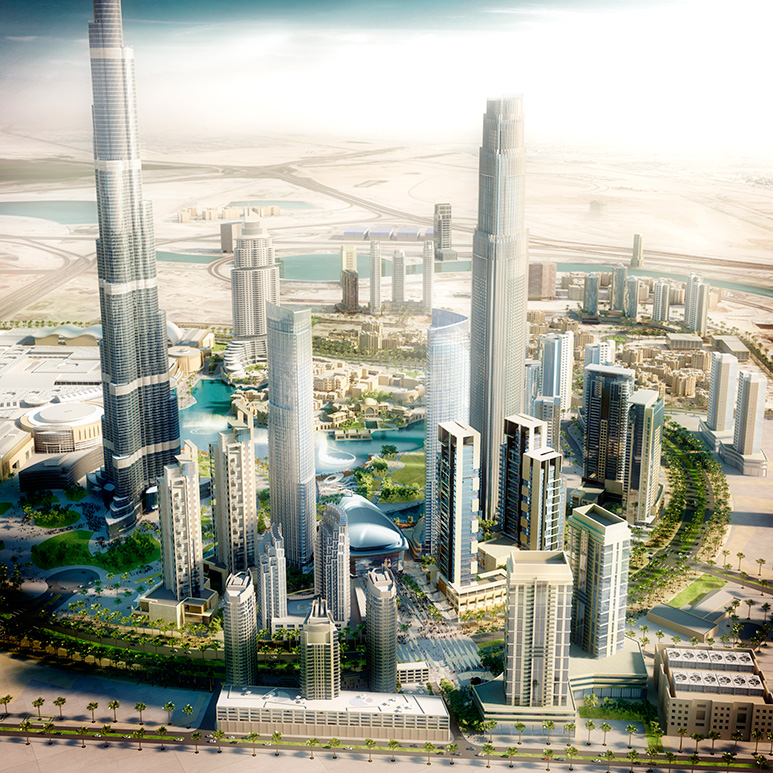
This is one vision
of the
future opera house and museum of modern art district in downtown Dubai.
Of course no self respecting opera house could ever succeed without being
surrounded by high-rise condominium blocks.
At Executive
Towers we may lose the best of our view of the Burj Khlalifa but the opera
house will be just a short walk away.
EK
extends Qantas relationship to Jetstar
14 February
2014
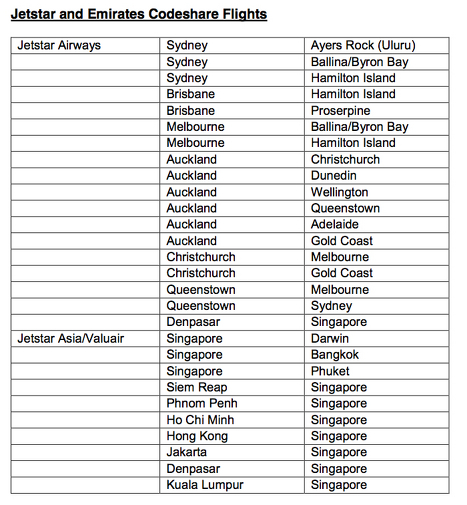
Jetstar and
Emirates have announced a partnership covering codeshare flights and
frequent flyer points.
The partnership between Emirates and the Qantas low-cost offshoot is a case
of 'keeping it in the family', and covers over two dozen routes operated by
Jetstar in Australia and New Zealand along with Singaporean-based Jetstar
Asia.
Emirates' EK code will be placed on 27 new routes and six new destinations
such as Bali in Indonesia, Byron Bay in Australia, Dunedin in New Zealand
and Siem Reap in Cambodia.
The tie-up will
also see members of Emirates Skywards frequent flyer program earn Skywards
Miles for flights on Jetstar-operated services carrying an EK flight number,
as well as using their Miles to purchase reward flights on any Jetstar-operated
route apart from Jetstar Pacific flights.
“Emirates customers travelling on Jetstar will enjoy a range of full service
fare features such as food and beverage options and the same luggage
allowance they would have on Emirates" said Lisa Brock, Jetstar Group Chief
Commercial Officer.
That is
interesting as EK allows 30kg of luggage to economy class passengers while
Jetstar requires passengers to purchase their luggage allowance.
Emirates/ Jetstar codeshare itineraries are now on sale for travel from
April 6th, with Emirates frequent flyers able to redeem Skywards miles for
Jetstar flights from March 1st.
Malaysia Airlines to operate from DWC temporarily
12 February
2014
Malaysia Airlines
will operate temporarily at Dubai World Central – Al Maktoum International
Airport (DWC) from May 1 to July 21, 2014.
The temporary shift is due to closure of one of the runways at Dubai
International Airport for major resurfacing work.
Passengers booking journeys to Dubai during this period will receive their
travel itinerary stating Dubai World Central – Al Maktoum International
Airport with the three-letter airport code DWC as the arrival airport,
instead of Dubai International Airport which goes by its code DXB.
Malaysia Airlines will resume operations at Dubai International Airport
after completion of the runway project.
Passengers in Dubai/UAE are advised to plan their travel accordingly during
this period to avoid any inconvenience. Dubai World Central – Al Maktoum
International Airport is located in Jebel Ali, some 37 km south west of
Dubai city centre.
Malaysia Airlines, a member of oneworld, flies daily from Kuala Lumpur to
Dubai on MH162 which departs at 3.20pm. The return flight from Dubai, MH163,
departs for Kuala Lumpur at 7.40pm.
However, from May 1 until July 21, 2014, during this temporary operation
period, the flight will operate as MH154, departing Kuala Lumpur at 3.15pm.
The return MH155 will depart Dubai at 7.35pm.
An update on all
the changes due to the DXB runway closure
can be found here.
Rise of the Swiss right
9 February 2014
It is hard to tell
what the near term changes will be but the Swiss referendum vote to impose
quotas on Euro and other migration into the country will damage Switzerland
and could will boost similar movements across Europe. It is a step backwards
and not forwards.
On Sunday
Switzerland voted by the slimmest of margins to impose quotas on newcomers
to the country, thrusting its relations with the EU into uncertainty.
In a referendum mobilised by far-right populists demanding caps on
immigration in a country where almost one in four of the population are
immigrants, 50.4% of voters supported the measure, in a relatively high
turnout of 56%.
The vote split Switzerland east to west, with the francophone west voting
against the quotas and the German-speaking east backing the clampdown.
The European commission said it regretted the outcome of the Swiss vote and
would need to review the impact on overall relations between Switzerland and
the EU.
"This goes against the principle of free movement of people between the EU
and Switzerland," the commission said.
While Switzerland is not an EU member, it is closely integrated with the
union and is a member of Europe's passport-free Schengen regime. The vote to
cap immigration throws this into question, undermining several bilateral
agreements between Brussels and Berne, and challenging the Schengen system
since the caps will also apply to EU citizens who previously enjoyed
unfettered travel and working rights in Switzerland under the open borders
system.
A little more than three months before elections to the European parliament,
in which far-right anti-immigration populists are expected to make gains,
the Swiss verdict is certain to galvanise the more extreme wings of European
politics and chasten the mainstream.
France's National Front, tipped to come first in the French European
elections in May, was quick to congratulate the Swiss voters on their
verdict. Similar anti-immigrant parties are doing well in the Netherlands,
Austria and Scandinavia.
The results will be seized on in Britain, where David Cameron espouses
similar policies of curbing freedom of movement within the EU and setting
caps on those allowed to migrate from future new EU members. The results
also play into the agenda of UKIP which could be a force in the EU
elections.
The situations are different: Switzerland is not in the EU but in Schengen,
while Britain is an EU member but not part of the Schengen system. However,
freedom of movement for EU citizens is a central pillar of the EU's single
market and applies both to the union and to the Schengen countries.
The Swiss yes vote came as a surprise since opinion polls had shown a
majority against the quotas in a country that is one of the world's
wealthiest and most successful, with a jobless rate of less than 4%, the
lowest in Europe.
The vote, organised by the arch-conservative and Eurosceptic Swiss People's
party, raises the prospect of Switzerland having to quit the Schengen
system, which it joined in 2002, and its citizens forfeiting passport-free
travel across most of Europe.
This would be an
appropriate response by the EU. But it is likely that a more conciliatory
approach will be taken. Though Brussels may also demand the renegotiation of
several bilateral agreements with the Swiss regulating the neutral country's
access to Europe's single market.
About 80,000 EU citizens freely settle in Switzerland every year, most
coming from Germany but with large numbers also coming from neighbouring
Italy and France.
The government opposed the quotas, as did Swiss business leaders. The
government now has to come up with new legislation fleshing out the detail
within three years.
The French foreign
minister, Laurent Fabius, has said Europe will review its relations with
Switzerland. "It's a worrying vote because it means Switzerland wants to
withdraw into itself," Fabius told RTL radio. "We're going to review our
relations with Switzerland," he said, referring to Europe.
The yes vote for the "stop mass immigration" initiative was also sharply
criticised by the European commission in Brussels, which said it would
examine the implications for its relations with Switzerland.
Etihad's stake strategy faces new test with Alitalia move
6 February 2014 - Reuters
A potential deal to buy a stake in troubled Italian airline Alitalia
CAITLA.UL could be the biggest test yet for Abu Dhabi-based Etihad's
strategy of using stakes in ailing airlines as an easy way to expand its
global footprint.
Etihad's collection of minority airline stakes stretches from the Seychelles
to Ireland and Australia, and dates back to the purchase of an almost 30
percent stake in Air Berlin (AB1.DE) at the end of 2011.
What Etihad calls its "airline equity alliance" strategy differs from that
of larger regional rivals Emirates EMIRA.UL, which is striking out on its
own, and Qatar Airways, which in a surprise move, turned to the OneWorld
airline alliance last year to boost its network coverage.
Lacking large populations in their own countries, the Gulf airlines need to
feed more traffic from other countries through their hubs in order to fill
their planes after a massive order spree at last year's Dubai air show.
Etihad, which has driven restructuring and job cuts at Air Berlin and Air
Serbia, has via the equity stakes and code shares diverted more passengers
from its partners' planes to its Abu Dhabi hub while avoiding the costs that
being a member of a traditional alliance entails.
"From the airlines they have acquired, we can see a regional spread across
Europe and Asia-Pacific, giving them access to very populous countries,
which brings more passenger flows and, ultimately, more sales to their
operations," Euromonitor analyst Nadeja Popova told Reuters.
In 2013, Etihad's code shares with other airlines and its equity partners
brought 1.8 million passengers onto Etihad flights, helping total passenger
numbers rise 16 percent to almost 12 million. Emirates carried 39 million
passengers in its 2012/13 fiscal year, also a 16 percent increase.
The equity stakes strategy could also bring procurement benefits, analysts
said, because by agreeing contracts that cover its equity partners, Etihad
can ask for better deals when it comes to buying planes and services such as
maintenance, IT and catering.
"When we sit down with Boeing (BA.N) or Airbus (AIR.PA) , our discussions
are now about 500 aircraft, it's the same with the engine makers," Etihad
chief executive James Hogan said last month at an event in Berlin.
Hogan said that the $105 million to buy a 29 percent stake in Air Berlin was
recouped within 6 months thanks to additional revenue and cost savings.
However, the airline has since given a 195 million euro loan to Air Berlin
and spent another 184 million euros on buying a 70 percent stake in its Top
bonus frequent flyer program.
Investing in Alitalia would be Etihad's first sizeable investment in a
European legacy carrier though and brings with it a host of thorny issues
that other potential investors such as Air France-KLM (AIRF.PA) have not
been able to resolve.
Alitalia and Etihad are in the final stages of due diligence and sources
close to the matter say a deal could involve Etihad buying a 40 percent
stake for as much as 300 million euros.
Etihad has said it will only invest in Alitalia if it fits with its network,
if Alitalia has a credible plan to return to profit and can bring it
synergies.
"Any issues that may prevent the establishment of an appropriate business
plan will have to be resolved to ensure the plan can be implemented to move
Alitalia to sustainable profitability," the two companies said on Sunday.
Alitalia offers access to Europe's fourth-largest travel market and flies 25
million passengers a year. But the airline loses 700,000 euros a day and has
net debt of more than 800 million euros. Alitalia completed a 300 million
euro capital hike in December, which analysts said then would keep it flying
for six months.
While Italy's government has said it is optimistic about a possible deal,
analysts said an agreement was far from certain and expect tough
negotiations on debt and additional cost cuts in the upcoming weeks.
Etihad will want to make sure that neither Rome's politicians nor Italy's
notoriously feisty unions stand in the way of a joint strategy in the
future.
"Etihad doesn't want to have anything to do with Italian unions and will
make sure that a deal with labor groups is found before it comes in," Andrea
Giuricin, CEO of TRA Consulting said.
Chronic political interference in Alitalia, which Rome considers a national
strategic asset, has been a major obstacle in previous negotiations between
Alitalia and foreign bidders.
But with other potential suitors few and far between, analysts said Alitalia
- and ultimately Italy - may have to negotiate on Etihad's terms.
"If the talks with Etihad break down, I don't see any other alternative than
Alitalia going to the wall," said Carlo Stagnaro, head of research at
think-tank Bruno Leoni Institute.
Rivals Easyjet (EZJ.L) and Ryanair (RYA.I) are also using the weakness of
Alitalia to expand aggressively in Italy, making life more difficult for any
investor.
The competition on the shorter, point to point, routes means Etihad will
focus on long-haul, should it invest in Alitalia.
"They can't win the point to point battle with Ryanair and Easyjet,"
Goodbody Stockbrokers analyst Donal O'Neill said. "They're playing in a
market which is unfamiliar territory for them and that will really
incentivize them to say we will only do feed."
Certainly the prospect of an Etihad investment in Alitalia has ruffled some
feathers, with Germany's Lufthansa calling for the European Commission to
take action in a fierce rejection of the deal.
Etihad's stake-building strategy and its code shares with Air France-KLM
also call into doubt the future of the traditional airline alliances - Star
Alliance, OneWorld and SkyTeam, groupings that Etihad CEO Hogan has
described as "fractured."
"What role the alliances will play in the future is unclear, but it looks
like it is a business model that will not last in its current form," Tanja
Wielgoss, Berlin-based partner at consultancy AT Kearney told Reuters. "We
see a tendency towards more focus on growing organically or via
acquisitions."
Analysts also say the increasing ties between the likes of Etihad and Air
France-KLM, or Qatar and British Airways owner IAG (ICAG.L) could prompt
Emirates to rethink whether it can continue going it alone.
"Five years ago, these guys wouldn't look at each other in a room,"
Goodbody's O'Neill said.
"I think both Emirates and Lufthansa will realize that if they really want
to grow in North America and South-East Asia, where they are weak
respectively, then they have to cooperate."
Still, Etihad's strategy does not have everyone convinced.
"I find it difficult to fully understand what they're trying to do," said
airline analyst James Halstead, managing partner at UK-based Aviation
Strategy, adding that Etihad could have just agreed code shares with
airlines without needing to buy stakes.
"Maybe it's a shot of brilliance by James Hogan. I'd like to give him the
benefit of the doubt."
Abyss looms after Thai poll
6 February 2014
The Canberra Times
There was a time
when Thai elections were festive occasions, the celebration of a nascent
democracy seeking its own robust interpretation of ''rule by the people''.
Win or lose, the political classes would usually accept the popular verdict.
Of course there was violence, often allegedly the byproduct of local
business disputes, and the inevitable claims of vote-buying and corruption.
In some cases it took months for the adjudication of all these claims and
counter-claims.
Democracy, in its Thai-style, was messy and competitive. The winners tended
to form government through unruly coalitions of conflicting regional and
sectoral interests. The prevailing idea was that nobody missed out
completely or consistently on a chance to share in the spoils. In those
years, elections were considered an adequate mechanism for distributing
political power. The usual suspects still tended to win: provincial
strongmen, gangsters, retired generals, celebrities, tycoons, the beautiful,
and the outrageous. In any case, they all usually played by the same rules.
On two occasions, in 2001 and 2005, I watched Thailand's elections from the
polling booth level, where the calculations of ordinary voters reigned
supreme. On the first occasion I enjoyed the hospitality of voters in one of
the staunchest Democrat Party strongholds of the south. They educated me in
the intrinsically local preoccupations of the voting public.
On the second occasion, I observed the national political tussle from the
vantage of one of deposed former prime minister Thaksin Shinawatra's
heartland constituencies. It was a place where the people rejoiced with
pride: ''our PM speaks our language''.
In both cases, I recall the hum of cheerful activity as officials readied
the designated buildings for duty. I remember the lines of voters, eager to
exercise their democratic responsibilities. During those years the habits of
election season were becoming entrenched. The 1997 constitution, often
considered Thailand's most ''representative'', gave the country confidence
in its institutions. The consensus, back then, was that the coup-happy army
had ''returned to the barracks'', and that Thais could look forward to a
more democratic political system, a beacon in a dictatorial neighbourhood.
We now know the consensus was very wrong and that Thailand's political
institutions remained fragile, with the military poised to intervene once
its tolerance was exhausted. It is in this context that Thai voters sought
to exercise their democratic franchise last Sunday. This election, called by
Prime Minister Yingluck Shinawatra in the face of an insurrection by
opposition forces, has failed in its immediate goal of consolidating her
government's power.
It has ended with stalemate and recriminations. In nine of Thailand's
southern provinces - areas that traditionally swing behind the opposition
Democrat Party - no voting occurred. Candidates had failed to register and
officials were reluctant to perform their duties. In some cases, boycotts
and other disruptive tactics had the desired effect. In a further nine
provinces, including parts of Bangkok, voting only happened in select areas.
Some polling booths were marred by stand-offs between anti-vote activists
and officials. In a few cases, violence flared.
It is the violence that has punctuated this period of political strife that
is most worrying. Only a small number of people have been killed and yet the
audacity of terrorist-style tactics has set dangerous precedents. On the eve
of the poll, a shoot-out in northern Bangkok left hundreds of people
traumatised, and six injured. Some were lucky to escape with their lives.
But sadly, such violence is not surprising. Over recent months the
manoeuvres of anti-election activists have been deliberately calibrated for
confrontation. Some pro-government groups have determined to meet fire with
fire. Both sides trade in the accusation that impunity has fundamentally
distorted the political system. For now, illegal actions are rarely punished
and, for the powerbrokers, there is little chance of criminal sanctions,
even when they are in flagrant defiance of the law.
One real threat to their top positions comes from direct attack: guns, bombs
and fists have already featured heavily in the skirmishes around Bangkok.
The armed forces and police are mobilised as official security, and yet some
of their members are allegedly operating in the shadows to further stoke the
flames of discontent.
Talk of ''civil war'' has taken on new, and terrifying, immediacy. Thailand
faces persistent uncertainty that will test the resolve of its people.
Sunday's election may have been won by Yingluck, but the result is not
acceptable to the anti-government movement, and the government is waiting
for judicial rulings on what happens next.
The sad fact is that one side of Thai politics has determined, through their
failure at elections, to disavow the democratic process. It leaves a wounded
nation struggling for any potential resolution. Yingluck, now in limbo as
caretaker Prime Minister, has demonstrated patience in the face of
anti-government provocations. But how long can that last?
There are a few reasons that Thailand is now facing an even graver crisis.
First, the election of February 2014 does not offer Yingluck the refreshed
mandate that she craved. But it demonstrates, yet again, that her opponents
fear the electoral juggernaut she rides. Second, further elections are
unlikely to help. And the challenge of redrawing the rules of political
engagement in such an unsettled situation cannot be exaggerated. That leaves
Thailand, once the great democratic hope of south-east Asia, looking for new
answers.
Third, the Democrat Party is already seeking the annulment of the election
result. There is the serious possibility that through a judicial decision or
a military intervention the government of Yingluck will fall.
What then for Thailand? It faces the prospect of a maelstrom, unleashing
destructive influences the length and breadth of the country. The tragic
histories of its mainland south-east Asian neighbours should provide ample
warning about what can happen when you lunge for the abyss.
Underground shambles
6 February 2014
The two London
underground unions are on strike this morning protesting against plans to
close ticket offices at rail stations in favour of machine ticketing and
greater use of London Transport oyster cards.
There is no right
side to this dispute.
The unions have
been promised that there will be no compulsory redundancies; and that staff
who do not take a voluntary redundancy will be employed at the stations to
help guide passengers.
But London
Underground is rail-roading (no pun intended!) these changes without
investing in the technology that will help passengers leaving many people
confused, frustrated and in slow queues. The staff, if you can find them,
are helpless and end up on the wrong side of angry, frustrated
conversations.
There are not
enough machines; the machines are slow. Many only take cards - but do not
like foreign bank cards. Many do not take cash or notes. And they offer
English language only.
London Underground
is one of the most expensive city transport networks in the world. It may
even be the most expensive. Yet it is suffering from decades of neglect and
mis-management. Its age does count against it. With ever increasing
passenger numbers the stations and platforms are often cramped and
dangerously crowded.
London Underground
management needs its staff onside with the changes and needs significant
investment in its front line customer-facing staff in order to build a safe,
reliable and user-friendly transport network.
Thais must be
allowed to vote
3 February 2014
- The Financial Times editorial
The way things
normally work in a second-rate democracy is that, come election time, the
incumbent administration prevents a free and fair election. In Thailand,
which is fast sinking from second- to third-rate status, it is the
opposition that has done its utmost to scupper the democratic process.
Sadly, the elections held last weekend will do little, if anything, to end
the debilitating impasse into which Thai politics has fallen. Not only did
the opposition, led by former deputy prime minister Suthep Thaugsuban,
boycott the polls – which was just about its right. It also prevented many
other people from voting – which was not. As a result, the poll was
disrupted in 11 per cent of electoral districts. Voters were prevented from
exercising their right with the threat of violence. Such are the thuggish
tactics normally employed by dictatorships, not by self-professed
representatives of the people.
In the northeast, stronghold of self-exiled Thaksin Shinawatra, the former
prime minister, voting went on as normal. The disruption, though, makes it
impossible to tally the votes without holding further by-elections. It also
means the government will not be able to convene parliament since fewer than
the 95 per cent of seats required by Thai law have been filled.
This is not only bad for Thai democracy, it is also bad for the economy.
Thai investors have been pulling money out of equities for several months.
Tourist numbers have suffered. Consumer and business sentiment have
plummeted. The power vacuum could persist for months, meaning it will be
impossible for the government to implement a coherent fiscal policy. That
puts all the onus on the central bank, which may be forced to cut rates. In
an period of Fed tapering, that could leave the currency vulnerable. The
economy, originally predicted to grow at 4.5 per cent this year, may
struggle to hit 3 per cent.
A succession of governments loyal to Mr Thaksin, who is now resident mainly
in Dubai, are far from blameless. The government of Yingluck Shinawatra
blundered badly when it tried to enact legislation that would have
exonerated her brother of past crimes and paved the way for his return. Its
rice-subsidy programme was ill-conceived, too.
Still, if we are apportioning blame, the opposition is much more at fault.
Having failed to win an election in more than 20 years, it seems determined
to tear up democracy itself. It accuses Ms Yingluck’s government of bribing
the electorate. If by that it means paying people to vote on polling day, it
should prove those allegations in court. If, rather, it means using the
levers of government to reward supporters with rice subsidies or cheap
health plans then this is to misunderstand the nature of democracy. Winners
of elections reward their supporters. If the policies are bad for the
nation, the opposition should contest them in parliament – not in the
streets. That is how democracy is supposed to work.
The election commission has been rightly perceived as too keen to declare
the elections impossible to hold. Given the forceful turnout in districts
where the opposition could not prevent a vote, it is now incumbent on the
commission to conclude the poll as swiftly as possible. The courts should
not politicise the electoral process and the army should stay in its
barracks.
The opposition should also drop its unworkable demands for an unelected
council to run the country. If it persists in blocking the democratic
process, all that remains is a military coup or a legal putsch. That, one
suspects, is precisely what it is hoping for. If that happened, government
loyalists, who have mostly shown restraint during the latest crisis, would
likely take to the streets themselves. That way lies ruin.
Democracy in Thailand, Interrupted
3 February 2014
- The New York Times editorial
These are dark
days in Thailand, where an election on Sunday was disrupted by protesters
whose demands for a suspension of democracy could lead to greater chaos. The
country’s constitutional monarchy has faced coups and street protests in the
past, but it has been a model of relative stability and development in
Southeast Asia, a region known for its autocratic and brutal governments. As
an American treaty ally, Thailand has been critically important in helping
to reduce regional tensions and provided balance to the growing military
assertiveness of China by championing trade and economic integration partly
through the Association of Southeast Asian Nations. On Sunday, protesters
disrupted the vote by blocking the distribution of ballot boxes to polling
places in about 11 percent of the country’s electoral districts. Because
Thailand’s Constitution requires that 95 percent of parliamentary seats be
filled before a new government can be formed, the disruption means the
country will remain in a limbo for months as election authorities try to
conduct elections in those districts where protesters prevented a vote from
taking place. A gun battle between protesters and government supporters left
seven people injured on Saturday, a day before the elections.
The protests are being led by opposition politicians who represent the urban
elite and people from the south of the country. They refused to participate
in the election knowing that they would surely lose to the Pheu Thai Party
of Prime Minister Yingluck Shinawatra, which enjoys the support of the rural
majority in the north and northeast.
Instead of making a case to voters, the opposition leaders want to oust Ms.
Shinawatra and replace Parliament with an unelected people’s council to
carry out unspecified political reforms. They also want to bar Ms.
Shinawatra and her popular brother Thaksin, a former prime minister who
lives in exile, permanently from the country’s political system.
Protest leaders, who include former leaders of the opposition Democrat
Party, say that the changes they propose will cleanse Thai politics of
corruption, but they themselves have been accused of serious corruption.
If the elections are put off indefinitely and Parliament replaced with an
unelected council, the country’s deep divisions — now breaking along
urban-rural and north-south fault lines — would be made worse and the
continuing political strife would further undermine Thailand’s already shaky
economy. The military and King Bhumibol Adulyadej, who is 86, two powerful
institutions that have previously stepped in to resolve political disputes,
have refused to support either side. That could change if the current
impasse drags on. If the opposition cares about reducing corruption and
strengthening the democracy, it should end the protests and propose clear
and detailed reforms that voters can accept or reject.
Thailand on the
brink
1 February 2014
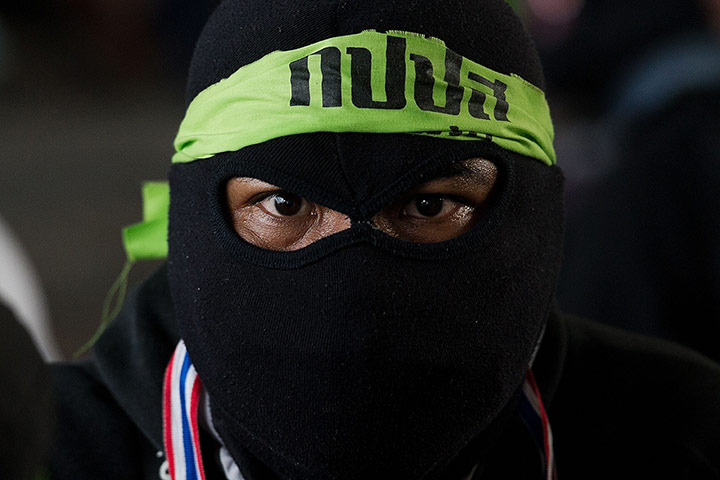
Paula
Bronstein/Getty
Gunfight in the streets of Bangkok - in pictures
Thai Takedown
30 January 2014
-
Foreign Policy
Thailand is known
for its dynamic economy, vibrant tourist industry, smiling hospitality, and
pragmatism. But that’s hard to tell these days. On a recent walk near Siam
Square, Bangkok’s iconic shopping and entertainment district, I watched a
young, well-heeled woman gleefully defacing what remained of the signage in
front of Thailand’s national police headquarters. In the square itself, the
faces of speakers preaching hatred for the government flickered on countless
looming flat screens. Trash cans had been plastered with pictures of
incumbent Prime Minister Yingluck Shinawatra and her brother, ex-premier
Thaksin Shinawatra. These were only the most visible signs of long-standing
political tensions that bubbled over in November.
Before 2001, Thai prime ministers had come and gone with predictable
frequency. They would be elected by voters in the provinces, but then
readily ousted by the Bangkok elite -- the military, the bureaucracy, the
network surrounding the monarchy, and key business interests. The system
appealed to the Bangkok elite, and provincial voters routinely failed to
come together to collectively support their own interests. But that all
changed with the arrival on the political scene of Thaksin, a billionaire
telecommunications tycoon.
Thaksin hails from Chiang Mai, the cultural capital of Thailand’s north.
Before he made it big, he was a police officer. Earlier than any other Thai
politician, he recognized the value of tailoring his message to voter
demands. He was the first to make use of modern polling and marketing
techniques and was one of the earliest to recognize that the key to
electoral success would be in capturing the vote in the country’s populous
north and northeast, home to the fastest-growing segment of the Thai
population -- urbanized villagers.
Although urbanized villagers are registered to vote in the countryside, they
spend much of their time working in and around Bangkok’s industrial and
service sectors; at the same time, the rural heartlands are rapidly
urbanizing. The countryside has come to the city, and the city to the
countryside. The urbanized villagers, Thaksin found, no longer wanted to
work their rice fields -- they could hire cheap Burmese or Cambodian labor
for that. Instead, they dreamed of sending their kids to college, and were
ready to hustle two or three jobs to do it. Accordingly, he set out to win
them over with virtually free health care, loan deferrals, and community
development funds. The result: pro-Thaksin parties have won decisive
victories in every Thai election of the last decade -- in 2001, 2005, 2006,
2007, and 2011.
Thaksin was the first to make use of modern polling and marketing techniques
and was one of the earliest to recognize that the key to electoral success
would be in capturing the vote in the country’s populous north and
northeast.
The old elite did not take his success lying down. By early 2006, Thaksin
faced a range of accusations of corruption and human rights abuses in his
government. Many of his former allies turned against him, starting
yellow-shirted street protests to oppose his government and defend the
monarchy, whose supporters believed Thaksin’s rise to be a challenge to
royal standing. (Yellow is associated with Thailand’s widely-revered
monarchy.) These events, which were relatively peaceful, set in train a
bewildering sequence of color-coded political rallies, elections, judicial
interventions, and military machinations that continues today.
Thaksin himself was ousted in a military coup in September 2006 while
attending the UN General Assembly in New York. The courts dissolved his
political party and banned him and his key allies from office for five
years. Many voters, of course, would not be swayed: a rebranded version of
Thaksin’s party comfortably won the first post-coup election and brought a
stand-in, Samak Sundaravej, to power. The Constitutional Court then ousted
Samak on the bizarre charge of his having illegally hosted a television
cooking show. The courts abolished Thaksin’s political party once more, and
this time the opposition, the Democrat Party -- which had lost the 2007
general election -- set up a government. Red-shirted pro-Thaksin protestors
occupied parts of central Bangkok from March to May 2010, and faced a
military crackdown that resulted in more than 90 deaths.
Tensions between pro- and anti-Thaksin forces subsided following the July
2011 election, in which Thaksin’s younger sister, Yingluck Shinawatra, was
elected prime minister. Pragmatic and soft-spoken, Yingluck confounded her
critics with a penchant for compromise. She proved able to work well with
both of Thaksin’s old adversaries, the palace and the army, latterly serving
as her own minister of defense. Under her guidance, the factions made a
deal: she could stay in office as long as she did not push the envelope on
sensitive issues, such as the sacrosanct monarchy or the bloated military
budget. Another implicit condition was that Thaksin, now living in Dubai,
not return to Thailand. The deal between Yingluck and the establishment was
never made public, and it tacitly excluded the opposition Democrat Party and
the yellow- and red-shirt movements.
Until late 2013, everything seemed to be going well. On the surface, at
least, Thailand was returning to normalcy. Then two things happened to
disrupt it. First, Yingluck made her first serious political miscalculation.
In the middle of the night on November 1, members of her party pushed
through the lower house of Parliament a comprehensive amnesty bill for
politically related offenses that had occurred between 2004 and 2013. The
bill, which was opposed not only by the Democrat Party but also by many
government supporters, would have paved the way for Thaksin’s return to
Thailand. Prior to this episode, Yingluck had seemed to be her own woman,
distancing herself from Thaksin’s more aggressive moves to secure a pardon.
But the amnesty debacle suggested that she was ultimately beholden to her
brother. Although Yingluck promptly killed the bill, her credibility was
blown.
Second, recognizing that they had no chance of winning an election,
Thaksin’s opponents rethought their strategy. Whereas former Democrat Party
Prime Minister Chuan Leekpai had campaigned in the 1990s under the slogan “I
believe in the parliamentary system,” in December 2013, all of the party’s
members of parliament walked out and took up the street politics they had
always professed to despise. Former Deputy Premier Suthep Theuksuban assumed
the leadership of a new unified anti-Thaksin movement, the People’s
Democratic Reform Committee, which included the yellow-shirts. The PDRC
quickly mobilized huge rallies in central Bangkok, drawing much of its
support from the urban middle classes. According to an Asia Foundation
survey, nearly two-thirds of the demonstrators had incomes of more than
$1,000 a month -- good pay by Thai standards.
Thailand’s current political polarization both is and is not about Thaksin.
He did not cause Thailand to change. Rather, he and his parties have
identified and capitalized on a massive socioeconomic transformation, a
shift in the aspirations of voters that has been underway for a couple of
decades. Urbanized villagers are utterly weary of the relentless paternalism
of Thailand’s capital city and its denizens. The PDRC repeatedly insists
that Thaksin manipulated millions of uneducated, unsophisticated provincials
into voting for him, five times in a row. Pro-Thaksin parties -- just like
all other Thai parties -- have undoubtedly spent huge amounts of money to
win elections, but electoral success on this scale cannot be bought. Like
him or loathe him, Thaksin is simply the most popular Thai politician of the
time.
Today, the PDRC urges reform and the end of corruption. But the Democrat
Party has consistently opposed all manner of political reforms over the past
two decades: the landmark 1997 people’s constitution was passed only after
the party’s leader, Chuan Leekpai, was out of power. And Suthep’s vague
current calls for a people’s assembly selected from different occupational
groups sound like a reversion to authoritarianism, not a process of
democratic reform. Further, for Suthep to reinvent himself now as an
anti-corruption czar is deeply ironic: In 1995, he spectacularly brought
down his own government after presiding over a notorious land reform program
under which party cronies received land in Phuket meant for low-income
farmers. He has denied any wrongdoing.
Yingluck has responded to the protests by calling for a snap election on
February 2. The Democrat Party is boycotting it, and the vote may yet be
postponed. Protesters already disrupted advance voting on January 26. And
one protest leader was shot dead in Bangkok, the tenth person killed since
the protests began back in November.
Under these conditions, an election will resolve little without a new
agreement between rival factions. All must agree that elections and reforms
are necessary, and that military coups and any form of violence are not.
Yet, as law and order breaks down, such an accord seems far off. The army,
which played a central role in allowing Yingluck to become prime minister in
the first place, now looks likely to assume the role of power broker.
Thailand’s generals, reluctant to stage a conventional coup d’état, which
would make them a lightning rod for popular discontent in the countryside,
will first try to find some middle ground, forcing Yingluck’s party to sign
up for a thoroughgoing process of political reform and offering some
face-saving concessions to allow the PDRC to wind down their protests.
Taking turns hitting at a Yingluck punching bag might provide some instant
gratification for Bangkok’s frustrated middle classes, but these are the
moves of people who are in deep denial about political realities: Thailand’s
urbanized villagers are the country’s future, and they are not about to
vanish. Thaksin is a deeply troubling figure, but so are some of the leaders
of the anti-Thaksin movement. Rather than calling for vengeance and
retribution, the protestors need to seek a compromise before violence claims
more lives and erupts into open clashes on Bangkok’s streets.
The show must go on
30 January 2014
-
The Economist
In front of the Royal Thai Army Club the thuggish rump of a failed people’s
revolution gathered to collect their reward. They were to hear the
announcement of a temporary interruption of Thai democracy, so that an
appointed council of “good men”, as dreamed up by their leader Suthep
Thaugsuban, could save the country. Mr Suthep, a former deputy prime
minister with the opposition Democrat party, was to be disappointed.
There was already a stink of testosterone and aggression in the air. Young
men, new veterans of a three-month-long protest against the government, were
perched on lorries. They threatened by megaphone to storm the club and rid
Thailand of the influence of the “Thaksin regime”, meaning Yingluck
Shinawatra, the prime minister; as well as her brother, the former prime
minister, Thaksin, whom they see as pulling the strings from his refuge in
Dubai; and everyone close to them. The protesters are calling their own
movement “The People’s Committee for Absolute Democracy with the King as
Head of State”. Here at the army club, miles away from the shopping malls
and offices in the heart of Bangkok, Mr Suthep’s insurrection has to make do
without the benefit of its more well-heeled supporters, the ones who post
their revolutionary slogans on the walls of Facebook.
The army club made for an ironic venue. In the past its membership would
have staged a coup and cut short the drama that was playing out inside. The
prime minister, Yingluck Shinawatra (now only the caretaker prime minister),
was locked in talks with the election commission over whether to suspend a
snap poll which had been scheduled for February 2nd. Before the meeting, the
commission had cited the possibility of violence and disruption as a reason
for its demand: to delay the poll for 120 days. The constitutional court had
ruled just days earlier that the election could be postponed in accordance
with the constitution, though their ruling was apparently without legal
basis. So, it extemporised, any delay must be settled by agreement between
the government and the election commission. The government, for its part,
insisted that the poll must go ahead. It was not deterred either by the
commission’s inability to organise advance polling in the capital Bangkok on
January 26th or by the killing of one of the anti-government protest
leaders.
A dozen ambulances were parked outside the army club, which created the
strange sense that the imminent meltdown of Thailand’s democracy might have
medical consequences. Then, as if on cue, a shooting: a self-appointed guard
of the protesters was shot in the leg and packed off to hospital bleeding,
the gunman apprehended from the back of a motorbike. But soon the attention
turned from the blood on the pavement back to the scheduled event, inside
the club. Soldiers had begun trying to talk protesters out of their siege.
Two hours later, after the army had dispersed the crowds from the scene, the
government announced that it would go ahead with the poll. This was
unexpected. It was just two days earlier that roving mobs of anti-government
protesters managed to shut down all 50 of the polling stations open for
early voting in Bangkok. Early polling went ahead in 66 out of 77 provinces,
but only 440,000 people, or 22% of the 2m eligible voters, cast their
ballot.
It is hard to see how further voting in Bangkok on February 2nd can proceed
at all, unless the army protects polling stations. Even then, winning a
landslide in elections that will be boycotted by the opposition would not
appear to help the government. Indeed, as things stand, Ms Yingluck would
not even be able to form a government. According to the constitution, 475
members of parliament are needed to convene parliament—and the protesters
have prevented candidates from registering in 28 out of 500 constituencies.
But to defer the poll would have carried risks that the government must have
judged intolerable. The pro-royalist Democrats have thrown in their lot with
the street protesters. For now, they are prepared to see electoral democracy
sidelined. Ms Yingluck’s main fear must be that the opposition step up its
efforts to overthrow her by legal action. The Democrats have filed a case
with the anti-corruption commission to impeach her over a controversial
rice-pledging scheme.
Ms Yingluck’s supporters would hate to have seen the poll deferred. But it
is a coup rather than the delay of another electoral victory that would push
them to action. Two other factors supported the government’s decision to
risk a showdown. First, an opinion poll shows that four out of five Thais
intended to vote if an election were held on February 2nd. Second, American
and Japanese diplomats have made it clear to politicians on all sides that
Thailand’s frail democracy and its economic prospects must not be held
hostage by an angry minority.
The government may now start to enforce its emergency powers in and around
Bangkok, to be able to keep the polling stations open come Sunday, February
2nd. Arrest warrants have been issued for dozens of the protests’ leaders,
including Mr Suthep. Or it might hold that card in reserve, giving the
protesters further opportunity to discredit themselves, by denying their
fellow citizens the right to vote.
Sadly neither option seems likely to resolve the battle on the streets. A
measure of the mess is that Myanmar, only freshly emerging from its
half-century of authoritarian rule, is expressing its own worry about the
instability next door, in Thailand.