Welcome to rascott.com
This is a
personal site that reflects my interests in news,
current affairs, aviation and travel.
email me: robert@rascott.com
Now In Dubai:
Scott
Consulting
Photo Albums
My photographs have been moved off this site and are now stored on Picasa. They
were simply taking up too much space on my web host.
Please use
this link to see my list of photo albums.
Some
Useful links:
Information:
World Time
Clock
Exchange Rates
Journalism:
ForeignPolicy
Nationsonline.org
Project Syndicate
Amnesty International
Reporters w/o borders
The Guardian
BBC World News
CNN Asia
Bangkok Post
Daylife.com - news
Gulf News
Arabian Business
World News
WSJ - Asia
SCMP
Good causes:
Sister
Joan - Bangkok
Regional Info:
BKK Magazine
HK Magazine
In
Singapore Magazine
TimeOut Dubai
Back in the UK:
Newton Ferrers
And for fun:
Lin Ping live panda tv
EarthCam
History
BBC Archive
National Media
Museum
The British Library
Imperial War Museum
There are many other links on my AOB blog page.
|
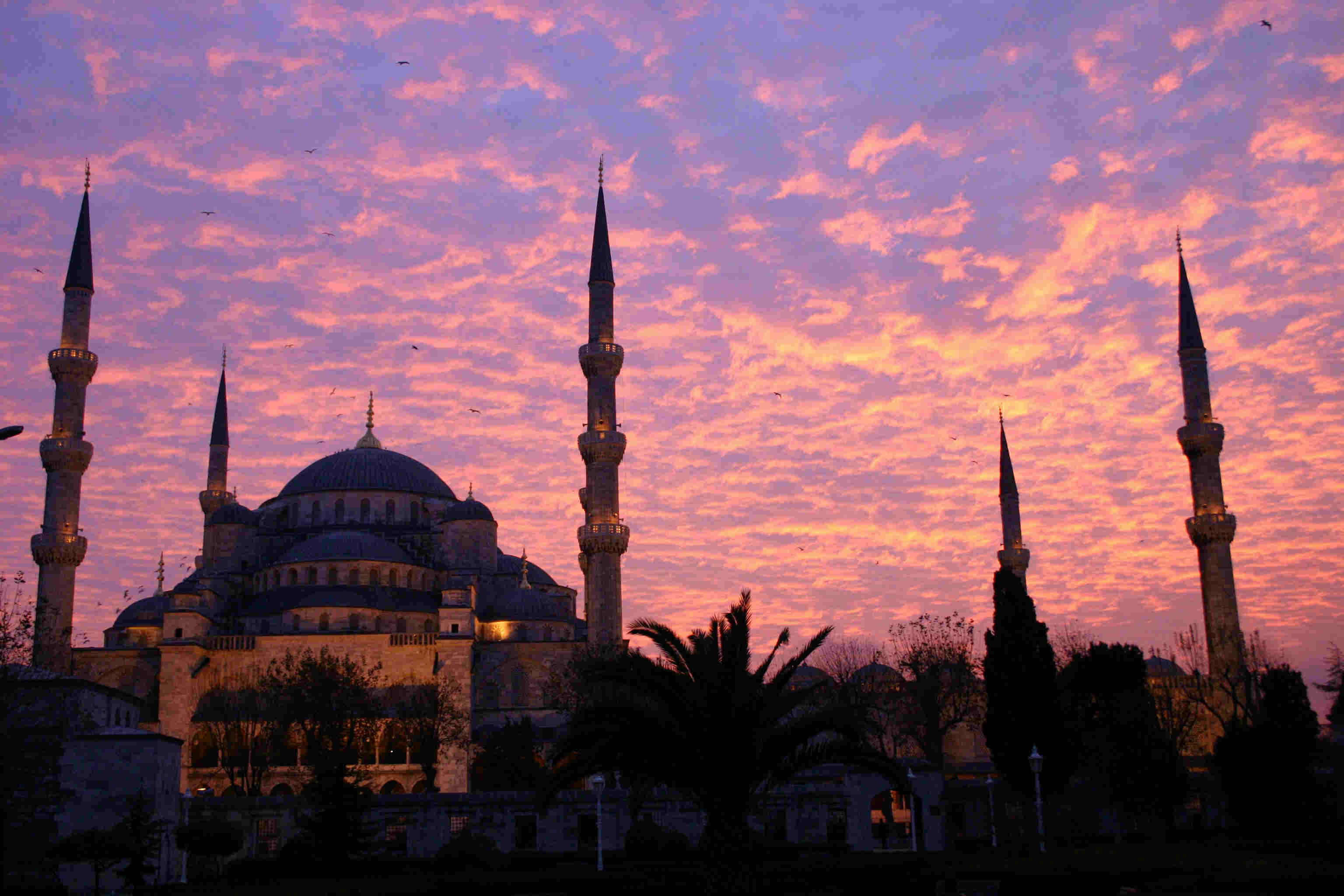
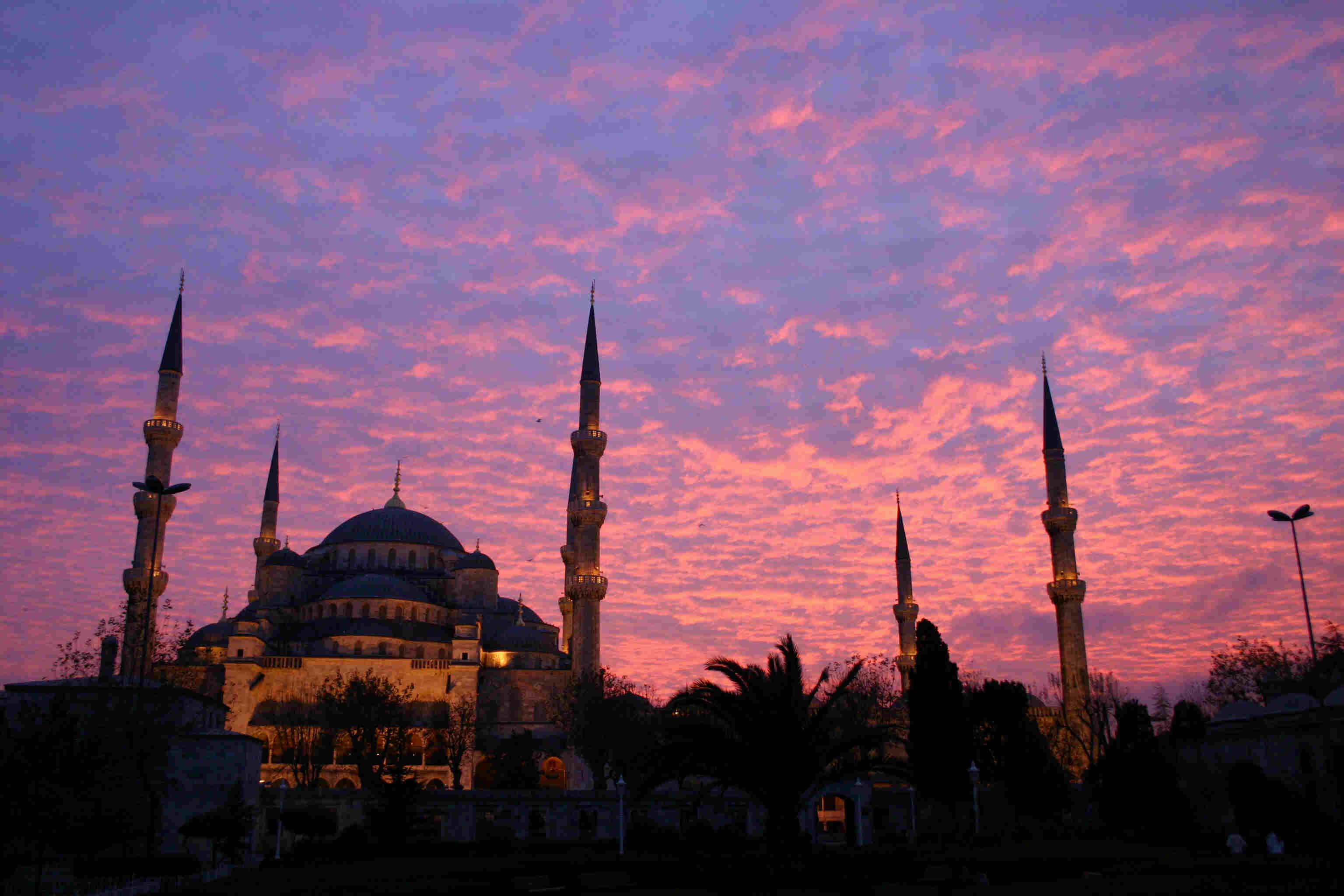
Dusk over the Blue Mosque 27 November 2006 - taken this evening
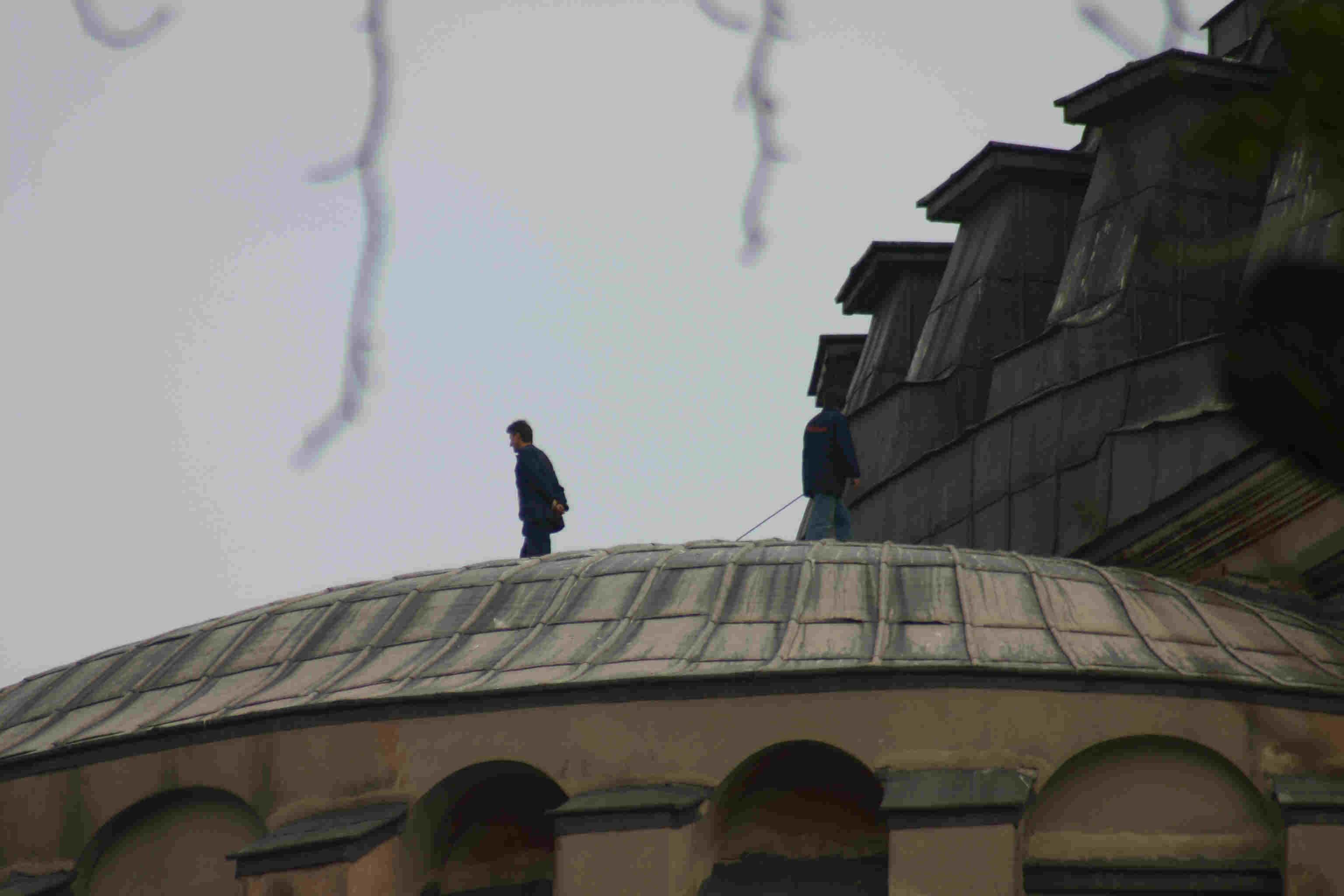
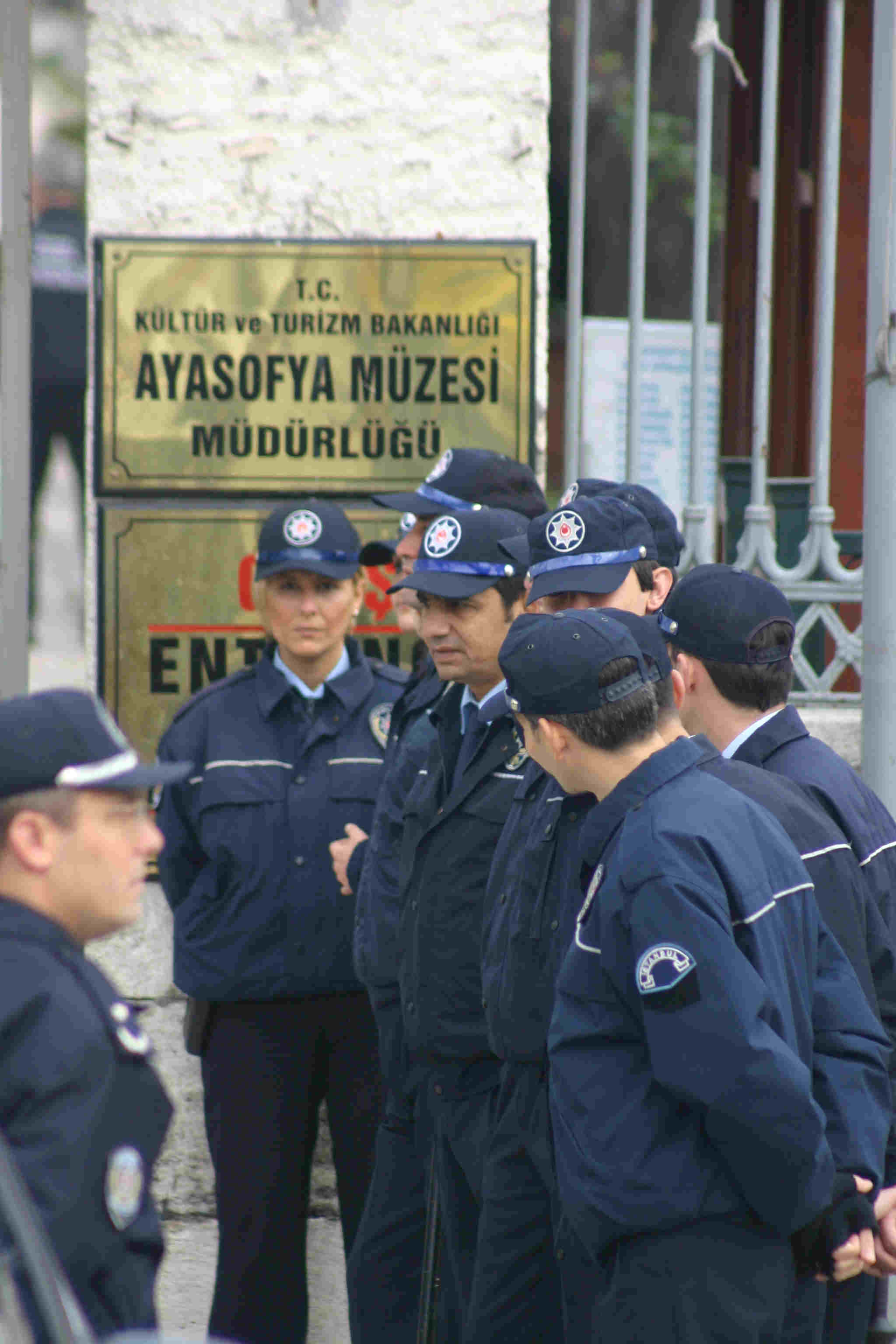
No Turkish delight for the Pope 27 November 2006 Although the Pope will not be in Istanbul until Thursday police presence around the Aya Sofia and the Blue Mosque is already strong. The protests against his visit are unfortunate and do not seem representative of Turkey's secular hospitality. The Turkish Prime Minister, Recep Tayyip Erdogan, who although not responsible for the Pope's invitation to Turkey clearly gave it his approval, has fortunately now decided that he should meet the Pope on his arrival in Turkey. This should help send a message that is more reflective of Turkey's search for an alliance of civilizations rather than a clash of civilizations. The Turkish have a worldwide reputation for the warmth of their hospitality and it is right that the host greets such a high profile guest. I have no doubt that the Pope is coming to Turkey to preach peace not hatred; to talk about what the faiths have in common, rather than to highlight their differences. It is not the position of Pope that is the issue; Pope John Paul 2 was well respected in Turkey. But his successor has made (as Cardinal Ratzinger) negative comments about Turkey's bid for EU membership and his speech at Regensburg suggested he viewed Islam as an irrational and violent religion. But I am not sure that the demonstrators really understand what was said, why it was said and the context of the speech. There are fundamentalists in any faith. The Catholic church has (unfortunately) a doctrine of infallibility with respect to the Pope. He is limited in his ability to admit fault. His expressions of sorrow that he was "misunderstood" is as good as it gets for a Catholic apology. He is a religious leader not a politician. So let us hope that his visit is peaceful. And that he makes constructive statements that embrace all faiths. The Aya Sofia which will be visited by the Pope is a stone's throw (how apt) from my hotel. The AP tells why the Pope's visit there is so significant in the article that follows these pictures of the early police presence on the ground and the roooftops.
Ancient Christian site becomes 'very sensitive ground' for pope The Associated Press 27 November 2006 No moment of Pope Benedict XVI's upcoming trip may be more closely watched as his walk through the majestic Haghia Sophia, a domed complex whose history spans Istanbul's stormy evolution from Christianity to Islam. It's not the homage to early Christianity that has many Turks on edge. It's how Benedict could chose to pay his respects on Thursday — near the end of a four-day visit that begins Tuesday. Any gesture perceived as worship — even as simple as making sign of the cross — could be viewed as a serious affront by his hosts and undermine the Vatican's attempts to rebuild goodwill with Turkey as a bridge to other Muslims nations. "The pope is treading on very sensitive ground as soon as he enters Haghia Sofia," said Dogu Ergil, a professor of social and religious trends at Ankara University. But it requires a sweeping view of Turkish attitudes to understand why. Haghia Sophia — "Holy Wisdom" in Greek — rose from the ruins of an earlier church in the 6th century and now holds 15 centuries of religious and political history under its massive central dome and multicolored marble columns. It was the architectural and spiritual marvel of Christian Byzantium until the city — then known as Constantinople — fell to Muslim forces in 1453. Crosses and other Christian symbols were defaced and it became one of the most renowned mosques of the expanding Ottoman Empire. In 1935, it again was transformed — this time into the Ayasofya museum during the secular reforms of Mustafa Kemal Ataturk, who built modern Turkey from the Ottoman ruins. Religious services are prohibited and Benedict's visit is considered by Turkish officials as only sightseeing. An open act of piety by the pontiff would likely enrage powerful Turkish nationalists, who hold sway over the political and military establishment, as a perceived signal of Christian claims to the site and a challenge to Turkish sovereignty. "The risk is that Benedict will send Turkey's Muslims and much of the Islamic world into paroxysms of fury if there is any perception that the pope is trying to re-appropriate a Christian center that fell to Muslims," said an editorial in Turkey's independent Vatan newspaper on Sunday. It's another complication amid many for Benedict in Turkey. On Sunday, more than 25,000 demonstrators filled a square in Istanbul to denounce the pope and his remarks in September in which he quoted a medieval Christian emperor describing the teachings of the Prophet Muhammad as "evil and inhuman." Some placards made reference to the 1453 Islamic conquest of the city. One read: "Constantinople is forever Islamic." Another sign featured a snake with two heads: one of Benedict and the other Ecumenical Patriarch Bartholomew I, the spiritual leader of the world's more than 250 million Orthodox Christians and caretaker of the vestiges of a once-flourishing Greek Orthodox community in Turkey. The pontiff's pilgrimage to Istanbul is mostly about building stronger bonds with Orthodox churches, which split with the Vatican nearly 1,000 years ago over disputes including papal authority. But Benedict also plans a brief stop at the famous 17th century Blue Mosque — which faces Haghia Sophia — as a "sign of respect" toward Muslims, said Vatican spokesman the Rev. Federico Lombardi. There have been no discussions between the Vatican and Bartholomew's office on the protocol for Haghia Sophia, said the Rev. Frank Marangos, a spokesman for the ecumenical patriarchate. "We have no information on what the pope plans," he said. It has gone both ways on previous papal visits. In 1967, Pope Paul VI dropped to his knees in prayer as stone-faced Turkish officials, including the foreign minister and a top general, looked on. But Pope John Paul II made no outward gestures of worship during his tour in 1979. Last week, about 40 members of an ultranationalist party occupied Haghia Sophia, shouting "Allahu akbar!" — "God is great!" in Arabic — and kneeling to perform Islamic prayers
A new cold war? 26 November
2006 That is where facts end and speculation begins. Because the crime happened in democratic Britain, the public genuinely hopes police might solve it. Had it happened in Moscow, the response would be different: weary acceptance that the case is unfathomable. In Russia, audacious public assassination is a familiar story. Businessmen, politicians and journalists regularly meet such a fate (although usually they are gunned down, not poisoned with radiation). The crimes go unsolved. The truth is lost in conspiracy theories. Mr Litvinenko's murder is an outbreak in the London diaspora of a disease that is rife in the motherland and there isn't much hope of it being solved. But while the police do their best, it is a moment for Britain to look eastwards and ask what sort of a country Russia has become. The answer is: 'Grim.' The rule of law in Russia is weak; justice is applied selectively to serve political and commercial interests. Television networks are controlled by the Kremlin. Exercising free speech can be perilous. Journalists risk prison or death if they are too critical of the authorities. Parliament is supine. Independent political activity is stifled. State media promote a neo-Soviet cult of state power and xenophobia. Racist violence is out of control. Last year, at least 28 people were murdered and 366 assaulted on racial grounds. Non-whites live in fear of skinhead gangs. Internationally, Moscow uses its natural resources to compromise the independence of neighbouring states, threatening to turn off the taps if it suspects former Soviet satellites of disloyalty. Foreign companies working in Russia fear arbitrary expropriation of their assets and extortion by corrupt bureaucrats. President Putin is genuinely popular with many Russians. He has brought stability while high energy prices have subsidised rising living standards. But the brutish cynicism that made Russian streets dangerous in the capitalist free-for-all of the Yeltsin years has been concealed, not eliminated, by Mr Putin's bullying state. The Russian President, meanwhile, is greeted as an ally in Western capitals for two reasons. First, with a quarter of the world's natural gas at its disposal, Gazprom, the state monopoly, can supply Europe's growing energy needs. Second, in 2001, Mr Putin convinced Britain and America that his dirty war in the Chechen republic, now run by a Kremlin-backed puppet regime with a reputation for systematic torture and repression, is a front in the 'war on terror'. In exchange for supporting the war in Afghanistan, Mr Putin won a moratorium on criticism of his undemocratic tendencies. That deal has expired. The West should continue to engage with Mr Putin. Russia is too big to ignore and its interests and energy infrastructure too intertwined with Europe's for it to be isolated. But we must be clear about who we are dealing with. Britain should, for example, look sceptically at Gazprom's declared interest in buying Centrica, formerly British Gas. Gazprom is an arm of the Russian state and should not be allowed control of such a vital asset. Energy relations with Moscow must be negotiated at the level of the EU, paying heed to new members from the old eastern bloc with their insights into how Russia does business. Economic co-operation with Moscow should come with strings attached to political and judicial reform. By necessity, we must treat Moscow as a partner in some spheres, but Mr Putin has much to prove before he can be trusted as an ally. A not entirely welcome visitor 25 November 2006 Not me; but the Pope. We are both in Turkey this week. My visit is entirely agnostic. The Pope's visit is potentially antagonistic. The following is from The Turkish Press. ZAMAN- This is not a first the visit by a pope to Turkey. Turkey earlier has welcomed two different leaders of the Catholic Church. The same protocol will be applied for this visit. He will first come to Ankara and hold official meetings and then he’ll begin his own program. He’ll visit the House of the Virgin Mary in Ephesus and proceed to Istanbul to join the ceremony by the Fener Greek Orthodox Church. He will visit Hagia Sophia and can also visit the nearby Blue Mosque. This visit isn’t on his program, but the Turkish side expects it. Why is the pope visiting Turkey? Does this visit seek a dialogue with the Islamic world? No, the real purpose of the visit is clear: to take part in the divine liturgy in the patriarchal Church of St. George together with Patriarch Bartholomeos. The Catholic world and the Orthodox world will meet in this ceremony. This meeting is no doubt a very exciting meeting for the Christian world. This is the reason why the world attaches so much importance to this visit. The pope is also a head of a state, so he will be hosted like every other leader visiting Turkey. The media has commented on Prime Minister Recep Tayyip Erdogan and Foreign Minister Abdullah Gul’s absence during the visit. Some said that they are trying to avoid a meeting with the pope. These comments in the Turkish media were also reflected in the foreign media. Their absence is actually by necessity: They will attend a NATO meeting whose date was set earlier. This meeting is also important for Turkey, so it would be unfair to see this as an attitude against the pope. Pope Benedict XVI’s visit is different from the previous papal visits. Before rising to the papacy, he told a German magazine that he was against Turkey’s EU membership, and a few months ago he quoted comments linking Islam with violence. These words have hurt the Islamic world. Therefore there are many people in Turkey who won’t be happy keep them from becoming violent. This is also a great opportunity for Turkey to introduce itself to the world. Istanbul, the capital of the Islamic world, has always been a city where all religions have been able to live together in peace. The mosque, church and synagogue exist in peace. The pope’s visit is a good opportunity to show this to the world. Turkey will host the pope despite its hurt. It’s also our right to expect a gesture from the pope. He can take a first step in his Sunday mass two days before the visit.
The Thaksin Question Even in exile ex-PM Thaksin remains the most influential political figure in Thailand and his travels around Asia, effectively to everywhere but Thailand, are making the generals nervous, The IHT reports: BANGKOK -- Really, he is not up to anything. Just doing a little shopping, taking a well-earned rest. What is everybody so worked up about? From China to Hong Kong to Bali, Thailand's deposed prime minister, Thaksin Shinawatra, ousted in September in a coup, has been circling his country, mostly shopping for blazers, handbags, things like that; playing a little golf. And whoops! Wherever he goes, reporters seem to catch up with him. Almost every day, it seems, he is in the newspapers back home, the coup victim who just won't go away. At one point last week he ran playfully from reporters in a Hong Kong department store before turning to tell them, "I have no plan yet." He seems to be having a much better time than the generals who ousted him, struggling to master the bucking bronco of a country he left behind. And the more he smiles, the more he shops, and the more he jokes -- "I need a job because I'm unemployed now" -- the more nervous the generals seem. They are going to lift martial law "within days"; they are going to lift it in a couple of weeks; they are going to lift it "when things are stable." He has "every right to return"; he "shouldn't come back at present"; it would be better for him to wait a year. If he does suddenly decide to return, what will he do? What will they do? They say they will refuse to let him off the plane, but it isn't as simple as that. Electorally, he is still the most popular figure in the country, with a huge base among rural voters. He is certainly the richest politician in a land where money doesn't even have to talk. His network of operatives is still in place, waiting, the generals fear, for his signal. A regional army commander reported last month that he had detected underground "cells" of Thaksin supporters in rural areas, ready to make trouble. Last week, the junta reshuffled 136 battalion commanders in a move that seemed to suggest they were worried about loyalty in the armed forces. It would not take much to mobilize Thaksin's rural base, to fill the streets with protesters, to make life very difficult for the men in power. So they are stuck. If they lift the controls of martial law and allow mass gatherings, those "undercurrents" of opposition they talk about could burst into a destabilizing flood. But the longer they maintain controls, the more they look like just another power-hungry junta rather than the saviors of democracy they seem to yearn to be. When the generals moved against Thaksin on Sept. 19, their peaceful coup was welcomed by Thailand's middle class, which said the prime minister was crippling the country's democratic processes and institutions and harvesting power for himself. They have appointed a civilian government -- headed by a former general -- whose task is to draw up a constitution in preparation for an election late next year. Then, they promise, they will step aside. But their first two months have gone slowly as they come up against complexities that cannot be solved with tanks. A small prodemocracy movement is growing louder. Political opponents are meeting openly. The middle class is growing impatient. On Monday, a leading prodemocracy group, the Campaign for Popular Democracy, gave the junta an F for how it has addressed the country's problems. The new government still has broad public support. It is investigating the financial dealings of Thaksin and his family, and on Tuesday said it was considering whether to charge his wife and brother-in-law with tax evasion. His political party is fraying at the edges. It is not clear whose side time is on. In a poll last week, people displayed their impatience as they set out an agenda for the interim government: Crack down on corruption, overhaul the civil service, maintain social order, rehabilitate flooded lands, reduce poverty and debt, combat crime, and tame a Muslim insurgency in southern Thailand. That is not exactly a two-month agenda, or even a one-year agenda. Worst of all, the new leaders have not put their finger on the corruption and abuse of power they say justified the coup. They have not yet been able to bring the charges they had hoped would deter Thaksin from coming back. And so the man who billed himself as the can-do chief executive officer/prime minister has turned coy, issuing teasing statements through a spokesman, Noppadol Pattama. "He has no plan to return." "He will return to Thailand when the time is right." "It is probably too soon to say." A month after he was ousted, his influential wife, Pojamon, paid a high-profile call on a senior adviser to the king, Prem Tinsulanonda, who is believed to have been active in orchestrating the coup. "She insists Mr. Thaksin won't engage in political activities after he returns," The Bangkok Post quoted a source close to Prem as saying. Few people took that statement at face value, and there have been no more public overtures. But Pojamon's private activities when she is in town are a source of speculation. Last week she was with her husband in Hong Kong , strolling through department stores and smiling for the cameras. And so, if Thaksin does board a plane and fly to Bangkok, what will the generals do? If they take him into custody, he would happily parody the detention of Nobel laureate Aung San Suu Kyi, who is under house arrest in Burma, right next door.
Death in the Lebanon I am sitting in a Dubai cafe watching the funeral service for Pierre Gemayel. One of the other visitors to the cafe is a Lebanese business man who as well as speaking Arabic speaks fluent English and French. He is both concerned and moved and it would appear quite relieved to be in Dubai rather than his homeland. This is the Guardian's leader on yet another episode that could move the Middle East to deeper chaos. 23 November 2006 The Lebanese are used to asking "cui bono?" - who benefits? - when bad things happen in their complex and vulnerable country. On that basis, most see two likely suspects behind the assassination of the industry minister, Pierre Gemayel. Neighbouring Syria is still a powerful player in the Land of the Cedars despite having been forced to withdraw its troops and intelligence agents last year after being blamed for the murder of Rafik Hariri, the former prime minister. Half a dozen other political murders - all anti-Syrian figures - have been laid at its door. The other prime suspect in this latest case is Hizbullah, the Iranian-backed Shia Muslim movement and militia group which fought last summer's war with Israel and is jockeying to boost its representation in the Lebanese government. Syria and Hizbullah both condemned the killing and denied any involvement. Motive, as every trainee detective knows, is not proof, and past form suggests that clinching proof will not be found easily. All that can be said with certainty at this stage is that the murder of Mr Gemayel is a dangerous development for Lebanon and the wider Middle East. Viewed from Beirut, it threatens to further undermine the already shaky pro-western government of Fuad Siniora following the resignation of six pro-Syrian Shia ministers who are aligned with Hizbullah. If he loses any more ministers - sadly more likely to bullets than by-elections - it will probably collapse. Sheikh Hassan Nasrallah, Hizbullah's leader, routinely attacks Mr Siniora, a Sunni Muslim, as the servant of Washington. Damascus is worried about plans for a UN tribunal to try the suspects in the Hariri assassination. Syria hints - cui bono? again - at a conspiracy to blacken its name. George Bush, on cue, swiftly accused it of "fomenting instability and violence". Whoever killed Pierre Gemayel, there is an ominous symbolism in the choice of target: he bears the same name as his late grandfather, founder of the rightwing Phalange party and embodiment of the old Maronite Christian ascendancy, eroded by emigration and a higher Muslim birthrate. His father and uncle served as presidents; the latter was also murdered. The regional implications may be no less alarming. The suspicion that Syria is again trying to destabilise Lebanon will make it hard for the US, Britain and France to improve relations without abandoning the Beirut government. Washington, where some neocons once openly hoped for regime change in Damascus, downgraded ties with Syria after the Harriri killing. Britain has been more circumspect, hinting at better times if President Assad dropped his alliance with Iran: his response is to fly to Tehran for talks with President Ahmadinejad this weekend. Accusing him of political murder is not likely to help break up that cosy friendship. Syria matters to the US and Britain because it is a player in Iraq, turning a blind eye as Sunni fighters cross its border. James Baker's Iraq Study Group is expected to recommend talks with Syria as a way of weakening the insurgency and stabilising the region for an eventual US withdrawal. It was a characteristically depressing instance of one step forward, two steps back on Tuesday when Syria restored diplomatic ties with Iraq hours before the Beirut murder. Nor can there be much progress on the Israeli-Palestinian dispute without a Syrian-Israeli deal over the Golan Heights. Mr Assad may one day prove to be more amenable to western blandishments than Mr Ahmadinejad. Syria, after all, does not follow Iran in seeking to develop nuclear energy that may be used to build a nuclear weapon. But there should be no underestimating how hard it is, since the Iraq war, for the US and Britain to wield real influence in the Middle East. Lebanon, not for the first time, is paying the price of other peoples' mistakes as well as its own historic complexities. Emirates to fly the Aussie cricketers 23 November 2006 The Aussie cricketers are justifiably famous for inflight drinking binges; David Boon allegedly holding the record for the most beers consumed between Australia and England in a single flight. So it is not without irony that the Australian crocket team is now to be sponsored by an airline from a Moslem nation. Emirates announced yesterday that it has become the official airline of the Australian cricket team for the next three years. Rocky Ponting reading carefully from a prepared script said that "from the players' perspective, flying internationally with an airline like Emirates means we'll arrive and get home in the best shape possible. We're really looking forward to flying with Emirates from next year." The sponsorship strengthens Emirates' association with Australia and its sporting passions. It does seem to me rather sad that the Aussies are not supported by their own national airlines. At least the English team flew to the Ashes on Virgin Atlantic. James Sutherland, Cricket
Australia Chief Executive Officer, said the new partnership with Emirates
was fantastic news for Australian cricket. "This partnership and the support Emirates will provide to the Australian cricket Team means that they will travel in unparalleled comfort and style when playing abroad, providing them with best preparation possible and helping them maintain the level of success." The first major trip the Australian team will take aboard Emirates will be when they head to New Zealand in early 2007. Let battle commence 22 November 2006 Richard Williams sets the scene for the 2006/7 Ashes in today's Guardian; as a kid I used to stay awake at night listening to the cricket commentary on my transistor radio while hiding under my sheets until I fell asleep. These were the days of Cowdrey, Dexter and Simpson. I could never get used to the idea that while I was sleeping some 10,000 miles away cricket was being played under azure blue Australian skies. The only other thing I knew at that time about Aussie was that all their kangaroos were called Skippy, that Dolphins could talk and that for some reason they had sent Rolf Harris to England....sort of a reverse convict. Tomorrow is the first day of the first of five tests; if last year's series in England is anything to go by this will be another great contest. Mr. Williams sets the scene: It is a contest older than the modern Olympic Games, older by far than football's World Cup. The Ashes, created in 1882, may not enjoy the global reach of those other great international tournaments but to the participants, two nations with long sporting pedigrees, they represent a biennial journey, interrupted only by baser conflicts, through the peaks and troughs of every conceivable emotion. Brisbane's Gabba stadium will be packed tomorrow for the opening day of this latest five-match instalment of the ancient rivalry between England and Australia. Only two nations with so much shared history could engender a rivalry so deep that it seems to touch and expose their essence, an extension by other means of their intimate but often abrasive relationship - social, political, cultural. This may have been called the most eagerly anticipated cricket series of all time but the threads of 124 years of combat form an intricately worked background to this meeting between the sides led by Ricky Ponting and Andrew Flintoff. Behind the two captains and their players flit the ghosts of Spofforth, Grace, Trumper, O'Reilly, Larwood, Grimmett, Hobbs, Bradman, Hutton, Miller, Compton, Harvey, Tyson, Benaud, Cowdrey, Simpson, Dexter, the Chappells, Boycott, Marsh, Botham, Lillee, Gatting, the Waughs and countless others, woven into a tale that grows richer with each retelling. No player privileged to take the field in an Ashes series can be unaware of his place, however insignificant, among the immortals. For once, however, history recedes into the background. This time there is a more immediate imperative driving the two sides. England's victory in the summer of 2005, achieved by the skin of their teeth, represented a long-desired rebirth for the mother country and an unexpected reversal for the former colony. Now the host nation is thirsty for revenge while the visitors yearn to prove that their first Ashes success in 18 years was not merely the consequence of propitious circumstances. And so, once the Australian public have got over the shock of hearing the swimmer Ian Thorpe, their No1 individual sporting hero of the past 10 years, announcing his retirement yesterday, they will turn their attention to six weeks of cricket that promise another epic narrative. The England squad will not lack for support: this week the advance cadres of the Barmy Army have been setting up camp at the Pig and Whistle pub in Queen Street, downing pints of lager and pan-grilled Moreton Bay bugs under strings of St George's flag bunting. You might not think that the 2006-07 Ashes series would need much in the way of hype but the Aussies are doing their best to raise the temperature. The arrival of Michael Vaughan at Brisbane airport on Monday inspired claims of a secret England plan to spring him on the Australians tomorrow, an Achilles emerging from seclusion to answer his army's despairing call. The Sydney Morning Herald asked: "Was this part of an elaborate swindle by England coach Duncan Fletcher, known for his wily ways?" Outside an Elizabeth Street newsagent a billboard shouts: "SECURITY SCARE FOR POMS". On an inside page of the Brisbane Courier-Mail the story turns out to be about a passenger on England's flight to Queensland attempting to secure an autograph from Andrew Flintoff en route. "WEAK LINK" is the banner headline on a story quoting Shane Warne's suggestion that Geraint Jones, England's Brisbane-reared batsman-wicketkeeper, is likely to spill enough catches to ensure Australia's success. "Will this man drop the Ashes?" another tabloid asks. Meanwhile Warne, 37, and Glenn McGrath, 36, promise that a side packed with thirtysomethings will be more than fit enough to humble the Poms. Last time around, even in defeat, Warne was the undisputed man of the series, while the two victories that gave England the Ashes were achieved in McGrath's absence. Whatever these two have left in the tank, it will be drained to the last drop. Three years ago an England team came to Brisbane and knocked Wales out of the quarter-finals of the 2003 Rugby World Cup on their way to a victory over Australia in the final that was rather less unexpected than the Ashes defeat in England two years later. Now the hosts, heavy favourites in the betting, fancy their chances of restoring their pre-eminence while England, deprived of Vaughan, Marcus Trescothick and Simon Jones, must overcome the odds. On the surface the tide appears to be running one way: of their last 12 Test matches Australia have won 11 and drawn the other, while five of England's last 12 have ended in victory, including Pakistan's default at The Oval. Subtler undercurrents, however, may play a part. Youth and optimism could give England's top-order batsmen an advantage, while their coach, Duncan Fletcher, may come to be judged by his decision between the reliability of Ashley Giles and the promise of Monty Panesar. Whichever side wins the toss tomorrow, the first session cannot help but be as gripping as its equivalent at Lord's two years ago, the thunderous overture to a day that Ponting later called the most intense he had ever experienced and which ended with Australia 190 all out, England 92 for seven and five wickets apiece for McGrath and Steve Harmison. Never had so many conflicting signals been sent out in a single day's cricket. You would not want to bet against the same again tomorrow and a series to match. CNS unveils the sins of Thaksin 21 November 2006 Rather bizarrely the Nation newspaper has printed an English language summary of the CNS's paper on why the coup took place. This is the catalogue of Thaksin's alleged sins. Sadly it has no balance. There are many things that he did right; remember the action taken after the Tsunami or his work for Thailand's poor. Or the sense of national pride that he built up and which won him overwhelming support. Or even the high levels of GDP growth. Throwing mud is easy; but the CNS needs to successfully prosecute some of these allegations. They have given no hard evidence. It is a start but it really is not enough. The name White Paper would be used in the UK parliament as draft legislation to be debated in Parliament and entered into law. This is more like a press release aimed to maintain momentum for a cumbersome process and perhaps to justify the continuation of martial law. "What Thaksin
had done wrong"
Paradise Lost By way of background to this story my paternal grandmother's maiden name was Adams and for many years it was held in our family that we were directly descended from the last of the Bounty mutineers - John Adams. Actually we are not. But it made for a great family story. The background to the loss of paradise on Pitcairn is already documented on my web site here. And the excise that this is how things have always been on Pitcairn is offensive. An adult has a responsibility to protect a child in his or her care. This is child abuse. There is no valid defense. They should consider themselves fortunate not to be in a British or American jail where they are not fond of child rapists. 19 November 2006
With his son Randy, and a third man, Terry Young, Christian started a three-year term for sexually assaulting young girls on the tiny tropical island of Pitcairn. Together with three other islanders who were also found guilty but escaped prison sentences, the convicts represent almost half the adult male population of this mile-wide lump of South Pacific rock. Teams of warders, ferried in from New Zealand, will now guard the prisoners over the next few years, while British Ministry of Defence police have gone to Pitcairn to ensure law and order is maintained on this remote piece of UK territory. Given that Pitcairn's population is only 47, such a presence now makes it the most heavily policed place on Earth. This month's imprisonings have also triggered deep divisions that many believe could bring about the destruction of the isolated community. However, it is only now - with the removal of Privy Council reporting restrictions two weeks ago - that the extraordinary details of the Pitcairn sex scandal can be revealed. Christian, whose ancestor Fletcher led the Bounty mutiny and founded the renegade colony on Pitcairn, was originally accused with six other men of taking part in the systematic sexual assaults on girls as young as eight. The case emerged after a teenage girl told a visiting British policeman she had been raped. After a five-year British investigation, 32 women who had grown up on Pitcairn said they had been sexually abused. Thirty-one men, some now dead, were accused. Seven women alone named Steve Christian, the island's mayor, as their attacker. Eventually he was among seven men who were tried on Pitcairn in front of three New Zealand judges. The trial revealed a disturbing picture of systematic sexual abuse whose details will be revealed for the first time with the screening of Trouble in Paradise on Channel 4. According to one victim, Jacqui Christian, life on the island was initially pleasant for children. 'We could go nice places we wanted to after school, riding our bikes or flying kites.' But by the time girls reached 11 or 12, life took on a darker, far less pleasant tone. 'Being a girl, we always tried to avoid being anywhere with an adult man on our own. The older you got, you tried to get smarter about being aware about where you were and who you were with, working out who was safe to be around and who wasn't. No one spoke out until the police came.' Jacqui, who is now living in Australia, gave evidence by video link against several Pitcairn men - though not Steve Christian - at the trial. What happened affected her whole life, she says. 'I'm 35 and I still have not been game enough to have children of my own yet.' However, a very different version of events is given by other islanders, including Steve Christian. There was no regular rape on Pitcairn, he says. There was 'only consensual under-age sex'. 'What I am being accused of is nothing for what has happened on Pitcairn, in our parents' day, in their parents' day. Don't let anyone run off with the idea that in Pitcairn's history we were the bad ones. No, we were the good ones.' The case, not surprisingly, has shattered the community. Some women came forward to report rape. Others maintained that under-age sex was simply part of the culture of Pitcairn, which in turn was a product of its history. The island was settled in 1790 by nine Bounty mutineers who had brought Tahitian women, and a few men, with them. The mutineers claimed most of the women for themselves, however, and within a few years, inflamed passions brought anarchy to the community. All but one of the mutineers - able seaman John Adams - were killed, with Fletcher being clubbed to death by Tahitians. However, he was survived by his son, Thursday October Christian, the ancestor of almost everybody called Christian on the island today. Teenage sex was therefore a consequence of this extreme, impassioned ancestry, it was claimed during the trial. Merelda Warren, whose brother was eventually acquitted during the trial, acknowledges that most women of her generation were having sex at the ages of 12 or 13. 'We're Polynesians. In Polynesia we grow up very quickly.' Six of the seven accused were found guilty and three were jailed: Steve Christian, aged 55, got three years, his son Randy, 32, received six, and Terry Young got five. At the same time, 79-year-old Len Brown received a term of home detention. All men appealed, however, and their sentences were suspended while the Privy Council studied the case. Two weeks ago, it ruled that the verdicts should stand. A few days later, the three men began their prison terms, though their time in jail will not be much of a privation. The men built their own prison, which was transported, in kit form, from Britain and was specially constructed to house them. It turned out to be the most luxurious building on the island. It even has plumbing, a Pitcairn extravagance. Sexpo Singapore - don't get excited 17 November 2006 Only in Singapore could they make something that sounds so much fun into something so utterly dull. Sexpo Singapore. Great title. But it sounds like the toilet expo in Bangkok. Healthy Sex, Healthy Life is only marginally better as a tagline than Happy Toilet Happy Life. But then you discover it is not really an exhibition or show - it is a Sexual Reproductive Health Event. From 24-26 November 2006 raincoaters from all over the island of SIN will be flocking (yes, flocking) to Suntec City. In a rivetting series of seminars you can learn all about Female Sexual Dysfunctions and Sex in your Golden Years. There is even a clinic on how old guys should put on a condom (most should know by now or are past caring!). Most attendees at the seminars will presumably arrive disguised for fear of bumping into their neighbours. "Eh, Mavis lah, here for what lah, not getting enough lah." The story would be all over the local HDB before you get home. The exhibition includes slimming gadgets, tours, tours, jewelry, gym equipment and the quaintly named adult novelty items. Spicing up your life with the latest edition of Asian Fever or expecting a guest appearance from Tia Tanaka is sadly out of the question. This is sex Singapore style. If you feel the urge to attend - the details are here - http://www.sexpo.com.sg/event/2006/main.htm Heineken=Green Space=Jazz Festival 17 December 2006 One weekend that you might like to note in your diary is December 15-17; the dates for the 4th Bangkok International Jazz festival. Given the current sensitivities over beer advertising the sponsors, Heineken, are rebranding their events under the Green Space name. It makes no difference, it is still a garden party with great jazz and cold beer. In the cooler Bangkok evenings, with the floodlit Dusit Palace as a backdrop, this really is a very good way to pass the time. This years line-up includes US rhythm and jazz quartet The Yellowjackets, bossa nova from Lisa Ono, jazz piano from Hiromi, horn driven jazz funk from the Tower of Power and jazz/blues singer Salena Jones. Tickets are Baht1,200 for one day or Baht 3,000 for the whole weekend. Tickets are available at : www.thaiticketmaster.com The web site for the festival is at : http://www.bangkokjazzfestival.com/2006/
Thaksin cannot come home until after new elections 12 November 2006 Prime Minister Surayud Chulanont has told deposed leader Thaksin Shinawatra to wait until a democratic government is established to return to Thailand, effectively ending the latter's hope to come back to the country in the near future. Remember that
deposed PM Thaksin has a Thai passport and has not been charged (yet) with
any offence. Now presumably there is no intent on the part of the current
government to press charges during their administration Meanwhile Gen Chavalit Yongchaiyudh, former prime minister and a senior member of the Thaksin regime, has provoked the ire of the coup leaders by criticising their work and suggesting that Thaksin should be allowed to come home and be contained to his residence. Surayud has rightly described the "house arrest" idea as "impossible," likening it to the Lady's status in Burma. Thaksin has made it known that he wishes to return to Thailand. Surayud has made it clear that Thaksin has to wait saying that "when we have a constitution draft, a public referendum and then the country is set to have an election, then the negotiations [on Thaksin's return] should be able to begin." The end of flying as we know it - Emirates goes mobile 10 November 2006 It is already bad enough on board when as soon as the plane lands mobile phones are turned on and there is the ping, ping ping, of messages arriving as desperate phone users cannot wait an extra five minutes until the plane is at the gate. Now the depressing news. From January next year, Emirates will be the first airline to allow mobile phone calls to be made while in flight. Under the $27m (£14m) deal with the AeroMobile company, Emirates will offer voice and text phone services charged in line with international roaming rates on all its flights. The plans, however, remain subject to regulatory safety approval. Emirates will introduce the new facility on one of its Boeing 777s in January. The service will then be extended to the entire fleet. It was, of course, inevitable. But the prospect of a plane load of Chinese (sorry to pick on them but they do all shout at once) all trying to make phone calls while I am trying to relax on an airplane is depressing.
Emirates is trying to keep some sense of decorum onboard; the use of mobile
phones will be subject to restrictions. Emirates cabin staff will advise
passengers to switch phones to silent or vibrate calls can only be made at
cruise altitude and they will try ensure that phones
are switched to text-only mode during night flights..
Not a chance of that ever working. And how are an overworked crew meant to
police such a policy and what can they do if a passenger simply says no.
Of course most calls can wait, but try telling that to the person making or receiving the call. Air rage is inevitable as conflicts arise between cellphone addicts and passengers who want a peaceful cabin to work or read in. I would prefer unlimited wireless internet access in flight and power sockets in all seats. That will come in time. Postscript On one of the airline forums and from a writer in Dubai: "My biggest concern (apart from of course being kept awake by some tosser shouting into his phone about how good his glass of bubbly is at 3 in the morning) is the increase in air rage incidents that our cabin crew will have to deal with because of this stupid decision. As if our crew don't have to put up with enough shyte as it is, without much if any support from the company. They will be abused by the tossers when the system is not working properly (or when it's in "text only" mode), and will be abused by the passengers that the tossers keep awake with their inane calls and stupid ring tones. Stupid, stupid, stupid decision. I for one will be encouraging everybody I know to write this as a comment on the customer feedback forms." Hot news from Singapore 9 November 2006 Presumably as part of its drive to boost tourist numbers Singapore's government yesterday announce that oral and anal sex in private between consenting heterosexual adults will be legalised under Singapore's first major penal code amendments in 22 years. At last the thousands of Singaporeans, terrified of a knock on the door in the middle of the night, can happily blow eachother all night long without any obligation to attempt procreation.
A gay rights group, People Like Us (PLU), welcomed the repeal
of the section but expressed disappointment there is no plan to repeal a
section which criminalises "gross indecency" between two males. Rumsfeldisms 9 November 2006Smart man Donald Rumsfeld. Maybe a bit too smart. Too many clever comments can alienate those whose support he needed; from the generals to the media. Anyway here are a few of he quotes that we will miss. "I would not say
that the future is necessarily less predictable than the past. I think the
past was not predictable when it started." New York Times ends its Republican support 8 November 2006 This was the NYT's editorial at the start of election day in the USA yesterday. It is a strong condemnation of all that is wrong with the current Republican and GW Bush led government. IT is worth a read. "For the first time in memory, The New York Times is not endorsing a single Republican candidate for election to the U.S. Congress. Although Times editorials tend to agree with Democrats on national policy, we have proudly and consistently endorsed a long line of moderate Republicans, particularly for the House of Representatives. Our only political loyalty is to making the two-party system as vital and responsible as possible. That is why things are different this year. To begin with, the Republican majority that has run the House of Representatives - and for the most part, the Senate - during President George W. Bush's tenure has done a terrible job on the basics. Its tax-cutting-above-all-else has wrecked the budget, hobbled the middle class and endangered the long-term economy. It has refused to face up to global warming and done pathetically little about America's dependence on foreign oil. Republican leaders, particularly in the House, have developed toxic symptoms of an overconfident majority that has been too long in power. They methodically shut the opposition - and even the more moderate members of their own party - out of any role in the legislative process. Their only mission seems to be self-perpetuation. The current Republican majority managed to achieve that burned-out, brain-dead status in record time, and with a shocking disregard for the most minimal ethical standards. It was bad enough that a party that used to believe in fiscal austerity blew billions on pork-barrel projects. It is worse that many of the most expensive boondoggles were not even directed at their constituents, but at lobbyists who financed their campaigns and high-end lifestyles. That was already the situation in 2004, and even then this page endorsed Republicans who had shown a high commitment to ethics reform and a willingness to buck their party on important issues like the environment, civil liberties and women's rights. For us, the breaking point came over the Republicans' attempt to undermine the fundamental checks and balances that have safeguarded American democracy since its inception. The fact that the White House, House and Senate are all controlled by one party is not a threat to the balance of powers, as long as everyone understands the roles assigned to each by the Constitution. But over the past two years, the White House has made it clear that it claims sweeping powers that go well beyond any acceptable limits. Rather than doing their duty to curb these excesses, the Congressional Republicans have dedicated themselves to removing restraints on the president's ability to do whatever he wants. To paraphrase Tom DeLay, the Republicans feel you don't need to have oversight hearings if your party is in control of everything. An administration convinced of its own perpetual rightness and a partisan Congress determined to deflect all criticism of the chief executive has been the recipe for what we live with today. Congress, in particular the House, has failed to ask probing questions about the war in Iraq or hold the president accountable for his catastrophic bungling of the occupation. It also has allowed Bush to avoid answering any questions about whether his administration cooked the intelligence on weapons of mass destruction. Then, it quietly agreed to close down the one agency that has been riding herd on crooked and inept American contractors who have botched everything from construction work to the security of weapons. After the revelations about the abuse, torture and illegal detentions in Abu Ghraib, Afghanistan and Guantánamo Bay, Congress shielded the Pentagon from any responsibility for the atrocities its policies allowed to happen. On the eve of the election, and without even a pretense at debate in the House, Congress granted the White House permission to hold hundreds of noncitizens in jail forever, without due process, even though many of them were clearly sent there in error. In the Senate, the path for this bill was cleared by a handful of Republicans who used their personal prestige and reputation for moderation to paper over the fact that the bill violates the Constitution in fundamental ways. Having acquiesced in the president's campaign to dilute their own authority, lawmakers used this bill to further Bush's goal of stripping the powers of the only remaining independent branch, the judiciary. This election is indeed about George W. Bush - and the Congressional majority's insistence on protecting him from the consequences of his mistakes and misdeeds. Bush lost the popular vote in 2000 and proceeded to govern as if he had an enormous mandate. After he actually beat his opponent in 2004, he announced he now had real political capital and intended to spend it. We have seen the results. It is frightening to contemplate the new excesses he could concoct if he woke up next Wednesday and found that his party had maintained its hold on the House and Senate. "Low cost air travel comes to the Gulf 8 November 2006 A Euromonitor
report out this week estimates that the number of tourists visiting the
Middle East and Gulf regions will grow 56 per cent by 2010, with the United
Arab Emirates (including Dubai and Abu Dhabi), Saudi Arabia and Israel
benefiting most. Air Arabia's
network rises to 29 destinations in November, with the start of new services
between Sharjah and Chennai. The airline began flights to Tehran this year
and currently flies to 15 cities in the Middle East, with its largest
representation in Egypt (Alexandria, Assiut and Luxor) and Saudi Arabia (Dammam,
Jeddah and Riyadh). Yesterday ,Air Arabia, started operating four
times a week to Kathmandu in Nepal. As the gulf and middle east become destinations of choice this may be just the beginning for regional LCCs. WTO comes to Bangkok 8 November 2006 Anticipation is mounting in Bangkok as we prepare for the the second World Toilet Expo & Forum from 16 to 18 November 2006. The theme for the conference, Happy Toilet, Healthy Life, should have everyone flushed with excitement. The Expo will showcase the latest toilet-related trends, technologies and products. Featuring a wide range of products and services from leading industry names, the visitors will learn about the latest trends and innovations in the hygiene and toilet-related industries. Maybe the latest in toilet friendly magazine racks! Highlights of the conference include presentations on: Progressing
Towards Gracious Living – Shanghai’s Public Toilets Finally the sort of tour that makes any visit to Thailand a fun trip : at the end of the conference there will be a Technical Visit to Best Public Toilets of Bangkok & Neighbouring Provinces. I guess that will be a very short tour! My only advise to the delegates; go prepared with your own tissues and a handy pack of wet wipes! Tax reversal hits at Thaksin offspring 8 November 2006 In early February 2006, senior executives of the Finance Ministry and the Revenue Department publicly stated that the blockbuster buyout of the Shinawatra family's 49% stake in Shin Corp by Singapore's Temasek Holdings was not liable for personal income tax. No one disputes that the bulk of the 73.3-billion-baht Shin transaction, conducted through the Stock Exchange of Thailand, was rightly tax-free under a long-standing exemption of capital gains tax for transactions made through the stock market. But what stunned many tax experts earlier this year was how the Revenue Department interpreted one specific part of the transaction, involving Mr Panthongtae and Ms Pinthongta and offshore holding vehicle Ample Rich Investments. On Jan 20, Ample Rich, a holding vehicle registered in the British Virgin Islands, sold 164.6 million Shin Corp shares to each of the two Shinawatra siblings for one baht per share. The next working day, the two sold the combined 329.2 million Shin shares to Temasek for 49.25 baht, resulting in a windfall of 15.8 billion baht. Prior to the transaction they apparently received an assurance from teh Revennue Department that the deal would not be liable to income tax. The outrage at the time derived from the size of the transaction and the appearance that rules could be bent, if not broken outright, by the political leadership for personal gain. Ten months and one new government later, tax officials have executed a complete U-turn. The director-general of the Revenue Department confirmed that the tax authorities on Monday submitted a letter to Panthongtae and Pinthongta Shinawatra, calling for their personal income tax filings to be submitted within 30 days. Tax experts at the time viewed the Ample Rich transactions as taxable income, as the exemption for listed companies did not apply in this case. But the tax authorities argued that the Ample Rich deal was not taxable. In reality the country's senior tax civil servants ignored precedent and common sense to offer a multi-billion-baht tax break to the Shinawatra family, one of the richest in the country. But their reversal 10 months later is equally alarming. The tax law did not change over the past 10 months, only their perspective on what the law is and their ability to bend to the requirements of a new government. The Revenue Department officials, who appear to have few principles of their own, will view actions today as a logical response to the new government and changing public mood. Simple self interest. 63rd place in the CPI index (see below) is looking generous. TPI releases corruption perceptions index; Thailand 63rd 7 November 2006 Transparency International (TI) has released its 2006 Corruption Perceptions Index (CPI). Not surprisingly this shows a strong correlation between corruption and poverty, with a concentration of impoverished states at the bottom of the ranking. The 2006 Corruption Perceptions Index is a composite index that draws on multiple expert opinion surveys that poll perceptions of public sector corruption in 163 countries around the world, the greatest scope of any CPI to date. It scores countries on a scale from zero to ten, with zero indicating high levels of perceived corruption and ten indicating low levels of perceived corruption. A strong correlation between corruption and poverty is evident in the results of the CPI 2006. Almost three-quarters of the countries in the CPI score below five (including all low-income countries and all but two African states) indicating that most countries in the world face serious perceived levels of domestic corruption. Seventy-one countries - nearly half - score below three, indicating that corruption is perceived as rampant. Haiti has the lowest score at 1.8; Guinea, Iraq and Myanmar share the penultimate slot, each with a score of 1.9. Finland, Iceland and New Zealand share the top score of 9.6. Fundamentally the CPI is assessing governments (public officials and politicians) around the world for their honesty or impropriety. Corruption is defined here as the abuse of public office for private gain. Depressingly seventy-one countries, nearly half, score below three, indicating that corruption is perceived as rampant. The USA rather embarrassingly has slipped to 20th place, alongside Chile. The USA should also be hugely embarrassed by Iraq's almost last place report. Thailand with a rating of 3.6 is in a depressing 63rd place. A few highlights are in the table below. Similarly India's new government appears to have done little to eradicate domestic corruption; and this must be the worst performance of any significant democracy.
Why does this index matter; one key reason. Aid Donors and investors, fed up with losing aid and funds to corruption, eye rankings like these as a guide to where to put their money. That does not mean writing off the countries at the bottom of the table. Corruption comes is many different ways; corrupt politicians or military can offset an honest judiciary or civil service and vice versa. For the investor and donor, the responsibility must be to demand accountability and transparency. Maybe the saddest part of all is how little this chart changes from year to year. Hanging Saddam is wrong 5 November 2006 The death penalty handed down to Saddam Hussein today was utterly predictable. How the Americans must wish that he had been shot when found hiding in his rat hole almost three years ago in December 2003. But the death penalty remains wrong. It is revenge, and to be honest that makes his executors look little better than was Saddam and his cronies. Saddam's execution will create a martyr for many. Rotting in jail would silence him. The timing of the verdict was interesting; 48 hours before crucial mid term elections where the Republicans are struggling and where Iraq is the issue driving the vote. So who is pulling the strings in this trial ? Malcolm Smart, Amnesty's director of the Middle East and North Africa, said the trial was deeply flawed. He said that it had been "a shabby affair, marred by serious flaws that call into question the capacity of the tribunal, as currently established, to administer justice fairly, in conformity with international standards."
The least secure job in Iraq appeared to be as Saddam's defense lawyer; three of whom were killed during the course of the trial. It is hard to imagine that there was fair process and no political intervention during this trial.
There are also other ongoing trials against Saddam and other; in particular for the gassing of the Kurdish population. It will be harder for this part of history to be fully resolved without Saddam as a key witness. In order to achieve any sort of national reconciliation and a full accounting for past actions Saddam needs to be kept alive. There will be an appeal; but to who? Party time in Watford 4 November 2006 Hang out the flags and celebrate. At last the Hornets win for the first time in this Premiership season. A 2-0 win at home to Middlesborough. TO be honest Watford have not been playing badly. They have had some poor luck and been on the wrong end of some crap refereeing decisions. So here is the season to date. Only Arsenal have beaten Watford by more than one goal and Arsenal played Watford off the park; the trouble is that so near is not good enough for the premiership. There is no place for the unlucky loser. Next Saturday Watford go to Chelsea. Good job we got the first win today.
Concerns in Thailand at lack of post coup progress 4 November 2006 From the International Herald Tribune It was a smiling coup for the Land of Smiles, quick, neat, bloodless and broadly popular among the citizens of Bangkok. For several days, the tanks in the streets were a sort of petting zoo as families brought their children to climb onto the big, friendly machines. Now, six weeks later, the tanks are gone, the mess of politics has reasserted itself and the generals are fumbling a bit with their new image as managers. People have begun to complain that these fix-it men have not yet produced what one foreign political analyst called "instant democracy." General Sonthi Boonyaratglin, who led the coup, acknowledged the problem a few days ago and promised to work harder on public relations. "Thai people are not easy to please," he said. On Sept. 19, the generals ousted Prime Minister Thaksin Shinawatra in what was quickly labeled a pro-democracy coup. They said their aim was to restore democratic institutions and processes that Thaksin had been systematically dismantling as he consolidated personal power. Sonthi apologized for "any inconvenience" his tanks had caused, named an interim civilian government and promised to step aside once a new constitution had been written and a new Parliament elected. That process has gotten off to a halting and disorganized start, many critics say, and the coup leaders have already hinted that it may take more than the year they had predicted. The critics said that delays would throw doubt on the junta's democratic intentions and that a failure to act decisively could open the way for a comeback by Thaksin. For some people, this military junta is just not tough enough. "It made allegations and seized power from the Thaksin government," said Suriyasai Katasila, coordinator of an anti-Thaksin movement called the People's Alliance for Democracy. "Why would it need to prove anything? It can just send cases to court. But I understand it wants to show that this was a 'civilized' coup or a 'soft' coup." Indeed, Sonthi seemed an unusual coup leader when he told the newspaper The Nation last week, "We have tried to abide by the law and take all parties' concerns into consideration." Even the martial law the junta imposed, rather than casting fear, seemed to many to come across as weakness. The country seems calm, people are saying; what are they afraid of? The answer, of course, is Thaksin, riding out the storm at his daughter's house in London - the overwhelming winner in three popular votes in Thailand, master of a thorough network of local officials and politicos, and rich enough to buy his way through the eye of a needle. He is now visiting Beijing and a spokesman said he planned to return when martial law was lifted, although Sonthi has said he is not yet welcome here. "Never has a leader been deposed with that much wealth and public support and with that much at stake," said Surin Pitsuwan, a former foreign minister who is a member of the opposition Democrat Party. "Thaksin still has considerable support inside Thailand," he said. "He won't go easily. So it depends on how the group manages the psychology and support of the people. If they lose it they can't regain it." One frequently suggested scenario if things do not speed up is an improbable coalition of disillusioned pro-democracy supporters of the coup and disenfranchised backers of Thaksin. It is difficult to imagine where that would lead. The junta's worry is expressed in the new catch phrase of the coup, "undercurrents," a suitably cryptic word for discontent and machinations that could build into open revolt. The government's nervousness was on display this week in heavy security at an international flower show in Thaksin's home city of Chiang Mai. So far, one Western diplomat said on the condition of anonymity, outside intelligence had found no sign of anything that could be called a serious undercurrent. There seem to be ripples, though. One newspaper printed a facsimile of what it said was an anonymous flier with portraits of some of the country's new leaders. Their captions read: "The person who took orders," "Time to take revenge," "Chinese rebel" and "Skin head, leader of the blood suckers." Under a portrait of Thaksin were the words: "The poor will never forget you. We will always wait for you." That declaration plays on social divisions between the poor and the elite that some believed Thaksin aggravated for political purposes and that the junta gave as one of the reasons it moved against him. "We know who they are and what they are up to," Sonthi said of Thaksin's agents and supporters. "Our strategy is to make his money worthless and turn our lesser foes into our friends. "For those people who used to have so much and lose it so swiftly, it's hard to come to terms with that, and they may do everything necessary to get it back." Newspaper columnists and some leading politicians are reciting back to the junta the four rationales it listed for moving tanks into the streets, and they are asking why more has not been done to address them. These are corruption in government, worsening social divisions, the emasculation of governmental checks and balances, and activities seen as offensive to the highly revered monarchy. It is the first item - corruption - that offers a concrete way to demonstrate wrongdoing by Thaksin, to justify the coup, to hold him to account and to complicate any plans he might have for a return. But after bold statements in the early days after the coup, investigating boards have made headlines more for internal squabbling than for results. This week, investigators suggested that a land deal by Thaksin's wife, Pojamarn, might have broken the law. If it did, it would seem a tiny offense alongside the major corruption that has been alleged, but it would at least offer the courts something concrete to pursue. "I am not sure how far the Office of the Auditor General can investigate suspected corruption cases involving him," Sonthi said in the interview, referring to the legal and financial manipulations that may have covered Thaksin's tracks. "They might get nowhere at all."
Thaksin goes to China 2 November 2006 The Nation newspaper reports today that ousted prime minister Thaksin Shinawatra is in China and that he had sought to meet Prime Minister Surayud Chulanont. A request apparently declined by the PM. The
Thai Embassy in China has been criticised for failing to report Thaksin's
travelling to China. This is hilarious. Even I knew that Thaksin is in China
this week. Information that I passed onto a certain international news
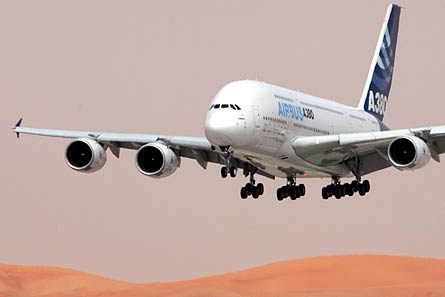
agency. I can confirm that Thaksin went to Beijing and stayed there for a vacation and golf. And presumably to negotiate his business and personal interests! I bet he is missing his golf in Thailand and the 19th hole. Golf in Beijing in November can be a bit bleak. A380's Asian schedule for November 1 November 2006
Airbus has published the schedule of the A380's technical route-proving
flights ahead of certification, as the aircraft completes hot and high tests
in Ethiopia.
During the fourth of these trips, the A380 will fly via both poles, with the South Pole being crossed between Johannesburg and Sydney and then the North Pole on the aircraft's return from Vancouver to Toulouse.
Meanwhile, MSN009 completed its high altitude tests at Bole
international airport in Addis Ababba, Ethiopia in mid-October. The airport
sits at 7,500ft (2,286 metres) above sea level.
China's African takeover 1 November 2006 When I was a teenager my parents were living in Nigeria; near the Ikeja airport, some 20 miles outside Lagos. There were not many places to eat locally. The Lagos Airport hotel was one. The other was the Mandarin Chinese restaurant. This was the early 70s. There was no other evidence of Chinese influence. Now this is all changing. And this week there are 48 African nations represented at a China African summit in Beijing. This summit links the world's fastest growing economy with the world's poorest continent. And this is effectively the 21st century version of colonisation. It is all about economic benefit. China's trade with Africa is set to exceed £27bn this year. In this modern-day "scramble for Africa" China is streets ahead when it comes to winning influence in the mineral-rich but often politically unstable continent. Africa is rich in oil and other natural resources, while China is the world's second-biggest consumer of oil and petrol after the United States. Its factories need iron ore and copper to keep churning out the industrial goods fuelling the country's economic boom, and China has been unstinting in its efforts to maintain good relations, investing £3bn in Africa this year alone. Not all is sweetness and light; China's enthusiasm for building economic ties with some of the worst human rights offenders in Africa, such as Sudan, has earned it widespread international criticism. However, increasingly reliant on Africa's resources, China defends its economic links with governments accused of civil rights abuses. China will argue that its investment has promoted economic growth in African countries, increased job opportunities, brought technical applications to African countries and improved living standards for African people. China has been acquiring oil from Nigeria, Angola and Sudan, iron ore and platinum from South Africa, timber from Cameroon, Congo-Brazzaville and Gabon. Angola overtook Saudi Arabia this year to become China's largest supplier of crude oil. On the other hand the human rights group Amnesty International says China's secret arms exports to Sudan are fuelling human rights violations and helping to sustain conflict there. The World Bank also accuses China and its banks of ignoring human rights and environmental standards. But when they get scant regard in their own country why pay attention to them overseas. The Chinese use their usual (self serving) argument that human rights issues are a domestic problem and not for foreign governments to meddle in. One downside to the growth of African companies is the flood of Chinese clothing and textiles, plastics and electronics into African markets where local companies have little chance of competing. Throw enough mud; something will stick 1 November 2006 Its smacks of a desperate move. Unable, so far, to find any compelling evidence of corruption against former Prime Minister Thaksin, the CNS has now alleged that an aide to Thaksin may have been linked the abduction and disappearance of Muslim human rights lawyer, Somchai Neelaphanijit. The CNS cited four justifications for its seizure of power. They were social division, corruption, a collapse of the system of checks and balances and suspicious activities seen as offensive to the monarchy. To date there is little evidence of any real change. The CNS, under General Sonthi, has set out in the last week to defend its performance, highlighting CNS efforts to untangle Thaksin's tentacles of power and restore checks and balances. The CNS has now said that a former Cabinet member admitted an aide to Thaksin had masterminded the abduction of Somchai in 2004. He is presumed dead but investigations have faltered over a claimed lack of evidence. The hint is that the previous government may have been involved in the Somchai case, possibly including a direct order from Thaksin himself. At last the beginnings of a firm reason to justify the coup. The CNS needs just one strong case to prosecute Thaksin and prove it was his obsession with power that caused democratic rule to be derailed. If Thaksin continues to elude justice a perception of unfairness will persist that military intervention was partly in vain. The CNS needs to find evidence that will stick. Throw enough and something will!
|