Welcome to rascott.com
This is a
personal site that reflects my interests in news,
current affairs, aviation and travel.
email me: robert@rascott.com
Now In Dubai:
Scott
Consulting
Photo Albums
My photographs have been moved off this site and are now stored on Picasa. They
were simply taking up too much space on my web host.
Please use
this link to see my list of photo albums.
Some
Useful links:
Information:
World Time
Clock
Exchange Rates
Journalism:
ForeignPolicy
Nationsonline.org
Project Syndicate
Amnesty International
Reporters w/o borders
The Guardian
BBC World News
CNN Asia
Bangkok Post
Daylife.com - news
Gulf News
Arabian Business
World News
WSJ - Asia
SCMP
Good causes:
Sister
Joan - Bangkok
Regional Info:
BKK Magazine
HK Magazine
In
Singapore Magazine
TimeOut Dubai
Back in the UK:
Newton Ferrers
And for fun:
Lin Ping live panda tv
EarthCam
History
BBC Archive
National Media
Museum
The British Library
Imperial War Museum
There are many other links on my AOB blog page.
|
Thai Day's self delusion 1 September 2006 ThaiDay ceased publication yesterday. It will not be missed. The newspaper which was distributed free with the International Herald Tribune consisted of strongly anti-government articles penned by non-Thais with a few interesting features thrown in. Thai Day was owned by Khun Sondhi Limthongkul. the newsaper
IHT's self delusional farewell letter from its editor is below. This was in their final edition and posted in the web site. Greater balance in the Thai media will always be welcome. But ThaiDay's agenda was far from balanced; and its distribution with a quality newspaper such as IHT was frankly embarrassing.
Dear readers, "I had a dream" August 30 2006 There are rumours that certain well -connected Thais have acquired substantial speculative land rights around the new airport, one reason, it is alleged why the government is hurrying the opening of the new airport. Speaking at the
2006 Owen G. Kenan Conference on ‘Development Around Suvarnabhumi Airport’,
Deputy Minister of Interior, Somchai Sunthornwat said that in addition to
being a tourism and logistics transit point for Southeast Asia, the
Suvarnabhumi aerotropolis would become a business and investment hub which
he describes as being Asia's leading 'aerotropolis'; at least he did not say
it was a "hub". And what does all this hype mean for land prices. The Venice of the
East - that is almost as good as the Detroit of Asia ! The beginning of the end for the Star Ferry August 30 2006 If riding the Star Ferry is to be the highlight of your visit to Hong Kong then you should head there quickly ! Hong Kong's world-famous landmark, the 49-year-old Star Ferry pier in Central, moved one step closer to demolition yesterday when the government announced completion of external works on the replacement terminal. Unveiling the new terminal, chief engineer of the Civil Engineering and Development Department Fung Kit- wing said the Star Ferry Company would start fitting out the terminal immediately, with work taking about two months. The new terminal will open in November, and the old landmark will be demolished three months later. The new terminal is located 600 meters further out in the harbor from the old site - roughly a 10-minute walk. In fact you are almost walking across the harbour. The Star Ferry Company has complained that the location change, coupled with plans to relocate the public transport interchange at the Tsim Sha Tsui pier, will result in a loss of a third of its passengers, or roughly 25,000 passengers a day. Fueling the government's desire to demolish the terminal is a proposed six- lane road, which will require 16 hectares of reclamation directly in front of the existing terminal; and on the island's waterfront. The move is likely to mean the death of the Star Ferry. It is simply quicker and more convenient to take the subway train. To make the ferry even less viable, the Government is moving the bus stops that are at the Tsim Sha Tsui pier some hundreds of yards away to TST East. The Star Ferry will effectively link two places that no one can get to and no one wants to go to. A few nostalgic tourists will take the ferry; but in time the economics cannot work and the city will lose one of its most famous attractions. TAT versus Fox News August 26 2006 The tourism authority of Thailand's proposed 2007 campaign is "Unforgettable Thailand" and the intent is to bring some 15 million tourists to Thailand. If some of the US press is to be believed over the last week these tourists all arrive attracted by underage sex and a massive sex industry. Unforgettable Thailand indeed. Unseen Thailand, last year's campaign, may be more appropriate. This rush of allegations was prompted by last week's arrest of American, John Mark Kerr, suspected in the slaying of 6-year-old beauty queen JonBenet Ramsey. He was arrested in Bangkok in a surprise breakthrough in a decade-old U.S. case And here are some of the more over the top headlines and stories:"CNN: Poverty, corruption in Asia helps sex trade thriveIn countries such as Thailand, child sexual exploitation builds on a long-standing and vast prostitution industry and thrives where law enforcement is weak or corrupt. That sex with young teens is not a strong taboo in some Asian cultures makes fighting the problem more difficult." "Denver Post: Bangkok known as center for sex industry Bangkok is a
pedophile paradise with a lucrative child-sex industry." The frenzy surrounding the deportation of American John Mark Karr dominated Thai TV and headlines over the weekend, the case a reminder of Thailand's struggle to shake its image as a magnet for foreign "sex tourists" and pedophiles." Thailand has been described in the week as being the "sex capital of the world" and a "pedophile's paradise". These comments mostly do not come from Thailand based journalists and are based on inaccurate or outdated information. But most reports proclaimed it was obvious why pedophiles converged on Thailand. OK, Thailand has a huge commercial sex industry. But anti-human-trafficking experts say the situation in Thailand in regard to child prostitution has improved dramatically from the 1990s. The availability of children under 18 for commercial sex has been sharply reduced, thanks to intensified crackdowns over the years. Far fewer children are in the country's sex trade, because the economy has improved, and fewer poor families need to take their children out of school to help make ends meet. But once you have a reputation it is hard to shake; and admittedly, the Kingdom still has a large sex industry, But then so does the USA (just for an example). Anyone mentioned the fact that the California porn industry makes more money than Hollywood? It only takes a couple of days in Myanmar to appreciate just how great Thailand's achievements in economic and social development are and just how much has been done to establish a dynamic middle-income developing country it is today. Prostitution is big business and a fact of life, but do not forget that much of the sex trade is home-grown and aimed mostly at Thai men. So it falls to Thai society to decide at some point whether it really wants to shed this decades-long notoriety. The penalties for pedophilia should certainly be sufficient to make any foreigner check the age of his companion. But for the moment the world's attention is focused on Thailand for all the wrong reasons. The election campaign may be enough to stop an over reaction from the Ministry of Culture to take action. But there is every chance of increased raids on nightspots by the boys in brown. But they will target the bright lights and the clubs for foreigners where by and large there will be no surprises, just aggravation; they won't go into too many dark, local places. And just to show that this is not just restricted to the sensationalist US press; here is Reuters getting in on the act. Thailand's smile hides multitude of sinsBANGKOK (Reuters) - To the millions of holidaymakers who flock there every year, Thailand is the "Land of Smiles," a picture-postcard paradise of white-sand beaches, tropical sun and exotic eastern charm. But behind the relentlessly promoted tourist image lies a darker reality in which legendary hospitality also extends to less savory visitors -- from misfits and murderers, to perverts and pedophiles from across the globe. John Mark Karr, the 41-year-old American accused of murdering child beauty queen JonBenet Ramsey, was just one of the thousands of foreigners with shady pasts enjoying the benefits of lax border controls and a corrupt police force. Karr is now being questioned in the U.S. as to his possible involvement, but many believe his bizarre claims may amount to nothing. "People like him are dangerous," said Immigration Police chief Suwat Tumroungsiskul after Karr's arrest last week in Bangkok, where he had found work as a primary school teacher despite a U.S. charge in 2001 for possessing child pornography. "We have criminals from all over the world running away from their home countries to look for teaching jobs in Thailand," Suwat said. With official statistics on the extent of the problem hard to come by, crime reports in Thai papers reveal the tip of the iceberg -- the very few who fall foul of the law. This month, an Australian pedophile was arrested near the Cambodian border. Before that, it was a Swiss. Other recent cases have involved a Danish biker gang busted for extortion, a Dutch underworld kingpin shot dead, a German wanted for a European security van heist and a Briton for murdering his fiancée by running her over with a car. "COSTA DEL CRIME" Towns such Pattaya on the eastern seaboard or the southwest island of Phuket are fast becoming Asia's "Costa del Crime" -- the nickname given in the 1980s to the Spanish Costa del Sol due to the presence of many high-profile British fugitives. Drawn from as far afield as Western Europe, Russia and China by the widespread availability of false documents, as well as cheap sex and beer, such mafias exist in part because police look the other way if the price is right. "In general, we have a problem with the police going back to the Cold War, when they could do what they wanted in the fight against communism," said Pasuk Phongpaichit, author of "Guns, Girls, Gambling, Ganja," a book that lifts the lid on Thailand's seamy side. "We have never cleaned up the corruption problem inside the police. A lot of countries go through a cleaning process from time to time, but we haven't really got down to that," she said. Although Thailand's reputation as sex capital of southeast Asia dates back to the era of the Vietnam War and U.S. soldiers seeking "rest and recreation," organized international crime is a more recent arrival. With the economic boom of the early 1990s came an explosion in the number of foreign tourists -- around 12 million come each year now -- who provide ample cover for crooks either wanting to lie low or set up shop under a tropical sun. "It's very simple. This is a nice place to be and they like it as much as the rest of us," said Jens Toettrup, a police officer at the Danish embassy in Bangkok, who encouraged Thai police in the motorcycle gang bust. "If you think the meaning of life is riding a bike with a black-haired girl on the back and having a cheap beer, then this is definitely the place to be."
The plot (if there is one) thickens 25 August 2006 BBC Report Thai Prime Minister Thaksin Shinawatra has accused several military officers of plotting to assassinate him. He was speaking a day after police said they had intercepted a car containing bomb-making materials near his house. A former army officer was arrested shortly afterwards and Mr Thaksin has also sacked the head of Thailand's main counter-insurgency operation. But critics of the prime minister have expressed scepticism about the alleged plot. Some have even claimed the whole incident could have been a stunt by Mr Thaksin or his supporters, to gain sympathy or divert attention from criticism of his leadership style. According to the BBC correspondent in Bangkok, Jonathan Head, if this does turn out to be a real assassination plot within the armed forces, it would be an alarming development. Thailand has a long history of coups and attempted coups, but the military has largely stayed out of politics for 14 years. More arrests likely This is not the first time Mr Thaksin has claimed that plotters have been trying to assassinate him, but few such claims have been taken seriously. Thursday's discovery, though, is being treated by both the prime minister and the police as a serious attempt on his life. "There are three to four military officers involved in the assassination plot," Mr Thaksin told reporters on Friday. "We know which group made [the bomb] and more suspects will be arrested." Police said they found powerful bomb-making materials in the back of a car near Mr Thaksin's home early on Thursday morning. They arrested the driver of the car, who turned out to be an employee of General Panlop Pinmanee, the deputy chief of the powerful Internal Security Operations Command. Gen Panlop, who has now been sacked, has publicly denied any involvement in the incident. As a former military death squad leader, he told reporters: "If I had done it, I guarantee that the prime minister wouldn't have survived." Gen Panlop pointed the finger of blame back at the premier. "I think Thaksin cooked the thing up to damage me," he said. He is not the only person to claim the bomb scare could have been a political stunt. "The information disclosed by the authorities so far still has not convinced the public there was a real plot," Ong-Art Klampaiboon, a spokesman for the opposition Democrat party, told Reuters. The newspapers were also sceptical. "Bomb plot or stunt?" the Bangkok Post asked in a front page headline. "Is this incident fact or stage-managed?" questioned the Thai language Post Today. Mr Thaksin's supporters, though, are insistent that a real threat exists. "There is a movement to bring the government to collapse and to kill the government's leader," said Defence Minister General Thammarak Isarangkun. Countdown to election Even before Thursday's incident, security around Mr Thaksin has been tight. The country is preparing for a general election on 15 October - a re-run of a controversial poll in April, which was annulled because of an opposition boycott. Since the April poll, the country has been in political limbo - divided between Mr Thaksin's supporters, in the rural hinterland, and his detractors, many of whom live in Bangkok. In recent days there have been a series of minor scuffles between the two sides, in which several people have been injured. Analysts had hoped that the October election might bring back some sense of normalcy and calm to Thailand's political scene. But incidents like Thursday's bomb plot - whether real or not - show just how deep tensions still run. Pluto gets a downgrade! 25 August 2006 The world's leading astronomers yesterday voted to reduce the size of the solar system by stripping Pluto of its status as a planet. The decision was taken by a majority vote of 2,500 scientists at the International Astronomical Union meeting in Prague. Textbooks will have to be re-written to record that there are only eight planets in the solar system, with three newly-defined "dwarf planets", of which Pluto is now one. When scientists at the Lowell Observatory announced the discovery of Pluto in 1930, they claimed it was several times larger than Earth, ensuring its prompt labeling as the ninth planet. In fact it turned out to be a runt substantially smaller than the moon. By a majority vote, the IAU decided on a definition of planet as a body that orbits the sun, is so large its own gravity makes it roughly spherical, and, crucially, also dominates its region of the solar system. That instinctively sounds sensible. The definition admits Mercury, Venus, Earth, Mars, Jupiter, Saturn, Neptune and Uranus, but excludes Pluto because it is not big enough to clear smaller bodies close to it. Pluto, along with Xena and Ceres, asteroids that lie between Mars, Neptune and Jupiter, are now officially dwarf planets. The trouble is there is no clear definition of a dwarf planet and of what distinguishes a dwarf planet form an asteroid. In addition to the categories of "planet" and "dwarf planet", the definition creates a third category to encompass all other objects, except satellites, to be known as small solar system bodies. The astronomer Patrick Moore said: "They've made it far too complex. What is a dwarf planet? I agree that Pluto is not a planet, but why not just call it a Kuiper belt object or a large planetoid? In the end, I don't suppose it matters too much. It's just a name." Assassination attempt; real or not? 24 August 2006 Anywhere else in the world an alleged assassination attempt on the country's Prime Minister would be a cause for grave concern; here in Thailand no one knows whether we should believe the allegations or not ! Such are the doubts over the transparency of any news coming from the Prime Minister, his aides and the ruling TRT party. The city is full of conspiracy theories after news reports unfolded to the public about how an Army lieutenant was planning to use 67 kilograms of explosives to assassinate Thaksin. Former security tsar Prasong Soonsiri said the incident was a set-up to divert attention from the political turmoil the government is experiencing. He said the incident could lead to the issuing of the controversial Emergency Law to clamp down on the government's political opponents. Others believe the incident will give the premier the needed bargaining chip to put his supporters in key security positions at the upcoming annual reshuffle. Thaksin said it "was his lucky day for leaving home earlier". He claimed to have been heading to an emergency meeting on the flood crisis in the North, which he had called for an hour ahead of his scheduled appointments, the times of which are usually made known in advance. Contrary to usual practice Thaksin's security people were extremely helpful with the media, providing photographers with pictures of Lieutenant Thawatchai Klinchana and the explosive materials found in the vehicle. Thaksin said yesterday that he had been the target of failed assassination plots on at least two occasions in the past two weeks. He claimed one happened when he was getting off his official plane at the Don Muang airforce base, but he did not elaborate. The premier has made similar claims over the past six years, although none has been proven. A military strategist also pointed out that the explosive devices in the car yesterday were not assembled or ready to be detonated. Just a minor issue if there really was an intent to detonate a car bomb yesterday! The government has suggested that Internal Security Operation Command (ISOC) Deputy Director Pallop Pinmanee was behind the plot, yet Pallop had always been close to Thaksin. Pallop was immediately sacked without investigation. Even more strangely the vehicle with the bomb materials was driven repeatedly in a circle around Thaksin's residential area during the rush-hour, making the vehicle noticeable and creating suspicion. The Daewoo Espero sedan carrying materials for a powerful bomb was the stopped by police, who were alerted by Mr Thaksin's security team, at the foot of the Bang Phlat flyover, which is near the caretaker prime minister's residence in Soi Charan Sanitwong 69. The search found TNT and C-4 explosives, fertiliser mixed with diesel fuel, detonating cord, two sets of M-8 fuses, electrical circuits and bags of sand. But it wasn't wired up. Yesterday's incident came amid mounting demands on the government for an explanation after it was revealed that two petty criminals who carried out the beating of anti-Thaksin demonstrators at the Central World shopping complex were in fact political thugs. The bomb story has also diverted attention away from the probe into the Kularb Kaew controversy. The Commerce Ministry has yet to make a decision on whether Kularb Kaew was an alien company or a nominee for Temasek Holdings, the Singaporean government's financial arm that took over Shin Corp Plc. All very, very strange. All this happened on the first official day of campaigning in Thailand's October 15 general election. A campaign that could, based upon yesterday's events, be unpredictable and potentially violent.
Premiership Predictions 22 August 2006 It is that time of year again so a few limited predictions: Premiership
Champions: Manchester United Relegated: Middlesborough, Fulham and Manchester City. (I am worried about Watford but they are my team and I have to hope that they can battle away and stay up). Promoted from the Championship: West Bromwich Albion, Birmingham and Cardiff City (after the playoffs) First Premiership manager to be fired: Chris Coleman at Fulham followed by Southgate at Middlesborough. Stories sort of related to football that we will read in the Sun newspaper: Arsenal's new
stadium is haunted by the ghost of Highbury The inevitable
sex, drugs, tantrum stories will all be there as well. In a summer blighted
by scandals (the world's fastest man and woman both failed drugs tests, so
did the winner of the Tour de France; and the world's best footballer
resorted to head-butting thuggery in the World Cup Final). Sport is a mess.
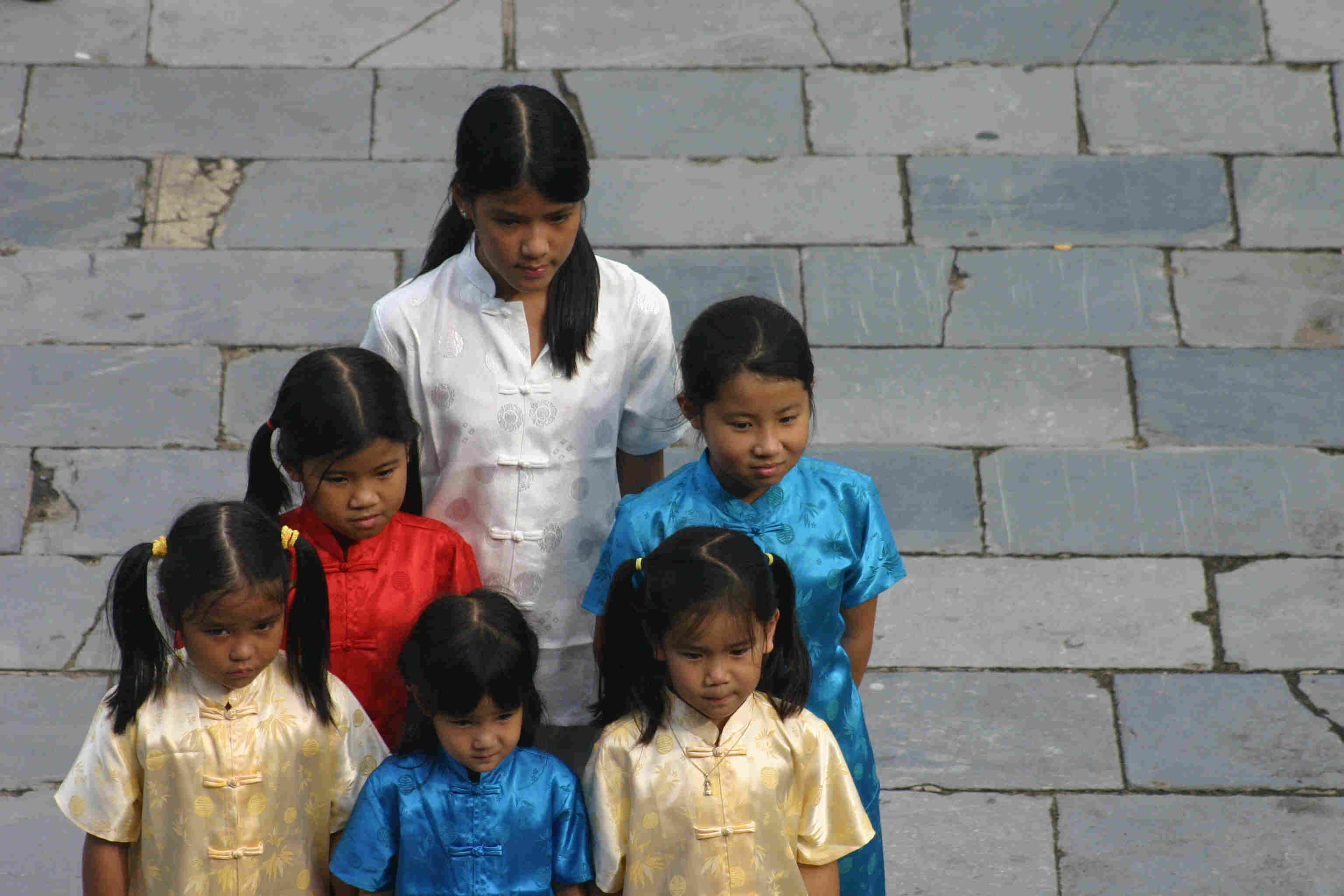
The Premiership is not the salvation; just more of the same. 22 August 2006 A new Myanmar will not be made by government policy, slogans, or control. It will be made by its people. They know there is a world outside Myanmar and they know that there is prosperity to be had. There are satellite dishes in the most remote of towns. There are internet cafes in Yangon. You can even read this website there! They are an industrious, friendly people who retain a deep faith. And here are a few of them:
A fading light? 20 August 2006 The New Light of Myanmar is the country's state run English language newspaper. At last a newspaper that is even more of a government mouthpiece than The Straits Times! On page 1 of each edition the NLoM proudly recites the nations four political, four economic and four social objectives. They are worth restating here: Four political objectives: Stability of the
State, community peace and tranquility, prevalence of law and order. Four economic objectives: Development of
agriculture as the base and all round development of other sectors of the
economy as well. Uplift of the
morale and morality of the nation. Not the clearest
of mission statements. Lacking measurable targets and in parts highly
contradictory! Taking to the water - Inle Lake 20 August 2006 I feared the worst as I arrived at Helo airport. But in fact Inle Lake is bewitching; and a different world even from Bagan. It was the journey here that gave me doubts. The flights were fine; Air Bagan again and a 20 minute hop to Mandalay, 25 minutes on the ground and 30 minutes to Helo. Helo is a small and a grotty little airport. There are few visitors compared to Bagan, and taxis are few; bizarrely they park 100 yards from the fenced off terminal. And they wanted US$20 to take me to the pier at Nyaunggshwe; that became US$16; but still expensive. The roads are somewhere between poor and terrible; there are more people here than in Bagan but much more obvious hardship. Rain and cloud do not help but the villages are poor. Then when you get
to Nyaungshwe you have to negotiate your boat to the hotel is you are
staying on the lake. The boat is a powered longboat/canoe; powered by a
noisy lawnmower engine ! And my resort at Golden Island 1 was an hour on the
lake; and it was wet; we hit a big rain squall mid lake. It is also cool;
you are almost 3,000 feet above sea level. But after drying off and some food and hot tea I went out on my boat to explore. The lake is unusual; there is no clear shoreline; the water gets shallower; the reeds and grasses get thicker and more tangled and then you find land. But the lake sustains and supports a remarkable lifestyle with some 17 villages on stilts. Underneath the rooms is each family's canoe and the way that they get to work; the kids to school; that they take to do their shopping at the market; that they use to visit the temple and to even visit their neighbour. There are small workshops for silk weaving, and weaving lotus thread, there is a blacksmith (no one has told them that all the knives that they make for tourists cannot be taken on planes!) and the local cheroot producer. Here approximately 20 women work from 8am until 6pm making aroung 1,000 cheroots each in a day; for this astonishingly monotonous task they get the princely sum of Kyat 700 for each 1,000 they make (about US 60 cents a day). The only relief to the day appears to be the visit of curious non smoking tourists who ask too many questions! We paddled (my driver paddled - I sat there like royalty) through the watery "streets" of Nam Pan village. People smiled and waved. The kids shouted hallows. We paddled past the local stilted school. Like kids anywhere theirs was a happy noise. And as the late afternoon sun came out and the colours softened the lake was at its most serene. But make no mistake, it is a hard, hard life here. I guess if you are born into it there is a lifestyle and customs that you learn and adapt to. Many would argue that this old traditional way of life should be preserved. But people deserve more chances at least a choice of modernisation or the old ways. The trouble is the whole place feels like one of those western style culture parks much loved in Europe and the USA which I used to visit as a kid. People dress up and act out life as it might have been centuries ago. They recreate the past. And then they go home. Here the past is still the present.
Currency Woes 20 August 2006 Myanmar's national currency is the kyat (pronounce "chat"). The currency is a mess. The official exchange rate is US1 = 450 kyat, A Yangon hotel will offer around 1,100 kyat. Moneychangers in Scott market will give you 1,300 kyat provided you exchange large denomination notes. But, the big but, many hotels and government run businesses will set their prices in US$. Then if you want to pay in kyat they will likely use an exchange rate between 1,400 and 1,500 kyat. There are no ATMs Credit cards are not accepted as foreign banks have no presence in Myanmar. And other currencies are worthless. US$ and kyat are the only currencies that you can travel with. Pre-booking and pre-paying hotels is a good way to avoid carrying too much cash with you. The highest denomination note is 1,000 kyat (about 75cents US). Inevitably you will end up carrying around a large wad of notes. The older 1,000 kyat notes are larger and do not fit into a standard wallet. Government run services will want to be paid in US$. Beware of the change that they give you; they will offload their worn US$ bills. And when you try to use these bills again you will find that they reject any bill with a tear or that is well used. Preposterous, especially given the condition of their own poorly made kyat notes. All templed out in Bayan 19 August 2006 Peace: sitting half way up Dhamma-ya-za-ka Zedi listening to nothing other than the birds. A little breeze. And air that is so clear that you can see forever. And then the Italian tour group arrived; not so peaceful. Bagan is beyond desciption. Over 3000 temples in an area of about 42 square kilometres. It is dry and mostly sunny. A short, sharp late afternoon shower freshens up the air. Roads; forget it. There are a few country lanes that circumvent most of the site. Other than that it is dust, dirt and mud tracks best known to the local horse and cart drivers! I joined the few cyclists. Everyone you pass smiles and/or says hallo. If you are walking the standard and genuine question is where do you come from? Flights arrive at Nyaung U. Single travelers should probably stay there. I am in New Bagan; dead by day and worse after evening falls. Nyaung U apparently has restaurants and a night market. There are a couple of very pleasant restaurants by the river in New Bagan.
Too many temples can be hard work. I spent 6 hours with a horse and cart on Friday (he was No 88 so it was a good cart to take. At every temple there are people trying to sell you things that you do not want. It is not overwhelming but it is a little trying. In the end it is easier to simply buy a few pieces of laquerware at different places and a shirt or two. A little redistribution does not hurt and it is better to buy a little from a number of places than everything from one vendor. The Museum of Archeology is a waste of US$5 and is a very ugly building that would do better as a railway station. Yomping around Yangon 17 August 2006 It is exotic; the city seems very distant as I sit by the side of Kandawgyi Lake at the open air bar and restaurant listening to the sounds of the night. The smell is that exotic tropical smell that cities used to have before they became overrun by pollution. The scent is slightly smokey but it is not cigarettes. The ubiquitous Filipino band is singing in the background, but it is mellow. It is dark; there is little light around the lake. It is hot and humid and rain is an ever present at this time of year. I have spent a couple of days walking around Yangon, Rangoon as was. It is a remarkable place; and I cannot work out whether I am encouraged by resilience of the people or depressed at the living conditions and oppression of this great people. Should you visit? The answer has to be yes. Boycotts isolate a people. And they make the west look mean and petty. Travel is interaction. No one is telling me what I can and cannot say and some people have been very open with me in sharing their views on education, politics, corruption and faith. My only encouragement is to try to spend your money with local businesses and people; try to minimise the money that reaches the pockets of the military rulers. And this also means with-holding investment unless it is clear that the investment is of benefit to the people of this country. Invest, and indeed spend, with a sense of moral responsibility; not quick profit. Isolation does not help the people or fix the problems of this land. Don't just go with a camera and snap away. Talk with those who want to talk. They will be curious to know about your life. The only catch is that English is not as widely spoken as it used to be. Education is basic. Older folk are likely to speak better English; many of the young people will only speak Burmese. The other problem with any international sanctions is that someone will always ignore them for their own benefit (this is usually the French !!). Myanmar's trade with Singapore, China, Thailand and India remains strong. The Japanese are also active and have a large embassy in Yangon. Myanmar's oil and gas reserves are significant and China and India are both major customers. Although power supplies in Myanmar itself appear very patchy. British rule of Burma (as it was known) became complete in 1886. Governed as a part of British India there was a flood of Indians into the city. By 1930 most of Yangon's population was Indian and that influence remains very strong. Chinese migrants were also encouraged. The British occupiers were not popular (do we never learn from history); Buddhist monks and university students led protests and by 1937 Burma had been given some self government; at least it was separately administered from India. The Japanese drove British and Indian forces from Burma after 1941. The Japanese occupation was as harsh as it was elsewhere in Asia. But the war was also the end for British rule in Asia. Burma became independent on 4 January 1948. But the British walked away from chaos; as the country disintegrated with infighting between rebels, communists, anti-communists (Chinese KMT) and tribes in Burma who did not trust the Bamar majority. The modern history of Burma is covered well in other publications and need not be repeated here. But the foundations appear to have been there for Burma to have enjoyed the same success as say Malaysia; but something went seriously wrong. Walking around Yangon feels a little like walking around old Georgetown in Penang or how Singapore would have been before the mid 1960s. It is very green. There are some lovely old gardened and walled homes. Except they are falling apart. The city is decrepit. Yet is is bustling. People are busy. The streets are crowded; maybe a 50% unemployment rate is a part of this. Betel nut is chewed and spat onto the streets. Durian are widely sold. Flip flops are the footwear of choice. The traditional longyi wrapis still worn by most men. That is changing a little with the younger adults taking to jeans. The cars are old; the taxis are older. The newest being rejects sold from Singapore. The street lighting is poor. The hotel room lighting very dark and gloomy. It feels like a very safe city; I do not feel threatened or endangered in any way. I am either ignored or met with questions. The trade embargoes ensure that the foreign banks; foreign high street stores and the likes of MacDonalds and Starbucks are simply not to be found. This makes Yangon a very different place to visit.
Why? 12 August 2006 The question that everyone is asking in Britain is Why? Why would young British citizens of Pakistani origin, but nonetheless British, plot to blow up airplanes over the Atlantic, which would be sure to kill hundreds of their fellow citizens? What is it about Muslim youths in England that draws them to suicide and religious fanaticism? On the face of it Britain appears pretty tolerant: there are real efforts towards multiculturalism; racism is widely seen as being unacceptable and as abhorrent as it is, there are more Muslim faces on television, and more participation in the national life than in other European nations with sizeable Muslim populations. Yet something is wrong; and inevitably the answer lies in recent history and in the remnants of empire and disaffection. There are a significant number of young British Muslims who are alienated from the culture their parents and grandparents brought to Britain and who have acquired no being British. Worse still the industries in which the first-comers from South Asia had found work mainly in the Midlands and North of England have collapsed. Add to that discrimination and ignorance which created short-sighted and protectionist reactions in some of their communities. So wit the lack of a sense of belonging some young men have found a form of Islam that is built upon confrontation and resistance. A few converts from other backgrounds may then follow them, for disaffection is obviously not a solely Muslim phenomenon. Britain's engagement in the Iraq war, its high-profile role in Afghanistan, and its close alliance with U.S. foreign policy in the Israeli-Palestinian dispute have given such people a cause to rally around and a genuine sense of grievance. It is not hard to build up a portrait of Islam being under Western siege. And the West has lost much of its legitimacy through events in Iraq, Afghanistan and the Lebanon. The Financial Times editorialized that the West needs to gain legitimacy if it is going to defeat extremists in its midst. However, "that legitimacy will not come from Guantánamo, Abu Ghraib, and Bagram, or from renditions and trampling on the Geneva Conventions. Nor will legitimacy come from indulgences of Israel's tactics toward occupied Palestinians, or from the fiasco of unprovoked invasion of Iraq." These were strong words for a generally right-of-center newspaper, but it has to be remembered that most Western Europeans, be they Muslim or non-Muslim, are against U.S. policies in Iraq, Gaza, and Lebanon. And that is important.
There is a dislocation between government action and
policy and the views of the people that they are meant to represent.
Politically there are likely to be big changes in the USA and the UK at the
next elections in large part as a reaction to middle east policy. Frankly,
the public in both countries have been lied to in order to justify political
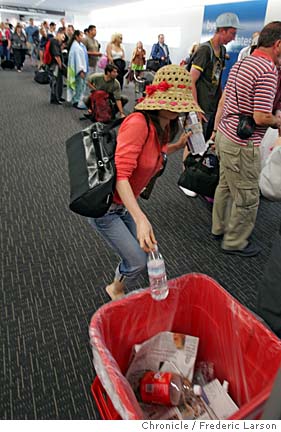
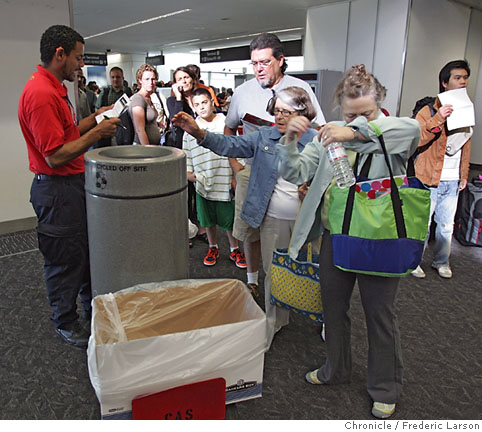
ends. That will not be forgotten. Muddled security 11 August 2006 CNN: Because the plot involved taking liquid explosives aboard planes in carry-ons, passengers at all U.S. and British airports, and those boarding U.S.-bound flights at other international airports, are banned from taking any liquids onto planes." But it is clearly OK to dump the contents at the airport into large containers. And to leave these containers (with all the liquids that you cannot take on a plane all mixed up inside) in a very crowded public place? How very strange.
In all of the paranoia about flying do remember that the possibility of being killed by terrorists is about that of being hit by lightning. More than twelve thousand people were killed by firearms last year in the USA alone. Driving is infinitely more dangerous than flying. Now people are
having to put laptops in their check in baggage - there's a remarkably bad
idea. And no magazines or books in the cabin. Well as there is no luggage in
the cabin can we have pillow and blankets back; can we turn the overhead
lockers into an inflight library? Can we play truth or dare inflight or pass
the parcel? London on major alert 10 August 2006 London's Metropolitan Police have just announced that anti-terrorist officers foiled a plan to blow up airliners in mid flight using explosives smuggled in hand luggage. Further announcements are expected later in the day; it is still early in the morning in London. The suspects may have been targeting flights from Britain to the U.S., the police said. Up to twenty people were arrested overnight in London, the police said, without giving details. No more detail was immediately available. The government has raised the U.K.'s security threat level to "critical",' indicating an attack is expected "imminently". British Airways Plc, the U.K.'s main carrier, said the government had instructed all airports not to permit hand baggage aboard flights until further notice. The only exceptions were items such as baby food, travel documents, a wallet, medication and contact lens. These items should be carried in a small see through plastic bag. No other items will be allowed in the cabin; this includes mobile phones, personal computers and books. This is the most extreme alert in London since 11 September 2001. Travelers can expect massive delays on all flights out of London today; in particular on flights to the USA. How to move an airport 10 August 2006 The following is a press release from Thai AIrways. I have now booked flights into the old airport on 27th September and out of the new airport on the morning of 28th September. This should be as interesting as it is potentially chaotic! THAI Press Release:9 August 2006 Thai Airways International is gearing up to migrate the company’s six main activities to Suvarnabhumi Airport. The six main activities are: Cargo and Mail Commercial, Ground Support Equipment Services, Catering Services, Aircraft Maintenance Center, Customer Services, and Operations Center. These six activities need to migrate in time for the opening of Suvarnabhumi Airport on 28 September 2006, whereby 1.8 million pieces will be moved. Objects to be transferred have been separated into 9 groups (mentioned below), transported by large trucks, including 10-wheelers and container vehicles, with around 2,200 trips, in addition to 800 service vehicles that THAI will transfer in 3 periods, those being: Pre-Transfer Period Transfer equipment that does not effect everyday operations, such as office equipment and spare parts that are not used regularly, with migration to begin in August 2006 with approximately 1,248 trips. Critical Transfer Period Transfer equipment used in everyday flight operations, such as ground support equipment services, cargo, and catering services, utilizing not over 6 hours with approximately 1,086 trips. Post Transfer Period Transfer equipment that may be moved after the opening of Suvarnabhumi Airport, such as aircraft spare parts and equipment used in the parking bay, with approximately 595 trips. There are 6 routes used in traveling between Bangkok International Airport to Suvarnabhumi Airport, as follows: Route
1: Vibhavadi – Don Muang (tollway) – Expressway 2 – Motorway – Suvarnabhumi In addition to the transfer of equipment, on the evening of 27 September 2006, THAI will transfer the parking location of its aircraft. A total of 27 aircraft will be flown without passengers from Don Muang’s Bangkok International Airport to Suvarnabhumi Airport. Furthermore, THAI has established a coordination center for migrating operations, public relations center, and press center at THAI’s Operations Center, located at Suvarnabhumi Airport. This coordination center has been set up in order to oversee migration, provide accurate information to the public, and decrease the chance of traffic congestion. As for the readiness of over 17,000 employees who will migrate to Suvarnabhumi Airport, the company has provided training sessions to aid in familiarizing employees with their new work environment. In addition, the company has provided various means of assistance to employees, whereby they will receive the same benefits as extended in Don Muang, which includes return trip employee bus transportation, medical office, and housing facilitation. The National Housing Authority has assisted in arranging a real estate project for employees to purchase at special prices. The company has also provided assistance to employees whose children must transfer schools in their parents’ move to Suvarnabhumi. In addition, the company has prepared a work manual, map of various offices, telephone numbers, road plan, and other useful information for employees. As for readiness in the area of construction and system integration in buildings, Mr. Chokchai Panyayong, Vice President, Project Development at the New Bangkok International Airport (Suvarnabhumi), Thai Airways International, said that construction of all buildings for THAI’s six activities was completed in March 2005. Currently, information systems are being installed, while interior decoration for Ground Support Equipment Services, Aircraft Maintenance Center, and Cargo and Mail Commercial buildings are complete and ready for operations. Interior decoration for Customer Services, which is located in the passenger terminal, as well as Catering Services and Operations Center, will be complete in August 2006, ready to serve the public in time for the airport’s opening.
Happy birthday Singapore; no criticism please 9 August 2006 As Singapore reaches its 41st birthday the city state still shows little hope of developing either a thick skin or a sense of humour. The message very loudly is that the government knows what is best for its people and public criticism has no place. The government largely muzzles criticism though its control of TV and news media. But Singapore embraced the Internet and promotes itself as a high tech centre; but it is rapidly learning that criticism in cyber space is harder to control. One of Singapore's earliest bloggers was Mr. Brown (Lee Kin Mun) whose blog is linked to this site and who has been commenting on some of the more curious aspects of life in Singapore since 1999. His blogs and more recently his podcasts are popular internationally and his popularity and his entertaining and light style of writing earned him a column in Singapore's Today media. There is a lesson here; it is hard to be both new media and old media in Singapore. What works on a blog gets more attention when it appears in a state newspaper. On July 6th the Today newspaper contacted "Mr. Brown" to advise him that his column had been suspended. Have no doubt that this was a government, not editorial, decision. Strangely the article that causes all the noise is still available online: but for my dear reader I will reprint it below. Mr Brown wrote the article for publication on 30th June, two days after a press release from the Department of Statistics based upon their general household survey. The statistics showed that only 50% of Singaporean households enjoyed any significant improvement in their income over the five-year period spanning 2000 to 2005.
In his commentary, Mr Brown alluded with tongue firmly in cheek to how convenient it was that the survey results, together with recent announcements about increases in electricity rates and taxi fares, came out after rather than before the recent Singapore elections. The government took Mr. Brown's comments very personally indeed; and replied in kind in the same newspaper. "Voices, TODAY newspaper, Monday, July 3, 2006: Distorting the truth, mr brown? When a columnist becomes a 'partisan player' in politics Letter from K
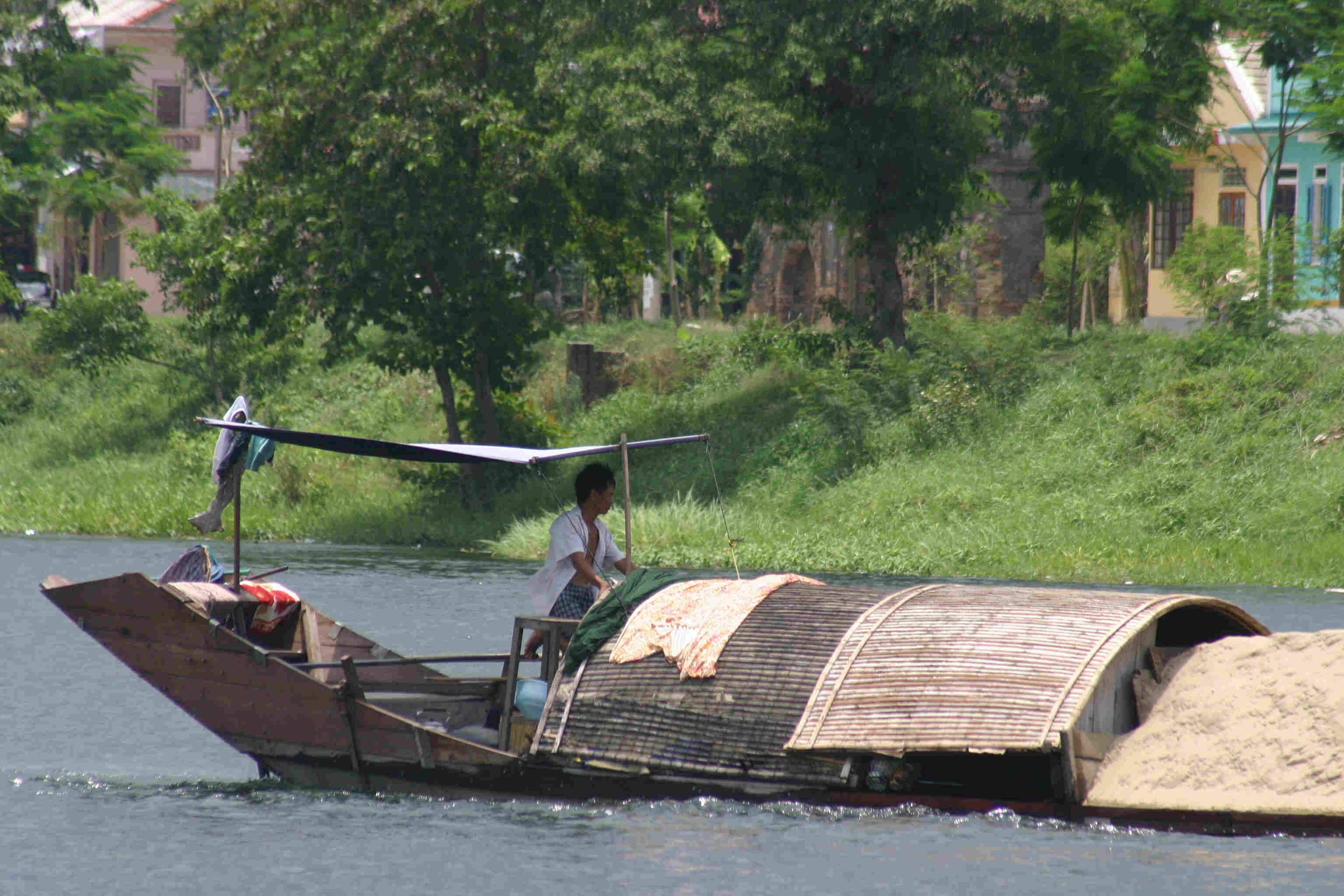
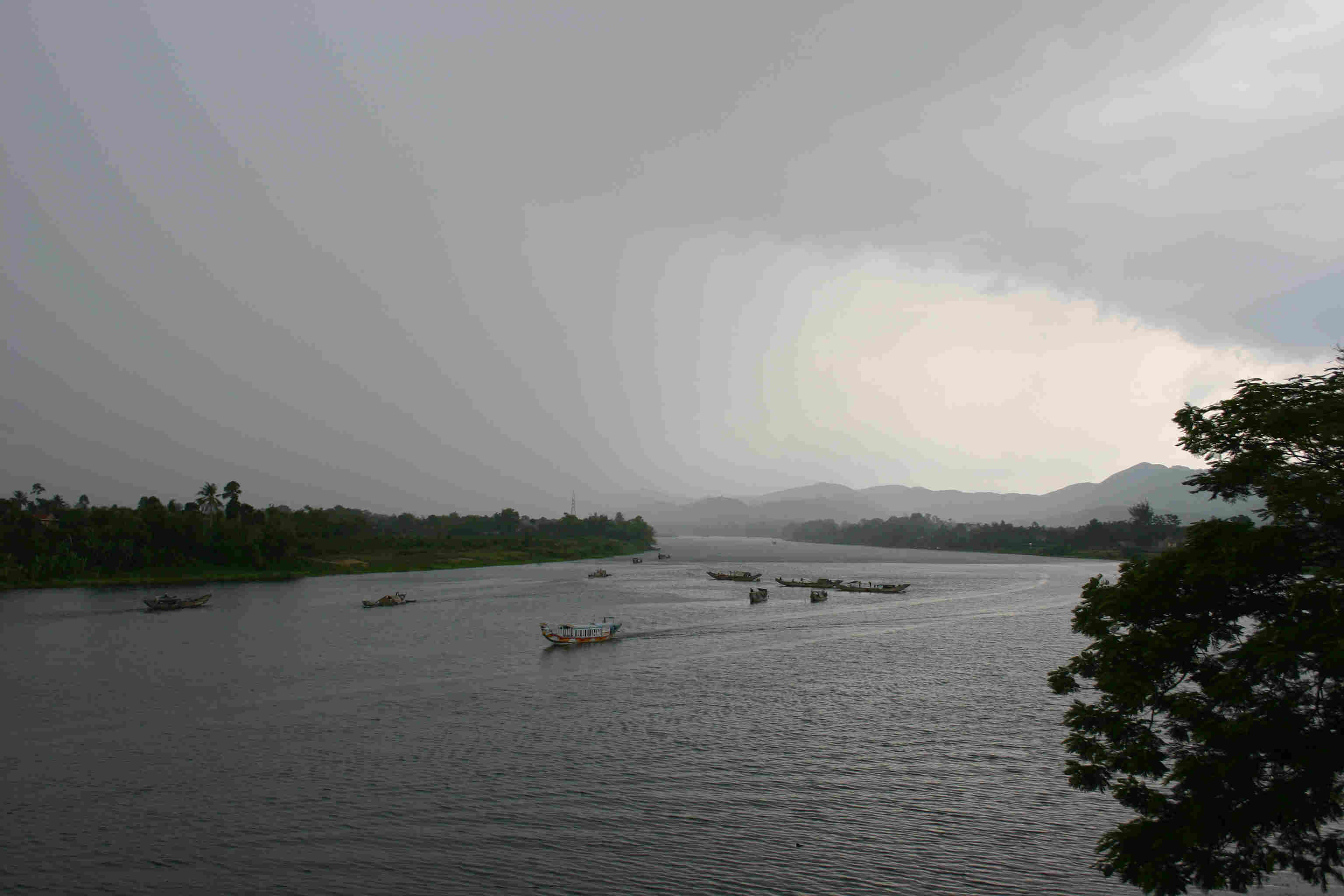
BHAVANI Your mr brown column, "S'poreans are fed, up with progress!" (June 30) poured sarcasm on many issues, including the recent General Household Survey, price increases in electricity tariffs and taxi fares, our IT plans, the Progress Package and means testing for special school fees. The results of the General Household Survey were only available after the General Election. But similar data from the Household Expenditure Survey had been published last year before the election. There was no reason to suppress the information. It confirmed what we had told Singaporeans all along, that globalisation would stretch out incomes. mr brown must also know that price increases in electricity tariffs and taxi fares are the inevitable result of higher oil prices. These were precisely the reasons for the Progress Package — to help lower income Singaporeans cope with higher costs of living. Our IT plans are critical to Singapore's competitive position and will improve the job chances of individual Singaporeans. It is wrong of mr brown to make light of them. As for means testing for special school fees, we understand mr brown's disappointment as the father of an autistic child. However, with means testing, we can devote more resources to families who need more help. mr brown's views on all these issues distort the truth. They are polemics dressed up as analysis, blaming the Government for all that he is unhappy with. He offers no alternatives or solutions. His piece is calculated to encourage cynicism and despondency, which can only make things worse, not better, for those he professes to sympathise with. mr brown is entitled to his views. But opinions which are widely circulated in a regular column in a serious newspaper should meet higher standards. Instead of a diatribe mr brown should offer constructive criticism and alternatives. And he should come out from behind his pseudonym to defend his views openly. It is not the role of journalists or newspapers in Singapore to champion issues, or campaign for or against the Government. If a columnist presents himself as a non-political observer, while exploiting his access to the mass media to undermine the Government's standing with the electorate, then he is no longer a constructive critic, but a partisan player in politics." WOW; it was an entertaining article; expressing widely shared concerns; none of which are that earth shattering or likely to incite rebellion. Mr Brown was employed by Today to encourage a younger readership by sharing ideas, commentary and observation. But in any real democracy the media must have a right to criticise the government’s actions and express political views. We the readers have the intelligence to decide what we do with these views. Furthermore, a newspaper’s editorial policies should depend solely on its editors. They should under no circumstances be subject to instructions issued by the government. It is I guess no great surprise that Reporters Without Borders ranked Singapore 140th out of 167 countries in its 2005 worldwide press freedom index. The risk here is that the growing disparity between what is available in online media (blogs and the international media) and offline in Singapore's controlled press, radio and television will force the government either to open up the mainstream media or clamp down harder on the internet. So Happy Birthday Singapore, life begins at 40; you are now 41. Time to relax a little; be proud of what has been built and trust your people to make up their own minds and to enjoy free and wise debate. Singaporeans are among the smartest and best educated citizens of the world; they really should be treated as such. As a final thought who said the following in April 2004: ''Our people should feel free to express diverse views, pursue unconventional ideas or simply be different.'' None other than Prime Minister Lee Hsien Loong. in a speech that stressed he wanted to see a more open and free Singapore. Thoughts from Central Vietnam 7 August 2006 As war rages in the Lebanon and as US forces, with British and Australian support, still occupy Iraq, it is interesting to be in Vietnam where the lessons of history are still so valid. We are in Central Vietnam, staying in Hoi An, but also visiting Hue. Both are attractive riverside towns. Pleasant; not busy. Industrious but not industrial. It is now 33 years since the USA pulled its forces out of Vietnam. US combat troops were involved from 1959, but not in large numbers until 1965. They left the country in 1973. A large number of civilian casualties resulted from the war, which ended on April 30 1975 with the capitulation of South Vietnam. As you see Vietnam today and meet her people it really is hard to tell why a war was necessary and what the superpowers were fighting for. It was the cold war and Vietnam became a proxy war (like the Korean conflict) where the superpowers were engaged in the war but not directly at war with eachother. The war killed over 3 million Vietnamese (excluding foreign forces on either side); the war ravaged the land; bombs, defoliants and land mines left an economy in ruins. Yet 30 years on the pace of change is rapid. The Vietnamese Communist Party remains overly pre-occupied with the conflict. There are war remnant museums and memorials. But there is no apparent animosity to westerners and Americans. Indeed this may be the most welcoming of South East Asian nations. About 60% of the Vietnamese population has been born since the end of the war; there is little memory of the Americans and of the reality of the war. The greater concern is making a living and understanding the legacy of the war on day to day life in Vietnam. There has never been a national reconciliation program despite the north/south divide and the memorials and heroes of the war are from the north and not the south. While the economic force of Vietnam remains Ho Chi Minh City (Saigon) the political power lies firmly in the North. So what was the war about; it was for the hearts and minds of the people. It was a fear of the spread of Communism. Lee Kuan Yew argues that if the USA had not intervened then Communism would have spread further into South East Asia and other countries would have fallen. Vietnam was the buffer protecting Thailand, Malaysia, Singapore and others and this buffer allowed the economic and (some) democratic development of these nations that would otherwise have been threatened. By 1973 the countries oF SEA were more prosperous and were therefore resilient to Communist influence. In mid 1995 Vietnam joined the Association of South East Asian nations (ASEAN) as its first Communist member; in February 1994 President Bill Clinton announced the normalisation of trade relations between the USA and Vietnam and a new USA Embassy was opened in Hanoi in August 1995. United Airlines now flies to Saigon. Communism is as dead in Vietnam as it is in China. Capitalism rules. Central planning and classic Leninist doctrines are history. Communism is merely the mechanism used by the nation's rulers to maintain their state control. There will inevitable be tensions between growing urban prosperity and the poor rural communities and between those who seek reform and those who wish to keep control. Even our tour guide talked openly about official corruption, in millions of dollars not dong. Don't get the wrong impression here. Although the economy is growing fast a schoolteacher's salary is still only US$50 a month. The roads are full of bikes and mopeds, not (thankfully) of cars. But economic growth is rapid. The country has opened for trade, investment and tourism. Yet here in Central Vietnam there is still a pleasant innocence about the place. The people smile. The vendors and not pushy. You can walk along a spectacular empty beach without hawkers and without tourist hordes. There are no loud bars. Indeed, the authorities in Hoi An ensure that you wont even get a foot massage. The paintings (and Hoi An is famous for its galleries) and of idyllic rural or fishing scenes and of students in ao dais and non la hats carrying books from school. This is a country that deserves to be explored. The mountains and coastline of central Vietnam are lush, green and welcoming. The Huong Giang (or Perfume River) (see below) of Hue may not be the Thames or even the Chao Phyra but it has its own magical quality best seen through the mists of the next rain storm.
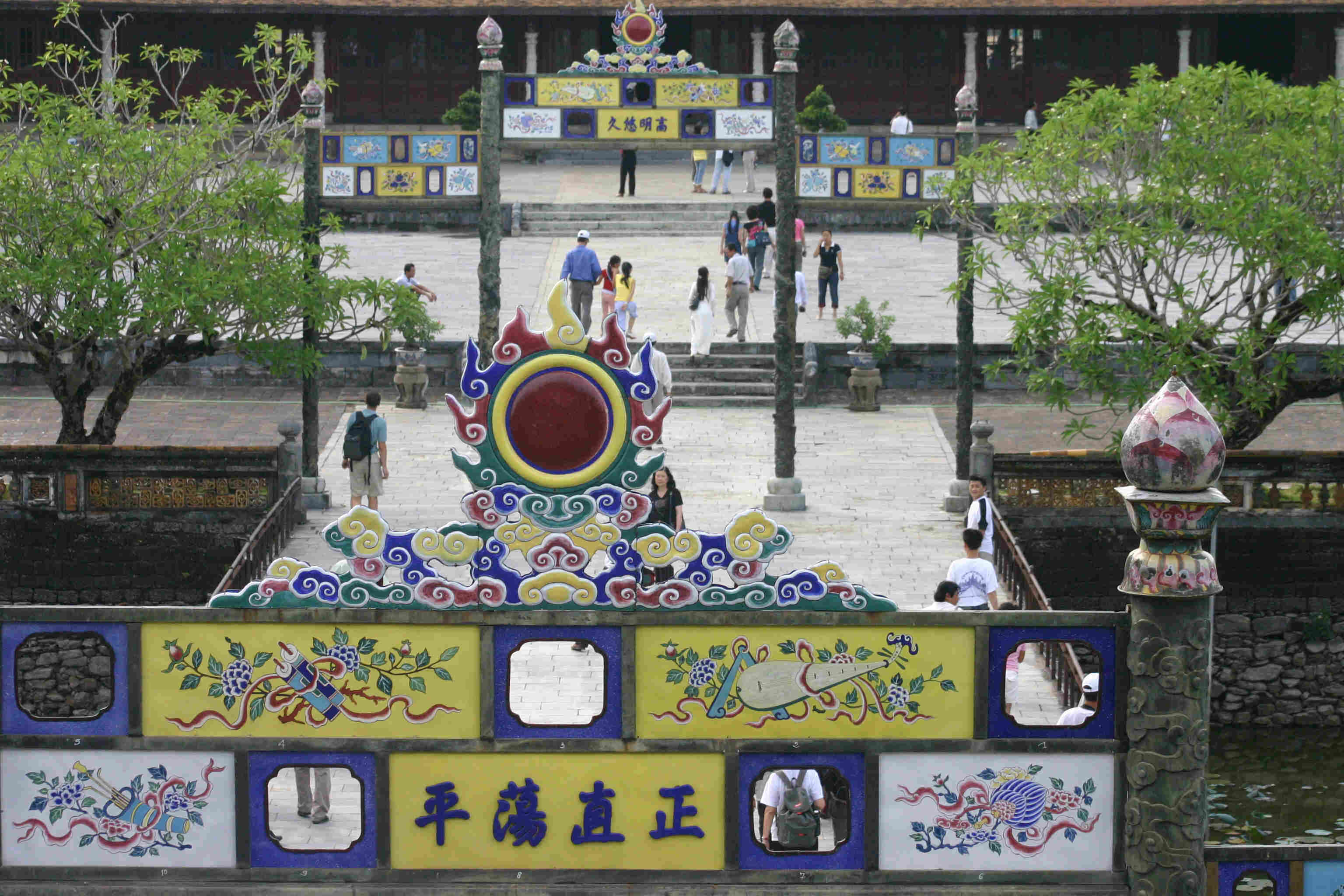
The Imperial city of Hue was the capital of Vietnam under the Nguyen Dynasty from 1802 to 1945. The Imperial City itself is built on the same principles as the forbidden city in Beijing. There is a significant Chinese influence in both this city and in Hoi An and there are many people who still speak Mandarin as well as Vietnamese.
Despite economic development and the arrival of tourism the pace of life here remains slow. The big urban centres of Saigon and Hanoi are remote. There is an innocence to this part of Vietnam that exists now but for how much longer is unclear. See it while you can, explore, and try to understand more about this remarkably resilient country. New York Dating Tips 3 August 2006 Currently on the corner of 54th and 7th Manhattan
The only catch - it is not for real ! It is a promo for Court TV in the USA. There is even a web site to go with the ads which have been seen in New York and Los Angeles. Thai Dating Tips - or how not to dispose of the farang ex spouse. 3 August 2006 It suits the image that most people have of Thailand. A wealthy, older Englishman arm in arm with an attractive Bangkok bar girl for whom he has fallen. 41-year-old, Marlborough-educated Toby Charnaud, met his ex-wife, Pannada Laoruang ("Som"), in a Bangkok bar, He had sold his £2.5 million estate in Wiltshire to go traveling. But this is not a happy ever after story. The couple married in 1997 and lived for a time with his parents in England. They then returned to Thailand, where Charnaud bought two bars in the resort of Hua Hin. They had a son, Daniel. But Charnaud's Thai wife had a gambling habit and built up £50,000 in debt. The couple divorced in 2004. Charnaud had custody of the boy in return for a financial settlement. In court this week the prosecution allege that Toby Charnaud was murdered, presumably for his money, after being lured to Pannada's remote border village to see his son, who had been visiting his mother. When he arrived he was greeted by five men. At first, Pannada's relatives and friends tried to kill him with a muzzle-loading hunting musket, but it backfired. Then they clubbed him to death with an iron bar and wooden staves. His body was burned on a charcoal fire, before being dismembered and distributed around Kaeng Krajan National Park on the Thai-Burma border On 29 March last year, Pannada, 35, reported Mr Charnaud missing to police. The police appear to have done nothing. Surprise. In court, Pannada denied premeditated murder, while Boontin Puipong, 31, Sattri Sripatum, 28, and Nipit Satabut, admitted murder with provocation. They were provoked, they said, because Mr Charnaud had interrupted them while they were drinking whisky. Mr Charnaud's sister, Hannah Allen, and his parents, Jeremy, 69, and Sarah, 65, had become suspicious of their son's death and hired a locally based Scottish private investigator. He checked mobile phone records and discovered that Mr Charnaud had been at his former wife's house on the day he disappeared. When police raided the house, two of the accused confessed and led police to the body parts. The trial is attracting little press coverage in Thailand. This is typical. After all we don't want to put off happy foreign holiday makers. The story has been well covered by the English press. The trial will not continue until 6 September. Contrast the speed of this trial to the prosecution and trial of two suspects in respect of the rape of a Welsh girl on Koh Samui at the new year.
|