Welcome to rascott.com
This is a
personal site that reflects my interests in news,
current affairs, aviation and travel.
email me: robert@rascott.com
Now In Dubai:
Scott
Consulting
Photo Albums
My photographs have been moved off this site and are now stored on Picasa. They
were simply taking up too much space on my web host.
Please use
this link to see my list of photo albums.
Some
Useful links:
Information:
World Time
Clock
Exchange Rates
Journalism:
ForeignPolicy
Nationsonline.org
Project Syndicate
Amnesty International
Reporters w/o borders
The Guardian
BBC World News
CNN Asia
Bangkok Post
Daylife.com - news
Gulf News
Arabian Business
World News
WSJ - Asia
SCMP
Good causes:
Sister
Joan - Bangkok
Regional Info:
BKK Magazine
HK Magazine
In
Singapore Magazine
TimeOut Dubai
Back in the UK:
Newton Ferrers
And for fun:
Lin Ping live panda tv
EarthCam
History
BBC Archive
National Media
Museum
The British Library
Imperial War Museum
There are many other links on my AOB blog page.
|
Australia issues travel warning ref Thailand 1 January 2007
We advise you to exercise a high degree of caution because of
the high threat of terrorist attack. We continue to receive reports that
terrorists may be planning attacks against a range of targets, including
places frequented by foreigners. Bangkok bombing update 1 January 2007 - source Reuters. By Darren Schuettler BANGKOK (Reuters) - Thailand grappled on Monday with the mystery of who ruined New Year celebrations with a series of bombs which killed two people in the capital and wounded more than 30 as police ruled out the obvious suspects. A top policeman ruled out Muslim insurgents currently waging a separatist insurgency in the Malay-speaking far south despite similarities in style, and no one in authority was pointing the finger at backers of ousted prime minister Thaksin Shinawatra. "I don't believe it has anything to do with the militants in the south," deputy national police chief General Achiravit Supanpasat told reporters after bombs forced the cancellation of New Year street parties. In their latest war to break free of overwhelmingly Buddhist Thailand, Muslim insurgents in the deep south have exploded strings of small bombs, set off by digital watch timers or mobile phones, designed to cause chaos rather than mass deaths. However, the militants have never ventured out of their region, and there is no proof foreign terrorist groups such as al Qaeda are involved in the insurgency. Five of the first series of six bombs in Bangkok several hours before midnight were triggered by timers. Some were planted in areas likely to cause deaths -- outside a shopping mall, in an open-air market -- and some were not, like one in the parking lot of a shopping mall and another at an intersection. But two later bombs which exploded around midnight would have caused untold mayhem had street New Year countdowns not been cancelled. They were planted at either end of the broad stretch of road in the capital's upscale shopping district where the main street party was to have been held. Ten people were wounded, eight of them foreigners -- 3 Hungarians, 2 Britons, 2 Serbs and an American. Yet despite ruling out Muslim militants whose insurgency has cost more than 1,800 lives over the past three years, Bangkok officials were not blaming the other obvious suspects -- Thaksin supporters. Since their leader, twice a landslide election winner, was ousted in a bloodless Sept. 19 coup, several schools have been burned down outside Bangkok and martial law has been kept in several areas because of what the army calls "undercurrents". But leading members of the billionaire Thaksin's Thai Rak Thai (Thais Love Thais) party have denied it is involved in any form of violent resistance to the coup. Thaksin, who last surfaced a few weeks ago in China, has made no comment since the bombs aborted celebrations in Bangkok, a sprawling city of 9 million people always ready to party. Celebrations were also cancelled in Chiang Mai, a major tourist destination in the north and Thaksin's home town. In Bangkok, troops moved onto the streets to help police with security, with Governor Apirak Kosayodhin promising special protection for transport systems and the city's many shopping malls. "They want us to panic. They want us to point fingers, pass the blame and fight among ourselves," the English-language Nation newspaper said in a front-page editorial. "They want to aggravate our political turmoil."
31 December 2006 Rumours in Bangkok suggest that the bombings were a pretext for a coup to oust the Council for National Security and its government. The TRT party has already denied any responsibility.
Three more bombs exploded in the heart of Bangkok once the
new year started, severely injuring many foreign tourists.
Before 1 am police also disposed of another bomb at the
Lumpini Night Bazaar before it exploded. New Year's Eve bomb chaos in bangkok 31 December 2006
The Bangkok Post is reporting that at least six bombs or
grenades have exploded in Bangkok early on New Year's Eve. Two people are
reported to have been killed, about 25 have been wounded. EK Expansion news 28 December 2006 As always there is plenty if news from EK. Much of it is still speculative. But some Middle East expansion has been confirmed. EK will strengthen its Kuwait and Damascus flights by adding two flights per week and will go double daily to Beirut. EK's middle east presence will now be 155 weekly flights to 12 destinations. From 25 March 2007 there will be an additional flight to Kuwait on Sunday and Monday with an A330-200. This makes 25 flights a week to Kuwait city. From 1 May, Damascus will get its two extra flights on Tuesday and Wednesday to go to nine flights a week.
Also from 25 March Emirates will add an additional Monday
flight to Beirut to go double daily on all days of the week. An uninspiring Global Village 28 December 2006 You can visit 39 global pavilions and 50 restaurants at the Global Village, which will remain open for 59 days until February 9, 2007. The Village will be open from 4.00pm to midnight from Sunday to Wednesday and from 4.00pm to 1.00am from Thursday to Saturday while Mondays are marked as the 'family day' for the convenience of women and children. The Global Village concept is part if the Dubai Shopping Festival; it used to take part on the Creek where Dubai Festival City is under construction. It has now moved to a permanent site in the wilderness known as Dubai land - a 55 to 60 Dirham taxi ride from S. Zayeed Rd. If you go expecting a Dubai version of an Epcot Center you will be sorely disappointed. Yet, if you believe the hype this is what you should be getting. Australia, Canada, and Nigeria have pavilions that are empty. India's, on the other hand, is massive and has many booths, few selling anything that you might want. The Thai pavilion had some reasonably authentic (except for the prices) food. But little else. The UK pavilion was tired and rather embarrassing. China's was a market but little of cultural significance. There is no US presence in the village. Mind you the US presence is everywhere else in the city's malls. None of the pavilions appeared top be supported by local tourism offices or national airlines. There were few (honourable exception to Tanzania) that tried to provide local music and entertainment. Best name for a stall - Dung Dung in the Vietnam pavilion. Pavilion being a rather grand name for a facade hiding some market stalls behind it! There is a fun fair - but at 15 Dirhams per person for three rotation of the (not so) big wheel it is not cheap. Yet the place was packed - the atmosphere was fun; maybe it is just good to see people from across the Middle East just letting their hair down a little and having a good time. It was fun to go; but I would not rush back. Christmas in Dubai 26 December 2006 From all of us to all of you - Merry Christmas and thank you for flying Emirates!
Forget the boy bands - this is Thailand's first Ladyboy band 23 December 2006 Move over Girls and Boy-bands, the latest musical wonder to be hitting the airways are one of Thailand’s newest bands - consisting of only ladyboys! Sony Entertainment (Thailand) are currently getting ready to market their hottest commodity on a big scale and proud to be the innovators of ‘Venus Flytrap’ who they have uniquely called Thailand’s first one and only ‘Ladyboy band’. “Our ladyboy band members are not only as sexy as female stars but they are also just as talented” a spokesman from Sony said. Venus Flytrap’s 5 "girls" are named as follows: Hot Venus Somehow I doubt these were there birth names. This unique project was apparently the marketing brains of Sony Entertainment who thought it was time that the pop music-mad public had more to chose from than just girly/boy bands. So why not a bit of both. Sony opened their doors last year for auditions and the five beauties above were chosen for their looks, talents, skills and characters. Not necessarily in that order. They have been working together for a year. Venus Flytrap are apparently proud to be Thailand’s first ladyboy band. They claim to be only the second ladyboy band in the world and take aspiration from the first ladyboy band ever (Korean) who became successful even though that country’s society is much more anti-ladyboy than Thailand’s. Why Blair is past his "use-by" date 23 December 2006 The following op-ed piece is from today's Gulf News and explains clearly why, at least from a Middle Eastern perspective, Tony Blair, is now irrelevant and useless. He should have gone before now. He should be going now. Gulf News, 23 December 2006 Not since the mid-fifties in the days of Sir Anthony when he turned the patch of shrub at the back of Downing Street into the "Garden of Eden" by pruning roses has a British prime minister been so out of touch with the Middle East yet so convinced of his righteousness. At least Eden in 1956 could claim mental as well as physical health reasons and knee-jerk imperial traditions for the Suez calamity. Blair, surely does not harbour any imperial leanings and no men in white coats are likely to turn up at Downing Street at least until the furniture removers come next year. Maybe it was travel fatigue. Blair visited Brussels, Turkey, Egypt, Iraq, the West Bank and Israel and the UAE all in the space of a week or so. His bizarre behaviour in Dubai, when he refused to take questions from journalists, could be put down to jet lag and a hurry to get back to Downing Street and put the feet up while having a cuppa. Possibly Blair felt he was on a farewell tour to top up the tan before the onset of winter. He may as well have spent a couple of hours down on the beach for all the good he did. But other aspects of his behaviour are harder to fathom. How is it that Blair can be so far-sighted about Northern Ireland and talk with Sinn Fein who want to break up the United Kingdom and yet refuse to talk to Hamas, the elected representatives of the Palestinian people? Why does he demand that Hamas recognise Israel (which they should and accrue the benefits of the ANC in recognising their opponents) and yet not demand or even suggest that Israel should recognise the aspirations of the Palestinian people? And why does he believe that a departing prime minister has anything of value to give the people of the Middle East? Blair, always aware of his place in history though not a keen student of the subject, suffered a massive haemorrhage of credibility during the Lebanon fighting. He viewed his latest trip as a chance to redeem his reputation. He failed utterly and made it even more obvious that he may have been once a man of his time but his time has long gone. When Israel was pulverising Beirut and southern Lebanon Blair decided in the best interests of peace to postpone his summer holidays. He waited for two days, refused to call for a ceasefire and then went off on holiday. His erratic behaviour damaged Britain's reputation in the Middle East even further. He has been described as Bush's poodle but this does a disservice to poodles who will eventually bark. The whole point of a Blair premiership has been devalued by his unquestioning obedience (loyalty it is not) to the present regime in Washington, the fallout from his delayed departure from office and the fact that his own chancellor and the next prime minister makes it so obvious that has little time for him. And now Blair wants to "pin back" Iran. "They [Iranians] seek to pin us back in Lebanon, in Iraq and in Palestine. Our response should be to expose what they are doing, build the alliances to prevent it and pin them back across the whole of the region," Blair stated before departing Dubai. What utter tosh. This is not policy, it is a flight of fancy. How does Blair exactly propose to pin back, as he puts it, Iran. The reason Iran has gained influence is because the US and Britain have lost so much not by honest mistakes or one or two misjudgements but through a series of calamitous errors and an asinine refusal to accept either that mistakes were made or that those mistakes are unleashing alarming consequences. In Lebanon, Israel launched a war of aggression designed to smash Hezbollah, hence Blair's refusal to call for a ceasefire. Hezbollah emerged stronger. Iraq? Blair, you have helped make a complete mess of things. More than $4 billion is lost annually due to corruption. The official cost of the US war on Iraq has breached the $350 billion mark and getting higher, a civil war has broken out as a consequence of the invasion and the plight of Iraqis is worse than medieval in its terror. In Palestine, Blair refused to talk to the elected representatives and refuses to acknowledge the glaring contradiction that despite urging democracy in the Middle East he is now supporting the overthrow of an elected Palestinian government. In one honest moment Blair did admit on Al Jazeera TV that Iraq was a disaster. His spin doctors soon "explained" that this was a slip of the tongue. What Blair needs is more slips and less spin. So sure of himself, so completely wrong. Eden has a kindred spirit in the history books. More on Thailand's bungled capital controls 21and 22 December 2006 from the Financial Times (leader)
An abrupt baht turn
The Thai U-turn does at least
remove the risk of capital controls in other Asian countries. That was the
real danger for foreign investors: indeed, they may now see the slump in
Thai shares as a buying opportunity. "On Monday, Thailand's government announced strict new controls on capital inflows, hoping to stem speculative foreign investment that was driving the value of the Thai currency sharply higher. Foreign investors, to put it mildly, freaked out, instantly fleeing the Thai stock market in droves and sending it into a dramatic tailspin. Markets throughout the region trembled in sympathy, inducing agonizing flashbacks of the Asian financial crisis in the late 1990s. Which, it must be remembered, started in Thailand. On Tuesday, Pridiyathorn Devakula, the Thai finance minister, embarrassingly backtracked, and announced that the new controls would be relaxed. But from the unforgiving perspective of the international financial community, the damage has already been done. Thailand is no longer to be trusted. There are two stories to pay attention to here. Let's call them the micro and the macro narrative. The micro narrative looks at recent events within the context of Thailand's political crisis. The military coup in September was supposed to end a prolonged period of political chaos. Foreign investors, much as they were fond of the gung-ho globalization advocacy of deposed Prime Minister Thaksin Shinawatra, were hopeful that the new regime would usher in a new era of stability. They cheered the appointment of former central bank governor Pridiyathorn as finance minister -- he was well regarded for his efforts in rescuing Thailand from the Asian financial crisis 10 years ago and was seen as a sober technocrat. But it's hard to argue with the perception that Pridiyathorn and the government massively bungled their attempt to slow down the appreciation of the Thai baht. Surprising the international financial community with "draconian" new capital controls is unwise, whether or not the controls themselves might be justified on economic grounds. But reversing yourself immediately afterward, even if absolutely necessary to prevent the further implosion of the stock market, isn't very effective as an image enhancer either. The foreign investment community is fickle; it exhibits all the composure of a starving cat hopped up on crystal meth. Step on its tail, and it will screech, hightailing it for the nearest exit at the speed of light. The Thai junta came to power and promptly declared that it was going to make the somewhat nebulous concept of "gross national happiness" a priority over more conventional economic metrics. But nobody's smiling now. And yet, the much more important story is the macro narrative, against which backdrop the Thai government's errors of implementation are basically irrelevant. Thailand is in a pickle. The ongoing decline in value of the U.S. dollar has spurred investors to move their money out of greenbacks and into currencies that are strengthening in value. Thailand's baht has been a major recipient, and is appreciating much faster than other Asian currencies. But some 60 to 65 percent of Thailand's economy depends on exports, and when the Thai dollar appreciates, those exports become less competitive. Most observers explain the dollar's decline as an overdue response to unsustainable trade and budget deficits, triggered at long last by slowing U.S. economic growth. But some analysts point the finger for Thailand's problems at China. China, as has been well publicized, does not allow its currency to float freely, and has gone to great efforts to keep it set at what most economists agree is an artificially low level. This gives Chinese exports an advantage not just over U.S. goods, but also over those of its neighbors, like Thailand and Malaysia and Indonesia. Viewed against the larger tapestry, Thailand's woes are hardly of its own making -- they are the function of an unbalanced global economy that cannot easily be put to rights. On one side it is squeezed by Chinese competition, on the other it is buffeted by the international financial speculation. A legion of economists and politicians in the U.S. will argue that a first step toward rebalancing things would be for China to allow the yuan to swiftly rise in value. But does anyone really imagine that China's government officials will be any more encouraged to allow a sharp upward reevaluation of the yuan after watching what happened in Thailand this week? If anything, the unseemly spectacle of foreign investors wiping out billions of dollars of stock market equity in a manner of hours will only reaffirm China's determination to make changes as slowly as possible. The last thing its leaders will ever do is willingly put the stability of their own economy at the mercy of foreign capital. The bad start to Thailand's week may not have any serious long-term implications for the rest of the region and the global economy. That, at least, seems to be the consensus of most of the financial press coverage so far. But if the dollar continues to decline, other cracks in the global economy will likely emerge. And if nothing else, the Thai stock market meltdown serves as a fine reminder of why the debate over whether sovereign nations should regulate the flow of foreign capital in and out of a country is one of the defining faultlines of globalization today. The speculators who direct the flows of vast torrents of capital liquidity around the world do not care about gross national happiness, they care only about making bets that will pay off in their own favor. Governments have different priorities." Old BKK airport might re-open - told you so !! 21 December 2006 Don Muang airport was closed in late September after 92 years of service. It was immediately clear that the new airport simply was not big enough to cope with the number of flights that used the old three terminal airport. In particular the new airport was ill-suited to the needs of the low cost airlines. Contacts at Air Asia suggested in early November that they had been told to prepare for a return to Don Muang. Now Deputy Transport Minister Sansern Wongcha-um has said passenger and airline inconvenience at Suvarnabhumi airport had prompted airline operators to demand Don Muang airport be reopened, and revive a plan to use both Suvarnabhumi and Don Muang airports to serve Bangkok's air traffic. Yesterday, he chaired a meeting with current and former executives of Airports of Thailand (AoT) and representatives of the Civil Aviation Department, low-cost airlines and the Airline Operators Committee. The government of deposed prime minister Thaksin Shinawatra changed the dual-airport policy to a single-airport policy. Mr Sansern said AoT would now review its Suvarnabhumi master plan. He believes AoT proposed expanding Suvarnabhumi without considering its actual physical limitations. AoT planned additional land acquisition and as many as six runways for Suvarnabhumi, he said. Mr Sansern said working groups would consider the re-use of Don Muang airport, review the Suvarnabhumi master plan and tackle passenger inconvenience at Suvarnabhumi. An AoT source said a prompt decision on reopening Don Muang could allow Bangkok to serve heavy traffic during the upcoming New Year and Chinese New Year festivals, as Suvarnabhumi airport could not handle any more flights. Its peak traffic stands at 76 flights an hour. Tassapon Bijleveld, chief executive of low-cost Thai AirAsia, has said that Suvarnabhumi airport had neither office space for his airline nor cafeteria for airline staff. Re-using Don Muang would relieve traffic at Suvarnabhumi, and could allow traffic of low-cost airlines to grow 20-30% annually in the next 4-5 years. Udom Tantiprasongchai, chief executive of Orient Thai Airlines which runs the One-Two-Go budget carrier, said Don Muang should be reopened to serve domestic flights by low-cost airlines. To add to the problems at the new Suvarnabhumi Airport a recent study that will be presented to the Airports of Thailand (AoT) board today has found that their are many problems at the new airport some of which could impact passenger safety . The long list of complaints and problems includes a lack of toilets in passenger terminals which are also inadequately equipped. The working group concludes that many passages are too narrow and waiting areas for the reception of arrivals are too small due to the expanded space for shops. Concourses are also too remote, forcing passengers to walk too far. Some corners of the airport are hot due to inadequate air-conditioning and possibly substandard glass roofing, which in some places has caused leaks. The working group recommends the replacement of roofs or installation of sunshades. Revolving glass doors are also inconvenient and impractical, the report says. Ten out of 26 revolving doors have been damaged and are dangerous as they are not fitted with safety glass. The working group recommends two layers of sliding doors to replace the current revolving doors. The terminal structures and floors are dirty and inconsistently coloured due to substandard construction and ineffective inspection, it says. Uneven floors can cause accidents and joints between floor slabs are wide enough to catch trolley wheels. The glass walls are also dirty because cleaners cannot reach all the panels. Not a bad summary of the problems !! And we are now in the peak holiday season. Expect the airport to be very busy. The benefits of sex 21 December 2006 This has nothing to do with my recent engagement! Though I can confirm many of the related benefits! The article was published in Forbes magazine last week. So if you want to know what to give your partner for Christmas; read on !! "The best that modern science can say for abstinence is that it's harmless when practiced in moderation. "Saving yourself" before the big game, the big business deal, the big hoedown or the big bakeoff may indeed confer some moral advantage; but physiologically it does zip. Having regular and enthusiastic sex, by contrast, confers a host of measurable physiological advantages, be you male or female. (This assumes that you are engaging in sex without contracting a sexually transmitted disease.) In one of the most credible studies correlating overall health with sexual frequency, Queens University in Belfast tracked the mortality of about 1,000 middle-aged men over the course of a decade. The study was designed to compare people of similar age and health. Its findings, published in 1997 in the British Medical Journal, were that men who reported the highest frequency of orgasm enjoyed a death rate half that of the laggards. Other studies (some rigorous, some less so) purport to show that having sex even a few times a week has an associative or causal relationship with the following: -- Improved sense of smell: After sex, production of the hormone prolactin surges. This, in turn, causes stem cells in the brain to develop new neurons in the brain's olfactory bulb, its smell center. -- Reduced risk of heart disease: In a 2001 follow-up to the Queens University study mentioned above, researchers focused on cardiovascular health. Their finding? That by having sex three or more times a week, men reduced their risk of heart attack or stroke by half. -- Weight loss, overall fitness: Sex, if nothing else, is exercise. A vigorous bout burns some 200 calories--about the same as running 15 minutes on a treadmill or playing a spirited game of squash. The pulse rate, in a person aroused, rises from about 70 beats per minute to 150, the same as that of an athlete putting forth maximum effort. British researchers have determined that the equivalent of six Big Macs can be worked off by having sex three times a week for a year. Muscular contractions during intercourse work the pelvis, thighs, buttocks, arms, neck and thorax. Sex also boosts production of testosterone, which leads to stronger bones and muscles. Men's Health magazine has gone so far as to call the bed the single greatest piece of exercise equipment ever invented. -- Reduced depression: A study of 293 women in 2002 had the same implications. American psychologist Gordon Gallup reported that sexually active participants whose male partners did not use condoms were less subject to depression than those whose partners did. One theory of causality: Prostoglandin, a hormone found only in semen, may be absorbed in the female genital tract, thus modulating female hormones. -- Pain relief: Immediately before orgasm, levels of the hormone oxytocin surge to five times their normal level. This, in turn, releases endorphins, which alleviate the pain of everything from headaches to arthritis to even migraines. In women, sex also prompts production of estrogen, which can reduce the pain of PMS. -- Less frequent colds and flu: Wilkes University in Pennsylvania says individuals who have sex once or twice a week show 30% higher levels of an antibody called immunoglobulin A, which is known to boost the immune system. -- Better bladder control: Heard of Kegel exercises? You do them, whether you know it or not, every time you stem your flow of urine. The same set of muscles is worked during sex. -- Better teeth: Seminal plasma contains zinc, calcium and other minerals shown to hinder tooth decay. Since this is a family web site, we will omit discussion of the mineral delivery system. Suffice it to say that it could be a far richer, more complex and more satisfying experience than squeezing a tube of Crest--even Tartar Control Crest. Researchers have noted, parenthetically, that sexual etiquette usually demands the brushing of one's teeth before and/or after intimacy, which, by itself, would help promote better oral hygiene. -- A happier prostate? Some urologists believe they see a relationship between infrequency of ejaculation and cancer of the prostate. The causal argument goes like this: To produce seminal fluid, the prostate and the seminal vesicles take such substances from the blood as zinc, citric acid and potassium, and then concentrate them up to 600 times. Any carcinogens present in the blood likewise would be concentrated. Rather than have concentrated carcinogens hanging around causing trouble, it's better to evict them. A study published by the British Journal of Urology International asserts that men in their 20s can reduce, by a third, their chance of getting prostate cancer by ejaculating more than five times a week. While possession of a robust appetite for sex--and the physical ability to gratify it--may not always be the cynosure of perfect health, a reluctance to engage can be a sign that something is seriously on the fritz, especially where the culprit is an infirm erection. Dr. J. Francois Eid, a urologist with Weill Medical College of Cornell University and New York Presbyterian Hospital, observes that erectile dysfunction is an extension of the vascular system. A lethargic member may be telling you that you have diseased blood vessels elsewhere in your body. "It could be a first sign of hypertension or diabetes or increased cholesterol levels. It's a red flag that you should see your doctor." Treatment and exercise, says Dr. Eid, can have things looking up again: "Men who exercise and have a good heart and low heart rate, and who are cardio-fit, have firmer erections. There very definitely is a relationship." But is there such a thing as too much sex? The answer, in purely physiological terms, is this: If you're female, probably not. If you're male? You betcha. Dr. Claire Bailey of the University of Bristol says there is little or no risk of a woman overdosing on sex. In fact, she says, regular sessions can not only firm a woman's tummy and buttocks but also improve her posture. As for men, urologist Eid says it's definitely possible to get too much of a good thing, now that drugs such as Viagra and Levitra have given men far more staying power than what may actually be good for them. The penis, says Eid, is wonderfully resilient. But everything has its limits. Penile tissues, if given too roistering or prolonged a pummeling, can sustain damage. In cases you'd just as soon not hear about, permanent damage. "I see it in pro football players," says Eid. "They use Viagra because they're so sexually active. What they demand of their body is unreasonable. It's part of playing football: you play through the pain." This type of guy doesn't listen to his body. He takes a shot of cortisone, and keeps on going. And they have sex in similar fashion."" Forbes.com 15 December 2006. Health Amateurs at the helm 20 December 2006 While there are many reasons to like Thailand, government economic competence has never been one of them. The latest fiasco truly ranks of amateurism. On Monday Thailand sought to slow inflows of foreign money by establishing new capital restrictions. This was an attempt to offset the double-digit appreciation of the Thai baht currency against the dollar since the beginning of the year One day later under strong criticism after a 15% drop in the market the government the government was forced to dump its currency control measures that required 30 pct of most incoming foreign funds to be effectively impounded for a year. But no one really knew what was going on. The central bank governor was apparently on holiday. Although Bank of Thailand officials said on Tuesday that she was in meetings. In the end it was the finance minister, Pridiyathorn Devakula, not the central bank governor, who announced that the capital controls would be rolled back and would no longer apply to stock market investors. Thirachai Phuvanatnaranubala, the secretary general of the Securities and Exchange Commission, claimed he was not told about the capital controls. The new rules required investors to set aside 30 percent of any new investment into an interest-free reserve account for one year. Amounts could only be withdrawn in the first year on penalty of 10% witholding tax. The new measures led to the worst one day fall in the Thai market history as Bt820 billion in paper wealth was lost and the key SET index plunged by 14.8 per cent. One day later the Finance Minister Pridiyathorn Devakula quickly reversed the government's capital-control policy by exempting the ultra-sensitive stock market from the capital controls. In a nationally televised announcement, Pridiyathorn admitted foreign investors had been severely hit by the capital reserve and tax measures, resulting in the Thai stock market's free fall. Regional stock markets had also fell in tandem, with Jakarta down 2.9 per cent; Kuala Lumpur down 2 per cent, and Singapore down 2.2 per cent. Pridiyathorn said the 30 per cent capital reserve requirement would remain intact on funds brought into the country for investing in financial instruments, as well as for borrowings. However, there would be no such requirement on foreign funds brought into the country for foreign direct investment and for investing in the stock market, starting today. He said the stock market should recover in stages and admitted that the damage in terms of a massive loss of market capitalisation was far beyond any expectation. Which only goes to show how little the bureaucrats understand how markets work. The finance minister said he hoped the negative consequences on the stock market would not be long-lasting. As well as the collapse in the SET the Thai baht fell 2 per cent to about Bt36 to the dollar. Until yesterday, the currency had risen by 16 per cent this year against the dollar. With the about turn share prices closed sharply higher today although the market failed to recover all of yesterday's losses as foreign investors questioned the government's credibility. The SET composite index closed up 69.41 points or 11.16 pct at 691.55, while the bluechip SET 50 index gained 52.19 points to 483.15. The baht, which hit a new nine-year high of 35.12 to the dollar on Monday, closed at 35.80-90 today. The Thai unit finished at 47.36-48 to the euro from 46.70-80. Caveat emptor; after seeing the government's sudden policy change, investors should take a deep breath and check their underwear before returning to the market quickly. 2006 in review - from loss to great optimism 19 December 2006 At some stage in everyone's life we have to confront the loss of people that we love. My last memories of my father are strange and a little conflicted. There was so much that I wanted to say to him and so little that was said. His way of saying goodbye was to hold out a frail hand to be shaken, that was how we always greeted eachother, and to say thank you for coming to visit. It was almost as though it was a normal trip back to England. But this was anything but normal We both knew we would not see eachother alive again. My Dad was not one for saying I love you. But we knew he did. It was not his way. too much old school, old England. He never really showed much emotion about anything; no joy, no tears, no shouting. If he was angry he seemed to hide away and not reveal it. Maybe that is not entirely fair; I moved away to school when I was 13. So I only saw my parents for school holidays. And then there was university and though I lived at home for a while I was working and not around the house that often. But he is me. Cricket, football, geography, history and even latin all came from him. Tolerance and curiosity. The need to find the answers came from him. Respect for people; a need to travel. They were all part of what he give me. He was a great friend. He was always interested in what the family was doing. He was never judgmental. If we made mistakes they were ours to learn from. He was very loyal to friends; and quietly built and maintained networks of friends, that even when he died, could still go back to his schooldays. He bore his cancer with wonderful dignity, I used to be terrified of death, he even cured that for me. He showed it to be a part of life. He calmly accepted what had happened; and fought it as best he could. He took great pride in the family he built and that remembers him; and he left us with the best of memories and with a gentleness for which he will always be remembered. Now as I look forward to settling down with a partner who I love so deeply I still feel some sense of loss from the year but above all else I feel massive hope and excitement. I am guilty of trying for too long to protect my feelings and not making a commitment to someone who stood by me and deserved better from me. It is too easy to dangle your feet in the water without taking the plunge. Since mid year, when the sale of Asia Pacific Resources was complete, I have been treading water. Not sure which way to turn. There has been lots of travel; but the best trips were with Tai, I just did not appreciate it enough. She is the best possible companion. Traveling on my own merely served to make me regret that I did not have someone to explore with me. So it took Tai to show me the way forward; she probably does not know quite how influential she is. Part of our concern about committing to eachother was the uncertainty over what I would do and where I would go after Asia Pacific and her goal of a flying career. She persisted and it was wonderful being a part of the preparation process as she made it through the different series of interviews and prepared to leave Bangkok. And as she left I knew that I was losing the most important part of my life in Thailand. This is a lovely country, but without her there is nothing to keep me here. So the best place I can be is at her side. So the big search is for work in Dubai as soon as possible. We will come back to Thailand to live one day; I am fairly certain of that. But I don't know when. Last Christmas Tai wrote in a card at this time last year that I should “forget the past, start the new.” She was right. I just did not realize it at the time. All of my life I put career first; and dragged the people that I cared about around the world behind me. Not now. I am going to follow her. My heart is already in Dubai; the rest of me should be there as well. This is so different for me; and I feel very good about it. I will look after our relationship first; we both need that; work will be part of my life but it will not consume my life. We will build our lives together in Dubai until such time as we agree that it is time for us to move. Whatever we do and wherever we go we will do it together. I now have this huge belief and sense of purpose. It is time to move from Bangkok. It is time to start living my life rather than wondering what might happen. So the year ends far more positively than it began. Loss has been replaced by great optimism and my heart is full. Wish us luck as this great adventure begins. As for rascott.com, it has become more personal recently. Even this note will only be published with Tai's blessing. The site will inevitable become more Dubai - centric. It will also be interesting to see what work I find. Something fun, something challenging. But I do know that I am not alone; that is a great responsibility and a great source of joy. Where next for Emirates? 18 December 2006 I have been thinking about where Emirates will extend its fast growing route network to. There are certain limits imposed by bilateral agreements so here is the best I can come up with without knowing all the details of what is and is not possible. Firstly a health warning; there is no inside information here. This is all based on a mixture of public statements by the airline, website speculation and my own thoughts. Frankly, anything could happen ! CANADA Canada is clearly an opportunity for Emirates - but the existing bi-lateral agreement allows only six weekly flights from the Emirates to Canada. EK wanted daily or not at all. Etihad was willing to fly three times a week. I doubt AC wants Emirates entering the Toronto and Vancouver markets so pending a re-negotiated bilateral agreement not much will happen in the Canadian market for now. SCANDINAVIA Copenhagen was expected before the autumn of 2006. But a combination of factors saw this route postponed, namely the fact that the cartoon scandal in Denmark made the country very unpopular in the Middle East and some delays in technical crew recruitment. Expect Copenhagen as a first Scandinavian destination by mid 2007. The premium cabins may struggle on this route so a C/Y mix is probably better. The route could do well for Scandinavian tourists heading to the Middle East and/or onto Asia. SOUTH AMERICA EK's first South American destination is expected to be a 6x weekly 777LR flight to GRU - Sao Paulo in Brazil. This will start in the second half of 2007 with a 14 hour flight time. EK is still researching the Rio market. AFRICA More services to Africa are likely. Emirates gets good through traffic to and from Africa and with limited route competition the yields are almost certainly good. The poor service and safety reputation of certain airlines in Africa also gives Emirates the opportunity to fill a void. Good business class demand from working ex-pats fills the premium cabins. USA There are strong rumours or a 777LR non stop to Houston, three times weekly and daily from February 2008. This will likely come before LAX which may only see EK service when the A380s arrive. UK Newcastle with a daily A330-200 from September 2007. This assumes the 330s are freed up for some of these secondary routes as more 777s arrive in the fleet. OTHER EUROPE Venice looks like the next Italian destination as EK does not appear to have additional rights into Milan and Rome. The route is expected to be 5x weekly from 1 July 2007 moving to a daily flight in September; using an A330-200. Amsterdam; EK's limited number of slots into Amsterdam are used for freighter flights. It is an obvious passenger detsination and monoplised at this time by KLM. Brussels. Would seem like a potential market for EK. It is unclear why they are not already there. It may relate to 5th freedom rights and the ability (or lack of) to fly on (transatlantic) from Brussels. ASIA No new routes but increased frequencies Beijing to go double daily in 2007 followed by double daily to Shanghai in 2008 Manila - to go double daily MIDDLE EAST No new routes but expect additional flights on certain routes. SPECULATIVE Madrid. Again maybe requires an A330 rather than the larger 777. Geneva - perhaps an A330; unlikely to support a 777. Guangzhou. There is plenty of trade traffic through Guangzhou and room for a third Chinese destination. Tokyo - obviously - but there is a queue for landing rights at Narita. The rest of the USA: the obvious run to the USA is to combine it with European departures and 5th freedom rights. EK is already flying daily to JFK via Hamburg. An early morning flight out of Dubai can land in Europe in the morning and continue in the afternoon to the USA returning back to Europe overnight. It is a good fit into DXB's traffic patterns. Chicago via Manchester or Amsterdam? And Atlanta, LAX, SFO and Dallas at some point in the future. How about Miami with a follow on flight down to Mexico. That fits with EK's global airline thinking. T'bilisi in Georgia; Baku in Azerbaijan, Tashkent in Uzbekistan, Astana in Kazakhstan, Kiev in the Ukraine. The oil, gas and energy rich countries of the former Soviet Union all have potential as business links and tourism links into Dubai as a gateway to the Middle East, China and India.
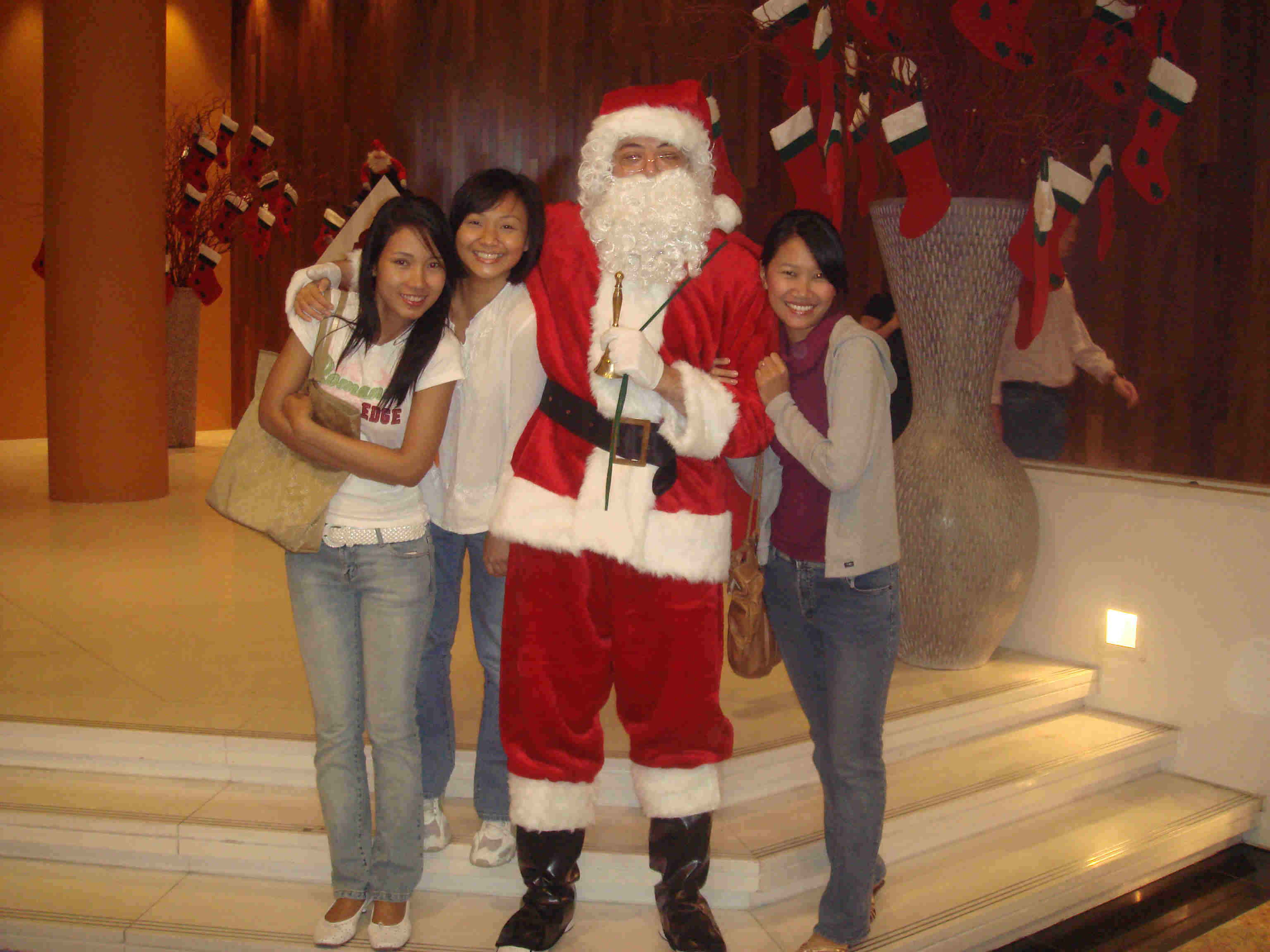
Dubai's shopping addiction 18 December 2006 With one week to go until Christmas a recent survey on UAE shopping habits reports that emirates boasts the second highest number of per capita recreational shoppers in the world. Add to that the huge number of visitors atracted to Dubai and you realise why building shopping malls, or multi-use complexes, is compulsive in Dubai. Dubai in particular is increasingly being seen as a haven for shoppers, with people flocking to the emirate to buy, buy, buy. The Dubai Shopping festival which lasts for 45 days starts on 20th December. Dubai retail spending is expected to exceed Dh27.9 billion by 2009. Retail space in Dubai is set to quadruple by 2010, when new developments, including the Mall of Arabia and Dubai Mall are completed. It is quite possible for people to spend entire days walking through the vast, cavernous expanses of retail havens, particularly during the summer months when the respite from the heat is a welcome relief. EU's cold Turkey is bad for everyone 13 December 2006 It is not the season to be jolly in Ankara. The European Union has decided to slow down its trouble accession talks with Turkey; if the talks get any slower they will go backwards. The continuing argument is in theory related to the fact that Turkey has refused to endorse the internationally recognised Greek Cypriot government that rules the south of the divided island of Cyprus. Meanwhile Turkey is the only country to recognise the Turkish Republic of Northern Cyprus. But here is more to it than that; and it is buried in issues of race, religion and even history. The EU should not be a geography; it should be a way of being that eliminates borders and seeks better lives for all its members. By engaging with Turkey the EU was showing the world that the West is not incompatible with the East; and that a democratic Muslim nation can be as modern and European in feel as a Christian nation. And Turkey, at least Istanbul, the economic heart of the country, feels very very European. A European Turkey can be a model for the rest of the Muslim world, positioned, as a geopolitical bridge between the East and West. EU membership for Turkey was seen as a part of the nation's modernisation and democratisation. The Turkish are a proud people. Push them away and who knows where they will turn. The politicians say that they will continue down the long and slow road to EU membership. But talk to the taxi drivers and anyone else who wants to air an opinion. If they don't want us we don't want them runs the popular sentiment. With EU membership we could expect to see the role of the military downplayed in Turkish politics and cultural and political rights given to the minority populations. Will these changes continue? Or will Turkey fall back into the battle between secular Turks and Islam. Ataturk reformed his nation after the collapse of the Ottoman Empire and a secular Turkey was always looking to the West. The current Prime Minister leads the mildly Islamic AK Party in government which is seeking reform within Islam as well as leading Turkey into the EU. But as support for EU membership wanes then ultra nationalism can rise. Will this sharpen Turkey's history of ethnic, religious and political divides. Maybe; but maybe that remains enhanced debate rather than open conflict. The trouble is a split between the EU and Turkey sends a wider message; it says that the West cannot embrace an Islamic state and it alienates the minority muslims in countries throughout Europe. But Turkey looks and feels Western. It has weekends on weekends. It has street corner bars and wine for sale in supermarkets. Its tabloid newspapers are liberally filled with pictures of bikini clad girls. It feels liberal. It is opinionated. Maybe there is a compromise that in the short term becomes some sort of special partnership between Turkey and the EU. Europe's failure to embrace Turkey makes us all poorer and could end one of the great modern day civilisational projects. Beware the Baht 13 December 2006 For those of us who hold too much of our assets in US$ the strengthening of the baht is a serious concern. It is also a serious issue for Thai exporters. The Baht yesterday hit 35.10 to the US$; a nine year high. The strengthening of the Baht has been rapid and it may well fall below 35 before the end of the year. Offsetting this for bigger companies is the cheaper price being paid for capital goods and imported raw materials. This is also pushing up the price of Thai property for foreign investors and of course it increases the holiday cost of any travelers from a US$ or US$ pegged country. EK crew spotted in Bolton 13 December 2006 Our north of England (anywhere above Watford) correspondent has reported remarkable scenes in downtown Bolton last night as a member of the Dubai based EK crew was spotted at the city's rail station. "Never before," said the mayor of Bolton, Mr. Walter Snodgrass, "has a crew member found our fair city. This could put Bolton tourism on the map like never before." "It is a little known fact." he continued, "that according to a survey of the British Association for the Advancement of Science Boltonians are the friendliest people in Britain." That last bit is true !! It is also a little known fact, other than to Monty Python fans that Bolton in reverse is Notlob ! To see what's happening in Bolton, the pride of Lancashire, you can follow this link. http://www.bolton.org.uk/ Anyone else wanting to explore Bolton, intentionally or otherwise, can use the rail map at http://www.manchesterairport.co.uk/web.nsf/Content/RailNetworkMaps for access from Manchester Airport. The question is - does the fact that she got to Bolton by accident make her a Bolton Wanderer.....for none football fans the local premiership team are know as Bolton Wanderers !??? Presumably they were originally all lost travelers !? Santa comes to Dubai 11 December 2006 I realise the job is rather seasonal and I have to say Santa's accent was a little unusual; he was also rather less padded than a traditional Santa. But still the job has its benefits:
The growth of Emirates Airline 10 December 2006 Before starting I will confess a certain bias towards Emirates. I like everything about them except for 3-4-3 in Economy on a 777. Dubai is growing faster than any city on earth and at the heart of that growth is Dubai's home town airline, Emirates. The airline's bold plan is to grow both our total revenue and the number of our passengers at 20 percent annually for the next 10 years. Do the maths.
Why is Emirates so successful. Among other reasons
Timing also matters. Large discounts offered by Airbus and Boeing during the economic downturn caused by the tragic events of 9/11 as well as Emirates' strong financial position compared with most of its competitors at the time, enabled the airline to take advantage of this situation by placing huge orders for up to 150 long-haul airplanes including an order for 45 Airbus A380 "super jumbos" as well as a major order for Boeing's increasingly popular 777-300ER that will make Emirates the world's largest 777 operator. The passenger can now by-pass traditional hubs such as Heathrow, Paris and Frankfurt on their way from Europe/North America to Asia/Australia. Now they can connect through Dubai. This is a significant threat to the established European carriers such as BA, Qantas, KLM, Lufthansa etc who all have higher costs. wing competitive threat Emirates poses to their business because of their much higher cost base. Some of these carriers are so concerned about the detrimental effects of Emirates' growth on their future ability to compete with it on a level playing field that they have resorted to openly accusing their Dubai-based rival of receiving hidden state subsidies and of maintaining too cosy a relationship with Dubai's airport authority as well as its aviation authority, both of which are also wholly state-owned entities that share the same government owner with the airline. Emirates strongly denies taht it receives any state support or funding. The financials of course are not transparent. The company is privately owned and won’t go public any time soon. But the financials are frankly less interesting than the ambition and the potential. Within ten years, Emirates will connect its homebase Dubai with every major city in the world. And many of the passengers that are routed through the city by Emirates will always stay in Dubai contributing to it’s meteoric rise. And to add to the fun Dubai is currently constructing the biggest airport in the World at Jebel Ali to the West of the city. Welcome to Dubai - can this be the Arab centre of the Modern World 5 December 2006
It is the geopolitics of Dubai that are so fascinating. Can it be that Dubai will become the centre of the modern world. Is it what London was to the 19th century, and Manhatten to the 20th century. Has it the political and economic muscle to be bigger and stronger than Beijing?
Dubai is the strangest of melting pots. At the bottom, cheap Asian labour; in the middle, white northern professional services, and tourist hunger for glamour in the sun supported by an increasingly de-monopolised western market system; and at the top, enormous quantities of invested oil money, combined with strong social and political control and a massive sense of ambition and purpose.
Will Dubai be at the heart of future global trading and financial systems? Will it be the hub of all hubs (with all due respect to the ambitions of Thailand's ex - Prime Minister) and will indeed Dubai be the bridge that links the Middle East and the West and that ties together the Moslem and Christian faiths in a prosperous and viable state.
The rise of Dubai is meteoric and it is hard to predict where sensible growth will take over from out of this world growth. The city is being built on vast invented islands offshore and in even vaster building sites that stretch in a wide band the whole length of Dubai's now famous coast of 25 miles of sand on the Persian Gulf. It is said that a fifth of the world's cranes are now at work here. An army of some 250,000 men, largely from India and Pakistan, are labouring to create this fantastical new city.
The traffic is already as bad as Los Angeles, and maybe worse than Bangkok. Priority is being given to building new roads and bridges across the Dubai Creek, five lanes in each direction. A taxi ride that might take 15 minutes at midday lasts 90 minutes at the start or end of the day.
The working estimate is that there are about $100bn worth of projects either underway or planned for the near future. This huge figure is the equivalent of every single dollar invested in the United States from abroad last year and almost twice the foreign investment in China. But Dubai's population is still under 1.5 million. There are plenty of web sites that list these projects. But they include the three famous offshore "palms", man-made peninsulas laden with hotels and signature villas. There will be a Giorgio Armani Hotel and a Palazzo Versace. There's the tallest building in the world under construction, Burj Dubai, costing $800m and expected to be 800m tall when complete, but the precise figure is being kept secret in case New York's new Freedom Tower tries to top it. A billboard the size of Piccadilly Circus stands out in the desert showing the pencil-thin rocket of a tower alongside a simple rubric: "History Rising - now 86 floors.
The Middle East's answer to Disneyland, called Dubailand, which is far larger than Monaco, is costing $4.5bn. It will employ 300,000 people in the various joylands, servicing 15 million visitors. A new urban railway, with 37 stops, has started construction.
There's another side to Dubai. At the western border of Dubai you come to the largest man-made harbour in the world. The unapproachably vast quays of the modern port at Jebel Ali were dredged out of the desert sands in 1979.
More than seven million containers are moved here in the course of the year, a figure that grew 23% last year, and is set to triple within the next six years, serving a market of two billion people.
The harbour is also where the American carrier battle groups patrolling the Gulf come for service - and shopping. It's the port most visited by the US navy outside the United States. Another irony of this Moslem nation.
Dubai wins because of its strategic location. It sits on the all-important strategic routeway of the modern world: China, India, Middle East, Europe and the US. That is where the money is going to be. China has just become the third biggest economy in the world and it is the fastest growing. India is set for its own acceleration. Dubai's ambition is top be at the centre of a global strategic network of port facilities to rival Singapore and the huge Hong Kong-based conglomerate of Hutchison-Whampoa.
So why is Dubai in such a hurry and why such massive plans. The simple answer has always been that Dubai, unlike other parts of the Gulf, has little of its own oil or gas. A great deal of Arab money, invested in the US, came back from there after 9/11 and needed an outlet. The fact that oil is now pushing $70 a barrel means that the Gulf is awash with liquidity. There is clearly a role for a strategic financial centre in the Middle East and Dubai can play that role now.
But is that really the answer, Dubai is everything; traditionalist, modernist, Arabist, internationalist, market-based, authoritarian.
Dubai is seeking to be the modern embodiment of the new Middle East. Bikinis are worn on the beach. Santa Claus is in the shopping malls. And importantly there is a determined effort to de-monopolise the economy, to make market competition the driver for this new model world.
Local customs must be respected: no loud music during Ramadan, no eating in front of Muslims on fast days, no possibility of making a political claim on the direction of the state. And in return for those limits, the state delivers a sense of wellbeing.
Business people like Dubai. Visitors like to Dubai. The city's ambitions may indeed become a reality. We will endure the dust and construction for now. As long as there is no major increase in Middle East fighting (for instance involving Iran, across the gulf from Dubai) then anything appears possible. New direction? 3 December 2006 You never know what life has in store. I don't know if I will get what I want but perseverance has been proven to work. It feels right. But let's see what happens before I write more here. Cross your fingers for me.
|