Tied up in the
courts
1 July 2006
One of the great
frustration of Thai politics is watching how the courts are used to fight
out battles that should be kept in private; the latest suit to be launched
by caretaker Prime Minister Thaksin is one billion baht lawsuit accusing the
Democrat party and four of its high-ranking officials of slander and
defamation.
Thaksin’s lawyer Noppadol Meewanna filed the suit in the Civil Court. The
complaint names Democrat Party leader Abhisit Vejjajiva, party
secretary-general Suthep Thaugsuban, and MPs Korbsak Sabhavasu and Thanin
Jaisamut.
The suit claims that the defendants made false statements during a March 17
speech which was delivered at a public gathering in Trang, the hometown of
former Democrat party leader Chuan Leekpai.
Thaksin’s lawyers claim that Democrat MPs unfairly accused Thaksin of
intentionally avoiding tax payments on the multibillion baht sale of Shin
Corp to Singapore-based Temasek Holdings and of engaging in contract fraud.
Surely not and unthinkable come to mind. Although just how much tax was in
fact paid on this transaction?
The lawyers say that during the same event the defendants accused Thaksin of
interfering with the functioning of independent organizations, destroying
the parliamentary system of checks-and-balances, committing election fraud,
ordering extra-judicial killings in the war on drugs and of backing the
killings of anti-state authority protestors at Krue Se mosque in Tak Bai,
Narathiwat province.
Noppadol says the litany of accusations have damaged Thaksin’s reputation
and that a billion baht payment would be fair compensation for the damage he
has suffered.
The Civil Court has scheduled a preliminary hearing for December 4. A trial
date has been set for December 25.
Pattaya
News update
30 June 2006
This site has not
had a news update from Pattaya for many months: so here is what is happening
in this grim town this week. It is raining. Pattaya is a grimy town in the
rain !
Two major news
items in Pattaya today; "Pineapple price falls through floor"; "Drain covers
keep disappearing in Pattaya". So I guess the pineapples have even further
to fall.
There are better
stories:
Bomb bag: A
suspect bomb bag turns out to be a dud bag.
On June 15th at
9.00am Pattaya Police were called to a house at 164/31 on Thappraya Road,
Soi 5 bu the owner a Mr. Pagorm Jinanigorn regarding a suspicious suitcase
that had been placed against the wall of his home.
Fearing the worst
Police went to the scene and saw the offending and suspicious looking bag.
The first thought
was that it could possibly be a bomb, so they cautiously strolled over and
gave it a prod, with no result.
Obviously not
satisfied with that tactic, one of the men then decided to give it a bit of
a lift to find that its weight didn't correspond with that of an explosive
device; so they decided to open it, with fingers firmly planted in each ear.
Still no bomb. In
fact the suitcase was completely empty.
However, as it was
a particularly handsome bag the authorities decided to donate it to the
rescue squad, who no doubt will find good use for it.
Makes you
proud to be a Brit??
29 June 2006
The British
Embassy is clearly concerned about providing the best possible care and
support of British citizens living in Thailand. To this end they recently
issued the following spectacularly useless letter.
The simple
translation is that at the Embassy we have out bottles of Bollinger to wash
down the Tamiflu; and we first access to BA business class flights home. The
rest of you miserable tax avoiding British dregs are on your own.
So now you know.
“British Embassy Bangkok
8 June 2006 Consular Section
1031 Wireless Road Bangkok 10330
Telephone: (662) 305-8333 FacsimiLe: (662) 255 6051
AVIAN INFLUENZA (BIRD FLU) Email: consular.bangkok@fco.gov.uk
I wrote to you in December 2005 with information about avian and pandemic
flu. The UK Department of Health has now produced a pamphlet on pandemic flu
that gives advice on how to reduce your risk of infection from an influenza
virus. This can be viewed on their website: www.dh.gov.uk. That should be
read together with an updated version of the Foreign Office (FCO) avian and
pandemic flu fact sheet which can be accessed through this Embassy’s
website: www.britishembassy.gov.uk/thailand
Although the number of cases of people contracting avian flu has increased,
the perceived threat of a human influenza pandemic remains the same, as the
virus continues to show an inability to pass between people. However, in an
effort to ensure you are kept as fully informed on the subject as possible,
you may welcome an update, in particular, about what your embassy will and
will not be able to do in the event of a pandemic.
It is clear that, should a human flu pandemic occur, the virus would likely
spread very rapidly, possibly affecting all countries within a matter of
weeks. Given the likely disruption to transport, health services (including
the NHS in the UK) and other local services, the level of consular
assistance and the visa service which we can provide might be significantly
reduced, not least because some of our own staff may be ill. In certain
circumstances we may even have to close the embassy temporarily to prevent
the spread of infection.
We have put in place a flu contingency plan for the embassy so that we can
try to maintain a basic consular service during the crisis. Depending of the
seriousness of any outbreak we would endeavour to continue providing regular
updates on the embassy website. We will set up an emergency call centre to
deal with your enquiries and will keep you informed of developments by
e-mail and/or letter.
I would especially draw your attention to the section of the fact sheet
headed “British Nationals living Overseas”. You will note that in the event
of a pandemic, we have concluded that given the potential number of British
nationals involved we will be unable to offer repatriation.
We would also not be able to offer any diagnosis or medical treatment. This,
rightly, should be the duty of your usual healthcare provider. We suggest
that you consider this and make the necessary arrangements, in particular
your likely access to anti-viral drugs and the quality of medical care
facilities in the event of a pandemic.
I suggest you visit the Department of Health website at
www.dh.gov.uk/pandemicflu,
which contains a range of information to help you consider your options in
the event of a pandemic. Further information can be found on the World
Health Organisation and Health Protection Agency websites. Please contact me
if you have any further queries about pandemic flu planning.
You should also monitor the FCO and embassy websites for updates. We will
communicate with you again when there are further developments.
Peter Karmy
HM Consul “
Q and A on
Thailand's political woes
28 June 2006
What is going
on?
The fact-finding
committee of the Office of the Attorney-General has unanimously proposed to
the Attorney-General the dissolution if five political parties for alleged
election fraud under Article 66 of the Political Party Act.. The parties
include Thailand's two heavyweights, the Thai Rak Thai and Democrat parties
as well as three smaller parties.
What happens
next?
If the AG objects
then the matter returns to the Election Commission. If the AG does not
object then the cases go to the Constitutional Court.
What can the
Constitutional Court do?
If convicted it
can dissolve the parties and ban the leaders and other executive members of
the five parties from holding party executive posts for five years. They can
still run for parliament and hold political office.
Why are the
Democrats also charged.
The OAG's
committee received a 1,500 page report from the Election Commission on
Monday, and in less than 24 hours decided that charges should also be made
against the Democrats.
Analysts argue
that adding the Democrats to the list of political parties that the
Constitution Court has been asked to dissolve is a bargaining chip to keep
the ruling Thai Rak Thai party alive. They doubt the Constitution Court
would hand down a ruling to dissolve all five parties, especially the Thai
Rak Thai and Democrats, because of the political crisis such a decision
would spawn.
What' is the Office of the Attorney-General (OAG) up
to?
It has been a strange process. On Monday, the day before
an announcement on the election-fraud allegations against Thaksin's Thai Rak
Thai Party, Attorney-General Pachara Yutithamdamrong visited the prime
minister at Government House, purportedly to receive instructions on the
deep South.
Yesterday, the OAG committee concluded that along with
Thai Rak Thai, the opposition Democrat Party and three small parties should
also be indicted for election-law violations, punishable by party
dissolution. The timing is interesting.
What will the Attorney- General do now?
The onus is now on Pachara. He will probably send
all five case to the Constitutional Court.
So what's next?
The proposed October 15 election will have to wait. The
Constitution Court process will be lengthy. The caretaker government
is beginning to look like it has a permanence about it.
Would the Court dissolve both major parties?
It probably does not matter; the parties would simply
morph into something else. But having made charges against both major
parties the Court will probably throw out all the charges for lack of hard
evidence.
The final election date will give politicians enough time
to meet the 90-day party-membership requirement to contest the poll.
There may be a few sacrificial party leaders. Senior party
officials can be judged to have violated election laws on their own. But do
not expect such judgments to reach the real party leaders.
Eventually it will be concluded that no mistakes were
made; no one really did anything wrong and we will go to another election
where Thaksin will lead Thai Rak Thai to another sizeable win.
What's up with the EC?
The crippled and much-maligned commission has survived
against all the odds, and has dragged the Democrats into the mud. But the
three remaining commissioners have done all they need to to protect the Thai
Rak Thai and should, for the good of the country, resign now.
Even the Bangkok
Post, known for its polite editorials, said not long ago: “If (the three
commissioners) still had any self-respect, dignity or conscience, they would
realise their continued presence in office could only cause the country more
damage.”
How longer will we have to live with all this?
The main issue now
is that the Constitutional Court has a pivotal role in sorting out Thailands'
political mess. The King has given the Court this role. They must fulfill
it. This is never easy in Thailand where it is usually easier to pass the
problem to someone else.
I overheard
someone at the Dusit Thani hotel (I could not help but overhear - he was a
very loud suited American who clearly thought we should all hear his views)
saying that no one cared about his political mess anyway. That business
could continue irrespective of the political situation and that in two years
no one would care whether Thaksin is in charge or not. Typical American.
Sees everything in black or white. There are 20 million voters in Thailand
who want Thaksin, Thai Rak Thai and their financial support. That is a
powerful force if mobilised.
As for business,
the real issue is Thailand's ability to attract investment, This is already
damaged by continual allegations of corruption, and market sentiment will
remain poor until new and legitimate elections are held. Then just maybe,
there will be changes that lead to greater transparency and accountability.
Award
yourself the CDM
26 June 2006
Many, many years
ago Cadbury ran advertisements encouraging people to award themselves the
CDM; which then used to mean the Cadbury's Dairy Milk chocolate bar. Now CDM
should probably mean Cadbury Disaster Management. Or more accurately
the lack of such a plan.
It took Cadbury 5
months to make the problem public;
Cadbury informed the FSA of the contamination on June 19, five months after
it first detected salmonella in its products. The Company then announced on
June 23 that it was withdrawing seven varieties of chocolate in the U.K.,
including Dairy Milk bars. The company said
more than a million chocolate bars and Easter eggs recalled from shop
shelves and warehouses will be buried at landfill sites across Britain.
Cadbury argues
that it followed regulations at the time of detection. The Sunday
Times newspaper reported that the contamination only came to light when the
government's Health Protection Agency investigated a leap in people
contracting salmonella montevideo, a rare strain of the disease. The agency
began to suspect chocolate because many of the patients were children, the
newspaper said.
The Health
Protection Agency went back through its files and found chocolate samples
sent by a private laboratory that turned out to have been hired by Cadbury,
and molecular analyses revealed they contained the same montevideo strain.
Thousands of
concerned people have been trying to contact Cadbury. Many customers,
demanding to know why it had taken the company five months to disclose the
danger, found it could take an hour to get through as the company was taken
aback by the scale of the reaction.
Cadbury's lack of
preparation and apparent disregard for the potential scale of public concern
is little short of staggering. For a consumer foods company what is the
biggest possible crisis that they could have to deal with? Heads will roll.
Under the Food
Safety Act companies must withdraw food from the market when they have
confirmed contamination, and must also tell the authorities.
But Cadbury
executives yesterday defended their decision not to recall the products in
January, when it was first known that a form of salmonella, known as a
montevideo strain, had got into one of its chocolate production lines.
The company's
European president, Matthew Shattock, said yesterday: 'Our responsibility is
to look after the welfare of our consumers and I can reassure you that our
products are perfectly safe to eat and we have no evidence that anyone has
been ill from eating them.'
When asked why
Cadbury did not contact the FSA immediately he said: 'We were contacted by
the FSA and we spoke to them on Monday and it was at that point, in light of
the awareness that we then gained of an increase in salmonella in the
population, that we decided to conduct a precautionary recall."
Of course, in the
five months that has lapsed since Cadbury first discovered the problem,
which arose from a leaking water water pipe at its Herefordshire factory,
some 500,000 bars of the potentially contaminated chocolate have already
been eaten.
Cadbury has a lot
of work to do to rebuild public trust. An early announcement of the problem
would have been the responsible action and would look rather less like a
cover-up. This is a food business. Trust and public confidence are
paramount.
Is Mr.
T coming or going ?
24 June 2006
The Nation
newspaper reports rather optimistically that Thaksin Shinawatra, the
caretaker prime minister, has expressed an intention to step down.
The newspaper
reports that he has said "If I were to leave, I would be happy to do so for
the peace and reconciliation of the country."
It seems a long
time ago since the day, two days after the April 2 snap election and an
audience with His Majesty the King, when Thaksin announced that he would not
assume the top job until the new Cabinet was formed and a new prime minister
picked. But his "break" was a tactical move and he refused to resign
outright because he want to remain in a caretaker capacity. His April 4
announcement came in spite of the fact Thai Rak Thai reportedly won at least
15 million votes in the poll, later nullified by the Constitution Court.
Thaksin appointed
Deputy Prime Minister Chidchai Vanasatidya to be prime minister, after weeks
of rallies and a huge protest vote against him in Bangkok and in the South.
More than a month later, however, Thaksin had an apparent change of heart.
He went back to work at Government House, saying that the country needed him
to look after the economy. And he wanted to ensure that preparations for the
60-year jubilee celebration for His Majesty the King would proceed in order.
Is this the beginnings of a comeback? Or was it that he wanted to be up
front meeting and greeting the world's monarchs at the 60th anniversary
celebrations?
Recent events
could trouble Thaksin. After weeks of stalling and huge controversy, the
Election Commission finally advised the Attorney General yesterday that the
Thai Rak Thai Party had hired small political parties to run in the April 2
election. If the case reaches the Constitution Court, Thaksin's party could
be dissolved, if it is found guilty. This appears very unlikely.
While the EC has
set October 15 as the date for the next election, it is so discredited that
one Thai Rak Thai member said there was still no certainty on when a new
ballot would be held. He said politicians were doing little except waiting
for the outcome of court cases to clear the political deadlock.
Thaksin can win
the next election. But can he govern this highly divided society that he's
created?
The Nation
responds to "The Economist"
Questions that 'The Economist' has to answer
(from The Nation 20 June 2006).

I guess The Economist and I can bore each
other to death now. After calling Thaksin Shinawatra's downfall, or
semi-downfall if you will, a "blow to democracy", the magazine has adamantly
repeated its stand in yet another eye-popping editorial. Again, Thailand's
political turmoil was blamed on "just a few thousand" undemocratic
protesters.
Again, the ruin of checks and balances was not acknowledged. And as usual,
if The Economist ever suspected there might be some truth in the charges by
the "mobs" in regard to massive graft, it never showed.
All we've heard is
it's the protesters' fault: "Thais are paying a heavy price for the
opposition's dismissal of April's election result." "[Thailand] has taken a
big step backwards." "Once you start allowing demonstrators who number in
thousands to throw out politicians who have been elected by millions, the
fabric of any democracy is bound to fray, let alone one that has existed for
only 14 years and still lies under the shadow of crown and gun."
With all due
respect, corruption - the important word that has gone missing in recent
Economist editorials - started it all. The Economist has the right to call
the demonstrators democracy's worst enemy, but we beg to differ. To the
Thais who took to the streets and in the process endured international
condemnation for being "undemocratic", the real enemy of democracy is the
abuse of faith and power for personal gain.
When a popularly
elected leader thinks he can do anything and place himself above the law,
using the votes he got as a political shield, then the fabric of any
democracy is bound to fray, let alone one that has struggled against such
corrupt powers that be for so long. Democracy gives us the right to rise
against corruption. It gives us the right to boycott any election we fear
could reinforce the evil in our political system. And our Constitution, the
fundamental part of our democracy, gives us the right to protest and resist
peacefully as long as we want.
Our Constitution
prohibits conflicts of interest and is very specific about that. It aims at
strengthening checks and balances and promoting the role of citizenship. It
encourages free speech. It seeks to empower a previously feeble system as
well as the Thai public to fight that formidable enemy: corruption.
Who has been our
Constitution's biggest enemy all along? Before branding the demonstrators a
destructive mob and portraying Thaksin as a victim, perhaps The Economist
should have addressed that question. Once a Constitution is breached and its
enshrined spirit ignored, the fabric of any democracy is bound to fray.
When Thaksin and
his wife were found to have stashed Bt10 billion worth of shares in his
servants' accounts, this Constitution was screaming, "STOP HIM!" But whereas
The Economist at that time sounded a major warning over his "insuperable
conflicts of interest" and his "alarmingly undemocratic instincts", Thais
forgave him, because - just as The Economist of today would have been
pleased about - he had won a landslide election victory. Thais tolerated his
contempt for human rights and other democratic principles and massive graft
scandals for the same reason: he had been endorsed by so many of the
electorate.
After sounding the
alarm in 2001, The Economist changed its tone last year. "We owe Thaksin
Shinawatra an apology," it said in an editorial just as he was cruising to
another landslide poll win. It praised his populist policies and gave him a
lot of credit for the resurgent economy.
But the magazine
ended it with a noble punch-line: "Successful democracies require checks and
balances, and the biggest worries about Mr Thaksin all relate to the absence
of them." What happened to that ideology? With all the people who mattered
in Thailand - outside the government, of course - lamenting the destruction
of checks and balances over here, what happened to The Economist?
What if Tony Blair
owned England's largest telecom firm? What if he hid some shares in his
servants' stock accounts and a mysterious offshore firm for no good reason?
What if those shares enabled him to evade taxes or exposed him to charges of
stock manipulation? What if other British had to pay taxes for similar share
transfers, but he didn't? What if parliament couldn't censure him? Questions
like this go on and on where Thaksin is concerned, but the ultimate question
to The Economist is: "Would you tolerate it?"
If the answer to
those questions from such advanced democracy advocates like The Economist is
"Yes", then sorry. To democratically ill-educated Thais - you all but call
us so - the answer is a painful but uncompromising "No!"
Tulsathit Taptim
Dreams
22 June 2006
I am alone in my
home. I am in my pajamas walking around the apartment. I walk to the second
bedroom and out onto the balcony. But instead of being in a high floor
apartment I am at ground level.
In front of me
there are kids playing ball in a concrete playing field. There is no
balcony. I can just walk out. I cant go back as the apartment is not here;
just little side lanes in a concrete city square. I am carrying two
umbrellas and one golf club, an iron. I have my pajamas on but also what
looks like a dressing gown. There is a signpost. I am in New Westminster
City Center in BC Canada.
Strangely in my
dressing gown pockets I fond my wallet (everything appears to still be
there) and my mobile phone.
I try to
call my ex wife. I don't know where I am living; I simply cannot remember. I
ask her the address of my home; she sounds irritated. She gives me the
building and road number. I do not recognise it and ask where it is and the
nearest main road. I want to try and explain everything to her. She does not
reply. 'Are you still there?' I ask; she says nothing though I can hear her
working in the background.
Then I woke up; it
is 10.30am today. This was so amazingly vivid. I was convinced it was
actually happening. Does it mean anything?
United
93
20 June 2006
September 11 will
be the fifth anniversary of the terrifying events of 9/11. If anyone doubts
why the war on terror exists they need only see the movie "United 93".
Freedom has come at a price. Generations have fought to be free of tyranny,
oppression and slavery. Generations have fought to build a way of life that
is based upon values that make sense in our western, industrialized,
liberal, democratic and open world.
Yet 9/11 shattered
that. Maybe we had become too complacent. Maybe we took for granted that it
was our way of life that others would aspire to rather than despise.
But the world
changed that day; it changed for the forty passengers and crew of United 93.
They had to fight back. What other option was there? They left their homes
and families that bright, sunny morning for a routine cross country flight
to San Francisco. Their day ended in terror and sacrifice as they saved a
certain suicide attack on Washington DC.
It is a remarkable
film to watch; based and scripted around telephone calls made from the
flight and wit the co-operation of the families involved it is a deeply
personal movie. It is also a movie that asks a lot of questions about the
world we live in and our respective values.
I cannot imagine
how anyone could watch that movie without tears. Some are for sadness, some
are for fear, and some of them are for relief, that at least my little part
of the world and the people that I care about, are safe today, and
god-willing, will be safe tomorrow and all the days after that.
Government confirms airport opening date
20 June 2006
The caretaker government
yesterday confirmed that the new Suvarnabhumi International Airport will
open for commercial operations on September 28, replacing Don Muang as
Bangkok’s sole international airport.
The decision was announced by Transport Minister Pongsak Raktapongpaisal
yesterday after a meeting between caretaker Prime Minister Thaksin
Shinawatra and parties involved with the new airport project.
Five domestic airlines – Thai AirAsia, Nok Air, Orient Thai’s One-Two-Go,
Bangkok Airways and PB Air – will be taking part in a major test of
Suvarnabhumi on July 29, when they will operate from the airport for the
first time.
Airports of Thailand (AoT) has been conducting two integrated systems tests
a week, said Somchai Sawasdeepon, Suvarnabhumi airport general director.
“All involved agencies confirmed with the prime minister that everything is
going well and we will be ready for the opening on September 28,” said
Somchai yesterday.
For airlines taking part in the test, special transport has been laid on for
passengers, said Chaisak Angkasuwan, director-general of the Civil Aviation
Department, adding that passengers on the day would receive special AoT
certificates.
As an incentive for low-cost carriers to take part in the test, there will
be no service charges or landing fees at Suvarnabhumi airport and airports
such as Chiang Mai, Phuket and Hat Yai.
“I think many people will want to fly to the new airport,” Chaisak said.
AoT said it will invite domestic and international airlines to Suvarnabhumi
to talk about moving operations from Don Muang after July 29, if the tests
are successful.
When Suvarnabhumi officially opens on September 28, Don Muang will close to
all but charter operators. Its long-term fate is yet to be decided.
Airbus debacle
17 June 2006
I have always been
a fan of Airbus; the competition was good for the American company, Boeing,
which had for too long been the world's dominant airline manufacturer.
But there is too
much bad news coming out of Airbus; and it looks as though there has been
some executive pocket lining at the expense of the airlines and the
shareholders.
The Americans are
of course enjoying watching Airbus squirm; Boeing has, after all, had its
own fair share of recent scandals.
But think on this;
the French co-chief executive of Airbus, Noel Forgeard, sold shares in March
which earned him €2.5m (£1.7m) just before its flagship A380 superjumbo
started to suffer from technical problems which were reported last week. Mr
Forgeard has said that he sold shares in EADS, Airbus' majority shareholder,
before he knew of the problems. It is hard to imagine the co-Chief of any
company not being up-to-date on the status of his Company's biggest project
and biggest risk. In addition three of Forgeard's children each sold 1.4
million euros worth of company stock, and six other managers also sold
stock. Smart kids.
Securities
regulators in Germany and France are investigating this sale. A sale that
smacks at a minimum of opportunism. Given the sheer scale of the A380
project it is frankly ridiculous that Forgeard could even consider the sale
(or purchase) of WADS shares.
On Tuesday last
week EADS said that wiring problems were causing delays in the production of
the A380. The news sent shares of EADS down 26 per cent the following day.
Airbus said in a statement that it has informed clients that deliveries of
the A380 are to be delayed by six to seven months. Airbus said it is still
on track to win certification for the aircraft and deliver the first unit at
the end of 2006.
However, only a maximum of nine A380 aircraft can be delivered in 2007,
Airbus said.
Compared to the initial targets, there will be
shortfalls in delivery of five to nine aircraft in 2008 and around five
aircraft in 2009, it added. This will clearly impact the business and growth
plans of Singapore AIr, Emirates, Etihad and Qatar Airways. Emirates had
expected its first A380 this year but will not see its first delivery
until October 2007.
I smell a very
large French rat.
Meanwhile before
the Americans get too smug Business Week magazine is reporting that the
Boeing 787 itself faces delays. Boeing says that because it is pushing
state-of-the-art technology, some glitches can be expected. The company
plans to begin flight testing the 787 next year.
Let battle
(re-) commence
17 June 2006
The King's diamond
jubilee celebrations are barely over and the mud slinging has started. We
will soon be back to the pre-April2 2006 political mess that was Thailand
and the warnings and counsel of the King.
Make no mistake,
Prime Minister Thaksin is back in charge. The apparent resignation was
temporary. Just how temporary are the memories of the people of Thailand.
Taking his lead
from the Singaporean approach of dealing with political opposition Thaksin
appears to have the opposition parties tied up in legal knots. There is a
real cost here, financial, time and credibility.
On Wednesday,
Thaksin’s lawyers filed criminal and civil lawsuits against the Democrat
party and three daily newspapers for likening the premier to a mythical
creature that feasts on human innards and feces. The lawsuits, which seek a
total of 800 million baht from the main Democrat opposition party, as well
as Matichon, Khao Sod and Daily News, follow criminal defamation lawsuits
filed two weeks ago against 11 defendants who claimed the premier and ruling
party members concocted a plan in Finland to push the country away from a
constitutional monarchy....the so-called Finland Declaration.
Thana Benjathikul, one of Thaksin’s lawyers told local media that a civil
defamation case was likely to be brought soon against those who exposed the
alleged “Finland Declaration,” including Manager Media founder Sondhi
Limthongkul, former Bangkok Senator Chirmsak Pinthong and academic Chai-anan
Samudavanija. Thana admitted that the lawsuits filed on Wednesday were
delayed due to the celebrations for His Majesty the King’s Diamond Jubilee,
but denied that they represented a renewed effort to crack down on criticism
in the press.
Politically, the lawsuits appear the first salvo in a strike back at
Thaksin’s opponents after they managed, however briefly, to remove the
premier from official duties. Many in the Thai Rak Thai party saw the anti-Thaksin
campaign as an orchestrated plot by newspapers to oust the government.
Activists said the latest lawsuits were also notable because they list Daily
News as a co-defendant. The daily was viewed as a government mouthpiece only
six months ago.
Although newspapers enjoyed the brief respite from criminal defamation
suits, free-press advocates are not surprised to see them pop up again. Now
they wonder how many more will follow as all parties gear up for an election
later in the year.
Angkor Wat;
preserving the past at the cost of the present
13 June 2006
It is fashionable
to be enrapt by Angkor Wat. It is clear that the ruins are those of a
one great civilization. That makes the current mess that is Cambodia all the
more depressing. It makes the lack of fair government all the more obvious
and it shows again the failings of a communist utopia.
There is abject
poverty. Barefoot children, some following older siblings, are everywhere.
School is for those who can afford it. Women sell fruit and other
goods at roadside stands and small markets. Bizarrely women sit
outside the local temple with bathroom scales ready to weigh you. Men
languish in hammocks, prostrate from the heat. And it is hot,
especially at this time of year.
Yet, amidst its
dirt roads and street commerce there are a bizarre assortment of glitzy four
and five star hotels. Many cater for Asian tourists in group tours and are
along the main road in from the airport. Others are nearer the old river and
the (dreadful) central market. It is disturbing: While
Cambodians struggle for subsistence survival, tourists feast on at the
buffet trough, shop in upscale craft outlets, and enjoy chauffeured
air-conditioned cars.
The counter
argument is that without the tourists the people would have even less.
Angkor Wat is basically this nation's only asset and tourism is its only
growth industry. There is no doubt that the growth if tourism in Siem Reap
has created many new jobs; but much of the wealth remains in foreign
ownership and is not Cambodian.
The reality. My
guide's English was self taught. He supports his non working wife and two
children on the $10 he earns daily when he has "clients." Yet he was
booked through the hotel at $30 a day. An interesting mark up. The hotel
gets some; the tour guide agency gets some. He was going to use
yesterday's fee to pay off a loan that he had taken to cover another loan
that he had given on behalf of his wife.
It costs $40 for a
two or there day pass to see the Angkor ruins. With some one and a half
million visitors a year to Angkor where is that US60 million a year going to
? Add to that the S20 visa fee to enter the country and the $25 departure
tax to get out. Corruption is rife in modern Cambodia. Health care is
virtually non-existent; mothers carry baby children around the city asking
for milk money. As you get out of the little three wheel tuk tuk you will be
swarmed upon by people looking for handouts. Mothers, children and
Cambodia's army or war caused cripples.
There are plenty
of experts who come to Siem Reap, the access town for Angkor Wat. They come
for UNESCO or other NGOs; and they stay at the best hotels; and they ensure
that there work will continue by trickling down just enough work for the
local people to survive. NO NGO wants to be out of work as a result of the
success of their own efforts. A friend describes this to me as the "noble
savage" theory; he is correct; somehow there are first world people who seem
to think that the life of the third world villager is somehow ennobling. The
fact that the family has no drinkable water, no electricity, no source of
income and no way out of its life of toil are offset by the simplicity of
their lives and surroundings and the honestly of their existence. Nonsense,
it just shows how wide the gap has gotten between those who have and those
who do not.
The people are
friendly and welcoming; they smile. The children selling bangles, cards,
books, drinks and scarves at every temple have their lines worked out in
every language. You no buy from me I will cry. I need money or I cannot go
to school. I had great fun with twins at Ta Phrom where we worked our way
through international capitals. They could both say buy three for one dollar
in half a dozen languages. They were engaging and curious. But their
education will stop at 8th grade and their chances of escaping the poverty
trap are minimal.
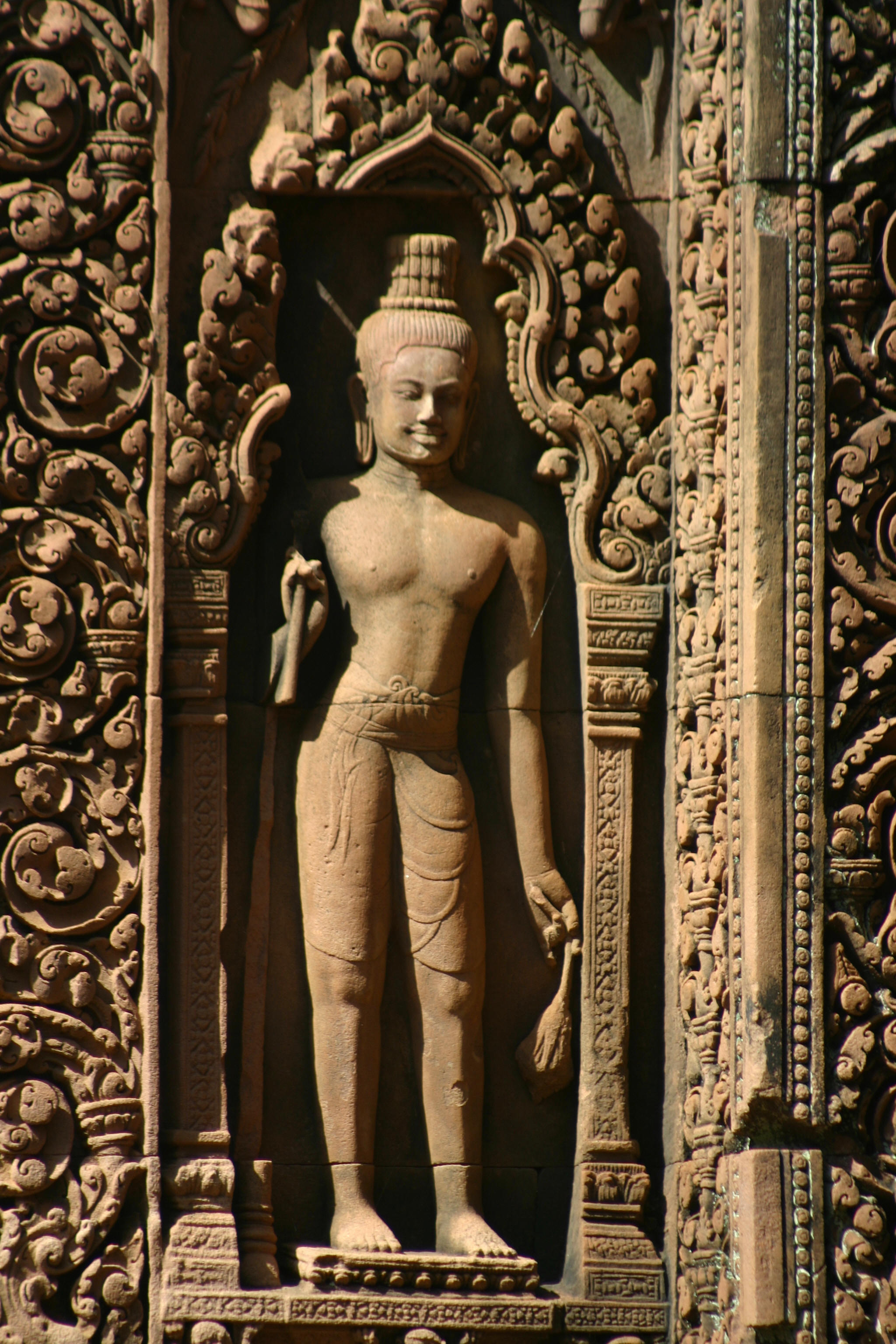
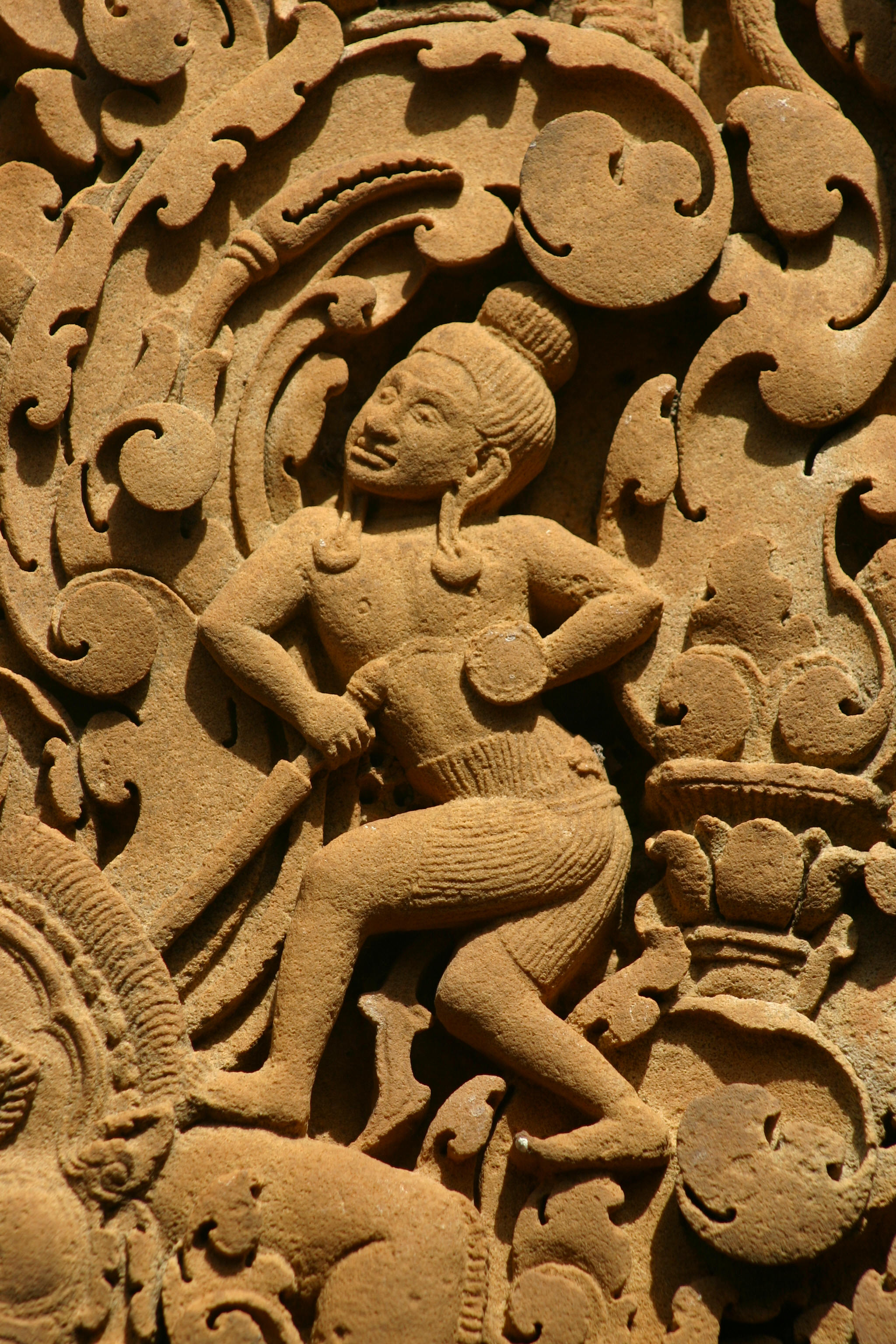
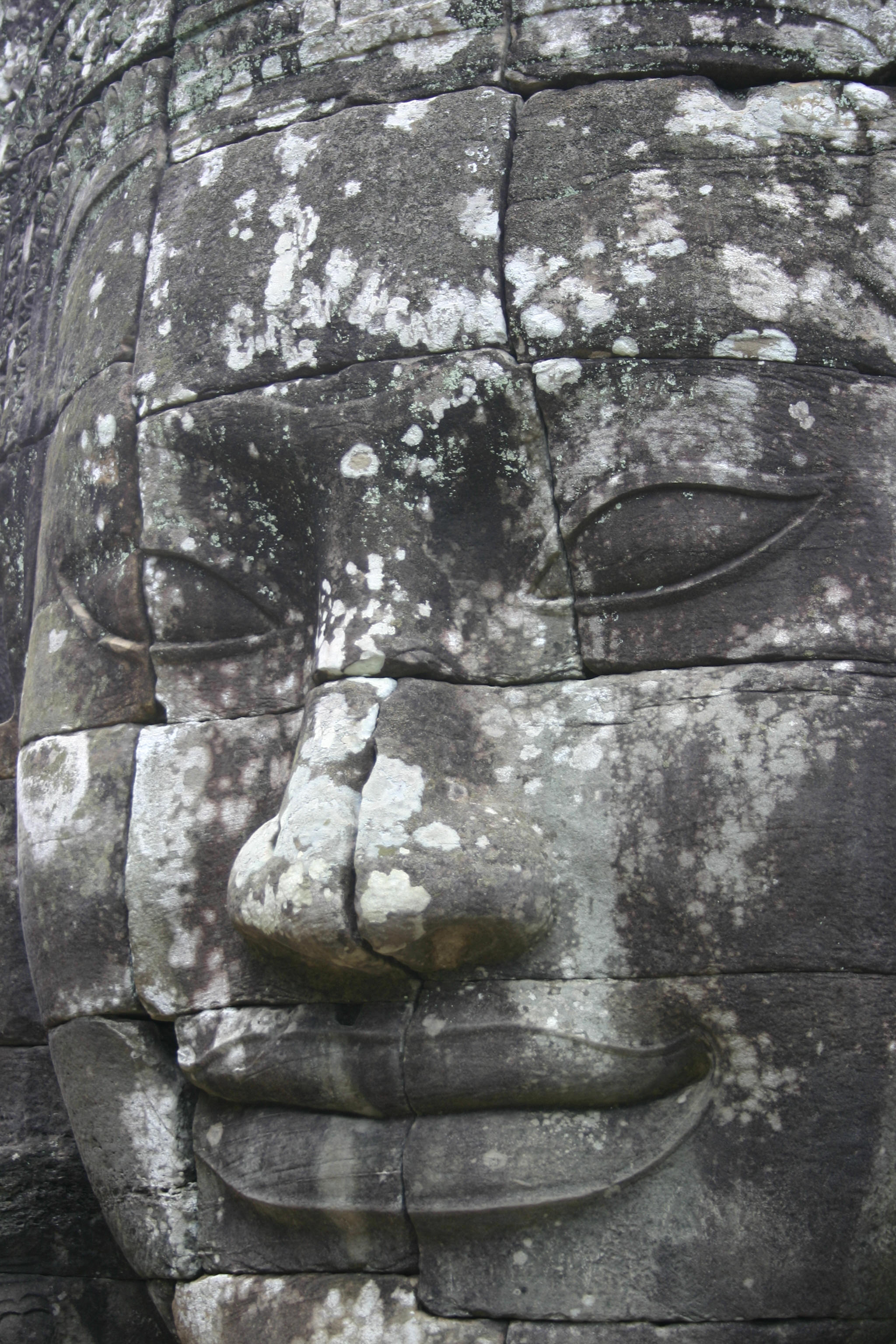
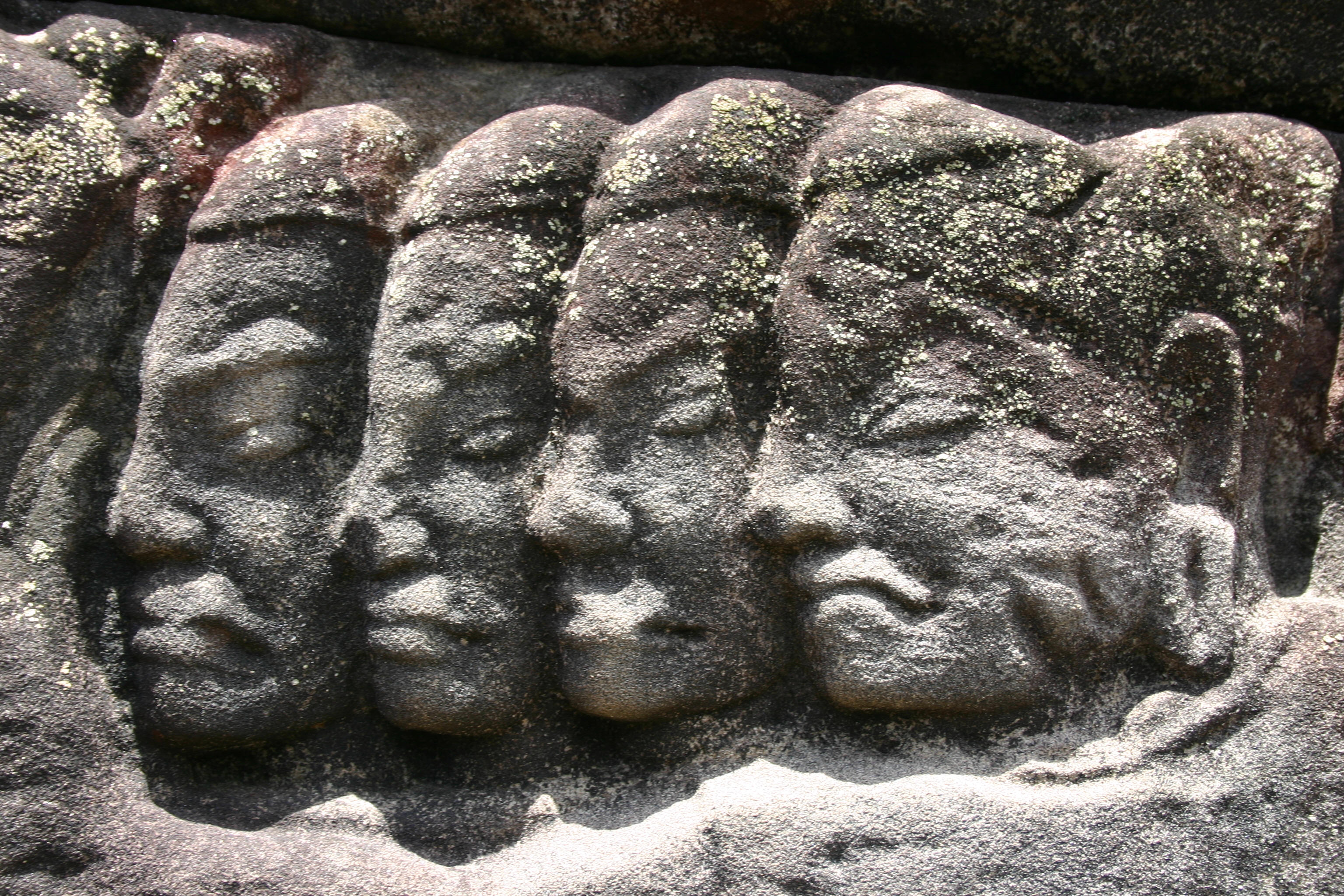
Angkor Wat is one
of the manmade wonders of the world. The temples, scattered over
nearly 200 miles and dating back to the 12th century, are mysterious and
their history is remarkable. It is a privilege and a pleasure to see them.
They have of course been stripped over the years. For each well meaning
archeologist there was another who was a treasure hunter and some of the
greatest artifacts from Angkor languish in museums around the world or in
private collections.
So here is a
question for the modern world. Is it better to spend on the preservation of
these relics or should we apply this funding and today’s technology to
massive poverty reduction in Cambodia or to ending childhood mortality from
preventable causes?
For the moment the
answer appears to be to continue to extract every possible dollar from
Angkor. The latest idea from the
kingdom's Apsara Authority, which manages Cambodia's premier tourist
attraction, is to have all tourists where temple friendly shoes and Apsara
has signed a contract with an unnamed firm to provide them.
Apsara are unclear how the shoes would reduce wear on the stone temples and
have not said when the programme would begin or how much they would cost
visitors.
The special shoes would mark the second proposed fee increase at Angkor in
recent months.
Apsara in May announced a three-dollar entrance fee increase, ostensibly to
help cover costs of a free guidebook for tourists, but the hike was
rescinded, in part due to criticism from travel agencies.
But greed will cost Angkor. As more tourists come; as the airport is
enlarged; as new eyesore hotels appear; then the wear and tear on the
temples will continue at a fast pace. Parts of the temples will be fenced in
or even fenced off. New steps will need to be installed at many places.
Access to some places will be limited to a certain amount of visitors a day.
This already started to Banteay Srei (a small temple some 25 or so
kilometres from Angkor) and will spread.
There are many reminders of a glorious past...there is little
that is comforting about the present.
A sea of
yellow for the 60th anniversary
9
June 2005
United like never
before the people of Thailand are paying tribute in astonishing numbers to
His Majesty the King. Hundreds of thousands of Thais
crowded the roads near the royal palace in Bangkok on Friday to glimpse
their revered King Bhumibol Adulyadej during a speech for celebrations
marking his 60th year on the throne.
Throughout the
speech the city was at a near standstill as pedestrians, almost all wearing
yellow, stopped to watch television screens.
There is another
rehearsal for the Royal Barge procession tonight and fireworks.
The celebrations
will continue until next Tuesday.
This is a modern
king who teaches traditional values. His aura of wisdom, tolerance, concern
for the poor, humility and justice are a ready contrast to the self serving
nature of Thai politics and daily allegations of corruption.
An increasingly
complex, modern, urban Thai society does rely heavily on one man's wisdom
and on an ancient philosophy of kingship. The king himself made clear in his
recent intervention after the 2 April electoral farce that the development
of institutions based on laws and procedures is to be valued and relied
upon. That may be one of his greatest legacies.
Another
opening date for Bangkok airport
8 June
2006
Suvarnabhumi Airport set to open on
Sept 28; THAI Airways top management confirms date;
Fortunately they did not say Sept 28 of which
year! The official Thai news agency reported today that Bangkok's new
Suvarnabhumi Airport is now set to open for commercial purposes on September
28, the Transport Ministry announced here on Wednesday. It is quite hard to
know how they keep a straight face while making these announcements. Maybe a
few domestic Thai flights can transfer on that day; but a fully operational
international passenger and cargo airport. Most unlikely.
The opening date of the Suvarnabhumi International Airport was set recently
by the government committee on management and development of the new
airport, Deputies Transport Minister Gen.Chainant Charoensiri and Mr.
Phumtham Wechayachai told a press conference after a meeting here Wednesday
with the board of directors of Thai Airways International Public Company
Limited (THAI), the national flag carrier. Gen. Chainant oversees AOT,
while Mr. Phumtham supervises THAI.
They also announced that yet another new committee comprising of
representatives of all parties concerned, including Airports of Thailand
Public Co., Ltd. (AOT), the Customs Department, the Immigration Bureau, THAI
and other international airlines, would be set up to oversee the relocation
of Bangkok's international airport from the Don Muang Airport to the
Suvarnabhumi Airport.
AOT has in its wisdom outsourced almost all
the functions of the new airport but they have outsourced them into multiple
small contracts. The air bridge operators will not be the same contractors
as the cleaners or the air conditioning maintenance team. Many of these
contracts have still to be awarded. This can be a laborious process in
Thailand and may be little connected with a company's capabilities.
On June 17 Caretaker Prime Minister Thaksin Shinawatra will chair a meeting
of all the parties concerned to review all projects and plans involving the
Suvarnabhumi Airport.
It may not be a coincidence that the
government is pushing hard for a September opening ahead of the next
election, currently scheduled for October 15, 2006.
What everyone has forgotten is that it was on
September 29 last year that the airport was last declared open:The
new date is the sixth anniversary of the bestowing of its auspicious name,
Suvarnabhumi (meaning "golden land") by His Majesty the King on September
29, 2000.
My money is still on December 2006 for a full
transfer of operations.
Sources of
hope
7 June 2006
We find
inspiration in the strangest of places and in the deepest recesses.
Sometimes it comes from the qualities of the people that lead us. Sometimes
it comes from family and friends. In Thailand this week a nation will pay
tribute to a modest man of massive influence; a man whose presence
single-handedly provides unity to the kingdom of Thailand.
Then there is my
baby brother; you can read his story below. Would I have fought like he did?
Would I have turned adversity to personal victory? Would I be able to junk
the bad memories? I really do not know. Over a very bad weekend last weekend
I went to bed on the Sunday night thinking that it really did not matter too
much whether or not I woke up in the morning. Yet I did. And it was a new
day; and the crap of the previous day had for the most part disappeared.
Maybe the answer
is that once you have found whatever it is that gives you faith,
inspiration, hope, a reason to be, to excel; then grab it and don't let it
go.
Last night's rains
have gone; today is bright and sunny. Life is about transitions; for every
ending there is a new beginning. It is making the best of those new
opportunities that gives us hope and that defines the next ending.
Nine Lives...One Left
by Timothy Scott
7 June 2006
Originally
published on
www.inspiredtorun.co.uk
When I left the
John Radcliffe hospital in Oxford it was July 2003. I was terrified
of what the future held for me. I had gone to A&E in November 2002,
and had been quickly diagnosed with pancreatitis caused by a gallstone
blocking a bile duct. I was in hospital from November to January 2003
and home in February. I went back at the start of March 2003 to have
my gallbladder removed. This caused the pancreatitis to flare up and
cause many complications, which were life-threatening. For example
enzymes, produced by the pancreas, escaped and started to digest parts they
would not normally get to. When I woke one night vomiting blood I just
thought that a blood drip I was having was coming out again. No!
Enzymes had eaten the wall of the splenic artery. This involved a
transfusion of more than 60 units of blood and I thank everybody who goes to
the trouble of giving blood!
What could I do?
Not very much apart from trust everybody to do their best for me and to use
the skills they had learned, some through years of experience and others
just starting on their own career. All of them superb and unforgetable;
too many to name and probably every department in the hospital - they will
know who I mean!
My wife Caren and
our three boys, Joe, Ellis and Sean watched with the rest of my family,
friends and colleagues. I had started a new job at Windles three weeks
before being taken ill. They gave me their full support and a job when
I was ready to return.
From March 2003 to
July 2003 I was on a Nil By Mouth order! So I had lost a few stone.
I was fed by fluids dripped into my duodenum, below the stomach so that the
stomach could heal itself. My stomach had been cut through to reach
and repair the splenic artery. I lay in bed and was scared that I
would never walk again. Physiotherapists, my wife and family, nurses,
a very special health care assistant, stoma nurses and a friend who used to
put lines into me for blood and drugs all helped me to believe that it was
possible. A tilt-table was brought into my room and I was put upright
for the first time in months. Scared? Yes but also "quietly
determined" - or "stubborn" as my wife prefers to call it.
Gradually I
started to move again. Sitting on the edge of the bed would be a great
achievement, then standing, then walking in a zimmer frame. Nervously
my confidence grew and the distances increased. I dressed in a dinner
jacket and went out with my wife and friends to a charity dinner in Oxford.
I was still Nil By Mouth so it was an odd place to be, but I felt great joy
and relief to be out and about doing something that I had taken for granted.
I had got to the age of 42 with very few health concerns. I was
pleased to get back to the hospital for sleep and security but I knew I was
going to be well.
My first marathon
in 2005 was 5:33:48; I had enjoyed listening to "Don't Fear The
Reaper" on the PA in the Red Start zone.
My second marathon
in 2006 was 5:12:33; if I carry on improving like this I will set a record
when I am 54. What made me very happy was spending some time in the
Leonard Cheshire reception. My consultant chose Leonard Cheshire as
the charity I should run for because of the great work they do for diasabled
people in the UK and around the world. At one time in hospital after
I'd had a cardiac arrest, my wife was told that if I lived I may never live
at home again or work again. I have learned not to take anything for
granted.
I had previously
watched the man in the deep sea diving gear. I knew that I could beat
his time and I was pleased this year to be walking back to my car and
noticed a Dalek making his way along the Embankment!
Running has given
me strength and great recovery powers. All my training has been at the
Vale of White Horse Leisure and Tennis Centre on a treadmill. The
trainers think I am a bit nuts! I have enjoyed the comfort of watching
monitors, like in hospital, telling me that I am going a little further,
sometimes a little faster each time. And the staff, like the John
Radcliffe team, superb in their reassurance and belief that I cold achieve
my goal.
And it is easy to
think I had a bad time. I did. But I arrive at the London
Marathon, talk to runners or just read some of the t-shirts and look at the
photos of loved ones. Then I can understand how fortunate I have been.
Caren thinks I am
unusual because I do not worry much. After all that - why should I?
As I trained for the marathon this year I have watched my father die from
cancer after a malignant melanoma was removed in 1990. The cancer only
showed itself again last year, and chemo gave him his last months with a
better quality of life.
This year I also
had a mole removed and this has tested as a malignant melanoma.
The day after the London Marathon I went into hospital to have more cut from
around the removed mole and a lymph node removed. These are being
tested to see if there are further signs of cancer; I am looking forward to
good news next week!
It would have been
easy to say "no" to the marathon and hold my place for next year. But
I needed to do it to prove something to myself. I am not sure what it
proves but it helps me to think that I am OK.
In all of this the
most difficult thing has been to understand my mind. I was so close to
being brain damaged, and it has only been over two years' recovery that I
have gradually understood how ill I was. Standing up and driving a car
will fool most people that you are well and able to do your sales job.
Bit by bit I have put my mind back together, like a jigsaw puzzle. In
the puzzle there are bits I do not want to put back in, so I leave them out.
I make the pieces that I do want back in take up more space
and change shape. Many things that connect now to the past have
helped; concerts, films, family and friends, Dr. Who on the TV and Daleks by
the Thames. It all makes wonderful sense and I hope I can keep on
running.
When I left
hospital my consultant (on morphine he was promoted to God) said: "you have
used 8 lives, make the most of your 9th."
The King's 60th anniversary
7 June 2006
Until Bangkok I
had never lived anywhere where one person is so universally revered and
admired. This weekend sees the celebrations of the diamond (60th)
anniversary of His Majesty the King's accession to the throne. This is a
country where the royal and national anthems are separate and where it is
the royal anthem that is played at the start of all public events, even
including the movie cinemas.
For the first time
in many months the politicians and those who want power have to take a
back stage while the nation and visiting dignitaries pay their respects.
Born in 1927 the monarch has overseen the emergence of a modern Thailand
built as far as possible on traditional values.
The King was
honoured by the international community last month when United Nations
Secretary General Kofi Annan visited Thailand to present a Human Development
Lifetime Achievement Award on May 26 to commemorate his well-known
dedication to the welfare of the Thai people, particularly the poor and
downtrodden.
King Bhumibol has initiated more than 2,000 development projects, many of
them involving irrigation but all of them devoted to the concept of
promoting economic self-sufficiency, now a popular theme among United
Nations economists.
"As the world's 'Development King,' Your Majesty has reached out to the
poorest and most vulnerable people of Thailand regardless of their status,
ethnicity or religion, listened to their problems, and empowered them to
take their lives in their own hands," Annan said in an apt summery of the
King's lifework.
The King is a jazz-loving yachtsman who
speaks four foreign languages fluently. He is the counter balance to the
avarice of politicians; to the corporate behemoths; to the invasions of
modern life. The king has always looked out for the disadvantaged - whether
it is the hill tribes of the northern forests or the people of the
predominantly Muslim south in what is otherwise a Buddhist-dominated
country. All this has been done with humility. While traditional bureaucrats
try to shield him from his subjects, King Bhumibol has constantly tried to
break down the barriers, most notably when he ordered any criticism of him
to be encouraged rather than punished with imprisonment.
His influence
extends, albeit carefully, into politics. He defused the country's latest
political crisis by calling on the judiciary to do their duty in deciding on
the legitimacy on the country's April 2 snap election, which was turned into
a farcical one-party affair after it was boycotted by opposition parties.
The king, in an
audience granted the judges, stressed that he had no constitutional power to
interfere in the 'mess,' while the judiciary did. They have since followed
his guidance and Thailand appears to be heading towards some sort of
political normalcy, albeit slowly. It may well be that the King understands
democracy better than some of Thailand's political leaders.
There is an
excellent web site for the 60th anniversary celebrations.
Follow this
link.
Meanwhile the
Times of London gave this tribute:
"MONARCHIES around
the world may be struggling to retain the love and allegiance of their
people, but not in Thailand. Kings, queens and princes of many nationalities
will fly to Bangkok this week to join King Bhumibol Adulyadej in celebrating
60 years on the throne.
For the Thai
people, the world’s longest-reigning monarch remains the most revered figure
in their lives, save for Lord Buddha himself.
Thailand’s strict
laws forbidding criticism of the King are hardly necessary. An accomplished
jazz musician, yachtsman, artist and author, the 79-year-old monarch also
devotes great energy to helping his country’s poor and has repeatedly used
his immense moral authority to save his country from turmoil.
King Bhumibol, the
great-grandson of King Mongkut, of The King and I fame, was born in
Massachusetts in 1927. He was thrust upon the throne in 1946 after his
brother, Ananda, was murdered in the palace in Bangkok with his own
pearl-handled revolver.
The new King
departed for Switzerland to study political science, and during the early
years of his rule his influence was curtailed by the military dictator Plaek
Pibulsongkram.
But when students
demonstrated for democracy in 1973, and the Army opened fire on them, the
King earned his subjects’ devotion by opening his palace as a refuge to
them.
In 1992, when
troops again fired on pro-democracy students, he summoned the leaders of the
coup and the pro-democracy movement to his palace to warn them of the harm
being done to the country. Pictures of both men crawling on their knees in
front of the monarch were flashed around the world. General Suchinda
Kraprayoon, the coup leader, resigned and democracy was restored.
King Bhumibol
intervened again this year as the People’s Alliance for Democracy
demonstrated against the alleged corruption and cronyism of Thaksin
Shinawatra, the billionaire Prime Minister. He summoned Mr Thaksin, who duly
announced that he would not be running again for office. “My main reason is
because this year is an auspicious year for the King, and I want all Thais
to unite,” he announced.
Mr Thaksin’s party
called a snap election, which was boycotted by opposition groups as they had
no time to prepare. Again the King stepped in. In a televised speech he
called on the courts to sort the matter out. The election was declared void
and a new one will take place in October.
After each
incident the country’s leaders have thanked the King for his advice, albeit
through gritted teeth. Indeed, Mr Thaksin will be master of ceremonies for
the celebrations taking place over the next ten days. These have already
started in Bangkok with exhibitions of the King’s work.
Over the next week
the celebrations will continue with candlelight ceremonies and fireworks
displays around Bangkok’s golden-spired temples. Millions of Thais will don
armbands with the message “Long live the King”. The climax will be a
well-wishing ceremony in the Ananta Sarnakorn throne hall and a massive and
colourful barge procession along the Chao Phraya river.
The finale will be
a royal banquet for the world’s royalty and final well-wishing ceremony.
This will be attended by the heads or representatives of the royal families
of Denmark, Sweden, Spain, Lichtenstein, Luxembourg, Norway, the
Netherlands, Belgium, Mon- aco, Brunei, Bhutan, Kuwait, Oman, Qatar,
Bahrain, Japan, Jordan, Malaysia, Nepal, Cambodia, United Arab Emirates,
Saudi Arabia, Samoa, Tonga, Swaziland, Lesotho, and Morocco. Britain will be
represented by the Duke of York."
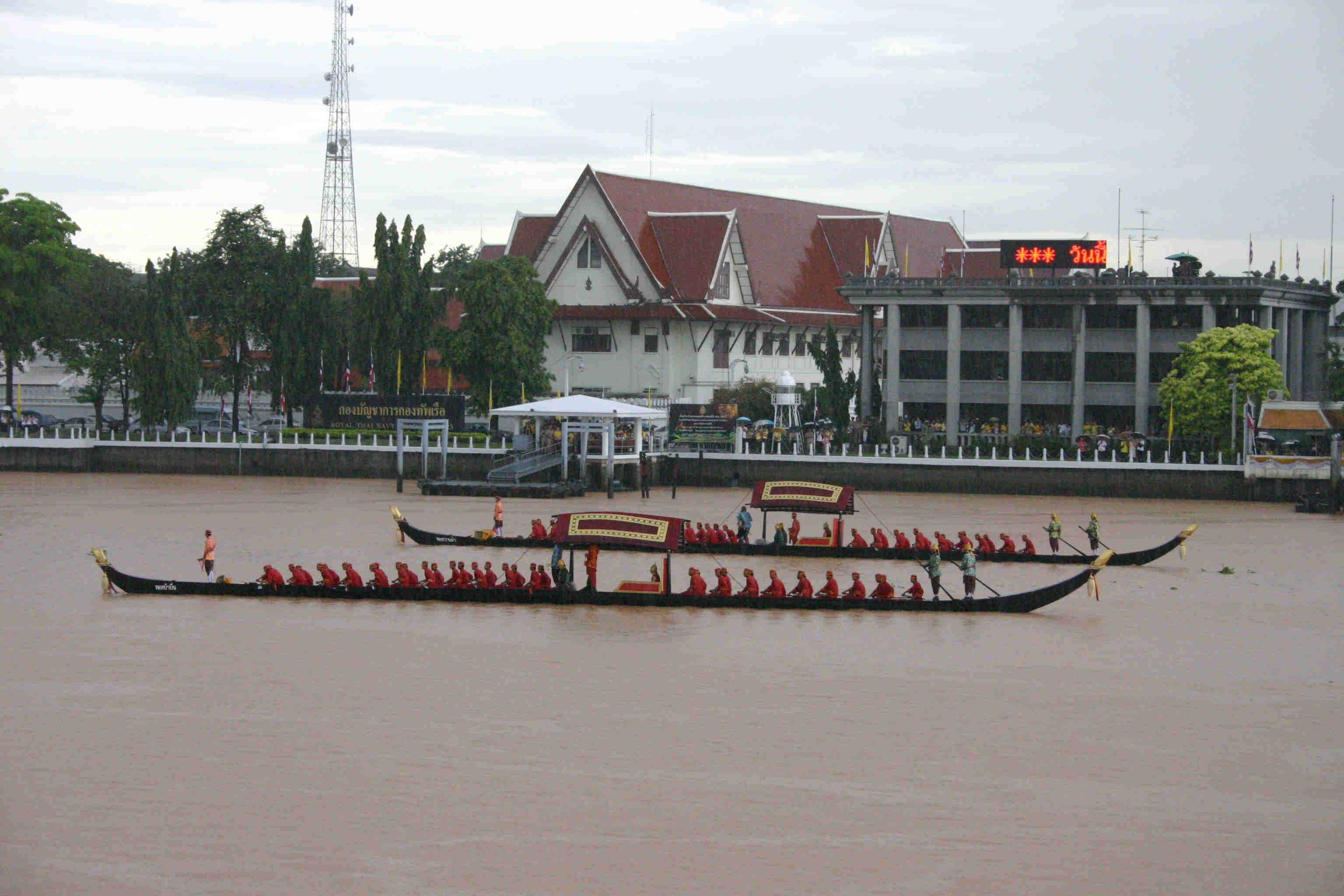
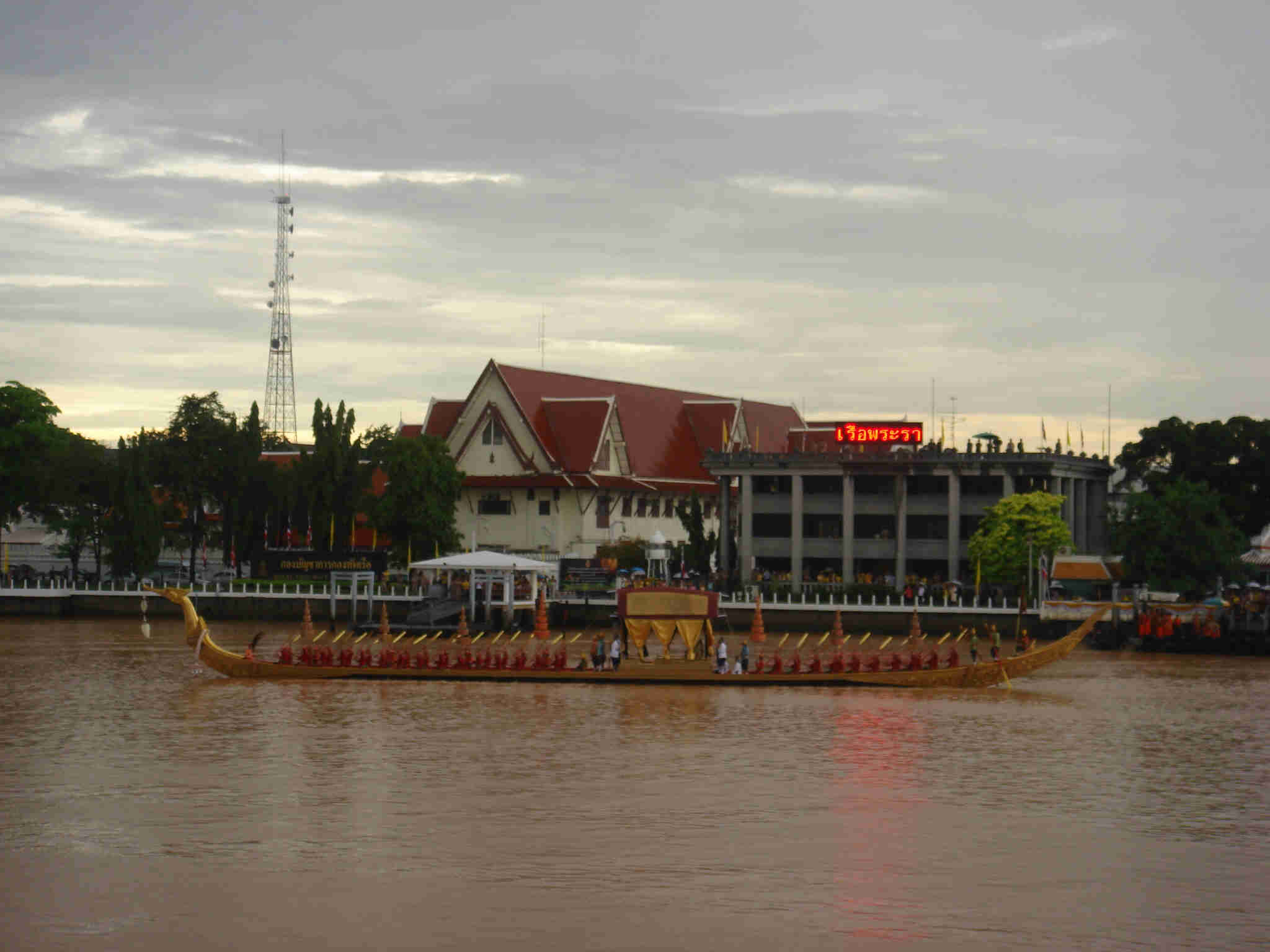
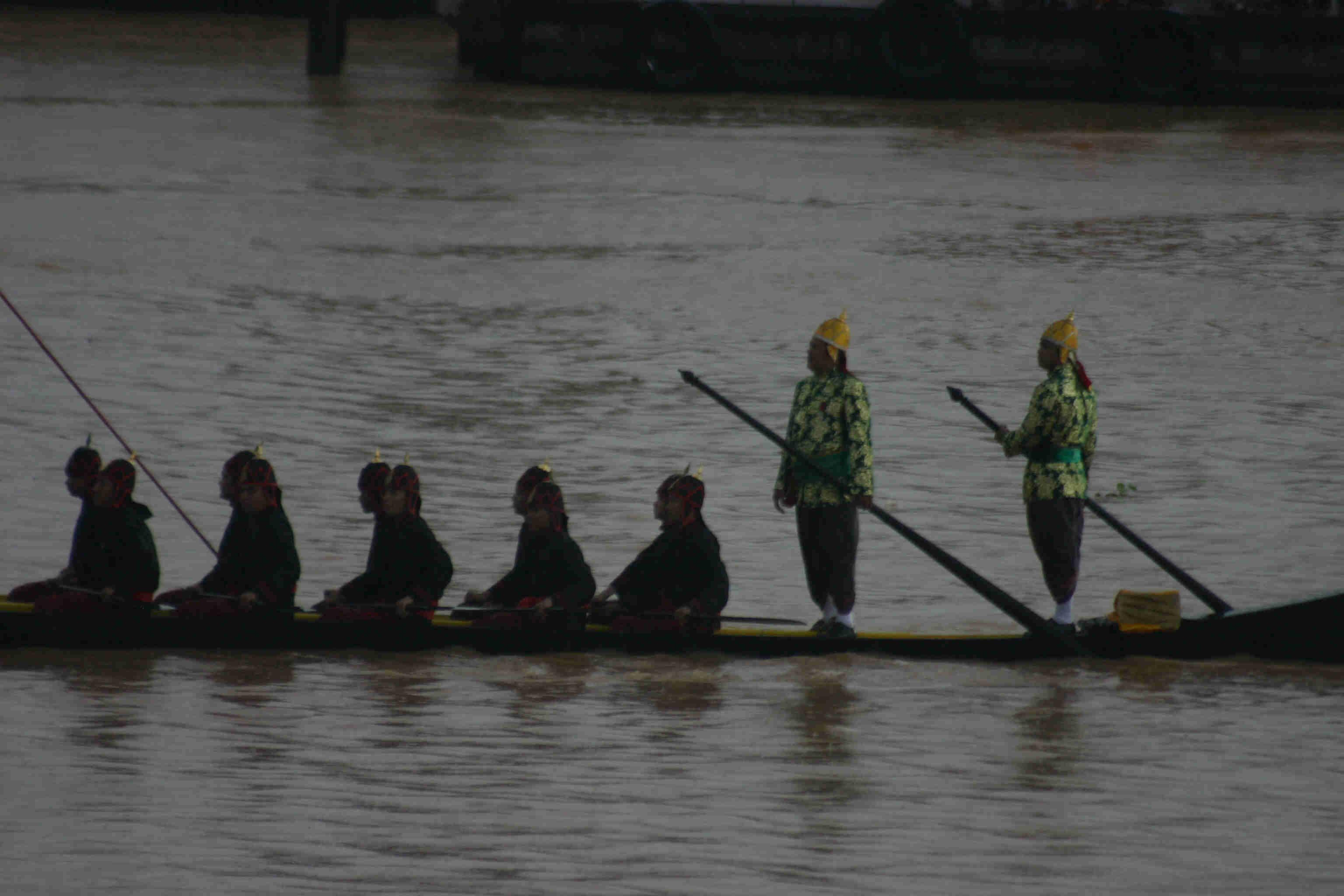
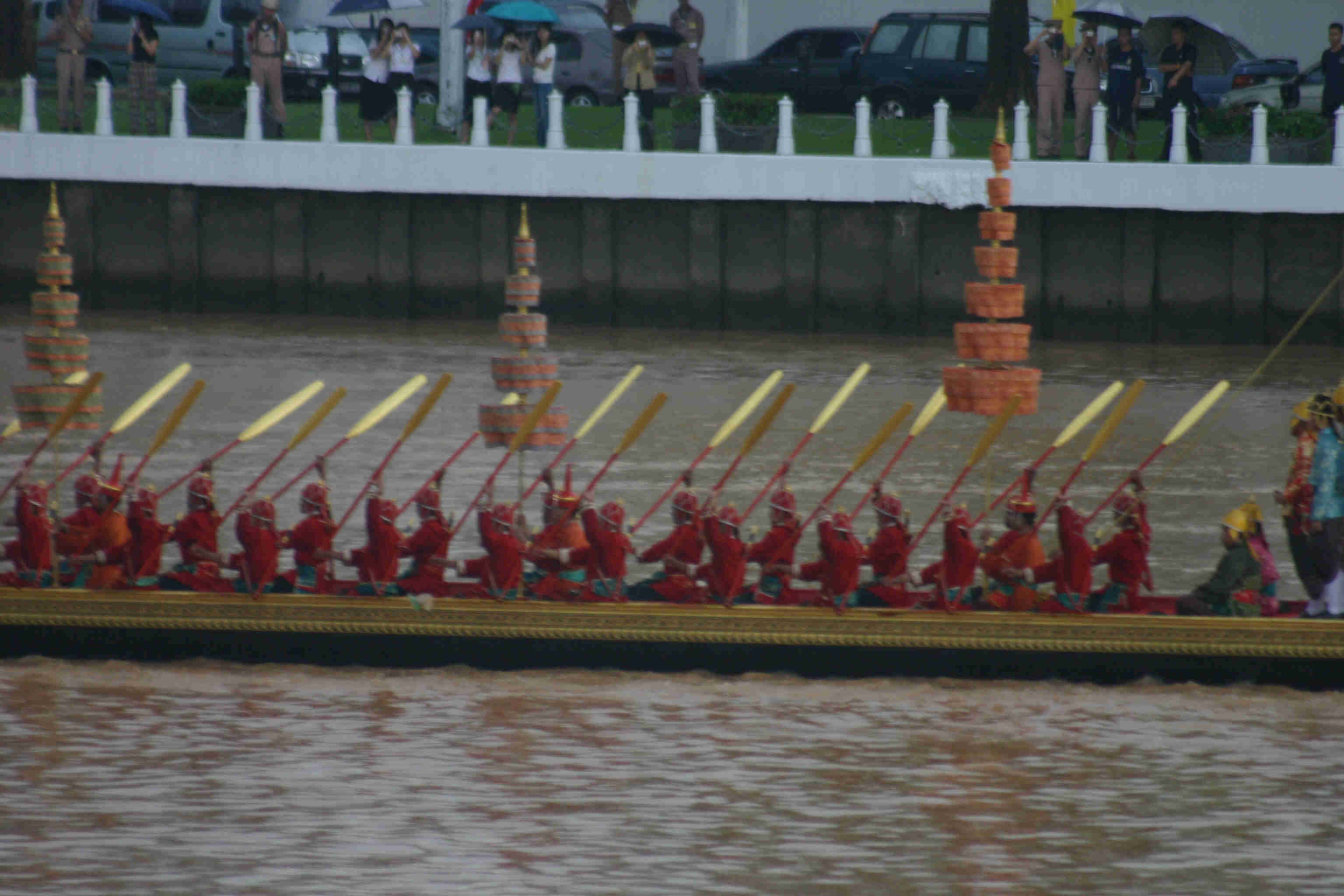
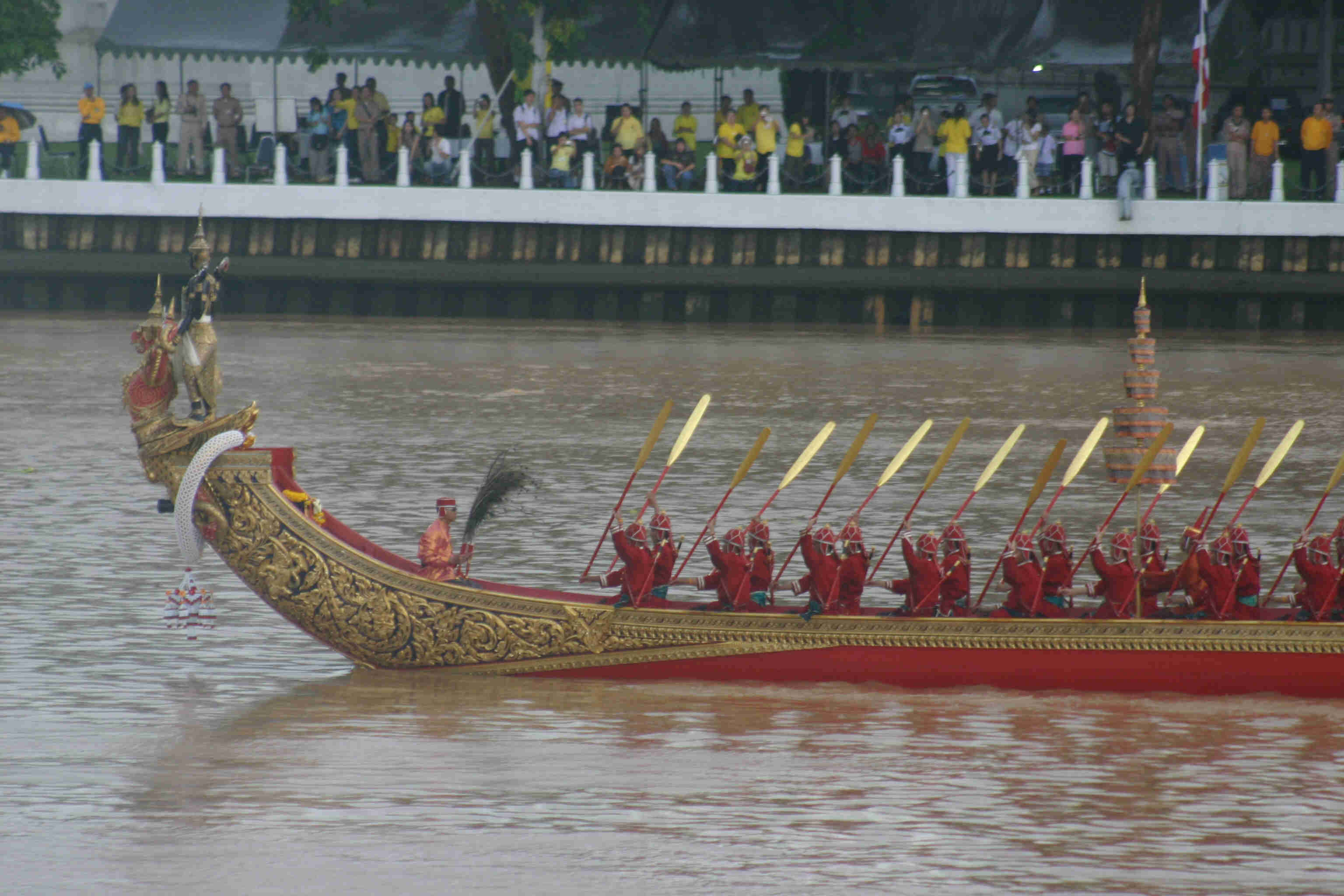
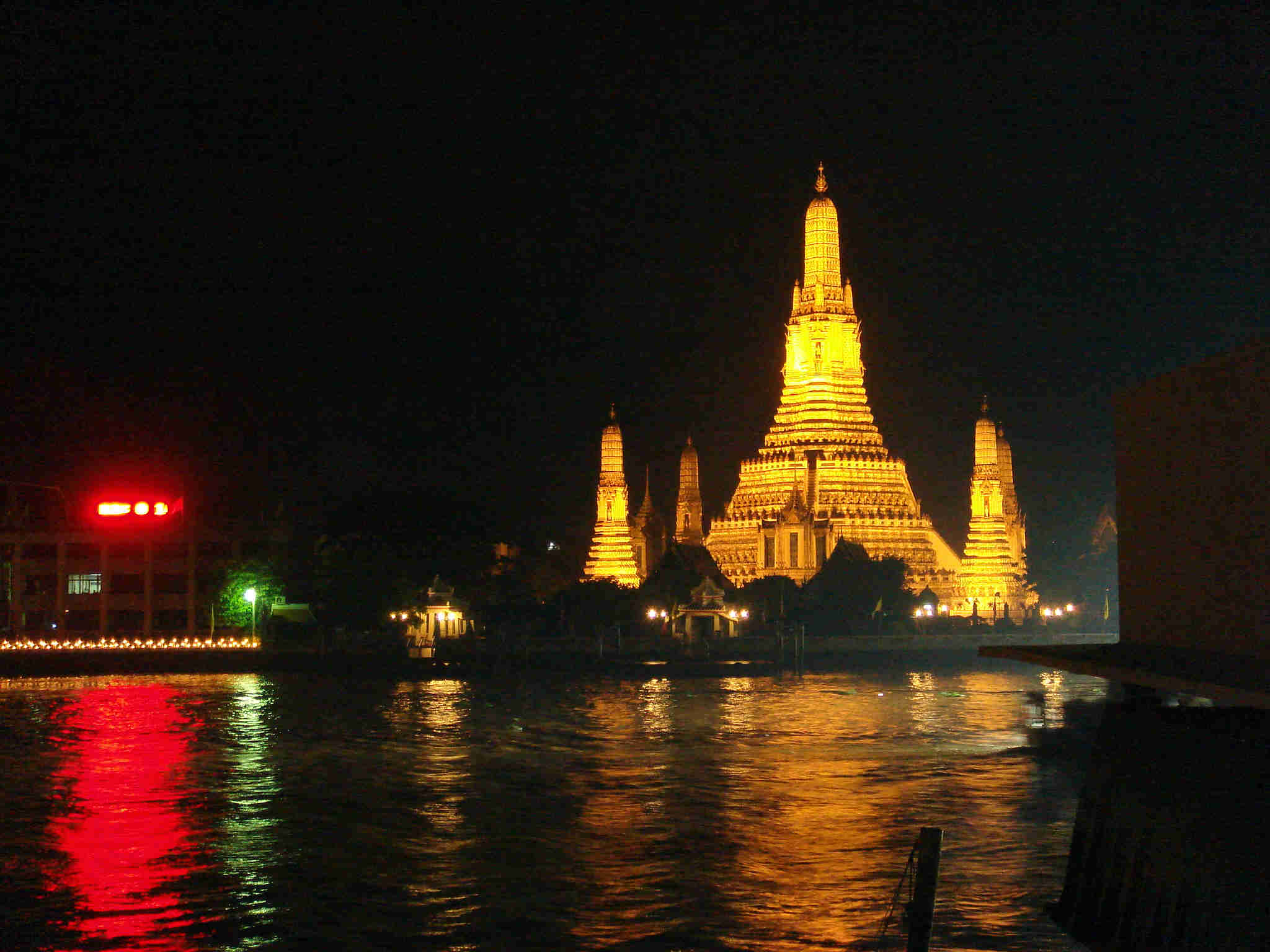
The Royal Barges
7 June 2006
The Royal Barge
procession will take place on 12 June 2006 to celebrate the 60th anniversary
of the King's accession to the Thai throne. Last night was a full
dress rehearsal and it is a spectacular sight.
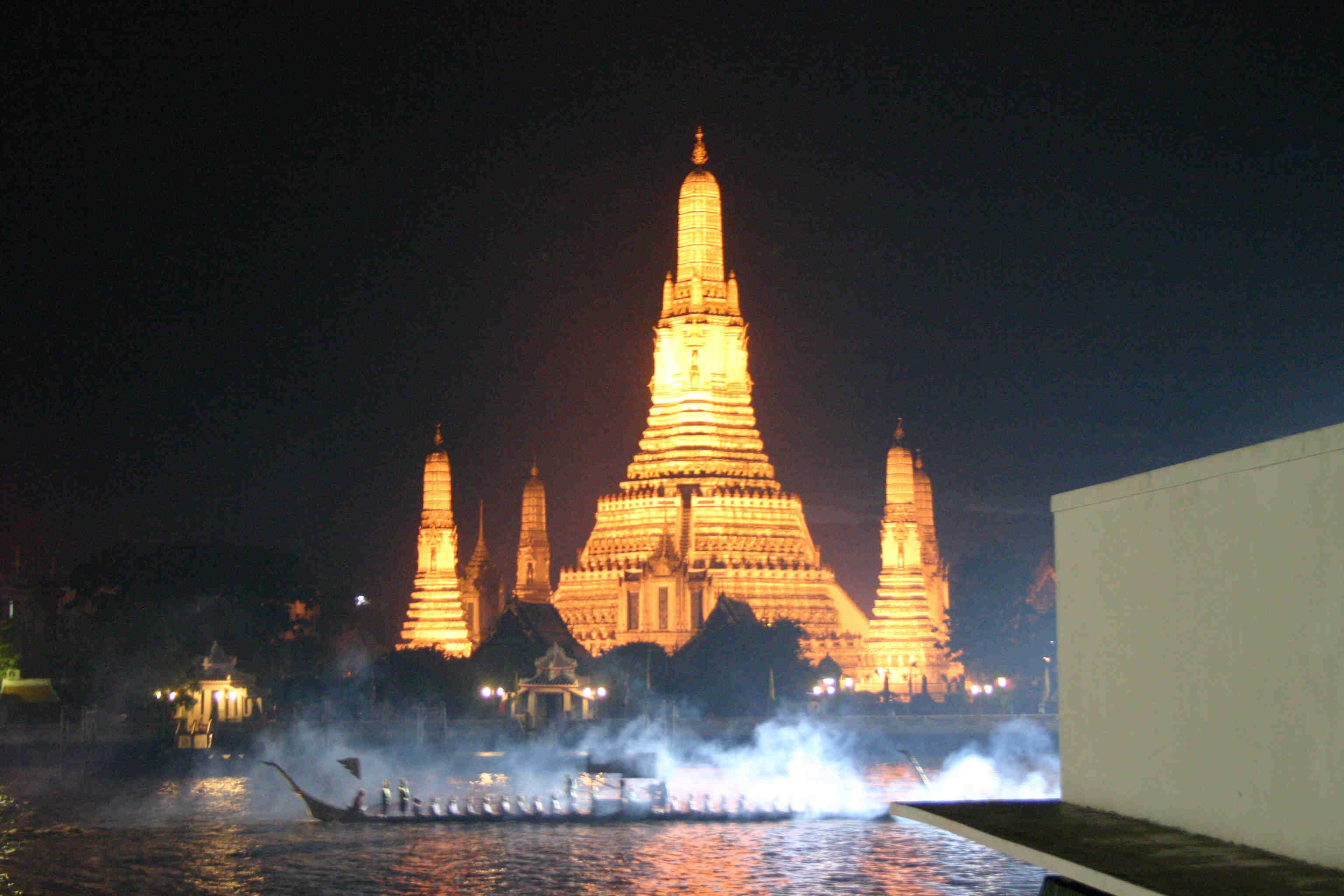
The barges
The costumes
 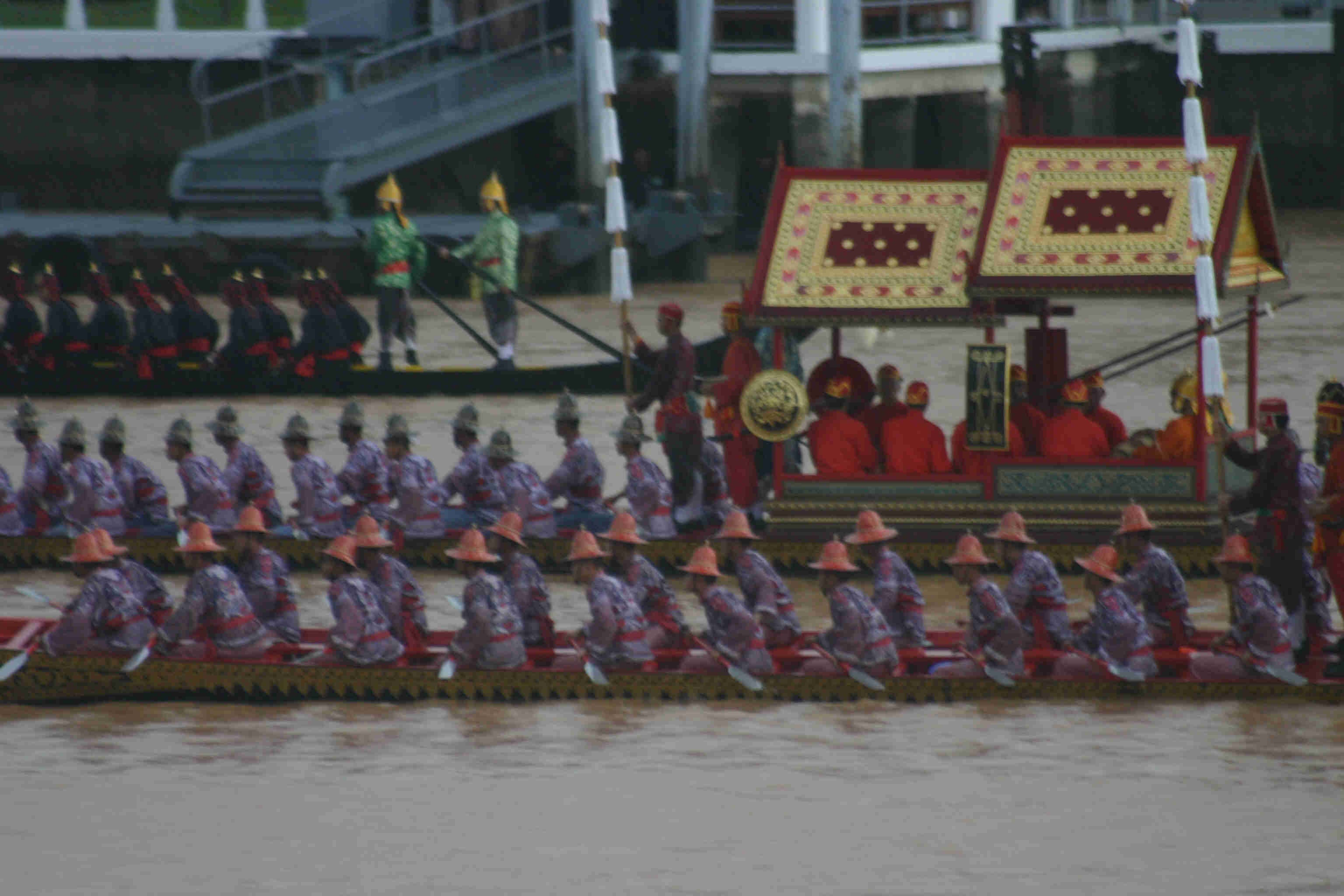 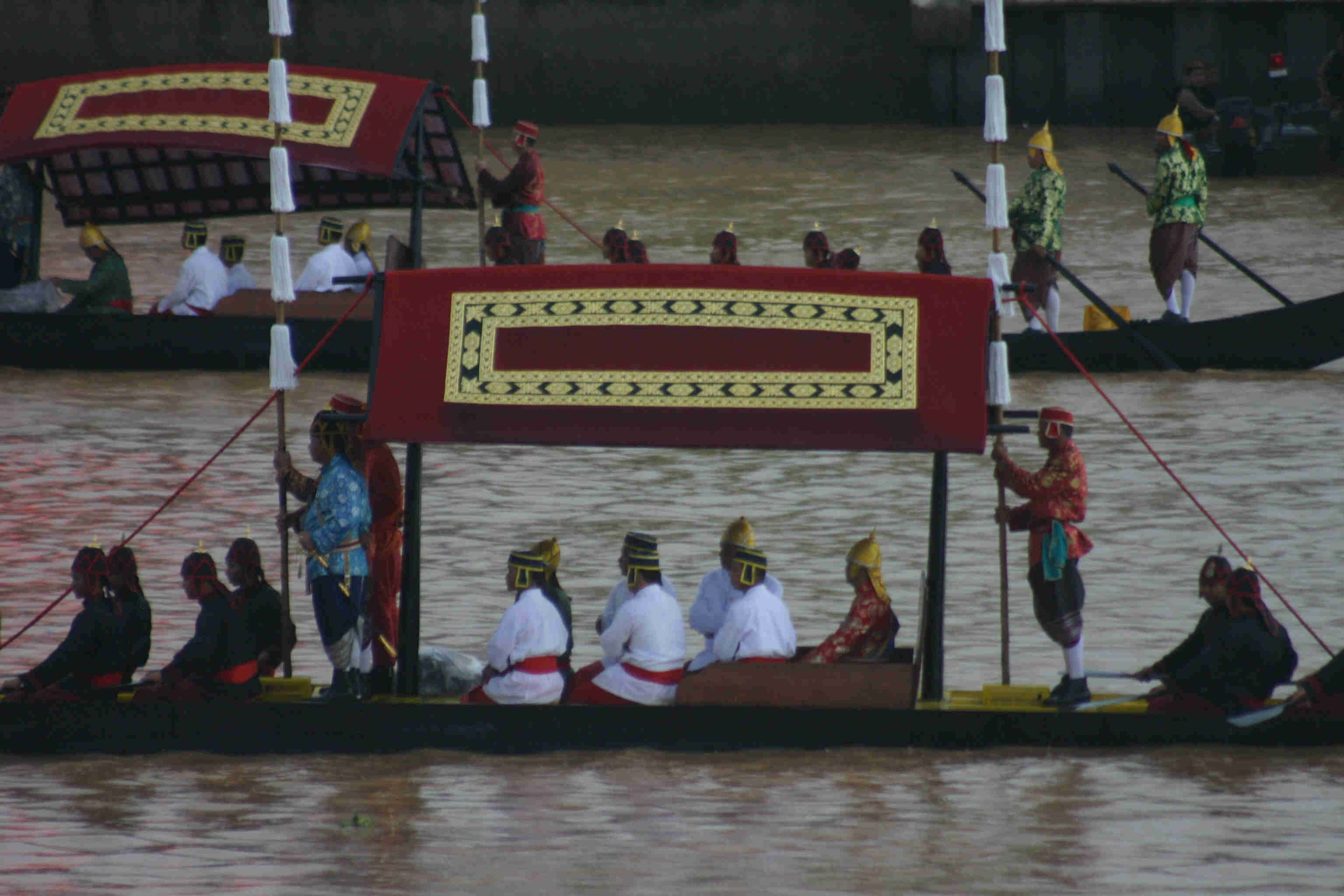
The technique
The stunning "Suphannahongsa"

By night
Girl, interrupted; Wie didn't make U.S. Open
this year, but it's coming
Put a pin in this
page and note it for future reference; Michelle Wie is making golf watchable.
There are plenty of snipers who complain that she has not won anything that
matters; that she should learn to win on the ladies tour. But the ladies
tour, with their heads stuck somewhere that the sun doesn't shine, exclude
her from all but six tournaments a year. So she beats up the men. She brings
in the crowds and that must be good for golf. Now if she could only sink a
few putts !
Michael
Bamberger; Sports Illustrated. 5 June 2006 wrote:
In the history of
American golf, nothing is as Old Guard as U.S. Open sectional qualifying
-- two rounds in one day, often played on sly courses designed by imported
Scotsmen that are guarded by clubhouses with creaking steps and suspect
plumbing. On Monday alone, there were 10 qualifying events across the
country, with a total of 577 golfers playing for 56 spots in the field of
the U.S. Open. As June final exams go, it's about as tough as it gets.
Among those 577
golfers -- including Mark O'Meara and Tom Lehman and other winners of major
championships -- there was only one woman, Michelle Wie, a Hawaiian teenager
whose parents were born in Korea. Maybe you've seen her on 60 Minutes.
Wie does things her own way. She turned pro last year, while still a junior
in high school. At 13, she was already talking about wanting to play on the
PGA Tour. Now, at 16, she's getting closer. The old order, the old way of
thinking, got nicked Monday.
It was an
important step. On Monday there was a girl playing with the boys for the
first time in a USGA sectional qualifier. A girl who, in the wet gray cool
of early morning, was wearing dangling earrings and clam-digger pants and a
coral-colored sweater that would look good on only one other golfer --
Arnold Palmer. Michelle Wie was at the Canoe Brook Country Club in the wilds
of northern New Jersey, trying to earn a place in the field at the 106th
U.S. Open, this year at Winged Foot, a tournament for which Tiger Woods and
Phil Mickelson have already secured their spots. No woman has ever played in
a U.S. Open before -- or the Masters or the British Open or the PGA
Championship. No woman, for that matter, has played in the NBA or fought for
the heavyweight title of the world, but things are changing. You've heard of
Danica Patrick, right? Michelle Wie didn't qualify for the U.S. Open -- she
needs to fix her putting game from 10 feet and in -- this year, but some
year she will. So will other women whose names we don't yet know.
Early Monday
morning she was on the practice tee at Canoe Brook, warming up for a 12-hour
day of golf. The other golfers -- at Canoe Brook there were 153 golfers
playing for 18 spots -- were using the garden-variety striped range balls
issued by the club. Wie, the youngest golfer in the field, was not. Her
father, B.J., came on to the range carrying a plastic shopping bag filled
with brand-new Nike practice balls, the brand she is paid to play, part of
an overall endorsement deal worth over $10 million. It takes chutzpah to
show up at a USGA event with your own practice balls, but the three Wies --
father, daughter and mother Bo --are not slaves to convention. B.J. Wie is
more Richard Williams (father of Serena and Venus) than Earl Woods. For
years now people have been saying that Michelle Wie should be playing
against other girls in junior events, learning how to win. The father has
never stopped to ask why.
But even while
trying to do something new, there was something lost-world about the golf at
Canoe Brook. There were a couple hundred spectators when she and her two
playing partners, former PGA Tour winner David Gossett and club pro Rick
Hartmann, played their morning round. The spectators wandered across the
fairways and made paths for the golfers with gallery ropes and with minimal
supervision, just like in the old sepia-toned clips from the early Bobby
Jones days. Of course, living in the times we do, ESPN was there, talk radio
was there, TV Ashai was there. But the crowd following them -- over a 1,000
by cocktail hour -- was mostly real golf fans, there on the hope that they'd
see something new.
"If you have the
opportunity to see something historic, and you can do it, why wouldn't you?"
said Robert Macdonald, a publisher of golf books.
Wie drove it with
her playing partners, hit the ball as high as her playing partners, chatted
(at least a little) with her playing partners. She putted like Fred Couples.
Over 36 holes, she missed once from five feet, twice from four feet, once
from two feet. In the morning, on the South Course, she shot 68, 2 under
par, and after lunch, on the more difficult North Course, she shot 75, 3
over par. She needed a two-round total of 138 to qualify for Winged Foot.
This year, she missed. There's next year and 30 more next years after that.
All she did Monday was not make it. There are more believers now than there
were before.
In the gallery on
Monday at Canoe Brook was Nicole Sikora, 23 years old and an aspiring
professional, watching Wie in person for the first time and soaking up
everything. "She can change the whole game," Sikora said. "Look at her.
She's not a girl playing golf. She's one of them." Sikora's looking to be
one of them, too.
Wie is still going
to school, in every sense. On Monday, she made a decidedly minor faux pas.
She hit a wild push off the 18th tee in the first round, and only wet rough
kept her ball from going in a pond. Distracted by this near-calamity, she
left her extra long tee, marked by stripes, right where she had planted it.
In golf, as in life, you're supposed to clean up after yourself. Hartmann,
playing after her, bent over to put his peg in and tossed Wie's tee to the
side. Gossett, who knows the rich and fallow periods golf can bring,
pocketed this semi-exotic little souvenir. At that point, the day showed
nothing but promise. By nightfall, looking through a longer lens, it still
did.
Will Cathay
Pacific buy its way into China?
5 June 2006
After some two
years of speculation it appears that Cathay Pacific is close to announcing
its purchase of Hing Kong based Dragonair. A deal would win Cathay, which
owns 17.8% of shares in Dragonair, access to much-coveted routes between
Hong Kong and mainland China.
Cathay has
struggled to gain access into China with only limited flights to Beijing (2
a day) and to Xiamen.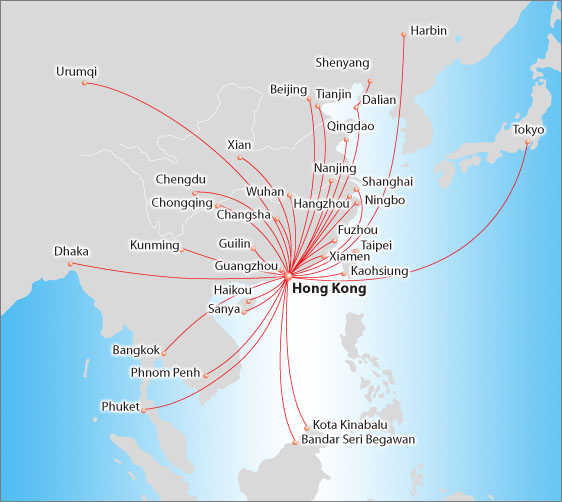
In 2004, Cathay Pacific took a
10% holding in Air China, to win greater access to mainland China.
But this appears to have done nothing to gain greater access
for Cathay. Instead Cathay has merely served as a training consultant to Air
China.
Dragonair's network is shown in
the graphic and includes the lucrative Hong Kong-Shanghai route.
To complete the purchase Cathay
Pacific would acquire holdings in Dragonair held by Swire Pacific, CITIC
Pacific and CNAC.
In March, Cathay reported a 25%
drop in annual profits as higher passenger numbers failed to offset a
surging fuel
Presumably the deal needs
regulatory approval from the Chinese government who will need to allow
Cathay to lay claim to the operating rights of Dragonair. The fact that
Cathay is ultimately controlled by UK-based John Swire & Sons Ltd., a legacy
of Hong Kong's days as a British colony, has been seen as a hindrance in its
efforts to win a meaningful share of the booming mainland China market.
As a part of any deal Air China
is likely to acquire shares in Cathay, becoming its third-largest
shareholder after Swire and CITIC Pacific.
It is an expensive deal. And it
is a little strange that Cathay no has to repurchase the airline that it
helped to create some 20 years ago. But for Cathay and for the One World
Alliance this is the way to build a significant network into China from a
tried and trusted hub. Anyone who has ever tried to transit through Beijing
or Shanghai will know that they are simply not set up for hub operations.
It will also be straightforward
to integrate KA's airbus fleet into Cathay.
The devil will be in the detail.
This is a huge deal that could create a very successful Chinese airline
which the three mainland Chinese carriers are going to struggle to compete
with.
United 93 - the film of the
year
4 June 2006
The UK reviews of United 93
are in, and they are compelling.
United 93
 Cert 15
Peter Bradshaw
Friday June 2, 2006
The Guardian
What other subject is there? What
other event is there? Nothing is so important, so inextinguishably
mind-boggling as the terrorist kamikaze flights of 9/11. Al-Qaida gave the
world a situationist spectacle that dwarfed anything from the conventional
workshops of politics and culture. Since then, Hollywood has indirectly
registered tremors from Ground Zero, but here is the first feature film to
tackle the terrible day head on, and Paul Greengrass has delivered a
blazingly powerful and gripping recreation of the fourth abortive hijacking.
It is conceived in a docu-style similar to Bloody Sunday, his movie about
the 1972 civil rights march in Northern Ireland. He does not use stars or
recognisable faces, and many of the characters in the air traffic control
scenes are played by the actual participants themselves.
This is an Anti-Titanic for the
multiplexes - a real-life disaster movie with no Leo and Kate and no
survivors: only terrorists whose emotional lives are relentlessly blank, and
heroes with no backstory. Greengrass reconstructs the story of the hijacked
plane that failed to reach its target (the Capitol dome in Washington DC)
almost certainly owing to a desperate uprising by the passengers themselves,
who were aware of the WTC crashes from mobile phone-calls home, and who
finally stormed the cabin, where terrorists were flying the plane. With
unbearable, claustrophobic severity, Greengrass keeps most of his final act
inside the aircraft itself.
The director is able to exploit
the remarkable fact that the sequence of events, from the first plane
crashing into the World Trade Centre at a quarter to nine, to the fourth
plane ditching into a field in Shanksville, Pennsylvania, at three minutes
past 10, fits with horrible irony inside conventional feature-film length,
and he is able to unfold the story in real time. It is at this point that a
critic might wish to say: caution, spoilers ahead. But we all know, or think
we know, how the story of United 93 comes out, and this is what makes the
film such a gutwrenching example of ordeal cinema. When the lights go down,
your heart-rate will inexorably start to climb. After about half an hour I
was having difficulty breathing. I wasn't the only one. The whole row I was
in sounded like an outing of emphysema patients.
Every last tiny detail is
drenched with unbearable tension, especially at the very beginning. Every
gesture, every look, every innocent greeting, every puzzled exchange of
glances over the air-traffic scopes, every panicky call between the civil
air authority and the military - it is all amplified, deafeningly, in pure
meaning. And the first scenes in which the United 93 passengers enter the
plane for their dull, routine early-morning flight are almost unwatchable.
These passengers are quite unlike the cross-section of America much mocked
in Airplane! - with the singing nun and the cute kid - neither are they
vividly drawn individuals with ingeniously imagined present or future
interconnections, like the cast of TV's Lost. They are just affluent
professionals from pretty much the same caste, with no great interest in
each other, and nothing in common except their fate. And all these people
are ghosts, all of them dead men and dead women walking. When they are
politely asked to pay attention to the "safety" procedures, ordinary
pre-9/11 reality all but snaps in two under the weight of historical irony.
But what does happen at the end
of the story? In his memorial address, President Bush implied that the
passengers committed an act of tragic self-immolation, rather than see the
Capitol destroyed. Is that what happened? Greengrass evidently disagrees. In
his vision, the passengers have a quixotic idea of using one passenger, a
trained pilot, to wrest control and bring the plane down safely to the
ground - a Hollywood ending, perhaps. But there is something very
un-Hollywood in Greengrass's refusal to confirm that without the passengers'
action they would have hit the Capitol. On the contrary, his script shows
the terrorists making a miscalculation of their own.
United 93 is growing, in popular
legend, into the tragic and redemptive part of the 9/11 story: America's act
of Sobibor defiance. It is a myth-making which is growing in parallel with
jabbering conspiracy theories that the plane was shot down by US air-force
jets and the whole passenger-action story is a cover-up. On that latter
point, Greengrass's movie shows us that it is easy to be wise after the
event; it is a reminder of how unthinkable 9/11 was, of how all too likely
it was that the civil and military authorities would not have mobilised in
time, and that any action would indeed have to come from the passengers
themselves. The film is at any rate fiercely critical of Bush and Cheney,
who are shown being quite unreachable by the authorities, desperate for
leadership and guidance.
United 93 does not offer the
political or analytical dimension of Antonia Bird and Ronan Bennett's 9/11
docu-drama Hamburg Cell; there is no analysis or explanation. The movie just
lives inside that stunned, astonished 90 minutes of horror between one epoch
and the next - and there is, to my mind, an overwhelming dramatic
justification for simply attempting to face, directly, the terrible moment
itself. The film might, I suspect, have to be viewed through an obtuse fog
of punditry from those who feel that it is insufficiently anti-Bush. It
shouldn't matter. Paul Greengrass and his cinematographer Barry Ackroyd have
created an intestinally powerful and magnificent memorial to the passengers
of that doomed flight. It is the film of the year. I needed to lie down in a
darkened room afterwards. So will you.
Brilliant, brutal and
utterly real
The first movie to address
directly the horrors of 9/11 is a gut-wrenching tour-de-force that demands
to be seen
Philip French
Sunday June 4, 2006
The Observer
United 93
(111 mins, 15)
Directed by Paul Greengrass; starring JJ Johnson, Gary Commock, David Basche,
Trish Gates
When you recreate actual events
for the cinema, and the prospective audience is presumed to know the
outcome, there are a variety of strategies available to the film-maker. One
is that used by the producers of The Longest Day, the 1962 movie about the
1944 Normandy landings, and Tora! Tora! Tora!, the 1970 picture about Pearl
Harbor: you have an all-star cast of familiar faces to play the wide range
of characters; you flash up the names, ranks and functions when each of them
first appears; and you have the people involved talk of how momentous they
feel the occasion to be. Another method is that followed by Roger Corman in
his 1967 reconstruction of The St Valentine's Day Massacre: you use a
portentous narrator to introduce the figures involved and to give a sense of
fateful inevitability to the proceedings.
British
writer-director Paul Greengrass, best known for his docudrama, Bloody
Sunday, and most commercially successful as director of the political
thriller, The Bourne Supremacy, has eschewed both these processes in United
93. This, as everyone will know by now, is a controversial, scrupulously
researched reconstruction of what happened on the morning of 11 September
2001, when four Arab terrorists took over United Airlines Flight 93, a
Boeing 757 flying from Newark, New Jersey to Los Angeles, with the intention
of using it as a bomb to destroy a target in Washington DC. Of the four
planes hijacked that day, it was the only one not to reach its target, which
the film suggests was the Capitol.
Except for a prologue in which we
see the four terrorists praying in their hotel room and then travelling to
the airport (passing a large roadside sign saying 'God Bless America'),
Greengrass restricts himself to the airport and the aircraft, and to a
variety of ground control centres. The function of the opening is to isolate
the hijackers from their victims, but we are told nothing of their
backgrounds. There are no names flashed up to identify anyone's function,
nor any familiar faces. Members of the aircrew are played by actual
stewardesses and pilots, and several key figures at the civil and military
control centres are played by the real people concerned.
The movie is gripping from first
to last, partly because, like a Greek tragedy, we are only too aware of
where everything is heading and partly because we are simultaneously taken
back to that day that shook the world and experience the events through the
eyes of the innocent passengers and the puzzled observers on the ground.
The other hijackings occur before
Flight 93 takes off, and there's a terrible irony in a young man rushing
down the corridor to board the plane just before the doors close, and a
chilling frisson in the view across the Hudson River from the Newark control
tower to the twin towers of the World Trade Centre, which are soon to be
issuing plumes of smoke.
What we go through again with the
controllers is the gradual apprehension of the unspeakable, unprecedented
horror of what is afoot. They haven't had a hijacking for years. With the
passengers and crew on Flight 93, we re-experience the discovery that we're
living with a new kind of enemy. This isn't one of those hijackings where
the perpetrators are seeking a ransom or a flight to freedom. On the ground,
the technicians are fumbling to adjust themselves to the beginning of a new
era. As at Pearl Harbor, they're unprepared and confused, talking about
'rules of engagement' and discovering that there's nothing they can do until
word comes from the President who, like the Vice-President, is
incommunicado. The movie manages to be lucid in its presentation of chaos.
The hijackers, their eyes and
body language revealing their nervousness, do not show their hand until an
hour into the film. From then on, the movie works in more-or-less real time
as the brutal takeover is followed by the shocked passengers and
stewardesses coming to appreciate the horror of their predicament. As in
most movies today, and as in life, mobile phones play a key role; in
communicating with families and ground staff; receiving information about
the fate of the Twin Towers and the Pentagon; and sending last-minute
communications, mostly declarations of love, to family and friends.
Both hijackers and their victims
are praying to their different gods, and the urgency, fear and indecision is
conveyed by hand-held camera work and rapid cutting. A man in his thirties,
speaking with a German accent, urges co-operation with the terrorists,
believing common sense will prevail. Even after the critical consensus to
fight back has been made, he continues to plead for calm and has to be
suppressed. By this point, I was engaged as intensely as I have ever been
with a film - tears in my eyes while hearing those last messages, admiration
for the passengers' resolve to go down fighting like the defenders of the
Alamo. Would I have done the same? I hope so. From the moment one of the
leaders says: 'Let's roll', the movie is gut-wrenchingly visceral, right up
to the final seconds, as we in the audience urge them on, hoping that
somehow history might be changed.
It has been said that too little
time has passed between the actual events of 9/11 and the making of this
docudrama. I cannot agree. Greengrass, his cast and associates have
consulted the families of the victims at all stages of making the picture,
and they have produced a sober, unsensational film that is at once
dramatically involving and morally challenging. At the very least, it is a
fitting memorial to the courage of these men and women who decided they were
not going to be passive victims and ended up saving hundreds of lives and
averting the destruction of a national shrine.
Royal Barge Procession a spectacle not to be
missed
Published on Jun 2, 2006 - The Nation - Bangkok
The highlight of the celebrations of the 60th
Anniversary of His Majesty the King's accession to the throne will be the
Royal Barge Procession on June 12.
This spectacular procession of the royal barges along the Chao Phya River
will be witnessed by the kings, queens and royal representatives of 26
countries, along with Thais and people from all around the world. It is a
once-in-a-lifetime experience that you should not miss.
The Royal Barge Procession will
start at Vasukri Pier, near the National Library, and end at the Temple of
Dawn. A total of 52 barges will take part in the procession, formed into
five contingents. The four most important barges are Suphanahong, Ananta
Nakharaj, Narai Songsuban of Rama IX, and Anekachart Phuchong. The entire
procession will be 1.2 kilometres long and 90 metres wide, with 2,200
oarsmen. Truly a part of our cultural heritage, the Royal Barge Procession
is the only one of its kind in the world.
In the old days, the Royal Barge
Procession reflected the military might of the Ayutthaya kings. King
Naresuan the Great, in one of his tireless military campaigns, travelled in
a procession of royal barges to wage war in Burma's Moulemein. King Narai
the Great, who preferred Lop Buri to Ayutthaya as his capital, also
travelled in the Royal Barge Procession to visit various outposts in his
kingdom. King Narai's Royal Barge Procession came to be known as the "Phetch
Phuang Procession".
Other Ayutthaya kings also
travelled by royal barge to pay respects to the Buddha's Footprint in
Saraburi during the Royal Kathin Ceremony. All Thai children know from their
schoolbooks about the tragic yet heroic act of Phanthai Norasingh. Legend
has it that during the reign of Phrachao Sua, there was an able captain of
the king's barge named Phanthai Norasingh. His job was to stay at the stern
of the barge to control the tiller and guide the rhythm of the oarsmen. One
day, the barge was travelling on a very treacherous river and the captain
could not control it. The bow of the barge struck a tree branch and broke.
Ancient tradition prescribed
severe punishment - execution - for a captain who caused damage to the royal
barge. In this particular case, Phrachao Sua did not want to punish Phanthai
because he understood that the accident was beyond anybody's control. But
Phanthai insisted that he be punished in order to maintain tradition. He was
executed by beheading.
Later on, the Royal Barge
Procession was held largely during royal ceremonies as battles on water had
become less significant. During the Rattanakosin Period King Yodfa, or King
Rama I, took part in the Royal Barge Procession in the first year of his
reign in 1782 when he travelled to Wat Bangwahyai and Wat Hong to attend the
Royal Kathin Ceremony.
There have been 14 Royal Barge
Processions in the reign of the present King Rama IX. The first was held in
1957 to coincide with 2,500 years of Buddhism. The most recent one was held
for visiting heads of state when the Thailand hosted the Asia-Pacific
Economic and Cooperation meeting in October 2003. As for the Royal Barge
Procession to be held on June 12, His Majesty the King will witness the
spectacular sight, along with other kings, queens and royal representatives,
from the Royal Navy Building on the Thonburi side of Bangkok.
There will be three rehearsals of
the Royal Barge Procession - one today and the other two on Tuesday and
Friday next week - before the actual event. The rehearsals offer a good
chance to witness the grandeur of the Royal Barge Procession from a choice
position along the Chao Phaya River between Vasukri Pier and Wat Arun. It
will be more difficult to find a good spot on June 12 because thousands of
people will be lining up along the river to watch the spectacle. The world
will be sharing Thailand's pride during this and all the other events
marking the 60th anniversary of His Majesty the King's accession to the
throne.
Atrocity and
Cover Up - the US failings at Haditha
2 June 2006
We are so used to
hearing about atrocities in Iraq that it is easier to turn a deaf ear and
ignore the facts and the implications.
But the US
government is openly using the words 'atrocity' and 'massacre' to describe
acts by the U.S. military in a November 19, 2005 incident in Haditha, Iraq
when a small group of Marines, according to the claims, shot at least 24
Iraqi men, women and children. The slayings were allegedly triggered by the
killing of a Marine in a bomb attack.
The killing of
civilians by Marines there is reminiscent of the 1968 My Lai massacre, which
galvanized opposition to the Vietnam War. This story would be too ugly to be
credible if it hadn't happened before. It makes the prisoner abuses at Abu
Ghraib seem benign by comparison and harms America's cause and credibility
in Iraq, and, indeed, around the world. It also makes those nations
such as the UK, that have stood by the Americans, look similarly embattled.
Throughout history
invading and occupying forces have committed atrocities; but the USA chose
the moral high ground in its war in Iraq. The USA insists that what it
offers is better than what was there before. War is hell, but in this war
the USA has to be holier than thou. And it has failed abjectly.
The politicians
really did not know what they were getting into in Iraq. The town of Haditha
is at the violent epicenter of the Sunni insurgency responsible for the
majority of U.S. casualties since the fall of Saddam Hussein. U.S.
forces, often inadequately trained and undermanned and like Vietnam, young
and under educated, leave the relative safety of their base to patrol a land
where it can be treacherously difficult to distinguish friend from foe,
innocent from deadly.
But the fault lies
not just with the marines; the whole culture of cover up needs to be
exposed. That six months on we are still seeking the truth of events on this
day is embarrassing. Allegedly the marine squad leader involved in the
deaths of the civilians falsely reported that they had been killed by a
roadside bomb.
Members of a
separate marine unit that removed the bodies also failed to report they had
been shot at close range, and senior officers failed to launch an
investigation even after doubt was cast on the official version of events by
human rights investigators and journalists. A marine captain ridiculed Time
journalists for looking into the case. "I cannot believe you're buying any
of this," he emailed the magazine. "This falls into the same category of any
aqi [al-Qaida in Iraq] propaganda."
Iraq is broken.
The US Army long ago lost control of Iraq's security. Now it's losing a grip
on its own soldiers, who are exhausted and demoralized by everything they've
seen.
It is time to give
Iraq back to its people and let events unfurl. Iraq is broken and America is
not a force for good or for change in Iraq.
Finally, someone
needs to explain why Donald Rumsfeld still has a job.
|