|
Democracy in
Asia? Beware of Thailand
The explosive mix of street protests and veiled military threats holds the
government hostage - a risk for the spread of totalitarian regimes in the
whole region
by Francesco Sisci, La Stampa, Italy. 28 June 2008 - the article is
interesting; assuming the failure of democracy in Thailand could somehow
affect the rest of Asia is a little far fetched. Thailand's politics has
been a basket case for so long already that one more coup wont change
anything,
"In modern democracies, countries give themselves an electoral system, then
hold elections, and the winner rules for the established period of time.
Massive protests sometimes can push governments to send citizens to the
ballots at an earlier date, but this is the exception to the rule.
Governments brought into power by the shouting of a mob may be
revolutionary, but they are not democratic.
That situation seems to occur in Thailand, where street protests have cried
for new elections three times in as many years. However, the government won
the elections each time and belied the protesters, who then proved to
represent only a minority of society.
When a minority imposes its will on the majority, it is not a democracy—it
is a dictatorship. In fact, in September 2006, after months of loud
demonstrations, the military staged a coup d’etat in Thailand that did not
punish the protesters but banished the ruling party, Thaksin Shinawatra’s
Thai Rak Thai (TRT). The military set new rules, disbanded the TRT, forbid
Thaksin from taking part in campaigning, and called new elections for
December 2007. Once again, Thaksin won the elections, with a new party that
backed him, the People’s Party.
This should have settled once and for all the situation: If Thaksin managed
to win an election held under rules designed to his disadvantage, certainly
most Thais wanted him—or his fellow party members—to rule.
Yet, a month ago, protesters took to the streets once again, demanding the
government resignation—just six months after last elections!
It is absolutely clear: The protesters represent a minority. As such, they
should be allowed to voice their grievances but only as far as they do not
interfere with the government functioning.
Moreover, as in any democratic country, demonstrations have to be authorized
and otherwise must be forcibly removed. This is necessary to prevent the
minority from prevailing on the majority and establishing a dictatorship.
This is not happening—the police seem powerless, the military refuses to
intervene, and the demonstrations grow bolder by the day. The protesters
insist on the same old thing: The prime minister must quit. Why should he
quit? Because a mob said so. Then who should appoint the new government? Who
knows. Or does somebody?
But this is not democracy. This is, once again, a coup d’etat. It does not
matter whether the military rolls out tanks to banish the prime minister; it
is bad enough that they tolerate a situation where a democratically elected
government is held hostage to a rabble shouting empty slogans.
Not only that: Last month, the Thai generals publicly announced on
television that “they did not want a coup.” This sounded like a threat—so
much so that American Secretary of Defense Robert Gates immediately reacted
by saying that the U.S. wanted democracy, not a coup, for Thailand.
For a few days, the generals stepped back and the protesters grew silent.
But then, the escalation started all over again.
What's at stake? The power to change Thailand’s old ways. A group of
entrenched interests opposes the radical reforms brought by Thaksin. He
wants to foster new entrepreneurs, create new small and medium enterprises,
give credit to new companies, and let old inefficient ones go bust. But
those old companies hate to lose their privileges to newcomers and are
trying to cling to their monopolies by any means. Three elections prove that
the majority of Thailand is with Thaksin.
If the protesters and their organizers disagree, well, they can write to
newspapers, quietly organize, wait for the next elections, and hope to win.
But they aren't doing that—they just demand that the prime minister quit.
One can call it as he likes it, but it is, once more, an attempted coup.
If Thailand's democracy fails again, Burma, with its military regime, will
be lost forever. What's more, the militaries that just went back to their
barracks in the Philippines and Indonesia may be tempted to come out of them
and seize power. The effort to push reforms and disarmament in North Korea
would lose steam.
Western drive for democracy and human rights in China would lose credibility
if America’s firm ally in the region were to slip back to chaos or military
rule. Who could believe the West wants really democracy in China when it
allows democratic Thai government to be toppled by a raging mob? In sum, the
whole Asian political balance would be at stake.
In July 1997 the crash of the Thai stock exchange triggered the Asian
financial crisis that crippled the world economy. Then, for months there had
been signs of the coming catastrophe, but very few in Thailand and in the
world thought that cold lead to a global disaster.
Fascism started in Italy, then a minor European power, in 1922. A group of
people took the law into their own hands, donned black shirts, and marched
on Rome intimidating the Italian king, the public, and even the army into
surrendering power."
How oil is reshaping the aviation world
27 June 2008
With oil prices
soon to hit US$150 a barrel the global airline industry is in turmoil, but
not everyone is seeing it the same way.
Many airlines are staring at disaster, while some see the coming bad news as
an opportunity.
That's why what is happening now to the world's airlines is more than just
another steep downturn. It is a complete transformation of power and size
within the industry. It may also mean the end of the low costs airline. With
escalating oil prices it is impossible to now be low cost. It is just a
fight to see who can keep their other costs lowest.
When the trade cycle heads back up again in perhaps a year or two, the
global airline business will have taken on a very different appearance.
The US and European legacy airlines are collapsing. Most operate old,
fuel-thirsty aircraft; they operate in a cut-throat market and many are
still inefficient, despite having been through prolonged bankruptcy
processes.
But, worst of all, demand for travel is dropping as the effects of fuel
prices filter through to consumers.
If it were not for the US summer season peak period right now, where seats
were already sold, the scale of fleet cutbacks and aircraft groundings would
be even more aggressive than already announced. Airline share values are
collapsing. US Airways, already had a severely depressed share price, which
has halved again in just a month. With valuations slumping like that,
something is going to have to give in the US industry. Alitalia is as good
as dead.
USA based airlines
will look to merge to consolidate. Northwest will die as it is absorbed into
Delta. Expect United and Continental to court eachother. Suddenly Emirated
moves into the top ten of global carriers by passengers carried.
The wider economic malaise is spreading quickly across the world. The
airlines are beginning to absorb higher costs, but as consumer sentiment and
demand deteriorate, the bottom line effects spread.
So, where airlines were previously able to cover the higher costs by adding
"fuel surcharges", softer demand means that if they continue to do so,
travellers simply stay on the ground. The lead indicator of forward bookings
already clearly shows there is a slowing down in travel.
India's airlines, which had been experiencing rapid, but profitless growth
will lose around $2.08 billion this year, even if things don't deteriorate
further. And European airlines, hurting at home, are announcing that the
Chinese long-haul market has slowed significantly in the past quarter.
Japan, another key market in this region, is cooling fast as well.
Across the world airlines are bunkering down and preparing for the worst.
Except in the Middle East. Emirates is not slowing its growth and from July
the airline will acquire two wide body aircraft a month. And that will
go on for 58 months.
Emirates will be increasing its seat capacity by more than 20 per cent
annually for the foreseeable future. And the airline appears able to fill
these new planes in part because other airlines are being forced to cut
back.
Emirates - along with its neighbouring airlines, Etihad and Qatar - are the
airlines of the future.
This downturn will accelerate its future, as the carrier capitalises on its
great advantages: it is based in the middle of the world, now able, with new
generation aircraft, to fly non-stop to any point on the globe and sporting
an established brand with decent quality product.
The magic ingredient that now allows Emirates to prosper where they couldn't
before is that governments are increasingly willing to open up their markets
to so-called sixth freedom airlines (which carry end-to-end passengers in
transit via their home base). Now a traveller can fly from Melbourne with
one-stop (Dubai) to unlikely small points like Venice. Or bigger ones like
Sao Paolo.
Emirates will soon have the youngest large aircraft fleet around, when its
93 large aircraft orders (and another 50 options) arrive. Half of those are
massive A380s.
These new planes have better fuel consumption and yes the airline has access
to fuel sources. Emirates and the new Middle East airlines can profitably
establish long-term dominance of the airline industry over the next two
years, while others are forced to cut back.
This coming downturn is going to be very tough on many airlines and Emirates
may emerge as the world's leading international airline before any stability
returns.
The road
hazards of the UAE
27 June 2008
It was a nice
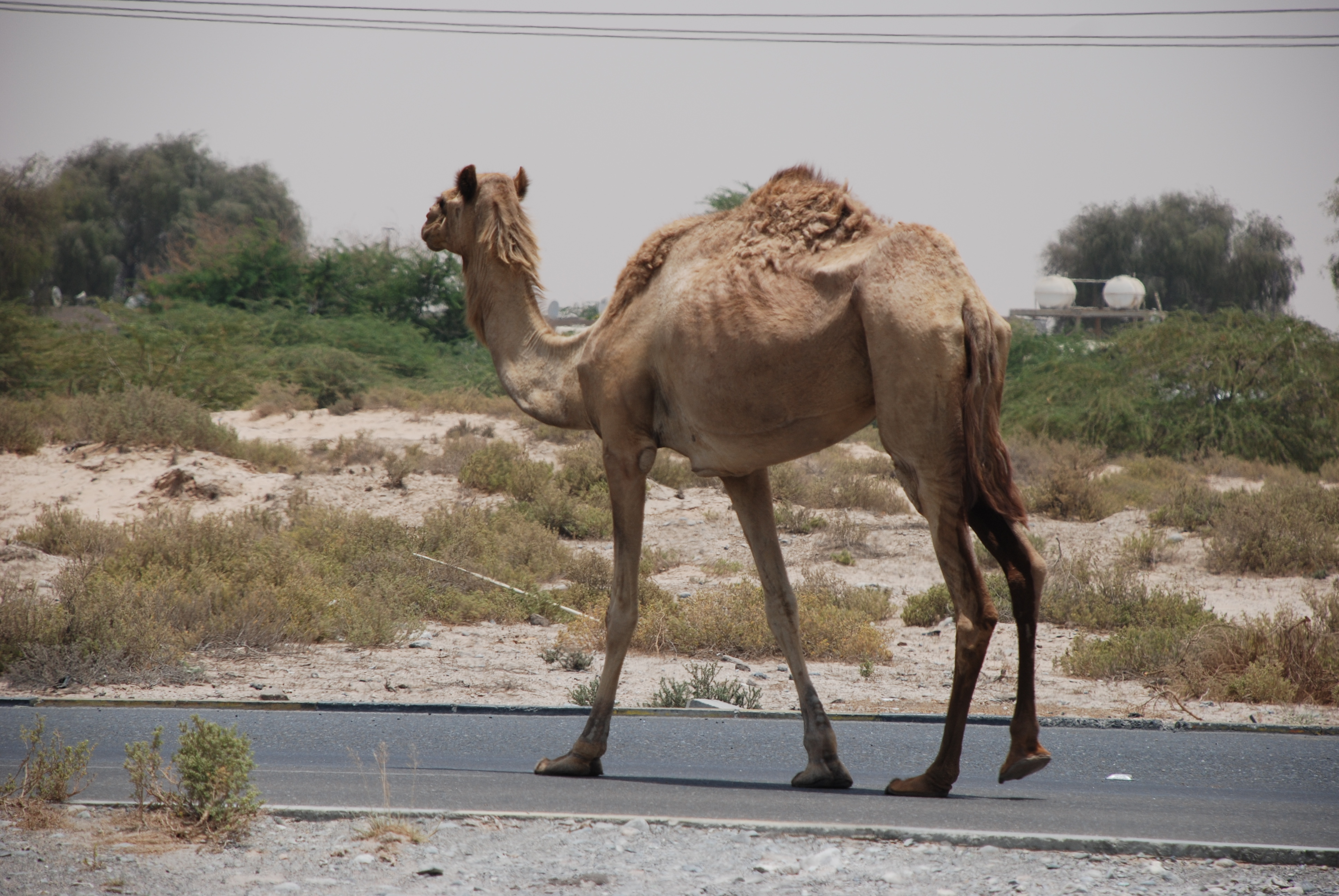
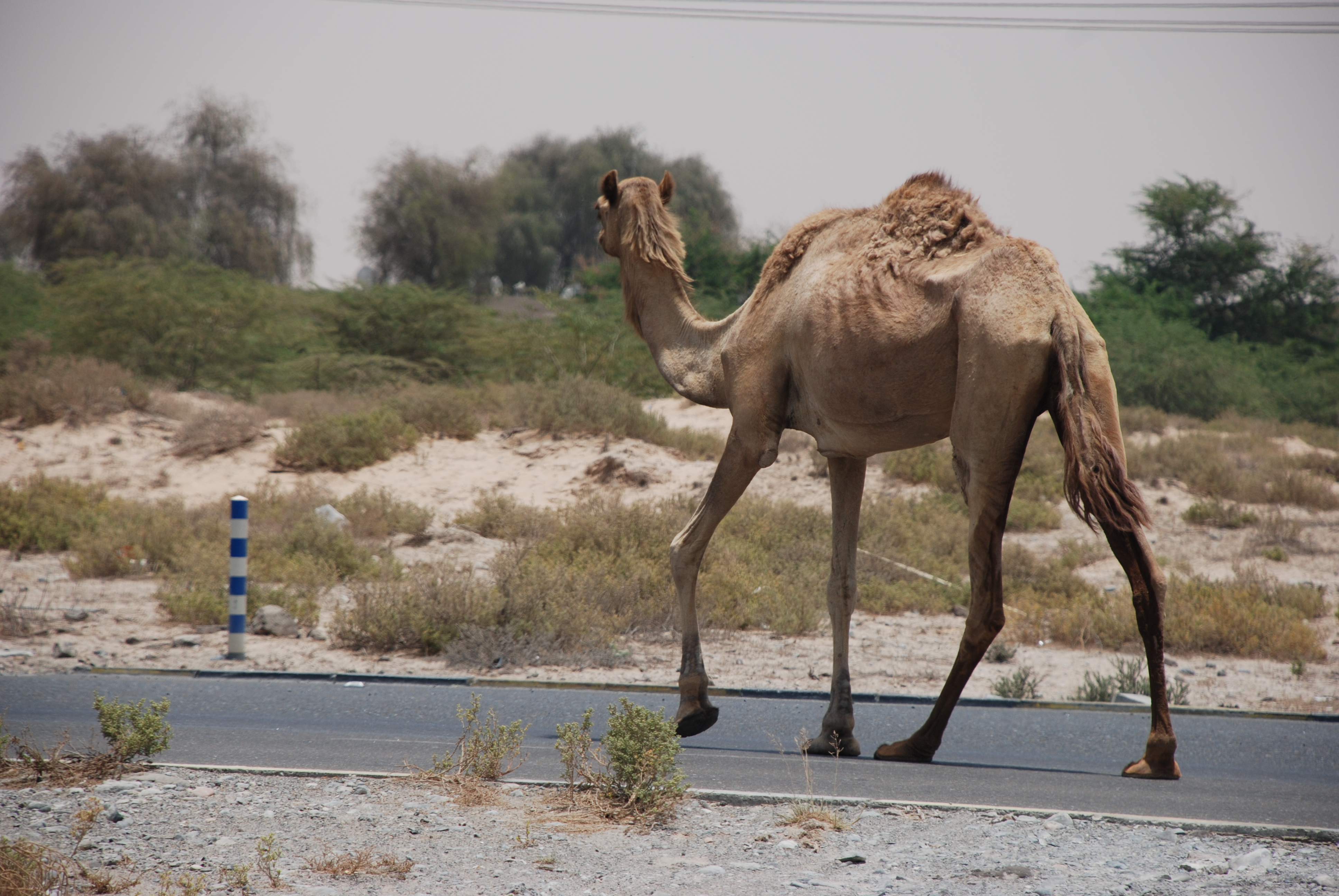
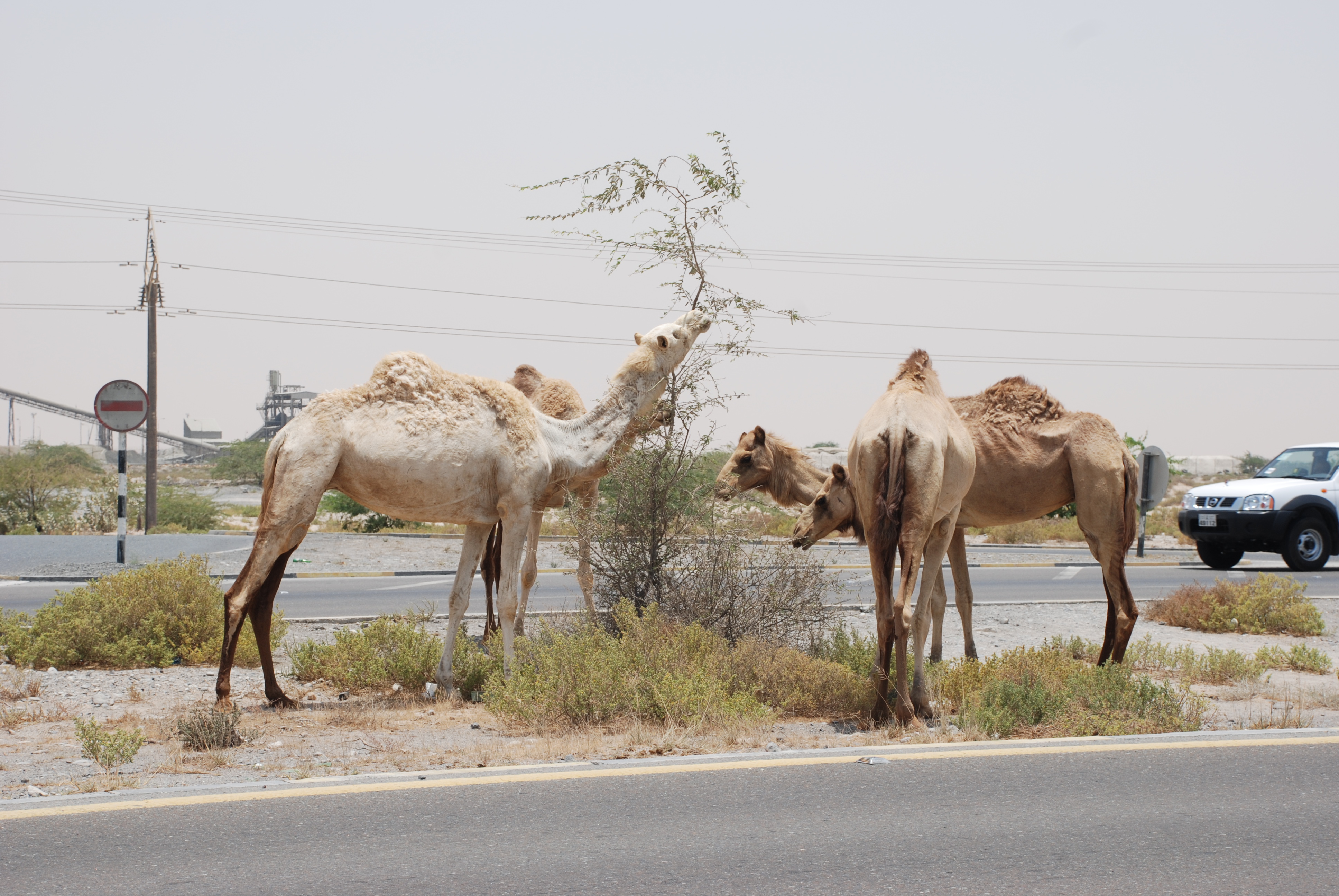
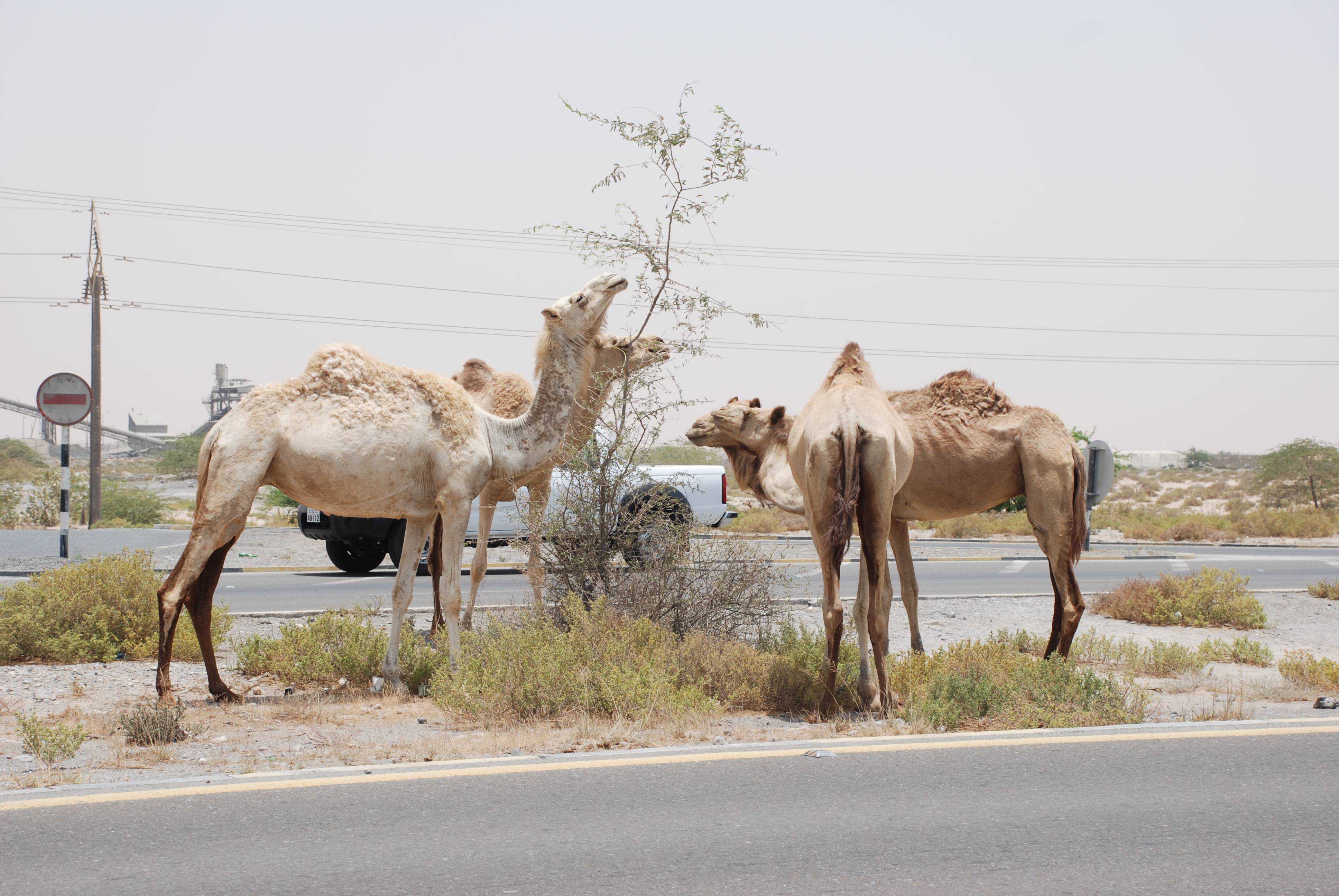
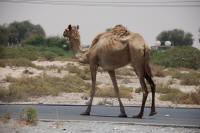
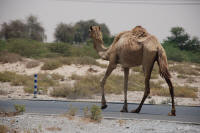
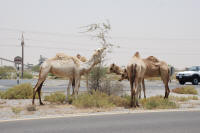
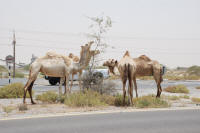
morning drive to the Northern UAE; but there are some unusual hazards both
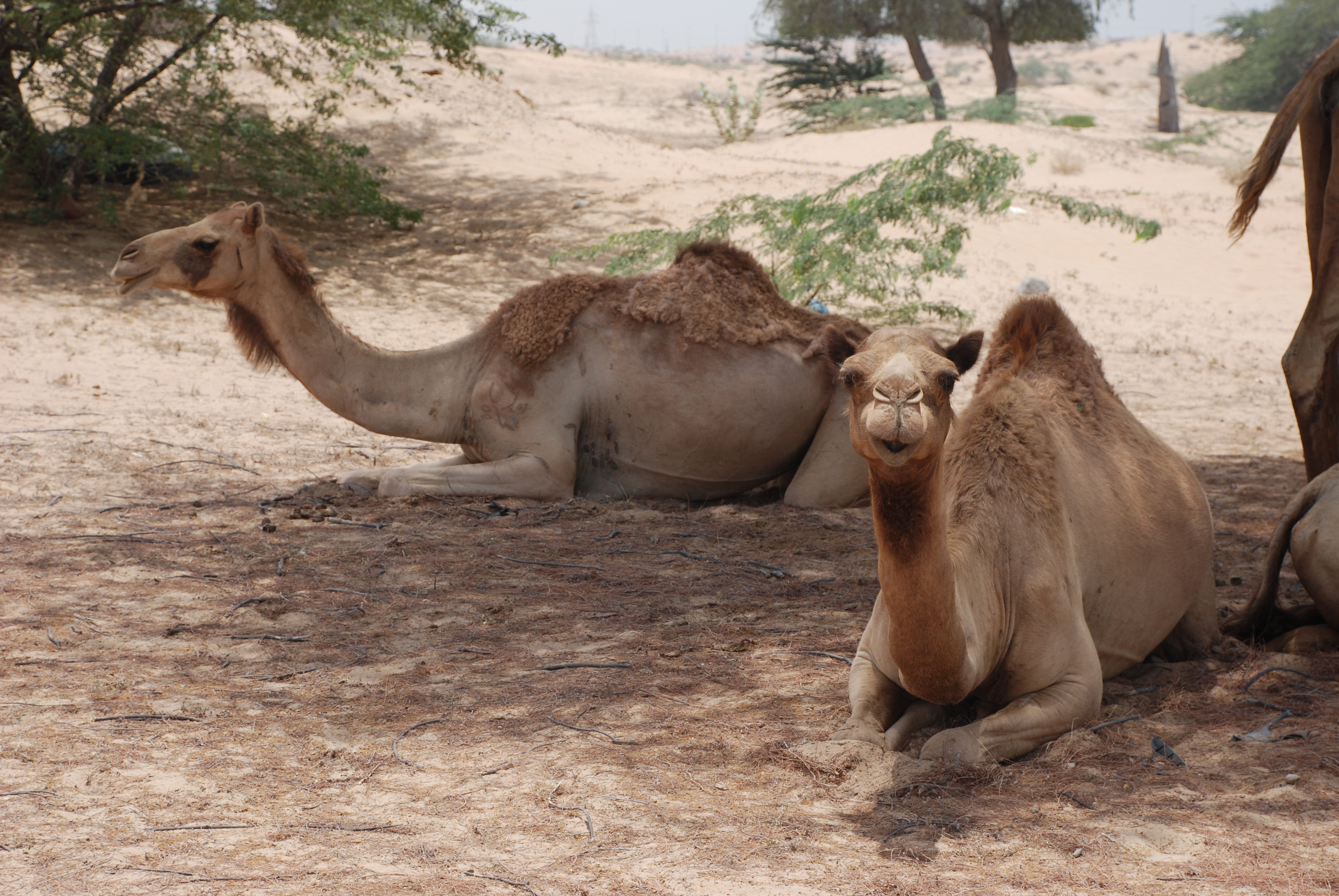
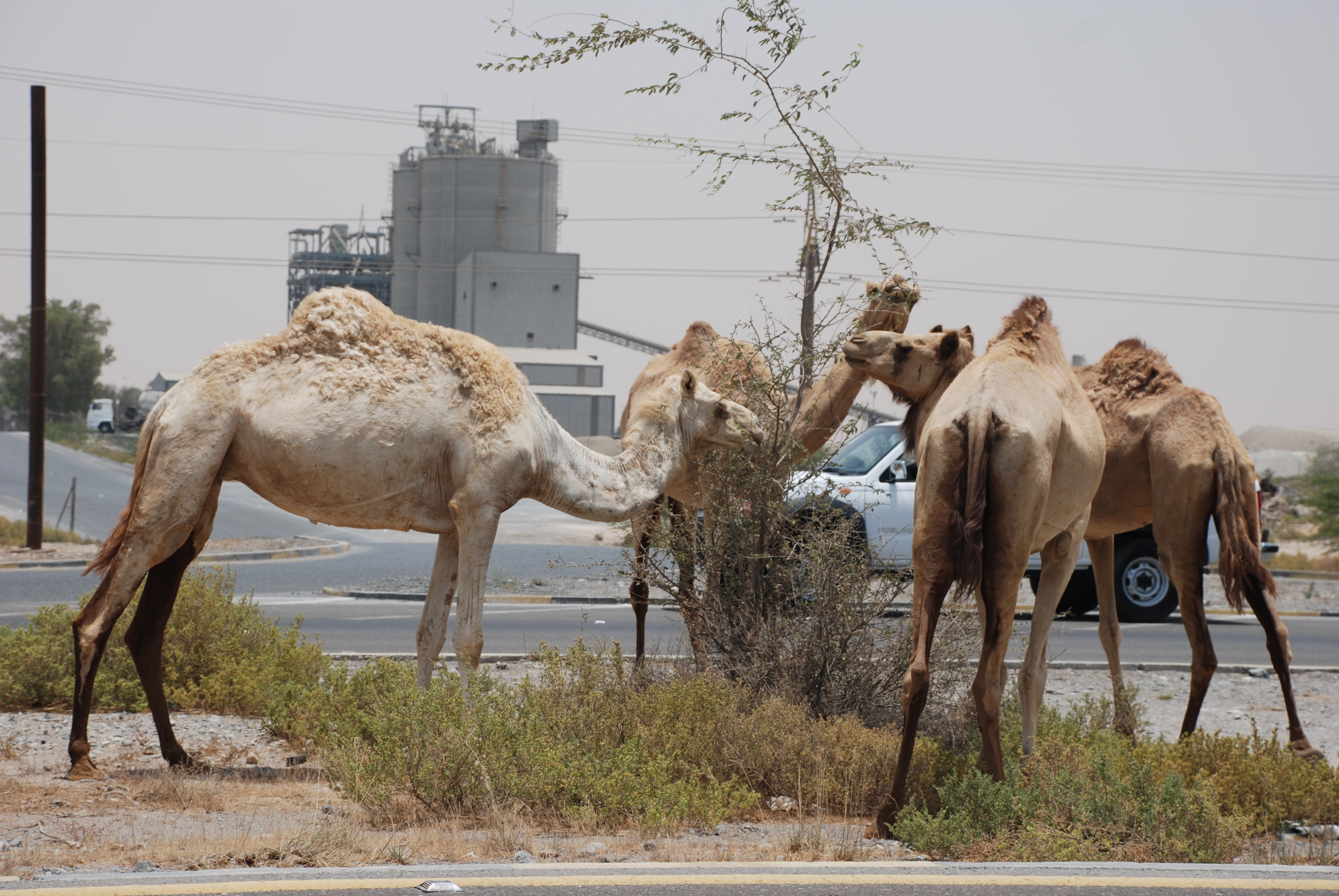
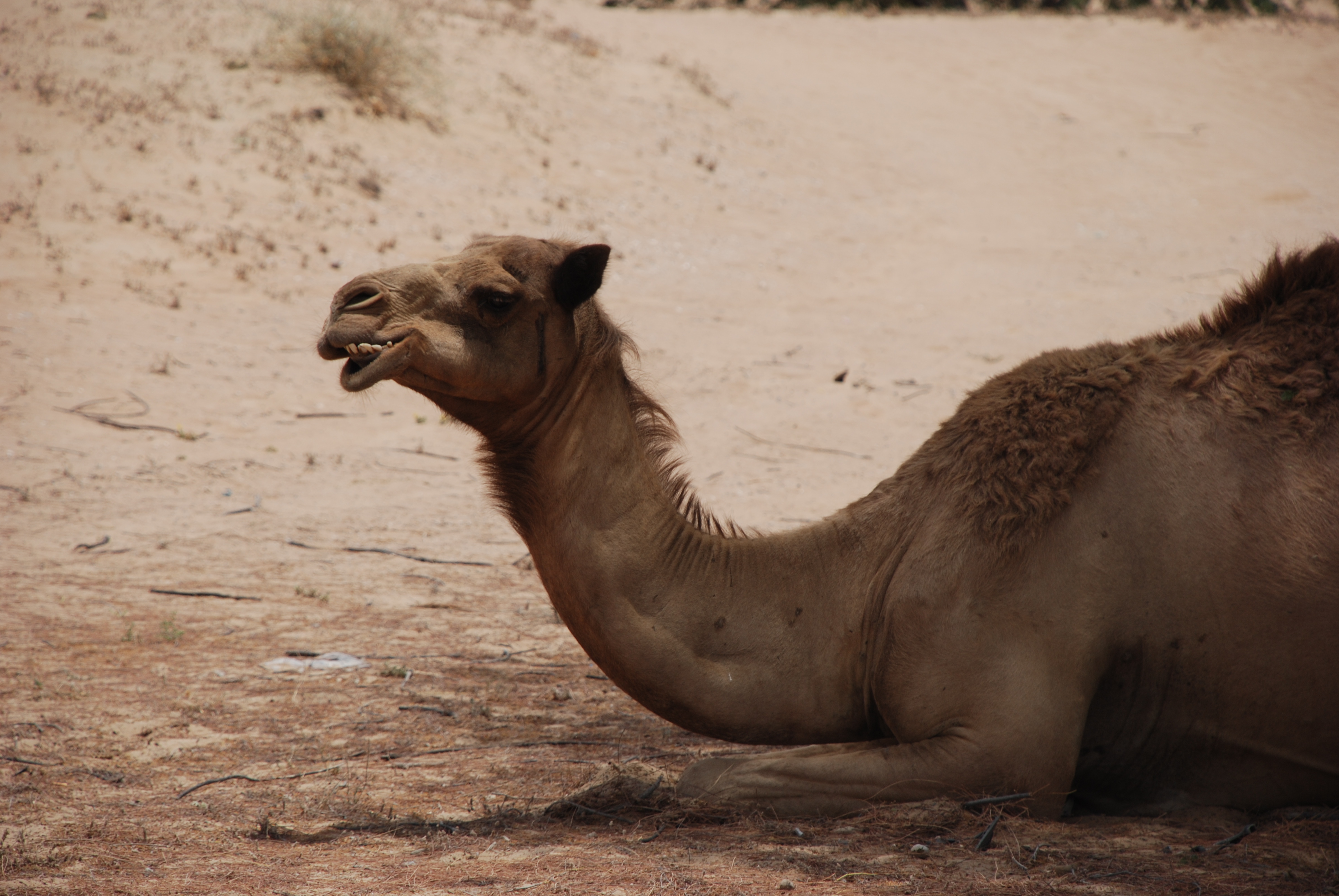
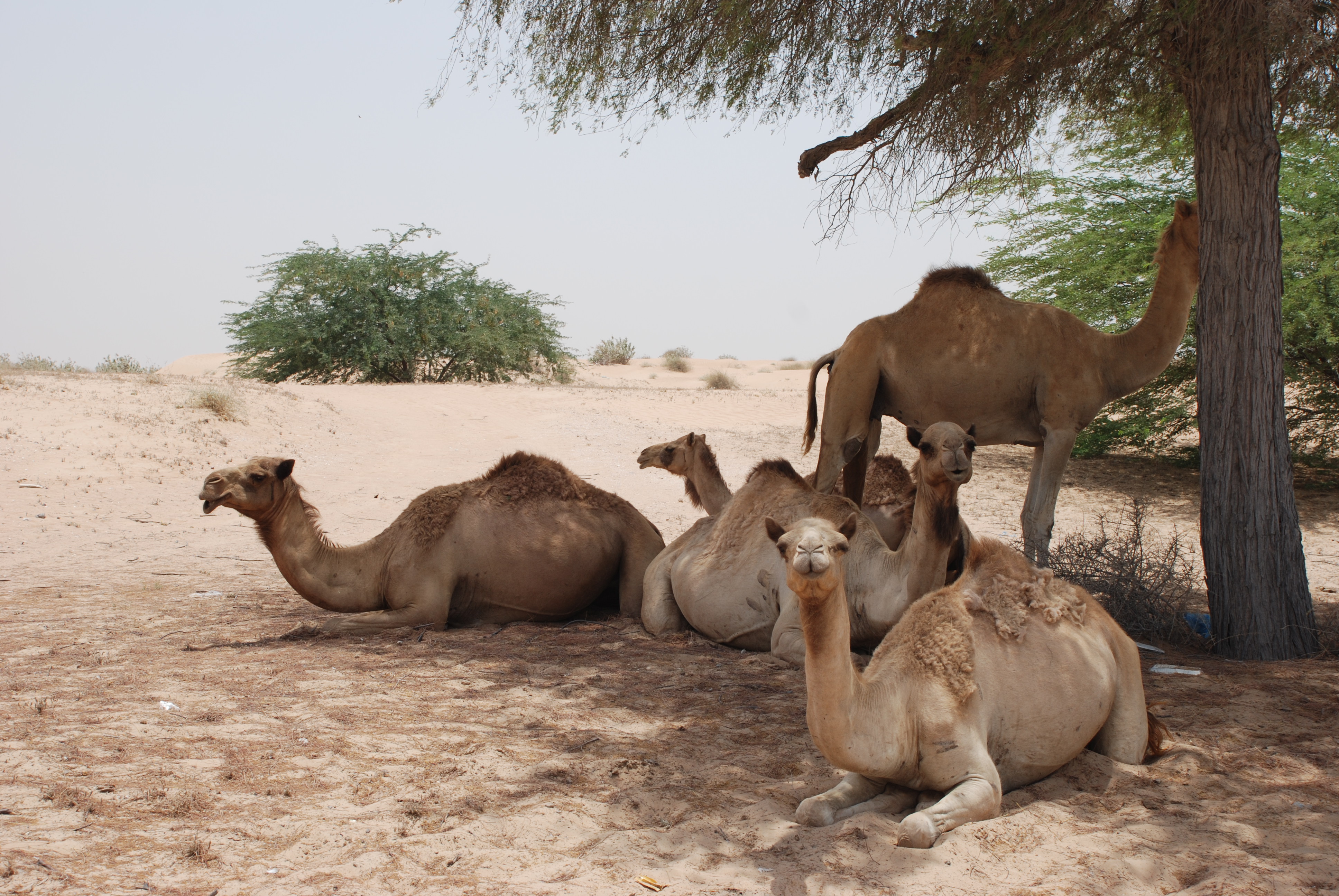
on the roads and grazing by the road side !This is the 4 lane coast road
from Duabi and Sharjah to Ras Al Khaimah !
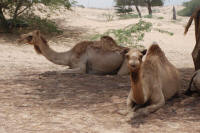 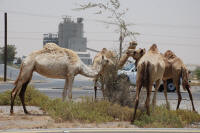 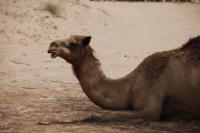 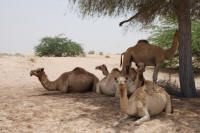
Amazing
Thailand; Samak denies insanity
26 June 2008
Facing a three day
no confidence debate in the Thai parliament Prime Minister Samak Sundaravej
has fiercely defended his mental and physical health, insisting he is fit
and capable of leading the government.
His assertion came
after Democrat MP Malinee Sukvejworakij, who is a doctor of medicine, told
the House that Mr Samak showed symptoms of a mental deficiency and behaviour
disorder. He should take leave and get treatment for the sake of the
country, she said.
She held aloft a book, Phu Puay Pok Krong Loke (Sick People who Ruled the
World), as the Democrats attacked Mr Samak for his ''aggressive behaviour
and bad temper''.
Mr Samak fought back strongly. ''You can ask the cabinet whether I am fit to
administer the country. Would you like to compete with me in a brain game,
like a memory test?'' he said.
Dr Malinee said there was medical evidence to confirm that his glaring at
reporters and ordering cake and red cordial drinks like a child reflected a
low IQ and low emotional quotient.
She referred to Mr Samak's moody look prior to a luncheon with coalition
partners early this month.
The book showed the harm that came from having sick patients as rulers, such
as Adolf Hitler who had Parkinson's disease and took 28 medications a day.
Putting Samak and Hitler in the same sentence is farcical; which makes this
lady's whole argument invalid.
''A leader needs both mental and physical strength. Mr Samak should take a
break to seek medical help,'' she said.
Mr Samak said her medical licence should be reviewed. ''It's the first time
I've seen a doctor diagnose a patient on the floor of parliament.''
Mr Samak maintained he had quarterly health examinations, adding that his
surname means ''good doctor''.
And he only glared at reporters to show his displeasure, he said.
''If I am crazy because I glare at reporters, then all actors in soap operas
will have gone mad, they glare at each other all the time. And there's no
point worrying about my liking red drinks.''
Later, Democrat MP for Nakhon Si Thammarat Theptai Senpong said Mr Samak was
immature, impolite and rude to both Thai and foreign reporters.
He broke false news such as a coup in the making and a bank going under, and
apologised afterward for the damage.
He said Mr Samak had been found guilty of defaming people several times.
A court gave him a two-year suspended jail term for falsely accusing former
science and technology minister Damrong Latthapipat of involvement with
drugs.
He also is appealing a conviction for defaming Bangkok deputy governor
Samart Ratchapolsitte by saying a construction firm bought him a BMW car.
Mr Samak replied shortly, saying he felt ashamed for the people who had
attacked him.
If this is the
best that the Thai Democrats can do in opposition that Thailand will be
governed by Samak and his friends for a long time to come.
Duck; Donald
does Dubai
26 Jun3 2008
This week saw the
US$5 million (Dh18.4m) “global launch” of the Dubai's Trump Tower building.
The launch was held in New York where on a corner of Central Park, about 200
luminaries and media executives sipped drinks while butlers in all-white
suits served trays of hors d’oeuvres.
More than the launch of a single tower, the event was part of an aggressive
stepping up of Dubai into the international market. Suspend your disbelief
at this point. Chris O’Donnell, the chief executive of Nakheel, took the
stage after Mr Trump and cited the world’s “greatest” cities. “London, New
York, Sydney,” he said. “And now, Dubai.”
Nakheel, a property developer wholly owned by an investment fund of the
Dubai Government, is increasingly taking on the role of ambassador for
Dubai’s construction boom. As the property market matures, Nakheel and other
developers want to prove to the international investment community that its
rapid growth and status as a hangout for the rich and famous is sustainable.
Their is one interesting contract - as US home prices continue to sag and
the economy worsens, Dubai’s economy is growing. Yet for Americans, who are
usually geographically more challenged than most, Dubai remains a hazardous
place to invest.
Mr Trump would not say whether his company had made any financial investment
in the new tower that will bear his name because it was a “private deal”.
His son, Eric, who is vice president of acquisitions at the Trump
Organisation, said “Dubai is a developer’s dream,” adding “you can build
anything you want. It really allows us to let our creative side out. The
only boundaries are your imagination and the laws of physics.”
Thaksin linked
to pastry-gate bribes
25 June 2008
In Bangkok the
Supreme Court yesterday sentenced three attorneys for ousted premier Thaksin
Shinawatra and his wife Pojaman to six months in prison for attempted
bribery.
The court ruled that the three had conspired to undermine the judiciary's
reputation and integrity by stashing Bt2 million in cash in a snack box
handed to a court official on June 10.
According to the presiding judge at yesterday's trial, the bribery attempt
was "a serious matter" and "grave" action that insulted the highest court.
In the meantime there is an on-going trial involving Thaksin and his wife in
the Ratchadaphisek land purchase, in which the ex-premier is accused of
abusing his power while in office for a sweetheart deal with the government.
How pastry-gate will impact the Thaksin case is unclear but it is clear that
it wont help the Shinwatras.
Thana Tansiri, the lawyer who delivered the snack box stashed with Bt1,000
notes worth around Bt2 million, was not present at yesterday's sentencing.
He had asked for a trial postponement, claiming health reasons, but the
judges dismissed the request on grounds that his health problems didn't
appear to be serious.
The court then ordered police to issue an arrest warrant for the lawyer. I
wonder of he is even in the country !
The two other convicted lawyers were Pichit Chuenban and Suphasri Sriswat.
Thana had argued in his testimony that it was a mistake, as his driver got
the wrong box for him to deliver to the court official. If in doubt blame
the driver. And if that was the case who was the Bt 2 million meant for!
The judges effectively called Thana a liar. They ruled the argument
unlikely, saying that if Thana really intended to give chocolate or pastries
he could have done it in the open in the presence of other officials, not
privately with Thitipong alone.
The court believed Pichit and Suphasri were also "working closely" with
Thana as all of them appeared at the court on that day.
I have to confess
that I really don't understand what happened here. Thaksin really does have
more brain than to use open bribery in a court. Isn't it a little strange
that the whole case was resolved so quickly. Why would Thaksin's lawyers,
highly educated, experienced and well aware that 2 million is chicken feed
to Thailand's hi-so, would apparently try to bribe judges with such an
amount in daylight?
Is this the
establishment taking a hard line with Thaksin?
Dubai LCC is "FlyDubai"
25 June 2008
Dubai’s new low
cost airline has been named FlyDubai. The brand identity and livery for
FlyDubai will be unveiled in the coming months.
The airline's ambitions are simple; to provide no-frills flights to bring
people to and from Dubai. The airline expects to launch its first flights by
mid-2009.
FlyDubai will initially focus on regional flights within the GCC area and
surrounding countries. The new management team at the airline have been
recruiting for key positions, evaluating aircraft options and routes,
working out our pricing and distribution strategy, and putting in place the
structure and operational resources for the business. And presumably
worrying about whether the whole thing will work given the recent escalation
in oil prices.
It will be very
interesting to see where the airline will fly to initially and will it
compete head on with Emirates on some routes. Indeed are there some routes
that Emirates will withdraw from to allow them to be taken on by FlyDubai.
Its operations will be entirely separate from Emirates Airline and Group.
EK delays west
coast launch
25 June 2008
Emirates Airlines
is reporting a delay in the delivery of galley equipment on four new Boeing
777-200LR’s as the reason for delaying inaugural flights from Los Angeles
and San Francisco to Dubai.
Originally scheduled to start 1-Sept, the new Los Angeles launch date is
1-Oct. San Francisco service will start 20-Nov instead of 26-Oct.
The mess formerly known as Zimbabwe
23 June 2008
The run-off
election will proceed this weekend. Except there will not be an opposition.
Zimbabwe's
opposition leader has sought refuge at the Dutch Embassy, the Dutch Foreign
Ministry said Monday, while police raided his party's headquarters and took
about 60 people away.
Morgan Tsvangirai went to the embassy Sunday shortly after announcing he was
withdrawing from Friday's presidential runoff against longtime leader Robert
Mugabe, citing violence against opposition supporters.
"He asked to come and stay because he was concerned about his safety,"
ministry spokesman Rob Dekker said. There has been no request for political
asylum, Dekker said.
Opposition spokesman Nqobizitha Mlilo refused to comment on the report and
referred callers to The Hague.
Tsvangirai won the first round of the presidential election on March 29, but
did not gain an outright majority against 84-year-old Mugabe. That campaign
was generally peaceful, but the runoff has been overshadowed by violence and
intimidation, especially in rural areas. Independent human rights groups say
85 people have died and tens of thousands have been displaced from their
homes, most of them opposition supporters.
Tsvangirai had returned to Zimbabwe a month ago to campaign despite
information his party had said it received that he was the target of a
state-sponsored assassination plot.
Since then, his top deputy has been arrested on treason charges — which
carry the death penalty — and Tsvangirai has been repeatedly detained by
police.
He has survived at least three assassination attempts and last year he was
hospitalized after a brutal assault by police at a prayer rally. Images seen
around the world of his bruised and swollen face have come to symbolize the
plight of dissenters in Zimbabwe.
He had applied for a new passport earlier this month and Zimbabwean
officials refused, saying he lacked proper police clearance. His current
passport has not expired but its pages are full.
On Sunday, Tsvangirai pulled out of the violence-wracked presidential
runoff, declaring that the election was no longer credible and the loss of
life among his supporters was simply too high.
Mugabe's government says Friday's vote will go ahead. The prospect of a sham
election drew strong criticism from the international community.
"The Mugabe regime cannot be considered legitimate in the absence of a
runoff," Secretary of State Condoleezza Rice said in a statement. "In
forsaking the most basic tenet of governance, the protection of its people,
the government of Zimbabwe must be held accountable by the international
community."
Western powers outraged at the turmoil in Zimbabwe began pushing Monday for
the U.N. Security Council to condemn the violence and insist on a fair
presidential election.
Britain and France were joining the U.S. in seeking a council statement of
condemnation on the Zimbabwe violence. They expect opposition from
Zimbabwe's two biggest trading partners, South Africa and China. On Monday,
Dumisani Kumalo, South Africa's ambassador to the U.N., said his nation was
taking a wait-and-see approach to the council's deliberations.
U.N. Secretary-General Ban Ki-moon also planned to hold an urgent briefing
for reporters on the situation in Zimbabwe on Monday afternoon.
But Zimbabwe's longtime, increasingly autocratic ruler has shown little
concern for the world's opinion — his police entered opposition headquarters
Monday even as foreign election observers watched.
Movement for Democratic Change spokesman Nelson Chamisa said most of the
people taken away from party headquarters were women and children seeking
refuge after fleeing state-sponsored political violence. He said police also
seized computers and furniture.
Police spokesman Wayne Bvudzijena said police took 39 people from the
opposition headquarters as part of an investigation into political violence.
He said they had been taken to what he called a "rehabilitation center" for
interviews.
After a similar raid in April, police detained scores of people they accused
of being responsible for postelection violence. A court later released them.
Roy Bennett, treasurer of Tsvangirai's party, told The Associated Press in
Johannesburg, South Africa that the party was not turning its back on
elections.
He called on the Southern African Development Community and the African
Union to launch negotiations aimed at bringing members of the opposition and
moderate members of Mugabe's ZANU-PF party together in a transitional
authority that would create conditions for free and fair presidential
voting.
"We honestly believe that we will move forward to a new round" of elections,
Bennett said.
He said Mugabe would not be welcome on the transitional authority or in a
future government.
The issue of Mugabe's role is believed to have derailed previous attempts to
resolve Mugabe's crisis by creating a coalition government. But Bennett said
ZANU-PF would have to yield now in the face of growing international
pressure. ZANU-PF, he said, risked being "totally isolated and totally
rejected by the African countries as well as the world at large."
South African President Thabo Mbeki has been mediating between Mugabe and
Tsvangirai for more than a year under Southern African Development Community
auspices. Bennett, though, appeared to be calling for a new initiative. The
Movement for Democratic Change has said Mbeki should step down, accusing him
of bias in Mugabe's favor.
Mbeki's spokesman Mukoni Ratshitanga said a South African negotiating team
was in Zimbabwe Monday. But Bennett said negotiations could not open until
state-sponsored violence ended and Tendai Biti, the party's
secretary-general, who has been jailed on treason charges since June 12, was
released.
Mbeki has steadfastly refused to criticize Mugabe, saying confronting him
could close the door to talks. But other African leaders have shown
increasing unease, and South Africa was under pressure to speak out.
Zambian President Levy Mwanawasa, who currently holds the rotating chair of
the Southern African Development Community, said Sunday a "catastrophe" was
looming in Zimbabwe. He expressed frustration with Mbeki, saying he had been
unable to reach him in recent days and complaining he was not sharing
information about his mediation efforts.
In a statement Monday, African Union chief executive Jean Ping expressed
"grave concern" at the violence and Tsvangirai's withdrawal.
Mark Malloch-Brown, Britain's minister for Africa and Asia, declared Monday
that Mugabe is no longer the legitimate leader of Zimbabwe.
Malloch-Brown said Britain wanted to see a "deepening" of international
sanctions against Zimbabwe, including tighter restrictions on international
companies doing business with the Mugabe government and a ban on leading
regime figures sending their children to be educated abroad.
Myanmar's new capital: Remote, lavish, off-limits
Monday, June 23, 2008 - International Herald Tribune
NAYPYIDAW, Myanmar: The bamboo forests and sugarcane fields that once
covered the gently sloping hills here have been replaced by hulking
government buildings, roads so long and straight they resemble runways and a
vast construction site marked by a sign that could be read as a metaphor for
the entire project: "Parliament zone. Do not enter."
Naypyidaw is Myanmar's new capital, built in secret by the ruling generals
and announced to the public two and a half years ago, when it was a fait
accompli.
A nine-hour drive north from the former capital, Yangon, it looks like
nothing else in this impoverished country, where one out of three children
is malnourished and travelers appreciate potholed pavement because many
roads are nothing more than dirt tracks.
Workers in Naypyidaw are building multi-tiered, flower-covered traffic
circles. In a country of persistent power shortages and blackouts, street
lamps brightly illuminate the night, like strings of pearls running up and
down scrub-covered hills. On the city's outskirts there is a modern and tidy
zoo complete with an air-conditioned penguin house.
Foreigners rarely travel here, and the police tried to stop a reporter from
taking pictures in the city, but the zoo is ready to receive them: admission
is $10 for foreigners and a tenth that for Myanmar citizens.
It would be easy to write off the move to Naypyidaw as a caprice of the
paranoid and secretive generals who have been in power for 46 years. But the
transfer of the entire bureaucracy to this relatively remote location, where
malaria is still endemic and cellular phones do not work, has drained the
country's finances and widened the gulf between the rulers and the ruled.
Even the most charitable observers of Myanmar's junta portray them as out of
touch. Now they are literally out of sight: the generals live and work in a
guarded zone of Naypyidaw that is off limits to all but senior officers.
When Cyclone Nargis swept through the Irrawaddy Delta last month with winds
up to 250 kilometers per hour, or 155 miles per hour, it killed about
130,000 people and damaged many buildings in Yangon. But the generals and
civil servants ensconced in Naypyidaw felt only a zephyr, say residents. The
leader of the junta, Senior General Than Shwe, did not visit the area
devastated by the cyclone until May 18, more than two weeks after the storm.
Isolation appears to be what the generals want. The main reason for the move
may have been that the junta felt unsafe in Yangon, which is near the sea.
"They really believe, and they have believed for a long time, that we are
planning an invasion, which is nuts," said Shari Villarosa, the
highest-ranking U.S. diplomat in Yangon. "We are not," she added.
The military came to power in a coup four and a half decades ago, and the
prospect of being deposed by force may not be an irrational fear. People in
Myanmar regularly ask foreign visitors whether the United States has plans
to knock out the leadership. When British, French and U.S. warships sailed
to waters off of the Myanmar coast in May to offer assistance to the victims
of the cyclone, at least one Western embassy in Yangon received phone calls
from excited residents.
"You're coming to save us, aren't you?" a diplomat remembers the callers
saying.
Steve Marshall, the representative in Myanmar for the International Labor
Organization, says the army, too, feared invasion when the ships, which have
since left the coast, were stationed offshore. A colonel whom Marshall
described as a senior government official told him that the military sent
extra personnel to prepare for a possible landing.
"He said, 'We've had to withdraw army boys from humanitarian activities to
protect the coast in case the French, British and the Americans land,"'
Marshall said.
Perhaps owing to their military discipline, the generals organized Naypyidaw
like a living yellow pages. There is an avenue for hotels and an area
dedicated to restaurants. The government offices, built with traditional
Burmese influences and Soviet-style bulkiness, are in one section. Housing
for bureaucrats, partitioned and color-coded according to ministry, is
nearby.
It's difficult to judge the city's size, but it feels smaller than the
government's claim of one million inhabitants and 7,000 square kilometers -
10 times bigger than Singapore.
A huge pagoda is being built atop a hill, matched in size only by the
Parliament complex. Myanmar's military dictatorship has no sitting
Parliament, so the building, once completed, may sit empty for a while. The
generals have vowed to hold "multi-party, democratic elections" by 2010, but
opposition groups are skeptical that the elections, if they occur at all,
will be free and fair.
The junta ignored the results of the last election, held in 1990, in which
their proxy party was badly defeated by the party of Aung San Suu Kyi, the
democracy leader.
That is not to say Myanmar's masses are unrepresented in Naypyidaw.
Thousands of workers, many of them who look like teenagers, are helping
construct the place, hacking away at embankments, carrying huge stones and
shoveling dirt.
Naypyidaw, which means royal capital in Burmese, is far from the country's
main population centers, but it is not totally isolated. It is 16 kilometers
from the small city of Pyinmana and is near the main road and railway line
between Yangon and Mandalay, the former royal capital farther to the north.
But it is remote enough that most people in the country were unaware that it
was being built until it was officially unveiled in November 2005.
"They built in secret," said a doctor who lives in Pyinmana. Six years ago
he and other residents noticed Chinese engineers in Pyinmana's coffee shops.
"Only when they started coming did we know the government was building
something," the doctor said. "It was never in the papers."
Engineers from China, which has a relatively close relationship with
Myanmar's leadership, are also helping build a giant hydroelectric dam on
the Paunglaung River that will offer a steady supply of electricity to the
new capital.
The government is widely assumed to have built Naypyidaw with revenue from
the sale of timber, gems and natural gas. Last year Myanmar received $2.7
billion from Thailand for natural gas, which is piped from the Andaman Sea
and keeps the lights on in Bangkok.
The total cost of building Naypyidaw remains a mystery, but Sean Turnell, an
expert on the Burmese economy with Macquarie University in Sydney, says the
consensus estimate is around $4 billion to $5 billion.
In a country where per capita annual income is $280 - less than 80 cents a
day - opposition groups say the money could have been better spent.
The contrast between the grandiose architecture of Naypyidaw's buildings and
the poverty of the surrounding countryside is jarring. Civil servants have
two golf courses at their disposal, and the large zoo, which would not look
out of place in Singapore or Sacramento and features dozens of animals from
white tigers to zebras and kangaroos.
On a recent afternoon, the animals greatly outnumbered the visitors.
Outside the zoo's gates, farmers live in flimsy thatched huts and till rice
paddies with water buffaloes. From this vantage point the zoos seem as
appropriate as penguins in the tropics.
The penguins, which were donated by zoos in Thailand and China, require
constant air-conditioning, and they eat fish shipped in from Thailand
because they could not stomach the local river fish.
"This zoo is a government fantasy," said a woman selling souvenirs and soft
drinks near the empty ticket counter.
"Business is terrible," she said. "The people around here are villagers.
They don't have money to spend."
Google's costly misjudgment
21 June 2008
When YouTube was a
private company people could post and view whatever they wanted. YouTube had
no money and copyright owners knew they wouldn't get anything out of a
lawsuit?
Not now. YouTube
was acquired for US$1.65 billion by Google.
It is online video
chaos, almost impossible to host; expensive to operate and it generates
almost no revenue.
Since Google acquired YouTube, the company has tried desperately to make
something, anything, from its $1.65 billion investment. So what to do now.
If Google is unsure of how it can turn a profit on YouTube and it still has
no idea if it will be able to get a return on its investment, why shouldn't
it cut its losses. This is a business and Google has a duty to its
shareholders. It overpaid for a service. It is spending significant amounts
of cash, including for copyright lawsuits. creating a valuable revenue
stream?
Google's ad revenue on YouTube is so low, it's not even material to the
financial statements. In other words, if Google is making anything with
YouTube, it doesn't even matter. In the end advertisers are not willing to
place ads on videos of time wasting teens.
YouTube has a
massive audience that may view a few select popular videos; but videos are
barely regulated; the content is hardly controlled. Why should any
advertiser want to send cash to a service like that?
Google advertising
needs critical mass but it also needs a target audience with known
demographics. And it needs grade A, recognised brand, advertising.
Beyond that, YouTube costs Google millions each month and I'm just not sure
how long the company really wants to maintain that loss until it follows a
new course.
Killing YouTube would be a last resort but if it cannot attract high-paying
advertisers, it's sitting on a billion dollar mistake that needs new cash
every day.
For the moment YouTube is a storage space for crummy videos that have no
commercial viability. For a public company that has to be unacceptable. Sure
it is popular. But the people it is popular with have no intention of paying
for it. Page views do not mean financial success.
How to get your
UAE ID Card
21 June 2008
In April 2006 the
UAE Government introduced a single national identity card. This card is
compulsory for everyone living legally in the UAE, including nationals,
expatriates and GCC citizens.
The Emirates Identity Authority has rolled out the first phase, as part of a
three-year plan.
In the future, the cards will be used as a travel document within the GCC.
However, when the scheme was introduced for expatriates, few expatriates
actually turned up to take part in the scheme.
Registration for expatriates working in government departments has now
commenced on June 1, after being postponed from May 1 because of the number
of Emiratis that had not finished registration.
Other sectors will need to register for the cards according to a schedule
that is to be announced.
It will be mandatory for expatriates who are at least 15 years old living
lawfully in the UAE to obtain a registration card.
For children below 15, registration for the Population Register and ID card
programme is also mandatory, although having an ID for them is a matter of
choice and is subject to a guardian's consent.
The Population Register includes a centralised database that includes the
aim of upgrading governmental services and putting an end to forgery.
Registration: How to apply for an ID card (no surprise here - there will be
a fee).
1. Book an online appointment
2. Before going for your appointment, fill in an online application form
from the EIDA website (www.emiratesid.ae) and take a printout, using a laser
printer.
3. Visit the nearest EIDA service centre and pay the registration fee, while
submitting your form.
4. Allow biometric and fingerprinting to be done and get your original
documents scanned.
5. You can either choose to have your National ID card sent to you by Empost
or personally collect it after 3 working days.
Documents and fees
UAE Nationals: Original Family Book and Passport. Dh100
UAE Residents: Original passport. Dh100 per year of visa validity.
Lost or damaged card: Dh300
 DSS.
Dubai's shocking summer DSS.
Dubai's shocking summer
20 June 2008
Oops. Sorry. DDS
is meant to be Dubai Summer Surprises.
 The
shocking summer refers to almost 50C temperatures from
which local and expats flee to cooler climates. In the
meantime along comes the yellow Michelin Man, also know as Modesch; and
Modesch is seeking to bring in more than 2.5 million visitors, an increase
of 10 per cent over last year. Modesch is named after the Arabic word for
amazing, incredible and unexpected. The
shocking summer refers to almost 50C temperatures from
which local and expats flee to cooler climates. In the
meantime along comes the yellow Michelin Man, also know as Modesch; and
Modesch is seeking to bring in more than 2.5 million visitors, an increase
of 10 per cent over last year. Modesch is named after the Arabic word for
amazing, incredible and unexpected.
What are they all coming here for? Sure there are summer sales in the malls.
But that is it. By next month you really do not want to go outside in the
middle of the day and even night time is simply too hot. There was a
honeymoon couple on the plane to Birmingham this morning; they had
honeymooned in Dubai. Must have come here for a Modesch!
The mascot is all over town. The Executive Director of DSS is a little
delusional believing that Modesch is an independent brand that may become
global very soon. I doubt he even gets as far as Abu Dhabi.
The Dubai Summer
Surprises (DSS) was launched in the summer of 1998 by the Dubai government
in order to promote Dubai as a family holiday destination. It lasts for for
10 weeks from the end of July until September. The festival has a family
emphasis focusing on both fun and education. Events are organised by various
government departments, in association with the shopping malls, hotels, and
sponsoring companies.
EK update
June 17 2008
A few small pieces
of news from EK, Emirates airline.
Emirates will
operate its last commercial service to Alexandria (HBE) in Egypt on 9
September 2008. Thereafter the route will be discontinued. Its most likely
the victim of Emirates ongoing focus on profitability. HBE was probably not
a profitable route.
Its a fair bet
that the route will likely be re-started by the new Dubai LCC sometime in
2009.
The A330-200 from the route will be used on a fourth daily Delhi (DEL)
service. The flight will be started effective 26 October 2008. Flight
details:
EK516 DEP DXB 1010 ARR DEL 1445
EK517 DEP DEL 1555 ARR DXB 1815
The 1 December
2008 luanch of flights to Durban has been postponed. Probably due to delays
in the arrival of new fitted out 777s. One was needed to free up the A330
for the Durban launch!
Brits warn of
UAE terror attack
June 17 2008
Intelligence
gathered by MI6 suggests an attack on Dubai could be imminent. The
intelligence was analysed by the Joint Terrorism Analysis Centre in London
before a decision was taken by the Foreign Office to warn of the threat.
The Foreign and Commonwealth Office has raised the level of threat faced by
the United Arab Emirates from "general" to "high," warning travelers:
"attacks could be indiscriminate and could happen at any time, including in
places frequented by expatriates and foreign travelers such as residential
compounds, military, oil, transport and aviation interests.
"You should maintain a high level of security awareness, particularly in
public places."
Over a million British visitors travel to the UAE every year and 120,000
British nationals live and work in the country.
There have been rumours that Dubai has remained relatively untroubled
despite its reputation as the hedonists playground, because al-Qa'eda uses
it for money laundering.
One of the September 11 pilots, Marwan al-Shehhi, who flew United Airlines
175 into the second of the twin towers, was from the small emirate of Ras al
Khaimah, but the country as a whole has been relatively free from terrorism.
In 1999 explosives were found in a major shopping mall in Dubai, while in
2002 an al-Qa'eda suspect was arrested, thought to be in the planning stages
of an attack.
The risk was last assessed as "high" in October 2007 and Middle Eastern
countries such as Saudi Arabia and Egypt are also on the highest level but
neighbours Oman and Qatar remain at "general" risk.
The FCO has four levels of threat: high, general, underlying and low.
It uses a number of sources to make the assessment, including the Joint
Terrorism Analysis Centre, MI5 and MI6, reports from diplomats and
information from other countries.
Sources said there had been no reported incidents in the Emirates and the
rise in threat level was the result of intelligence received.
The FCO said the "vast majority of visits to the UAE are trouble-free."
The British Government was apparently been slow to admit the threat, in part
because of significant business ties, including the arms industry, tourism
and real estate, and in part because of co-operation over terrorism.
In reality the UAE is a soft target because of the hospitality it shows
towards foreign investors and tourists.
Winding up the
Aussies
June 17 2006
It always amuses
me when the Aussies go on and on about 'whingeing poms', but even now a
whole nation has still not recovered from a series of cricket defeats that
tool place 75 years ago when Douglas Jardine led an England size that used
its fast bowlers to deliver the Bodyline series. A tactic which was
perfectly legal at the time. Jardine was the creator of and a chief
protagonist in the hugely controversial Bodyline Ashes series of 1932/33. He
was one of the coldest, shrewdest captains in the history of the game, not
always well liked or regarded but still undeniably successful.
Jardine as captain
sounds more than a little reminiscent of Australia's most successful modern
era captain, Steve Waugh.
One of the
earliest books my Dad bought me (I must have been about 10 years old) was a
biography of Jardine. Rivetting.
Jardine died a
young man, fifty years ago this week. This was his obituary in the Guardian
newspaper written by Sir Neville Cardus, a man widely acknowledged as the
greatest of all cricket writers. Cardus wrote on cricket and music for the
Guardian between 1919 and his death in 1975. He was knighted in 1967.
From the
Guardian newspaper vault: Neville Cardus on the death of Douglas Jardine
DR Jardine was one of the strongest-minded captains ever to command an
England eleven. He asserted his character and leadership in Australia in
1932-3. Bradman at the time was at the height of his supremacy over all
bowlers. So long as he remained tyrannically the master-batsman, almost
certain to score a century, even a double or triple century, in every Test
match, England could never hope to defeat Australia in a rubber. So the
so-called "body-line" method of attack was put into force, to reduce Bradman
to near-normal prowess and efficiency.
Jardine boldly exploited this method, which could scarcely be encouraged
ethically. The method involved fast bowling directed to rise shoulder or rib
high, pitched on or outside the leg-stump, with some eight fieldsmen placed
on the leg side, three close up round about the batsman's left trouser
pocket. At the time, I described the method of body-line attack as the "Jardinian
theory": it was an attack designed to show ruthlessly that none but the
fittest could hope to survive.
It had the immediate effect of reducing Bradman's batting average from the
nineties to the fifties. Larwood was Jardine's main executive agent, and
none but a bowler of Larwood's pace and accuracy could have succeeded with
the method.
Jardine stood his ground in the teeth of all Australia's rages of protest.
At Adelaide, Woodfull was hit over the heart by a ball pitched on the
offside to the orthodox offside field. Then, according to plan already
arranged, Jardine switched the field to leg. He would not allow any
circumstance, not even one demanding some humane if only temporary
consideration, to interfere with policy. The bruised Woodfull had now
definitely to look to his ribs, not to say his cranium. The Adelaide ground,
naturally enough, quickly sounded outraged pandemonium. Even Whitehall, far
away in London feared a disruption of Colonial relations.
When Jardine and Larwood returned to England they found that what was good
(or bad) enough in the tend of the barbarian would not do in the home of the
Establishment. One or two counties at once threatened not to renew fixtures
with Nottinghamshire if Larwood and Voce persisted with the "body line"
specific.
But in the English season of 1933, Jardine himself scored a century at
Manchester for England against the West Indies, and treated a fast
leg-theory attack of Constantine and Martindale with the loftiest distain of
which his physical height, his long nasal sniff and his Harlequin cap could
express, singly and in combination.
He was born in October 1900, in Bombay, and his father was in his day nearly
equally famous for a while for a brilliant 140 in the university match of
1892. The son went to Winchester, and it must be admitted that in subsequent
years he interpreted the motto, "Manners maketh man" with uncompromising
masculinity.
At Oxford his cricket developed with characteristic patience, but in 1921 he
scored 96 not out against Warwick Armstrong's invincible team, though
Gregory bowled only ten overs in the match and McDonald did not play. Still,
here were signs of the wrath to come sooner or later to the ancient enemy.
In 1927 he came to the honour of a century for the Gentlemen v the Players
at Lord's, when the next highest innings on his side was 46.
It is a testimony to the dominating sense of his presence, if felt only for
a moment or two, that he is now regarded part of Surrey's cricket history,
as well as England's, despite that after one or two active seasons in the
1920s, his appearances at the Oval and elsewhere were comparatively few and
intermittent. In one of his few full seasons' for Surrey - 1926 - he scored
1,050 runs, average 43.75.
He twice was one of the England team in Australia, first with APF Chapman's
side of 1928-9 where the result was four victories to one for England, as
subsequently happened when Jardine made himself notorious if not immortal.
His Test match innings in Australia were registered in the score-sheet as
follows: 35, 65*, 28 run out, 62, 33, 1, 98, 19, 0, 27, 1, 0, 3, 56, 46, 24,
18, 24. But the scorers could only indicate superficially the value of an
innings by Jardine; his influence was psychological.
He was a tall hard boned personality, having none of the unction often
associated in his period with cricket. His was a realpolitik. He determined
in the early 1930s to wrest back the "ashes" from Australia, and to put
Bradman in a reasonable, if still high, place. All the howls and winds of
the world would not deter him.
As a batsman he was upright and unbending, strong in defence and to the
onside. His hat was scrupulously straight. The fastest bowling could not
hurry him. His batting, indeed, was like the man himself - calm, well-bred,
not given to rhetoric, common-sensed, and imperturbable. He had, off the
field, a canny wit and gifts for fellowship. On the field, even a Harlequin
cap did not lighten or brighten his pervading air of relentless purpose.
Against Australia he played cricket to win. He was perhaps the first to lead
the reaction against Edwardian gesture and romance and the humbug of "may
the best side win."
Potash mine
future in doubt
The Nation
Published on May 29, 2008
Why is this on my news page? Because almost three years of my life was spent
working on this project. And after the company was sold to Italian-Thai
Development in 2006 there was a reasonable confidence that the project would
move ahead. Then came the September 2006 coup. And then nothing.....
This is a project
that creates jobs in huge numbers; that generates real sustainable wealth
for Thailand; and that properly managed is far safer than crossing any road
in Thailand. Further the Thai government has a revenue royalty and a free
carry shareholding.
What stops the
project is the possible loss of votes from a few overseas sponsored (by
guess who?) NGOs.
This project is
far to valuable to be left undeveloped.
"No permit
after decade of opposition
Development of the Udon Potash Project faces a
bleak future after more than 10 years of opposition by non-governmental
organisations, and the community, have stalled the issuance of a production
licence.
Asia Pacific Potash Corp (APPC), which holds the concession for the potash
mining project, is now a 75-per-cent-owned indirect subsidiary of
Italian-Thai Development, a major local construction company.
An industry source said progress in getting the mining permit was hard to
come by because many groups lacked an understanding of underground mining,
and potash miners around the world felt threatened by the entry of a strong
rival.
Not many countries operate potash mines. Canada, the United States and
Russia do. The development of the project would thrust the local potash
export industry to the forefront of the world's biggest growing market for
fertiliser products - the Asia-Pacific region.
"It's possible that all the big players don't want this project to move
forward because they're afraid of losing the Asian market to Thailand.
Obviously, APPC will enjoy a freight advantage over its competitors, which
export to this region," the source said.
In 2003, the company lodged its mining lease application, which allows the
development of an underground mine covering 75,000 rai. The Udon Potash
Project has reserves of 100 million tonnes. It expects to produce 2 million
tonnes per year of high-quality potash.
The project still faces some resistance from NGOs and local people although
the company has pledged to follow their demands, including re-submitting the
environmental impact assessment. About 2,000 villagers are estimated to live
within the mining lease area.
In requesting a review of the EIA's approval, the NGOs and community
expressed concern over salt emissions from the potash-mining operation
because Thailand has no standard to regulate such salt pollution.
However, APPC insisted that the salt produced from this project would be
only half of Canadian standards. It had also prepared control measures, for
example, enclosing all production equipment and conveyors on site and
installing monitoring equipment around the project area.
Italian-Thai Development's president, Premchai Karnasuta, has said he tried
to negotiate with the NGOs and the community and accepted all of their
demands. "We accepted that our costs will increase but that will better for
our business, the country and local community," he said.
The Department of Primary Industries and Mines plans to educate the public
about underground mining by making a television documentary.
"The resistance is mainly caused by a lack of understanding among many
groups, which are unfamiliar with underground mining. We try to show them
that both underground mining and the community can be developed together,"
Anusorn Nuangpholmak, director-general of the department, said last week.
"Our fertiliser industry grows quite slowly compared with growth in demand
here. Even though we have our own resources, we have to import high-priced
potash to make fertiliser," he said.
A geology study has estimated Thailand's potash reserves at 407 billion
tonnes. Five potash projects are seeking exploration licences, while two -
Asean Potash Mining Project and Udon Potash Project - are waiting for
production licences.
Potash is one of the costliest raw materials for making fertiliser because
of tight demand and supply in the global market. Global potash demand is 50
million tonnes per year, equivalent to worldwide potash production. Potash
fetches about US$1,000 (Bt32,300) per tonne."
Pastry-gate
14 June 2008
It is hard to keep
Thaksin off the front pages of the Bangkok newspapers. But the latest
Bangkok scandal smacks of an ineptitude that Thaksin and friends could not
sink to. There is however a growing nastiness in the ongoing power struggle.
What actually happened? Apparently, two men came to the Supreme
Court's political section around noon on Tuesday and at the end of a brief
meeting with general affairs officials, handed them the bag and said
something ambiguous like "Go on and share it". It was apparently a bag
containing pastries.
After the duo left, the bag's contents were examined in the presence of a
judge, who either was called into the room or went there out of curiosity.
In addition to the pastries there was Baht 2 million. By Thai standards not
a large bribe - only some US$65,000
The court say that they documented and photographed the evidence.
The court have said that one of the men was a lawyer who "had been
seen working on a case at the political section". The other was thought to
be a relative of a politician.
The link to Thaksin is very tenuous. The only connection so far is
that the incident took place on the day his lawyer was scheduled at the
court on the Ratchadaphisek land-deal case. Thaksin's spokesman Pongthep
Thepkanchana promptly described the incident as a joke. Yesterday, Thaksin's
lawyer in the case, Pichit Chuenban, dismissed any involvement, saying he
"wouldn't have even thought about it".
Was this a blatant bribery attempt, or a smear campaign against the court,
or an attempt to discredit a certain politician.
Who knows.
European
disunion
14 June 2008
The Irish had the
decency to put a nail into the European constitution. But in doing so they
have left Europe weaker and without a clear direction.
The Lisbon treaty
required the ratification of every EU member, It was only Ireland (Eire)
that required a public referendum. Other countries are saying yes through
their respective parliaments.
The Lisbon treaty
is intended to simplify how the European Union will be run in future. Here
are its main points. It was a toned down rewrite of the European
constitution that both French and Dutch voters has said "no" to.
So what did the
Lisbon treaty propose:
Burying the
constitution - If ratified, the Lisbon treaty would replace the aborted
draft constitution voted down by French and Dutch referendums in 2005. The
new treaty is more modest: it would amend previous EU treaties and drop some
of the symbolic elements of the constitution, such as formally recognising
the EU flag and anthem.
Reformed presidency and foreign policy chief - The EU would have a president
for two-and-a-half-year terms (the present system rotates the presidency
between member states on six-month terms) and a more powerful foreign policy
chief who answers to member governments. That person would control the EU's
aid budget and its extensive network of diplomats and civil servants.
Smaller European commission - The EU executive would be cut from the current
27 members to 18 as of 2014. Commissioners would be selected on a rotation
system among the states, and would sit for five-year terms.
Increased power for the European parliament - The European parliament would
get more power to influence or reject EU legislation, especially in justice
and interior affairs. The EU assembly would have its membership capped at
751 members, reduced from the current 785.
Increased majority voting - The treaty would mean EU member states could
take decisions by majority rather than by unanimous agreement in 50 new
areas including judicial and police cooperation, education and economic
policy. Britain and Ireland would get opt-outs in judicial and police areas.
Unanimity would still be required in foreign and defence policy, social
security, taxation and culture.
Fundamental rights - A 50-article charter contains a list of
well-established rights, such as freedom of speech and religion, but also
includes the right to shelter, education, collective labour bargaining and
fair working conditions. Worried by the impact on business and their legal
systems, Britain and Poland obtained opt-outs.
To date eighteen member states have ratified the Lisbon treaty through their
parliaments. But the Irish rejection was emphatic yesterday. So do the other
nations forge ahead and leave Ireland to work out its own relationship with
the Lisbon arrangements. But Ireland has already opted out of large chunks
of the treaty, such as defence, justice and home affairs. It is not clear
what more it could withdraw from.
Gordon Brown will be under pressure to to abandon the treaty's ratification
by the UK. This is now in the final stages of parliament.
It may now be that the prospects of creating a Europe with a strong voice
and distinct leadership are now very limited. Is the EU to be a
patchwork of 27 intergovernmental alliances. If integration by grand
constitution is dead then business will be conducted by smaller groups of
countries. This is not a union that will find it easy to accept Turkey as a
member, defend its common interests against Russia, or speak with one voice
about the Middle East, Burma, Zimbabwe, global warming, trade or anything
else that matters.
The airline
industry mess
13 June 2008
The airline
industry is in an oil price driven mess. The only airlines likely to
benefit from this are the new middle east carriers with young airline
fleets, international networks and low operating costs.
The domestic US
industries are suffering. Day by day the older full service airlines look
more and more like the low costs carriers.
Fuel prices are up
100% over this time a year ago. In the USA the airlines are cutting staff,
routes and costs while creating new fees at the same time. United Airlines
is charging $15 for the first checked bags and $25 for the second. This is
about an industry in survival mode. American already does the same on
Sunday, U.S. Airways does it next month.
And the latest from U.S. Airways is a $2 fee even for tea, coffee or a soda.
More for alcohol. U.S. Airways announced other changes too: buying a ticket
by phone will go up to $25. What else can they charge for? Use of the
washroom ?
US Air as an example is also cutting 1,700 jobs and shrinking its fleet. It
will return ten planes, canceling leases on two more, and plans to park more
through 2010.
What else are
airlines doing? Weight loss is one. Lighter planes burn less fuel.
Emirates removed
the footrests in economy. Airlines are power-washing jet engines more often
to get rid of grime, carrying less water for the faucets and toilets, and
replacing passenger seats with lighter models. Japan Airlines has suspended
beer sales on domestic flights, except in first class, for a savings of 210
pounds, or 94 kilograms.
Every increase in the price of fuel increases the pressure
on the carriers, which pump about 7,000 gallons, or 26,500 liters, into a
737 airliner and as much as 60,000 gallons in a 747.
Airlines are raising fares and adding surcharges and fees
as fast as they can, but, at a certain point, passengers stay home. That is
why the carriers are looking for any new savings they can find.
Retiring older planes helps but means reductions in
services. Northwest Airlines is retiring DC-9 jets it has used for decades.
American Airlines is grounding some MD-80s, while United Airlines is parking
six 747 jets.
Some airlines are flying their planes slower in order to
save fuel, for example, 480 miles per hour, or 770 kilometers per hour,
instead of a cruising speed of 500 miles per hour. Singapore Airlines is
among those cutting flight speeds, and plans to find more efficient routes.
Some of the weight saving measures sound desperate. Up in
the cockpit, Delta is studying whether it is feasible to divide the heavy
pilot manuals required on each flight between the captain and first officer,
so pilots are not toting duplicate sets of five or six books that each weigh
about a pound and a half. Japan Airlines is reducing the number of
newspapers and magazines on international flights, which achieve a 50-pound
reduction in aircraft weight. The Japanese carrier is also using smaller
cutlery used on international flights, cutting the weight of each piece an
average of 0.07 ounces.
Water is another target. Northwest is putting 25 percent
less water for bathroom faucets and toilets on its international flights.
Most planes had been returning from long flights with their tanks half full,
an unneeded expense given that water weighs 8.3 pounds a gallon and a gallon
of jet fuel weighs 6.8 pounds.
Northwest argues that every 25 pounds of weight that is
removed saves $440,000 a year. Cathay's fleet is using luggage containers
made of Twintex. The new containers are about 50 pounds lighter than the
older ones made of aluminum.
Airlines also are trying to cut fuel consumption at the
airport. Most now run their planes' electrical systems at the gate by
plugging them into outlets, rather than running the engines.
Many jets now taxi out to the runway on one engine, saving
full power until in position for takeoff.
Meanwhile as the older airlines of the US and Europe
struggle the likes of Emirates, Qatar and Etihad forge ahead.
Toothless UN
watches Mugabe's crimes
14 June 2008
The UN under Ban
Ki Moon is looking more and more toothless by the day. The run off election
for the President of Zimbabwe should never have been necessary. Mugabe lost
the election. There can be little doubt of that. And he lost convincingly.
But in the month long count enough of his opponent's votes (Morgan
Tsvangirai) were lost to give Mugabe a second chance.
Tsvangirai has
been arrested three times while campaigning for the run off vote on June 27.
The Secretary general of the Movement for Democratic Change, Tendai Biti is
apparently to be charged with treason and could face a death sentence after
he was earlier held on arrival at Harare International Airport from
neighbouring South Africa.
How is it possible
to have a fair election.
All relief
agencies have been banished from Zimbabwe. Food Aid is now given out by the
government in return for votes.
The UN has
suddenly woken up to just how bizarre this election is and Assistant
Secretary-General for Political Affairs Haile Menkerios will visit the
country from June 16-20.
The visit by Mr Menkerios, an Eritrean in charge of African affairs for the
UN political department, follows talks Secretary-General Ban Ki Moon held
with Mr Mugabe at the world food summit in Rome last week.
The UN has a permanent presence in Zimbabwe but Mr Menkerios's trip
represents the world body's deepest involvement so far in the African
nation's recent political crisis. Zimbabwe is a UN member state. It should
be censured and the UN should insist on a monitoring team being sent to
oversee the elections. Not a chance.
Western diplomats said they had wanted a broader discussion of Zimbabwe at
the UN but that has been opposed by South Africa, Russia and China. No
surprise there.
Emirates crew get a new look
12 June 2008
With the launch of
the A380 aircraft on August 1st, Emirates has decided to freshen up their
image, and give all their crew a new uniform. This will appear first on the
A380 but by mid 2009 it should be worn by all cabin and ground crews.
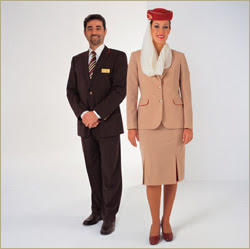
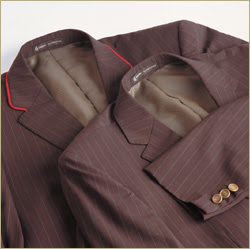
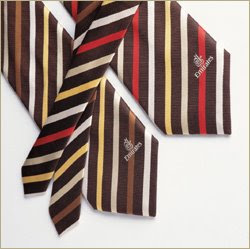
The guys will
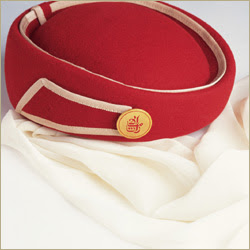
turnout in chocolate and beige! The girls see less of a change; a few red
flashes here and there, a new hat and bag! The look appears more modern. The
tabards (aprons) are gone and have been replaced by the new rather baggy
looking waistcoats. The current image was designed back in 1997. Time for a
change. EK designs its uniforms in house. This is not a Balmain design like
SQ and definately not the glamour look of Korean Airlines, But it is
distinctive; widely recognised and practical.
While the A380
crew will launch the uniform from 01 August 2008, the remainder of the
company will be strutting their stuff from the New Year. There are ober
9,000 crew to be fitted with new uniforms that will use over 500km of cloth!
Here are a few of
the first promotional pictures.
Emirates A380 arrives early in New York
10 June 2008
Originally
Emirates announced the launch of its A380 flights to New York from 1
October. Many people rushed to book seats on the inaugural flight. But
Emirates has now announced that the first commercial flight of the A380 will
be on Aug 1 to New York.
The flight details
for August 1st and 3rd are:
DXB-JFK on 1
August: EK 3801 Dep: 11:00 Arr: 16:45
JFK-DXB on 1 August: EK 3802 Dep: 21:00 Arr: 17:45+1
The A380 will be a
3rd flight Aug 1 and on Aug 3. After that, the A380 WILL replace the 77W on
EK 201/202 3x a week until Oct 1 when it will replace 77W EK201-EK202 daily.
Expect some surprises from EK on Aug 1-3.
The airline’s expansion has been hampered for two years because of
production delays with the Airbus A380, the world’s largest commercial
aeroplane. The airline has ordered 58 of the twin-deck aircraft, and should
receive its first delivery on July 28.
The August launch represents the first announcement of the A380 service
being ahead of schedule, following technical difficulties that delayed
production and forced Airbus to announce successive delays.
Emirates will become the first airline to serve the Americas using an A380
with a 14-hour, non-stop flight to New York’s JFK Airport. It expects to
receive its next four A380s by March next year, all in a three-class,
489-seat configuration.
The additional aircraft are to be used on its route to London Heathrow,
beginning on Dec 1, as well as its route to Auckland and Sydney, with an
expected date of introduction of Feb 1 next year.
Emirates plans two other configurations for its A380, including a
three-class, 517-seat version and a high-density, two-class version with
more than 600 seats.
Doha-based Qatar Airways and Etihad Airways of Abu Dhabi are two
fast-growing Gulf-based international airlines that have also purchased the
A380 to offer more seats on long-haul routes. Qatar Airways will introduce
five A380s beginning in 2012, while Etihad has deferred delivery of its four
A380s from next year to 2013.
Where next for
Hillary
7 June 2008
Today in
Washington Hillary Clinton endorsed her rival Barack Obama for President of
the United States.
"This isn't exactly the party I had planned," she said, as she praised Obama.
"Today, as I suspend my campaign, I congratulate him. I endorse him and will
throw my full support behind him," she said.
This was the
passing of a generation in Democratic politics. Clinton was first lady for
the eight years of the Bill Clinton presidency. Clinton lost to a younger
politician running on a message of change.
The challenge
after such a long and expensive Democratic campaign is how does Obama unite
his party behind his bid to be America's first black president. Does he
really need to take Clinton as his VP running mate. I hope note. He needs to
appoint his own man or woman. Appoint Hillary as his VP running mate and he
gets Bill Clinton as well. Too many egos running the country. This is not a
dream ticket; it is a nightmare.
The Democratic party must quickly heal itself after a bitter, divisive
nomination contest and unite against McCain.
What role will Hillary Clinton will play. To many of Clinton's huge support
base her name on the ticket is the minimum price Obama must pay to be
assured of their votes in November. But Obama should not want Clinton in his
White House. She would be a potentially under-mining figure and there is
little to suggest that the two have warm feelings for each other.
But Obama desperately needs her genuine support. Clinton did garner some 18
million votes. Obama needs that support. He needs to play the peacemaker and
could offer her a lead role in the Senate, perhaps spearheading efforts to
get a healthcare plan to all Americans.
He could also help
her pay het huge campaign debt from his own fundraising efforts.
The election is in
November; It will be a fascinating five months.
Crude reality
7 June 2008
Using the tagline
from an entry on my tagboard we are in to some harsh economic realities: oil
prices leaped to another record high yesterday; fuelled (forgive the pun) as
Israel warned Iran about its nuclear sites and the dollar slumped on news of
the biggest jump in US unemployment for 22 years.
Global crude ended a run of lower prices as it jumped by more than $11 a
barrel to more than $139 - it has risen more than $17 in two days. The price
eventually settled at $138.54. On Wednesday the price had fallen to as low
as $122. Where to next week. How about US$150 by the end of the week.
Already jittery oil markets were sent into spasm by remarks from Israel's
transport minister that an attack on Iranian nuclear sites looked
"unavoidable". Any attack on the country would threaten supplies from the
whole region. Would the USA be drawn into this dispute. Inevitably. As the
USA is Israel's staunchest ally. And what does that mean for Middle East
stability?
Earlier in the day the dollar had fallen against the euro partly on
speculation that the European Central Bank may consider raising interest
rates to curb inflation. Then markets were rocked by a report showing US
unemployment suffered its biggest monthly rise for 22 years.
Shares dived after the US unemployment rate unexpectedly jumped to 5.5%,
intensifying fears that the world's biggest economy is sliding into
recession. The Dow Jones industrial average lost nearly 400 points, more
than 3%, to close at 12,209. In London, the FTSE 100 closed the week down
1.5%, or 88 points, at 5,906.
The US unemployment rate jumped from 5% in April to 5.5%, the biggest rise
since February 1986 and the highest rate since October 2004. As stocks
tumbled, so did the dollar, which shed nearly a cent against the euro.
The overall US trend is clearly weakening and this will continue to depress
consumer spending. The Fed is also unlikely to be able to raise US interest
rates to prop up the dollar and rein in inflation.
Tradition
versus modernity keep Thai politics in turmoil
Jonathan Manthorpe Vancouver Sun
Friday, June 06, 2008
Five months after democracy returned to Thailand following a military coup
in 2006, the country remains in the grip of political upheaval.
Thousands of protesters are camped on the streets outside the parliament
buildings demanding the removal of the People's Power Party government of
Prime Minister Samak Sundaravej.
They also want corruption charges pressed against former prime minister
Thaksin Shinawatra, who recently returned from exile after being ousted in
the coup.
Thailand's economic indicators are gyrating in response to the uncertainty
and to cap it all off there are rumours -- strenuously denied by senior
generals -- that another military coup is in the offing.
So why has the coming to power of a freely elected government not brought
stability?
The answer is that the underlying causes of the 2006 coup are still
unresolved.
Since Thaksin, a former policeman who became Thailand's richest businessman
after building a communications technology empire, was elected prime
minister in 2001, there has been a sometimes bitter competition to influence
and define the future political landscape of the country.
Thaksin is a revolutionary in the modern history of Thai politics. He is a
populist who tried to bring business principles to the workings of
government and who exhibited scant respect for the elites that traditionally
run Thailand's government. Those elites are made up of people and parties
with strong loyalty to King Bhumipol Adulyadej, the palace hierarchy and the
military.
What has brought the clash of ideas to a head is that the king is 80 years
old and in poor health.
In theory he should be succeeded by his son Crown prince Maha Vajiralongkorn.
But unlike King Bhumipol, who is universally respected, Vajiralongkorn's
lurid lifestyle and arrogant ways have made him widely feared and disliked.
His sister, Princess Sirindhorn, on the other hand, is not only very
popular, she has been a lecturer at Chulachomklao Military Academy for more
than 20 years. This means that a couple of generations of military officers
have taken her classes and, it can be assumed, a high proportion acquired
loyalty to her.
The reality of the succession is that it will be decided by the royal Privy
Council and the senior military officers. Parliament will only be called in
later to approve what has been arranged.
The 2006 coup was launched after Thaksin started appointing his own
loyalists to senior military positions and thus manoeuvring to influence the
royal succession.
So when palace loyalist and Army Commander-in-Chief Gen. Sonthi
Boonyaratklin launched the coup it was with some certainty of approval by
Prem Tinsulanonda, King Bhumipol's senior aide who is also a former prime
minister and former commander of the military.
The speed with which the palace conferred its blessing on Sonthi's coup
clearly expressed approval of his motives for ousting Thaksin, if not
provable foreknowledge of what was afoot.
Prem and the palace hierarchy do not want Thaksin influencing the succession
and thus the power of the establishment elites in Thailand's political
future.
Their problem, however, is that Thaksin, though he has many grievous faults,
remains very popular.
The military and its palace backers tried to remove Thaksin from the
political scene by levelling corruption charges against him and banning his
Thai Rak Thai party.
But when the coup leaders were pressed at the end of last year to restore
democracy, a new formation, the People's Power Party, emerged. This is
clearly a front for Thaksin, who remains silent in the background. But in
the election campaign everyone understood that a vote for the PPP was a vote
for Thaksin, which is why the PPP won control of the government.
So Thaksin is still there despite the coup, but now he is not a clear
target. He lurks somewhere in the shadows behind the prime minister.
What has brought the protesters out onto the streets are moves by the Samak
government to amend the constitution put in place by the military. These
plans appear to undercut the legal basis for charging Thaksin with
corruption.
Most demonstrators are from the People's Alliance for Democracy, an urban
party that dislikes Thaksin's appeal to the rural poor.
The PAD's demonstrations in 2006 provided the excuse for the coup, and it is
natural to wonder if that is the agenda again.
The reality of Myanmar
6 June 2008 -
Amnesty International
The Burmese
Junta remains paranoid and the rest of the world seems happy to let the
junta continue to ignore the desperate plight of its people.
The New
Light of Myanmar accused foreign media of running "groundless news stories
with the intention of tarnishing the image of Myanmar and misleading the
international community into believing that cyclone victims do not receive
any assistance."
"Myanmar's government is keeping aid from reaching survivors of Cyclone
Nargis and stepping up efforts to force them out of emergency shelters,
according to new research published by Amnesty International. The
government's actions place tens of thousands of already vulnerable survivors
at increased risk of death, disease and hunger.
On 20 May, Myanmar’s government, the State Peace and Development Council (SPDC),
announced an end to the rescue and relief phase of the disaster response and
the beginning of the reconstruction phase. Since then, the SPDC has launched
a campaign to force homeless cyclone survivors out of government and
unofficial resettlement camps.
The authorities have targeted schools and monasteries, as both were used as
polling stations for the delayed May constitutional referendum, and because
the school term began on 2 June.
Most of the displaced survivors cannot return to their original homes as
large swathes of the Irrawaddy delta, which bore the brunt of the cyclone,
remain largely uninhabitable.
"After surviving the cyclone's fury, thousands of cyclone survivors are now
suffering at the hands of the SPDC," said Benjamin Zawacki, Amnesty
International's Myanmar researcher.
Amnesty International’s findings, which include eyewitness accounts and
interviews with people with first-hand information from cyclone-hit areas,
highlight the urgent need for the SPDC and international donors to adopt
human rights standards as safeguards in the disaster response.
Amnesty International is also concerned about aid delivery. On 16 May, the
SPDC mouthpiece New Light of Myanmar pledged to "conduct investigation into
the cases [of misappropriation of aid] to expose the offenders and take
punitive action against them in accordance with the law." Amnesty
International has welcomed such steps and calls on the SPDC to strictly
monitor the distribution of aid by its officials and to investigate any
allegations of theft, abuse of power or other diversion of aid.
"Given the SPDC’s long track record of abuses, humanitarian agencies should
be especially alert to the SPDC diverting or obstructing their aid," said
Zawacki, who has been in the region for the past month gathering information
from the affected areas.
Amnesty International has confirmed more than 30 instances and accounts of
people being forcibly removed from emergency shelters in monasteries,
schools and other places.
In the last two weeks, the relocation campaign has become more systematic
and widespread. The authorities have forcibly relocated people out of
Maungmya, Maubin, Pyapon, and Labutta, where they had been originally
displaced, back to their original villages.
Of the 45 camps that existed in Pyapon, by 28 May only three remained. On 23
May, authorities in Yangon forcibly removed more than 3,000 cyclone
survivors from an official camp in Shwebaukan in North Dagon Myo Thit, and
from an unofficial camp in State High School No. 2 in Dala township.
Abuses also include confiscation and misuse of aid. Amnesty International
has received over 40 reports or accounts of aid being confiscated by
government officials, diverted or withheld instead of being handed to
cyclone survivors.
Despite statements against such conduct by senior SPDC leadership, local
officials can act with impunity. For example, Amnesty International received
eyewitness testimony that on 26 May, at the Pan Hlaing bridge in Yangon’s
Hlaing Tharyar township, Police Major U Luu Win stopped 48 trucks carrying
supplies from private Myanmar donors. As of 1 June, the police had not
released the trucks."
Thaksin's
amazing insight into his City dream
6 June 2008
From "This
is London" - The London Evening Standard. Some of this is brilliant; some of
it verging on delusional. But like most things; if you say it often enough
it may just be true!
"Tales of the
unexpected: lunching with the former prime minister of Thailand in China and
hearing in detail, for the first time, his plans to sign Ronaldinho for
Manchester City.
Let's clear up the
choice of location first. Why here in Beijing instead of Thaksin
Shinawatra's Thai homeland? It's safer this way (we don't need to be
shadowed by his personal armed guard the size of a football team nor to
perfect the trick of booking a series of restaurants for the same time, then
swapping at the last moment so his enemies don't provide an alternative
ending to the cheese and port).
'Just
now, my wife asks me to stay away and, if I have to go to Thailand, not to
stay for long,' explains Thaksin. 'We have intelligence that there may be
more danger.'
He has survived three car bomb attacks
and six assassination attempts. 'I should be a man who drives around in a
nice sports car, not an armoured car,' he adds with a smile.
Even here, almost five hours of flying
from his home, the Lincoln Navigators of his security unit skillfully flank
Thaksin's car on his way to a business meeting.
After avoiding real bombs in the Far East
and dodging verbal grenades in the North West, where the Manchester locals
have been restless, losing 8-1 to Middlesbrough on the last day was not how
the season was meant to end.
Now Mark Hughes has been captured from
Blackburn, an appointment that will surely go some way to restoring calm.
Well, at least until the Ronaldinho carnival comes to town.
Thaksin has invited Sportsmail for this
rare private audience at a secluded escape about 50 minutes outside China's
Olympic City. The exact location is best kept a secret, just in case. You
never know who might be reading.
Mark Hughes is an
excellent appointment. The players need to be motivated,' says Thaksin
Today, he wants to explain for the first time why you would give a new
manager more than £50million, see him complete the double over Manchester
United, finish ninth in the Barclays Premier League, qualify for the UEFA
Cup (admittedly through the back door) and then axe him after one season.
Also, in this
wide-ranging interview, Thaksin - I am advised to call him Dr Thaksin before
we begin - talks about the ambitious pursuit of the former world player of
the year, the future of Micah Richards and his long-term ambitions for
Manchester City, including the appointment of new executive chairman Garry
Cook from Nike.
Cook may not score
goals, select the team or even yet support the club (he's a Birmingham fan
by birth) but Thaksin believes he is a 'special signing, a football man who
will inspire great things by leading from the front'.
Any more special
ones planned, Doc? 'Ronaldinho - you know, he is a great player. Whatever
the club in your heart, you would want to see this player in England,
wouldn't you?'
True, but this is crazy talk. Who will pay the wages? 'It is not a risk.
Sponsors will contribute. It will not damage our wage structure. Garry and
Pairoj, my chief advisor, they are taking care of this transfer. I am very
excited.
'I am 59 next
birthday, so I am not a man who can wait for many years to see my dreams
come true.'
How will City know
the Brazilian doesn't just want to take the money? 'Ronaldinho is 28. He has
much still to offer, he is a star. You need a combination of new players,
existing players, quality, young and old.
'I admit also you
need a player who is more than just winning the match. You need a star who
can play on the pitch, but who can achieve much more for the club.
Ronaldinho is that player.
'I am hearing good
things about his hunger. I have spoken to his brother (his agent).
Ronaldinho wants the new challenge, the chance to play his best football
again, to return to the days when he was really, really famous. The magic is
still in his boots. Let us hope we can bring him.'
City will also announce the signing of
Jo, a new breed of Brazilian. 'He will cost a lot of money,' continued the
City owner, who has agreed to pay £20m. 'But he is fast, he is a goalscorer;
he will be special and a very good player in the Premier League.'
Eriksson has left the building, with a
rather tasty pay-off. Here's why, according to Thaksin. 'I want you to know
that Sven is a good man. I brought him to the club and supported him with
investment (more than £50m spent last season) and we still have a good
friendship.
'But I want this club to advance faster,
much faster. Sven is a good football general, but we need more. We must play
with more consistency, much more urgency. In the second half of the season,
the slide was too bad, too much. We lost 8-1 at Middlesbrough! The shame of
that.'
City supporters will know that the
players had downed tools by this point, seemingly disputing the treatment of
their manager. Thaksin begins to throw his arms around and raises his voice.
'The team stopped playing! They stopped
working! I could not take this. I understand you cannot win every game. A
football is round; it does not bounce along a straight line. I can accept
the unpredictable, but not such a fall. We had to make a change.
'Mark Hughes is an excellent appointment.
The players need to be motivated, instead of playing like people who are not
being paid any money!'
He pays his money, he does his homework:
Thaksin has researched the past and family background of every City player.
'I have heard of Premier League players with a garage full of sports cars
and almost a girlfriend for each one. That is no way for an athlete to
behave. He should be in the training ground, working.
'Ronaldinho has
the old magic in his boots. I am sure he is still hungry,' says Thaksin
'We need a culture of discipline at our club,' he continues, hinting that
Eriksson was too weak. 'I want strong leadership from the manager,
motivation for young men and I want players who can cope with that.
'If not, they can
go. I want players who work hard to make their luck, not players who are
lazy. We are not a selling club, but I want players with talent, who will
exercise and improve. I want desire and commitment.
'Some may fit,
some not. That is a decision for the new manager. Look, you cannot all live
together for ever. Some will go, but not our best young players.
'We will pay the
best for the best and to the best. That is my strategy, which is why I want
a player like Ronaldinho. We need to breed success. Right now, we have a
negative cash flow, but within two years we will be making money. You will
see.
'The supporters, I
hope, will also see what I am trying to do. They have loved the club longer
than me, but I am with them because I have invested my money, a lot of
money.' Most recently the £4.6m paid to Blackburn for Hughes and his
coaching team.
'There are times
when I wish I could be closer to the fans and to talk to them, but they will
have to trust me and to see that, instead of words, I show them my
intentions with actions.'
Richards, sought
by Manchester United is staying. 'He is our star. He will not leave,' says a
determined owner with £900m in reserve to back up his promise. Will the
other team in Manchester be as lucky keeping their star attraction?
'You can see why
other teams want Cristiano Ronaldo. Watch him in the penalty box when the
ball is arriving. He comes alive, he wants the ball, he does not wait for it
like some others. He makes it happen,' says Thaksin, illustrating his words
by flashing his head at an imaginary ball.
It can be a
surreal fantasy talking football with Thaksin (but he has the money to make
it reality) so it would not have surprised me if he had declared Ronaldo to
be his next transfer target, right there and then over the organic chicken
soup.
Don't worry Fergie,
he didn't. Blackburn's David Bentley is a more realistic purchase. 'Every
owner of a Premier League club has a duty to play Englishmen in his team.
'We won the Youth Cup this season and I am very proud of the young men (he
reels off at least six names and descriptions of players who may soon appear
in the City first-team squad) and the staff there, like the academy director
Jim Cassells.
'There should be
at least five English at the core of every team. We are the English Premier
League,' he adds. His English is fluent, mastered during his years studying
for a doctorate in criminal justice in Texas.
A decent knowledge
of the law has come in handy during the turbulent past two years during
which he spent 17 months in exile and his vast fortune was frozen.
'That is why I
bought a football club, to give myself a job after I was the subject of a
military coup,' he explains simply. How does he respond to those who say he
should never have been allowed to own City, given the persistent criticism
of his human rights record?
First, he tells me
he is revered by many in Thailand for making medical attention available to
all Thais - even the poor from the rural areas - for the first time, at a
cost of less than 50p. 'It didn't go down well with everyone,' he reports.
'The dentists, for instance, had so much work. Some people had never been to
a dentist in 60 years and suddenly everyone could afford treatment. I paid
them more money, but maybe not quickly enough.'
He also launched a
national lottery, fought an HIV/AIDS crisis, built a new Bangkok airport and
stabilised a creaking economy. But what about the corruption allegations?
Untrue; a smear campaign, he responds. What about the reports of almost
3,000 killings in an aggressive offensive against drugs? 'Sometimes, as a
leader you must have an angry face. In the past, I have ignored these
allegations published in the Thai media, with whom I have no relationship.
The foreign media has since picked them up and this is damaging. Now you are
asking me these questions and I am happy to answer.
'These figures you
have read are not true. They are figures created by the military. I was not
a ruthless dictator. No. There have been investigations: The Premier League,
for example, has ways of investigating these matters, I welcomed the Fit and
Proper Persons Test for new owners for that reason.'
He is now free to
return to his homeland in return for agreeing to stay out of politics for
five years and to concentrate on his 'football interests'.
That's another
sticking point with the critics - the fact that 40 per cent of clubs in the
top two divisions are now in the hands of foreign owners - but he has little
sympathy with their concerns.
'Clubs do not
collect enough revenue from TV and advertising. If they want to try to
challenge the top four, if they want the best players, they need people with
deep pockets.'
He is here for the long term, too. 'Tell the fans from me that they cannot
love the club more than me. We have the same goals and they will understand
me now.
'Mark Hughes,
Garry Cook, Jo, maybe Ronaldinho. They will see by the new season.'
Thaksin may be
guilty of football decisions triggered by a sense of urgency and a crazy,
infectious will to see City walk with the giants, but his pockets are deep
and his desire is fierce. Doctor Do-Little he isn't.
Emirates to
raise fares again
4 June 2008
Emirates is better
positioned than most global airlines to ride out the impact of high oil
prices but the Dubai-based airline is likely to further increase passenger
fares, its president said yesterday.
Emirates' nine per cent fare increase on June 1 was based on an oil price of
$110, some $25 below its recent record price.
"We will try and mitigate what we do by improving asset employment and
revenue optimisation," said Tim Clark. "These are things behind the scenes
that the consumer doesn't see and mitigates the need to pass on extra costs;
but oil is now at $130. We have more to do to strip our costs before we go
ahead with the next fare increase but I'm afraid it's going to be fairly
imminent if the oil price stays where it is." Clark said a $10 rise in the
oil price equated to extra annual costs of $500 million (Dh1.8bn) for his
airline.
"Our profit last year was $1.5 billion, so you can do the math. We have to
find ways of sorting this out quickly. Our growth is still there and the
market will take higher fares," said Clark. He is, however, one of the few
airline chief executives to offer an upbeat outlook for the aviation
industry. "It's amazing how robust this market is and at the moment things
are still looking pretty good.
"A high oil price gives us great difficulty but we have a robust network and
our income streams our solid.
"We will get through it. We will tough it out," he said.
US withdraws
Myanmar relief
4 June 2008
It is hard to know
what to say about Myanmar's foolish generals. They are killing their own
people and there seems to be so little that we can do. The UN has proven
toothless.
Yesterday the U.S.
military ordered its navy ships away from the coast of Myanmar after the
country's ruling junta refused to give them permission to help survivors of
the cyclone that devastated the country more than a month ago.
Admiral Timothy
Keating, the top U.S. commander in the Pacific, ordered the Essex and its
accompanying vessels to leave the Myanmar area after what he said were 15
separate attempts to obtain authorization to help relief efforts.
State media, on
behalf of the paranoid Myanmar junta, reported that the country feared an
invasion by U.S. forces interested in seizing its oil deposits.
The junta has also
forbidden the use of military helicopters from the country's Asian
neighbors, even though such aircraft are considered vital to delivering
supplies to isolated populations of the Irrawaddy Delta. This has forced aid
agencies to scour the world for privately owned military-grade helicopters
and to bring them to the region at dramatically higher cost.
The United Nations
has estimated that some 2.4 million people are in need of food, shelter or
medical care as a result of Cyclone Nargis, which killed 78,000 people and
left 56,000 missing, according to the official toll.
Tiananmen - 19
years on
4 June 2008
This is one date
that continues to live in infamy; and despite the silence from Beijing is
one date that the rest of the world will never forget.
The most senior
Chinese official jailed for sympathising with the 1989 Tiananmen Square
protests has urged the leadership to make public the events that led to the
government's decision to crush the pro-democracy movement.
The demonstrations, which lured more than a million people on to Beijing's
streets, ended in a military crackdown on June 4 of that year. Now a fading
memory, the massacre is still taboo in the Chinese media.
Bao Tong, once the top aide to purged Party chief Zhao Ziyang, argued that
China has been praised for its transparency in handling the devastating May
12 earthquake and should also reveal the rifts in the leadership that led to
the massacre.
Zhao was ousted as
Party chief in 1989 for opposing then paramount leader Deng Xiaoping's
decision to send in the People's Liberation Army to crush the pro-democracy
movement.
At least two other leaders, Deng's rival Chen Yun, and then president Yang
Shangkun, also opposed Deng's decision, Bao said.
Zhao died in 2005 after more than 15 years under house arrest. He was
replaced in 1989 by Jiang Zemin, who in turn retired in 2002 to make way for
incumbent President Hu Jintao.
Other key Tiananmen figures have either been forgotten or intimidated into
silence. Those in exile are divided and bickering or scraping a living.
Despite efforts of dissidents and families of victims to keep memories of
Tiananmen alive, the virtual silence on that period within China means few
people know much about the movement.
But Bao has remained outspoken about 1989 and he urged the leadership under
Hu to disavow Deng's "greatest mistake".
The government has rejected calls to overturn the verdict that the protests
were subversive.
"The June 4 of 19 years ago was a man-made disaster, but like natural
disasters it should be made known to the people of the entire country and
the whole world," said Bao, who was jailed for seven years and is now an
outspoken critic of the government.
In the end, debts
will have to be repaid ... the earlier they are repaid, the more timely, the
more thorough, the more it will be in command, the more dignity and the more
face it'll have," said Bao, who is under round-the-clock police
surveillance.
From Reuters.
Obama wins; Clinton digs in
4 June 2008
Hillary Clinton
declined to concede tonight despite the fact that Barack Obama had enough
delegates to lock up the Democratic nomination.
Saying she had won
the swing states needed to carry the general election in November and that
nearly 18 million people had voted for her, she said it wasn’t the time for
a call whether to stay in the race or not and fight to swing superdelegates
to her side from Obama or continue her fight to the convention in Denver.
“The question is where do we go from here,” she said at an event in New York
City after being declared the winner in tonight’s South Dakota primary.
“This has been a long campaign and I will be making no decisions tonight.”
Meanwhile Obama
has sufficient nominations to claim a win in this epic series of primaries
and he will be the Democratic candidte in the November presidential
election.
Early in the
campaign Mrs Clinton looked a winner; but there were too many mistakes made
along the campaign and she increasingly looked like a past generation not a
new generation of leadership. However, she has shown a fight, a perseverance
and a tenacity that has proven that she has heart.
But the Clintons
should begin thinking about their future and standing in the party. What
they do over the next five months will determine what their standing will
be. Will they be seen as party unifiers and team players, or party wreckers
and sore losers? Will Hillary be the VP nominee? That may just buy Obama the
votes to win an election.
For the moment
Hillary Clinton needs to bow out gracefully over the next few days, take a
well-earned vacation and then lead the campaign for Obama not against him.
UAE in mourning
for three days
3 June 2008
The Emirates state
news agency WAM reports the brother of Emirates' president died in a
helicopter crash off the Gulf coast.
The crash killed several of Sheik Nasser Bin Zayed Al Nahyan's colleagues
and took place Monday night, added the agency.
Sheik Nasser was the brother of Sheik Khalifa bin Zayed Al Nayhan, the
president of a federation of seven semiautonomous states that make the
United Arab Emirates.
The Emirates Ministry of Presidential Affairs announced a three-day mourning
for Tuesday. Sheik Nasser did not hold an official position.
Reforming the
UN
Simon Jenkins
writing in the Guardian
1 June 2008
Gazing briefly at
the Eurovision song contest this week I could not rid my mind of a quite
different image, that of Nato's multilateral force headquarters in Kabul.
There was the same flag-waving and confusion of purpose, the same
small-state rivalry and cynical balancing of interests. There was the same
belief that, simply by being international, a so-called community of nations
was forged.
For Eurovision and Nato, read the Olympics and Burma, read the Moscow cup
final and Darfur. Read the European parliament, Fifa, the World Bank, the
Organisation of African Unity, the European parliament. I was brought up to
regard "international" as synonymous with saintly. It was a concept to
supplant the rude nationalism of the 20th century in a worldwide concord of
peace, ruled by a clerisy of selfless bureaucrats; Dag Hammersköld out of
Albert Schweitzer.
Today the word "international" suggests tailored suits, tax-free salaries,
white Land Cruisers and Geneva. The Eurovision contest is run by the
European Broadcasting Union with 400 staff in Switzerland, with no risk of
oversight or reform. It takes after the International Olympics Committee,
which now charges its host taxpayers $20-30bn for two weeks of extravaganza
in the name of bogus world brotherhood. Fifa, the international football
regulator/promoter, forces thousands of English fans to travel to Moscow to
watch their teams act out an insult to the great game - a penalty shoot-out
stunt staged because television cannot bear a draw.
It may seem crude to leap from such mundane activities to world peace, but
the ruling assumption is the same, that internationalism legitimises itself.
It rises above (never below) the nation state and its rulemakers owe
allegiance only to an ideal of global community, which means whatever they
choose. The ever-more numerous world bodies to which the British Foreign
Office subscribes need never pass the eye of any National Audit Office.
It was only when America briefly withdrew from Unesco and capped its
contribution to the UN that steps were taken to curb that organisation's
waste and corruption, which culminated in Kofi Annan's obscene 2000 "poverty
summit", which I watched as it gridlocked New York and emptied it of
lobsters and champagne. The only good thing to emerge from the warped brain
of America's former UN ambassador, John Bolton, was his reform package, and
he blew it. Nor can Europe talk. The EU still cannot get its accounts past
any reputable auditor nor control the outrageous expenses of its
parliamentarians.
This laxity turned to ghoulishness when Save the Children last week revealed
the atrocities against women and children committed by UN peacekeeping
troops in Africa. Soldiers thought that the sacred carapace of the blue
beret put them beyond ordinary jurisdiction. In a similar, if less brutal,
spirit, the World Bank for decades forced indebtedness on bankrupt
countries, lest someone cut its gargantuan budget.
We are all still hardwired to treat international as a good thing. In the
process we have abandoned the constitutionalism and accountability that
should govern any form of government if it is not to run amok. The one facet
of neoconservative America that I share is frustration with the UN and
related organisations' inability to walk the talk.
It took the UN three weeks just to visit Burma, despite the clear threat to
humanity of the regime's response to the cyclone. Meanwhile an American
relief convoy is still sitting inert offshore. Ask me which humanitarian
intervention is the more plausible and I will reply, ask those facing
catastrophe in the Irrawaddy delta.
On these pages earlier this week, the former UN undersecretary, Shashi
Tharoor, rang an alarm over the emergence in America of a demand for a
"league of democracies", substituting for the UN's globalised inertia.
Proposed, by left and right alike, is a coalition of the voting classes,
somehow defined and clearly under the leadership of America, to stand out
against the half of the world still in the grip of authoritarianism.
Tharoor argued cogently that this would be a regressive move, dividing the
globe "just when there has never been greater need for a system of
universally applicable rules and laws that will hold all countries together
in a shared international community". Excluding China and Russia and
polarising the world into goodies and baddies was not the way to get things
done.
On this score I think I would relax. A league of democracies would soon turn
into another G8, Council of Europe or Nato political committee. It would
stage conferences, demand that something must be done and do nothing but
upset those excluded from the fun. But the proposal reflects a craving for
an internationalism that is not producer-captured by the UN and others.
The Americans are right, that if you want something done in the world, get a
nation to do it, not an inter-nation. I may be opposed to both the wars in
Iraq and Afghanistan, but there is a significant difference between them
noticeable to any visitor to their capitals. In Baghdad, America is
unmistakably in charge and the world follows. There is a clear line of
command that leads, however misguidedly, to Washington. Things get done.
Afghanistan is the opposite, the embodiment of Tharoor's globalism in
practice. Some 30 nations piled into Kabul after 2001, under the banners of
Nato and the UN. There was and remains no coherence, no agreed strategy and
a perpetual feuding over rules of engagement, use of air power and policies
for anti-corruption and counter-narcotics. Things do not get done.
Some 10,000 UN, Nato and NGO officials and their hangers-on fall over each
other in the streets of Kabul. Command structures overlap. It is a recipe
for failure. Yet because the "international community" has given Afghanistan
its blessing, the intervention must be benign. It is the ultimate feelgood
war.
Some of the best people I know have struggled to do good abroad. They have
sacrificed career, home and hearth to help others, even to advance the noble
cause of world government against all odds. Thus there are worthy
campaigners for a global rule of law, such as Human Rights Watch and Amnesty
International, but they are let down by the longwinded international court
in The Hague. This moves at the speed of the slowest jurisprudence because
it accounts to no one.
Filling this accountability deficit has long been debated by NGOs such as
the Red Cross and by UN agencies. It obsesses the few UN activists who know
they must reform or lose out to American unilateralism, or to such botches
as a league of democracies.
No organisation has a right to live forever purely for being international.
Yet such are the bureaucrats who crowd Geneva's nameplate-land, with no more
accountability than their neighbours, the Swiss banks. And they grow
incessantly. The G8, once an informal "library chat" of world leaders, has
inflated into a chauvinist display of competitive extravagance. As goes the
G8, so goes the world.
Until internationalism can acquire a more robust accountability, there will
be more Burmas and more Iraqs. The superpower and the nation state will
reassert global sovereignty. International must stop flying first class.
|