Welcome to rascott.com
This is a
personal site that reflects my interests in news,
current affairs, aviation and travel.
email me: robert@rascott.com
Now In Dubai:
Scott
Consulting
Photo Albums
My photographs have been moved off this site and are now stored on Picasa. They
were simply taking up too much space on my web host.
Please use
this link to see my list of photo albums.
Some
Useful links:
Information:
World Time
Clock
Exchange Rates
Journalism:
ForeignPolicy
Nationsonline.org
Project Syndicate
Amnesty International
Reporters w/o borders
The Guardian
BBC World News
CNN Asia
Bangkok Post
Daylife.com - news
Gulf News
Arabian Business
World News
WSJ - Asia
SCMP
Good causes:
Sister
Joan - Bangkok
Regional Info:
BKK Magazine
HK Magazine
In
Singapore Magazine
TimeOut Dubai
Back in the UK:
Newton Ferrers
And for fun:
Lin Ping live panda tv
EarthCam
History
BBC Archive
National Media
Museum
The British Library
Imperial War Museum
There are many other links on my AOB blog page.
|
If Arsenal upset you,
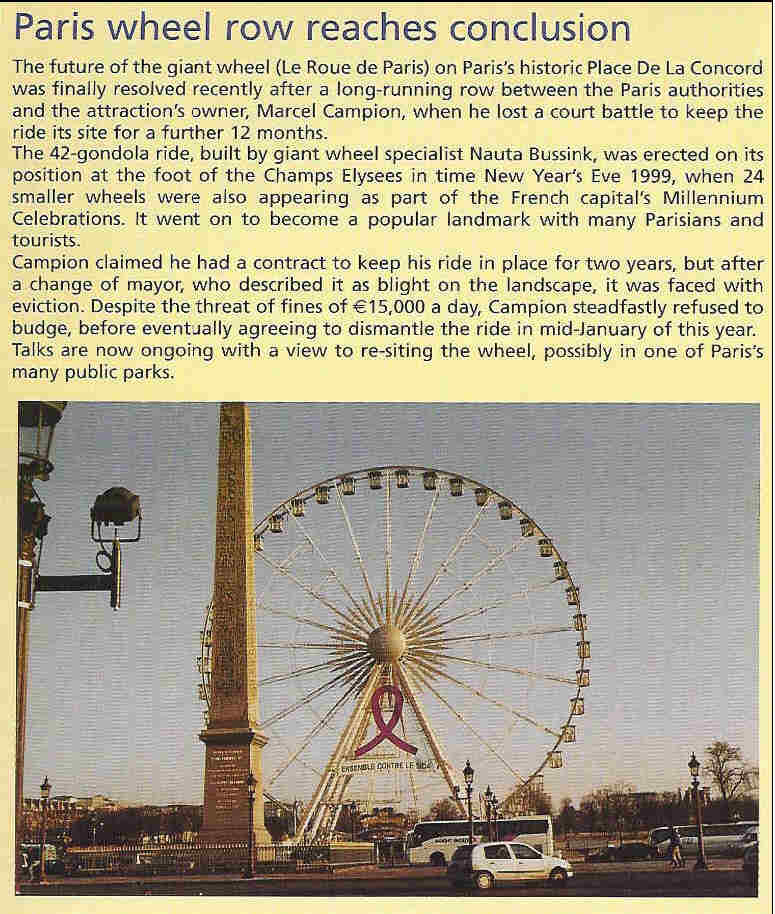
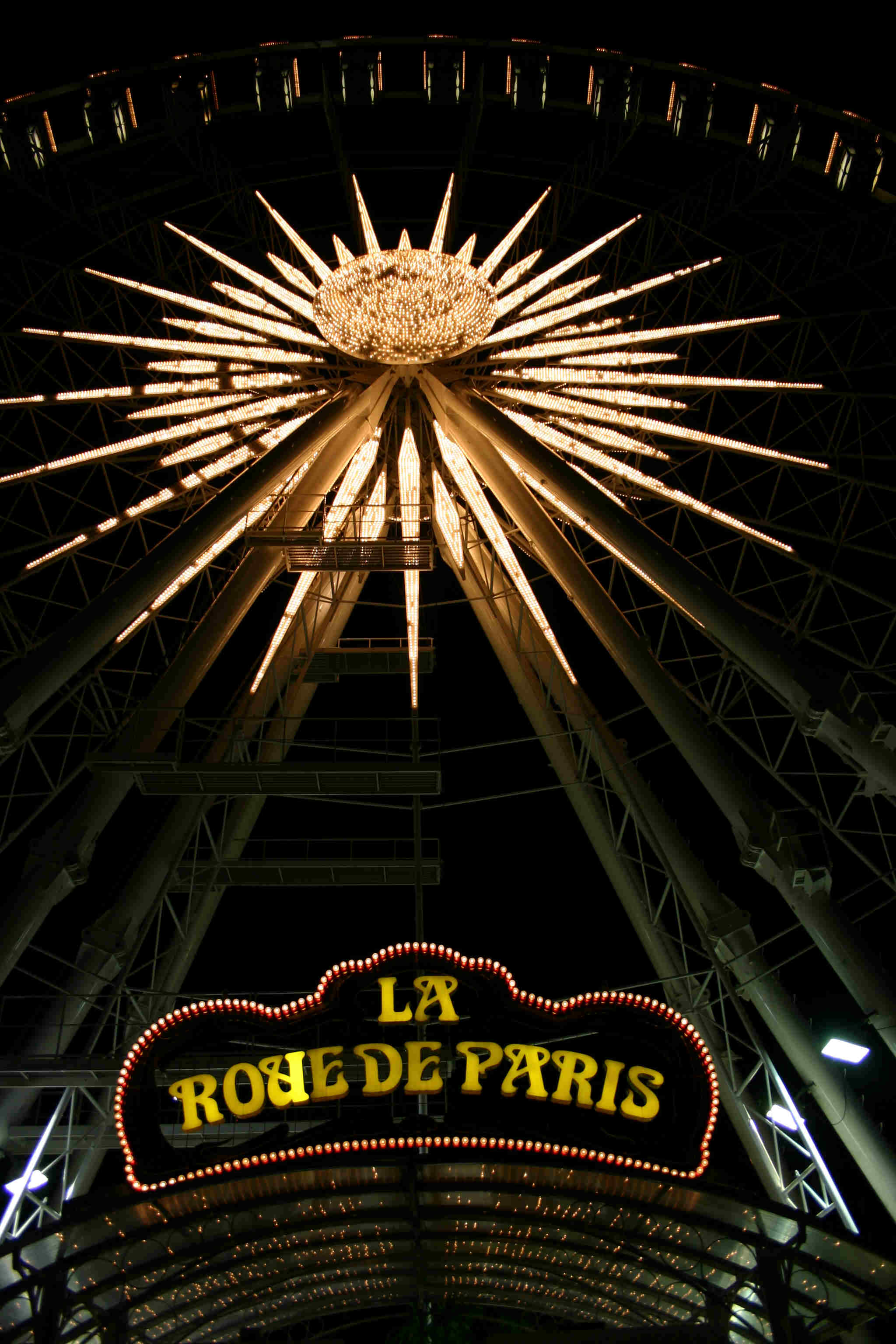
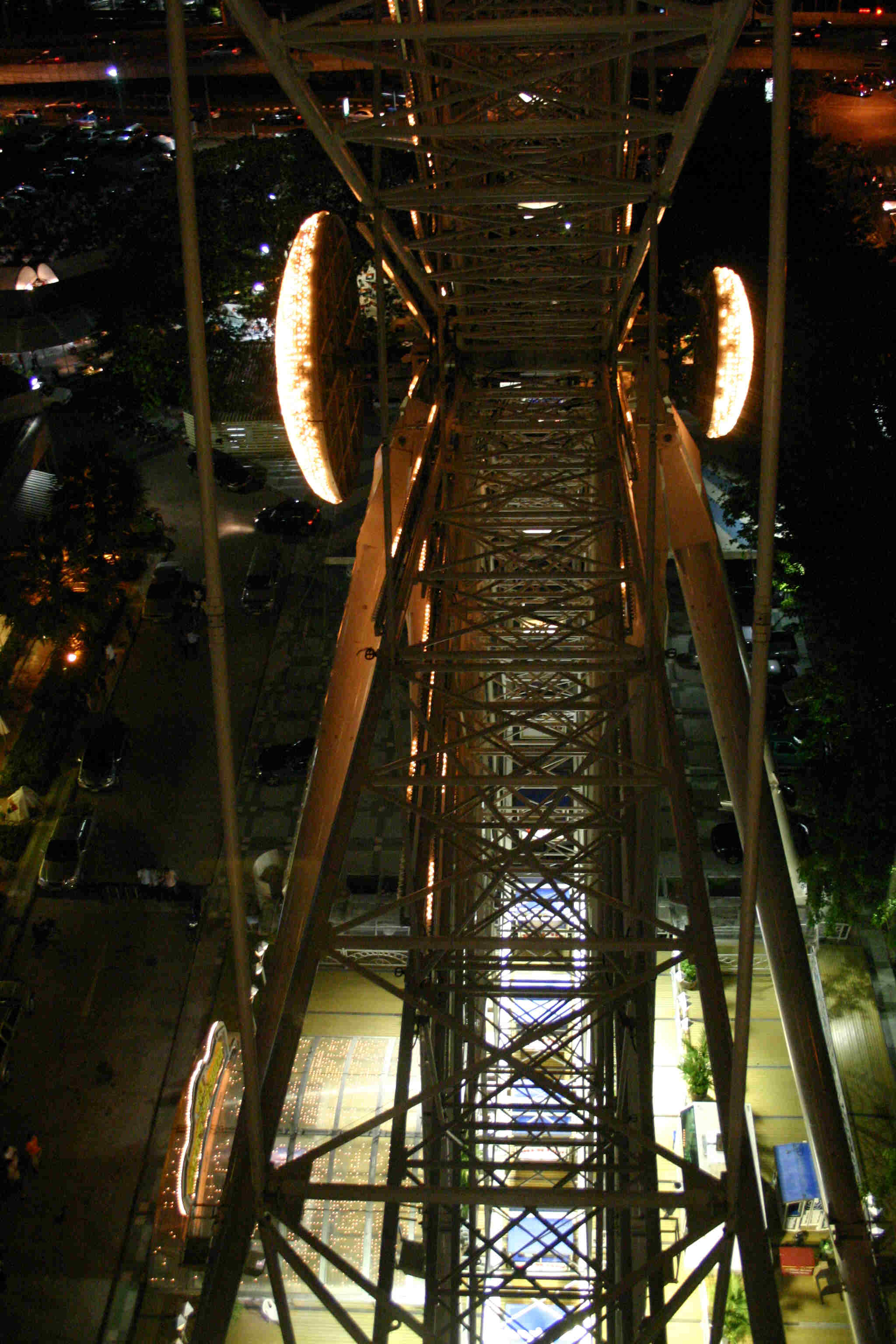
beware the World Cup Last Monday morning at the rain-delayed Irish Open golf tournament, leader Darren Clarke returned to his ball to discover that fans anxious for him to win had trampled the ground around him to ease his passage to the green. There was nothing in the rules to stop him capitalising on this 'advantage' yet his sense of fair play prevented him from doing so. He chipped out on to the fairway as he would have done if the conditions had not been altered and thereby dropped a shot meaning that he missed the play-off for the title by one. Questioned afterwards on his sportsmanship he shrugged and said it was nothing. As indeed it probably is for a man more preoccupied by his wife's battle against cancer. The Wednesday before in Paris, Arsenal were deservedly beaten by the best team in Europe. Despite being gifted an advantage when a player who was lucky to be on the pitch clearly dived, there was little magnanimity on display afterwards. Thierry Henry, who, had he kept his head, might have given his side a streaky victory, derided Samuel Eto'o who had succeeded where Henry had failed, and blamed the referee. Arsene Wenger, supposedly the most balanced of managers, blamed the referee and the linesman for missing an offside that, while not visible to the naked eye, was clear as day from where the Arsenal manager was sitting. The stark contrast between the two events illustrates not only the gulf between the self-policing game of golf and the multi-officialed sport of football but also how confused the British have become about cheating. In the past, it was simpler. Confronted by a set of rules, the British played by them while others tended to regard them as elastic concepts and directed their energies into avoiding getting caught. In his recent book, The Italian Job, Gianluca Vialli reveals that, when he was growing up, avoiding detection was not seen as cheating but as an example of what Italians call furbo, or cunning. He writes: 'When an opponent won a penalty against us by diving or making a meal of slight contact, the attitude among players and coaches wasn't to condemn him for cheating but to point the finger at our own defenders for allowing it to happen. "He was clever!" we were told. "He tricked you and he tricked the referee." We were engaging in footballing realpolitik.' It is an education that has helped Italy to win five of the past 10 European under-21 championships while the innocent English have failed to make it even as far as the semi-finals in the past 20 years. The difference between the two approaches is still best exemplified by the reactions of Peter Shilton and Diego Maradona to Argentina's first goal in their World Cup match in 1986. The law-abiding Shilton looked utterly bemused, the very picture of a man whose whole world order has been turned upside down. Maradona, thrilled by his own chicanery, looked as pleased as Punch. The permed Englishman was so certain of his superiority over the diminutive Argie that he hadn't even bothered to jump so Diego had, on the spur of the moment, surprised him. It was pure furbo. And only underlined by Maradona, still on a high, scoring the greatest legal goal in World Cup history five minutes later. Within or without the rules he was the best. It is not an interpretation with which DJ Taylor, author of the perceptive and entertaining On the Corinthian Spirit - The Decline of Amateurism in Sport, would have much truck. 'How he could live with himself, I don't understand,' he says. 'Sport is a romantic activity. The sports field is where you project your myths and if something is romantic it is, ipso facto, moral. If [as a fan] you are going to invest so much emotional capital in a game then it must have a fundamental moral basis otherwise it means nothing at all and is pointless. If it didn't contain those elements I couldn't stomach it any more. Which was why I found what Maradona did repulsive.' In his book, Taylor re-examines the boys' school stories he read in his youth such as Play Up, Kings! and Harold Avery's The School's Honour. The latter contains the story 'The Man Who Could Lose' in which the hero Bob Lowe, 'a slow-moving swimmer', reacts to yet another defeat by saying: 'Look here, I believe the next best thing to winning a thing is to lose it - that is, if you lose well - and I'm not quite sure if it doesn't sometimes show better pluck to take an honest licking and look cheerful, than it does to give it.' Losing well like Darren Clarke is perhaps better than winning and to lose badly is beyond the pale. 'It is significant that a lot of the literature that attached itself to football should have a moral basis,' says Taylor. 'For example, books on football were published by the Religious Tract Society and the Sunday School Union.' The difficulty with attempting to enforce a moral basis through a system of laws (be it football or the criminal justice system) is that the laws are only efficacious if there is a shared morality. There is little point putting in place legislation designed to encourage fair play if those falling under its jurisdiction are more interested in furbo. If there is no stigma attached to breaching the laws then they cease to achieve any moral purpose that may have lain behind their enactment. Taylor is not convinced. 'If football was entirely corrupt,' says Taylor, 'someone who committed a professional foul would be cheered to the echo and that doesn't happen.' Fair point, but what if his beloved Norwich were playing the team he loathes, Chelsea, in next season's FA Cup final and in the last minute of added time Darren Huckerby dived and finagled a penalty that he clambers to his feet to score. Would he cheer then? 'No. It would be a tainted victory if he did it. And I think a lot of Norwich fans would be upset too if he did it.' I'm not certain I concur but I admire Taylor's consistency. And his belief in fair play is infinitely preferable to the unthinking partisanship on display on ITV during Arsenal v Barcelona. In the kingdom of the bland the one-eyed man is commentator of choice. If you flinched during the Champions League final, be prepared to dive behind the sofa next month. With broadcasters carrying the burden of a nation's hopes it is certain that the weight of expectation will skew their interpretation of events even further. How you play the game will be incidental to for whom you play the game. Brazil 1 England 1 26 May 2006 It is just before the England v Brazil match. Ronaldinho goes into the Brazilian changing room to find all his teammates looking a bit glum. “What’s up?” he asks. “Well, we’re having trouble getting motivated for this game. We know it’s important but it’s only England. They’re sh*te and we can’t be bothered.” Ronaldinho looks at them and says, “Well, I reckon I can beat them by myself—you lads go down the pub.” So Ronaldinho goes out to play England by himself and the rest of the Brazilian team go off for a few jars. After a few pints they wonder how the game is going, so they get the landlord to put the teletext on. A big cheer goes up as the screen reads “Brazil 1 – England 0 (Ronaldinho 10 minutes)”. He is beating England all by himself! Anyway, a few pints later and the game is forgotten until someone remembers, “It must be full time now, let’s see how he got on.” They put the teletext on. “Result from the Stadium ‘Brazil 1 (Ronaldinho 10 minutes) – England 1 (Lampard 89 minutes).” They can’t believe it; he has single-handedly got a draw against England!! They rush back to the Stadium to congratulate Ronaldinho. They find him in the dressing room, still in his gear, sitting with his head in his hands. He refuses to look at them. “I’ve let you down, I’ve let you down.” “Don’t be daft, you got a draw against England, all by yourself. And they only scored at the very, very end!” “No, no, I have, I’ve let you down…I got sent off after 12 minutes.” Le Roue De Paris dans Bangkok 23 May 2006 The biggest and fastest recent erection in Bangkok is the splendid ferris wheel in Suan Lum night bazaar adjacent to Wireless Road and opposite Lumpini Park. The wheel appeared from no where; was constructed in about a week and now operates through the afternoon and evening. The fare for about a ten minute ride, which appears to be five revolutions of the wheel, is Baht 100. The Roue De Paris is a giant transportable ferris
wheel. It needs no permanent foundations because it
uses water ballast tanks to provide a stable base. In 2003 it was re-erected in
Birmingham, England.
The wheel is 60 metres (197 feet) high and uses 40,000 litres of water
ballast. It started in 1999 in Paris and was put on the Champs Elysees for the
Millennium celebrations. For Christmas 2004 the wheel was
moved to Manchester after the owners, World Tourist
Attractions Ltd put up a new and improved wheel on the
Birmingham site. And now the attraction is in Bangkok, and enjoys a splendid
view of the Wireless Road traffic!
In Paris In Bangkok Which all brings to mind a Blue Rodeo song called : What am I doing here: on this useless night Asia's foul air cities 23 May 2006 The Bangkok air at this time of year is pretty grim. The air is hot and humid; there is little breeze and the car, bus and truck emissions, from a population of 10 million people who seem to enjoy traffic jams, hand unpleasantly in the air. Yet Hong Kong is worse. With more than one day in four now marred by poor visibility, the city is beginning to lose talent and investment as people look to settle in safer and healthier cities. Hong Kong's air contains almost three times more particles of soot and other pollutants than air in New York and Paris, and more than double the amount in London, according to the University of Hong Kong. In Los Angeles, the most polluted U.S. city, people breathe in 29 percent fewer such particles. The situation may in fact be worse because Hong Kong's government doesn't make public some of the most dangerous emissions. Hong Kong's Environmental Protection Department reports the amount of large, so-called respirable suspended particulates in the air rather than fine ones. In general, the smaller the particulates, the deeper they penetrate into the lungs, department reports show. Health effects range from respiratory irritation to lung-tissue damage that may lead to heart attacks, strokes and cancer. Hong Kong markets itself as Asia's world city, yet the number of hours when it wasn't possible to see farther than 8 kilometers (5 miles) increased last year to 2,438, the equivalent of 102 days, from 960 hours in 1997, according to Hong Kong's meteorological office. The count excluded hours when fog, mist or rain were present. So much of the pollution blows into Hong Kong from Chinese industries in the Pearl River delta; there is little evidence that the mainland authorities think that any action is necessary to protect Hong Kong's health. In fact the opposite is likely. Beijing is trying to move manufacturing form around Beijing in an attempt to improve air quality in the capital; meanwhile in Shanghai the levels of pollution are significantly lower than Beijing or Hong Kong due to the absence of local manufacturing. In Beijing the smog has been severe this Spring and arises in large part from dust whipped up at pre 2008 Olympics construction sites and from the Gobi Desert. In addition the health dangers come from toxic vehicle emissions. Beijing's nitrogen dioxide pollution combines with air particles to blanket the city in a brownish pall. Once internationally famous as the city of bicycles, Beijing currently has over 2.6 million motor vehicles with a further 1,000 plus hitting the streets daily. Everyone in the city now aspires to own a car. There is a long way to go with an ever-growing 15 million plus population. Beijing's roads are clearly overcrowded> More roads are built. They are immediately filled and the pollution problem simply grows. The city authorities are trying to take steps to prevent the looming environmental and public health disaster. But it may be too little too late. Is there a solution? If you are mobile consider living elsewhere is a good start. Singapore had dealt with its traffic problems with draconian car and road usage taxes. It also has no "dirty" manufacturing industries. Hong Kong appears incapable of positive action and indeed may well be a victim of mainland policy and factories are displaced to the south. In Beijing there will likely be a quick fix for the Olympics to present the city on the best possible light. Expect major restrictions on car usage and expect zero construction activity at that time. But it will not be a long term solution for a country where people want the visible excesses and rewards of a first world nation. Watford win on DeMerit 21 May 2006 With a first goal scored by Watford's American defender Jay Demerit Watford eased to a 3-0 win at the Millennium Stadium against a rather poor Leeds side. The pitch was a disgrace after a rugby final was played on the same ground yesterday but Watford, who ground share with Saracens rugby team, should be used to that ! Certainly Watford offered the more incisive football and played with greater flair and pace. Leeds, who probably fielded the ugliest team ever to play in a final, and who are, surprisingly all white (why is that?), looked a well beaten team. 35-year-old Aidy Boothroyd will become the Premiership's youngest manager. Watford started this season a relegation candidates from the Championship. It is hard to see them competing with the likes of Chelsea and Arsenal. But this is a very shrewd manager. Glorious! Watford's dream season comes down to the Final 90 minutes 18 May 2006 (from www.football365.com) If Watford are beaten by Leeds in the Coca-Cola Championship play-off final, they will not be able to blame the defeat on stagefright. The Hornets take on Leeds for a place in the Barclays Premiership on Sunday, with the winner expecting to pocket up to £30million. With so much at stake, Watford's notoriously meticulous manager Adrian Boothroyd took his team on a dry run to Cardiff this week - which meant staying at their hotel and familiarising themselves with the Millennium Stadium. Boothroyd said: "The 48 games we've already played this season have all led to this one. To be 90 minutes away from Premiership football means that we will continue to be as professional in our preparations as we have been all season." He added: "Part of those plans has involved already taking a trip to Cardiff this week to check out our hotel and the Millennium Stadium. We're a young team and some of our lads will have not been there before so we thought it was a good idea to get used to the surroundings at the stadium." On Sunday, Boothroyd will come up against the club he left to take over as Watford manager in March 2005. Boothroyd, 35, was first-team coach to Leeds boss Kevin Blackwell before he accepted his first job in high-level football management at Vicarage Road. Boothroyd - by his own admission a modest player - has developed a reputation as one of the most talented young managers in the country since he took charge in Hertfordshire. After steering the club to safety in the Championship in 2005, the Yorkshireman made a mockery of the critics who said Watford would be relegated this season by guiding them to a third-place finish in the division. And following a comprehensive 3-0 aggregate victory over Crystal Palace in their play-off semi-final earlier this month, Boothroyd stands just one win away from promotion to the top flight in his first full season as a manager. He added: "I've no doubt that the whole experience of going to Cardiff will have been useful because it's easy to get caught up in the occasion of finals. We'll be going there to play a game just like any other." Da Vinci Uncut - make your minds up 17 May 2006 In a classic about turn the police censorship board decided in
favour of the appeal of film distributors, and will allow The Da Vinci Code to
be shown uncut and unchanged. Today's decision reverses a decision by the same board 24
hours previously, which ordered that the film's last 10 minutes be cut, and
changes made to the subtitles and opening. The reality is something like this;
Thailand thought other countries (in particular those with a Christian majority)
would ban or cut the film. When they realised that Thailand was the only country
in the world to demand the end of the film to be cut (even Singapore and the
Philippines approved the film uncut) they hastily reversed their decision.
Amazing Thailand. 17 May 2006 In Buddhist dominated Thailand christian groups have failed to have the controversial Hollywood thriller The Da Vinci Code banned but the Censorship Committee has agree to cut the last scene. That means taking out 10 minutes from the end of the film. The movie is due to open tomorrow; and their has been huge advance publicity for the show. Sony Pictures Thailand, the distributor of the film, is appealing the Censorship Committee's decision. An unsuccessful appeal may lead to a delay. Frankly, if Sony had any balls, they would simply pull the movie from Thailand. In Singapore the film will be shown uncut but with an over 16
rating. In the Catholic Philippines the movie is being shown without
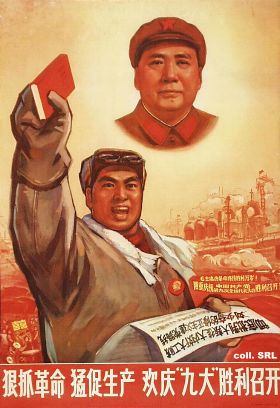
interference. It is a work of fiction. And most Christians accept that. 40 years on 16 May 2006 It is amazing to go to modern, urban China today and remember
that it is only 40 years since the cultural revolution. On 16 May 1966, Chairman
Mao launched the Great Proletarian Cultural Revolution.
Chinese leader Mao Zedong warned that "representatives of the bourgeoisie" had infiltrated the Communist Party and intended to establish a dictatorship. This was the beginning of a terrifying time that tore China's society apart. Mao's call was heeded by millions of radical youths, who came to be known around the world as the Red Guards. Between 1966 and 1968, Mao encouraged his Red Guards and other rebels to take power from the existing leaders of the Chinese Communist Party. In the chaos and violence that ensued, millions died and millions more were injured or imprisoned. China was plunged into turmoil. Alongside the violence against Chinese people much of China's cultural heritage was also left in ruins. To this day debate still rages over what motivated Chairman Mao. The consensus is a simple one; that Mao used the cultural revolution to destroy his rivals inside the Communist Party, and to reassert his supreme power over China. In 1968, to end the violence, Mao ordered the Red Guard to be disbanded. Millions of young Chinese were packed off to the countryside to learn from the peasants. The Cultural Revolution continued until 1976. Economic activity was halted. Revolutionary activity took priority. In addition older buildings, artifacts, antiques, books, and paintings were destroyed by the Red Guards as symbols of the bourgeoisie. Education came to a virtual halt. University entrance exams were cancelled during this period, only being restored by Deng Xiaoping in 1977. Teachers and professional people were sent to rural labor camps. Educated people were persecuted. A whole generation grew up under educated. The authority of the Red Guards was paramount. China's traditional arts and ideas were ignored, to praise from Mao. People were encouraged to criticize cultural institutions and to question their parents and teachers. Everything could be criticised or questioned except for the "thoughts of Mao Tse-tung". The Cultural Revolution was particularly devastating for minority cultures from Tibet to Inner Mongolia, Yunnan and Xinjiang. There was considerable emigration from China as people sought to escape persecution. From southern China people fled to Hong Kong and also to Thailand, Malaysia and Singapore. Election update 15 May 2006 The Thai Election Commission (EC) Monday has proposed October
22 (yes in 2006 !!) as the new date for the country's general election which
will be held after the Constitution Court declared the April 2 election as
invalid last week. Wise advice 11 May 2006 Miscellaneous words of wisdom!
Why we travel 9 May 2006 From Michael Palin, www.palinstravels.co.uk "There's much talk these days about the cost to the environment of our insatiable urge to move around. My view is that until the aeroplane is dis-invented then we should continue to use it to learn more about our world. But you know my personal view by now. Simply flying to a resort which looks just like home and learning and absorbing nothing of the country you're in IS a waste, not only of the world's resources, but also your own brain. Please travel but use this precious privilege (available only to a tiny minority in the world) to try and understand, appreciate, value and enjoy how other people live. Only in this way can we who love travel, go some way to reducing the well of anger and resentment which motivates those few, but influential people, who don't want us to get to know each other." In mid May Michael Palin and his crew from Himalaya and Sahara
will be embarking on a new journey, planning to make 6 one-hour programmes for
BBC-1 for "Palin's New Europe." Palin's New Europe is a
combination of twenty-one countries all of which were once in the Soviet bloc
and are now either part of or about to be part of the EU, as well as countries
like Turkey which are considering applying to join the EU. We shall visit many
countries, like Bosnia, Albania, Moldova and Macedonia, of which we may know the
names and not the detail. Whatever happened to: Janine Turner 8 May 2006
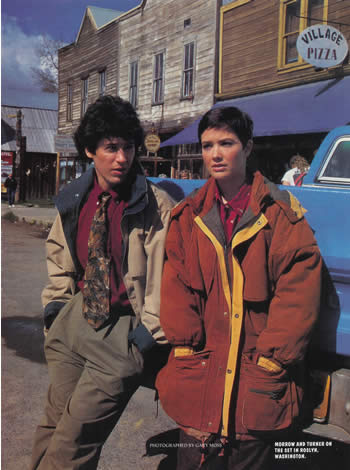
I used to have a major crush on Janine Turner. From 1990 - 1995 she was the reason to watch CBS' show Northern Exposure. As the ill-fated Maggie O'Connell she was the perfect blend of capability and vulnerability. She was Cicely's pilot; she was the link between Cicely and the outside world. At the heart of the first four years of the show was her love-hate relationship with Rob Morrow's character, Dr. Joel Fleischman. Her assorted boyfriends came to bizarre ends: a fate that became known as the O'Connell curse: Steve was hit by lightning while photographing an oil rig for a corporation's annual report. Dave fell asleep on a glacier and memorably Rick fused with the remains of a falling satellite. Ms. Turner's best known film was Cliffhanger with Sylvester Stallone. She now lives in Texas on a ranch with her daughter, Juliette. I even holidayed in Alaska because of this show; yes I know it was actually filmed in Washington state and not in Alaska. But it was the sense of the whimsical that appealed; and the fact that everyone who goes to Alaska is trying to find themselves. This remains at the heart of Alaska's appeal. United 93 - a review The following review is in London's Observer newspaper on 7 May. A story about the triumph of humanity and the ability of ordinary people to do what is necessary in the face of barbarity. I have re-printed the review in full. Five years on the events of the day still move me deeply. This page will tell you a little more about 9-11 and why I remember it so vividly. For the sake of humanity, I urge you to see United 93
Close your eyes and remember how 9/11 looked. See the arc of the first plane cruising towards immolation and the orange fireball as the second airliner hit the World Trade Centre. This sequence, played out as slowly as a dream, reflected all the unreality of Hollywood. Everyone said it looked like a disaster movie. Now it is. The first film of the world's worst terrorist attack arrives in Britain next month. It is an odd variant of the blockbuster. Paul Greengrass's United 93 makes no comment about good and evil. It has no special effects, no big budget, no patriotic message, no emotional overload and no Brad Pitt. It is the most harrowing and hopeful film I have seen. As I watched it, I remembered walking, many years ago, among the debris of Pan Am 103, the plane blown up over Lockerbie. A crater was carved in a Scottish cul-de-sac, where a bungalow used to stand. A human limb hung from a tree. But even those horrific scenes seemed like someone else's tragedy. No one escaped the grief of 9/11. In New York, trailers were pulled from one cinema as too distressing and Greengrass's film was denounced, unseen, as premature and prurient. Now, critics and vast audiences are praising United 93. Every family mourning a passenger on the flight has supported an epitaph to those they loved. The film, set in the airborne coffin of the fourth plane to take off on 11 September, is the story of around 40 passengers, of whom a cluster choose to fight against personal and national disaster. Confronting armed terrorists, their only weapons are a fire extinguisher and bottles of in-flight wine and their battlefield a plane bucking above the fields of Pennsylvania towards a destination it will never reach. As the 9/11 Commission recorded later, these citizens saved countless lives and may have spared either the Capitol or the White House from destruction. But this is not simply about heroism or dying terribly. The film's horror lies also in the early scenes, where the terrorists pray and passengers, in the closing minutes of a pre-lapsarian world, order omelettes they will not eat, ask for pillows on which they will not sleep and tell colleagues to copy them in on emails they will never read. Greengrass, the British director of Bloody Sunday and Omagh, has flouted many of Hollywood's old commandments. Though big on Second World War patriotism, the US studios averted their eyes from Nazism and the Holocaust for many years. While films such as George Clooney's Syriana have been quicker to study the roots of jihadism, Greengrass has reversed the roles of politics and film. His account is broadly accurate. The version offered by George Bush's government was, by contrast, a Walt Disney fantasy. In the Pentagon script, US fighter pilots would have shot down the doomed flight, had the passengers not caused it to crash. In fact, the nearest F-16 was 100 miles away and the military knew nothing of the airliner's fate until four minutes after it hit the ground. Almost as terrifying as the passengers' ordeal is the sweaty incompetence of the men in suits and uniforms. There is no strategy, no command structure and, in the crucial moments, no President. Greengrass's movie, although shorn of any political context, is not just about 9/11. It seems both a portent and an audit of all that has happened since. Like the passengers, we all sat that day in the departure lounge for another world. But, as the politicians and the generals flailed, the hijack victims were the only people who saw that the global order was shifting. Although they would not live to see its consequences, they spent their last minutes doing what they thought right. And now, their gravestones are etched with the West's variable tributes to their memory: Afghanistan, Iraq, Abu Ghraib, Guantanamo. George W Bush's war on terror, ordained by their fates, has claimed many thousands more lives. Each day, 35 to 50 bodies pass through the Baghdad morgue, stacked up in freezer trucks when the storage rooms overflow. Other ordinary citizens, in Bali, Madrid or London, have suffered or died as al-Qaeda turned their normal routines into a theatre of barbarity. Donald Rumsfeld, the architect of pre-emptive war, is discredited, and neoconservatives cry repentance or bicker over the ashes of their failure to graft Westernised liberal democracies on to the Middle East. Exactly three years after Bush stood before his 'Mission Accomplished' banner, another conflict looms. Tomorrow night will be Margaret Beckett's debut on Iran. The new Foreign Secretary, chosen because Jack Straw's view that a military strike was 'inconceivable' was deemed too soft by Tony Blair, will meet Foreign Ministers from the US, France, Germany, Russia and China, over dinner in New York. On the menu will be the future of the world. America wants sanctions to stop Iran developing nuclear weapons, but since it will not trade with or talk to Tehran, it is relying on its allies, Britain chief among them, to lead the fight. Another coalition of the willing is being lined up. Unless some miracle of diplomacy happens, the West is walking, eyes tight shut, towards a conflict that could blow the region and the planet apart. Go back to Greengrass's antagonists and the day terror took hold of global politics. Some passengers fought to avoid their fate, while others, accepting the inevitable, phoned home to offer calm messages of love. These were accidental heroes, acting reasonably in terrifying circumstances. Their story, at its simplest, is about the triumph of humanity. That impulse surfaced again last week in the sentencing of Zacarias Moussaoui, the only man to stand trial for the 9/11 attacks. A rollcall of the almost 3,000 dead was posted in the jury room, and the prosecution played the first release of the final cockpit transcripts from United 93, hoping the dying words of US citizens would send Moussaoui to his grave. But the jurors, in deciding he was a vicious fool who played no central role, refused a death penalty for aggravated hate. Moussaoui walked from the dock, screaming: 'God curse America', but justice had been done. Many families, declining to bay for blood, concurred with the result. As in the death throes of United 93, ordinary men and women had shown an insight and a reason that eluded politicians and generals on 9/11 and in all the subsequent moves towards a more perilous world. See Paul Greengrass's film. It will stop your breath with fear as it breaches the thin margin between power and vulnerability and between normality and carnage. But its message is not just of doom. In averting an attack on Washington's seats of power, a handful of people shifted the course of history. And now, five years after they died, they are the ushers between their yesterdays and our tomorrows. For all their reason, optimism and courage, those who boarded United 93 had no chance to avert their fate. We do. But only if the West is not paralysed by fear or drawn further into the clash of evil against virtue espoused by democrats and jihadists alike. The passengers of United 93 took a plainer view. They saw a universe where those of good faith must take all necessary risks to ensure that the earth keeps turning round the sun and that they are there to see it rise again.
Thai politics - mysteries never cease 6 May 2006 This is likely to alarm more than a few people; Acting Prime
Minister Chidchai Wannasathit has said that Prime Minister Thaksin Shinawatra is
on leave to rest, and that he has not resigned. 5 May 2006 Malaysia's AirAsia has announced a new joint venture airline in which plans to start flights in October 2006. The company, which will team up with Bangladesh's East West Airlines to launch Ait East Asia, plans to operate daily flights between the capital Dhaka to Chennai and Kolkata in India as well as Singapore, Bangkok and Kuala Lumpur. Air East Asia will be 49 percent owned by AirAsia with the newly-formed East West Airlines taking a 51 percent share. The airline will be the first budget airline in Bangladesh. AirAsia and East West signed a memorandum of understanding last week in Kuala Lumpur and AirAsia's board is expected to approve the joint venture airline later next month. Under the Bangladesh agreement, AirAsia is expected to provide two brand new 180-seat Airbus A-320 aircraft to Air East Asia and also technical and management support while East West will bear all local expenses. The airline also plans to fly to four major cities in Bangladesh. Michelle Wie 5 May 2006 First round action from the SK telecom Open in Seoul, Korea where Ms. Wie is hoping to make the cut for the first time in a men's tournament. A first round 70 should see her well on the way and an even par round today would be enough. (She made the cut with ease with a second round 69 to be 5 under after two rounds). The balance in that swing is textbook. Now if only I could do that. My lesson last night was a good reminder of how easily the old habits can creep back into my swing.
Picture : Asian Tour,
The West Wing - only two more weeks 5 May 2006 The West Wing; you must see this show while you can for the best written, best acted TV drama in modern day television. Santos is now President. Leo McGarry, his VP nominee has died. Vinick, the Republican candidate, is working out what to do next and a stressed out Josh has gone on vacation with Donna, and left his Blackberry behind. How will he survive. There are only two episodes left. The series is ending so strongly that it really could continue with Santos and Vinick in lead roles But decisions have been made and the final episode will air on May 14th. Perhaps the show's popularity is because it shows a presidency the public want, not the one they have! The following link takes you to reviews and summaries of this season's episodes and to viewers comments. http://www.tvsquad.com/category/west-wing/ Jurors send Moussaoui to life in prison. 4 May 2006 Jurors today spared Zacarias Moussaoui's life for a simple reason and in so doing the jury dealt a painful defeat to the US government and to the prosecutors. The jury could not accept that the Al-Qaeda plotter bore personal responsibility for nearly 3,000 deaths in the world's deadliest terror strike. The jury deliberated Moussaoui's fate for 41 hours and delivered a 42-page verdict form which guided their deliberations. Three jurors handwrote in an extra mitigating factor which surfaced in their deliberations to the verdict form -- that "Moussaoui had limited knowledge of the 9/11 attack plans." The form shows jurors did conclude that prosecutors had proved beyond a reasonable doubt Moussaoui came to the United States to kill as many Americans as possible in early 2001. But their deliberations appear to have reached a crisis point over his exact role in September 11. They could not answer a unanimous 'Yes' to the following question : "that the actions of defendant, Zacarias Moussaoui, result in the deaths of approximately 3,000 people?" The verdict form listed aggravating and mitigating factors related to Moussaoui's three confessed offenses -- conspiring to hijack aircraft, conspiring to use an aircraft as a weapon of mass destruction, and conspiracy to commit acts of terrorism transcending national boundaries. The jury's answers make it clear that while they believed his actions -- lying to federal investigators and allowing September 11 to go forward -- contributed to deaths they did not all believe he effectively wielded a killer weapon. Fundamentally, Moussaoui was not directly responsible for those deaths. The jurors did the right thing; they followed the law and their consciences. Let him rot in jail. He can expect an unpleasant incarceration.
|