Welcome to rascott.com
This is a
personal site that reflects my interests in news,
current affairs, aviation and travel.
email me: robert@rascott.com
Now In Dubai:
Scott
Consulting
Photo Albums
My photographs have been moved off this site and are now stored on Picasa. They
were simply taking up too much space on my web host.
Please use
this link to see my list of photo albums.
Some
Useful links:
Information:
World Time
Clock
Exchange Rates
Journalism:
ForeignPolicy
Nationsonline.org
Project Syndicate
Amnesty International
Reporters w/o borders
The Guardian
BBC World News
CNN Asia
Bangkok Post
Daylife.com - news
Gulf News
Arabian Business
World News
WSJ - Asia
SCMP
Good causes:
Sister
Joan - Bangkok
Regional Info:
BKK Magazine
HK Magazine
In
Singapore Magazine
TimeOut Dubai
Back in the UK:
Newton Ferrers
And for fun:
Lin Ping live panda tv
EarthCam
History
BBC Archive
National Media
Museum
The British Library
Imperial War Museum
There are many other links on my AOB blog page.
|
Ready for business 28 September 2006 At last, Suvarnabhumi Airport is now up and running as Bangkok's new international airport. The transformation from Monday is nothing short of astonishing. The duty free shops are (mostly) open. Cafes and bars are ready for business. A very fresh looking continental breakfast was available for Baht180 at a bakery cafe. Security checks were all functioning. Even the AoT booths were in place collecting the Baht500 international departure tax. Of course it is not all perfect. The roof still has leaks. The terminal building windows are so dirty that you can hardly see the airplanes. The washrooms have no soap or towels. There are bits of building material everywhere. There are no clear announcements. There was a massive overnight transfer from the old airport to the new; including ferrying planes to Suvarnbhumi. With the last flight out of the old airport at 2.45am and the first flight into the new airport at 4.10am there was little margin for delays. The biggest menace today were TV presenters, camera crews, hangers-on, and all their equipment. Two lanes of the access road to the terminal building had been set aside for all Thailand's TV networks to park their satellite, hardware and talent trucks. This caused the new airport's first traffic jam. Inside the main building there were cables everywhere; there were presenters shooting live to air and cameras poking themselves anywhere they could. The first flight in was Aerosvit Airlines from Kiev in the Ukraine. But signs of problems loomed early. Aerosvit was due to depart at 5.40am but was still on the ground at 7.15am. My Thai Air Asia flight to Singapore left about 40 minutes late at 7.45am. These delays will escalate as the day goes on. Thailand has an airport to be proud of and with a massive effort it was ready for business today.
Hallo Suvarnabhumi 27 September 2006 Air Asia have had a great few days at the new airport. With no other airlines fully operational they have been ahead of schedule. There are no taxiing delays and after three days all the ground and air crew are familiar with the airport. Tomorrow will be a different story ! I flew in from Macau about 6pm tonight. The standard landing runway will be 19R. We were 25 minutes early which may be a record for AA. It was a long walk through dark concrete passages to the immigration area but once there there are plenty of counters and the baggage hall is bright and colourful. The local artwork is a nice touch and is quite striking. The meet and greet area after customs appears to be on the small side and could get very crowded. The big problem with a single terminal building is how do you know which part of the terminal you are supposed to wait in to meet arriving passengers. You descend one level to catch a local meter taxi. Yes they are now allowing then up to the terminal building. The trouble is that the dispatch was terribly slow even with just a handful of passengers. When it gets busy this could be very slow and frustrating. Even with a rain storm and rush hour traffic the taxi took only 45 minutes. Not too bad. Looking through glass dividers into the departure area it is clear that huge amounts of work have been done since Monday. The duty free shops were stocked. The magazine store was open. There were still hundreds of people working away; especially on the airline offices which appear to have been the lowest priority. There will be teething problems. But it is a fabulous looking airport and it's opening is a great day for Bangkok, Thailand and the airline industry.
Arrivals Level; walk way to immigration. The walk gets interrupted occasionally by badly placed duty free shops.
A welcoming figure pre immigration; unpacking outside the Qatar Airways office; and the night view of the exterior if the terminal from the taxi level.
Baggage hall artwork. I think this is terrific, Farewell Don Muang 27 September 2006
The last hours of BKK's Don Muang airport will be live on Thai TV tonight. They are in for a tough night. There is a big storm tonight. This is not the night for an orderly transfer of equipment by road to the new airport or for on schedule arrivals and departures to allow the shuttle of airplanes to the new airport in the early hours of the morning ! If we build it will they come? 27 September 2006 The Wynn resort looks elegant. The stores are all top level brand names - Chanel, Bulgari, Vuitton. The gaming tables nearest the casino entrance had a 3,000 Hong Kong Dollar minimum bet limit. But one of the flagship restaurants is a congee and noodle house. Welcome to Vegas, Chinese style. As Hainan Island is to Hawaii, Macau is to Vegas. Macau is Vegas without the class and without the fun. The HK$3,000
minimum is 4X the monthly income of a mainland Chinese worker or 1/3 of the
minimum monthly wage at the Wynn. Yet 95% of the people there are Chinese.
Where do all these wads of cash come from. They certainly are not spending
the money on clothing; and not much of it on personal hygiene judging by
last night's crowds.
Images of Macau 27 October 2006
Coming Soon:
Babylon Casino at Fisherman's Wharf - I like this art deco style building !
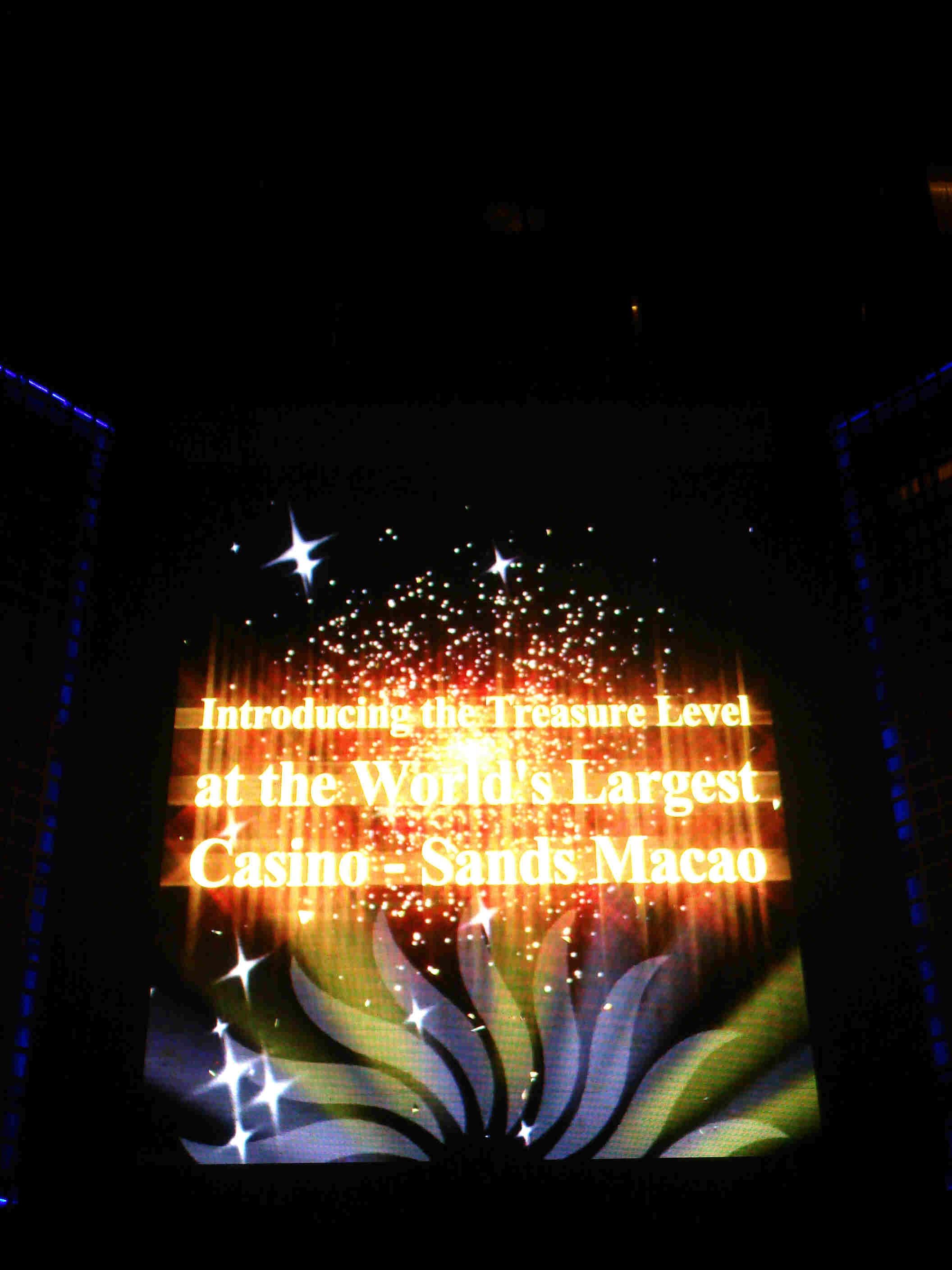
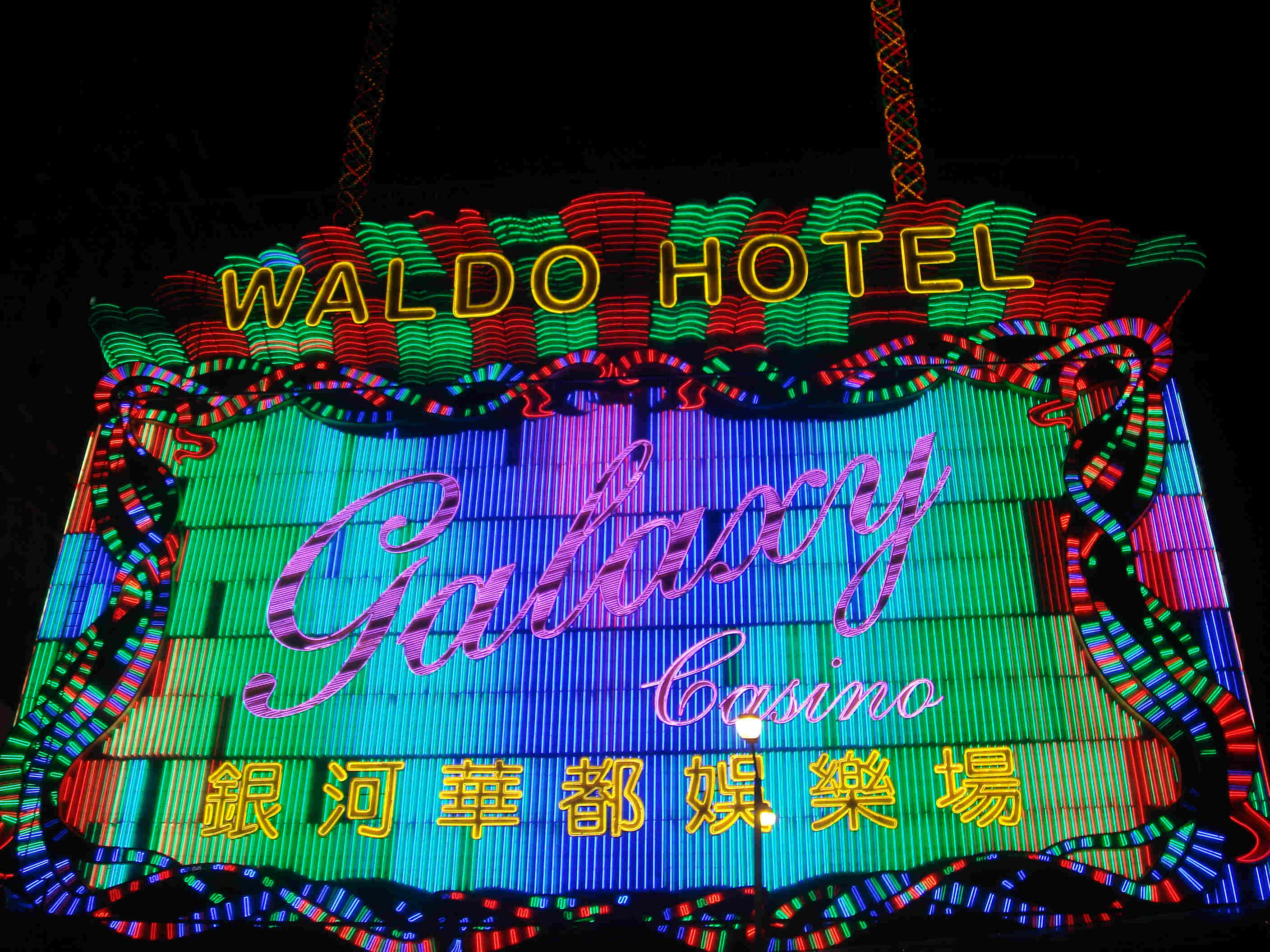
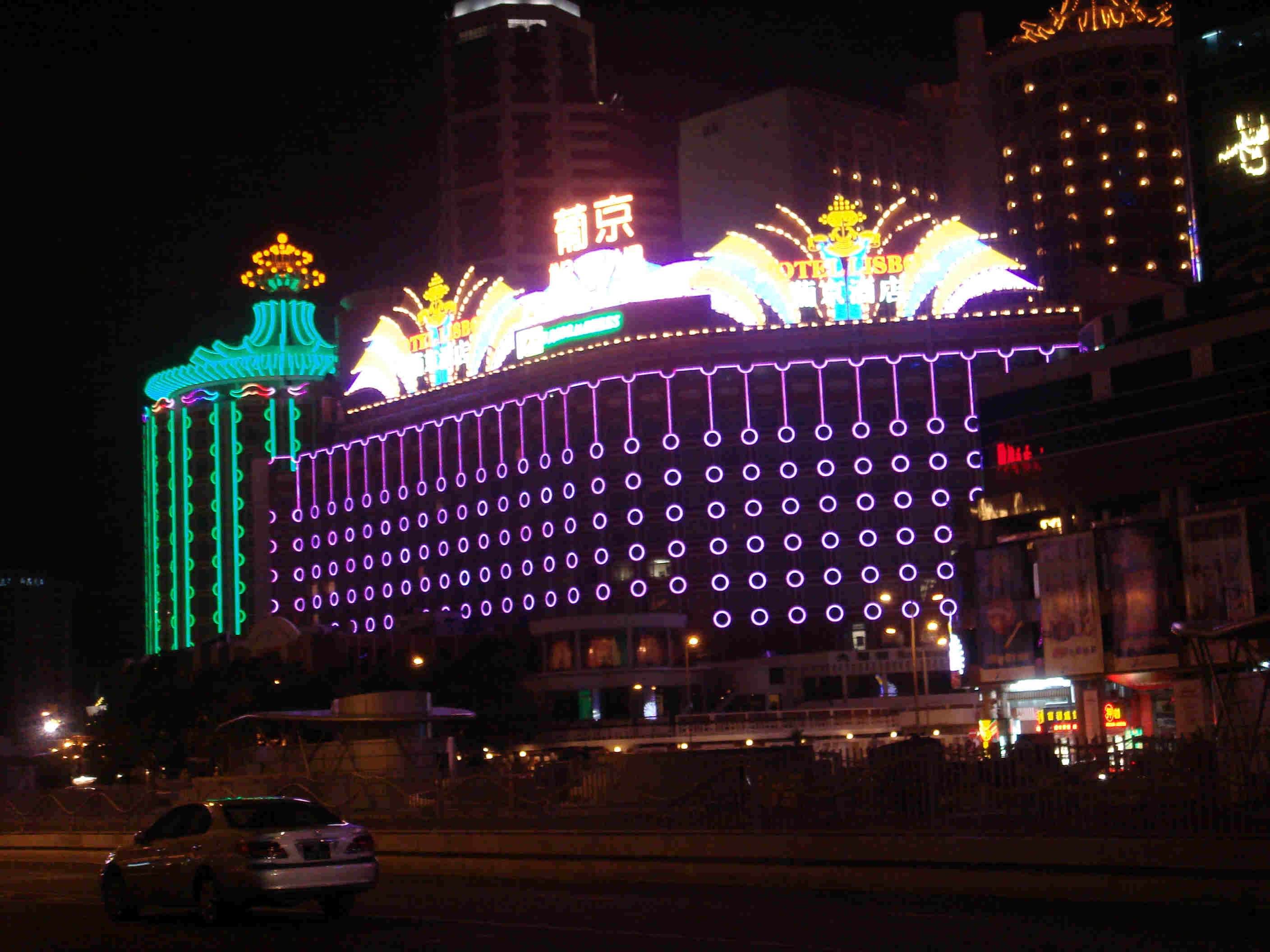
Sands, the Galaxy Casino at the Waldo Hotel and the original Lisboa; so much nicer looking by night.
Blair's final message - change or perish 27 September 2006 Tony Blair delivered his farewell speech, the first of many farewells over the next nine months, to the Labour Party conference yesterday. And he reminded people of why he will be missed. He is an engaging speaker. After overnight headlines reveling in his wife, Cherie Blair, condemning the chancellor as a liar, Mr Blair punctured the tension at the outset of his speech by saying: "At least, I don't have to worry about her running off with the bloke next door." He always had a nice light sense of humour. Very British. Mr Blair's dominant theme was to tell New Labour that the challenges the country faced in 1997 were essentially British, but today they are essentially global. Change or perish was the message. But Blair is already writing his history books. And sometimes he is a little too evasive. He argues that "terrorism isn't our fault. We didn't cause it". Sorry, but the USA and UK invaded Iraq and have fostered terrorism there and as a result across the middle east. Blair is not good at humility. Which is a shame. This would have been the time to put a little distance between himself and GW Bush. Because otherwise Bush will dominate the Blair legacy which cannot be right for a New Labour leader. He also talked of a country that was "aching for change" in 1997 but in all honestly Labour has not delivered on Blair's ambitions. His conversion to environmental issues is too little and too late. For all his brilliance - one cautionary note - there is no one in his Labour Party that is urging Blair to stay. There appears to be a strong consensus that it is time for him to move on. Ideally he would go next week; on Wednesday morning, thereby wiping out all media coverage of David Cameron's speech to the Conservative party conference. It would be a last act of service to Labour - and the one way to guarantee that the Blair era ends on a high. But it wont happen. Blair seems determined to carry on for a further nine months. Here is his speech. And this is why he will be missed. No one else (other than Bill Clinton in the USA) can make politics sound this good.
Tony Blair's speech
I'd like to start by saying something very simple. Thank you. Thank you to you, our party, our members, our supporters, the people who week in, week out do the work, take the flak but don't often get the credit. Thank you, the Labour party for giving me the extraordinary privilege of leading you these past 12 years. I know I look a lot older. That's what being leader of the Labour party does to you. Actually, looking round some of you look a lot older. That's what having me as leader of the Labour party does to you Nobody knows that better than John Prescott, my deputy these last 10 years, author of "traditional values in a modern setting". I may have taken New Labour to the country but it was you that helped me take it to the party, so thank you. Something I don't say often enough - thank you to my family. It's usual after you thank the family, you thank your agent and yes I do want to thank him and through him the wonderful people of Sedgefield. When I went to Sedgefield to seek the nomination, just before the 1983 election, I was a refugee from the London-based politics of that time. I knocked on John Burton's door. He said "come in; but shut up for half an hour, we're watching the Cup Winners' Cup final". I sat in the company of the most normal people I had met in the Labour party. They taught me that most of politics isn't about politics, in the sense of meetings, resolutions, speeches or even parties. It starts with people. It's about friendship, art, culture, sport. It's about being a fully paid up member of the human race before being a fully paid up member of the Labour party. But above all else, I want to thank the British people. Not just for the honour of being prime minister but for the journey of progress we have travelled together. Leaders lead but in the end it's the people who deliver. In the last few months I've seen new hospitals like University College in London, the new Queen Elizabeth Hospital planned in Birmingham or Whiston Hospital in Knowsley, where I laid the foundation stone. But without the talents and dedication of the NHS staff, they would be just empty shells. It is their efforts which have cut waiting, improved care, transform and save tens of thousands of lives every day. Thank you. And we in government can help put in place the new academy in Liverpool or the ground-breaking Education Village in Darlington which I have visited recently. But it's the commitment and love of learning of their teachers and their pupils, and the support of parents, which have given our country the best educated children in our history. Thank you. And what about Manchester? A city transformed. A city that shows what a confident, open, and proud people with a great Labour council can do. So thank you .... In 1994, I stood before you for the first time and shared the country's anger at crumbling school buildings, patients languishing, sometimes dying in pain, waiting for operations, of crime doubled, of homes repossessed, of pensioners living in poverty; and told you of our dismay at four election defeats and how it was not us who should feel betrayed but the British people. That such a speech seems so dated today is not through the passage of time but through progress. In 1997, we faced daunting challenges. Boom and bust economics. Chronic under-investment in our public services. Social division, with millions living in poverty, including over 3 million children. And more than all this, a country culturally and socially behind. No black ministers and never a black cabinet minister. Parliament, supposedly the forum of the people, with only one in 10 women MPs. Gay people denied equal rights. Trade unionists able to be sacked for joining a union. Workers on £1.20 an hour, legally. London the only major capital city in the world without city government. Scotland, Wales and Northern Ireland all run from Whitehall. Inner cities depleted, a refuge for the dispossessed. This was a country aching for change. Now, for all that remains to be done, dwell for a moment on what has been achieved. We have had the longest period of sustained economic growth in British history. Mortgage repossession, like mass unemployment, are terms we have to be reminded of. The last NHS winter crisis was six years ago. Heart patients wait on average less than three months. Cancer deaths are down by 43,000. You are more likely to see a new school building than a crumbling one. There are virtually no long- term young unemployed. Today we ask: can we meet our ambitious targets on child poverty when, before 1997, the idea of a child poverty target would have been laughable? We have black ministers and the first woman and then the first black woman leader of the Lords. Not enough women MPs but twice what there were. A London mayor, thankfully Labour again. Devolution in Scotland and Wales. But not just this. Free museum entry that has seen a 50% rise in visitors. Banning things that should never have been allowed: handguns, cosmetic testing on animals; fur farming, blacklisting of trade unionists and from summer next year, smoking in public places. Allowing things that should never have been banned: the right to roam; the right to request flexible working; civil partnerships for gay people. And in 2012 it is London that will host the Olympic games. Of course, the daily coverage of politics focuses on the negative. But take a step back and be proud: this is a changed country. Above all, it is progressive ideas which define its politics. That is the real result of a third term victory. And the Tories have to pretend they love it. The Bank of England independence, they never did in 18 years, the minimum wage, they told us would cost a million jobs. The help for the world's poor, they cut. They fall over themselves saying how much they agree with us. Don't lose heart from that; take heart from it. We have changed the terms of political debate. This Labour government has been unique. First time ever two full terms; now three. Why? How? We faced out to the people, not in on ourselves. We put the party at the service of the country. Their reality became our reality. Their worries, our worries. We abandoned the ridiculous, self-imposed dilemma between principle and power. We went back to first principles, to our values, our real values, those that are timeless, and separated them from doctrine and dogma that had been ravaged by time. In doing so, we freed Britain at long last from the reactionary choice that dominated British politics for so long: between individual prosperity and a caring society. We proved that economic efficiency and social justice are not opposites but partners in progress. We defied conventional political wisdom and so changed it. Around that we built a new political coalition. The USP of New Labour is aspiration and compassion reconciled. We reach out not just to those in poverty or need but those who are doing well but want to do better; those on the way up, ambitious for themselves and their families. These are our people too. Not to be tolerated for electoral reasons. But embraced out of political conviction. The core vote of this party today is not the heartlands, the inner city, not any sectional interest or lobby. Our core vote is the country. It was they who made us change. The beliefs of the Labour party of 2006 should be recognisable to the members of 1906. Full employment; strong public services; tackling poverty; international solidarity. The policies shouldn't. The trouble was for a long time they were. In the 1960s, re-reading the cabinet debates of In Place of Strife, everyone was telling Harold Wilson not to push it. They said it was divisive, unnecessary, alienated core support. In the end he gave up but so did the public on Labour. Even in 1974, the Labour government spent two years renationalising shipbuilding and the public spent two years wondering why. In the 1980s, council house sales had first been suggested by Labour people. It was shelved. Too difficult. Too divisive. We lost a generation of aspiring working class people on the back of it. In the 1980s we should have been the party transforming Britain. We weren't. The lesson is always the same. Values unrelated to modern reality are not just electorally hopeless, the values themselves become devalued. They have no purchase on the real world. We won not because we surrendered our values but because we finally had the courage to be true to them. Our courage in changing gave the British people the courage to change. That's how we won. 10 years after, government has taken its toll. It does. It's in the nature of the beast. In the harsh climate of the 24/7 media, in which gossip and controversy are so much more newsworthy than real news, people forget. I spoke to a woman the other day, a part-time worker, complaining about the amount of her tax credit. I said: hold on a minute: before 1997, there were no tax credits not for working families not for any families; child benefit was frozen; maternity pay half what it is; maternity leave likewise and paternity leave didn't exist at all. And no minimum wage, no full time rights for part time workers, in fact nothing. "So what?", she said "that's why we elected you. Now go and sort out my tax credit." And, of course, she's right. In government you carry each hope; each disillusion. And in politics it's always about the next challenge. The truth is, you can't go on forever. That's why it is right that this is my last conference as Leader. Of course it is hard to let go. But it is also right to let go. For the country, and for you, the party. Over the coming months, I will take through the changes I have worked on so hard these past years. And I will help build a unified party with a strong platform for the only legacy that has ever mattered to me - a fourth term election victory that allows us to keep changing Britain for the better. And I want to heal. There has been a lot of talk of lies and truths these past few weeks. In no relationship at the top of any walk of life is it always easy, least of all in politics which matters so much and which is conducted in such a piercing spotlight. But I know New Labour would never have happened, and 3 election victories would never have been secured, without Gordon Brown. He is a remarkable man. A remarkable servant to this country. And that is the truth. So now, 10 years on, this party faces the real test of leadership: not about what we've achieved in the past; but what we can achieve for Britain's future. Not just how do we win again; but how does Britain carry on winning? I won't be leading you in the next election. But I've sat in the hot seat for 10 years. Here's my advice. The scale of the challenges now dwarf what we faced in 1997. They are different, deeper, bigger, hammered out on the anvil of forces, global in nature, sweeping the world. In 1997 the challenges we faced were essentially British. Today they are essentially global. The world today is a vast reservoir of potential opportunity. New jobs in environmental technology, the creative industries, financial services. Cheap goods and travel. The internet. Advances in science and technology. In 10 years we will think nothing of school-leavers going off to university anywhere in the world. But with these opportunities comes huge insecurity. In 1997 we barely mentioned China. Not any more. Last year China and India produced more graduates than all of Europe put together. 10 years ago, energy wasn't on the agenda. The environment an also-ran. 10 years ago, if we talked pensions we meant pensioners. Immigration hardly raised. Terrorism meant the IRA. Not any more. We used to feel we could shut our front door on the problems and conflicts of the wider world. Not any more. Not with globalisation. Not with climate change. Not with organised crime. Not when suicide bombers born and bred in Britain bring carnage to the streets of London . In the name of religion. A speech by the Pope to an academic seminar in Bavaria leads to protests in Britain. The question today is different to the one we faced in 1997. It is how we reconcile openness to the rich possibilities of globalisation, with security in the face of its threats. How to be open and secure. And again, there is a third way. Some want a fortress Britain - job protection, pull up the drawbridge, get out of international engagement. Others see no option but to submit to global forces and let the strongest survive. Our answer is very clear. It is, once again, to help people through a changing world by using collective power to advance opportunity and provide security for all. To reconcile openness and security as we reconciled aspiration and compassion, not as enemies but as partners in progress. The British people today are reluctant global citizens. We must make them confident ones. The danger in all this, for us, is not ditching New Labour. The danger is failing to understand that New Labour in 2007 won't be New Labour in 1997. 10 years ago I would have described re-linking the BSP with earnings as "Old Labour". Our aim is by 2012, but by the end of the next parliament at the latest - we are going to do it. Rodney Bickerstaffe has become New Labour. Or have I become Old Labour? 10 years ago, if you had asked me to put environmental obligations on business, I would have been horrified. Now I'm advocating it. I would have baulked at restrictions on advertising junk food to children. Today I say unless a voluntary code works, we will legislate for it. 10 years ago I parked the issue of nuclear power. Today, I believe without it, we are going to face an energy crisis and we can't let that happen. Over the next year we are reviewing every aspect of our economic policy, not because we were wrong in the past, but because whether in tax and spending, regulation, planning, enterprise, the question is not about our competitiveness in the last 10 years, but in the next 10. Developing financial services and the City of London; the creative industries and modern manufacturing. How to be the world's number one place of choice for bio-science - if America does not want stem-cell research - we do. How to fund transport through road-pricing. Skills. I say to business: you have a responsibility to train your workforce. To trade unions: here is the chance to be the learning partners for the workforce of the next generation. Take the chance. Global warming is the greatest long-term threat to our planet's environment. Scarce energy resources mean rising prices and will threaten our country's economy. In 15 years we will go from 80% self-sufficient in oil and gas to 80% imported. We need therefore the most radical overhaul of energy policy since the War. We will increase the amount of energy from renewable sources fivefold; ensure every major business in the country has a responsibility for greenhouse gas reduction; treble investment in clean technology, including clean coal; and make sure every new home is at least 40% more energy efficient. We will meet our Kyoto targets by double the amount; and we will take the necessary measures, step by step by step, to meet one of the most ambitious targets on the environment set anywhere in the world - a 60% reduction in emissions by 2050. In the future, as people live longer, we can't afford good pensions and help for disabled people who can't work, with 4 million people on benefit, many of whom could work. Almost a million less than there were. But too many. That is why we need more radical welfare reform, getting more disabled people, more lone parents, more on unemployment benefit, into work, not to destroy the welfare state. But to preserve it. And why is reform so important in public services? Over the past 10 years Britain has invested more in our public services than any comparable nation in the world. From near the bottom in Europe to the average in a decade. 300,000 more workers, treble the money, 25% more pay in real terms and the largest ever hospital programme; that is an NHS being re-built not privatised. Refurbishing or rebuilding every state secondary school in the country. 92,000 more classroom assistants, 36,000 more teachers, pay also up 17% in real terms. This isn't privatising state education; it's producing the best schools results ever. But what happens? Expectations rise. People want power in their own hands. Two thirds of the country has access to the internet. Millions of people are ordering flights or books or other goods on-line, they are talking to their friends on-line, downloading music, all of it when they want to, not when the shop or office is open. The Google generation has moved beyond the idea of 9-5, closed on weekends and bank holidays. Today's technology is profoundly empowering. Of course public services are different. Their values are different. But today people won't accept a service handed down from on high. They want to shape it to their needs, and the reality of their lives. The same global forces changing business are at work in public services too. New ways of treating. New ways of teaching. New technologies. There will be no selective trust schools or city academies. But if, as at the academy I visited in Lewisham, good GCSE results doubled in a year, and a school once under-subscribed, now five times over-subscribed, how is that a denial of public service values? Surely it is the most vivid affirmation of them. And if an old age pensioner who used to wait 2 years for her cataract operation now gets it on the NHS in an independent treatment centre, in 3 months, free at the point of use, that is not damaging the NHS; it is fulfilling its purpose. My advice: at the next election, the issue will not only be who is trusted to invest in our public services, vital though that is. It will be who comes first. And our answer has to be. The patient; the parent. Meeting the 18 weeks maximum for waiting in the NHS with an average of 9 weeks from the door of the GP to the door of the operating theatre. Booked appointments. The end of waiting in the NHS. Historic. Transforming secondary schools in the way we have done for primary schools. Schools with three quarters of children getting good results the norm. Historic. Both within reach. Do this and we will have earned the right to be custodians of our public services for the next generation. If we fail, and without change we will, then believe me: change will still be done; but in a regressive way by a Conservative Party. I want change true to progressive values, done by a fourth term Labour Government. I always said the Home Office was the toughest job in government. It hasn't got easier. We should get a few facts straight. Crime has fallen not risen. We are the only government since the war to do it. Asylum applications are dealt with faster, removals are greater, the system infinitely better than the chaos we inherited in 1997. But the fact is that the world is changing so fast that the reality we are dealing with - mass migration, organised crime, ASB - has engulfed systems designed for a time gone by. 30 million people now come to Britain every year. Visitors, tourists, workers, students. Our economy needs them. 227 million pass through our airports. Yet we have no means of checking who is here lawfully. The fundamental dilemma: how do we reconcile liberty with security in this new world? I don't want to live in a police state, or a Big Brother society or put any of our essential freedoms in jeopardy. But because our idea of liberty is not keeping pace with change in reality, those freedoms are in jeopardy. When crimes go unpunished, that is a breach of the victim's liberty and human rights. When organised crime gangs are free to practice their evil, countless young people have their liberty and often their lives damaged. When ASB goes unchecked, each and every member of the community in which it happens, has their human rights broken. When we can't deport foreign nationals even when inciting violence the country is at risk. Immigration has benefited Britain. But I know that if we don't have rules that allow us some control over who comes in, goes out, who has a right to stay and who has not, then instead of a welcome, migrants find fear. We can only protect liberty by making it relevant to the modern world. That is why Identity Cards using biometric technology are not a breach of our basic rights, they are an essential part of responding to the reality of modern migration and protecting us against identity fraud. I remember when I introduced the DNA database. On it go all those who are arrested. We were told it was a monstrous breach of liberty. But it is now matching 3,000 offences a month including last year several hundred murders, and thousands of rapes and other violent offences. Difficult reform leading to real progress in the fight against crime. In the next parliamentary session, the centre-piece will be John Reid's immigration and law and order reforms. I ask people of all parties to support them. Let liberty stand up for the law-abiding. And of course, the new anxiety is the global struggle against terrorism without mercy or limit. This is a struggle that will last a generation and more. But this I believe passionately: we will not win until we shake ourselves free of the wretched capitulation to the propaganda of the enemy, that somehow we are the ones responsible. This terrorism isn't our fault. We didn't cause it. It's not the consequence of foreign policy. It's an attack on our way of life. It's global. It has an ideology. It killed nearly 3,000 people including over 60 British on the streets of New York before war in Afghanistan or Iraq was even thought of. It has been decades growing. Its victims are in Egypt, Algeria, Indonesia, India, Pakistan, Turkey. Over 30 nations in the world. It preys on every conflict. It exploits every grievance. And its victims are mainly Muslim. This is not our war against Islam. This is a war fought by extremists who pervert the true faith of Islam. And all of us, Western and Arab, Christian or Muslim, who put the value of tolerance, respect and peaceful co-existence above those of sectarian hatred, should join together to defeat them. It is not British soldiers who are sending car bombs into Baghdad or Kabul to slaughter the innocent. They are there along with troops of 30 other nations with, in each case, a full UN mandate at the specific request of the first ever democratically elected Governments of those countries in order to protect them against the very ideology also seeking the deaths of British people in planes across the Atlantic.If we retreat now, hand Iraq over to Al Qaida and sectarian death squads and Afghanistan back to Al Qaida and the Taleban, we won't be safer; we will be committing a craven act of surrender that will put our future security in the deepest peril. Of course it's tough. Not a day goes by or an hour in the day when I don't reflect on our troops with admiration and thanks - the finest, the best, the bravest, any nation could hope for. They are not fighting in vain. But for this nation's future. But this is not a conventional war. It can't be won by force alone. It's not a clash of civilisations. It's about civilisation, about the ideas that shape it. From 9/11 until now I have said again and again. If we want our values to be the ones that govern global change, we have to show that they are fair, just and delivered with an even hand. From now until I leave office I will dedicate myself, with the same commitment I have given to Northern Ireland , to advancing peace between Israel and Palestine. I may not succeed. But I will try because peace in the Middle East is a defeat for terrorism. We must never again let Lebanon become the battleground for a conflict that neither Israeli or Lebanese people wanted though it was they who paid the price for it. Peace in Lebanon is a defeat for terrorism. Action in Africa is a defeat for terrorism. What is happening now in the Sudan cannot stand. If this were in the continent of Europe we would act. Showing an African life is worth as much as a Western one - that would help defeat terrorism too. Yes it's hard sometimes to be America's strongest ally. Yes, Europe can be a political headache for a proud sovereign nation like Britain. But believe me there are no half-hearted allies of America today and no semi-detached partners in Europe. And the truth is that nothing we strive for, from the world trade talks to global warming, to terrorism and Palestine can be solved without America, or without Europe. At the moment I know people only see the price of these alliances. Give them up and the cost in terms of power, weight and influence for Britain would be infinitely greater. Distance this country and you may find it's a long way back. So all these changes of a magnitude we never dreamt of, sweeping the world, are calling for answers of equal magnitude and vision. All require leadership. And here is something else I've learnt. The danger for us today is not reversion to the politics of the 1980s. It is retreat to the sidelines. To the comfort zone. It is unconsciously to lose the psychology of a governing party. As I said in 1994, courage is our friend. Caution, our enemy. A governing party has confidence, self-belief. It sees the tough decision and thinks it should be taking it. Reaches for responsibility first. Serves by leading. The most common phrase uttered to me - and not at rallies or public events but in meetings of chance, quietly, is not "I hate you" or "I like you" but "I would not have your job for all the world". The British people will, sometimes, forgive a wrong decision. They won't forgive not deciding. They know the choices are hard. They know there isn't some fantasy government where nothing difficult ever happens. They've got the Lib Dems for that. Government isn't about protests or placards, shouting the odds or stealing the scene. It's about the hard graft of achievement. There are no third-term popular governments. Don't ignore the polls but don't be paralysed by them either. 10 years on, our advantage is time, our disadvantage time. Time gives us experience. Our capacity to lead is greater. Time gives the people fatigue; their willingness to be led, is less. But they will lose faith in us only if first we lose faith in ourselves. Polls now are as relevant as last year's weather forecast for tomorrow's weather. It's three years until an election. The first rule of politics: there are no rules. You make your own luck. There's no rule that says the Tories have got to come back. David Cameron's Tories? My advice: get after them. His foreign policy. Pander to anti-Americanism by stepping back from America . Pander to the Eurosceptics through isolation in Europe. Sacrificing British influence for party expediency is not a policy worthy of a prime minister. His immigration policy. Says he'll sort out illegal immigration, but opposes identity cards, the one thing essential to do it. His energy policy. Nuclear power "only as a last resort". It's not a multiple choice quiz question, Mr Cameron. We need to decide now otherwise in 10 years time we will be importing expensive fossil fuels and Britain's economy will suffer. He wants tax cuts and more spending, with the same money. He wants a bill of rights for Britain drafted by a committee of lawyers. Have you ever tried drafting anything with a committee of lawyers? And his policy for the old lady terrorised by the young thug is that she should put her arm round him and give him a nice, big hug. Built to last? They haven't even laid the foundation stone. If we can't take this lot apart in the next few years we shouldn't be in the business of politics at all. The Tories haven't thought it through. They think it's all about image. It's true we changed our image. We created a professional organisation. But if I'd stood in 1997 on the policies of 1987 I would have lost. Period. And it's the same now. Enough talk of hung parliaments. The next election won't be about image unless we let it be. It'll be about who has the strength, judgment, weight and ideas for Britain's future in an uncertain world. And if we show belief in ourselves, the British people will feel that belief and be given confidence. Something else I've learnt. It's about a party's character. I'll give you two examples. Dennis Skinner. Watching from his sick bed. Get well soon. Never agreed with a policy I've had. Never once stopped him knowing the difference between a Labour government and a Tory one. People like Janet Anderson, George Howarth, Mike Hall. Good ministers, but I asked them to make way. They did. Without a word of bitterness. They never forgot their principles when in office; and they never discovered them when they left office. This is the party I am proud to lead. From the day I was elected until the day I leave, they will always try to separate us. "He's not Labour." "He's a closet Tory." In the 1980s some things done were necessary for the country. That's the truth. Saying it doesn't make you a Tory. I'm a progressive. The true believer believes in social justice, in solidarity, in help for those not able to help themselves. They know the race can't just be to the swift and survival for the strong. But they also know that these values, gentle and compassionate as they are, have to be applied in a harsh, uncompromising world and what makes the difference is not belief alone, but the raw courage to make it happen. They say I hate the party, and its traditions. I don't. I love this party. There's only one tradition I hated: losing. I hated the 1980s not just for our irrelevance but for our revelling in irrelevance. And I don't want to win for winning's sake but for the sake of the millions here that depend on us to win, and throughout the world. Every day this government has been in power, every day in Africa, children have lived who otherwise would have died because this country led the way in cancelling debt and global poverty. That's why winning matters. So keep on winning. Do it with optimism. With hope in your hearts. Politics is not a chore. It's the great adventure of progress. I don't want to be the Labour leader who won three successive elections. I want to be the first Labour leader to win three successive elections. So: it's up to you. You take my advice. You don't take it. Your choice. Whatever you do, I'm always with you. Head and heart. You've given me all I have ever achieved, and all that we've achieved, together, for the country. Next year I won't be making this speech. But, in the years to come, wherever I am, whatever I do. I'm with you. Wishing you well. Wanting you to win. You're the future now. Make the most of it. The new Bangkok airport building site 25 September 2006 Thai Air Asia has made an early move to the New Bangkok Airport with all its flights now arriving and departing at the new airport. Most airline will make their move on Thursday 28th. First impressions: It was a 35minute taxi ride from Sathorn Rd. Using Bangna-Trad; the meter fare was Baht 250 plus a 40 baht toll. I left home at 7.55am but you are going out of the city against the traffic so the journey was easy. The taxi driver was sightseeing as well as this was his first trip to the airport. The terminal is huge.
The check in area is a massive metal and concrete hangar. When it is busy, from Thursday onwards, I fear it will be noisy. Check in areas are well signposted. Inevitably with only one terminal it will be hard to keep traffic flowing outside the terminal building and congestion as passengers are dropped off will be a problem. Hong Kong solved this by having the rail connection up and running from day one. The check in area has a high roof and lost of light. But after you clear immigration you walk into the shopping mall. Here the roof is lower; there is no natural light and it is quite claustrophobic. None of the shops are open today. Not one. You cannot even buy a newspaper. And many of the shops look like they will struggle to be ready for Thursday. There are hundreds of people working in the terminal. It is dusty. There is not a seat to be seen until you reach the boarding gates. Even the food court apppears to have no seating area. The biggest problem with the shopping area is that there is no a lot of space. Stores have been crammed in and there is not a lot of walking space between the stores. When the airport is busy this could be a real problem and this area could be a badly crowded bottleneck. It is not a problem with a 100 Air Asia passengers in the international terminal. But with several thousand waiting for the late evening long haul flights then there will likely be a problem.
The good news is that the runways and taxiways are well marked and fully operational. It was a short taxi to runway 19L, which will be the main take off runway. he bad news for golfers is that the take off is over Thana City. Flying East we turned before Green Valley and went straight over the top of ABAC and Subrapreuk Golf Course. The westerly departure will head out over Green Valley. The big test will come on Thursday. Can the airport cope with 100,000 passengers a day rather than a few hundred. Where will the bottlenecks be? What will be open? The good news for Air Asia. They will be up and running and familiar with their new home. Not all the security checks are ready. For Air Asia's Macau flight we had to clear security by gate D1 and walk to gat D8A. This is over a kilometer; there is no moving walkway. This is an airport for the fit and athletic. The overwhelming impression is of an airport for the industrial age. It is all metal, concrete and marble. Even the boarding gate seats are made of metal. It is a harsh environment. New visa rules confirmed 21 September 2006 New rules limiting
stays in Thailand on “visas on arrival” to 90 days over any six month period
have been confirmed and go into effect on October 1. 17 September 2006 Some caveats before I go any further, I am not a religious man, I know too little about the world's faiths, I worry about the damage that excessive faith can do. I worry about the links between fundamentalism, intolerance and vioelence. I am not a great fan of Roman Catholicism of of the German pope, God's Rottwieller. He is no diplomat. A rather shy, incredibly, well-read ex-professor, he does not have his predecessor's simple charm to deliver a message. Billions of words are being written about his speech last week. The speech is in full below and I have highlighted the offending text. It is the speech of a theologian and historian. What was he trying to say? That violence in the name of religion seems to be tolerated by some Muslim clerics and actively encouraged by others. Given the reaction of so many muslims to his lecture, it looks like he got it pretty well right. This of course is not just a Muslim issue. Violence in the name of religion is tolerated by so called men of god on many faiths, and this has been true throughout history. So far Pope Benedict XVI "sincerely regrets" offending Muslims according to the Vatican. The new Vatican secretary of state, Cardinal Tarcisio Bertone, said the pope's position on Islam is unmistakably in line with Vatican teaching that says the church "esteems" Muslims. But that is not going to be enough. It is likely that he will be humiliated into giving a personal apology to the world's muslim community most of whom we can safely assume have not read, and probably not even heard, what it was that the Pope said in his speech. Religious superiority is all about who says sorry first. I don't think there is any doubt that Benedict as a man of faith respects Islam. But he wants the initiative for dialogue to be taken up on both sides. While Muslims can build mosques, worship and preach and speak openly in the West, Christians are often denied religious freedom in Islamic countries. Some of the smaller states on the Arabian peninsula have begun to allow Christians to practise their faith openly, but Saudi Arabia, for example, still bans all public expression of non-Muslim religions. In several other countries, Islamic law effectively deprived Christians of basic rights. Benedict's lecture was given in his home country, Germany. There is some discomfort for Catholics here. The Catholic Church had great price to pay for its silence during the extermination of millions of Jews by the Nazis. Benedict must feel the need to make his and the Church’s stand clear. The over the top reaction misses the fact that the Pope twice emphasised that he was quoting and said that the words were brusque and forceful. He also said, “Violence is incompatible with the nature of God and the nature of the soul,” issuing an open invitation to dialogue among cultures. Sadly the overwhelming response suggests that dialogue is not the favored response. As the Pope arrived in Munich earlier in the week for Mass with 250,000 of the faithful he said, "there is a hardness of hearing where God is concerned, and this is something from which we particularly suffer in our times." How true. I feel like I am walking on egg-shells with leaden boots as I write this. God knows what The Pops must be thinking! Faith, reason
and the university: memories and reflections It is a moving experience for me to be back again in the university and to be able once again to give a lecture at this podium. I think back to those years when, after a pleasant period at the Freisinger Hochschule, I began teaching at the University of Bonn. That was in 1959, in the days of the old university made up of ordinary professors. The various chairs had neither assistants nor secretaries, but in recompense there was much direct contact with students and in particular among the professors themselves. We would meet before and after lessons in the rooms of the teaching staff. There was a lively exchange with historians, philosophers, philologists and, naturally, between the two theological faculties. Once a semester there was a dies academicus, when professors from every faculty appeared before the students of the entire university, making possible a genuine experience of universitas - something that you too, Magnificent Rector, just mentioned - the experience, in other words, of the fact that despite our specializations which at times make it difficult to communicate with each other, we made up a whole, working in everything on the basis of a single rationality with its various aspects and sharing responsibility for the right use of reason - this reality became a lived experience. The university was also very proud of its two theological faculties. It was clear that, by inquiring about the reasonableness of faith, they too carried out a work which is necessarily part of the "whole" of the universitas scientiarum, even if not everyone could share the faith which theologians seek to correlate with reason as a whole. This profound sense of coherence within the universe of reason was not troubled, even when it was once reported that a colleague had said there was something odd about our university: it had two faculties devoted to something that did not exist: God. That even in the face of such radical scepticism it is still necessary and reasonable to raise the question of God through the use of reason, and to do so in the context of the tradition of the Christian faith: this, within the university as a whole, was accepted without question. I was reminded of all this recently, when I read the edition by Professor Theodore Khoury (Münster) of part of the dialogue carried on - perhaps in 1391 in the winter barracks near Ankara - by the erudite Byzantine emperor Manuel II Paleologus and an educated Persian on the subject of Christianity and Islam, and the truth of both. It was presumably the emperor himself who set down this dialogue, during the siege of Constantinople between 1394 and 1402; and this would explain why his arguments are given in greater detail than those of his Persian interlocutor. The dialogue ranges widely over the structures of faith contained in the Bible and in the Qur'an, and deals especially with the image of God and of man, while necessarily returning repeatedly to the relationship between - as they were called - three "Laws" or "rules of life": the Old Testament, the New Testament and the Qur'an. It is not my intention to discuss this question in the present lecture; here I would like to discuss only one point - itself rather marginal to the dialogue as a whole - which, in the context of the issue of "faith and reason", I found interesting and which can serve as the starting-point for my reflections on this issue. In the seventh conversation [text unclear] edited by Professor Khoury, the emperor touches on the theme of the holy war. The emperor must have known that surah 2, 256 reads: "There is no compulsion in religion". According to the experts, this is one of the suras of the early period, when Mohammed was still powerless and under threat. But naturally the emperor also knew the instructions, developed later and recorded in the Qur'an, concerning holy war. Without descending to details, such as the difference in treatment accorded to those who have the "Book" and the "infidels", he addresses his interlocutor with a startling brusqueness on the central question about the relationship between religion and violence in general, saying: "Show me just what Mohammed brought that was new, and there you will find things only evil and inhuman, such as his command to spread by the sword the faith he preached". The emperor, after having expressed himself so forcefully, goes on to explain in detail the reasons why spreading the faith through violence is something unreasonable. Violence is incompatible with the nature of God and the nature of the soul. "God", he says, "is not pleased by blood - and not acting reasonably ... is contrary to God's nature. Faith is born of the soul, not the body. Whoever would lead someone to faith needs the ability to speak well and to reason properly, without violence and threats... To convince a reasonable soul, one does not need a strong arm, or weapons of any kind, or any other means of threatening a person with death...". The decisive statement in this argument against violent conversion is this: not to act in accordance with reason is contrary to God's nature. The editor, Theodore Khoury, observes: For the emperor, as a Byzantine shaped by Greek philosophy, this statement is self-evident. But for Muslim teaching, God is absolutely transcendent. His will is not bound up with any of our categories, even that of rationality. Here Khoury quotes a work of the noted French Islamist R Arnaldez, who points out that Ibn Hazn went so far as to state that God is not bound even by his own word, and that nothing would oblige him to reveal the truth to us. Were it God's will, we would even have to practise idolatry. At this point, as far as understanding of God and thus the concrete practice of religion is concerned, we are faced with an unavoidable dilemma. Is the conviction that acting unreasonably contradicts God's nature merely a Greek idea, or is it always and intrinsically true? I believe that here we can see the profound harmony between what is Greek in the best sense of the word and the biblical understanding of faith in God. Modifying the first verse of the Book of Genesis, the first verse of the whole Bible, John began the prologue of his Gospel with the words: "In the beginning was the Word". This is the very word used by the emperor: God acts, [text unclear] with logos. Logos means both reason and word - a reason which is creative and capable of self-communication, precisely as reason. John thus spoke the final word on the biblical concept of God, and in this word all the often toilsome and tortuous threads of biblical faith find their culmination and synthesis. In the beginning was the logos, and the logos is God, says the Evangelist. The encounter between the Biblical message and Greek thought did not happen by chance. The vision of Saint Paul, who saw the roads to Asia barred and in a dream saw a Macedonian man plead with him: "Come over to Macedonia and help us!" (cf. Acts 16:6-10) - this vision can be interpreted as a "distillation" of the intrinsic necessity of a rapprochement between Biblical faith and Greek inquiry. In point of fact, this rapprochement had been going on for some time. The mysterious name of God, revealed from the burning bush, a name which separates this God from all other divinities with their many names and simply declares "I am", already presents a challenge to the notion of myth, to which Socrates' attempt to vanquish and transcend myth stands in close analogy. Within the Old Testament, the process which started at the burning bush came to new maturity at the time of the Exile, when the God of Israel, an Israel now deprived of its land and worship, was proclaimed as the God of heaven and earth and described in a simple formula which echoes the words uttered at the burning bush: "I am". This new understanding of God is accompanied by a kind of enlightenment, which finds stark expression in the mockery of gods who are merely the work of human hands (cf. Ps 115). Thus, despite the bitter conflict with those Hellenistic rulers who sought to accommodate it forcibly to the customs and idolatrous cult of the Greeks, biblical faith, in the Hellenistic period, encountered the best of Greek thought at a deep level, resulting in a mutual enrichment evident especially in the later wisdom literature. Today we know that the Greek translation of the Old Testament produced at Alexandria - the Septuagint - is more than a simple (and in that sense really less than satisfactory) translation of the Hebrew text: it is an independent textual witness and a distinct and important step in the history of revelation, one which brought about this encounter in a way that was decisive for the birth and spread of Christianity. A profound encounter of faith and reason is taking place here, an encounter between genuine enlightenment and religion. From the very heart of Christian faith and, at the same time, the heart of Greek thought now joined to faith, Manuel II was able to say: Not to act "with logos" is contrary to God's nature. In all honesty, one must observe that in the late Middle Ages we find trends in theology which would sunder this synthesis between the Greek spirit and the Christian spirit. In contrast with the so-called intellectualism of Augustine and Thomas, there arose with Duns Scotus a voluntarism which, in its later developments, led to the claim that we can only know God's voluntas ordinata. Beyond this is the realm of God's freedom, in virtue of which he could have done the opposite of everything he has actually done. This gives rise to positions which clearly approach those of Ibn Hazn and might even lead to the image of a capricious God, who is not even bound to truth and goodness. God's transcendence and otherness are so exalted that our reason, our sense of the true and good, are no longer an authentic mirror of God, whose deepest possibilities remain eternally unattainable and hidden behind his actual decisions. As opposed to this, the faith of the Church has always insisted that between God and us, between his eternal Creator Spirit and our created reason there exists a real analogy, in which - as the Fourth Lateran Council in 1215 stated - unlikeness remains infinitely greater than likeness, yet not to the point of abolishing analogy and its language. God does not become more divine when we push him away from us in a sheer, impenetrable voluntarism; rather, the truly divine God is the God who has revealed himself as logos and, as logos, has acted and continues to act lovingly on our behalf. Certainly, love, as Saint Paul says, "transcends" knowledge and is thereby capable of perceiving more than thought alone (cf. Eph 3:19); nonetheless it continues to be love of the God who is Logos. Consequently, Christian worship is, again to quote Paul [text unclear] worship in harmony with the eternal Word and with our reason (cf. Rom 12:1). This inner rapprochement between Biblical faith and Greek philosophical inquiry was an event of decisive importance not only from the standpoint of the history of religions, but also from that of world history - it is an event which concerns us even today. Given this convergence, it is not surprising that Christianity, despite its origins and some significant developments in the East, finally took on its historically decisive character in Europe. We can also express this the other way around: this convergence, with the subsequent addition of the Roman heritage, created Europe and remains the foundation of what can rightly be called Europe. The thesis that the critically purified Greek heritage forms an integral part of Christian faith has been countered by the call for a dehellenization of Christianity - a call which has more and more dominated theological discussions since the beginning of the modern age. Viewed more closely, three stages can be observed in the programme of dehellenization: although interconnected, they are clearly distinct from one another in their motivations and objectives. Dehellenization first emerges in connection with the postulates of the Reformation in the sixteenth century. Looking at the tradition of scholastic theology, the Reformers thought they were confronted with a faith system totally conditioned by philosophy, that is to say an articulation of the faith based on an alien system of thought. As a result, faith no longer appeared as a living historical Word but as one element of an overarching philosophical system. The principle of sola scriptura, on the other hand, sought faith in its pure, primordial form, as originally found in the biblical Word. Metaphysics appeared as a premise derived from another source, from which faith had to be liberated in order to become once more fully itself. When Kant stated that he needed to set thinking aside in order to make room for faith, he carried this programme forward with a radicalism that the Reformers could never have foreseen. He thus anchored faith exclusively in practical reason, denying it access to reality as a whole. The liberal theology of the nineteenth and twentieth centuries ushered in a second stage in the process of dehellenization, with Adolf von Harnack as its outstanding representative. When I was a student, and in the early years of my teaching, this programme was highly influential in Catholic theology too. It took as its point of departure Pascal's distinction between the God of the philosophers and the God of Abraham, Isaac and Jacob. In my inaugural lecture at Bonn in 1959, I tried to address the issue, and I do not intend to repeat here what I said on that occasion, but I would like to describe at least briefly what was new about this second stage of dehellenization. Harnack's central idea was to return simply to the man Jesus and to his simple message, underneath the accretions of theology and indeed of hellenization: this simple message was seen as the culmination of the religious development of humanity. Jesus was said to have put an end to worship in favour of morality. In the end he was presented as the father of a humanitarian moral message. Fundamentally, Harnack's goal was to bring Christianity back into harmony with modern reason, liberating it, that is to say, from seemingly philosophical and theological elements, such as faith in Christ's divinity and the triune God. In this sense, historical-critical exegesis of the New Testament, as he saw it, restored to theology its place within the university: theology, for Harnack, is something essentially historical and therefore strictly scientific. What it is able to say critically about Jesus is, so to speak, an expression of practical reason and consequently it can take its rightful place within the university. Behind this thinking lies the modern self-limitation of reason, classically expressed in Kant's "Critiques", but in the meantime further radicalized by the impact of the natural sciences. This modern concept of reason is based, to put it briefly, on a synthesis between Platonism (Cartesianism) and empiricism, a synthesis confirmed by the success of technology. On the one hand it presupposes the mathematical structure of matter, its intrinsic rationality, which makes it possible to understand how matter works and use it efficiently: this basic premise is, so to speak, the Platonic element in the modern understanding of nature. On the other hand, there is nature's capacity to be exploited for our purposes, and here only the possibility of verification or falsification through experimentation can yield ultimate certainty. The weight between the two poles can, depending on the circumstances, shift from one side to the other. As strongly positivistic a thinker as J Monod has declared himself a convinced Platonist/Cartesian. This gives rise to two principles which are crucial for the issue we have raised. First, only the kind of certainty resulting from the interplay of mathematical and empirical elements can be considered scientific. Anything that would claim to be science must be measured against this criterion. Hence the human sciences, such as history, psychology, sociology and philosophy, attempt to conform themselves to this canon of scientificity. A second point, which is important for our reflections, is that by its very nature this method excludes the question of God, making it appear an unscientific or pre-scientific question. Consequently, we are faced with a reduction of the radius of science and reason, one which needs to be questioned. I will return to this problem later. In the meantime, it must be observed that from this standpoint any attempt to maintain theology's claim to be "scientific" would end up reducing Christianity to a mere fragment of its former self. But we must say more: if science as a whole is this and this alone, then it is man himself who ends up being reduced, for the specifically human questions about our origin and destiny, the questions raised by religion and ethics, then have no place within the purview of collective reason as defined by "science", so understood, and must thus be relegated to the realm of the subjective. The subject then decides, on the basis of his experiences, what he considers tenable in matters of religion, and the subjective "conscience" becomes the sole arbiter of what is ethical. In this way, though, ethics and religion lose their power to create a community and become a completely personal matter. This is a dangerous state of affairs for humanity, as we see from the disturbing pathologies of religion and reason which necessarily erupt when reason is so reduced that questions of religion and ethics no longer concern it. Attempts to construct an ethic from the rules of evolution or from psychology and sociology, end up being simply inadequate. Before I draw the conclusions to which all this has been leading, I must briefly refer to the third stage of dehellenization, which is now in progress. In the light of our experience with cultural pluralism, it is often said nowadays that the synthesis with Hellenism achieved in the early Church was a preliminary inculturation which ought not to be binding on other cultures. The latter are said to have the right to return to the simple message of the New Testament prior to that inculturation, in order to inculturate it anew in their own particular milieux. This thesis is not only false; it is coarse and lacking in precision. The New Testament was written in Greek and bears the imprint of the Greek spirit, which had already come to maturity as the Old Testament developed. True, there are elements in the evolution of the early Church which do not have to be integrated into all cultures. Nonetheless, the fundamental decisions made about the relationship between faith and the use of human reason are part of the faith itself; they are developments consonant with the nature of faith itself. And so I come to my conclusion. This attempt, painted with broad strokes, at a critique of modern reason from within has nothing to do with putting the clock back to the time before the Enlightenment and rejecting the insights of the modern age. The positive aspects of modernity are to be acknowledged unreservedly: we are all grateful for the marvellous possibilities that it has opened up for mankind and for the progress in humanity that has been granted to us. The scientific ethos, moreover, is - as you yourself mentioned, Magnificent Rector - the will to be obedient to the truth, and, as such, it embodies an attitude which belongs to the essential decisions of the Christian spirit. The intention here is not one of retrenchment or negative criticism, but of broadening our concept of reason and its application. While we rejoice in the new possibilities open to humanity, we also see the dangers arising from these possibilities and we must ask ourselves how we can overcome them. We will succeed in doing so only if reason and faith come together in a new way, if we overcome the self-imposed limitation of reason to the empirically verifiable, and if we once more disclose its vast horizons. In this sense theology rightly belongs in the university and within the wide-ranging dialogue of sciences, not merely as a historical discipline and one of the human sciences, but precisely as theology, as inquiry into the rationality of faith. Only thus do we become capable of that genuine dialogue of cultures and religions so urgently needed today. In the Western world it is widely held that only positivistic reason and the forms of philosophy based on it are universally valid. Yet the world's profoundly religious cultures see this exclusion of the divine from the universality of reason as an attack on their most profound convictions. A reason which is deaf to the divine and which relegates religion into the realm of subcultures is incapable of entering into the dialogue of cultures. At the same time, as I have attempted to show, modern scientific reason with its intrinsically Platonic element bears within itself a question which points beyond itself and beyond the possibilities of its methodology. Modern scientific reason quite simply has to accept the rational structure of matter and the correspondence between our spirit and the prevailing rational structures of nature as a given, on which its methodology has to be based. Yet the question why this has to be so is a real question, and one which has to be remanded by the natural sciences to other modes and planes of thought - to philosophy and theology. For philosophy and, albeit in a different way, for theology, listening to the great experiences and insights of the religious traditions of humanity, and those of the Christian faith in particular, is a source of knowledge, and to ignore it would be an unacceptable restriction of our listening and responding. Here I am reminded of something Socrates said to Phaedo. In their earlier conversations, many false philosophical opinions had been raised, and so Socrates says: "It would be easily understandable if someone became so annoyed at all these false notions that for the rest of his life he despised and mocked all talk about being - but in this way he would be deprived of the truth of existence and would suffer a great loss". The West has long been endangered by this aversion to the questions which underlie its rationality, and can only suffer great harm thereby. The courage to engage the whole breadth of reason, and not the denial of its grandeur - this is the programme with which a theology grounded in Biblical faith enters into the debates of our time. "Not to act reasonably, not to act with logos, is contrary to the nature of God", said Manuel II, according to his Christian understanding of God, in response to his Persian interlocutor. It is to this great logos, to this breadth of reason, that we invite our partners in the dialogue of cultures. To rediscover it constantly is the great task of the university. The latest on Thailand's new visa rules 16 September 2006 This is the latest on the new 30 day visa regulations in Thailand. There are still details missing and the reality of the implementation may well be very different from the rules as drafted so far. The Nation.
BANGKOK: -- The days of foreign visitors doing endless "border runs" in
order to live - and often work - in Thailand are over, the Immigration
Police announced yesterday.
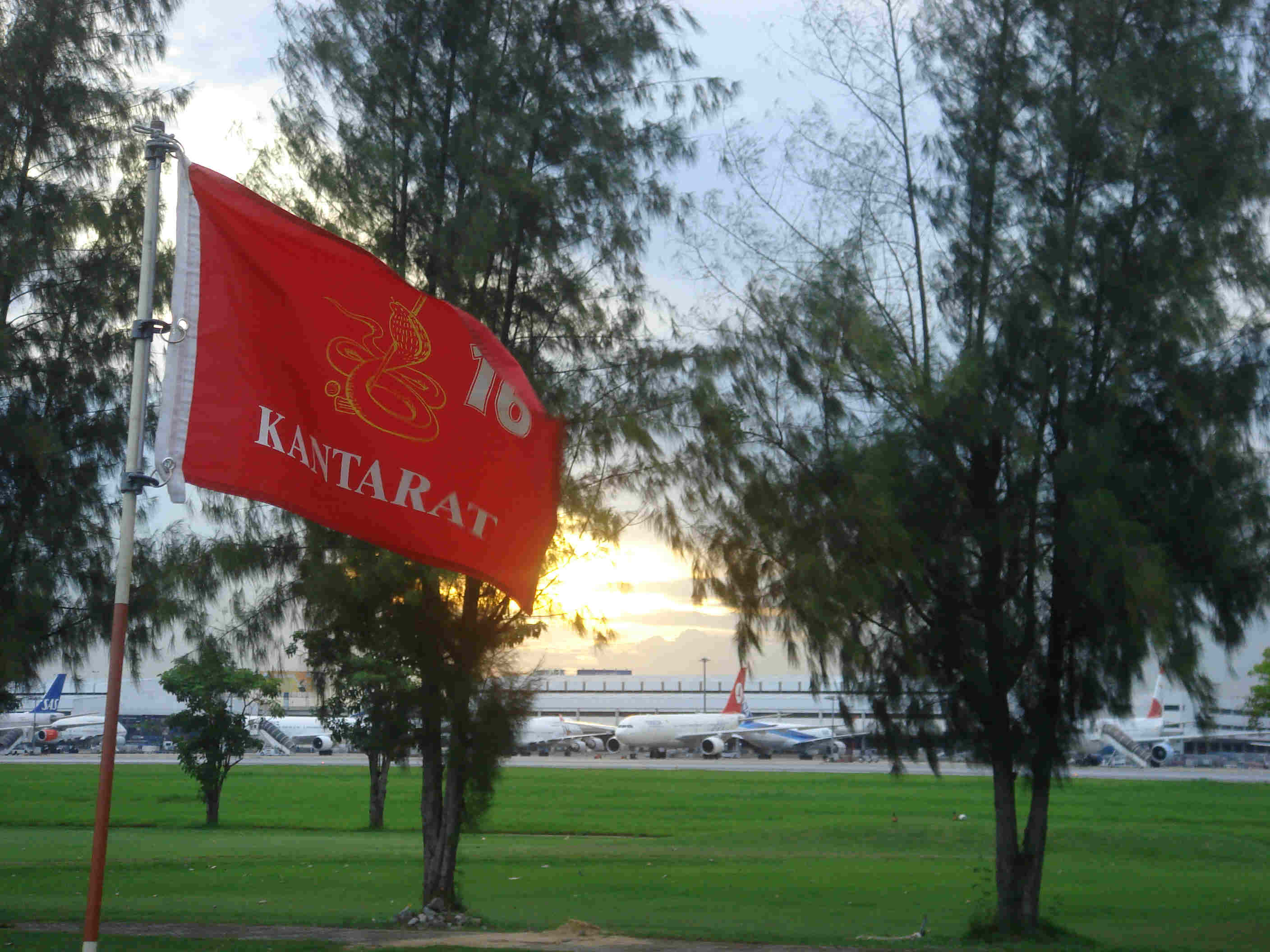
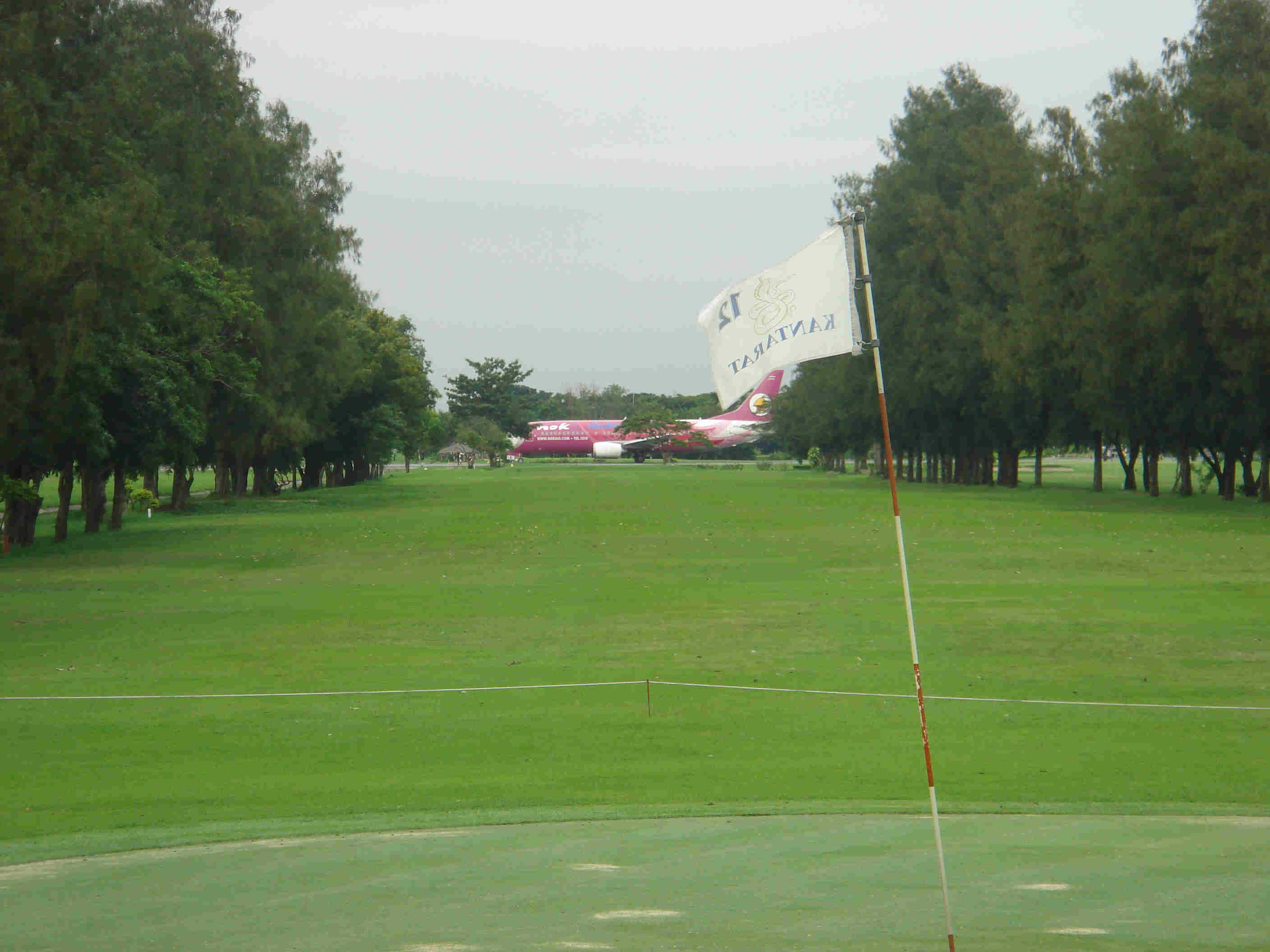
Small earthquake rattles Hong Kong 15 September 2006 No this was not the thud of useless unread copies of he SCMP being dropped into the fragrant harbour' 'waste tips. This really was a genuine small quake. Mt little guy told me that he felt the earth move last night and sure enough it is in today's HKG papers. The Hong Kong Observatory said it recorded a tremor, measuring 3.5, or minor, on the Richter scale, in waters near Hong Kong, at 7.53pm. The epicenter was initially determined to be in the sea around Dangan Island, about 36 kilometers south- southeast of the territory. Police said there were no initial reports of injuries or casualties, but local radio stations were inundated with telephone calls and e-mails. English teacher Kate Hodgson said residents in Shek O on Hong Kong Island ran into the streets after the tremor struck. The shake was for no more than a few seconds but was enough to send people scurrying into the streets. Many residents throughout the territory reported buildings and furniture shaking for several seconds. Earthquakes are very rare in HKG which lies some 600 kms from the nearest fault zone. Still it will have given them all something new to discuss in school ! According to the Hong Kong Observatory Web site, just six tremors measuring more than five on the Richter scale have hit Hong Kong since 1874. Sunset over Kantarat 15 September 2006 The Royal Thai Air Force Kantarat Golf Course has always been one of the more unusual golfing experiences. Sandwiched between the two runways at Bangkok's existing international airport is a full length 6,500 yard golf course. To add to the fun on two occasions golfers and caddies have to cross the active taxiway that takes planes landing in Runway 21L to the terminal building. The course is cheap at Baht 600, including the caddy fee. The condition is nothing special; although the greens are reasonable. After some heavy rain the course yesterday was soaking wet. You will need to leave ID at the first of two security gates. Taxis are not allowed to the course so find a friendly driver. And you only have 13 days to experience the real uniqueness of the course. On 28th September all flights to Bkk will leave and depart from the new airport. Don Muang will still be there for air force and some charter flights. The course will still be there, but it is suddenly about to get a whole lot quieter. But 747s will not be landing 30 yards away from you as you play the 3rd and 4th holes. You will no longer be able to concentrate on a three foot putt while a thundering 777 departs off Runway 21R. It is great fun. My idea of heaven - golf and airplanes all in the same place ! The golf suffered a bit - I was distracted.
The downside of the proposed Thai visa rules 13 September 2006 Thailand's immigration policy has previously allowed foreigners from some 41 countries including Britain, Canada and Australia to enter the country for 30 days at a time by granting a tourist visa on arrival. A whole industry has grown up around visa runs, trips out of the country to come back in again with a new 30 day visa. This 30 day rule was only for tourists; it was not a work visa or an investment visa. Of course some people have used their time in Thailand for work; some stay in Thailand but work outside Thailand, and some stay in Thailand and manage offshore businesses; some Thai employers use foreigners with tourist visas in lieu of applying for work visas and some visitors in Thailand stay in the country and have effectively taken short or long term retirement and use Thailand as a place to live and a base for travel. I guess I am one
who is in Thailand for the moment because I have worked hard and can afford
not to work for a few months. So I have been staying in Thailand and using
it as a base for some regular travel and to try and enjoy and explore life
for a while before returning to employment servitude! All of these people will be impacted by the new restrictions on the 30 day visa. With effect from October 1 you may only have three 30 day visa entries in a six month period. And previous trips to Thailand will be counted at 1 October. Simply if you have a visa on arrival more than three times in six months, you cannot come into Thailand without a visa from an Embassy/Consulate. Some examples: For example, if you have 30 day stamps on July 19th, August 9th and Sept 5th and need to leave Thailand on October 4th, you will not be able to re-enter Thailand without a visa, and must wait 90 days before coming back. If you have no
previous entry stamps prior to 1 October then here is another example; you
arrive for a week, this counts as 30 days, One month later 3 days and its 30
days, two months later and its for a two week period, still another 30 days.
You can reenter Thailand in 6 weeks without having a visa. What about the Japanese golfer who comes to Bangkok twice a month for a weekend of golf and frivolity? He can now only take three trips each 90 days irrespective of the length of the trip. What about the holidaymaker who uses the low cost airlines for regular cheap weekend jaunts to Bangkok and elsewhere. Well, three visits in 90 days is the maximum without getting a visa for each additional visit. One impact will be
on the TAT targets. Each entry to Thailand constitutes a new tourist. With
so many people no longer entering the country twelve or more times during
the year, the weekenders from neighbouring countries having their entries
limited, people who can't be bothered to go to the Thai Embassy and pick up
a visa and those who simply decide to give Thailand a miss altogether, how
many entries are they going to miss out on? Unforgettable Thailand could
soon be Forgettable Thailand. The plot thickens again ! 12 September 2006 XInhua (that bastion of accurate news) has the latest of an alleged coup attempt in Thailand! The biggest shock to Thaksin must be news that he has grandchildren ! He does not. Not yet. Thai government
confirms attempts of military coup 9/11, never forgotten 11 September 2006 At 8.46 and and 9.03 am on September 11th, five years ago, commercial airplanes hit each of the world trade center buildings in New York. In addition another plane flew into the Pentagon building in Washington at 9.40am killing 189 people. United 93 was also hijacked and heading to Washington before it was brought down in Pennsylvania. This remarkable event still impacts world affairs daily. The US styled "war on terror" is probably a war that can never be won. A famous news agency proclaimed (and my US readers should turn away at this point) that one man's terrorist is another man's freedom fighter. Sad, but true. We do not all have or aspire to US values and their way of life. Is there potential for compromise, for reconciliation, for peaceful co-existence. Probably not to be honest. There will always be extremists on both sides. And there will always be people that are willing to die for what they beleive in. I do find it easier these days to look backwards rather then forwards. The past is certain; the futures is not. But the past has much that is painful as well as much to be proud of and happy for. For many reasons this is never an easy day for me. News from Thailand's strangest town 11 September 2006 What would this website be without the occasional update from Thailand's strangest city, Pattaya. So here are a few gems from the local news: Construction workers living near a Pattaya orphanage in a makeshift camp got a real shock after a small bomb device turned up following a rain storm. Mr. Jaren Kajonboori had just woken up and was drinking his coffee when he noticed a round hand-grenade object in the mud. He called associates and they poked it with a stick before throwing it in the air to create distance between them and it. Police said later this course of action was none to wise..... *********************** A thief who broke into a room belonging to a number of transvestite dancers was severely beaten up by them when they found him hiding in a storeroom. *********************** Following complaints from an astonished buying public that their top class watches, shoes, bags, clothes and cigarettes were not the brand names they were supposed to be, police raided a number of establishments where fake brand names are to be found.... *********************** Police sped in haste to an apartment block in the Pattaya Klang area after reports that a farang had died in his bathroom. They found the body of an Italian national, aged 53, whose head was under the water in a huge water storage pot. An initial examination suggested that he had suffered a heart attack and had collapsed into the storage pot head first which may have resulted in drowning. ************************ German who threatened police with Samurai sword had almost 200 weapons in room. Thai immigration rules to change 11 September 2006 In a massive
change to Thai's tourism industry the Thai authorities have confirmed the
end of border runs from 1 October 2006. The longest time that a "30 day
tourist" can stay in Thailand will now be 90 days. Expect an outcry from
places like Pattaya where a huge industry has grown up around visa runs and
where many such visitors support (in one way or another) the local economy. There is clearly
still some clarification required as to what the new rules mean and who they
will affect. Clearly a sizeable number of foreigners, many of whom may have
already resided in Thailand for many years, are going to find it more
difficult to stay in the Kingdom long-term. A lot of people are going
to have to look at what options are available to them to allow them to stay
in Thailand. Blair's departure will be the beginning or the end of New Labour 9 September 2006 Like it or not politics is about personality. Blair has one, Gordon Brown does not. People did not read the New Labour manifesto at the last election; people did not even vote for Labour. They voted for "that nice man", Tony Blair, and his vision of what a modern, reasonably egalitarian Britain would look like. But he has been in No 10 Downing Street for a decade and people are bored with him. Isn't that sad. The British have never really had it so good. Blair's support of GW Bush and his war on terror has not helped. But Blair's political instincts after 9/11 were spot on. He was right to be seen to be supporting the USA as it dealt wit the shock of the first ever attack on its mainland. Should Blair have taken Britain into Iraq. Maybe not. But he did so with bipartisan political support. How quickly people forget. In their haste to remove Blair from office, the Labour Party has found unlikely friends on the left wing of its party and among the readers of the Daily Mail and the Daily Telegraph. The conservative opposition enjoys nothing more than watching the Labour Party self destruct. Brown has none of Blair's telegenic appeal. He does not appear to have Blair's native survival instincts. Brown will lead New Labour into mediocrity. Dangerously he will likely move closer to the unions, which after all were the heart of the old Labour party. When Blair goes the most electable asset of New Labour goes as well. Cameron's Tory party must be salivering. Blair made New Labour electable. His departure could be the beginning of the end for the Labour party.
The perils of celebrity death as a nation mourns 6 September 2006 A nation mourns. Australia has come to a near standstill this week as its most famous animal lover and conservationsist, Steve Irwin, died while filming. Irwin was killed by a stingray while diving off Port Douglas in far north Queensland two days ago. He was certainly the planet's best known Australian and was hugely popular in the USA appearing regularly on the talk show circuit. Not everyone was glowing in their praise of this extrovert man. He was considered, even by some of his countrymen, as a buffoon who by his wanton clowning around perpetuated a caricature of the Australian male as a swaggering braggart with more brawn than brain. "For years, Steve has teased and tormented all types of animals to the point of the creatures' distraction, all in the name of 'education,'" Ray Duncan wrote in a letter to The Australian. "He incurred many bites and stings in the process and it was only a matter of time before one was fatal." Irwin made a great living by being himself; his have-a-go personality and enthusiasm for the country's wildlife took him to world audiences. Yet there were detractors who combined envy of the wealth and influence that his international profile had brought him with derision at his short-pants, his breathless hyperbole and his broad accent. Fickle lot these Australians. Back in 2004, there was a media outcry in Australia when Irwin held his baby son over a crocodile pit at his zoo in a televised incident. Now, when dead, he is a legend, a hero, he is our Steve, a superstar and a lovable larrikin. The Aussie media is now full of teary tributes and agonised eulogies. Irwin was by all accounts a genuinely good guy and he has left behind a young family. But celebrity death is becoming an industry; the media lap it up and then the politicians get in on the act because they cannot be seen to be left out. This modern phenomenon started with Diana's prolonged exit just over none years ago. The continuing inquest into her death (the driver was massively over the legal alcohol limit and neither she or al-Fayed were wearing seatbelts) It is hard then for anyone to give a contrary opinion while the grieving nation canonises the latest icon. Enter Germaine Greer, the famous Australian feminist, who said that ‘the animal world has taken revenge on self-deluded animal tormentor Steve Irwin’ Now Greer is something of a rent a quote and probably has not had a good word to say about any man for many decades. She and Irwin would have had little in common. But they both had the right to their opinions, actions and a fair hearing. But the Melbourne Herald Sun led the rant. The paper is reporting a that "storm of fury has erupted over Germaine Greer's criticism of Steve Irwin". Yet The Herald Sun two years ago led the witchhunt for Irwin with an editorial titled "Dad's a Drongo." This referred to Irwin as "simple-minded", "Neanderthal", "a Tarzanesque, chest-beating reductionist", a "dangerous dropkick" and a "dill", before going on to declare that "this foolish pair" of parents were setting a lousy example indeed, their actions comparable to some of the world's more loathed personages: If Irwin's death teaches us anything at all, it's that no situation involving wild animals is as "under control" as Steve would have liked us to believe back in 2004. Sadly, death sells. The media eke out every possible column inch and TV feature. But you can't sell a dead "drongo", so it's "hero", "legend" and "larrikin" all the way, and anyone who doesn't toe that line is somehow deranged. Irwin's media driven notoriety is such that the Australian government offered him a state funeral. Now I know Australia is a bit short on heroes, but really, where do you draw the line? Who gets a State funeral? What are the qualifications? Democrat founder Don Chipp, bush legend RM Williams, former Queensland premier Joh Bjelke-Petersen and Kerry Packer were given state funerals. His family have probably done the right thing. A state funeral does not suit the image of this ordinary bloke and the family needs its own privacy and its own time to mourn, adjust and move on. Taking sides in Thailand 6 September 2006 Thai police have now charged five soldiers in connection with a plot to blow up Prime Minister Thaksin Shinawatra that critics and the media have suggested was a political stunt, one of their lawyers said yesterday. The latest suspects are four soldiers who are all on active duty. They have been charged with attempted premeditated murder of Thaksin and several other people, illegal possession of explosives and weapons, and document forgery, lawyer Prapass Kongmuang told reporters. The fifth soldier, Lieutenant Thawatchai Klinchana, who was arrested on Aug. 24 with explosives in his car near Thaksin's Bangkok home, is facing the same charges. Thawatchai and the four, a major-general, colonel, lieutenant-colonel and sergeant-major, are all linked by police to the Internal Security Operations Command (ISOC). All are originally from the Special Warfare Command in Lop Buri. Thawatchai was a driver for ISOC deputy director General Pallop Pinmanee. Pallop was sacked by Thaksin immediately after the incident, which coincided with the start of campaigning for an Oct. 15 general election. Pallop professed his innocence, saying he could not have been behind the plot because if he had he would have made a better job of it and Thaksin would be dead. Thawatchai and one of the other suspects are already in custody. The remaining three have been ordered to appear for questioning tomorrow morning or face arrest. Differing police accounts of the size, complexity and readiness of the bomb they say was found in the car sparked media suggestions that the plot had been staged to bolster Thaksin's support in the provinces. The Special Warfare Command connection is a key link. Former armed forces supreme commander General Surayud Chulanond, who is a member of the Privy Council, also rose through the rank and file from the Special Warfare Command (SWC) during his active military career. So did General Sonthi Boonyaratglin, the current army chief. The questions now being asked is whether the car-bomb plot is an attempt to link the SWC to those who stand in opposition to the prime minister? The day after the car-bomb incident, a group that called itself Rak Ya (Grassroots) went to the residence of Privy Council president General Prem Tinsulanonda and called for him to protect Thaksin. Prem's supporters viewed this rally as an attempt to somehow link the statesman with the alleged plot on the prime minister's life. On one side we appear to have the Thai navy, army and airforce, which have a strong loyalty to Prem. His message is that the military must serve the country and His Majesty the King. He is also calling for the military to honour good persons and to shower contempt on those who come to power through corruption and other immoral means. However there are some military figures that are alleged to have come under Thaksin's influence. The arrests of senior military figures may also inflame the tensions between the police and the army. There have been violent scenes at Thaksin's public appearances with clashes between his supporters and opponents. However the debate between supporters and opponents is largely playing out in the media, so far.... Between now and the election, whenever it may be, there will likely be more confrontations and a greater divide in the country. Thaksin seems determined to cling to power. TRT has the support, financing and organisation to win the election. It is unlikely that the election, on its won, will solve Thailand's political stagnation. Thai mobile numbers go to 10 digits 1 September 2006 The following is
from www.thaivisa.com (after I changed
their typos!!). Thai Day's self delusion 1 September 2006 ThaiDay ceased publication yesterday. It will not be missed. The newspaper which was distributed free with the International Herald Tribune consisted of strongly anti-government articles penned by non-Thais with a few interesting features thrown in. Thai Day was owned by Khun Sondhi Limthongkul. the newsaper The International Herald Tribune should be relieved to see this paper die. The IHT used to deny that they had any role in supervising or any responsibility for this rag, But they found themselves aligned with a polarizing and partisan anti-government figure. They also allowed the IHT name to be used on the paper's web site (www.ihtthaiday.com/IHT/Default.aspx) and pompously ThaiDay would say (see below) that the IHT was distributed with Thai Day. It was the other way around. IHT's self delusional farewell letter from its editor is below. This was in their final edition and posted in the web site. Greater balance in the Thai media will always be welcome. But ThaiDay's agenda was far from balanced; and its distribution with a quality newspaper such as IHT was frankly embarrassing. Dear readers,
|
| o |