|
Bangkok; Thailand's Luxembourg
30 March 2006
There is no obvious end to Thailand's political mess. In Bangkok
Thaksin is compared to Hitler. In the north of Thailand he is the Messiah! The
people's alliance for democracy had hoped that its campaign and a boycott by the
three main opposition parties would stop the April 2nd election taking place.
But it now looks certain to go ahead, although the boycott
means its result is unlikely to meet a constitutional requirement that all 500
parliamentary seats be filled for a new government to form.
Democrat party leader Abhisit Vejjajiva has said, and he is
probably correct, that the only certain outcome was a political mess that will
embroil the Constitutional Court. There is no quick fix to a crisis that has hit
the stock market and economic growth forecasts. "There are still many problems
ahead even after April 2nd, and Thaksin's legitimacy will still be questioned,"
Abhisit told Reuters in an interview.
So is there a solution that no one has proposed yet. Well how
about Bangkok declaring itself an independent state. Think of Luxembourg,
Lichtenstein, even Andorra. The gap between Bangkok and the rest of Thailand in
terms of economic clout and political awareness is now huge. The capital of the
new country of RoT (Rest of Thailand) could be moved to the old capital of
Sukhothai.
We can make the Governor or Bangkok the new President of the
nation of Bangkok. We could issue our own currency and passports. Thaksin can be
the Prime Minister of RoT and everyone should then be content and live happily
ever after.
Now there are just a few administrative details to attend to
!!
Thailand's election from afar
29 March 2006
My regular reader will know that I am usually a great fan of
The Guardian newspaper. But their editorial of March 27th is rather
misleading and shows scant understanding of the Thai political landscape.
Historically I am something of a fan of what the Guardian rather
huffily calls "bourgeois agitation." It was at the heart of the French
revolution and led the American War of Independence.
But this Thai election is not about democracy - it is about the
size of TRT's cheque book. The opposition could not win the election. And had
they taken part they would have legitimised Thaksin.
The opposition has tried to invalidate the election. Thaksin
meanwhile has proved far more resilient than most people expected.
Democracy could be the loser
Bangkok's traffic jams were made worse over the weekend by two more big
marches, as critics of the Thai prime minister Thaksin Shinawatra called on
voters to abstain in next Sunday's election. Though smaller than earlier
protests, which brought 100,000 people on to the streets, it is still tempting
to view the turmoil as a welcome manifestation of "people power". The
opposition People's Alliance for Democracy (PAD) accuses Mr Thaksin of
undermining the state by concentrating power in his own hands. His high-handed
manner has alienated supporters and he has done little to dispel suspicions of
cronyism.
Given that Thailand was ruled until the 1990s by military-dominated
governments, fears for democracy are understandable. Mr Thaksin has mishandled
the Muslim insurgency in Thailand's southern provinces. He may also have taken
insufficient account of the strains imposed upon a conservative, majority
Buddhist society by globalised, free-market capitalism. That would seem to be
confirmed by the uproar over the sale of a telecoms conglomerate he founded.
The deal was read by many as a sign of prime ministerial arrogance, of assumed
impunity, and even of criminality. The protests have been going on ever since.
Damaging and insupportable though many of Mr Thaksin's actions have been, the
PAD's street-level bid to drive him from office could, if successful, be far
more damaging still. Mr Thaksin won a landslide victory only last year. The
protests, almost entirely confined to Bangkok, have been a largely
middle-class affair, drawing support from civil servants, students, some
trades unionists and a Buddhist vegetarian sect. The street opposition is
united only by its desire to bring him down. Beyond that its aims and
intentions are as obscure as the Bangkok skyline on a smoggy day.
More to the point, Mr Thaksin, trying to make up for past mistakes, has
reacted flexibly with concessions, including his decision to call a snap
general election. The intention of the opposition parties to boycott the poll
is irresponsible in the extreme. Far from protecting Thailand's democracy,
they could by their action irredeemably shatter it, inviting, in the worst
case, violence and military intervention. If Thais want to be rid of Mr
Thaksin - and there are good reasons to wish him gone - they can achieve their
aim through the ballot box. If not, and unless there are persuasive reasons to
question the conduct of the election, his opponents should accept the people's
verdict and cease their bourgeois agitation.
-The Guardian
Leader
Monday March 27, 2006
Cathay Pacific and Dragonair merger rumours
29 March 2006
Beijing-backed investment conglomerate, Citic Pacific, has signaled it would
reduce its shareholdings in Cathay Pacific (25.5%) and Dragonair (28.5%) if a
merger between the airlines were to take place, as part of CITIC’s move out of
non-core businesses like aviation.
Pressure to consolidate the Asia Pacific airline industry will intensify in the
medium term, as more mega-carriers in Europe and (eventually) North America
emerge. Already Mainland China has taken steps to consolidate its industry into
three major carriers, China Southern, China Eastern and Air China. Indian
aviation is also undergoing consolidation evidenced by the reason Jet Airways
acquisition of Sahara. The situation in Hong Kong is highly political and the
ownership structure of its airlines is complicated. Cathay Pacific currently
owns 19% of Dragonair, which has an extensive network in Mainland China, which
Cathay Pacific does not have but dearly wants access to.
Cathay can increase its network to the Mainland either (a) on its own (relying
on liberalisation of aviation access, which has been slow to date) or (b)
through cooperation/ alliances/acquisition (its 2004 purchase of 9.9% of Air
China was designed to lead to greater access, but progress developing codeshare
operations has again been slow). With support growing for the merger of Hong
Kong's two main airlines, the latter approach could be Cathay’s best option,
particularly if the outcome of imminent Mainland-Hong Kong bilateral discussions
disappoint.
The savings in management cost and in maintenance and cargo
operations could be significant.
A Cathay-Dragonair merger would create a formidable presence in Hong Kong, with
powerful short and long-haul linkages. The oneworld alliance would also be a
keen supporter of such a development, giving it greater access to the
fast-growing Mainland market through a strengthened Hong Kong hub.
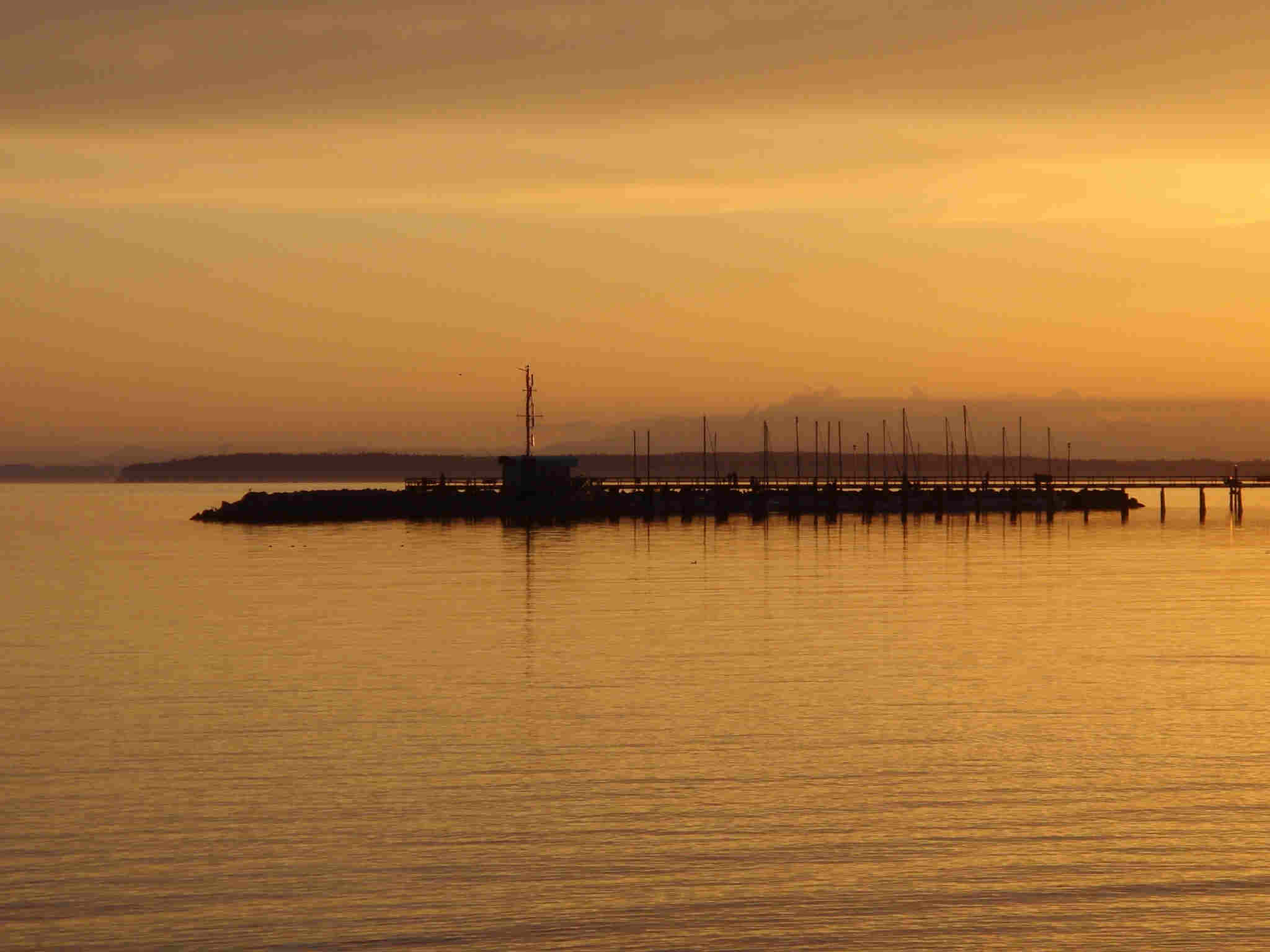
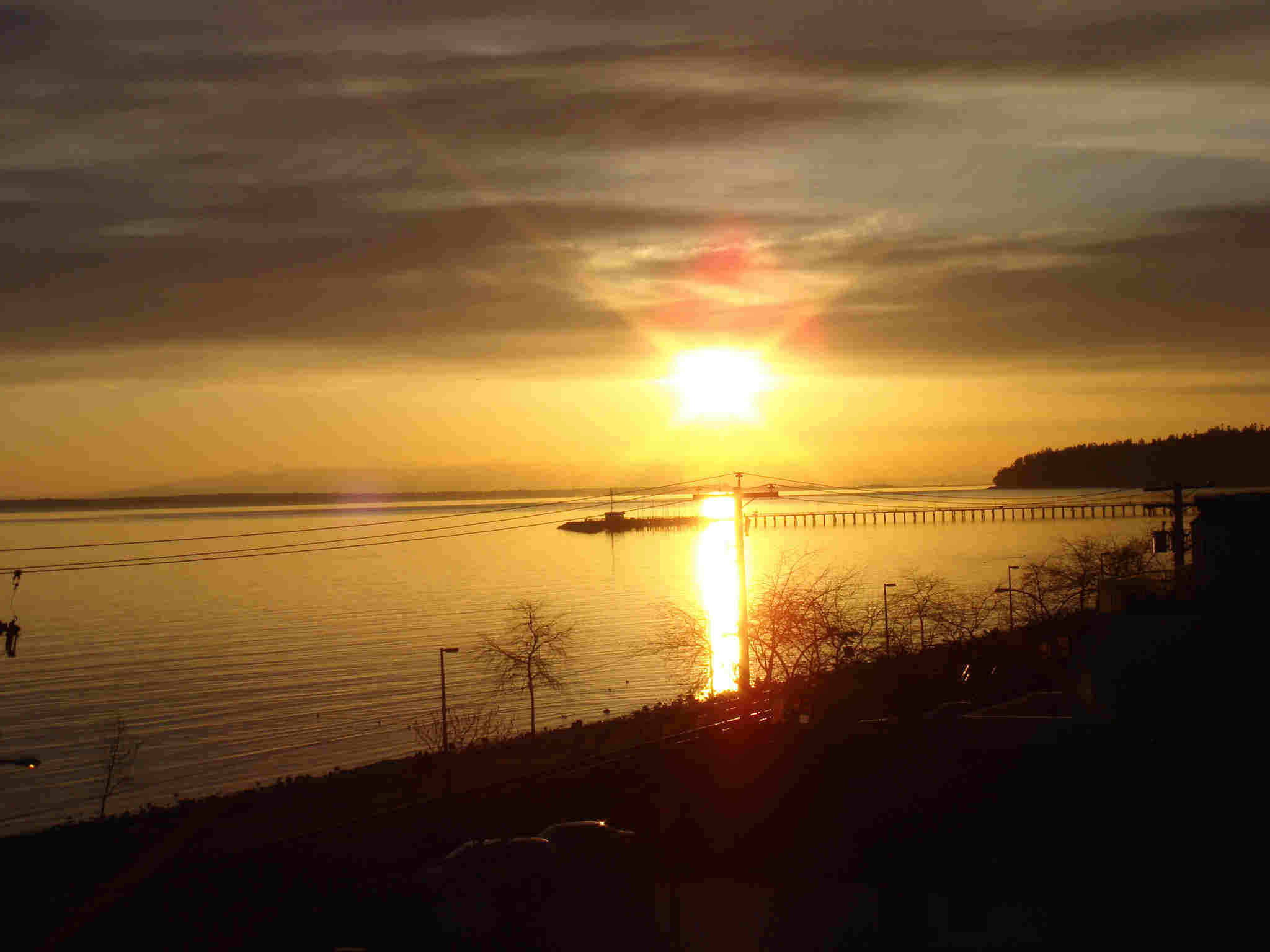
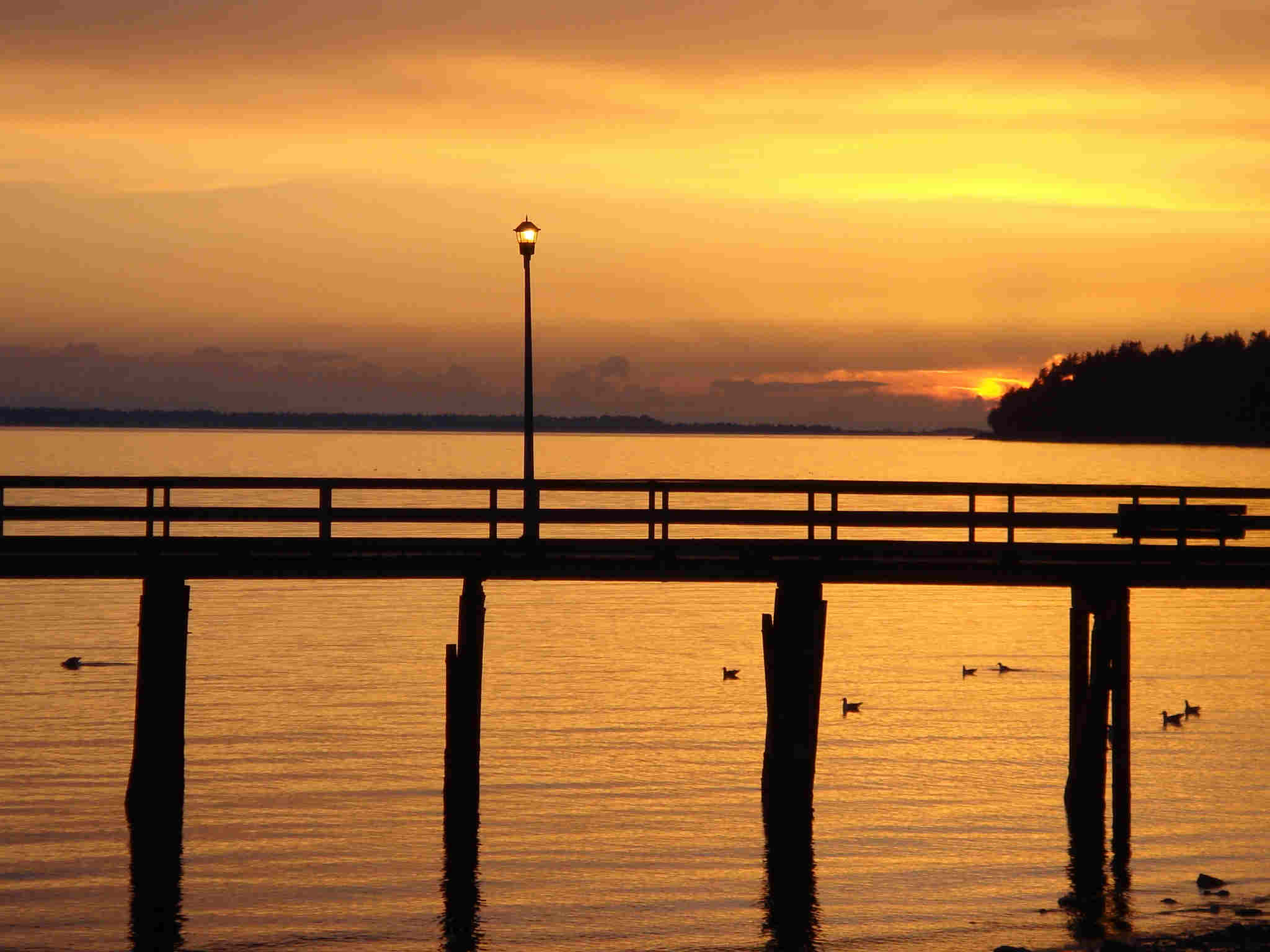
Sunset at White Rock
28 March 2006
Choices
27 March 2006
We go through life making choices. And then making the best life
that we can out of those those choices. That is a necessity. Yet it is easy to
look over a shoulder and wonder if we made the right choices. Perhaps that is
why we always want what we do not have or why we try to seek out the best of all
worlds....
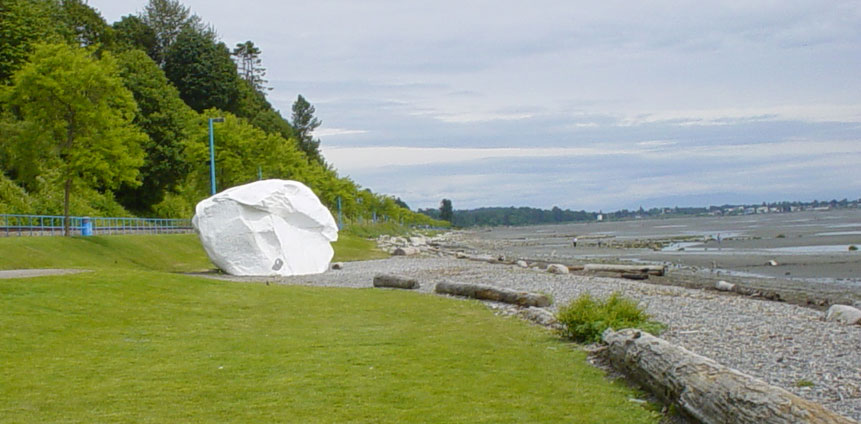
I am working this week at White Rock, about one hour south of
Vancouver in British Columbia. I am about 3 miles from the US/Canada border.
I wake up in the morning to a spectacular view across an eight
kilometer sandy beach and the warm shallow waters of Semiahmoo Bay. I can see
the 1,500 ft. long pier, and I can walk along the 2.5km long beach promenade to
the the large white rock. There are restaurants and bars; this place must get so
busy in the summer. Off season on a cool weekday it is quiet.
The air is wonderful. I am swallowing gallons of it (can you
swallow gallons of air) to try and clean my lungs out before I get back to
Bangkok.
Could I live here? Probably not. It is just too quiet. But I do
understand why people would want to live here; and I do sometimes wonder whether
city life is worth it. Traffic jams, heat, hassle, pollution. But I am a city
boy at heart. Maybe a city by the sea is the answer.
In about 4 to 6 months time I will probably need to make more
choices about what to do and where to live. Where will I go? What will I be
doing ? What choices will I have. Will I make the right choice? Will I wonder
what life would be like if I had followed a different path?
It is strange being on my own; my own choices led me here; they
may not have been good choices but we have to make the best of where we are. No
being alone seems an easy place to be. But it can be a lonely place. I like
company. But I dont always manage well the responsibility that comes with it.
Being alone on this trip is not much fun. There are some nice restaurants in
White Rock but they not places to go on your own. In white, anglo saxon White
Rock, someone eating alone will probably be considered very strange indeed. So
tonight was order in Chinese. There is no restaurant at the hotel. And a late
night of tv and email! More of the same tomorrow.
Near Disaster brings out the best of BC
25 March 2006
Last Wednesday night, just after midnight, the BC ferry, Queen
of the North, sank after running into rocks near Gil Island as she sailed
the regular overnight route down the inside passage from Prince Rupert to Part
Hardy.
Almost all the passengers escaped with only minor bruises and
scrapes. This is a great testament to the crew's safety training and to a
remarkable response from the local communities.
The ship's hull was holed as it hit the rocks but she took almost
an hour to settle and sink allowing an orderly evacuation. In addition the load
was light with 42 crew members and only 59 passengers onboard. Two passengers
remain missing.
The mayday call was at 12.26am; the crew and passengers were in
lifeboats on a dark, wet, chilly night within 30 minutes. Weather conditions
were bad; but not bad enough to explain why the ferry was so far off
course.
The mayday call was heard by radio operators in the small native
community of Hartley Bay. They launched all their fishing and speedboats and
quickly arrived at the accident scene before the ferry went down. The boats
picked up many of the passengers from life rafts and took them to the village. A
nearby coastguard vessel arrived soon after.
In the community recreation hall the villagers brought baked
foods, hot tea, duvets, blankets and clothing. A great response from the small
inside passage community.
Why democrats shun the Thai election
25 March 2006
We are just 8 days away from the April 2 election date in
Thailand and it remains a mystery whether or not the election will take place.
The Democrats held a big rally in Bangkok yesterday; the PAD will have a rally
today. Meanwhile Caretaker Prime Minister Thaksin was holding a large rally in
Udon Thani where the local governor had been requested to ensure a large crowd.
What is remarkable, truly remarkable given some of the
allegations and verbal abuse, is just how peaceful these protests have been.
There really is very chance of violence; conditions are hot and so are tempers;
the police presence is huge but they do not intervene. And so fare neither side
wants to incur the risk of being the aggressor.
The Democrats have taken a huge risk in boycotting the April 2
election. Thailand's oldest political party has a 60 year history of fighting
for reform and democracy not just in Thailand but in the region.
But if the election goes ahead and Thaksin and the TRT can retain
power then the Democrats will be in the political wilderness without one elected
representative in Parliament.
The Democrats argue that they are refusing to take part in a
event that is designed as a giant laundry for Thaksin to wash himself of all the
claims that have been made against him. This they argue is the job of the courts
not of an election.
The Thai constitution requires that all 500 seats must be filled
for a government to take power. To win a seat a candidate must obtain at least
20 per cent of the vote. In the south and in Bangkok this will be difficult for
some TRT candidates.
Into this post April 2nd chaos will step the Election Commission
who will have 30 days to seek resolution. But many argue that Thaksin has used
his own appointees to load the election commission.
In the villages of the North Thaksin is feted as the prodigal
son; in Bangkok there are professionals from lawyers to academics taking to the
streets to demand reform. The next two weeks in Thailand will be very
interesting indeed.
And one other concern; remember Thailand has had 17 coups or
attempted coups since 1945; another one is not out of the question; maybe with a
peaceful handover to civilian rule in a fairly short time.
Superstition clouds over the Thai election
24 March 2006
 It reminds me of the old TV show; it
will be all right on the night. Pol General Chidchai Wannasathid, acting deputy
prime minister has advised that the turmoil in Thailand will subside because the
Brahma statue at the Erawan Shrine has made a self-sacrifice and borne the bad
luck troubling the country, It reminds me of the old TV show; it
will be all right on the night. Pol General Chidchai Wannasathid, acting deputy
prime minister has advised that the turmoil in Thailand will subside because the
Brahma statue at the Erawan Shrine has made a self-sacrifice and borne the bad
luck troubling the country,
"I have talked to an astrologer who told me that the incident
could be seen as a self-sacrifice of Phra Phrom. The situation should now start
to improve," he said.
Chidchai was speaking at the Erawan Shrine yesterday during
Prime Minister Thaksin Shinawatra's inspection of the remnants of the four-faced
statue, hammered to pieces by a man with a record of mental illness on Tuesday.
The attack shocked the Bangkok public, who have worshipped the Brahma statue for
the past 50 years. The statue also welcomes many overseas visitors. Equally
shocking was the mob murder of the shrine's attacker.
Thaksin said it would take about two months to restore the
statue to its original shape. "The restoration will have to strictly follow the
religious principles and all the rituals. Some parts of the original statue may
also be placed at the shrine," he added.
Both sides of the current dispute have sought to make
political capital from the attack on the shrine. The gloves are off now and the
attacks will twist any story to potential advantage. The desecration of Phra
Phrom had led to widespread rumours in the capital about the ill omens hovering
over Thailand. Sondhi Limthongkul, one of the leaders of the People's Alliance
for Democracy, said yesterday during the anti-Thaksin rally that something fishy
was going on with the desecration of Phra Phrom. "Why was the man stomped to
death after he smashed the statue? I have in-depth information about someone who
is deeply obsessed with superstition. He wants to destroy Thao Maha Phrom so
that he can rebuild it by himself and then bury "his stuff" in the statue. This
is a way to avert ill omens," Sondhi said. It is clear who he meant though
whether he has such "in-depth information" is questionable/
As Thaksin seems to easily hold onto power the opposition rants
are beginning to sound rather desperate.
Thaksin; Survivor Thailand
24 March 2006
This weekend anti-Thaksin protesters are staging the biggest
demonstration against the Thai premier yet, ahead of the scheduled April 2nd
election. However, Prime Minister Thaksin continues to rally support in the
North and remains intent on staying in office.
Thaksin's task is made easier by a disjointed opposition that lacks strategy and
focus in their campaign and that offers no clear solutions to the problems that
exist in the current administration. The opposition demands Mr. Thaksin's
resignation, but they do not address the crucial questions on everyone's mind -
what next, and who can succeed him?
The largest grouping, the People's Alliance for Democracy (PAD), set up only on
February 4th after a rally, is a loose coalition which includes teachers,
state-enterprise officials, senators, academics, farmers, businessmen, students
and journalists.
The PAD has been successful in staging some of the biggest demonstrations in the
capital but the PAD platform has been used as a lobby for individual agendas.
The confused public does not know what the PAD stands for? Certainly the PAD is
not standing for election; so if they are trying to take power it is not at the
ballot box. The PAD campaign is primarily an exercise in finger pointing and
allegations.
Interestingly, opposition leaders Abhisit Vejjajiva (of the Democrat Party),
Sanan Kachonprasat (Mahachon Party) and Banharn Silpa-Archa (Chart Thai Party)
have distanced themselves from the PAD, preferring to hold their own separate
protests. This has led many to question the credibility of the PAD. These three
main opposition parties are refusing to participate in the April 2nd election.
But the weakening of the opposition can be traced back to the 1997 Asian
financial crisis, even before Mr Thaksin's party, Thai Rak Thai (TRT), was
formed. This was when untimely bankruptcies and unfortunate business ties put
many opposition politicians in the red.
Mr Thaksin, who was the Deputy Premier in Mr Chavalit Yongchaiyudh's government
in 1997, was unscathed by the crisis. He went on to form TRT and inaugurated an
era of "big money politics".
He exploited the income divide between Bangkok and the countryside (which
accounts for 60 per cent of the population) by implementing a raft of populist
policies ranging from universal 30 baht health coverage to debt suspension for
farmers. He also promoted a visionary economic policy that targeted growth
industries such as fashion and tourism, and carved out his own space on the
international stage. The Bangkok APEC conference was his time in the spotlight.
Then he was being touted as a leader for Asia.
So, it is hard for many ordinary Thais to buy into the opposition's calls to
reject Mr Thaksin on the grounds that he has abused power for his personal
benefit and marginalised opposition and civil groups. He is preferred by the
majority who see him as a populist leader who has addressed the long-neglected
needs and grievances at rural grassroots level.
Now it seems that even middle-class Bangkok residents are getting tired of the
opposition's rants.
An Assumption University poll of 1,500 people yesterday showed that only 28.1
per cent of respondents now want Mr Thaksin out, compared with 48.2 per cent on
March 6. Meanwhile, those who want him to stay had risen to 47.2 per cent from
35.5 per cent, the survey found.
Eight out of 10 respondents said they wanted all rallies to end and nine out of
10 favoured a negotiated end to the impasse.
In June this year, Thailand marks the 60th anniversary of the king's coronation.
Thais want to celebrate this auspicious year with more than seemingly-unending
protests. A solution to this political impasse is needed in the next two months.
Whithering Reuters?
23 March 2006
After sixteen years at Reuters I am still allowed to wonder how
they are doing and what has happened to the business. It was such an interesting
place to work for so many years. I dont have much to complain about - although
it would have been appropriate for someone on high to at least say thanks and
good luck.
There are a couple of recent posts off the Yahoo finance Reuters
message board that give clues as to the current malaise.
"Life 'inside' now is like a second rate dictatorship. Everybody
has to agree with the dear leader that the rest of the world is jealous of the
wonderful progress made under his leadership.
The old history books have been burnt and nobody is allowed to talk about the
bad old days before 2001; time only began five years ago.
The old guard were bad people whose so called 'achievements' are a figments of
the imagination of a few lunatics.That is why they are no longer here. The share
price never was four times higher than now.
A very few in the inner circle are taking out as much as they can while telling
the peasants that they must work even harder for the same money. Never has there
been a time when so much practical common sense has been trampled under the heel
of so much vaccuous power point."
"I can tell you that from the inside, it's awful. Nobody has a
clue what's going on, there's no plan for anything, especially in the Americas.
No products, no projects, no nothing. Everybody's walking around assuming
they're next to be whacked. Everybody is afraid to speak up, lest they get
whacked next. It's sad, it used to be a great place to work with all sorts of
interesting projects going on, now it's a ghost town with people walking around
like zombies."
"I know we are all supposed to agree that the bad times are
behind us and the good times are ahead; I know that. But the steady demise of
the company is clear to all but the most dim now. There are still -after almost
five solid years of 'messing about' - no big products anyone wants. The
competition are eating their breakfast. The salesforce is a pale shadow of
twenty years ago.
it is about time the Board had a quiet word with the Supreme Leader and all the
FoTs so that one morning we all wake up to reality with a properly organised
leadership capable of one last magnificent effort to make the company great
again.
Still stuck at £4 after all this time!!! ......I ask you £4 !!!!??? "
The share price has been stuck for over a year at gbp4; 25% of
its all time high back in the internet bubble. Customers appear to be falling
second to technology. Google has launched its own finance site. We can expect
significant investment there. My only surprise is that Google has not launched a
bid for Reuters.
Thoughts of home
21 March 2006
I spent the weekend in England visiting my parents. I have never
written more than a few words about them on this web site but I should tell you
a little about two remarkable people.
No history; just a few observations.
My father is not well. Cancer has taken hold; he is still at
home; in bed; unable to eat; and getting weaker by the day. Yet his sense of
humour is as dry and as strong as ever. He calmly accepts that these are his
last weeks; no tears; no anger; no frustration. He still tries to do as much as
he can by himself; not to be a burden on anyone; he never has been and never
will be. But he is private and when he wants to do things for himself we all
know to let him.
The home telephone was ringing throughout the weekend as friends
and family called to ask after my father. For a private man he made and kept
many friends. In an email today a family friend wrote "I am very fond of your
parents so I feel sad." He has this effect upon people. As a family, just as a
result of geography, we were unable to meet often. But he is always there,
listening and interested, if ever you needed to talk. He is a great hoarder of
information; yet he only remembers the good about people and never ever hangs
onto bad memories or to times that we are happy to put behind us. There has
never been a cross word; always rationale discussion; and a swear word can never
have passed his lips.
On Saturday afternoon we watched TV together as Ireland beat
England in Saturday's rugby union international. Dad was happy about that
result. He is very proud of his Irish roots.
My Dad accepted a job in Nigeria in 1970; there was no satellite
tv or mobile phones in those days. It was not an easy life for them but it gave
me, my brother and sister, an education and opportunities that we would not
otherwise have had. We grew up at boarding schools; we holidayed as a family.
Through his work in Nigeria came strong lessons of tolerance, respect,
integration, forgiveness and simple decency. We then went to college and
university. We never really took our personal lives home. There is the
occasional drama but my parents never make them into a crisis. We are allowed to
make our own decisions; to make our our mistakes and to find our own solutions.
Both Mum and Dad are only children. Maybe growing up as only
children helped them forge stronger relationships outside the family. My parents
make remarkable friendships. Friendships that have lasted from university, from
their wedding and from all their homes in England and Nigeria over the years.
They have enjoyed close to 50 years together. They deserve longer. They have
given so much and asked for so little.
Election confusion continues in Bangkok
17 March 2006
In any other democracy, and in any other election, I can get a
reasonable read upon local politics and the likely outcome of a general or
federal election. The process is fairly transparent; the polls are predictable
in that the slant in known directions. But it did not take a rocket scientist
for instance to tell you that the Canadians would have a Conservative led
minority government; and another election in 18 months to 2 years.
But no one has a clue what is happening in Thailand and what the
end game will be. It is not even clear whether there will in fact be an April
2nd election.
Thailand's electoral system is constituency based. But with the
three main opposition parties refusing to take part there will be many
uncontested seats. Where there is no contest there still has to be a vote and to
be declared the winner the sole candidate has to acquire the votes of 20% of the
electorate. The only other choice on the ballot paper being "no vote."
Where there is a contest the 20% minimum rule is waived.
There are suggestions that in some constituencies where Thai Rak
Thai considered they may not get the necessary 20% they have been paying
representatives of minor parties to stand or election.
As a further complication, in order to stand for election you
must have been a party member for 90 days prior to registering candidacy with
the Electoral Commission.
Estimates of the cost of the election are around Baht 2 billion;
some 1/40th of the amount that Thaksin and his family made tax free on the sale
of Shin Corp to Singapore Inc. Meanwhile the rallies continue; large and small.
In Silom yesterday lunchtime there was a large rally in front of Silom Complex;
not protesting about the foul taste and smell of Roti-Boy, but demanding
Thaksin's resignation. The booklet that was handed out included cartoon
comparisons of Thaksin to Hitler. Over the top and offensive. Thaksin as his
faults; but he is no Hitler.
The Silom protest was allegedly organised by the Businessmen for
Democracy Group. Very strange looking businessmen; unless they had decided to
have an en masse casual day and put on farming clothes.
Why getting old in Singapore is dangerous
17 March 2006
This is bizarre but true. The Singapore authorities have urged
old people to wear brighter colours so that they become more visible to car and
bus drivers and so avoid getting mown down in traffic accidents.
Nearly 700 pedestrians were injured or killed on Singapore's
roads last year; more than half being aged 60 or over.
Old folks are being issued with bright orange bags to carry; why
not paint a big dartboard on the bags as well? I can hear the conversation
already. "Hi dear., I'm just going out for a walk." "Don't forget you big orange
bag dear." Are you supposed to carry it at all times? What happens if you are
over 60 and out on the street without your bag? Re-education camp presumably.
Just a thought but wouldn't driver education be more appropriate
than blaming the old folks for wanting to safely cross the road. It just takes a
little care, consideration and driver awareness.
Nothing in common at these games
March 16,2006
The Commonwealth Games have now opened in Melbourne. One of the
advantages of being in Thailand is that I do not get to see the Aussie crowd
yelling "go Aussie go" as their web footed swimmers demolish the poor guy from
the British Virgin islands.
Outside of the sports-mad nations of Australia, New Zealand and
South Africa, no one takes any notice of these games, even in the UK. Part of
the problem is that there is really not that much talent to catch media
attention; without Ian Thorpe and Paula Radcliffe who is left that anyone has
heard of?
The trouble with the Commonwealth is that it comprises of but
a collection of countries which have nothing in common other than the fact of
being invaded, subjugated or annexed at one time or another by the British or
their colonies (excepting Mozambique, which joined despite being being a
Portuguese colony, as a special case). Many former members of the Empire have
never bothered joining, such as Egypt and Iraq. As a result, the current
Commonwealth is a hodge-podge of nations that are unconnected and disparate.
The only faint justification for Commonwealth membership was
preferential trade - which disappeared when Britain joined the European Union
and closed off its markets. What does that leave for the Commonwealth
nations? An annual meeting of heads of government that has little to say about
conditions in its member states and where pragmatism and political correctness
take precedence over any real drive for change.
The Commonwealth may once have had its uses. But the emergence
of multilateral and regional institutions such as the WTO, the European Union,
the Africa Union, where members have specific interests or areas in common, has
long since removed them. At least the Commonwealth does give the Queen something
to talk about at Christmas.
And as a sporting event. Not interesting. It is a bit like
playing in a practice match.
The Coming Resource Wars
By Michael Klare, TomPaine.com
Posted on March 11, 2006, Printed on March 12, 2006
http://www.alternet.org/story/33243/
It's official: the era of resource wars is upon us. In a major
London address, British Defense Secretary John Reid warned that global climate
change and dwindling natural resources are combining to increase the likelihood
of violent conflict over land, water and energy. Climate change, he indicated,
"will make scarce resources, clean water, viable agricultural land even scarcer"
-- and this will "make the emergence of violent conflict more rather than less
likely."
Although not unprecedented, Reid's prediction of an upsurge in
resource conflict is significant both because of his senior rank and the
vehemence of his remarks. "The blunt truth is that the lack of water and
agricultural land is a significant contributory factor to the tragic conflict we
see unfolding in Darfur," he declared. "We should see this as a warning sign."
Resource conflicts of this type are most likely to arise in
the developing world, Reid indicated, but the more advanced and affluent
countries are not likely to be spared the damaging and destabilizing effects of
global climate change. With sea levels rising, water and energy becoming
increasingly scarce and prime agricultural lands turning into deserts,
internecine warfare over access to vital resources will become a global
phenomenon.
Reid's speech, delivered at the prestigious Chatham House in
London (Britain's equivalent of the Council on Foreign Relations), is but the
most recent expression of a growing trend in strategic circles to view
environmental and resource effects -- rather than political orientation and
ideology -- as the most potent source of armed conflict in the decades to come.
With the world population rising, global consumption rates soaring, energy
supplies rapidly disappearing and climate change eradicating valuable farmland,
the stage is being set for persistent and worldwide struggles over vital
resources. Religious and political strife will not disappear in this scenario,
but rather will be channeled into contests over valuable sources of water, food
and energy.
Prior to Reid's address, the most significant expression of
this outlook was a report prepared for the U.S. Department of Defense by a
California-based consulting firm in October 2003. Entitled "An Abrupt Climate
Change Scenario and Its Implications for United States National Security," the
report warned that global climate change is more likely to result in sudden,
cataclysmic environmental events than a gradual (and therefore manageable) rise
in average temperatures. Such events could include a substantial increase in
global sea levels, intense storms and hurricanes and continent-wide "dust bowl"
effects. This would trigger pitched battles between the survivors of these
effects for access to food, water, habitable land and energy supplies.
"Violence and disruption stemming from the stresses created by
abrupt changes in the climate pose a different type of threat to national
security than we are accustomed to today," the 2003 report noted. "Military
confrontation may be triggered by a desperate need for natural resources such as
energy, food and water rather than by conflicts over ideology, religion or
national honor."
Until now, this mode of analysis has failed to command the
attention of top American and British policymakers. For the most part, they
insist that ideological and religious differences -- notably, the clash between
values of tolerance and democracy on one hand and extremist forms of Islam on
the other -- remain the main drivers of international conflict. But Reid's
speech at Chatham House suggests that a major shift in strategic thinking may be
under way. Environmental perils may soon dominate the world security agenda.
This shift is due in part to the growing weight of evidence
pointing to a significant human role in altering the planet's basic climate
systems. Recent studies showing the rapid shrinkage of the polar ice caps, the
accelerated melting of North American glaciers, the increased frequency of
severe hurricanes and a number of other such effects all suggest that dramatic
and potentially harmful changes to the global climate have begun to occur. More
importantly, they conclude that human behavior -- most importantly, the burning
of fossil fuels in factories, power plants, and motor vehicles -- is the most
likely cause of these changes. This assessment may not have yet penetrated the
White House and other bastions of head-in-the-sand thinking, but it is clearly
gaining ground among scientists and thoughtful analysts around the world.
For the most part, public discussion of global climate change
has tended to describe its effects as an environmental problem -- as a threat to
safe water, arable soil, temperate forests, certain species and so on. And, of
course, climate change is a potent threat to the environment; in fact, the
greatest threat imaginable. But viewing climate change as an environmental
problem fails to do justice to the magnitude of the peril it poses. As Reid's
speech and the 2003 Pentagon study make clear, the greatest danger posed by
global climate change is not the degradation of ecosystems per se, but rather
the disintegration of entire human societies, producing wholesale starvation,
mass migrations and recurring conflict over resources.
"As famine, disease, and weather-related disasters strike due
to abrupt climate change," the Pentagon report notes, "many countries' needs
will exceed their carrying capacity" -- that is, their ability to provide the
minimum requirements for human survival. This "will create a sense of
desperation, which is likely to lead to offensive aggression" against countries
with a greater stock of vital resources. "Imagine eastern European countries,
struggling to feed their populations with a falling supply of food, water, and
energy, eyeing Russia, whose population is already in decline, for access to its
grain, minerals, and energy supply."
Similar scenarios will be replicated all across the planet, as
those without the means to survival invade or migrate to those with greater
abundance -- producing endless struggles between resource "haves" and
"have-nots."
It is this prospect, more than anything, that worries John
Reid. In particular, he expressed concern over the inadequate capacity of poor
and unstable countries to cope with the effects of climate change, and the
resulting risk of state collapse, civil war and mass migration. "More than 300
million people in Africa currently lack access to safe water," he observed, and
"climate change will worsen this dire situation" -- provoking more wars like
Darfur. And even if these social disasters will occur primarily in the
developing world, the wealthier countries will also be caught up in them,
whether by participating in peacekeeping and humanitarian aid operations, by
fending off unwanted migrants or by fighting for access to overseas supplies of
food, oil, and minerals.
When reading of these nightmarish scenarios, it is easy to
conjure up images of desperate, starving people killing one another with knives,
staves and clubs -- as was certainly often the case in the past, and could
easily prove to be so again. But these scenarios also envision the use of more
deadly weapons. "In this world of warring states," the 2003 Pentagon report
predicted, "nuclear arms proliferation is inevitable." As oil and natural gas
disappears, more and more countries will rely on nuclear power to meet their
energy needs -- and this "will accelerate nuclear proliferation as countries
develop enrichment and reprocessing capabilities to ensure their national
security."
Although speculative, these reports make one thing clear: when
thinking about the calamitous effects of global climate change, we must
emphasize its social and political consequences as much as its purely
environmental effects. Drought, flooding and storms can kill us, and surely will
-- but so will wars among the survivors of these catastrophes over what remains
of food, water and shelter. As Reid's comments indicate, no society, however
affluent, will escape involvement in these forms of conflict.
We can respond to these predictions in one of two ways: by
relying on fortifications and military force to provide some degree of advantage
in the global struggle over resources, or by taking meaningful steps to reduce
the risk of cataclysmic climate change.
No doubt there will be many politicians and pundits --
especially in this country (America) -- who will tout the superiority of the
military option, emphasizing America's preponderance of strength. By fortifying
our borders and sea-shores to keep out unwanted migrants and by fighting around
the world for needed oil supplies, it will be argued, we can maintain our
privileged standard of living for longer than other countries that are less well
endowed with instruments of power. Maybe so. But the grueling, inconclusive war
in Iraq and the failed national response to Hurricane Katrina show just how
ineffectual such instruments can be when confronted with the harsh realities of
an unforgiving world. And as the 2003 Pentagon report reminds us, "constant
battles over diminishing resources" will "further reduce [resources] even beyond
the climatic effects."
Military superiority may provide an illusion of advantage in
the coming struggles over vital resources, but it cannot protect us against the
ravages of global climate change. Although we may be somewhat better off than
the people in Haiti and Mexico, we, too, will suffer from storms, drought and
flooding. As our overseas trading partners descend into chaos, our vital imports
of food, raw materials and energy will disappear as well. True, we could
establish military outposts in some of these places to ensure the continued flow
of critical materials -- but the ever-increasing price in blood and treasure
required to pay for this will eventually exceed our means and destroy us.
Ultimately, our only hope of a safe and secure future lies in substantially
reducing our emissions of greenhouse gases and working with the rest of the
world to slow the pace of global climate change.
Michael Klare is a professor of peace and world security
studies at Hampshire College in Amherst, Mass., and the author of
Blood and Oil: The
Dangers and Consequences of America's Growing Petroleum Dependency.
Golfing terms
10 March 2006
Time for a break from political commentary. The following is
presented courtesy of a representative of a well known international audit and
advisory firm, who obviously has too much spare time today the following
expressions may be familiar to golfing hackers everywhere: they are a bit
Anglocentric so any local variations would be welcome !
On the course:
An Adolf Hitler - taking two shots in a bunker ( I did
this last Saturday on the first hole with nearly terminal results).
An Arthur Scargill - a great strike but a poor result
A Kate Winslett - a bit fat but otherwise perfect; a Faye Wong would be a
little thin but "smoking" !
A Rodney King - over-clubbed
An O.J. Simpson - somehow got away with it
A Condom - safe but didn't feel real good
A Cathy Freeman - ugly but a good runner (aka Liz McColgan)
A Paula Radcliffe - not as ugly as a Cathy Freeman, but still a good
runner
A Kate Moss - a bit thin (see Faye Wong above)
Taking A Gerry Adams.......hitting a provisional ball
On the green:
A Dennis Wise - a nasty 5 footer
A Diego Maradona....very very nasty little five footer
A Salman Rushdie - an impossible read
A Rock Hudson - thought it was straight, but it wasn't
Shingapore under threat from Thaksin
opponents
8 March 2006
The Nation newspaper is starting to lose the plot. Their
attack Thaksin at any price is starting to wear thin. Today's front page leads
with the striking headline "Alliance warns Singapore to drop deal or face
boycott."
There was a rally in front of the Singapore Embassy yesterday.
And how many people turned up to protest and to demand that Temasek unravel the
deal. Fifty. Yes, fifty. And that makes the lead story in the newspaper.
Its a bit like being threatened by flee.
These fifty people are threatening a boycott of Shin and
Singapore related products and services. The Singaporeans must be quaking at the
possibility of economic devastation. A Singaporean boycott of Thailand would be
far more harmful. The massage palaces would never recover.
The proposed boycott includes companies
under Shin Corp such as Thailand's biggest mobile phone operator Advance Info
Service (AIS), discount carrier Thai Air Asia, Internet provider CS Loz Info,
and iTV television station.
The threat extends to companies linked to Temasek, which include banks DBS Thai
Danu Bank and UOB, the Hard Rock Cafe franchise, and Tiger Beer and Heineken, as
well as Singapore Airlines.
The Alliance is also threatening to boycott companies with links to Thaksin's
Thai Rak Thai party. That would include several leading international brands,
whose Thai operations have ties to TRT, such as:
- Toyota, the biggest automaker in Thailand. TRT secretary Suriya
Jungrungreungkit owns Thai Summit auto parts, a key supplier to the company's
Thai factories;
- Nescafe, whose operations in Thailand are owned by TRT backer and former
parliamentarian Prayuth Mahakitsiri;
- Seven-Eleven convenience stores, which are owned by TRT backer Dhanin
Chearavanon's Charoen Pokphand (CP) group. CP is also Thailand's main producer
of poultry.
This is degenerating into farce. It is all talk. There will
not be a boycott of 7-11 or of AIS etc. These businesses are too much a part of
people'slives.
There is a huge irony in the current debate. Thaksin was
elected on a wave of nationalist sentiment. Thais love Thais was his reaction to
the sell off of Thai assets to foreign buyers as Thailand struggled out of the
1997/8 financial crisis. And now Thaksin himself is under attack form selling
business assets to foreigners and hurting the national interest. After all there
is nothing like good profitable business to make one put profit ahead of
political correctness.
If you build it they will come
7 March 2006
Macau is in the middle of a stunning building boom; the city
is about to take off as Asia's Vegas; and it seems that anything is possible for
this once sleepy Portugese colony.
None of this is immediately evident when you land on the
single runway at Macau airport. Remember that the airport and its runway are
built on reclaimed land. Indeed the runway resembles an over long aircraft
carrier.
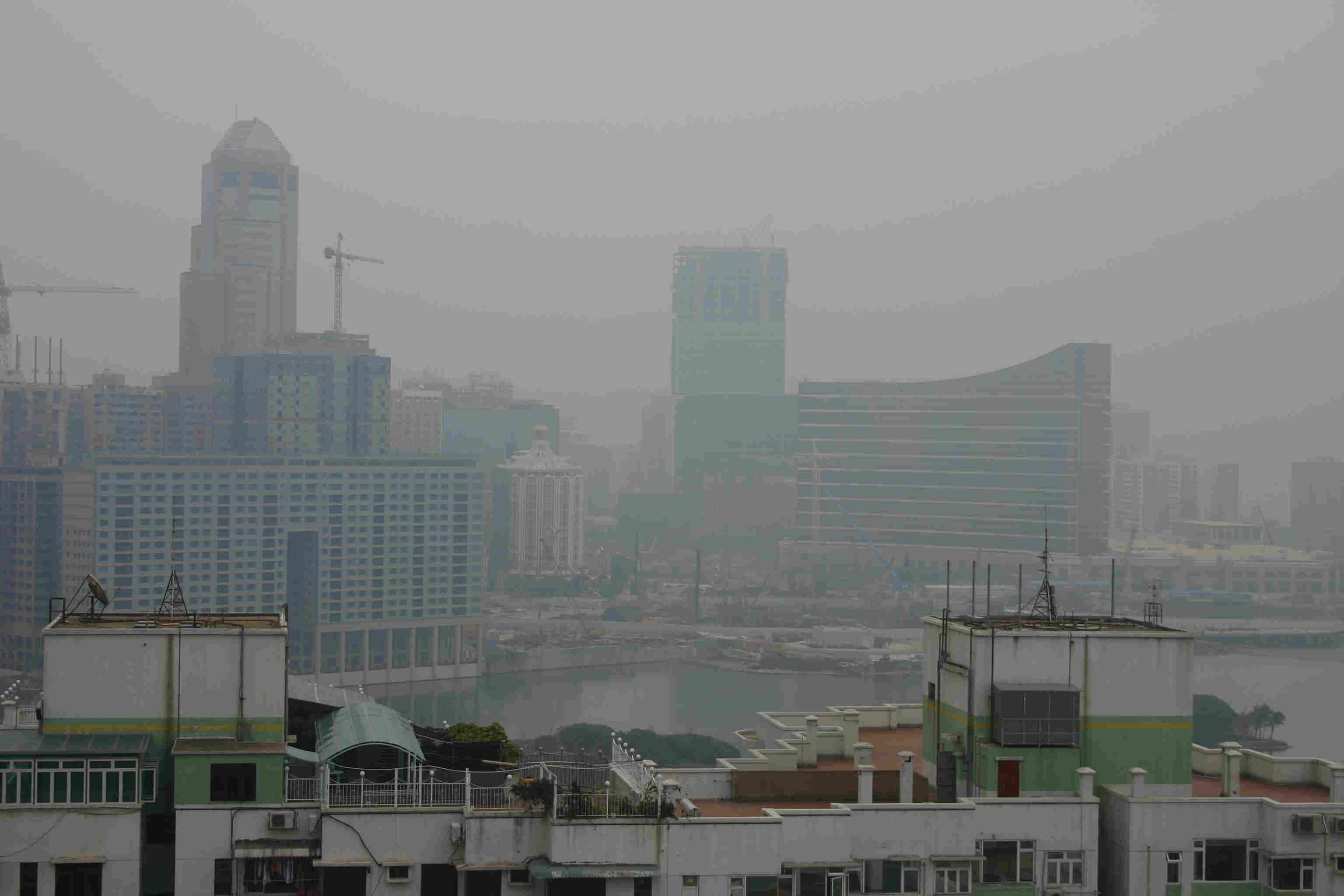
Leave the airport and head for Macau center and the cranes are
everywhere.
The number of visitors has increased
to 18.7 million in 2005, from 9.2 million in 2000.
The majority of visitors are still from mainland China. With the opening of the
Sands Casino in 2004 gambling revenues from Macau's casinos were for the first
time greater than those of Las Vegas (each about $5 billion), making Macau
currently the highest-volume gambling centre in the world.
New casinos slated to be opened through 2008 are the Wynn
Macau Casino in September 2006, the Venetian Macau in 2007, the Galaxy, Crown
Macau and others. As a result, the small economy is growing rapidly due to
gambling related tourism from China and construction from the new casino
entrants.
Wynn Macau is located opposite the
venerable Lisboa. The Lisboa itself is building a new Grand Lisboa.
The New Lisboa casino hotel complex has a total
construction area of 136,000 square metres. With a total height of 228 metres,
the hotel is set to be the second tallest building in Macau, after Macau Tower.
The Venetian and Galaxy resorts are
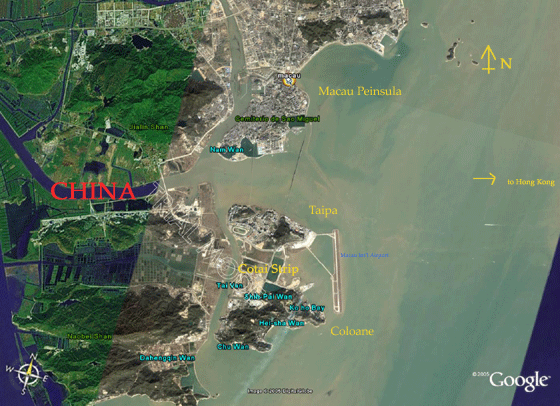
all a part of the mega development proposed for the Cotai reclamation area that
links Taipa and Coloane islands.
Also on Macau is the new Macau Fisherman's Wharf
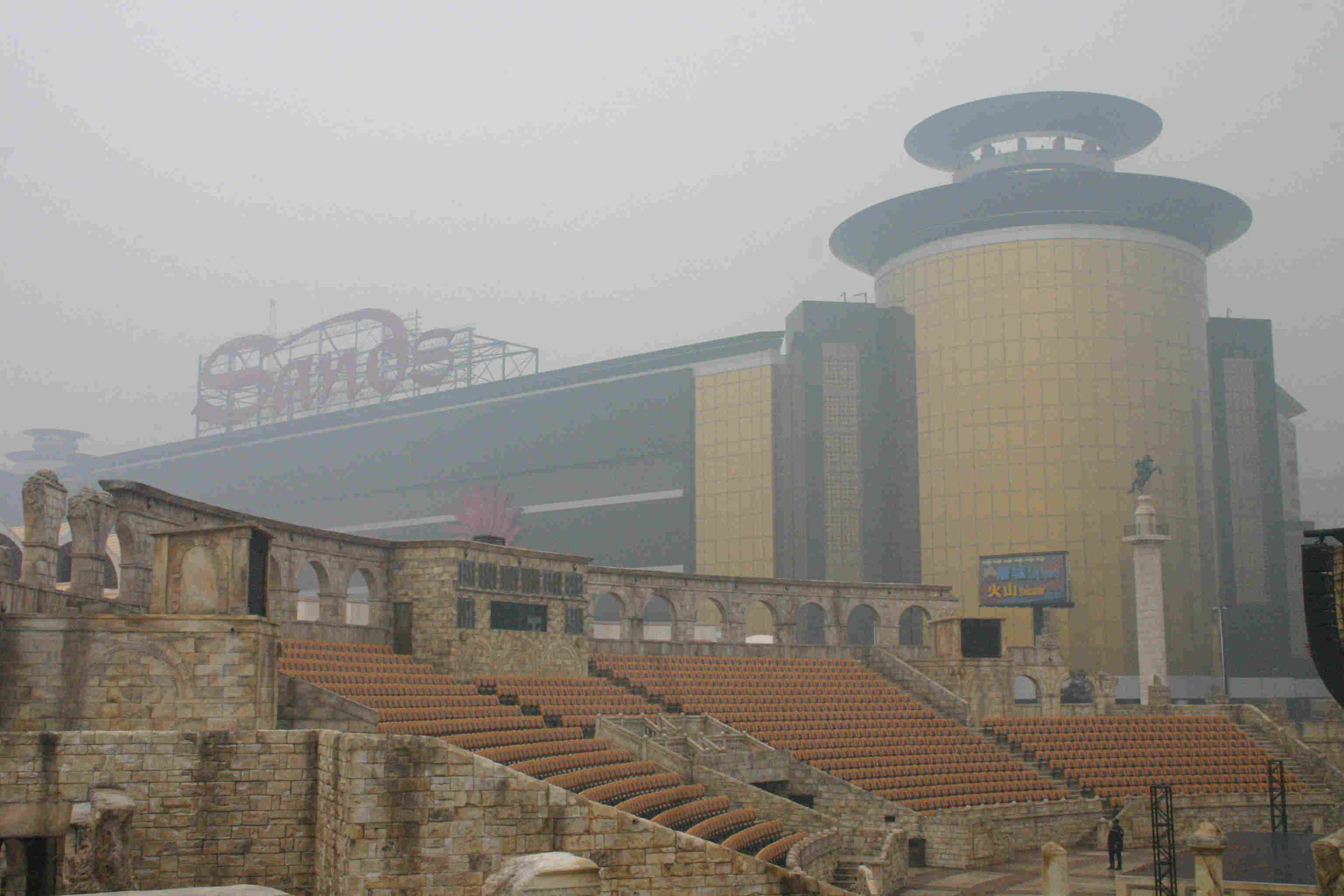
http://www.fishermanswharf.com.mo/. This is the first theme park in Macau.
It is located near the Ferry Pier and next to the enormous Sands. The
construction took 5 years, before it was opened on December 31st, 2005. This
US$2.5 billion complex will include nightly explosions of a 40-meter-high
volcano, daily jet-ski stunt shows and shopping and eating. The complex includes
over 150 stores and restaurants in buildings built in the style of different
world seaports such as Cape Town, Amsterdam and Venice, six rides, a slots hall,
a 72-room hotel, and a casino.
The project is still only half done. A new proposal would
allow the complex add three more hotels, a marina, a disco, an exposition center
and new executive offices in a US$ 1.5 billion extension. Building would take
two years.
It is not all about casinos. Citigroup Inc. has hooked up with
private developer Macau Land to build two luxury high-rise apartment blocks.
The site overlooks the Cotai Strip where U.S. casino operator
Las Vegas Sands Corp. is luring investors to Asia's first "neon alley" of
hotels, shopping centres, casinos and theatres.
And a joint venture between Morgan Stanley, Wachovia Corp. and
Hong Kong-listed Pioneer Global bought a 22-storey office tower last year. Many
investors believe too many office blocks have been turned into casinos in recent
years.
All of this is contained within a 27 sq km territory that has
no stock market and whose Pataca currency is pegged to the Hong Kong dollar.
Ten years ago Macau was faded cobbled streets and pastel
colonial facades, smoky casinos and seedy massage parlours. The boom really
began in 2002 when Macau, the only place in China where casinos are legal, broke
a four-decade-old gaming monopoly, letting in U.S. operators Las Vegas Sands and
Wynn Resorts A year later, China eased rules on overseas travel for citizens of
its main cities, unleashing a flood of gamblers.
Macau's economy grew 28 percent in real terms in 2004 and 6.2
percent last year. The government expects that when the Cotai Strip is built,
Macau will host 40 million tourists a year, and will need to swell its
population by 27 percent to 610,000 to make it all work. At the same time Macau
home prices jumped about 50 percent in 2004 before rising interest rates and
high vacancy subdued the market.
Continued reclamation is an issue. Macau has unveiled sea
reclamation plans to add 14 percent more land. Investors who bought pristine
waterfront land may now find that they're going to have a view of a 10-year
building site.
Macau Blog - My Olive
Tree commentary, daily life and links to some great pictures
Macau Casino World
- how to and where to.
Macau Casino
Blog - latest news.
The politics of confusion or compromise?
2 March 2006
India and the USA today signed a deal that gives the world's
second most populous muslim nation access to U.S. nuclear technology. Meanwhile
the Americans are baulking at a business deal between P&O and a Dubai company
that would give the Dubai company management (NOT security) responsibility over
six US ports. I find all this highly confusing.
It is also worth noting that India has not signed the Nuclear
Non-Proliferation Treaty. Bush is
undermining the treaty. He also gives ammunition to the efforts of both Iran and
North Korea to go nuclear. The deal could also prompt Russia to increase its
nuclear co-operation with Iran, and China with Pakistan. Everyone seeking to
preserve a perceived, but heightened, balance of power.
In signing today's agreement Bush
has weakened the one instrument of international law to stop the spread of
nuclear weapons. Maybe it was inevitable. The French were in India only a few
days ago where Monsieur Chirac, ever the opportunist, signed a similar
agreement.
The Canadians have also announced similar
nuclear co-operation with India.
This is all political
expediency when it suits. Bush needs India to politically counterbalance China
in the Asian subcontinent; he is seeking to work on key issues of global
security concern with
New Delhi vis-à-vis nuclear proliferation in the region, and to legitimise his
war against terrorism with a categorical support of India.
But when
it comes to domestic affairs. America take protectionism to new extremes of
prejudice.
Taking the life out of nightlife
March 1, 2006
By JENNIFER GAMPELL NEW YORK TIMES
A long wooden table obstructs the entrance
to Silom Soi 2, a narrow pedestrian alley lined with gay bars a few blocks
from Bangkok's once-infamous red light district, Patpong. I'm going to D.J.
Station, a local club where gays and straights alike gyrate to earsplitting
rhythms on the cramped dance floor. Four burly men in jeans and T-shirts
slouching at one end of the table point to a prominent sign written in Thai
and ungrammatical English. No one under 20 can enter the soi (street) and
everyone must present valid ID, which for non-Thais constitutes an original
passport (no photocopies) or a driver's license.
Obviously over 20, I'm excluded from the ID
formalities. "Have fun Auntie," one of the bouncers mutters in Thai as he
waves me through the barricade, probably not realizing I understand him. A
politer version of the ID checking process is repeated outside D.J.'s, where
once again I'm whisked through. However, my 20-year-old Thai-English
companion's valid British driver's license receives lengthy scrutiny before he
is allowed inside.
Increasingly, going out on the town in
Bangkok has become more of a hassle than checking in for an international
flight. At least after clearing airport security and passport control,
passengers can look forward to a smooth trip. But once inside the dwindling
number of international-standard Bangkok night spots, patrons still face a
potentially bumpy ride.
In early 2001 the government of Prime
Minister
Thaksin Shinawatra began a "social order"
campaign to clean up the country's risqué image and also to halt the supposed
moral decay of its youth. (Mr. Thaksin dissolved Parliament on Feb. 24 and is
acting as caretaker prime minister until new elections on April 2.) The two
local English-language publications — The Nation and The Bangkok Post —
periodically posit that the crackdown was inspired by unnamed prominent
politicians who couldn't control their own pampered offspring. Long-ignored
1981 legislation outlining entertainment licensing categories was
resuscitated, and contrary to the normally laissez-faire Thai attitude toward
lawfulness, the regulations began to be enforced.
To change Bangkok's decades-old
reputation as a 24-hour party center, in 2002 the Thaksin government created
three "entertainment zones" in which drinking and dancing were allowed until 2
a.m. (According to one club owner, four years later nobody knows the precise
boundaries because the zoning law was never made official.) Outside these
zones, dancing was illegal and closing times were 1 a.m.
Of the trio of late-night zones, only
Patpong would be familiar to visitors. Significantly cleaned up over the last
five years, the strip is naughty only in so far as sanitized parodies of sex
shows and hordes of stall vendors selling overpriced tourist schlock could be
considered salacious. Apart from the long-running bar Tapas (Silom Soi 4) and
D.J. Station, nothing in the Patpong area qualifies as a trendy dance club.
The second zone is Royal City Avenue,
known as R.C.A., a strip of youth-oriented venues in central Bangkok catering
primarily to Thais. Recently clubs like the huge concrete Astra have started
to attract a crowd of expatriates in their 20's by importing hip D.J.'s
(Amnesia Ibiza, Goldie and others). Even so, one night at the 15-year-old Zouk
bar in Singapore provides more real action and excitement than you'd find in
an entire week on R.C.A. The third zone, Ratchadapisek, is a four-lane
suburban road popular with Thai businessmen seeking the kind of entertainment
available at lavish multistoried massage parlors with names like Love Boat and
Colonze.
At first, club owners and customers
didn't take the new laws seriously. After all, this was Bangkok, where the
police hung out drinking with foreigners until dawn and a few hundred
surreptitious baht resolved most official problems. Besides, why would
authorities undermine the urbane club scene developing in the Sukhumvit area?
That scene was catalyzed by the 1999 opening of Q Bar, a "New York-style"
lounge on Soi 11, followed by the raucous Ministry of Sound (Soi 12), the
ultrachic Bed Supperclub (Soi 11) and the luxuriant Mystique (Soi 31).
Elsewhere, new hotel bars like 87 (at the Conrad), Tantra (Pan Pacific) and
Met Bar (Metropolitan) offered additional cosmopolitan choices.
But nothing deflates a thriving club
scene like repeated unheralded visits by a local constabulary intent on
upholding "social order." And that is exactly what has been happening over the
last four years. Sometimes the raiding police are accompanied by local TV
crews. Exits are barred, music grinds to sudden silence, lights flash on.
Confused and scared patrons who a moment before were partying down are
suddenly confronted by brown-uniformed police officers who demand to see their
ID's, frisk them or occasionally force them to urinate in a cup to test for
drug use. The raids often last far beyond the 1 or 2 a.m. closing hours. They
have rarely netted any violators.
[rascott.com insert - Testing urine
was not occasional - it was a regular event in many bars, probably forcing
some out of business. Long queues for washrooms, peeing while watched by
Bangkok's finest men in brown, and then handing your container to the
anonymous white coat was simply no one's idea of a good night out.]
But these attempts to regulate Thai
teenagers' behavior have severely limited the nocturnal activities of over-20
clubbers and have of course been devastating for the clubs they frequent.
Ministry of Sound, Tantra and Mystique have closed, and 87 is dead. Only Q Bar
and Bed Supperclub remain active, and David Jacobson, co-owner of Q Bar, says
that they survive partly because no new international investors will risk
coming onto such an unpredictable club scene to provide competition. "Bangkok
is a dead town," he said. "It was one of the most fun places in Asia." In
March Q Bar is opening a branch in Singapore where it can stay open 24/7,
though closing hour will be 4 a.m.
Even Kurt Wachtveitl, general manager of
the Oriental Hotel for 38 years, weighed in on local night life in a Jan. 13
interview in The Bangkok Post: "Wealthy people like to spend their money on
things they enjoy, and they spend a lot of money. But they don't want to go to
bed early! If Bangkok continues to be the kind of city that begins to look
sleepy after midnight, it will be wasting all its advantages to the upscale
foreign visitors. They'll go to Beijing, Shanghai and now Singapore."
Far from cleaning up the city's image,
the social order campaign has spawned a sordid — and unregulated — after-hours
scene that unfolds on steamy sidewalks and dark alleys behind second-story
black-curtained windows. "You can't suppress people," David Jacobson said.
"They want to have a good time. It's human nature."
An hour at smoky and cacophonic D.J.
Station satisfies my dancing urges. Not ready to call it a night, however, I
decamp to Rain Tree Pub & Restauant, a tiny bar near Victory Monument where
Thai folksingers croon 1970's melodies known as "songs for life." I adore
these rapidly vanishing examples of traditional Thai life and am having a
fabulous time. Nonetheless, promptly at 1 a.m. the lights come on, the band
packs up, and I'm out on the streets of Bangkok, all dressed up with no place
to go.
|