Welcome to rascott.com
This is a
personal site that reflects my interests in news,
current affairs, aviation and travel.
email me: robert@rascott.com
Now In Dubai:
Scott
Consulting
Photo Albums
My photographs have been moved off this site and are now stored on Picasa. They
were simply taking up too much space on my web host.
Please use
this link to see my list of photo albums.
Some
Useful links:
Information:
World Time
Clock
Exchange Rates
Journalism:
ForeignPolicy
Nationsonline.org
Project Syndicate
Amnesty International
Reporters w/o borders
The Guardian
BBC World News
CNN Asia
Bangkok Post
Daylife.com - news
Gulf News
Arabian Business
World News
WSJ - Asia
SCMP
Good causes:
Sister
Joan - Bangkok
Regional Info:
BKK Magazine
HK Magazine
In
Singapore Magazine
TimeOut Dubai
Back in the UK:
Newton Ferrers
And for fun:
Lin Ping live panda tv
EarthCam
History
BBC Archive
National Media
Museum
The British Library
Imperial War Museum
There are many other links on my AOB blog page.
|
Iran: brinkmanship or a real threat? 26 February 2006 Sitting just over the other side of the Persian gulf from Dubai is the mighty and historic nation of Iran. The growing tensions between Iran and the USA are by far the biggest threat to stability in the region and to the success of Dubai as a global geopolitical and trading centre. A diplomatic solution to the profound differences between Teheran and Washington may still be possible but looks increasingly less likely. As major differences and difficulties intensify the possibility of a military strike by either Israel or the USA increases. Such an attack would be designed to set back Iran's nuclear capability by at least 5 years. The US attack would be by air; they do not have the resources for a ground attack given their other Middle East commitments. An air attack would be aimed at destroying as much if the Iranian air defense capability as possible while at the same time destroying research, development and training facilities for nuclear and missile technology The attack would also be aimed at Iran's navy in order to eliminate as far as possible retaliatory attacks on Gulf shipping. It would be foolish to see this as anything other than the beginning of a long complex confrontation with no clear ending. It would also increase rather than eliminate Iran's desire for nuclear technology. How did it come to this: The US under the Bush regime has a clear intent to reverse the rise in Iranian power that has been an unintended consequence of the war in Iraq. Indeed the US appears willing to accet the risk of open confrontation and possibly igniting a regional sectarian war between Shia and Sunni Muslims. Elements of the tough new approach towards Tehran outlined by Hersh include: The New Yorker magazine this week argues that the US is already undertaking clandestine operations against Iran and Syria, as well as the Hizbullah movement in Lebanon, even to the extent of bolstering Sunni extremist groups that are sympathetic to al-Qaida; there's an irony. The magazine states that US special forces have been sent into Iranian territory in pursuit of Iranian operatives, as well as to gather intelligence. Further that these operations are being funded by or through Saudi Arabia to avoid scrutiny by Congress. Leading the fight is Vice President Cheney who is apparently advised by Prince Bandar bin Sultan, the Saudi national security adviser, who spent 22 years as ambassador to the US, and who has been offering his advice on foreign policy to Mr Bush since he first contemplated running for president. Cheney has reaffirmed that war with Iran remained an option if it did not dismantle its nuclear programme. Yet the Iranian president, Mahmoud Ahmadinejad has said that there could be no stopping or rolling back of his country's nuclear programme. "The train of the Iranian nation is without brakes and a rear gear," Iranian radio reported Mr Ahmadinejad as saying. The question is whether GW Bush will insist on doing something about Iran before he leaves office. In seeking to contain Iranian influence - and that of its most powerful protege, the Hizbullah leader, Hassan Nasrallah - the US has worked with the governments of Saudi Arabia and Israel. Both countries see a powerful Iran as an existential threat, and the Saudis suspect Tehran's hand behind rising sectarian tensions in its eastern province, as well as a spate of bombing attacks inside the kingdom. But in Iran the people hold a self-perception of Iran as one of the world's historic powers. Nuclear technology is seen as an essential part of its place in the world. And if Pakistan and India have nuclear capability then why shouldn't Iran. Indeed if the USA lives of nuclear power why shouldn't Iran. It is a persuasive domestic argument. The British meanwhile are taking the diplomatic lead in the UN and are seeking a tough new UN resolution capable of winning not only American and EU support but that of a more sceptical Russia and China as well. The International Atomic Energy Agency formally reported back to the UN last week that Iran had flouted the Security Council's 60-day deadline to freeze its enrichment programme and thus allay international concerns that it is developing a nuclear weapon. Instead, it had expanded the programme by setting up hundreds of centrifuges. The likelihood is that Iran would ignore any new UN sanctions or deadlines.....and then what happens? Ed: A map of the Middle East is here. The end of Suan Lum night bazaar 24 February 2007 The Crown Property
Bureau has awarded Central Pattana (CPN) a 30-year lease to develop a
6.4-hectare section of the former Bangkok Pre-Cadet School, near Lumpini
Park, which is currently occupied by the Suan Lum Night Bazaar.
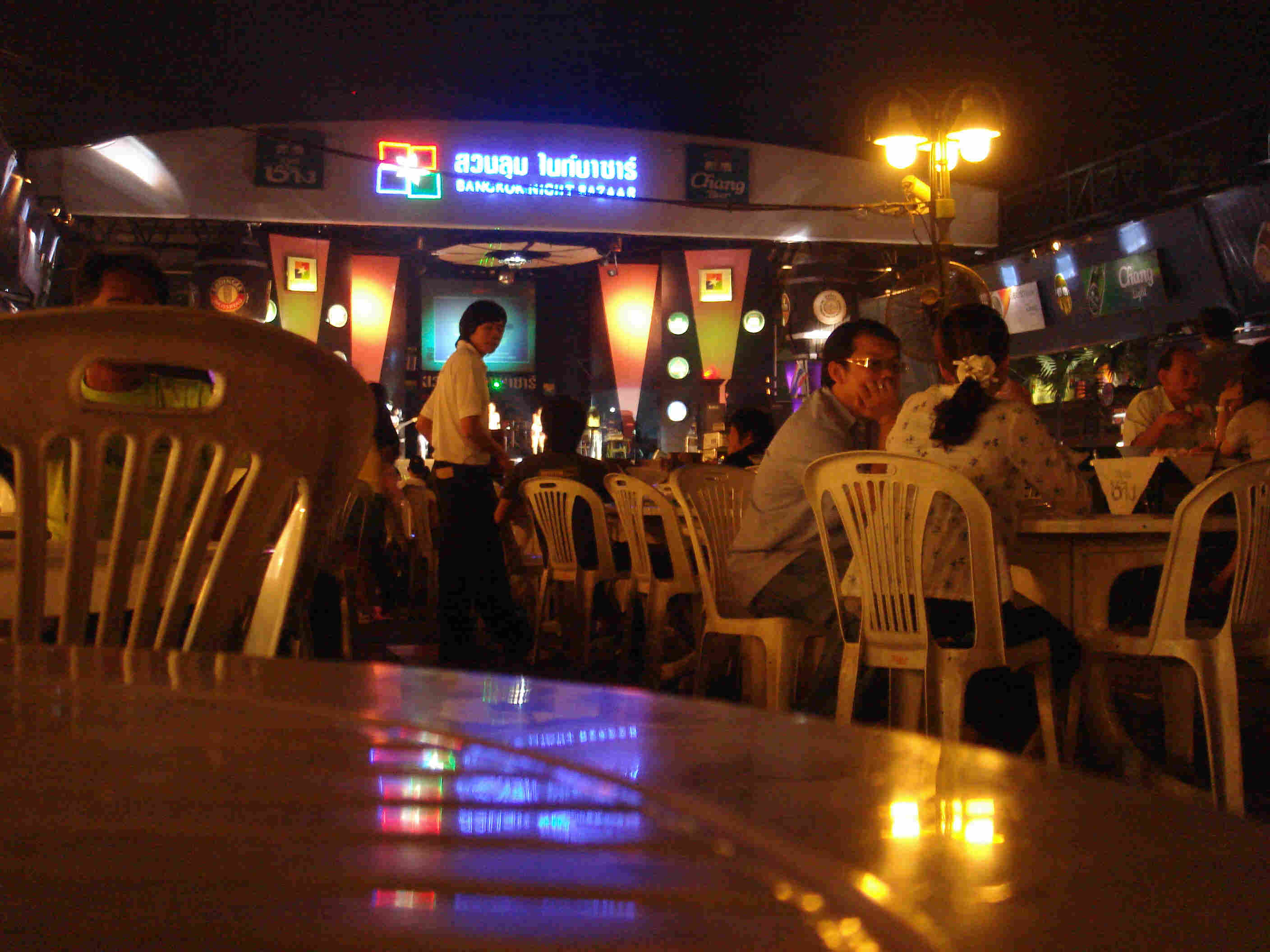
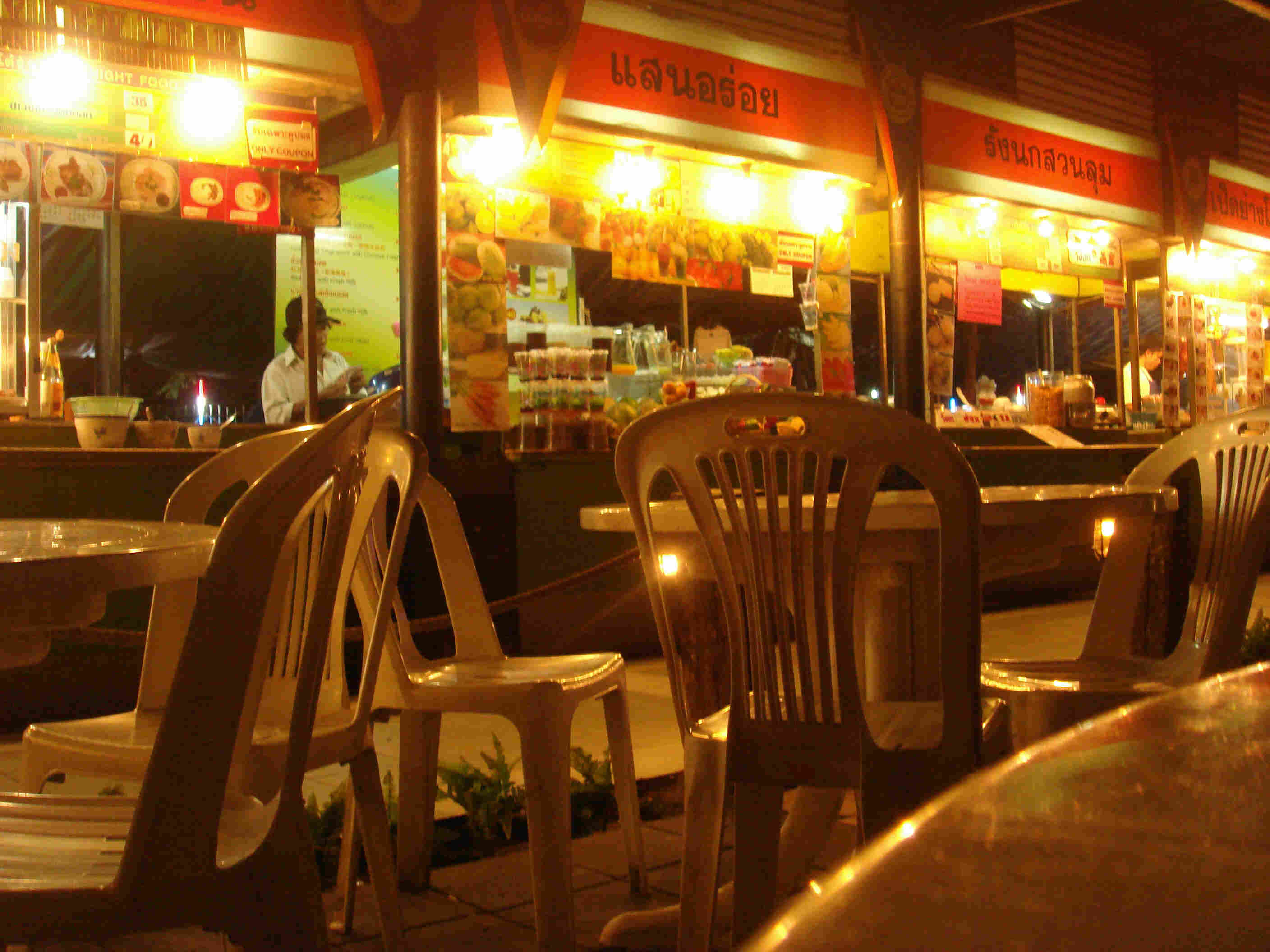
This is a tragedy for Bangkok. The night bazaar is a lovely place for both tourist and locals to eat and walk around in all the small shops that can only exist in this open space area under the night sky. Suan Lum Night Bazaar, has the usual market outlets with carved frogs, coconut cutlery, copy cds and the usual knick-knacks, but it also has stalls run by Thai artists and designers selling ceramics, lanterns, clothing and furniture. Much of it is very contemporary and represents the great creativity and artistic talents of so many young Thais. Better still you can put it all in a shipping container to send it all home. But Suan Lum is more than just a market; there is a huge open air food court surrounded by many food and drink stalls. On the stage at the front performers sing and dance; there is even the ferris wheel from Paris' Millennium celebrations. There are coffee
shops, restaurants and the Joe Louis puppet theatre. So just what Bangkok needs, another shopping mall. The Central group already have World Trade, Central, Big C and loads of other shopping malls in this area. For market lovers there will (for the moment) still be Jatuchak (JJ) but it is only on weekends and only during the daytime. In the hot season it is not pleasant. According to the statement released by the bureau yesterday, CPN's proposal for developing the site met its design and concept criteria for creating a landmark and a true centerpiece attraction for Bangkok. The plan maps out a complex, including world-class shopping facilities, offices and a hotel. The former lease agreement between the Crown Property Bureau and P Con Development (Thai) for the entire Pre-Cadet School site of 20.3 hectares expired in March last year. At that time, the Crown Property Bureau gave a grace period of one year to allow small retailers in the Suan Lum Night Bazaar to find new locations. That grace period expires on April 30 this year. Presumably by that date the market will be closed. Please sir, may I have my satellites back.... 19 February 2007 Investor beware; Gen.Sonthi Boonyaratglin, the Commander-in-Chief of the Royal Thai Army and Chairman of the Council for National Security (CNS), delivered a special lecture under the topic of “Patriotic Ideologies” last Friday, saying that he will bring back national assets, especially the Thaicom Satellite, from Singapore. The Thaicom Satellite concession was sold by Shin Corp, the satellite’s concessionaire, to Singapore’s Temasek Corporation. Few acquisitions have gone as spectacularly wrong for the purchaser. Singapore is nursing a $900m paper loss and, far from cementing relations between the two countries, the deal was one of the sparks that led to the coup against the Thai government. Following the General's breast beating speech the military-appointed government vowed on Monday to reclaim satellites and possibly other assets sold by ousted Prime Minister Thaksin Shinawatra's family to Singapore, but said it was unsure how to do it. I suspect Singapore would take cash at par. Not much chance of that ! “Getting them back, that is definitely what we want to do. But the question is how?,” Communications Minister Sitthichai Pookaiyaudom told a Bangkok radio station. "I want the nation's belongings back," said Sonthi Boonyaratkalin, army chief. Bangkok has zeroed in on five satellites controlled by Shin Corp subsidiary Shin Satellite Pcl and the General has accused Singapore of using Shin assets, including Thailand's biggest mobile phone operator AIS, to monitor military phone calls. AIS and Shin Satellite have denied eavesdropping. The uncertainty drove Shin Corp shares down more than 7 percent on Monday, while Shin Satellite ended up 0.71 percent. There is no indication Temasek is willing to sell any Shin assets, even though the paper value of its investment has dropped by nearly half. It is hard to marry the General's wishes with those of Temasek, which will want to avoid the loss of face and taxpayers' dollars that that would entail. Selling Shin Corp's operating assets to Bangkok – the sale of Thai Satellite in particular would please Gen Sonthi – would put Temasek in a poor negotiating position. And it would not actually address the foreign ownership issue at the holding company level. But that may not be necessary if a Thai investigation conveniently finds that the Singaporean firm violated foreign ownership laws. Shin Satellite's operating licence could then be revoked if investigators conclude it is a foreign controlled company. The fact that the deal structure mirrors that used as custom and practice by hundreds of foreign firms operating in Thailand has been conveniently forgotten. According to Thai stock exchange data, Shin Corp (controlled by Temasek) holds 41.3 percent of Shin Satellite with the remaining shares controlled by Thai and foreign investors. Most Thais support the government position and believe the government should reclaim Thai assets from Singapore. Where does this stop. Should everything Thai be 100% Thai owned. Should every company be nationalised? Is Thailand a part of the global economy? Should Thai's overseas assets be returned to their host countries. And who was it that was recently bidding for Liverpool football club? But there is little understanding of big business and little information to show that Thais satellite assets are far from unique in being foreign controlled. Temasek also owns Australian satellites. Many telecoms companies the world over have foreign owners, and in many cases they also operate satellites. DTAC's majority ownership in Thailand is held by Telenor controlled by the Norwegan government. Go to the UK: the only satellite broadcaster (Sky) is owned by News Corp of the USA and major cellphone providers are owned as follows O2 (Spain), Orange (France), 3 (Hong Kong), Vodafone (UK). The Temasek purchase was a valid and legal transaction. Advisors to Temasek on the deal were Siam Commercial Bank; there was no suggestion from them that the deal might in any way not be legal or that the sale of technology assets might be somehow inappropriate. Yet the backlash against the Shin Corp takeover has also prompted a re-drafting of foreign ownership rules to ban multiple holding companies, historically used by foreigners to secure majority control. A combination of changes to the FBA and "patriotic ideologies" should make any potential investor into Thailand very wary indeed.
The dress that is the news in Bangkok 18 February 2007
Chotiros ''Amy'' Suriyawong got her front page headlines after she appeared in this rather revealing frock for the Subhannahongse (Thailand's version of the Academy Awards) presentation. She wanted media attention and picked the outfit accordingly. What she got was criticism at the highest levels, the loss of a small movie contract and an instruction to undertake community service. Ah the hypocrisy of it all; she probably got a large number of attractive mia noi offers and a few more interesting movie offers as well; although probably not as a demure heroine! The dress and the 22-year-old actress have become a hot topic for debate in newspaper opinion pages and online chat rooms. And it was too much for Suraphol Nitikraipot, rector of Bangkok's Thammasat University, where Ms Suriyawong is a student in the Liberal Arts faculty. "Society feels this is a disgrace and that her actions have affected the reputation of this university," he said. Ms Suriyawong was reportedly forced to demonstrate to the university that the dress had specially sewn-in underwear. She said that although the dress was revealing, she was wearing underwear. This is rather hard to see! And the "nom yaai" look suitably enhanced. The university ordered her to make a public apology and carry out community service for 15 days - she has been asked to read to the blind. They decided that suspension might just be a little too much punishment. The university was not acting in isolation. It was prodded by the military junta. Thailand's Ministry of Culture called Chotiros' choice of dress 'very inappropriate' and the wrong message for a public role model to send to young Thais. The offending black dress that Chotiros wore is held together by thin strips of fabric and is said to have been inspired by Elizabeth Hurley's infamous Versace safety-pin dress, which launched the British beauty's career when she wore it to a London film premiere in 1994. In her press conference last week she apologised and said 'I feel very guilty about what happened. I want to apologise', said Chotiros, in a white button-down shirt and cardigan, her hair pulled back demurely into a loose bun. 'I didn't know it was going to be such a big deal.' The naiveté of youth!! She attended the news conference with deans from Thammasat University. Commentators in Thai newspapers felt the whole episode smacked of hypocrisy. The only crime Ms. Chotiros appears to have committed is a lack of style and taste. No one arrested her. She does not appear to have caused offence; just made a few heads turn! The idea that she should somehow be punished for this is a bit of a nonsense. Visa madness 17 February 2007 As a cabin crew member at Emirates Airline my fiance can enter more or less any country in the world (except the USA) without requiring a visa. As long, that is, as she is working; in uniform and in the responsibility if Emirates. But she is Thai; and when she wants to travel for pleasure; on her (our !!) own account she can basically only travel in SE Asia and some parts of Africa and the Middle East without a visa. Everywhere that she and I want to travel will require her to obtain a visa. The UK, France, Greece, Canada, Australia, will all insist that she has a visa; and they are not that easy to obtain in Dubai, where some countries do not have consular representation. This makes so little sense. She is employed (I am not !); she has a job that she loves. She will always have a return ticket back to Dubai. There is no one less likely to be seeking a long term stay in any of these countries that insist on visas for Thai citizens. Meanwhile Brits, Canadians and Aussies etc can enter Thailand for 30 days without a visa. It is annoyingly racist and rather offensive. It is also time consuming and not practical. She travels for work; and has to take her passport with her. So opportunities to obtain a visa hard to find, given that embassies are not the most customer focused of places and like to take their time. Fact and fiction from Sofitel 17 February 2007 The trouble with Sofitel's latest press release for their summer opening of a new hotel in Dubai is that none of this yet exists: Burj Dubai is unlikely to be completed until late 2008 or 2009; there is no lake; there are no white sandy beaches and no sign of a golf course. And the 1,200 shop Dubai Mall is still a very large building site. Stil, like most of Dubai; it will be great when it is finished. For the summer the Sofitel's guests will be admiring the building site from their hotel rooms! The press release follows: Paris
(PRWeb) February 17, 2007 -- Sofitel, the prestige brand of the Accor
hotels, continues its expansion in the Middle East, with the opening in July
2007, of a second hotel in Dubai, Sofitel The Palace. Making their minds up at Don Muang - domestic only (today!) 17 February 2007 Thailand's wonderfully indecisive military government has now determined that Don Muang airport will re-open in two to three weeks but will only serve only non-connecting domestic flights. General Surayud, the current non-elected Prime Minister, made the announcement yesterday in his capacity as chair of the committee on operating policies for Suvarnabhumi and Don Muang airports. The go-ahead for the initial reopening of domestic services followed opposition from the Board of Airline Representatives which disagrees that its members should have to split services between Don Muang and Suvarnabhumi. The board represents over 60 international airlines. Part of Bangkok's air traffic would return to Don Muang to allow repairs at Suvarnabhumi airport, Gen Surayud said. Transport Minister Theera Haocharoen will propose Don Muang's service for non-connecting domestic flights for cabinet approval next Tuesday. Adm Theera said the return would reduce traffic at Suvarnabhumi by 17%, or 71 flights a day. Nok Air and One-To-Go airlines will move back completely while Thai Airways International will deploy part of its domestic routes to Don Muang. The new arrangement appears designed to hurt Thai Air Asia which is largely seen in Thailand as being controlled by Malaysian and Singaporean interests, through the sale of Shin Corp to Temasek. In reality it is inevitable that some international flights will have to return to Don Muang eventually to help ease air traffic at Suvarnabhumi in the future due to likely delays in its expansion plan. It is alos still unclear how much damage there really is at the new showpiece airport and how much disruption will be caused by repairs. Yesterday's decision was met with a protest by Thai AirAsia. Tassapon Bijleveld, the airline's chief executive officer, cannot split TAA's services between two airports. TAA's 737s fly both domestic and international routes with minimal turnarounds. He said Thai AirAsia would not return to Don Muang, even after Suvarnabhumi became heavily congested.
Sights that you wont see in Dubai 15 February 2007
Bangkok and Vancouver - opposites attract 15 February 2007 The Vancouver WestEnder last week published this travel feature comparing the joys of Bangkok to life back home in Vancouver. Ther eis nothig very new here but it is a fun comparions of two of my favourite cities. It’s messy, archaic and sometimes lawless, but the Thai capital is uncommonly alive On a pleasantly warm night, halfway down Sukhumvit Soi 11 Road, the glory of Bangkok is on full display. To the right is a glitzy, futuristic nightclub called Bed, with its huge oval-shaped façade that flashes like a dance-floor light show. That’s not it, though. The real glory of Bangkok is on the other side of the street. It’s a little truck, parked at the curb. The back of the truck has been opened up to boast a full portable bar — a miniature mobile watering hole complete with wooden counters and stools, rows of bottles, and a little multicoloured light revolving defiantly in response to the hi-tech spectacle across the road. CCR’s “Proud Mary” pumps from a stereo system. A couple of tourists lean back on their stools, drinking in the near-full moon, the passing traffic, the calls of the massage-parlour girls, and the probably-watered-down liquor. Fancy nightclubs are pretty much everywhere, but guerilla bars in foldout pickups that set up in an available parking spot and then disappear before the cops arrive? That, among many other things, is the glory of Bangkok. In this town, merchants make opportunistic use of space, and they generally don’t ask permission. Fines or bribes will be paid and then it’s back to business. In ways good and bad, Bangkok is like the anti-Vancouver: chaos reigns; regulation is overwhelmed; the results are filth, danger, aggravation, and glorious, riotous life. It’s easy to romanticize when you don’t live here — chaos can be fun to visit. But after taking a bus from the airport and experiencing the black fumes and incremental progress of Bangkok traffic, the downside is really the first thing you become aware of. Amenities are sometimes sketchy. This is a town held together with bandages and baling wire. Daily tasks are no picnic either. You can walk on the sidewalk if you like — people here accept lots of odd behaviour. But a Bangkok sidewalk rarely seems designed for forward pedestrian progress. Bangkok sidewalks are for planting signs, digging holes, parking, driving over the curb, running sewage pipes up out of the ground, piling sand, and, most of all, selling. Stalls on Sukhumvit turn many blocks into bottlenecks, particularly in the cool of the evening. There’s cheap crap of nearly every description: knock-off jeans, glasses, bags, knick-knacks, porn, plus the latest pirated movies from Hollywood. And there’s food. That’s the glory of Bangkok, too. It’s hard to overcome natural Canadian squeamishness as you sit down on a dirty plastic stool at a spotty folding table on a filthy, crowded sidewalk to eat food cooked on a little cart from raw ingredients that sit in bowls drawing flies. But you really must. It’s such excellent food, and it usually costs the equivalent of about a buck and a half. And anyway, over the past few years I have had the dubious honour of contracting food poisoning the world over, from Vancouver to Hanoi to Hong Kong to Paris and beyond. Yet on four visits to Bangkok, eating very frequently at little street operations — last night, for example — I have yet to come down with so much as indigestion. So, to sing the glory of Bangkok is not just to romanticize. It helps to explain why, despite the military coup and the deadly New Year’s Eve explosions (not to mention the 2004 tsunami), Thailand has recently seen an increase in tourism. Those who like it, with all its noise and stink, like it a lot. One woman who lost a leg in a New Year’s Eve explosion enthusiastically claimed she’d be returning soon. Now that would make one hell of a TV ad. Locals need the help, too. People scramble to make a living here, and few know how to scramble like the Thais (the little mobile bar in the pick-up truck, for example). It’s frustrating for legitimate operators like Andrew Clark, the Vancouver Island native who runs Q Bar, often described as Bangkok’s premier nightspot. “We get inspectors in here nailing us on every little thing,” he says. “So we say, ‘What about those little bars on Sukhumvit that don’t even have licences?’ And the inspectors say, ‘Right, they don’t have licences, so we can’t regulate them. If we shut them down, they pay a little fine and open up again. Since they aren’t licensed, we can’t inspect them.’ “That’s the local logic,” Clark says ruefully. “As a Canadian, you say, ‘What? They don’t get licences so they’re above the law?’ But Thais think that’s normal. “We said to the inspectors, ‘We ought to just open up another place right across the street with no licence,” Clark recalls. “And the inspectors said, ‘Yeah — you should!’” Sam Sullivan likely isn’t taking notes on this. Just as well — the good matrons of Kerrisdale might quibble about zigzagging around the fried-squid vendors, the tuk-tuk drivers, and the whispering guys who want to show you their little brochures. Besides, if we did have all that stuff, there wouldn’t be any reason to visit Bangkok, and that would never do. EK announces Houston from Dec 2007 8 February 2007 Emirates has announced the December 3rd launch of its new Boeing 777-200LR non-stop service between Houston and Dubai which will initially operate three times a week, increasing to a daily service starting February 1, 2008. Flight EK212
departs Houston (IAH) at 6:25 p.m. on Mondays, Wednesdays and Fridays and
arrives in Dubai (DXB) at 7:35 p.m. the next day. 7 February 2007 The Thai
Journalists Association and the Thai Broadcasters Association yesterday sent
a letter to the management of Time magazine to present the truth regarding
deposed Prime Minister Thaksin Shinawatra's allegation against the Thai
media. Dear Editor, Shame on your interview with Thaksin Shinawatra (Time Asia edition Feb 13). Time magazine allowed Thaksin to tell lies. Thaksin has the audacity to say that the Thai press printed "groundless information" about him and that he never "intervened" in Thai media activities or closed them down. Let the truth be told. Before he came to power, the Thai press was considered one of the freest in the world, ranking 29th in the survey done by Freedom House in 2000. During his reign until September 19, the Thai press fell to a depressing 107th position last year. Similar conclusions can be found on indexes and reported by the Committee to Protect Journalists and Reporters Without Frontiers. Thaksin constantly interfered with the Thai print and broadcast media using advertising revenues and stock acquisitions as key strategies. He shut down community radios, websites and TV programmes critical of him. Political power was used to intimidate the media, particularly the broadcast media, which are largely owned by the state. The management of these outlets came under tremendous government pressure to put him in a positive light, while those who failed to conform or attempted to expose corruption faced the risk of being intimidated through various means, including the threat of staggering lawsuits. The legal battles between Shin Corp, which is owned by the Shinawatra family, and the Thai Post and media rights activist Supinya Klangnarong, are some of the cases in point. English language daily, the Bangkok Post, also faced the wrath of Thaksin after reporting about cracks on the runway at the Suvarnabhumi International Airport. We are opposed to all kinds of media interference, intervention or intimidation, and have protested strongly against signs of such actions by the leaders of the September 19 coup. But the truth is, so far, no Thai leaders have messed up the Thai media more than Thaksin. Thai Journalists Association & the Thai Broadcasters Association The rebirth of Don Muang 6 February 2007 It was inevitable. Don Muang is to be re- born. The Thai government has approved a plan for two international airports in Bangkok, giving second life to the 93-year-old airport at Don Muang which was closed last year, supposedly forever. The $3.7 billion new airport
needs massive repairs to taxiways and runways. It has a leaking roof,
unattractive terminal, lack of signboards and toilets, poor lighting and
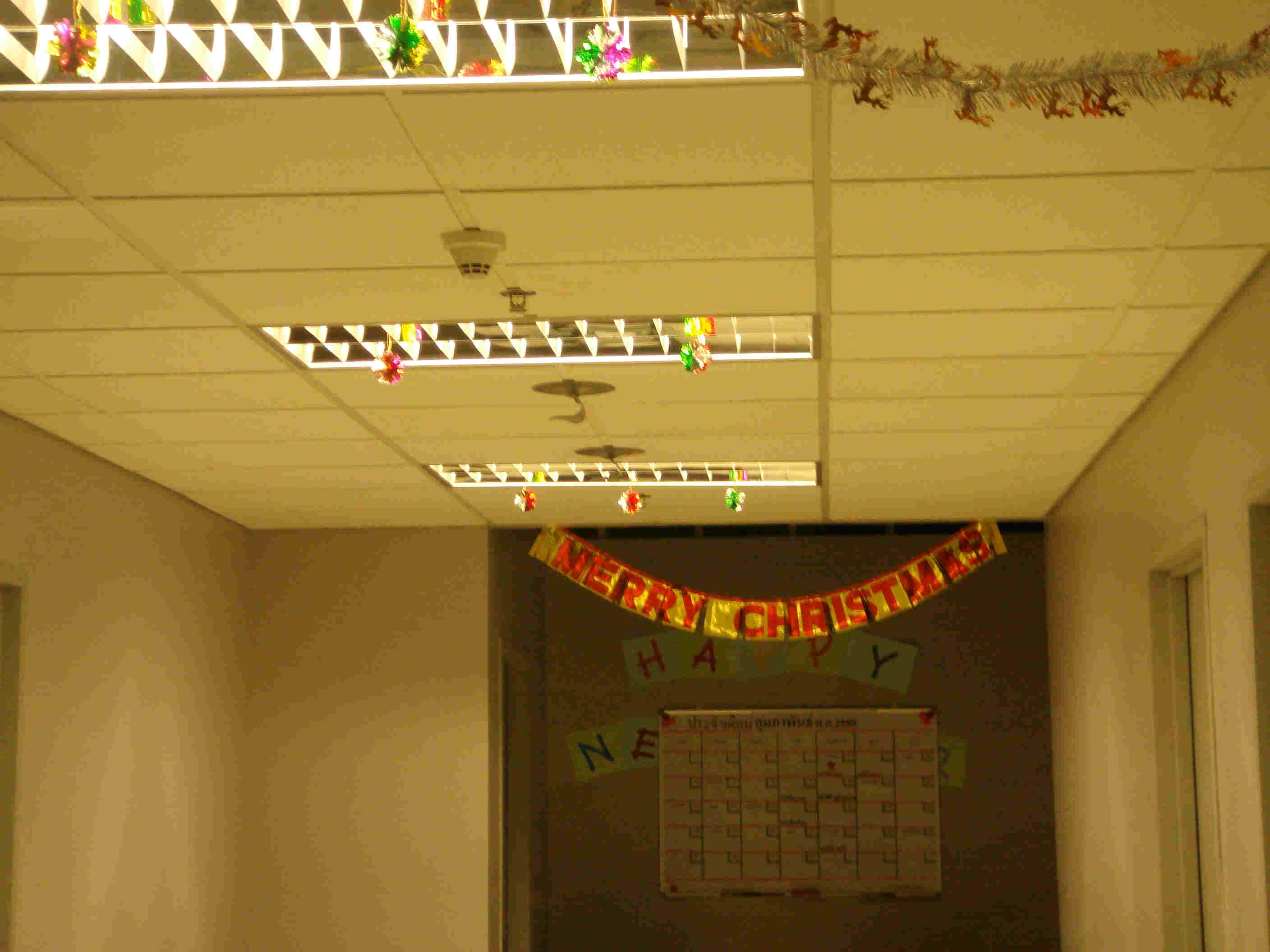
faulty air-conditioning. And no one has even bothered to take down the
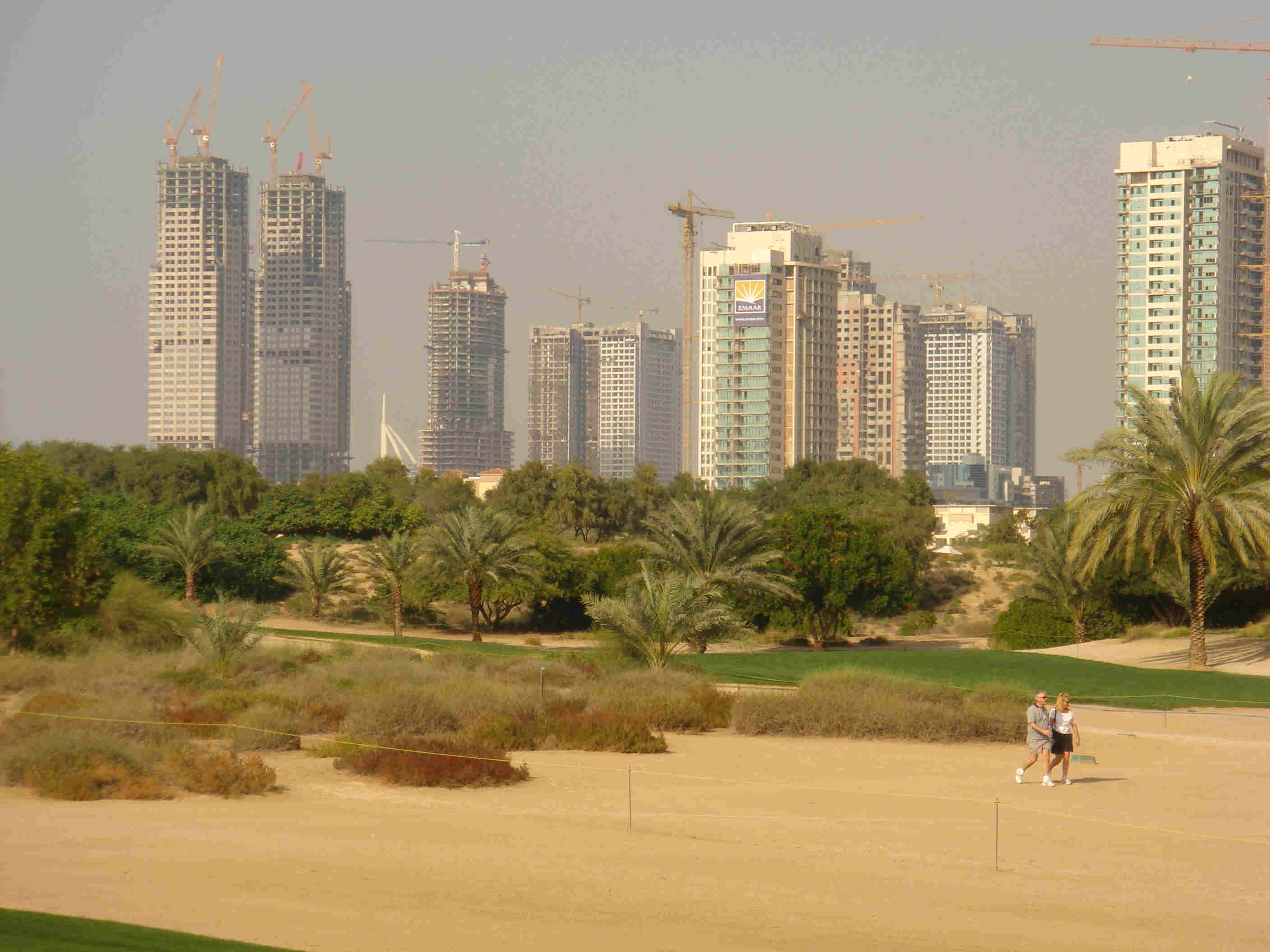
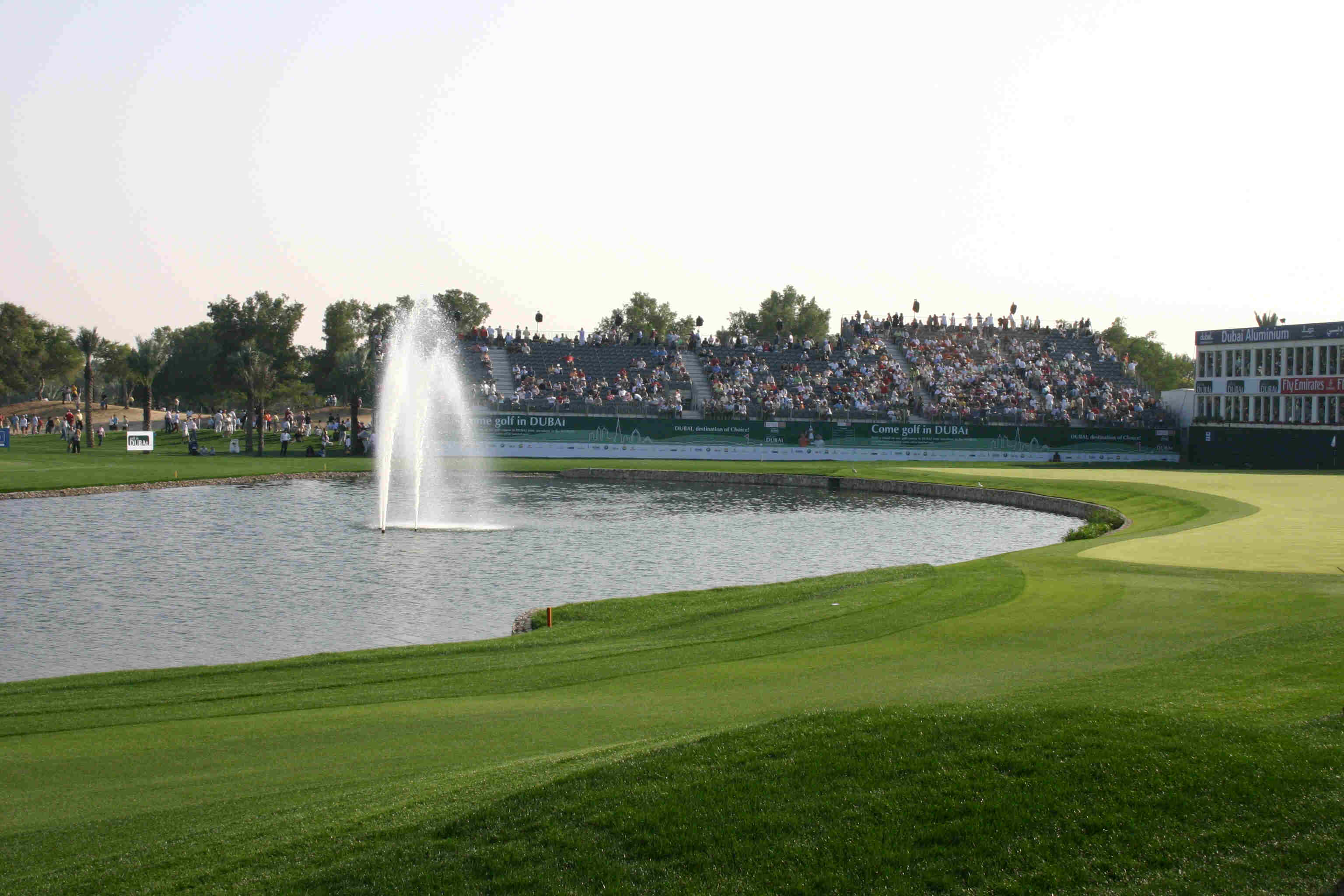
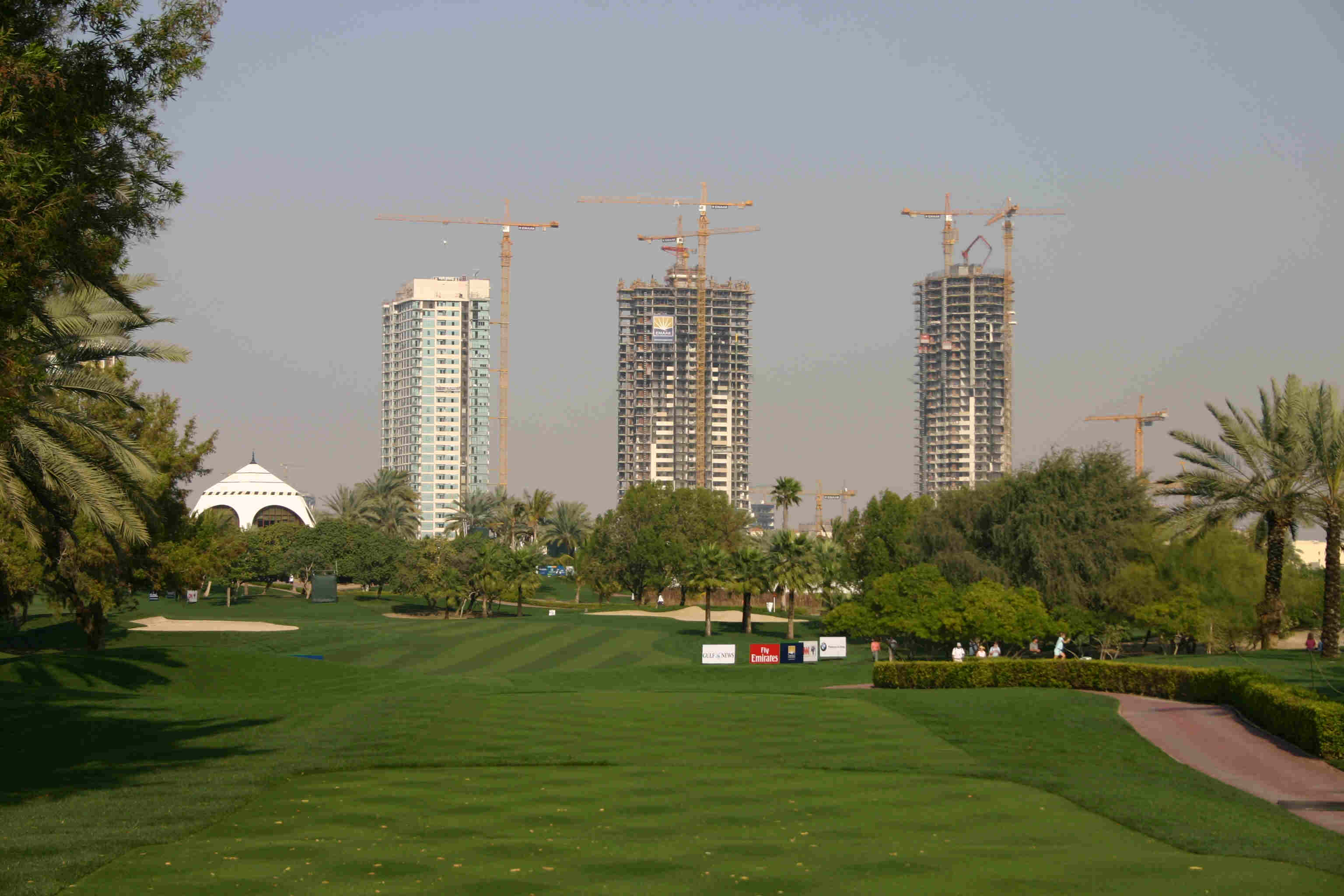
Christmas decorations! Desert Golf 3 February 2007 The golf world has descended this week on Dubai for the Dubai Desert Masters. The Majalis Course at the Emirates Golf club is far from looking like a desert; more like a beautifully manicured piece of Phoenix or Palm Springs. The pro golfers are truly spoiled; the have lovely fairways; carpet like greens, great practice facilities, ball spotters and passive crowds. The crowds are so well behaved at golf; no one dares say a word or cough of blow a large raspberry, But truly watching live golf is simply not exciting. At least on TV they can switch cameras to where the action is. But following a group around a course is an insomniac's delight. The golfers themselves show the personalities of funeral attendants. The crowd are clearly there to be tolerated and no more than that. Certainly there is no thought of engaging in friendly chat as they spend 5 hours walking the golf course. And some golfers can hear a pin drop over one hundred yards away. They must see ear specialists. Or it is just an excuse to frown more. In Dubai golf is played against a background of building noises, jack hammers and the call to prayer. The players seem OK with this; but a rustle of paper or the opening of a can they can hear from miles away ! It is time to make golf fun. Have golfers where team colours; allow the fans to cheer or jeer and applaud or abuse the players; then tell them that unless they are standing on someone's line they have to put out. Marking puts that are less than a foot is simply time consuming. Anyway a few pics of the course; sadly not of the golf; the no camera rules were being strictly enforced; presumably because Tiger had a moan after the first day.
Thaksin does Time 3 February 2007 No - not that sort of Time - no one has locked Thaksin up; in fact no one has been able to find anything to charge him with; and since the coupd to outs him was over four months ago; and was meant to be an assault on the corruption of the previous regime that is quite alarming. But Thaksin is still giving interviews and people are still listening and reading. This is his interview with Time Magazine, from 1 February 2007. "Since he was toppled from power last September, Thaksin Shinawatra has been crisscrossing the globe. TIME's Southeast Asia Bureau Chief Hannah Beech caught up with Thailand's former Prime Minister on Jan. 25 in Tokyo, where they spoke about the military coup against him, the new regime in Bangkok, and what he intends to do with his life. Excerpts: TIME: You've
asserted that you and your old political party, Thai Rak Thai, were highly
popular. Yet there was hardly any public outcry against the coup. The new
government has been responsible for controversial policies—the capital
controls in December, and the proposed changes to the Foreign Business Act
that could limit overseas ownership of companies in Thailand. What do you
think of such moves? You've met with
business leaders in Japan, which is traditionally the biggest foreign
investor in Thailand. What did you tell them? The junta has
claimed that forces loyal to you were responsible for the New Year's Eve
bombings in Bangkok. How do you respond? The junta also
accuses you and your government of corruption. You have
criticized the junta for muzzling the media, but you were accused of doing
the same during your time in office. You did more
than just express strong words. You slapped lawsuits on newspapers that
printed things you didn't like. How mature is
Thailand's democracy? Will you return
to politics? Thailand's Titanic struggle 3 February 2007 - The Irrawaddy
By Thitnan Pongsudhirak Football fireworks expected on Sunday 3 February 2007 Football fireworks are expected on Sunday as two of South East Asia's most sensitive nations meet on the football pitch for the second leg of teh South East Asian cup final.
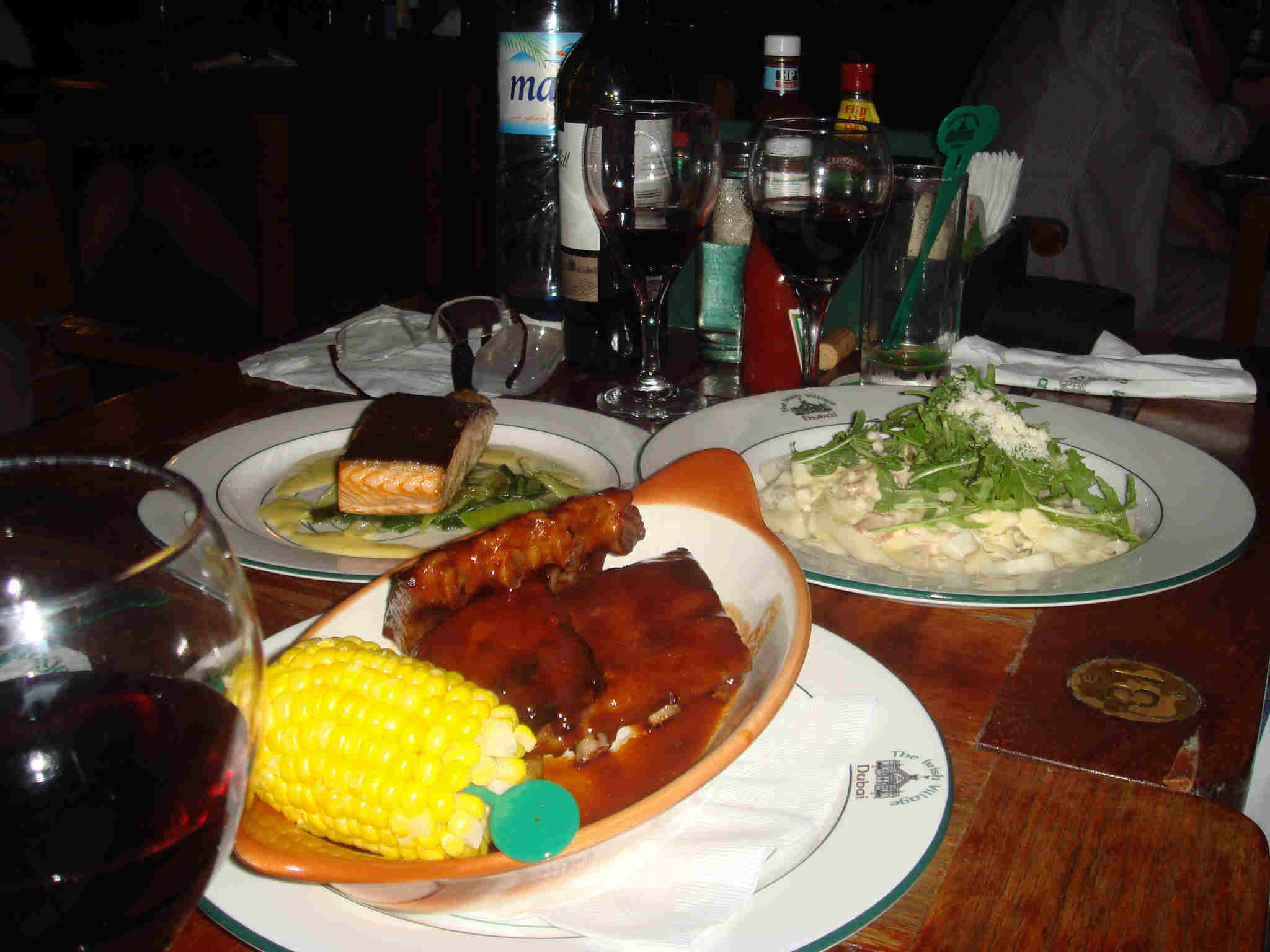
Budget airlines taking off in the Middle East 2 February 2007 - The International Herald Tribune Gulf Arab countries, shedding their traditional reputation for opulence, are the latest to join the phenomenon of no-frills budget airlines that have transformed air travel in Europe and America. The three chief Middle East budget airlines — Air Arabia, Jazeera Airways and Atlas Blue — have already grabbed 5 percent of the region's air travel market, and analysts say that portion is set to increase in coming years as booming Gulf economies attract more fliers. Despite the Gulf's luxury-obsessed reputation, there is a healthy market for low-cost flights, said Habib Fekih, president of Airbus Middle East, a unit of the European aircraft manufacturer. "Many people have this perception of the Gulf as being dedicated to anything first class, but this is not true," Fekih said. "A big part of the population in this part of the world need low fares. They are either Asian laborers or Western expatriates whose number is increasing because of the region's booming economies." Like Europe's easyJet and Ryanair, and America's Southwest Airlines, budget carriers in the Middle East are connecting mid-sized cities that may otherwise have no direct links. Common destinations include Egypt's central city of Assiut and coastal city of Sharm el-Sheik, Almaty in Kazakhstan, Iran's holy city of Mashhad, Syria's ancient cities of Aleppo and Damascus, Yerevan in Armenia, and small Indian cities such as Kochi and Nagpur. Mideast budget airlines offer services similar to their U.S. counterparts, from guaranteed seats and meals for purchase on board to free checked luggage up to 44 pounds. Jazeera offers a "Jazeera Plus" business-class equivalent. That's considerably less luxurious than carriers like Emirates, which fly global routes and are known for first-class service. On shared destinations, budget airlines are far cheaper than full service airlines. Emirates airlines charges US$540 (€415) for a round-trip from Dubai to Thiruvananthapuram, India. The same trip from Sharjah on Air Arabia costs US$266 (€200). A round trip ticket from Kuwait City to Mumbai, India, costs US$800 (€610) on Kuwait Airways and US$240 (€180) on Jazeera. Aviation experts say budget carriers' success stems from the easing of government restrictions on competition. Deregulation that has sparked competition in the Gulf still has a long way to go in some markets. Budget airlines are still banned from operating to Cairo, said Abdul Wahab Teffaha, secretary-general of the Arab Air Carriers Organization, a Lebanon-based industry advocacy group. "In the Arab world, liberalization is a gradual move toward easing restrictions. We are heading in that direction, but I cannot say we are totally there yet," Teffaha saius$540 (€414.75)d. Sharjah-based Air Arabia, the oldest and largest of the Arab world's three budget airlines, saw its passenger numbers increase from 500,000 in 2004 to 1.8 million passengers last year, said Adel Ali, Air Arabia's chief executive. The fast-growing airline has transformed Sharjah's once bucolic airport, ferrying passengers to 31 destinations, including faraway cities in Turkey, Kazakhstan, Nepal and Sudan. The company began operating in late 2003 with two aircraft and a US$13 million (€10 million) grant from the government of Sharjah, a conservative emirate overshadowed by its freewheeling neighbor, Dubai. Air Arabia now owns nine aircraft and plans to go public, selling 55 percent of its shares this year, Ali said. The Sharjah government will retain 45 percent ownership. The airline expects to report 2006 profits significantly higher than the US$8.8 million (€6.8 million) it made in 2005, Ali said. Air Arabia is not the only budget player plying busy routes in the Middle East. Kuwait-based Jazeera Airways, the only private airline in the Middle East, grew from two planes and five destinations in October 2005 to four aircraft flying to 12 destinations last year, said Marwan Boodai, Jazeera's chief executive. Jazeera carried about 500,000 passengers last year, he said. A third budget carrier, Marrakech, Morocco-based Atlas Blue, established in 2004, caters to European tourists linking 15 European cities with Marrakech. Low-cost carriers from outside are also breaking into the market. In 2005, Air India launched Air India Express, a no-frills operation connecting India to the Mideast. Air India Express started with 14 flights a week from India to Abu Dhabi, the Emirates' capital, and has since expanded to 50 a week, said Dubai-based regional director F.J. Vaz. In addition to the Emirates, the Indian carrier connects Bahrain and two cities in Oman to several cities in India. Saudi Arabia is in the process of granting traffic rights to two budget airlines, Sama and National Air Services. Despite the flurry of activity, JP Morgan's Peter Negline said the Mideast budget air travel market is still in its infancy. "They're in a position to stimulate a lot of traffic," said Negline, a Hong Kong-based airline analyst. Budget airlines are hampered by their reliance on Internet sales and credit cards, said Danvir Khawaja, managing director of Arabian Travels agency in Dubai. "Budget airlines still make their best offers online but most people in this part of the world still prefer to deal with another human being," he said. "People are also less comfortable using their credit cards." But he expects people in time will become more comfortable dealing with budget airlines. On the Net: Every City should have one 1 February 2007 An Irish pub and a Chinatown ! And this is the Irish Village in Dubai. At the Aviation Club next to the Emirates Crew Training facilities the Irish Village is a part of the Aviation Club, which is also home to the Dubai Tennis Stadium and Century Village, with twelve restaurants. The Aviation Club also has a spa, fitness facilities, pool and its own restaurant. The Irish Village includes a traditional Irish pub, shop fronts and a large courtyard, with trees, ponds and fountains. www.irishvillage.ae. It is home to resident musicians and visiting bands, for instance the Pretenders will be there on 9 February. As you can see the ribs were popular; the salmon was good; avoid the pasta. Bottles of wine at Dirhams 125 (US$34) are very reasonable.
|

 The
picture was taken yesterday at the new airport! Very festive! Perhaps they
just put them up early for next year!
The
picture was taken yesterday at the new airport! Very festive! Perhaps they
just put them up early for next year!