Welcome to rascott.com
This is a
personal site that reflects my interests in news,
current affairs, aviation and travel.
email me: robert@rascott.com
Now In Dubai:
Scott
Consulting
Photo Albums
My photographs have been moved off this site and are now stored on Picasa. They
were simply taking up too much space on my web host.
Please use
this link to see my list of photo albums.
Some
Useful links:
Information:
World Time
Clock
Exchange Rates
Journalism:
ForeignPolicy
Nationsonline.org
Project Syndicate
Amnesty International
Reporters w/o borders
The Guardian
BBC World News
CNN Asia
Bangkok Post
Daylife.com - news
Gulf News
Arabian Business
World News
WSJ - Asia
SCMP
Good causes:
Sister
Joan - Bangkok
Regional Info:
BKK Magazine
HK Magazine
In
Singapore Magazine
TimeOut Dubai
Back in the UK:
Newton Ferrers
And for fun:
Lin Ping live panda tv
EarthCam
History
BBC Archive
National Media
Museum
The British Library
Imperial War Museum
There are many other links on my AOB blog page.
|
Discrediting cricket 29 January 2008 I am no great fan of the boorish Aussie cricket team. But I am even less of a fan of the Indian team and administrators holding the game to ransom. Harbhajan Singh was found not guilty of using racial abuse. He was alleged (my guess is with many people hearing) of calling Andres Symonds a monkey during the second test match at Sydney. Why was he found not guilty. It had nothing to do with evidence and much more to do with economics. The view in Australia is that Cricket Australia bowed to pressure from India to drop the racism charge. The Indian team did not leave their Adelaide hotel pending the verdict and would not have traveled to Melbourne had Singh been found guilty. The Board of Control for Cricket in India (BCCI) had reportedly chartered a plane to fly its players home ahead of the forthcoming one-day series. cricket Cricket Australia then faced the prospect of a ruined one-day series and the loss of millions in television rights, sponsorship and gate takings. So the Aussies gave in to cricket's only financial superpower. A meeting was held between Cricket Australia and the Australian players on the morning before the appeal in which it was suggested that the best way to get the charge against Harbhajan to stick was to lessen the accusation from racism to abusive language. This reportedly met with resistance from the five players involved in the hearing, who stood by their claim that Harbhajan was guilty of racism. The New Zealand high court judge John Hansen ruled there was insufficient evidence to prove an offence under rule 3.3 of the code of conduct, which relates to racially insulting behaviour. Yet on January 7th the match referee Mike Proctor said "I am satisfied beyond a reasonable doubt that Harbhajan Singh directed that word at Andrew Symonds and also that he meant it to offend on the basis of Symonds' race or ethnic origin. Both teams will now move to Melbourne for a Twenty20 international on Friday which is expected to be played out in front of 90,000 fans at the MCG. The CB Series begins on Sunday when India and Australia meet at the Gabba. The Indian team used its financial muscle to have the widely respected Steve Bucknor terminated as an umpire for the series and has now made racial abuse an acceptable part of the game. Peter Roebuck in the Sydney Morning Herald wrote: "INDIA'S performance in chartering a plane to take the players back home in the event of an independent judge finding against them in the Harbhajan Singh case counted amongst the most nakedly aggressive actions taken in the history of a notoriously fractious game. If this is the way the Indian board intends to conduct its affairs hereafter, then God help cricket. It is high time the elders of the game in that proud country stopped playing to the gallery and considered the game's wider interests. India is not some tinpot dictatorship but an international powerhouse, and ought to think and act accordingly. Brinkmanship or not, threatening to take their bat and ball home in the event of a resented verdict being allowed to stand was an abomination. It sets a dreadful precedent. What price justice now? Not that the attempt made by Cricket Australia to broker a compromise had much more to commend it. Ricky Ponting and his players were entitled to take a stand on principle. As it happens, I thought their strategy unwise because they had fanned the flames, Anil Kumble had not been given a chance to intervene and the case was unwinnable. But they were entitled to take a stand and demand a hearing - especially after their disgraceful treatment by the crowd and a local umpire in Mumbai not long ago (not to mention in Kolkata in 2004) last October. The Australian players may have let rage get the better of them but they were within their rights to demand a hearing. Cricket Australia had no business pusillanimously trying to talk them out of it. Racism was the issue, or there was no issue. As was inevitable, Harbhajan's appeal was successful. Simply, there was not enough proof to justify a conviction. It does not matter what anyone thinks may have happened. Court cases are about facts, not opinions, or allegations or interpretations or guesses. Once the microphones and umpires could not back up the charges, the case was doomed. That does not make Harbhajan a hero. It is high time his seniors took him in hand. He has become a hothead with an unpleasant tongue. Far from seeking revenge, the Australians should have treated him with derision. Throughout this episode, they have been driven not by reason but by a rage that ruined a match and imperilled a series. Harbhajan is not worth half as much. Nor is it wise to ignore Australia's reputation as champion sledgers. Everything has a history. All around, it has been a bad business. Over the years, India have often been represented by gentlemen with high principles and a strong sense of sportsmanship. Australia have not been so fortunate. But it seems that power has corrupted. It was intolerable that India's one-day players were sent to Adelaide when they ought to have been practising hard in Melbourne. It was not an implied threat to the justice system. It was a direct challenge to it. India took part in the creation of the legal framework they disregarded. If the Indians had packed their bags, Australia should have refused to appear in India next season. That India took exception to the original findings of the match referee was not surprising. Realising that he was not properly qualified, Mike Procter implored the ICC to appoint someone else to sit at the hearing, but his plea fell on deaf ears. Indeed, the ICC has been notably unhelpful in these last few weeks. It is hard to believe that a legally trained professional could have reached the same decision as the former South African all-rounder. Procter is a cricketing man not versed in the intricacies of evidence and may not understand the difference between a balance of probabilities and reasonable doubt. That does not mean he deserves the venom directed at him by Sunil Gavaskar, also an employee of the ICC. Accordingly, it was appropriate for India to appeal against the original judgment. For the convenience of all parties, and to allow for a cooling-off period, the appeal hearing was delayed. An independent and experienced judge was asked to preside over it. That the judge was a New Zealander should not have troubled anyone. The idea that a Kiwi might be in league with the Aussies will come as a surprise to both parties. In any case, the time to object to the choice of intermediary had long since passed. Judge Hansen duly applied legal principles and convicted Harbhajan of a lesser charge. India's conduct was deplorable. That the Australians have been carrying on like pork chops for years was no excuse. India had every right to stand against them, but not to undermine the rule of law. Posturing has cost them the high ground. Indeed, the time has come to take a closer look at the behaviour of the BCCI, not least its liaison with the thieves and thugs running Zimbabwean cricket. A man is known by the company he keeps. Now the Australians must accept the decision and move on. The allegation could not be substantiated. It's as simple as that. Now both captains must insist that their players conduct themselves appropriately - a responsibility bestowed on them by the laws of the game. Blessed are the peacemakers." Bangkok Airways to grow Samui as international hub 29 January 2008 Bangkok Airways is Thailand's
largest privately owned carrier. It also owns and operates the airport at
Koh Samui Airport which it plans to turn into a second international air hub
after Bangkok's Suvarnabhumi Airport in the next one or two years. Venice at carnival 28 January 2008 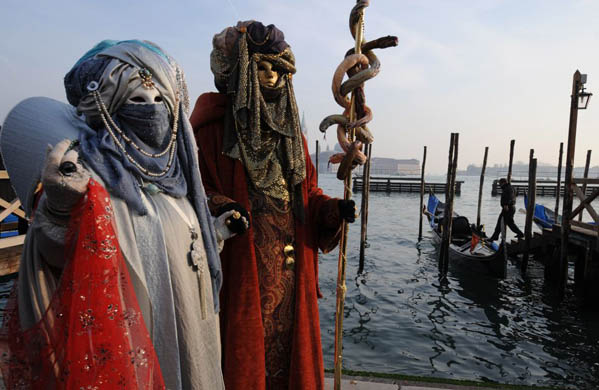
From Reuters: Drag queens and masked dogs competing for best outfit are some of the novelties spicing up this year's Venice carnival that opened last Friday with parades, balls, concerts and shows of every kind. More than a million visitors will visit the city built on water over the next twelve days, vastly outnumbering the 62,000 residents of the city's historical centre. In an effort to update the centuries-old celebration, this year the city has expanded the scope of attractions to include 30 drag queens performing to 1980s music, a parade of masked dogs, exhibitions of hunting with falcons and live outdoor theatre. In the evenings the squares will resonate with the sounds of tango, operas, a samba marching band, Brazilian carnival dancers and concerts of all sorts of music, from Venetian ska to disco, from alternative rock to Mozart. The carnival began centuries ago as moment of licentiousness during which Venetians could hide their identities behind masks and do as they pleased. It was a pressure valve to ease class tensions, allowing the poor, for a brief and controlled period, to break Venice's rigid, oligarchical social order. Yet, just as in the past, the poor may mix with the rich in the streets but will not be able to enter the exclusive events that are the carnival's highlights: the all-night masked balls in private palaces on the Grand Canal, the city's main waterway. EXCLUSIVE BALLS The balls recreate the lavish atmosphere of the 1700s and can cost as much as 430 euros ($630) a head to attend, not including the rental of the hand-made, tailored historical costumes for hundreds more. At these balls for the fortunate few, guests enjoy extravagant dinners while being entertained by opera singers, dancers and actors. After dinner there are formal dances, followed by more shows, dancing to DJs playing contemporary music, and breakfast at dawn with hot chocolate and pastries. One of the better known is the Ballo del Doge, organized by Venetian noblewoman and costume designer Antonia Sautter. This year her 400 guests are promised eight hours of shows as 80 artists will entertain them in the 15th century Pisani Moretta palazzo lit by 1500 candles. FOIE GRAS AND RISOTTO WITH PRAWNS One of the most alluring events may well be Passion Rouge, a dinner held at the luxury Hotel Bauer's De Pisis restaurant, with its terrace overlooking the Grand Canal and a minute away from Venice's main Piazza San Marco. For the mouth and nose, Passion Rouge includes marinated swordfish, foie gras, pumpkin risotto with ginger and prawns, glazed leg of veal and zabaglione dessert, washed down with wines from Tuscany and Piedmont. For the eyes and ears there will be tango, chanson Parisienne, opera, Berlin cabaret, a flamenco dancer, comedians and a fortune teller to reveal what the year holds in store. The carnival began in earnest last weekend with the flight of the angel on Sunday, during which an acrobat is lowered from the top of the San Marco bell tower to the lodge of the Palazzo Ducale. The ceremony used to be called the flight of the Turk and dates from five centuries ago when a young Turkish acrobat walked a tight rope stretched from a ship anchored at the pier of San Marco square all the way to the top of the San Marco bell tower. The carnival's grand-finale will be a fireworks show on the night of February 5, best watched from a boat to see the colorful explosions reflected on the water. Sad times at HKG's Peak Tower 26 January 2008 The viewing platform at HKG's Peak Tower used to be free to visit. Until recently. Better still you used to be able to see the harbour and Kowloon. Now the viewing platform costs $20 to get onto. And when you are there you won't see the harbour on most days, thanks to the choking smog. When the smog does happen to clear you get a gorgeous view of the government's reclamation efforts in the harbour which gets smaller and narrower by the day. HK$20 to go to the Peak Tower. That is Hong Kong greed at its worst. The Economist bids good riddance to the Thai military junta The Economist - 24 January 2008 "THE blundering soldiers who deposed Thailand's prime minister, Thaksin Shinawatra, in 2006 seem at last to have got something right. This week saw the restoration of an elected government following last month's election. Barring further mishap, the country seems back on the road to liberal multiparty democracy. This would be good news for the 65m Thais and would set an encouraging example for their fellow half-billion South-East Asians and the billion or more Chinese to their north. None of this, however, implies that Thailand's generals are enlightened guardians who served the national interest; still less that their coup was justified. The junta tried its utmost to thwart the relatively benign outcome that now seems possible. It had Mr Thaksin and more than 100 colleagues banned from politics for five years. His Thai Rak Thai party was dissolved. It re-formed as the People's Power Party (PPP) and, to the generals' dismay, won far more seats than any other party in the election, just shy of an outright majority. The Thai people—particularly the rural poor who benefited from Mr Thaksin's development policies—spoke loudly. They told the military-royalist elite in Bangkok that, for all his faults, they still wanted Mr Thaksin, or a like-minded alternative. Samak Sundaravej, the PPP's fiercely right-wing leader, who cheerfully admitted to being Mr Thaksin's “proxy”, was this week poised to become prime minister, at the head of a six-party coalition. Legal shenanigans since the election might still have frustrated the people's choice. The Election Commission held an extravagant number of inquiries into allegations of vote-fiddling, mainly directed at the PPP. And the Supreme Court decided to hear several cases calling for the party's election victory to be annulled. Whether or not there was any undue pressure on these institutions, they did the right thing in the end. Not enough candidates have been disqualified or made to re-run polls to stop the election winners taking office. And the Supreme Court, sensibly, rejected the idea that the PPP itself should be banned. Further cases are pending in various tribunals but so far the omens look good. The new government should have a workable majority—but not a crushing one like those Mr Thaksin previously enjoyed. The opposition Democrats have done a lot better than in the past two elections, so parliament may see more vigorous debate. The Election Commission has shown itself vigilant enough to suggest that Thailand's endemic vote-buying will become harder to get away with. Overall, Thai democracy stands a chance of emerging from the mess in decent shape. It is not out of the woods yet, however. The political system is prone to too much fiery anger, wild accusation and vicious name-calling, and Mr Samak is a particularly bad offender. There are also worries he might bring back some of Mr Thaksin's worst policies, such as a “war on drugs” that appeared to sanction extra-judicial murder. Mr Thaksin's planned return from exile brings other worries. His wife is home already and has been bailed—having pleaded not guilty—in a land-fraud case brought by an army-backed corruption inquiry. Mr Thaksin himself, relishing his victory, might orchestrate some sort of vengeance against the coupmakers, causing fresh unrest. Better, perhaps, if he keeps his promise to quit politics forever. Better still for General Sonthi Boonyaratglin, the coup leader, and his fellow junta members to retire gracefully, forswearing political meddling to enjoy the amnesty they granted themselves. With luck, Thailand's political elite has tired of its internecine strife, and normal parliamentary politics are about to resume. The many “liberals” who despised Mr Thaksin and applauded the coup may argue that this vindicates them. Nonsense. Not only did the coupmakers fail to produce the damning evidence of corruption and abuse of power that they needed to justify removing an elected government by force. Worse, they lowered the bar for other disgruntled soldiers seeing political squabbles or corruption allegations as an excuse to seize power—not just in Thailand but in places, such as the Philippines, where democracy remains a delicate blossom. The coupmakers failed because the interim government of bureaucrats and retired soldiers they appointed did a rotten job. This, and the uncertainty over how the junta would get out of the mess it had created, consigned the country to more than a year of slower growth. As coups almost always do, this one caused more problems than it solved." Xinhua announces Beijing Games will be the best 25 January 2008 In a gesture of typical
patriotism the Chinese state news agency has already declared that the
Beijing Olympics is poised to be the most memorable Games in history. China has spent billions of dollars on a makeover of the capital city that includes new highways, an extended subway system and a new airport terminal as well as massive construction on sports facilities. Beijing has been a dusty building site for six years while the authorities have ejected many people from the homes and turned away from reported failings in construction safety. Xinhua reports that work on the 37 competition venues is coming to an end with 36 already inaugurated and the showpiece National Stadium, known as the "Bird's Nest" for its giant latticework structure of metal girders, is expected to be put into operation next March. Better still the agency says that the public "are obsessed with a massive hunt for a chance to be part of the greatest show on Earth". Security will be such that staying home and watching on TV will be more attractive. And open air events in the middle of the August heat, humidity and pollution will not be much fun for either spectators or athletes. The biggest legacy may come from the etiquette campaigns that have been launched to stamp out bad manners like queue-jumping, spitting, littering and cursing in public. Xinhua adds that millions of brochures were sent out to individuals to introduce a new code of conduct, while "polishing" courses are being offered (is that offered or required) to all civil servants and the people working in the service sector, such as cabdrivers, shopping assistants, waiters and waitresses, and bus conductors. English translations popularly known as "Chinglish" is also out. Hotlines have been set up for citizens who spot an English-language-related mistake on a public sign to call and notify the authorities. To try to control the notorious pollution the city will order at least one third of 3.3 million vehicles off the road during the 16-day Olympics and close dust-spewing construction sites and polluting factories. New York Times goes for Clinton and McCain 25 January 2008 The New York Times has released its endorsements for the two candidates it prefers for the US Presidential race. These are ringing and loud endorsements from a hugely influential newspaper. The paper is damning of ex Mayor Giuliani as being a narrow, obsessively secretive, vindictive man! Well worth a read! For the Democrats - Hillary Clinton This generally is the stage of a
campaign when Democrats have to work hard to get excited about whichever
candidate seems most likely to outlast an uninspiring pack. That is not
remotely the case this year. We have strong disagreements with all the Republicans running for president. The leading candidates have no plan for getting American troops out of Iraq. They are too wedded to discredited economic theories and unwilling even now to break with the legacy of President Bush. We disagree with them strongly on what makes a good Supreme Court justice. Still, there is a choice to be made, and it is an easy one. Senator John McCain of Arizona is the only Republican who promises to end the George Bush style of governing from and on behalf of a small, angry fringe. With a record of working across the aisle to develop sound bipartisan legislation, he would offer a choice to a broader range of Americans than the rest of the Republican field. We have shuddered at Mr. McCain’s occasional, tactical pander to the right because he has demonstrated that he has the character to stand on principle. He was an early advocate for battling global warming and risked his presidential bid to uphold fundamental American values in the immigration debate. A genuine war hero among Republicans who proclaim their zeal to be commander in chief, Mr. McCain argues passionately that a country’s treatment of prisoners in the worst of times says a great deal about its character. Why, as a New York-based paper, are we not backing Rudolph Giuliani? Why not choose the man we endorsed for re-election in 1997 after a first term in which he showed that a dirty, dangerous, supposedly ungovernable city could become clean, safe and orderly? What about the man who stood fast on Sept. 11, when others, including President Bush, went AWOL? That man is not running for president. The real Mr. Giuliani, whom many New Yorkers came to know and mistrust, is a narrow, obsessively secretive, vindictive man who saw no need to limit police power. Racial polarization was as much a legacy of his tenure as the rebirth of Times Square. Mr. Giuliani’s arrogance and bad judgment are breathtaking. When he claims fiscal prudence, we remember how he ran through surpluses without a thought to the inevitable downturn and bequeathed huge deficits to his successor. He fired Police Commissioner William Bratton, the architect of the drop in crime, because he couldn’t share the limelight. He later gave the job to Bernard Kerik, who has now been indicted on fraud and corruption charges. The Rudolph Giuliani of 2008 first shamelessly turned the horror of 9/11 into a lucrative business, with a secret client list, then exploited his city’s and the country’s nightmare to promote his presidential campaign. The other candidates offer no better choices. Mitt Romney’s shape-shifting rivals that of Mr. Giuliani. It is hard to find an issue on which he has not repositioned himself to the right since he was governor of Massachusetts. It is impossible to figure out where he stands or where he would lead the country. Mike Huckabee, the former governor of Arkansas, is an affable, reassuring Baptist minister who talks about a softer Christian conservativism. His policies tell the real story. To attract Republican primary voters, he has become an anti-immigrant absolutist. His insertion of religion into the race, herding Mr. Romney into a defense of his beliefs, disqualified him for the Oval Office. Mr. McCain was one of the first prominent Republicans to point out how badly the war in Iraq was being managed. We wish he could now see as clearly past the temporary victories produced by Mr. Bush’s unsustainable escalation, which have not led to any change in Iraq’s murderous political calculus. At the least, he owes Americans a real idea of how he would win this war, which he says he can do. We disagree on issues like reproductive rights and gay marriage. In 2006, however, Mr. McCain stood up for the humane treatment of prisoners and for a ban on torture. We said then that he was being conned by Mr. Bush, who had no intention of following the rules. But Mr. McCain took a stand, just as he did in recognizing the threat of global warming early. He has been a staunch advocate of campaign finance reform, working with Senator Russ Feingold, among the most liberal of Democrats, on groundbreaking legislation, just as he worked with Senator Edward Kennedy on immigration reform. That doesn’t make him a moderate, but it makes him the best choice for the party’s presidential nomination. Phone call is latest BA38 speculation 23 January 2008 On 17 January some remarkably instinctive flying, great training and an instinct for self preservation saved the lives of 152 crew and passengers of BA38 as it made an emergency crash landing at Heathrow last week. There were a few scrapes and bruises but no serious injuries. The latest, of much, speculation is that, a telephone call may have caused the Boeing 777 jet to crash. The UK's Sun newspaper says that Transport Department investigators are probing the possibility a crossed line diverted a call to the Boeing 777, interfering with its computers and shutting down the engines. In an incident
ten weeks ago a Susan Archibald rang a BA lost baggage freephone 0845
number. After waiting for 20 minutes, she was put through to the cockpit of
a 777 standing on the same runway involved in Thursday’s drama. 21 January 2008
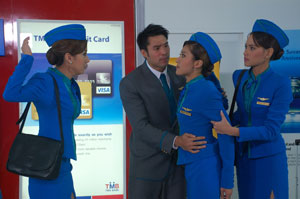
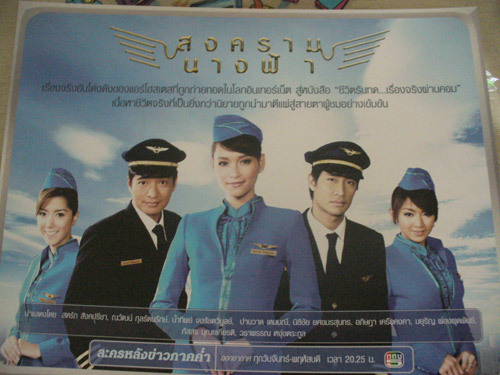
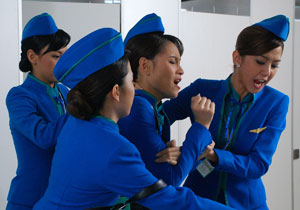
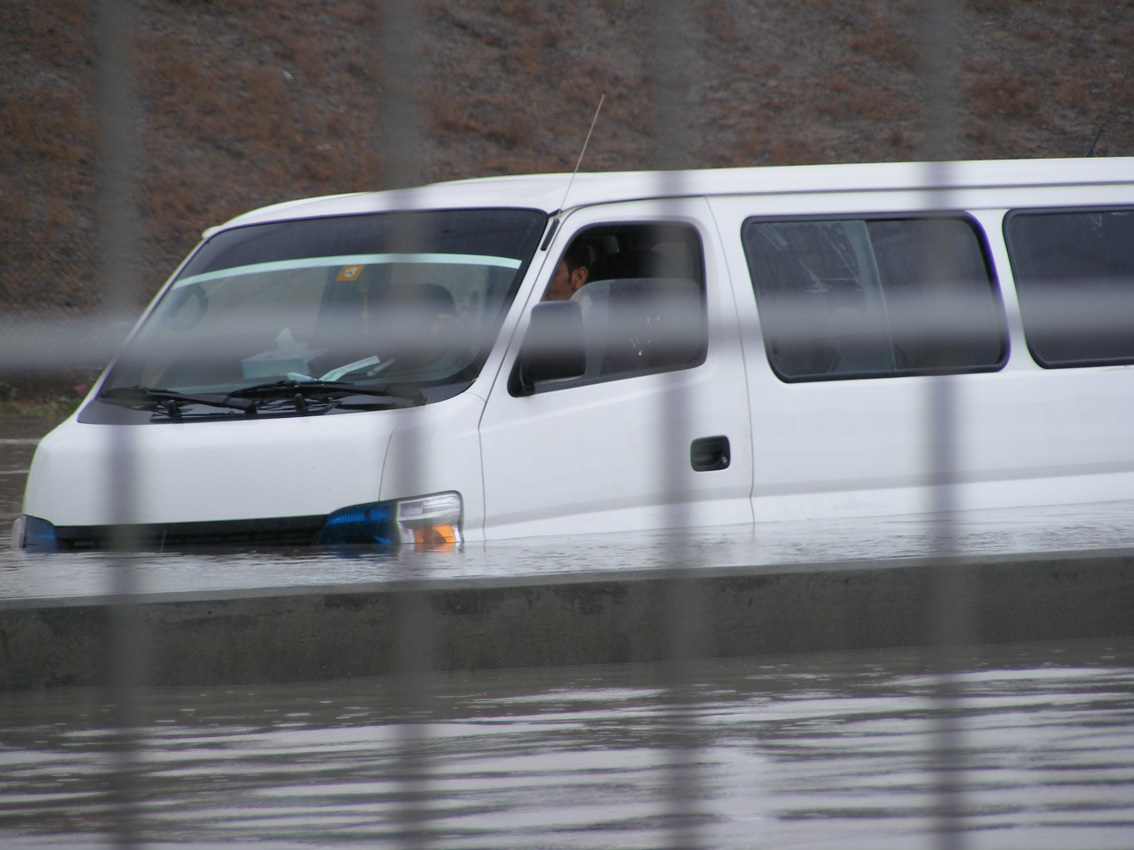
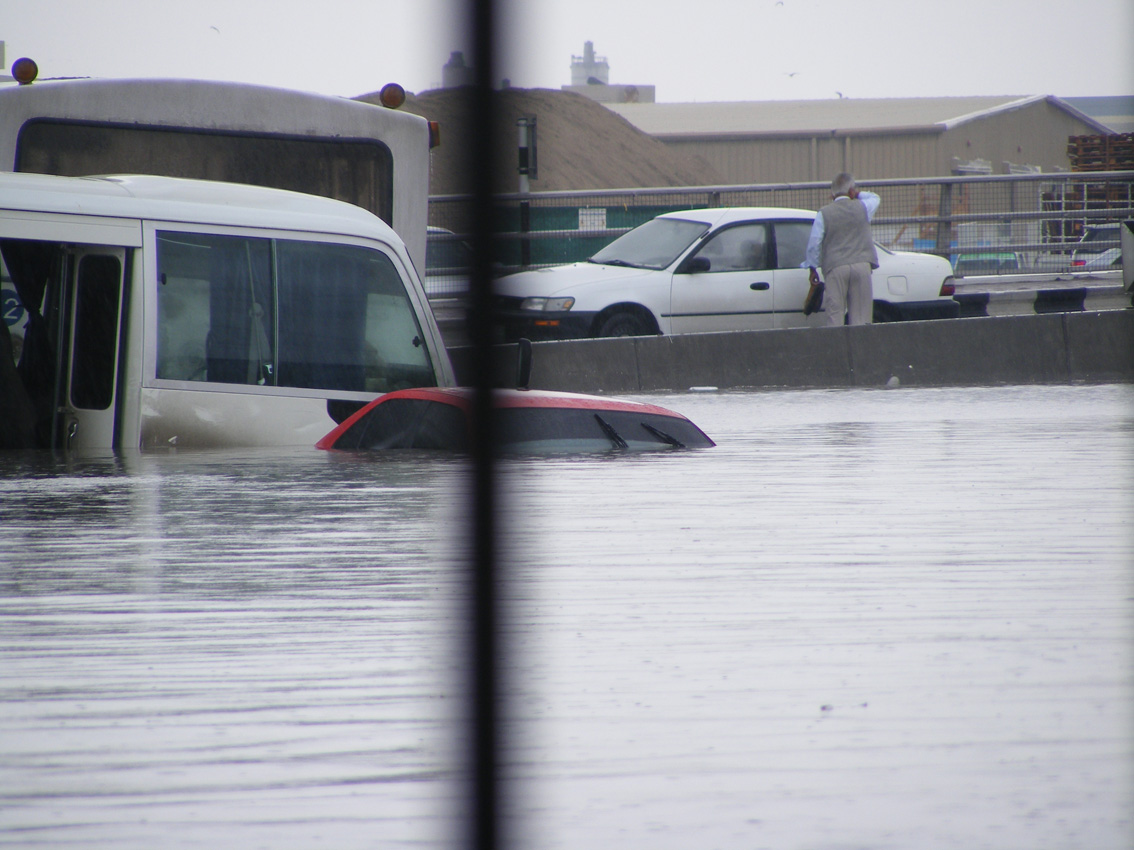
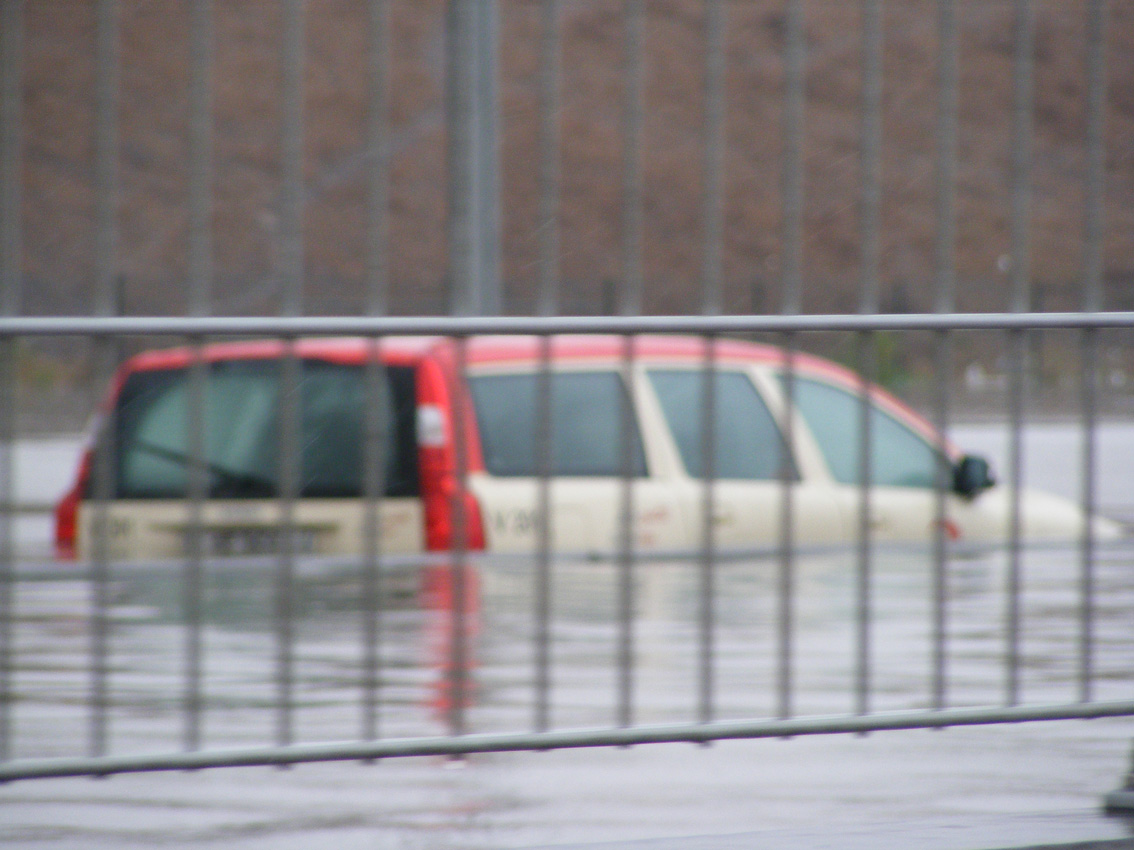
Thai television loves a good soap opera. The formula is usually the same. Man has a number of girls pursuing him; but is incapable of deciding what or who he wants and is unable to leave the influence of his mother. In the meantime the girls are getting increasingly competitive for him and resort to everything from slapping eachother (this happens a lot) to manslaughter. A little love and infidelity and a few cat fights with some pretty girls in short skirts. This is what the Thai audience loves and this then sells advertising. The latest soap opera is probably loved by everyone except Thailand's large contingent of airline cabin crew who are upset over the way their profession is portrayed in the new Channel 5 TV soap opera, Songkhram Nang Fah (The Air Hostess War). Cabin crew led by the Thai Airways International labour union will petition Culture Minister Khunying Khaisri Sri-aroon to get the drama pulled off the air. Not much chance of that; more likely they will ensure its commercial success. Far better for Thai Air to include the programme in its onboard tv programming. Acting union president Somsak Srinual said the Channel 5 show, in which female flight attendants battle to win the heart of a pilot, is humiliating and hurts their image. They will petition the television station and the National Human Rights Commission. Thai Airways president Apinant Sumaseranee and air force chief ACM Chalit Phukphasuk will also get an earful. Mr Somsak said one scene was set inside a plane which resembled the interior of the national flag carrier's aircraft. The crew of other carriers, such as Bangkok Airways, also found the soap opera objectionable. They feared it would discourage young people from entering the profession, he said. The drama first aired on the channel last Tuesday and ran for three days last week. Songkhram Nang Fah is scheduled to air Monday to Thursday at 8.25pm. The female lead is a charming air hostess, the envy of her co-workers, and a married pilot takes a fancy to her. Like all Thai soap opera the melodrama contains many scenes in which characters exact revenge, get jealous and fight each other. To add to the fun viewers report that the show portrays the flight attendants' lifestyle as scary and saucy. A Thai national Japan Airlines flight attendant, said the drama misrepresented the nature of working as an air hostess. 'Ability and discipline are far more important than physical beauty if you work as an air hostess,'' she said. I think we all know that. But we all love a good soap opera as well. Meanwhile on one of the Thai web sites is this great quote - "I watched 1 episode and its pretty good so far, you know why i watched it because my dream was to become an air hostess and this has something to do with it so yea I watch to see now I dont wanna be since there are mean envy girls in there." Channel 5, which I think is owned by the Army (the same people who led the 2006 coup !!!) said it has no plans to withdraw the popular soap, with four more episodes due to screen this week. Hopefully all the episodes will be on YouTube soon! What next for Thaksin 20 January 2008 Thailand's parliament convenes Monday with allies of ousted premier Thaksin Shinawatra back in charge. What does this mean for the ex- Prime Minister. The People Power Party (PPP), whose pro-Thaksin platform won them the most seats in last month's election, on Saturday announced a six-party coalition that will control about two-thirds of Thailand's 480-seat parliament. Making something of a mockery of the coup this is a huge political turnaround for Thaksin. Yet the self-made billionaire faces a number of graft charges that could block any efforts to return from exile in England. Some analysts say that his return will not be easy. Yet his brother in law is about to become Justice Minister. Surely that must count for something. Military-appointed investigators have frozen about two billion dollars of Thaksin's assets, while lodging two criminal corruption charges against Thaksin and his wife, who both risk possible prison sentences. Thaksin, who has said he will return home by April, will have to find a way to placate the royalist forces in the military that led the coup. This may have much to do with how much influence he retains with the Crown Prince and presumed Thai heir to the throne. What happens next depends on the negotiations and the maneuvres behind the scenes. And that is presumable why Thaksin sent his wife home first to start the negotiations. While the PPP remains under the leadership of Samak Sundaravej, who built it from the remnants of Thaksin's Thai Rak Thai party, it is clear that Thaksin is the one pulling the strings. Thaksin is seen to be selecting the government that he can work with. The question is can Thaksin maintain his influence wane once parliament convenes. For the moment there is likely to be some fierce infighting between the ideologically diverse coalition partners. 'The government will face instability and disunity among the coalition and it is quite possible that the government will not last long. The generals who fought to get rid of Thaksin will for the moment have to sit back and watch their arch-foes take control. They will likely find a way to keep some hold over politics. The great Dubai floods 20 January 2008 The extent of last week's Dubai floods can be seen in the following pictures - mainly taken on Emirates Road. Yes this really is Dubai !!
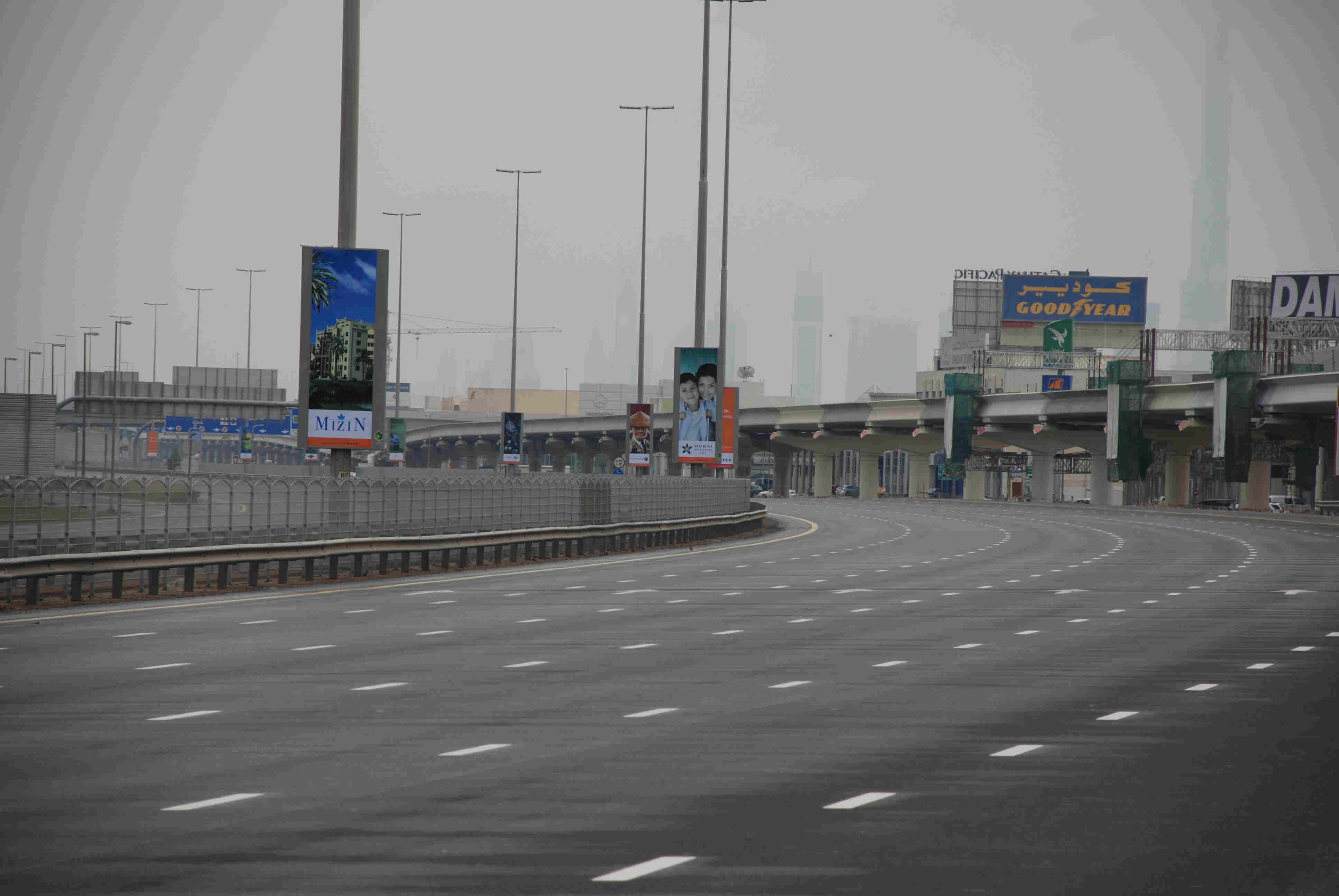
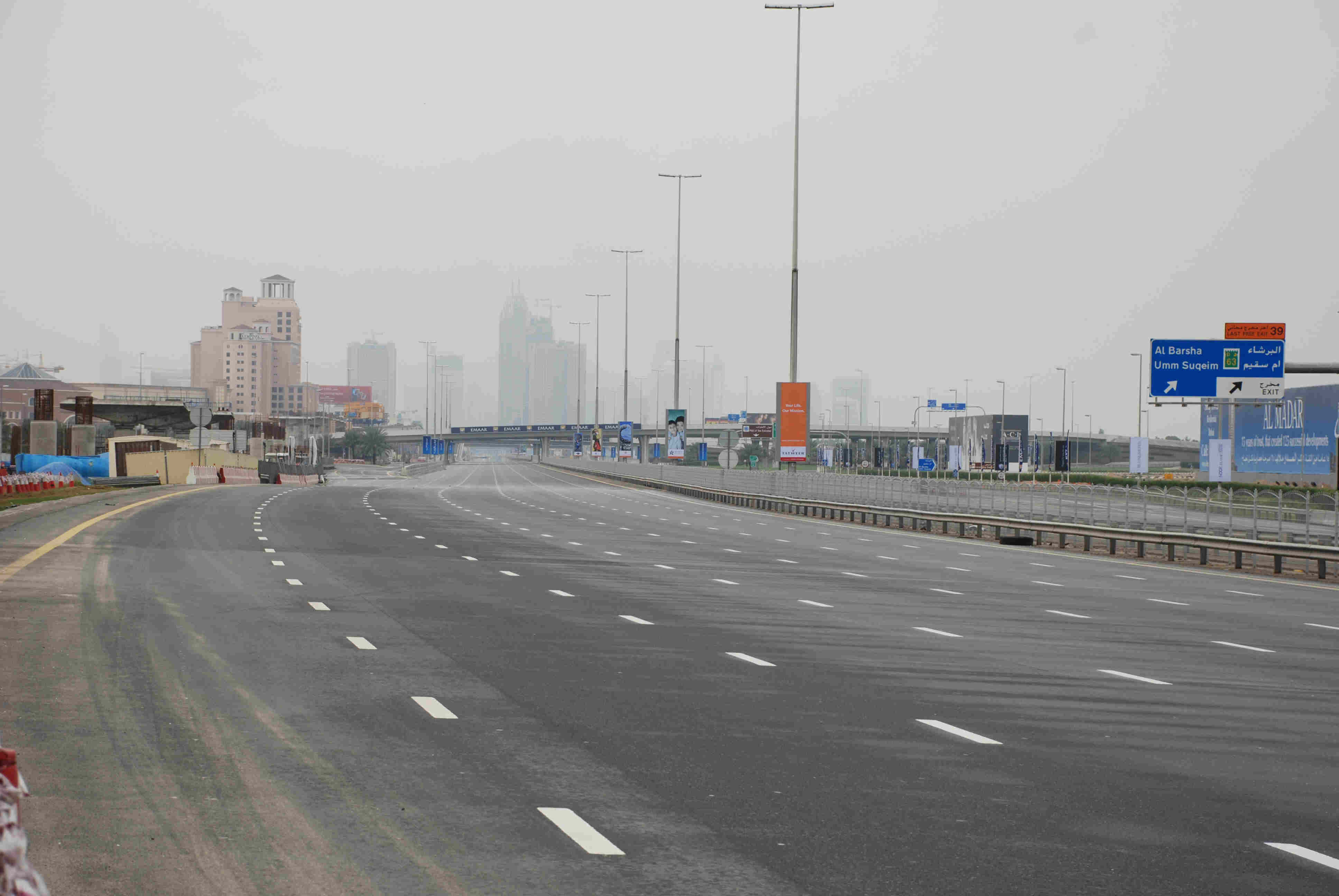
Bush Holiday watch 14 January 2008 Sheikh Zayeed Road is closed. And to add to all the fun many of the roads that are open have standing water due to 24 hours of rain. And access roads that were packed sand are now muddy bogs. Access to Millennium and Falcon Towers is near impossible without a 4x4. Updates as the day goes on. Air Arabia to start Nepal operation 14 January 2008 Air Arabia has announced plans to start a budget airline in Nepal with local carrier Yeti Airlines as part of expansion plans The airline, based in the Nepalese capital Kathmandu, will make its first flight at the end of this month to Sharjah, one of seven emirates comprising the United Arab Emirates federation, and Air Arabia's home base. The airline would later fly to destinations in India, Qatar and Malaysia, Air Arabia said. It did not say how much it would invest in the venture. Monday traffic latest news 13 January 2008 Dubai: There will be traffic diversions in Bur Dubai on Monday, while all roads in Deira will remain open, according to Dubai Roads and Transport Authority. Roads closed Shaikh Zayed Road, Shaikh Rashid Road, Shaikh Khalifa Road, Al Khail Road, Al Garhoud Bridge, Al Maktoum Bridge and Al Shindagha Tunnel. Many internal roads in Bur Dubai will be closed for traffic throughout the day as there is a planned tour of the historic Bastakiya district. Alternate roads Al Wasl Road, Jumeirah Road and Emirates Road. Routes to Dubai Airport
and Sharjah from Bur Dubai US President to bring Dubai to grinding halt 13 January 2008 UPDATE 14 January is now a holiday for public and private offices in Dubai. Everyone is being advised to avoid the major roads of the city. George Bush is coming to Dubai. But it appears that he is coming by road and as a result most of the main roads in Dubai will apparently be closed tomorrow from 6am to 5pm and traffic will be complete chaos as a result. The easiest answer will be to be at work by 6am. Already exits from the main Sheik Zayeed Road have been blocked off. This was done without any announcement of road signing and has made getting to work and home almost impossible for me the last 24 hours. Police presence on the roads has also increased dramatically. So far the rumoured road closures for tomorrow are: Al Khail Road closed Sheik Zayeed Road closed from Salik (Al Garhoud) to Salik (Mall of the Emirates) Jumeirah Beach Road closed from Al Thanya to Jumeirah Corporate office (far side of Madinat). Al Wasl closed from Al Thanya to Dubai Police. All of the above are still to be confirmed. But they are the main North to South roads that carry 90% of the UAE's commuters to and from work. Why GWB couldnt just bring Air Force 1 from AUH to DXB is a mystery. Presumably the multiple route closures are designed to keep the official route a mystery. This will be updated if I hear anything more. Whatever happened to radar? 13 January 2008 Shaken and injured passengers arrived back in Hong Kong Saturday a day after two high-speed ferries collided in thick fog off the gambling haven of Macau, leaving 133 people injured, officials said. About 19 people suffered serious injuries, including head wounds and bone fractures, the Macau government said. No one was killed in the accident. The two ferries, one bound for Hong Kong from Macau and the other travelling in the opposite direction crashed into each other on Friday night. The two ferries were carrying a total of 455 passengers and crew members. Over 25% of the passengers and crew were injured. This must have been a high speed collision. More than 10 vessels were sent by the Macau authorities for the rescue operation and all 133 injured passengers were taken to hospitals for treatment. The accident happened when thick fog caused serious disruption to sea traffic in Hong Kong waters, with visibility down to 100 meters (328 feet) at one point. The newspapers are reporting that one of the ferries was so badly damaged it had to be towed to port, with the incident causing ferry services to and from Macau be suspended for two hours. With modern radar and communications such accidents should simply not happen. Thailand's extended smoking ban 11 January 2008 Thailand will ban smokers from lighting up in bars, restaurants and open-air markets across the kingdom in a bid to curb smoking, the public health ministry said Friday. In addition to banning smoking in Bangkok's bars and nightclubs, the new regulation will also prevent people from lighting up in the popular Chatuchak market The ban will take effect on February 11 and smokers violating the regulation will be fined 2,000 baht (60 dollars) with night club and restaurant owners facing a 20,000 baht fine, a health ministry official said. Thailand already bans smoking at public places such as government buildings, train stations and hospitals. SQ mishap puts A380 out to graze 11 January 2008 The Singapore Airlines A380,
currently the only one in commercial operation, suffered a mishap yesterday
when it verged off the tarmac at Changi and onto the grass. Flight SQ221 was scheduled for an 8:30am departure for Sydney when a tow truck, which was pushing the aircraft back, disconnected from the plane due to a hydraulic glitch, said Singapore Airlines. Unfortunately even though the tow truck stopped pushing the A380, the Superjumbo continued to shift with its momentum and eventually rolled onto the grass. None of the 446 passengers on board were hurt, but all needed to be rescheduled onto other services. According to local Singapore news outlets, three quarters of the passengers were put onto a Boeing 747 which flew a midnight service to Sydney, while others had to stay overnight and take the first flight out this morning. The remaining passengers were put on flights to other destinations in Australia. Singapore Airlines said that the incident caused no major impact on the aircraft, but that it would carry out inspections and investigate the incident to determine if all the equipment at the landing gear level is okay. On the good news front for SQ, while they are digging the first 380 out of the mud, the second 380 was delivered to day from Airbus to SQ. A gripping race to the Presidency 10 January 2008 The race to be the next President of the USA is genuinely interesting and looks like it will go to the wire. Hillary Clinton's comeback in New Hampshire surprised the pollsters and relit her campaign. Super Tuesday, with primaries in some 26 states is on 5 February and could prove decisive. The Democratic contest is now essentially a two-horse race, after John Edwards came a distant third in the New Hampshire primary. How the Democrats will reunify behind one candidate after such a hard fight is a bit of a mystery. Is Obama to be Clinton's Vice-President? The other way around will never work. Mrs Clinton's next focus, as Rudi Giuliani has in the Republican race, is to concentrate on the big states, such as California and New York, which vote on February 5. Meanwhile John McCain looks like a Republican front runner alongside Rudi Giulliani. But McCain is 71. This is a one year campaign of huge stress and sleepless nights. He may be tough enough to stand up to the Clintons should it come down to these two candidates in the final race. Giuliani will enter the Republican race in Florida on January 29th. His unconventional strategy of hanging back until the race reaches the megastates will be put to the test. There also remain doubts over Giuliani's health. Neither McCain or Giuliani are modern America. Come to that nor is Mrs Clinton. The Clinton, McCain and Guiliani campaigns all reek of 1990s US politics. No fresh faces or fresh thoughts. More of the same. And that is Obama's appeal. He is not tainted with Iraq and Afghanistan. The other unknown is whether New York Mayor Bloomberg will have a run as an independent. I hope his advisors tell him that he will be wasting his money. He does not have the political machine to grind out what will be a nasty and long fight. The American people will need to think about what king of nation they want to be; and their role on, or not on, the world stage. The good news is that any of the candidates must be an improvement on the current incumbent. Emirates divorces Sri Lankan 7 January 2008 Emirates Airlines announced today that it will terminate its management of Sri Lanka's national carrier in March after 10 years. The Dubai-based airline in a statement said it will cease to run SriLankan Airlines from April 1. Talks between the Sri Lankan government and Emirates over the past two years failed to clinch a deal on the airline continuing to manage the national carrier. Emirates owns 43.6 percent of SriLankan Airlines and has the contract to manage the airline till March 31, 2008. Emirates announcement came amid worsening relations between Emirates Airlines and Colombo. The government last month withdrew the work permit of the Emirates-appointed chief executive of SriLankan Airlines, Peter Hill, as he failed to "look after the interests of the majority shareholder.". ie the Sri Lankan President's large ticketless entourage was not allowed on a Sri Lankan flight last month and not allowed to bump off other fee paying passengers. Emirates refused to remove Hill, and instead moved him to Dubai to manage the Colombo-based airline till the management contract runs out. SriLankan Airlines entered into the partnership with Emirates in 1998, with the Colombo government retaining a majority stake. There was no immediate reaction to Emirates' announcement from the Sri Lankan government. The Sri Lankan government argue that the management contract is too one sided in favour of Emirates but there is little doubt that the 10 year tie-up with Emirates has greatly improved the catering, punctuality and the overall profile of SriLankan Airlines. Despite continued civil unrest and attacks on the Colombo airport the SriLankan Airlines Group posted a post-tax profit of 862.18 million Sri Lankan rupees (7.8 million dollars) for the financial year to March 31, 2007. Expect Sri Lanka to struggle post Emirates and maybe to go the way of its predecessor Lankan AIrlines. NIB launched with big ambitions 7 January 2008 Dubai launched a new US$1 billion islamic bank on Sunday to meet the growing demand for Sharia-compliant products. Noor Islamic Bank (NIB) will
start operations with an initial network of six branches in Dubai. It is the
fifth Islamic Bank in the UAE. Noor Islamic, which will also launch an investment banking unit at the end of January, says it will introduce more modern, streamlined procedures and bring down the cost premiums that exist in sharia-compliant finance to attract a broader range of customers. Shareholders in the bank include Dubai Holding and Investment Corporation of Dubai, the investment arm of the Dubai government whose holdings include companies such as Emirates airline, Dubai Aluminium and DP World. Noor is in effect 25% owned by the government of Dubai and 25% by the emirate's ruler. HSBC estimates the regional market for Islamic financial services at US$400 billion and expects it to grow 11 times over the next decade to US$4,000 billion amid the growing petrodollar rush. With US$1 billion of capital for future acquisitions, Noor will look first at Middle Eastern markets before heading to Africa and Asia. President Obama? 6 January 2008 Americans are waking up to the historic possibility that the day when they might have a black president is closer than they thought - not just within their lifetime, but within the year. It is now genuinely possible that the next American president may be the son of an African who went to an Indonesian school school as a boy and who is not fixated about either race or religion and whose middle name is Hussein. Iowa was Obama's first test against the Clinton machine and was in the sixth whitest state in America. The first year senator Obama coasted it; especially among your voters who appear to be sending a clear message that they want to move on from the Bush, Clinton, Iraq years. History shows that victory or defeat in Iowa are not always reliable predictors of the eventual national outcome. Natural campaigners like Ronald Reagan and Bill Clinton both lost there before going on to be two-term presidents. So the 2008 contest could still be the long-predicted contest between Hillary Clinton and Rudy Giuliani, not a match-up between Mr Obama and Mr Huckabee, who won the Republican Iowa caucus, in which Giuliani did not even run.. One wasy or another there are some dramatic changes ahead. On the Democratic side, the next presidential candidate will now be either a black man or a woman - and the chances have risen that it will be Obama. Obama outpolled Clinton among women, supposedly her great strength. He easily outpolled her among independents. And he is clearly the candidate of new, young Democratic voters. Clinton is herself an immensely impressive candidate. But many Americans do not warm to her. Given the determination of Democrats to pick a winner this year, she must recover in New Hampshire later this week if she is to prevail. The Democrat race will be a two horse race between two talented centrist candidates; no lefties allowed. The Democrats want to be elected. Edwards does not have the support or funding to run the full campaign. Meanwhile the Republican path is much less certain. Huckabee won in Iowa with the conservative and evangelical Christian vote that has been George Bush's political bedrock. But he probably wont get much further. Expect to see wins for John McCain in New Hampshire and Giuliani in Florida. America it appears is ready for change. Obama might be just what America needs and the change that the rest of the world is hoping for as a leader of a great nation. A380 deliveries in 2008 5 January 2008 A quick update on A380 deliveries in 2008. The following appears to be the schedule. EIS is date of entering service. EK's first A380 due in August is rumoured to be ready for an earlier delivery which will be important for crew training.
MSN005
Airbus A380-841
9V-SKB
Singapore Airlines [EIS - January 2008] Au Bon Dubai? 5 January 2008 Dubai's latest fantasy development is a perfect Disney-like replication of the quaint city of Lyon, France. Entrepreneur Saeed Al Gandhi fell in love with Lyon city center and its cobblestone streets and charming bistros on a recent visit and decided he must have one of his own. Al Gandhi hopes to sign the €500 million deal with the city of Lyon next week, permitting him to replicate their structures and customs right in the middle of Dubai. He already hired urban planners and came up with a spiffy name for the place: Lyon-Dubai City. The plans call for a complete replication of cafes, theaters, and shops in addition to a hotel school run by chef Paul Bocuse's people and a football center run by the Olympique Lyonnais team. Best of all, according to Al Gandhi's urban specialist, even the atmosphere will be exactly the same. This might be hard to do with mid summer temperatures near to 50C and it would really need a healthy injection of actual French superiority. The project, due to be completed in 2012 and will contain public squares, restaurants, outdoor cafes and museums as well as copying Lyon’s gastronomic, cultural, sporting and economic institutions. Thierry Valentin, deputy president of Lyon-2 University, said the new city, which will be about the size of the Latin Quarter in Paris, would be “a small city with the accent on the best of French culture, and particularly Lyon culture.” The Dubai project follows a multimillion pound deal last year in another Arab emirate, Abu Dhabi, to build an outpost of the Louvre museum, called Abu Dhabi Louvre . The new downtown Dubai 3 January 2008 From Emirates Business 24/7 "With the world’s tallest building and a shopping mall bigger than 50 football pitches, an address in Downtown Burj Dubai is arguably one of the most attractive on the planet. And the $73 billion (Dh277bn) development is prime real estate for investors who are looking to make substantial returns in a city that is experiencing a building boom, say the experts. The one-square-kilometre complex, once complete, is expected to have a population of 100,000 living in its high-rise apartments and luxury hotels – with thousands more working in its offices and service industries. A one-bedroom property in Downtown Burj Dubai today has a market price upwards of Dh1.7 million and in November a one-bedroom apartment in the 160-room Armani Hotel was sold for a record Dh10m. Mahendran Yadav, managing partner of Emirates Homes Real Estate, which has more than 20 properties for sale in the development, said premiums for properties in Burj Dubai now stood at 100 per cent and more. “One bedroom apartments with an original price of Dh2.4 to Dh2.6m in 2005 are now going for Dh5m,” he said. “This is one of the world’s top locations and there will always be demand. “Commercial property is being sold at up to Dh4,000 per square foot. This is in part due to its proximity to the Dubai Financial Market.” Downtown Burj Dubai is located along Sheikh Zayed Road and will have its own Metro station, which, according to the Roads and Transport Authority, will be up and running as part of the Red Line in September 2009. Deepti Gehani, property consultant for Desire Homes, which has more than 50 properties for sale ranging from Dh1.25m for a studio on the Boulevard to Dh5m for a three-bedroom Dubai Mall apartment, said the price depended heavily on the property and view. “If you are in or near Burj Dubai then it will be more. We are looking at prices ranging from Dh1,800 to Dh4,800 per sq ft,” he said. “The premium depends on the time of purchase and people who have bought six months ago are getting between 20 to 25 per cent premium on full property value. “In my opinion, Downtown Burj Dubai is the best area to invest and when completed will be the most prestigious square kilometre of property on the planet.” Downtown is an American term for central business district and Downtown Burj Dubai will have millions of square metres of office space, although it is not yet clear which companies will be relocating to this new business hub. Burj Dubai Square, which is already completed, will be a key part of Emaar’s thrust into the business community and will provide one million sq ft of office space. The area will be a mix of large and small companies with “global players” already confirmed according to Emaar, which is to open up its own Emaar Malls Group offices there. In September, Burj Dubai was recognised as the world’s tallest freestanding structure at 556m, overtaking the CN Tower in Toronto, Canada, which stands at 553.3m. It is now also taller than the world’s tallest building, surpassing the Taipei 101 tower in Taiwan at 509.2m, completed in 2004. The final height of Burj Dubai has not yet been officially disclosed, but according to its developers, the final elevation will be above 700m. On websites the final height has been estimated as reaching 818m, but only time will tell. Downtown living Sunny Rahbar, co-founder and director of The Third Line art gallery in Al Quoz, has lived on the 9th floor of The Residence since May. “I really love living here. There is a mixed community of young families and professionals and there are people moving in all the time. I bought it ready-to-move-in, so it was more expensive than off-plan. But I think it has gone up 20 per cent, or Dh300,000. I’m hoping by 2009 it will go up by 100 per cent. “We live in a construction site but it is probably the best construction site. I sit on the balcony and look at the Burj in awe and you notice something different all the time, like when they start putting water in the lake or the cladding on the outside."" A royal death saddens Thailand 2 January 2008 (from TNA) Her Royal Highness Princess Galyani Vadhana, eldest sister of King Bhumibol Adulyadej, died early Wednesday, her death denoting not only the passing of a royal person who has contributed good to many during a long and fruitful life, but focusses the thoughts of many Thais on Buddhist concepts of impermanence. According to the Royal Household Bureau's 39th statement, even though all possible care had been given by the team of Royal Physicians, Princess Galyani's condition gradually declined and she succumbed at 2:54 am on the morning of Wednesday January 2. As a princess who was born and educated abroad, she was first of all older sister to her two younger brothers, Ananda Mahidol and Bhumiphol Adulyadej, both of whom became kings, and witnessed and reflected upon much of Thailand's history in the 20th century. Princess Galyani's passing bears witness to the passing of an era, focusing the thoughts and prayers of the Thai people on His Majesty the King and the future of the kingdom. Her overall condition had worsened Tuesday with increasingly laboured breathing and failing kidney functions, according to the Royal Household Bureau's 38th statement issued late in the day. In addition to treatment for renal failure, the 84-year-old princess had been receiving treatment for abdominal cancer at Siriraj Hospital since June 15, 2007. His Majesty the King, accompanied by his son HRH Crown Prince Maha Vajiralongkorn, the Royal Consort and their son, visited the princess at hospital about 6pm Monday. In his New Year address broadcast Monday night, the king thanked well-wishers who showed their heart-felt concern for his elder sister. People of all walks of life turned up at hospital to sign books wishing the princess well. By Royal Command of His Majesty the King, the Bureau of the Royal Household is responsible for the Royal Rites in accordance with royal tradition and the Lying in State will be at the Dusit Maha Prasat Throne Hall of the Grand Palace. By Royal Command the Court will be in mourning for 100 days. His Majesty the King has given Royal Permission for the general public to participate in bathing rites to be conducted before a portrait of the princess at the Sahathaisamagom Hall of the Grand Palace between 1 pm to 4 pm Wednesday afternoon. HRH Princess Galyani Vadhana was born on May 6, 1923 in London. Graduating in science and chemistry, she was knowledgeable in the arts, languages, and history, and taught French language, literature and history and Chulalongkorn and Thammasat universities. While dedicated to teaching and the arts, Princess Galyani considered it important to continue the work begun by her mother, the Princess Mother, in supporting the activities of the Foundation of Voluntary Doctors under Royal Patronage of HRH the Princess Mother. Alleviating pain and suffering of ordinary folk who are suffering illness, especially those who could not afford normally available medical services, is a special concern of the voluntary doctors. The doctors particularly try to reach people in Thailand's more remote areas. The princess was heavily involved in projects under her royal patronage, especially traditional Thai arts, education, sports and social welfare. She was president and honorary president of organisations and foundations as diverse as the Cardiac Children's Foundation, the Princess Mother's Charity Fund and the Autistic Foundation of Thailand. She created her own foundation for funding the studies of gifted young musicians, and she is the Royal Patron of the Bangkok Opera. Princess Galyani also traveled widely within Thailand and overseas to represent the royal family and her country on missions and was a focus of affection of the Thai people. Pictures from the Bangkok Post - 2 January 2008:
Latest news from Emirates 2 January 2008
Emirates Airline has
revealed that its second destination with the Airbus A 380 will be London
Heathrow. EK will use
the A 380 from Dec 1st 2008 to
LHR with the flight numbers being
EK 001/002. Flight
timings are as follows :
|