|
Fairy tale that had
no happy ending
August 29 2007
Ten years ago on Friday Diana,
Princess of Wales died in a violent car crash in a Paris tunnel. She was 36.


She was married to Prince Charles in
1981 her wedding looked like a modern fairy tale. But this was an innocent
girl thrown into the public limelight with little support from the bizarre
family that she had married into.
While she was giving Charles his male
heir, he was still with his old flame Camilla Barker-Bowles. The 19 year old
princess to be asked her future husband if he loved her; he replied
"whatever love means."
I have to confess that I did not watch
their 1981 wedding; yes Tai, when you read this it was before you were born
!! I did see the fireworks in London the previous night; but took the public
holiday as a good day for a game of golf.
By 1997 Charles and Diana were
divorced. I was a new father. And was about to move from Hong Kong to
Singapore. We were staying in a serviced apartment and I woke early. The
news story of the crash was just breaking; at first she was injured; but the
story soon changed to her death. Over the next week the monarchy was under
focus like never before. And their was a massive outpouring of grief
from the normally restrained British public.
She died with Dodi Fayed, the son of a
the multi millionaire owner of Harrods. Dodi had yachts, planes and
bodyguards. Diana was never very discreet about her romances; it was as
though she was catching up for lost time. She and Dodi were very visible and
even called photographers as they floated around the Mediterranean.
When they left their Paris hotel they
were driven by Henri Paul, an employee of the al-Fayed family. But he was
three times over the legal limit - mixed with a dangerous cocktail of
anti-depressants.
The crash was violent. No one was
wearing seat belts. There was no conspiracy. There were people working
for al-Fayed who mad some very bad and in the end fatal decisions.
Two investigations have shown that Diana died at the hands of a speeding,
drunk driver and was the victim of bad judgment and foolish circumstances -
not the way fairy tales are supposed to end.
I was never a great fan of Princess
Diana. But for all her manipulation there is much that she deserves enormous
credit for and where she genuinely made a difference for good. She helped to
tear down prejudices about AIDS. She raised awareness of eating disorders.
She coalesced opposition to land mines.
The
week after Diana died was extraordinary and it was deeply moving for
millions of people, especially in Britain but also all around the world, who
were affected by her death and who were transfixed by it in a way few of
them would have expected. Would they have been so transfixed if Diana had
not been beautiful? Probably not. She certainly used her looks.
By dying young, Diana ensured her
immortality. Better dead than wrinkled.
More Salik to come?
August 28 2007
You read it here.
Dubai’s Roads and Transport Authority (RTA) today denied speculation that it
is planning to add more toll gates on the emirate’s roads.
So there are more toll roads to come ! It is a quickly recovered usage tax
in no - tax Dubai and the temptation to extend it must be huge. Maybe there
will be future congestion zones.
There are reports
that the authority has started work on new toll gates at eight locations in
Dubai, including Shindagha Tunnel, Maktoum Bridge, Floating Bridge, Emirates
Road, Al-Khail Road, Nad Al-Hamar Road and Business Bay crossing.
The RTA has said that these reports are “inaccurate”.
Salik was launched July 1 in a bid to ease traffic flows along Sheikh Zayed
Road and over Garhoud Bridge. It has also been an excuse to shut off certain
roads and road lanes causing great confusion. The latest being to partition
the south bound traffic over Garhoud Bridge. If you are in the wrong lane
you ar egoing to have long long detours!
Salik has been been heavily criticised for making congestion even worse in
other areas of Dubai, especially around Deira and Bur Dubai, as motorists
take alternative routes to avoid paying the 4 dirhams toll.
Bigger may not be
better:
CN Tower topped by Dubai but soars beyond
in beauty
August 28 2007 - Commentary from the Urban Affairs Correspondent in the The
Toronto Star
"At some point
during the next few weeks, the CN Tower will no longer be the tallest
free-standing structure in the world.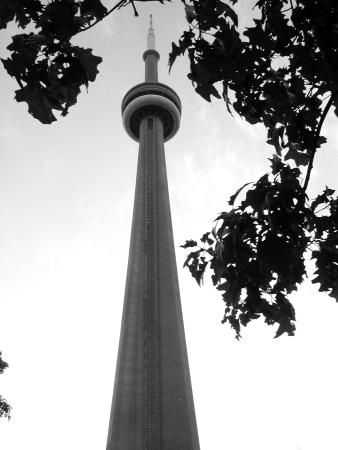
It will be
surpassed by the Burj Dubai, yet another nasty-looking petro-money monster
in the United Arab Emirates. The question is: Does anybody care? Not likely.
It's amazing
Toronto's 30-year-old tower has reigned as the world's tallest free-standing
structure for as long as it has, but let's be honest, in the 21st century
the fight for height has become degraded, ersatz and rather tasteless, even
tacky.
To be blunt, the
edifice complex is no longer a Western obsession; it has moved to
arriviste nations recently grown wealthy by plundering their own
natural resources, and, in China's case, its population.
You want proof?
Just ask yourself: Until the Burj Dubai (due to top off 165 storeys of
offices and apartments a year from now) began to claim both records, what
was the tallest building in the world?
The answer, lest
you've forgotten, is Taipei 101, a 2004 architectural grotesque that stands
just over half a kilometre tall.
Before that, it
was the Petronas Towers (1998) in Kuala Lumpur. Few outside Malaysia have
ever heard of the building, unremarkable but for its height.
The need to be the
biggest, highest, shiniest – whatever – is something cities go through in
their civic adolescence, so to speak. Paris built the Eiffel Tower for the
Universal Exposition of 1889.
In New York, the
race to the clouds was played out in the 1920s and '30s, the great age of
skyscrapers. Think of the competition between William Van Alen and his
Chrysler Tower (1930) and William Lamb and the Empire State Building (1931).
All three are as
famous now as ever. All are also magnificent structures. That's the critical
factor. None of the early giants has held a height record for decades, but
as icons they loom as large as ever.
Their places in
the collective imagination will never be matched by Taipei, Petronas or Burj.
Not only is there less interest in height records, the architecture of these
three ugly sisters lacks the poetry of their antecedents.
The CN Tower,
while technically not a skyscraper – a needle housing communications cables
is not the same as a building – also has its place in contemporary culture.
Sure it was tallest, but its design said something more; it speaks of the
modern age and man's eternal desire to reach ever higher. More to the point,
it soars. It is a spire, tall, thin and, yes, beautiful.
Of course, it also
says much about Toronto's wanna-be psychology, but the important thing is
that the CN Tower transcends the banality of its makers' intentions. The
designer, Australian-born architect John Andrews, came up with a
masterpiece, a structure that is somehow quintessential, not compromised by
design trends or architectural fashion. It is elemental; this, we feel, is
what a tower should look like.
Even the
accomplished Santiago Calatrava, creator of the Montjuic Telecommunications
Tower in Barcelona, didn't come close to the CN Tower.
By contrast, the
Dubai building is all about height for height's sake. Its ambition can be
read in every detail. It is what it is, nothing more. It goes no further
than its creator's desires.
This is why the CN
Tower's reign as one of the world's most recognizable and admired towers
isn't threatened. It possesses qualities more important than mere height; it
has a kind of perfection that makes it indispensable, irreducible and
incomparable. It rises above time and place and the conditions of its own
creation. It simply is, much in the manner of the pyramids, not
exquisite like the Parthenon, it's true, but equally essential.
Spires elsewhere
may out-climb the CN Tower, but Toronto need not concern itself. Outside
their host cities, few will care."
Playing around with
Thaksin
August 27 2007
Has ex Prime
Minister Thaksin being seeking solace in his exile. That is the latest
gossip emerging from Bangkok. Thaksin Shinawatra has been spending quality
time with 20 year-old Miss Sarunrat Visutthithada, a Thai pop and R&B singer
and golfer, better known as Lydia.
Without being too
cynical Thaksin is one of the best managers of the media that I have seen.
His investment in Manchester City keeps his profile high in football mad
Thailand with almost daily tv coverage of the English Premier League. And a
friendly relationship with one of the countries best known po idols cannot
do him any harm either.
Lydia was
mentioned in Mr Thaksin's biography, Thaksin, Where Are You? by Lieutenant
Sunisa Lertpakawat, a reporter for Thailand's army-run TV Channel 5.
According to local
newspapers, one of the most talked about subjects of the book is Mr
Thaksin's admission that he knows Miss Sarunrat, who was nominated favourite
Thai artiste at last year's MTV Asia Music Awards.
The 58-year-old
was quoted in the book as saying that he likes singing with her. When the
biography was released earlier this month, talk swirled around their
relationship.
They were
apparently introduced by MrThaksin's son, Panthongtae, who told the
biographer: 'She is like another daughter to him.'
Besides being Mr
Thaksin's singing partner, Miss Sarunrat is apparently also his golfing
companion.
Mr Thaksin, who
lives in self-imposed exile in London, flies her over to London to play a
round of golf.
Besides only son
Pathongtae, 27, MrThaksin has two daughters with his wife, Madam Potjaman.
His oldest daughter, Pintongtha, 25, is studying in London.
Youngest daughter
Paethongtan, 21, was the only family member who was in Thailand and could
vote in last week's referendum on Thailand's new charter.
It has also been
reported that MissSarunrat has been on shopping trips with Mr Thaksin.
On one occasion,
she was invited to Japan with Mr Thaksin and his son so she could shop for
new outfits in the trendy Harajuku shopping district in Tokyo for her new
album, Inside Out.
Miss Sarunrat also
performed during Manchester City's pre-season game against Spain's Valencia.
Manchester City is now owned by Mr Thaksin.
Besides Thai, Miss
Sarunrat speaks Spanish and English. After studying at the International
School in Bangkok she then enrolled at the prestigious Northwestern
University in Illinois, but then her singing career took off.
She had intensive
vocal training since she was 5 and is also said to be able to play the
flute, saxophone, drums and piano. She has released two albums so far.
Faye Wong approached
to sing 2008 Olympic theme
25 August 2007
It has been a long time
since this site updated news of my favourite Chinese singer, Faye Wong,
Faye had given up singing and films for her new family after the birth of
her second daughter. However, like all the best divas a comeback is
possible. She may return next year to sing the theme song for the
Beijing Olympic Games!
A staff member of Wong's husband Li Yapeng's
company told Chinese Businessman newspaper that the organizing committee of
the Beijing Games (BOCOG) has sent invitations to the singer, hoping she
will sing the theme song for the upcoming games.
The staff member
said the condition of her daughter, Li Yan,
is improving. It's time for the pop queen to think about returning as a
singer. The invitation from BOCOG is a good opportunity for her. The price
for Wong's performance is rumored to have reached three million yuan.
Faye Wong, a Beijing native who shot to fame in Hong Kong, was hugely
popular in the mid-1990s. She unofficially retired from singing in recent
years after marrying actor Li Yapeng and gave birth to her second daughter,
Li Yan. The girl was born with cleft palate, which was corrected by surgery
in the US.
New UAE airline,
terrible name
24 August 2007
An Indian businessman is all set to launch an airline - making it the fifth
airline based in the UAE. The big question is name the other four -
Emirates, Etihad, Air Arabia and I guess the still moribund RAK Airways.
Paul Kang, an Indian businessman who earlier owned companies involved in
aviation catering as well as supplied goods to duty-free shops in the UK and
Fujairah, is planning to launch Kang Pacific Airlines from Fujairah in
October.
Kang says that he is self-financing the airline's launch with $10 million in
start-up capital primarily to procure two DC-10s, a Boeing 747 and one
Boeing 737 over the next six months. The fleet will primarily consist of
leased aircraft. Old leased aircraft.
The services will initially begin for Philippines, Bangladesh, India and Sri
Lanka and later operate flights to the UK, with the likely destination being
the East Midlands airport. Birmingham and Manchester services are also
planned.
Why Kang Pacific. The Kang part of
obvious - a little but of naming ego. But Pacific? It must be an an attempt
to play on the Cathay Pacific name as
the Pacific features in none of the airlines route plans and Fujairah is on
the Indian Ocean not the Pacific.
Planning is underway for KPA to obtain an
Air Operators Certificate (AOC) from the UAE by early 2008. In the meantime
it will commence operations using wet-leased aircraft.
Kang Pacific's web site which is very
much work in progress is here - http://www.flykpa.com/.
Not a vote for
the generals
From The Economist print edition
24 August 2007
THAILAND'S army
chiefs seem to have overestimated their popularity, as military dictators
often do. They staged a massive propaganda effort to get people to turn out
and vote in August 19th's referendum—the country's first ever—and to say yes
to a new constitution written by a military-appointed panel. Yet the turnout
was a tepid 58%. And though the constitution was approved, the yes vote was
just 57%. Some of those voting yes will have done so only because the
passing of the constitution paves the way for elections, promised for
December. They were voting to hasten the end of the military dictatorship,
not to express support for it.
The referendum
showed that Thailand remains deeply divided: in the poor and populous
north-east, a stronghold of Thaksin Shinawatra, the elected prime minister
deposed in last September's coup, 62% voted to reject the charter. In the
south, a stronghold of the Democrats, the main opposition in the last
elected parliament, the yes vote was 88%. In recent months, graft-busting
panels appointed by the military have begun to bring corruption cases
against Mr Thaksin, who is exiled in Britain. In the week leading up to the
referendum, the Supreme Court issued an arrest warrant for him, for failing
to appear at a hearing for alleged corruption over his wife's purchase of a
chunk of prime state-owned land in Bangkok. But the high rejection rate for
the generals' constitution in Mr Thaksin's heartlands suggests that his
popularity has largely survived the efforts to discredit
After the
referendum on August 19th, General Surayud Chulanont, the prime minister,
insisted that elections would “definitely” be held in late December. But
three days later General Sonthi Boonyaratglin, the army chief, felt obliged
to deny rumours, which had caused a stockmarket slump, that some sort of
further coup was in the works.
Mr Thaksin's Thai
Rak Thai (TRT) party was dissolved in May by a
Constitutional Tribunal set up by the junta, for misdeeds in a general
election held in 2006 and subsequently annulled. He and over 100 of his
cronies were barred from politics for five years. However, more than 200
former TRT parliamentarians subsequently joined
the obscure People's Power Party (PPP). Their
numbers comfortably exceed the 96 seats that the Democrats won in the last
valid election, in 2005 (compared with TRT's
375). So the PPP may enter the coming election
campaign as frontrunner.
The prospect of a
reborn Thaksinite party leading the next government is surely not one the
generals would relish. The plan, it is assumed, was that after
TRT's demise Thailand would return to the weak
and short-lived coalition governments that had preceded its rise to power in
2001. Several changes in the new constitution—such as the merging of
single-seat constituencies into larger ones in which the second- and
third-placed candidates would also win seats—seem designed to give lesser
parties more of a chance and thus increase the likelihood of unstable
multi-party coalitions.
If so, the
royalist-military elite who staged the coup would be able to return to
exerting influence behind the scenes, as they did in pre-Thaksin times.
General Sonthi has even been flirting with the idea of standing for
parliament himself, hoping to be invited, in the absence of an alternative
leader, to be prime minister at the head of such a coalition government.
However, if the
PPP won hundreds of seats and emerged as the
mainstay of the next government, these hopes would be dashed. Even more
alarming for the generals, the PPP has been
courting Samak Sundaravej, a fiery right-winger and former governor of
Bangkok, to be its leader. Mr Samak is a fierce critic of General Prem
Tinsulanonda, a former prime minister who is chief adviser to King Bhumibol
and, it is widely assumed, was the driving force behind the coup. By a
convenient coincidence, this week the auditor-general's office suddenly
announced plans to bring charges against Mr Samak over four-year-old
corruption allegations.
In the generals'
worst nightmares, the Thaksinites win control of the government and use
their power to fix things so that Mr Thaksin gets off his corruption charges
and his ban from politics is lifted. Then they amend the just-approved
constitution to remove the amnesty that it grants to the coup-makers. It
seems unlikely that the army will let this happen.
A compromise is
still imaginable, for instance if a PPP-led
coalition chooses a more emollient prime minister. One name being mentioned
a lot in Bangkok is that of Chavalit Yongchaiyudh, an elderly former general
who is said to have reasonably good relations with both Mr Thaksin and
General Prem, and a strong desire to return to politics. Mr Chavalit,
however, had a disastrous stint as prime minister ten years ago. His
government badly mishandled Thailand's financial crisis, which soon spread
to much of the rest of Asia.
Several more
months, at least, of uncertainty lie ahead. By the time the election is
held—assuming it goes ahead on schedule—Thailand's political agony will have
dragged on for two years. This has taken a toll on the economy, which is
expected to grow by only 4% this year, much less than the rest of South-East
Asia. Even in this respect, the generals cannot boast that they have done
better than the politicians.
Emirates to go
double daily to Shanghai
23 August 2007
Emirates will launch its second daily
service to Shanghai on 1st February 2008.
Emirates launched passenger services to
Shanghai in April 2004. The demand on the route has load factors
consistently above 90 per cent.
Emirates expects
the
second service to Shanghai to be similarly successful given the continued
dominance of the Chinese economy; and Shanghai’s increasing appeal to
business and leisure travellers from around Emirates’ worldwide network.
Emirates has seen a sharp increase in
demand since the UAE and Chinese governments have signed a Memorandum of
Understanding to facilitate travel for Chinese tourist groups to the UAE.
Since Emirates’ launch to Shanghai, the
number of Chinese hotel visitors in Dubai has more than doubled from 32,265
in 2004 to 68,504 in 2006. Trade ties are worth billions of dollars, and in
2006 China grabbed the top spot among Dubai’s importing countries, nudging
India to second place.
Dubai imported US$7.6 billion worth of
Chinese goods and exported in excess of US$134 million to China.
Emirates’ second daily will be served by
the airline’s Airbus A340-300 with 267 seats in a three-class configuration
– 12 seats in First Class, 42 in Business and 213 in Economy – offering 13
tonnes of cargo capacity.
On Tuesdays, the service will be operated
by an Airbus A330-200, with 12 seats in First Class, 42 in Business and 183
in Economy. The new service EK304 will provide passengers a convenient
choice of timings, departing Dubai in the morning at 10:35 hours to reach
Shanghai at 22:25 hours. The return flight EK305 departs Shanghai at 06:15
hours to reach Dubai at 12:50 hours. The timing is very similar to the
second daily Beijing flight and for the crew gives them a pleasing 30 hour
stopover.
Emirates has been
working hard on brand recognition in China as part of the build up of
services before the 2012 Olympics.
Emirates supports the interests of the
city’s sporting community as Official Airline of the high-profile BMW Asian
Open in Shanghai. The Emirates branding will also be prominent at the FIFA
Women's World Cup 2007, being held in September this year.
Dubai Aerospace
goes shopping
23 August 2007
In a move that
should be seen as a significant threat to the well established airplane
leasing companies Dubai Aerospace Enterprises (DAE) announced plans to buy
at least 125 planes worth over $4 billion for its leasing unit over the next
five years, part of its drive to become one of the world’s largest airport
and aviation services companies.
The state-owned company, which was formed last year, may seek an initial
public offering (IPO) to purchase the planes from Airbus and Boeing, the
head of the company’s leasing unit told Bloomberg on Wednesday.
The leasing unit
will attempt to purchase some planes initially from leasing companies, but
will focus mainly on sale-lease back agreements with airlines and consider
direct purchases from Airbus and Boeing by 2012.
About 70 to 80% of the planes DAE Capital acquires will involve direct
orders from airlines, Genise said, mainly consisting of a wider variety of
single aisle and wider-bodied Airbus and Boeing planes.
The company is considering single-aisle planes including Boeing 737-700s,
737-800s and Airbus A320s and A319s. Wide-body models being looked at
include Airbus's A330-200 and the planned A350 as well as Boeing's
777-200-LR, 777-300-ER, 747-400 freighter and planned 747-8 freighter.
Basically a little bit of everything!
DAEis currently on a massive expansion drive aimed turning it into a global
player in the airport and aviation services industry.
DAE, which also owns Dubai International Airport, is currently attempting to
acquire a controlling stake in New Zealand’s Auckland airport, and earlier
this month bought US aircraft maintenance firms Landmark Aviation and
Standard Aero for $1.9 billion. It has also been linked with the UK's second
busiest airport, Gatwick, which is expected to be auctioned off in the
coming months.
DAE has previously said it plans to invest $15 billion in airport
development and aeroplane leasing and servicing worldwide.
Dubai goes
gambling
23 August 2007
Am i the only one
who finds it rather strange that a country where gambling is illegal is
making a multi billion dollar investment in one of the World's best known
gaming businesses.
Dubai World said
yesterday that it will invest up to $5.2 billion in MGM Mirage, making the
investment holding firm of the Dubai government a major player in Las Vegas,
the biggest gambling destination in the US.
MGM shares jumped
10%, or $7.46, to $81.78 in early trading on the New York Stock Exchange.
Dubai World said it will buy a 9.5% stake in MGM for about $2.4 billion. It
will also invest about $2.7 billion to acquire a 50% stake in MGM's
CityCenter project, a $7.4 billion, 76-acre Las Vegas development of hotels,
condos and retail outlets due to open in 2009.
Dubai World will
pay MGM Mirage an additional $100 million if the project opens on time and
on budget.
The investment firm will buy 14.2 million shares from MGM Mirage at $84
each, a premium of about 13% over Tuesday's closing price. The firm will
also issue a public tender for an additional 14.2 million shares at the same
price. The public tender is due to begin during the week of August 27.
Government owned Dubai World
pointed out that the company had long owned a small stake in Kerzner
International - the owner of the Bahamas' Paradise Island casino. The
investment company indicated that it would like to increase its stake in MGM
to 20% once it receives approval from gaming regulators.
Dubai World's activities in its home
nation include building two luxurious off-shore residential projects - the
World and the Palm. The company's recent overseas ventures include buying
the QE2, the W Hotel in New York's Union Square and the department store
group Barneys.
Two years ago, Dubai World's ports
offshoot, DP World, snapped up P&O for £3.9bn but was forced to offload
P&O's six US ports following a campaign by opponents including Hillary
Clinton, who claimed that Arab ownership of American ports was a national
security risk.
What next for
Thai politics?
20 August 2007
Thais voted yesterday for the new
constitution. But not because they had a detailed understanding of it. They
voted to end the turmoil that has reigned since Thaksin's family sold
control of the telecoms empire he founded to Singapore for a tax-free $1.9
billion in January 2006. The new constitution is designed to stop both
Thaksin and another like him seizing control of politics and business.
Many will also have voted yes in
Bangkok and the south as an anti Thaksin vote: the old Thai Rak Thai
mouthpieces kept on telling everyone to vote against the new constitution.
That worked in the North East but alienated Bangkok voters.
But the smaller-than-expected
margin of victory for the "Yes" camp suggests the December election
(probably December 16) will be closely fought and messy.
Even though Thaksin's Thai Rak
Thai (Thais Love Thais) party has been disbanded and 111 top members barred
from politics, its leaders hope the mass rural support that twice swept it
to power will rally to a new party under a new flag.
Voter breakdowns showed a 62
percent "No" in the Thaksin heartlands of the northeast, suggesting the
army's campaign to discredit him and his dissolved party has failed.
TRT alumni are now gearing up to contest the December
polls under new non-Thaksin banners.
The referendum-endorsed 2007 charter has essentially weakened Thailand's
elected politicians and strengthened the hand of the bureaucracy and the
military.
For instance, the 2007 charter mandates that nearly half of the Senate body
will be appointed by a seven-person committee selected from Thailand's
judiciary.
Besides dragging the judiciary into Thai politics, this will also give the
Senate tremendous clout over the elected Lower House, including the right to
launch impeachment motions.
Escaping attention in all the constitution fuss is the pending National
Security Act, also being pushed by the military, which promises to give the
army commander in chief martial law powers above and beyond the prime
minister.
Amnesty International's report on the proposed Thai
legislation is
here.
Dubai's road
chaos
19 August 2007
7 Days newspapaer
reports today that frustrated motorists have complained of chaos as the
Roads and Transport Authority (RTA) closed another section of Al Ittihad
Road as a part of its expansion plans.
The RTA closed the section between Al Mulla Plaza and Dubai Police
Headquarters on the road from Sharjah to Dubai yesterday after earlier
closing the opposite side of the road in July.
Drivers in Deira
complained of being stranded for hours as traffic increased on the artery
roads.
The sector of
the Ittihad Road, extending from the Dubai Police HQ interchange to the Al
Mulla Plaza roundabout has been closed in both directions. The tunnel will,
however, remain open for the traffic,” said an RTA official.
Motorists
commuting from Sharjah to Dubai would have to turn right at Al Mulla Plaza
roundabout towards the Al Wuheida Road. They should clear the new signals
leading up to the Abu Hail Road, take right towards Salah Uddin Road and
then left to Al Ittihad Road or may pass through the tunnel.
The motorists
travelling from Dubai to Sharjah should drive along the already existing
diversion by turning right towards the Al Quds Road, then left towards the
Al Nahda Road and back to the Al Ittihad Road or pass through the tunnel.
The RTA officials said that the road users should follow the traffic signs
and diversion signals.
How right they are
to complain. Access to terminal 2 at the airport from Al Ittihad Road is
nearly impossible now unless it is the early hours of the morning and the
road signs are now very confusing.
Get used to the
chaos. The closure of the road is part of the dhs800 million expansion
project which is expected to be completed by the end of next year.
Losing the
Ashes
17 August 2007
Emirates Airline
has apparently mislaid the ashes of a New Zealand-based woman whose dying
wish was to be scattered next to her husband in Britain. Emirates refused to
allow Auckland's John Ozimek, 55, to take the ashes of his mother, Kathleen,
on a flight as carry-on luggage.
He was forced to
pack the urn in a suitcase - with five luggage tags to be extra careful -
but the case was lost en route to London.
The airline says
it is doing all it can to find the suitcase, which has now been missing for
two weeks.
Mr Ozimek says
that no one from Emirates will talk to him and that he has no idea where his
mother's remains are.
He had promised
his mother that he would scatter her ashes "under a rose bush with Dad" and
says the thought had sustained her in her final days.
Mr Ozimek and his
wife, Jo, flew to London on August 3 and were devastated when they arrived
at Heathrow to be told the urn had been lost during a Dubai stop-over.
They had checked
with their travel agent about flying with the ashes, but the airline had
responded by saying the urn was too big for carry-on luggage.
The airline has
blamed operational issues at Dubai International Airport and peak holiday
season traffic for the missing urn.
Suan Lum's
temporary reprieve
17 August 2007
For months, one of
the most popular tourist attractions in Bangkok has been on the brink of
closure. In February 2007 officials announced that the Suan Lum Night Bazaar
would be ploughed under to make way for another shopping mall. April 30 was
the ultimate deadline for shopkeepers to clear out.
But plans appear
to have been postponed. Central Pattana, the company that acquired a 30-year
lease on the land, is now talking about closing down the place next year.
In the meantime
the night bazaar, open daily from 4 until midnight, is thriving.
So enjoy the foot
massages, imitation Croc sandals, t-shirts, cds, homewares and best of all
the beer garden while you still can.
The market can be
accessed from Lumpini subway station and is opposite Lumpini Park.
Sunday's vote
in Thailand
17 August 2007
If you don't want
to vote on Sunday and feel like watching the football instead the early game
on Sunday is the Manchester derby. This is a huge game for the city of
Manchester. Thaksin's Manchester City versus the Glazer family's (USA)
Manchester United. And I have no doubt that Thaksin will be there watching
his team and making sure that the camera's are pointed at him.
And of course the
game will be shown live across Thailand.
Meanwhile if you
want to vote this is what you do:

Above:
Voting procedure 1. Check your name 2. Show your identification card 3. Get
a ballot 4. Mark an X 5. Drop your ballot into a box
Meanwhile on
www.truethaksin.com there is a statement from the deposed Prime
Minister:
Over the next few days the military junta in Thailand will increase its
attacks on my reputation. This is because they fear my influence on the
outcome of the referendum on a new military constitution on Sunday 19 th
August 2007.
I have committed
no crimes, nor any acts of corruption, and all the charges against me and my
family are politically motivated.
The military
ousted me and my democratically elected government, but they can not destroy
the Thai people's desire for democracy through their smear campaign.
I will defend
myself against all charges when I am confident I can do so in a fair and
just process.
That is not
possible while the military control what should be a proud democracy. I hope
the media at home and abroad will treat these matters in a balanced way,
bearing in mind I have been convicted of nothing and I am innocent of all
charges."
A380 delivery
plans
17 August 2007
The latest schedule calls for 13 A380s to be delivered in
2008, and 25 in 2009. Full production of around four a month should be
reached in 2010.
As the initial launch customer, Singapore said it would
receive the first four A380s produced by Airbus for commercial service. The
first plane will be delivered to SQ on 15 October and will make its first
commercial flight on 25 October. The next three, of a total of 19 orders,
are due to be delivered in January, February and June next year. All 19 are
due by late 2011.
Qantas, the Australian flag carrier, is due to take the first
of its 20 orders in August next year, and Emirates, the biggest single A380
customer with 55 orders, will also take its first aircraft in the third
quarter of 2008 with deliveries running to the end of 2012.
Airbus has orders and commitments for 173 A380s from 14
customers, still well below the break-even point for the programme, and two
US express cargo carriers, FedEx and UPS, have already cancelled orders for
a total of 20 A380 freighters because of the long delays.
Singapore Airlines said it would be fitting 471 seats on its
A380s in three classes including a new first-class product to be called
"Singapore Airlines Suites," which would "totally redefine luxury in the
sky."
Qantas said it would equip its A380s with 450 seats in four
classes: first, business, premium economy and economy.
Emirates said it planned to operate three versions for
different routes ranging from a 489-seat, three-class layout for long range
services, and 517-seat, three-class and high-density 644-seat two-class
configurations for medium range services.
In the meantime the sales pitch continues as the A380 will
visit Bangkok on Aug 31 and Chiang Mai on Sept 2, according to the company.
The plane, powered by four Rolls Royce Trent 900 engines, will then fly to
Hanoi on Sept 2-3, Hong Kong on Sept 3-5 and Seoul on Sept 5-7.
Thailand's
flawed referendum
15 August 2007
On Sunday the Thai people have been summonsed to their first national
referendum, this will be on the new constitution. Monday has been declared a
holiday so that people may return to their home provinces to vote.
 As
far as I can see there has been no provision made for overseas Thais to be
able to vote – and certainly no encouragement given to my Thai friends in
Dubai to make their vote count. As
far as I can see there has been no provision made for overseas Thais to be
able to vote – and certainly no encouragement given to my Thai friends in
Dubai to make their vote count.
So what are Thais voting for and what should
they do?
The draft constitution (picture on right) is
long, complex, verbose and written in legalese – a language unique to law
firms that no one else understands.
Sadly a no vote has little effect on the
drafters of the constitution. It simply says we don’t like this one; But if
the 2007 draft charter is rejected, Thailand's junta has kept the right to
replace it with one of the 17 previous constitutions, and chances are good
that they will not choose the liberal 1997 charter that allowed Thaksin to
come to power and eventually monopolize the country's political system. They
can also make any amendments that they want.
This new charter was drafted by
a group handpicked by the military
who were all strongly
anti-Thaksin. The constitution is designed to
keep Thaksin, and anyone like him, out of politics. It also contains clauses
protecting the military from prosecution for their actions in last year's
coup.
There has not been much of a campaign.
With a large military
presence in the countryside, and a military-installed government controlling
state-run TV and radio stations and the voting apparatus, it is likely that
the military-approved constitution will get a thumbs up on Sunday.
The shear speed at which this
referendum has been conducted and the complexity of the text also favour a
yes vote. No international observers
have been appointed by the government to monitor the referendum and
vote-counting process
Some 19 million copies of the
169-page draft constitution with 309 articles have been distributed to
households nationwide for a quick study between August 1 to 19. Not exactly
enough time to seek and form a balanced assessment.
The government
should have encouraged
a free and open debate, but
the atmosphere has, at best, been stifled. The government has even gone so
far as restricting taxi drivers from putting up anti-charter stickers in
their taxi cabs, while authorities happily spend taxpayers' money urging a
''Yes'' vote. Press coverage has largely propped up the ''Yes'' campaign,
painting those who oppose the charter as either Thaksin-lovers, or
bribe-takers.
As for Malay-speaking
villagers in the southernmost provinces – well
they cannot read Thai
and cannot even read
the document.
None of the 19 million copies of the constitution are written in their
language. What is the point of holding a referendum on something as
important as the constitution if people are so ill-informed about what it
says?
And as a final issue, martial law
remains in place in 35 provinces, intimidating those who may wish to
campaign against the constitution.
Martial law makes campaigning
difficult by banning large assemblies
So what should a voter do? One
view is that it is a proxy vote – one year on – on the coup itself – a yes
vote says the coup was justified – a no vote says it was wrong.
A yes vote effectively endorses the military coup but does allow the country
to move on towards a general election; however much that is rigged to ensure
a strong role for the military. A no vote effectively endorses Thaksin - not
a great idea. But it also sends a message to the coup leaders. But it has
little effect as the coup leaders and the military government can simply
revert to and amend any previous charter.
The likelihood whatever the vote
on Sunday is that Thailand will see ongoing suppression of opposing voices,
leading to continuing instability in the Kingdom.
It's difficult to oppose the constitution
and not look pro-Thaksin and difficult to support it without looking
pro-military
Rather like the
old witches ducking stool. If you drown you are innocent. If you don't drown
you are guilty and will be executed anyway. Yes or No, the government will
get the constitution that it wants.
Which leaves only
one alternative - register your total dissatisfaction at the whole process
by not voting. The lower the vote the more bizarre the whole process
appears. And you still get a long weekend's holiday.
Emirates on
tour
14 August 2007
Management from Emirates Airline are
heading off on a transcontinental road show to support for a number of route
launches across the world, and possibly giving an indication of likely
additions to the route network.
The promotions start in Sao Paulo, the
most important financial centre in Latin America. Road shows will be held
there on 14&15th August to support the beginning of the Emirates’ service on
October 1st. Further road show activities are planned in Rio de Janeiro on
21&22nd August.
In Europe, Emirates will address the
travel trade in Newcastle in the UK on August 23rd, to promote its sixth
gateway into the UK, with services starting September 1st.
In the United States Emirates will
promote the December 3rd Houston launch. Events are taking place in Houston
itself on August 29th, with further activities in Miami on September 6th and
in Dallas on September 28th.
On 10th September Emirates is organising
a road show in Ahmedabad, India's sixth largest city and a place sometimes
dubbed the "Manchester of the East" because of its booming textile
industry. Emirates will fly there from October 28th.
In Canada, road shows to support the new
Toronto service, which begins October 29th, will take place in Toronto on
September 19th and later in Calgary on September 24th.
Emirates' road shows are aimed at raising
awareness, primarily within the travel and tourism industry, ahead of the
start of a new service. They involve trade presentations, dinner functions
and press briefings.
During the second half of 2007, Emirates
will launch a total of six new routes - Venice (which started July 1st),
Newcastle (September 1st) Sao Paulo (1st October), Ahmedabad (28th October),
Toronto (29th October) and Houston (3rd December).
More announcements are clearly on the
way. Rio, Miami and Dallas all look likely. Calgary is an interesting choice
as a second destination in Canada. The energy industry links are strong
between Calgary, Houston and the Middle East. Could Calgary be an add on to
a Montreal flight? The existing Canada/UAE bilateral would have to be
renegotiated but Emirates will be making their wishes known.
Virgin Asia?
14 August 2007
Virgin Nigeria,
Virgin Blue, Virgin America and Virgin Atlantic are four airlines already
carrying the Virgin brand for Mr. Richard Branson's private Virgin Group. Is
a Virgin Asia in the future.
The question was
partly answered last week when the Virgin Group took a 20% stake in Air Asia
X, a new airline that has ambitions to
become the world's top long-haul budget carrier.
AirAsia X, founded by former
Virgin executive Tony Fernandes, said Virgin would help accelerate its
growth, particularly in negotiating with airports, regulators and
governments. Branson's 23-year-old Virgin Atlantic already flies to
destinations in Europe, North America, Africa and Asia.
AirAsia X is far from a start-up
operation. It carries the the same brand as its sister airline, AirAsia Bhd,
Asia's largest budget carrier, also founded by major shareholder Fernandes.
Air Asia X, has already ordered Airbus A330 planes and will presumably use
crews already trained on the Airbus A320 fleet of Air Asia.
What does this mean for Singapore
Airline's 49% investment in Virgin Atlantic which was bought for £600
million ($1.21 billion) in 1999. It has been a strange and largely forgotten
investment. There has been no joint marketing; route sharing; co-branding.
Virgin got a nice cash investment (and probably an overpriced one at that)
while Singapore Air has seem little in return.
Virgin have been
dropping far from subtle hints that they would be willing to re-purchase the
Singapore shareholding; presumably at a significantly lower price.
That would leave the Virgin group with 100 per cent of Virgin Atlantic.
Singapore Airlines said last Friday that it was considering all its options.
AirAsia X has rights to fly to
Stansted airport, a major UK hub for European low-cost flights. This will
challenge flag carrier Malaysia Airlines, which has enjoyed a lucrative
monopoly on the London (Heathrow) route.
AirAsia X will initially fly to
Australia's Gold Coast and to Avalon airport near Melbourne. The Australian
flights are due to begin by the end of next month.
The launch is planned for
late-September/early-October 2007. The airline has not been able to secure
more than one A330-300, due to the tight leasing market. AirAsia X’s first
purchased aircraft will not deliver until Aug-08.
This will slow expansion beyond its first routes. Services to India (most
likely Amritsar?), China (Hangzhou?) and Japan or Korea will require a
second aircraft. Mr Fernandes says that services to London Stansted will not
commence until the carrier has received the second of its purchased A330s
AirAsia X's parent firm, Fly
Asian Xpress, has ordered 15 new Airbus A330-300 aircraft, the first to be
delivered in time for the September launch. It has options on 10 more.
A view from the
top
9 August 2007
The Burj Dubai is
now the tallest building in the world and reporters and a photographer from
Arabian Business were taken to the top for the first press pictures from the
top of the tower.
In this first
picture you can see Millennium and Falcon Towers as well as the development
of Executive Towers at Business Bay. The Arabian Gulf is in the background.
The second picture
shows Millennium Tower and the view over Jumeriah. The new EMAAR road from
Sheik Zayeed road into the Burj Dubai development can be seen. It is fenced
off so that there is no access from Millennium Tower, which makes little
sense.


A few statistics on the Burj Dubai Tower.
• The tip of the
spire can be seen 95km away with the naked eye.
• An estimated 330,000m² of cement, 39,000t of steel rebar and 142,000m² of
glass will be used in the construction of the Burj Dubai.
• 22 million man-hours will go into building the world's tallest landmark.
• The foundation slab is 80,000ft² in size, while the piling is 50m deep.
• The Burj Dubai's observatory lifts (double deck cabs) will have the
world's longest travel distance from the lowest to the highest stop.
• The Burj Dubai will set the record for the world's highest lift
installation.
• A condensate collection system will collect condensed water from the hot
and humid air and will use it for irrigation requirements across the tower
gardens. This will provide around 15 million gallons of additional water a
year, equivalent to 20 Olympic-sized swimming pools.
• The curtain wall of the Burj Dubai will be equivalent to 17 soccer fields
or 25 American football fields.
• The concrete used for the Burj Dubai is equivalent to a 1900km long
pavement.
• The Burj Dubai has a computerised central service system from Germany to
analyse the building's stability to withstand natural elements.
• Reflective glass on all the building's floors will provide protection from
sunlight at the same time as making the building's interiors cooler.
• It will also feature the world's fastest elevator, rising and descending
at 18m per second or 65 kmph. The world's current fastest elevator is in the
Taipei 101 office tower in Taiwan. It travels at 16.83m per second or
60.6kmph.
A bad day at
the EK office
8 August 2007
This report is
from the Independent newspaper on 4 August. Tai and I were on the exact same
flight two days earlier. The reporter at least had the benefit of enjoying
business class.
It is a bit of a
foul-up. One EK pilot on a message board wrote: "Emirates is much like a
Ferrari. It's a wonderful sight to behold when it's working but the minute
something goes wrong, it f**ks up big time and it costs a shed load a money
to put right. You can't run a Ferrari on a shoestring and constant
costcutting. It needs constant care and investment and well trained and
motivated staff to look after it."
In this case the
Ops team in Dubai probably made the right decision in diverting the last
running EK005 to Gatwick so that EK006 would not be held overnight due to
the London curfew. The passengers for EK006 were bussed to Gatwick, so was
their luggage and probably even the catering supplies.
One minor problem;
no one told the captain of EK005 who made his scheduled approach and landing
into Heathrow. No one at Emirate is enying teh story which appears to be
factually accurate.
Having landed at
Heathrow should the Captain have arranged to offload his Heathrow bound
passengers and baggage anyway. There must have been some very irate
passengers by the time they landed at Gatwick; some 40 miles from where they
expected to be.
To be honest; it
is not that major an incident and if that is the worst that happens to an EK
flight on any day or in any month then this fast expanding airline is
managing its growth pretty well. Still it makes for a good story!
The
Independent - 4 August 2007 - Simon Calder
"Arriving in the
right place on the right day is the best that airline passengers can hope
for this summer. Plenty can go wrong along the way. Last Sunday night, for
example, a Boeing 757 belonging to Thomas Cook Airlines blocked the main
runway at Gatwick after it landed with an hydraulics problem. Half a dozen
flights destined for the Sussex airport were obliged to divert.
The vexation of
finding yourself in Luton or Stansted when your boarding pass says Gatwick
pales when compared with the experience of 380 passengers aboard an Emirates
jet from Dubai to Heathrow the same evening (July 29th). They – or I should
say we, since I was the grump in seat 19H – arrived in the right place on
the right day. But after arriving at Heathrow, we were not allowed off the
plane. Instead, we were flown to the wrong place, where we landed on the
wrong day.
Flight EK005 had
promised a welcome escape from dry-roasted Dubai. The afternoon sun
threatened to melt the city, with the temperature climbing to 44C (111F):
warm enough to make the traveller sweat more than a price-fixing airline
executive. The heat also delayed our departure. Every seat on the Boeing 777
was full, and the belly of the jet was laden with our luggage and extra
freight. Hot air provides less lift, and engines cannot develop so much
power. The weight had to be reduced. So at the time we were supposed to
leave, apron staff began the long, hot business of offloading cargo. This
hold-up was compounded by air-traffic control delays, and we sat amid the
heat-haze for over an hour.
The late departure
made for some interesting inflight catering: "lunch" was served at around
7pm, Dubai time, followed some hours later by " afternoon tea" at 8pm,
British time.
Touchdown is
always a good moment, whether you are a fearful flyer relieved at a safe
landing, a parent in charge of fretful children or simply glad to be within
sight of home. But instead of the usual pootle around to the arrivals gate,
the plane stopped mysteriously on a taxiway, for no apparent reason, for
about 10 minutes. Eventually it taxied to a distant corner of the airfield,
and the captain relayed an extraordinary message: stay in your seats, we are
all going to Gatwick.
The reason? The
"noise curfew" at Heathrow. Britain's leading airport – numerically
speaking, if not in quality of service – is planted in the middle of a
built-up area. A blanket ban on departures applies between midnight and 6am.
This curfew can be violated only with permission from the Department for
Transport – a dispensation only granted when Heathrow is in a really serious
muddle. Arriving late from Dubai does not qualify.
Our Boeing had no
legal impediment to landing, but what concerned the airline was the return
flight. The plane was due to spend two hours on the ground at Heathrow
before returning to Dubai. While flight EK005 cruised at 34,000 feet towards
London, staff at the Emirates Network Control Centre in Dubai were checking
their watches. They calculated that there would not be time to land, offload
passengers and baggage, replenish the aircraft, board the new consignment of
passengers and leave before Heathrow closed for the night. The solution:
divert the plane to Gatwick, where there is no ban on take-offs after
midnight.
The message got
through to Heathrow, where passengers waiting for their flight to Dubai were
put on buses and sent around the M25 to Gatwick. Meeters and greeters who
called or logged on to check the arrival time of EK005 learned of the
change. Heathrow's ground handlers were stood down. Unfortunately, the
message never got through to the one crucial individual: the captain. Just
as you can never assume that an email has reached the rightful recipient, so
it would be wise to double-check that the pilot of a large aircraft with
nearly 400 people on board knows where he is supposed to be going. I surmise
that the conversation the airline's staff had with the captain on arrival
began with the question: "What on earth are you doing here?"
The bad news was
relayed to the passengers at 10pm, a full two hours before the noise curfew
set in. In the absence of ground handlers, we were trapped. In the absence
of any further announcements, I found myself in the unusual position of
acting as go-between, communicating what I managed to glean from the cabin
crew – who wisely confined themselves to the galley – to an audience of
bemused and agitated overseas passengers. It was tricky explaining UK
airport law, and why it should take nearly two hours between landing at the
wrong (or right) airport and departing for the right (or wrong) one.
The captain
promised a flight time of 15 minutes for the 25-mile hop, but at the same
time as we took off from Heathrow the Thomas Cook jet landed at Gatwick and
blocked the runway. The environmental cost of the communications breakdown
increased for every minute that we circled over Sussex: the flight lasted
over an hour, burning a couple of dozen tons of fuel along the way. Ticking
equally inexorably were the meters of the taxis that had, in at least one
case, gone from Gatwick to Heathrow and back again.
The airline
"accepts this was less than an ideal situation", and is "contacting all
passengers on EK005". I hope the airline uses a reliable channel of
communication.
Chronicle of a
delay
All times BST...
1.15pm: Emirates
flight 005 due to leave Dubai. The captain says that there will be a
20-minute delay
2.20pm: Plane
leaves, just over an hour late
9.40pm: Touchdown
at Heathrow
10pm: Captain
announces that, because of curfew restrictions at Heathrow, the decision had
been taken to divert to Gatwick – but that no one had told him
10.45pm: Emirates
006 is due to depart Heathrow, destination Dubai, on the same aircraft. Its
passengers are en route to Gatwick by coach
10.50pm: Emirates
005 pushes back from stand at Heathrow for the "short flight to Gatwick"
11pm: Joins a
queue of aircraft waiting to take off. The captain announces the wait is
likely to be 10 minutes
11.25pm: Still
taxiing. "I think we're going by road," said one passenger, shortly before
we lined up for take-off, after one hour and 45 minutes on the ground
12.27am: Touch
down at Gatwick
12.40am: Four
hours late, and at the wrong airport, EK005 finally arrives at a distant
stand on pier 6, the furthest gate in the entire airport from passport
control
1.15am: The first
piece of luggage arrives on the carousel at Gatwick. Twelve hours have
elapsed since Emirates 005 was scheduled to depart for the seven-hour flight
to Heathrow
2.30am: Emirates
006 departs from Gatwick, nearly four hours behind schedule. Many of the 335
passengers on board will arrive in Dubai to discover they have missed their
onward connections."
Casablanca -
the movie!
8 August 2007
Since Tai is on
her way to Casablanca this morning here is a quick reminder of the 1942 film
that has been synonymous with the city for the last 65 years.
Starring Humphrey
Bogart and Ingrid Bergman. In unoccupied Morocco at the start of World War 2
Humphrey Bogart plays Rick Blaine, the American expatriate owner of an
upscale club and gambling den called "Rick's Café Américain" in Casablanca.
The bar attracts a mixed clientele of Vichy French and Nazi officials,
refugees and thieves. Rick is a bitter and cynical man who professes to be
neutral in all matters.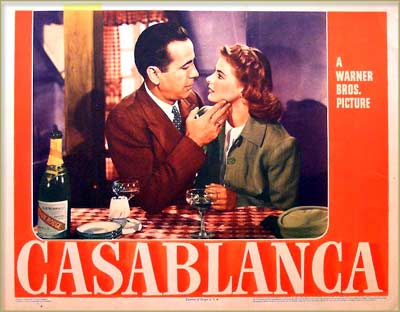
Rick's ex-lover is
Ilsa Lund (Ingrid Bergman) who arrives in Casablanca with her husband Victor
Laszlo (Paul Henreid). Laszlo is a renowned Czech Resistance leader who has
escaped from a Nazi concentration camp. At the time Ilsa first met and fell
in love with Rick in Paris, she believed her husband had been killed while
in captivity. When she discovered that he was in fact still alive, she left
Rick abruptly without explanation and returned to Laszlo, leaving Rick
feeling betrayed.
The plot revolves
around letters of transit that allow the bearer to travel freely around
German-controlled Europe, including to neutral Lisbon, Portugal, and from
there to the United States. They are almost priceless to any of the
continual stream of refugees who end up stranded in Casablanca; including
Laszlo.
At the end of the
movie Rick makes Ilsa get on a plane to Lisbon with her husband, telling her
that she would regret it if she stayed: "Maybe not today. Maybe not
tomorrow, but soon and for the rest of your life."
There is now a
real Rick's Cafe in Casablanca.
Set in an old courtyard-style mansion built against the walls of the Old
Medina of Casablanca, the restaurant - piano bar is filled with
architectural and decorative details reminiscent of the film: curved arches,
a sculpted bar, balconies, balustrades as well as dramatic beaded and
stenciled brass lighting and plants that cast luminous shadows on white
walls. And yes there is a pianist. Their web site is
here.
Here are some of the best lines from a
memorable script:
Ilsa: Play it once, Sam. For
old times' sake.
Sam: [lying] I don't know what you mean, Miss
Ilsa.
Ilsa: Play it, Sam. Play "As Time Goes By."
Sam: [lying] Oh, I can't remember it, Miss Ilsa.
I'm a little rusty on it.
Ilsa: I'll hum it for you. Da-dy-da-dy-da-dum, da-dy-da-dee-da-dum...
[Sam begins playing]
Ilsa: Sing it, Sam.
Sam: [singing] You must remember this / A kiss
is still a kiss / A sigh is just a sigh / The fundamental things apply / As
time goes by. / And when two lovers woo, / They still say, "I love you" / On
that you can rely / No matter what the future brings-...
Rick: [rushing up] Sam, I thought I told you
never to play-...
[Sees Ilsa. Sam closes the piano and rolls it away]
Captain Renault: What in
heaven's name brought you to Casablanca?
Rick: My health. I came to Casablanca for the waters.
Captain Renault: The waters? What waters? We're in the desert.
Rick: I was misinformed.
Rick: Of all the gin joints, in
all the towns, in all the world, she walks into mine.
Ilsa: Kiss me. Kiss me as if it
were the last time.
And the farewell:
Rick: Last night we said a
great many things. You said I was to do the thinking for both of us. Well,
I've done a lot of it since then, and it all adds up to one thing: you're
getting on that plane with Victor where you belong.
Ilsa: But, Richard, no, I... I...
Rick: Now, you've got to listen to me! You have any idea what you'd
have to look forward to if you stayed here? Nine chances out of ten, we'd
both wind up in a concentration camp. Isn't that true, Louie?
Captain Renault: I'm afraid Major Strasser would insist.
Ilsa: You're saying this only to make me go.
Rick: I'm saying it because it's true. Inside of us, we both know
you belong with Victor. You're part of his work, the thing that keeps him
going. If that plane leaves the ground and you're not with him, you'll
regret it. Maybe not today. Maybe not tomorrow, but soon and for the rest of
your life.
Ilsa: But what about us?
Rick: We'll always have Paris. We didn't have, we, we lost it until
you came to Casablanca. We got it back last night.
Ilsa: When I said I would never leave you.
Rick: And you never will. But I've got a job to do, too. Where I'm
going, you can't follow. What I've got to do, you can't be any part of. Ilsa,
I'm no good at being noble, but it doesn't take much to see that the
problems of three little people don't amount to a hill of beans in this
crazy world. Someday you'll understand that. Now, now... Here's looking at
you kid.
A380 coming to Dubai next week
8 August 2007
We will all be
looking to the skies next week as Airbus and Emirates bring an Airbus A380
to Dubai.
Emirates Airline, which has ordered 55 of the 173 A380 super-jumbo aircraft
currently ordered, will jointly conduct hot weather operability tests with
Airbus on the aircraft in Dubai, starting 15th August.
The
Airbus A380 aircraft, MSN007, will undergo airport compatibility checks,
on-ground and in-flight service checks, and ground handling and maintenance
procedure tests during its seven-day Dubai stay.
Flown
by Airbus test pilots, and experienced Emirates pilots, two flights each
will take to the Dubai skies on 17th and 18th August, operating on
back-to-back schedules with a two-hour turnaround period.
To
simulate normal operating conditions, 517 passengers, selected randomly from
over 11,000 Emirates staff applications will fly on the test flights. They
will undergo all pre-flight formalities including check-in through
self-service kiosks and boarding via double-decker bridges at fixed gates -
already in place to ensure A380-comptability.
To
test tarmac boarding, passengers will also board one flight through remote
gates that require up to ten buses carrying 50 passengers each to reach the
aircraft.
During the flight passengers will be attended to by 22 cabin crew and served
a complete refreshment service.
During the turnaround interval, cleaning crew will test their operations,
Emirates Flight Catering will load food trolleys using a special A380
hi-loader, cargo and baggage loading will be simulated, and ground support
equipment will be deployed - all in addition to the deplaning of the
existing passengers and boarding of the subsequent batch.
Emirates Engineering together with Airbus personnel will conduct routine
maintenance of the aircraft, including main wheel and nose wheel changes,
engine cowling opening, and cabin systems checks.
Singapore Air will make the first commercial flights of the A380 in the last
quarter of this year with the only A380 that will be delivered in 2007.
CCTV everywhere
8 August 2007
Perhaps the
biggest and most visible change in English cities, highways and public
buildings is the astonishing number of Closed Circuit Television (CCTV)
cameras for surveillance and crime control. In Britain between 150 and 300
million pounds (225 - 450 million dollars) per year is now spent on a
surveillance industry involving an estimated 300,000 cameras covering
shopping areas, housing estates, car parks and public facilities.
In London there is
no escape. CCTV cameras follow
you as you walk down the street. Add this to the fact that every time you
make a phone call, pay for an item with a store card, search online or even
visit a doctor, your transactions are tracked and your preferences recorded.
We are each leaving a trail of visible and electronic footprints that have
the potential to build up a detailed picture of who we are, where we go and
what we do.
CCTV is promoted
by police and politicians as primary solution for urban dysfunction. Yet
because of the security threat facing Britain, the public is prepared to
accept greater intrusion by the state into our private lives. Many people
regard CCTV as more reassuring than intrusive.
We should not be
so complacent; confidential data from both public and private sources can be
pooled and shared without your knowledge. The British government can access
sources as diverse as the Driver Vehicle and Licensing Authority, TV licence
records and London's Oyster card and congestion charge payments systems.
Companies trade personal details about customers to assist in personalised
marketing campaigns.
The fact is that
detailed information about our lives and habits can be readily obtained and
used for commercial gain. In the cities the British have lost control over
the way their daily lives are monitored.
The best places
to call home
1 August 2007
Mononocle magazine
for July and August lists its top 20 cities that offer the best quality of
life.
The first question
is what makes a livable city. Their survey is a quality of life survey - it
is not about being the best financial center or being a high tech city. High
murder rates eliminated most US cities from the survey. That makes sense, a
livable city cannot be one where life is cheap. A livable city also needs a
decent climate; sunshine and warmth but preferably with four real seasons.
A livable city
needs good state education and healthcare; it needs good road, rail and air
connections; it needs a high level of tolerance. It needs a place to get
coffee or a drink in peace and quiet at 1.00am. It needs affordable and
clean taxis and public transport; it needs a free and vibrant media. And it
needs green spaces; the heart and lungs of any city.
So who is on the
Monocle list:
Munich;
Copenhagen; Zurich; Tokyo; Vienna; Helsinki; Sydney; Stockholm; Honolulu;
Madrid; Melbourne; Montreal; Barcelona; Kyoto; Vancouver; Auckland;
Singapore, Hamburg; Paris and Geneva.
I think another
criteria is important; affordablity. That rules out London! But does
introduce cities like Bangkok.
The Monocle list
is interesting; not one city from the Middle East, USA mainland, South
America, China, or South Asia. Every city on the list is from a first world,
developed, country. Eleven of the cities are European; and the small nations
of Australia and Canada each contribute two cities as does Japan.
So who would be on
my top ten list of places to call home: I like a city with energy, colour,
character and personality. I could not imagine living in Geneva for
instance. Singapore would lose out due to the simple fact that the local
media is unreadable and local television a controlled bore. My list also has
to include cities that I have actually visited.
So for a top ten
how about: Vancouver; Bangkok; Hong Kong; Sydney; Paris; London (with an
income to match); Tokyo; Dublin; Toronto and San Francisco.
|
