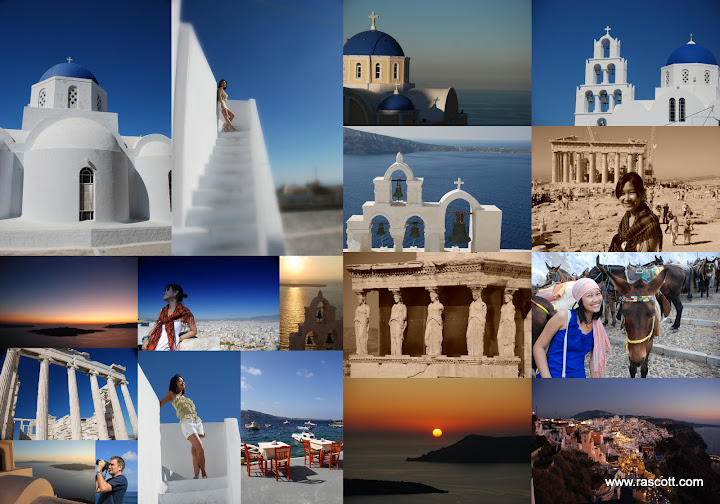
Athens and
Santorini
31 March 2010
Burj Khalifa
under a full moon
31 March 2010


EK's A380 to
Manchester
30 March 2010
Middle Eastern carrier Emirates is to deploy
it's Airbus A380 aircraft on services to Manchester in the northern UK.
It will replace the Boeing 777 aircraft which currently perform the EK017
and EK018 flights between Manchester and Dubai.
Daily operations using the 517-seat aircraft are set to begin on 1
September.
"Manchester has been one of the strongest performers in our growing network
of regional gateways, not only in the UK but globally as well," says
Emirates Airline president Tim Clark.
Emirates has served Manchester since 1990 and the carrier introduced a
twice-daily flight in 2003.
Manchester Airport's operator describes the decision to bring the A380 onto
the route as a "historic moment", adding that it has invested some £10
million ($15 million) in modernisation to accommodate the type.
Emirates is taking 58 A380s and the airline uses the type on routes to
London Heathrow, Paris, Sydney, Auckland, Toronto, Seoul, Bangkok and
Jeddah.
The Thai governments response to things we
cannot talk about
SIR — Struck by
the interest The Economist has shown in Thailand, particularly our monarchy
(“The battle for Thailand”, “As father fades, his children fight”, March
18th 2010), I am obliged to set certain important facts straight.
First and foremost, the Thai monarchy is above politics. Dragging the palace
into discussions about the current political conflict and portraying it as a
partisan actor is simply wrong and misleading. While some political groups
may have advocated their cause by claiming royal support or advancing the
notion of the palace’s involvement in politics, The Economist should not
fall into this trap, let alone perpetuate these misperceptions. Political
differences in Thailand exist as they do elsewhere around the world. They
stem from a multitude of reasons and with each side backed by their own
constituencies and supporters, in this case the so-called “Red Shirts” and
“Yellow Shirts.” It would be too simplistic though to pigeonhole these
groups as both have supporters and detractors who do not fit neatly into the
“rich versus poor” or “urban versus rural” divide.
Second, succession is certainly a difficult issue for Thais to discuss.
However, this is not because of the lèse-majesté law, but because when the
country has had such a father figure as monarch for so long, change would
naturally be unsettling and it is normal for people to be apprehensive. To
express doubts about the heir-apparent based upon rumours and wild
conjectures, though, is not a very intellectual way of initiating debate
about the issue.
Third, you had alluded to the need to reform the monarchical institution. As
an astute follower of Thailand, you would then know that Thailand's
monarchical institution—along with Thai society—has evolved constantly over
the years. This has been the case over the past 700 years and continues to
be the case now. The monarchy in Thailand will always remain one of the
Kingdom’s main institutions holding the country together. And this view is
shared by all Thais regardless of their political affiliations and the
colour shirts they wear.
Last but not least, the present administration did not assume office through
a “parliamentary fix”. Mr Abhisit Vejjajiva was voted prime minister by
exactly the same House of Representatives and through the same provisions
under the constitution as his two predecessors. As in other parliamentary
democracies, it is not uncommon for coalition parties to switch their
support as dictated by pragmatism, something you feel is now lacking in
Thailand.
I therefore hope you will print this letter so as to provide your readership
with a more fact-based perspective regarding Thailand's institution.
Yours sincerely,
Vimon Kidchob
Director-General
Department of Information
Ministry of Foreign Affairs
Thailand
Emirates seeking
daily Tokyo flight
30 March 2010
Emirates airline is negotiating with the Japanese government
to operate a daily direct service to Tokyo. Two days ago the airline started
its five-flights-a-week route.
Emirates on Sunday launched its non-stop service to Tokyo's Narita Airport,
its second gateway in Japan after Osaka, and the 102nd destination on its
global network. Emirates hopes to upgrade it to daily operation "as soon as
possible".
Emirates wanted to fly to Tokyo when the airline first started negotiations
in 1998. Initially the airline could not fly to Tokyo because of slot issues
so the Japanese government proposed Kansai, Osaka. Emirates ended flights to
Nagoya a year ago.
The new Emirates service to Tokyo started on the same day the other UAE
national carrier, Etihad started a direct service to the Japanese capital.
Qatar airways, another GCC carrier, will soon fly direct to Tokyo.
Qatar to start
South American flights
30 March 2010
Qatar Airways will
launch daily flights to Brazil and Argentina from June 24, marking the
airline’s first routes to South America using two new Boeing 777-200LR
aircraft on new services to Sao Paulo and Buenos Aires.
Flight QR921 will
depart Doha International Airport daily at 0740 hrs, arriving in Sao Paulo
at 1600 hrs. The flight continues onto Buenos Aires, arriving at 2005 hrs.
Return flight QR922 departs daily from Buenos Aires at 2305 hrs to Sao Paulo
before continuing its journey at 0310 hrs the next day, arriving in Doha at
2310 hrs.
Qatar's route
expansion is quite remarkable for such a small nation. Of course few people
actually stop in Qatar - the Doha airport is simply an overcrowded hub. But
it does make you wonder if the Gulf regions can sustain three major
international airlines. At the right price demand will continue to grow. But
does that price still support a profitable business. It is worth noting that
Qatar has avoided joining in the fight for access to Canada and continue to
fly where it is welcomed.
Thailand update -
30 March 2010
Panich Vikitsreth,
assistant to the foreign minister, said today that Thaksin Shinawatra flew
out of the United Arab Emirates on Mar 26 and is now staying in Stockholm,
Sweden. He added that it was not clear whether Thaksin had been told to
leave the UAE which had earlier promised to Thailand (I am far from
convinced that this is true).
Mr Panich said the
Foreign Ministry had asked Sweden not to let Thaksin use it as a base to
conduct political activities against Thailand and it had agreed to
cooperate.
*************************************
Meanwhile the Thai government is meeting in a prayer room at the 11th
Infantry Regiment compound surrounded by 5,000 troops.
Cabinet ministers will discuss national affairs before a statue of Phra
Phutthachaisirinimitpatima. A government spokesman said it was hoped the
move would boost morale among MPs disheartened by the continuing political
turmoil.
Deputy Prime Minister Suthep Thaugsuban will chair the weekly meeting while
Prime Minister Abhisit Vejjajiva is away on a trip to Bahrain.
Up to 5,000 troops are being deployed during the meeting today to step up
security inside the compound. More than 1,500 have been assigned to
undertake foot patrols. Armoured vehicles, personnel carriers and water
trucks are also on alert.
So just who is
running the country now. If the government wants credibility it needs to
distance itself from the army; or maybe it is already too embedded.
Lee Mill's
spoilsports
29 March 2009
I missed this
story while I was in the UK last week. But Lee Mill is a little Devon
village off the A38 Exeter to Plymouth highway. Until last week its only
claim to fame was that it has a large Tesco superstore. The closets to
Yealmton and Newton Ferrers.
But there used to
be more to Lee Mill. Until the neighbours got fussy and called the police
alleging that a brothel was operating in the village.
The police arrived
with battering rams; mistaken for customers they were invited in and
apparently found whips, handcuffs, masks, shackles and a straitjacket
It was a big raid. Officers from the Force Tactical Aid Group, along with
beat officers, special constables and CID, executed the warrant in the Lee
Mill area at around 6pm on Friday 5th March.
They made three
arrests.
Officer in charge
Detective Sergeant Stuart Gilroy said: ‘We discovered one room on the first
floor set up as a sex dungeon with whips, chains, belts, bondage chairs,
bats, ropes and costumes. Hundreds of items were seized at the address.’
A 38-year-old man
from Lee Mill, a 21-year-old woman from Ivybridge and a 24-year-old from
Efford were arrested on suspicion of conspiracy to run a brothel.
They were released
on police bail until April 30 to allow police to carry out further enquiries
into the running of the suspected brothel.
DS Gilroy
explained that the police had been looking at the property for a couple of
weeks after nearby residents reported unusual activity around the address.
He said ‘this is very unusual for the South Hams. This is likely the reason
that it came to our notice so quickly. It would stand out in the South Hams
more than it would in a city.’ You can see why he made detective !
The story made the
Daily News in New York and the Indian media.
But it is a
miserable and very dull little village. No wonder people tried to liven it
up ! And so prurient. The villagers heard "strange noises" coming from the
house of one of their neighbours. Instead of turning up the sound on their
TVs, as normal people would, they telephoned the police, who turned up.
Detective Sergeant Stuart Gilroy told a press briefing that "we were not
expecting to find a masochistic dungeon in sleepy Lee Mill". Most shocking
of all, he said that it was "near a Tesco supermarket".
The technical crime is conspiracy to run a brothel. But reading the story it
looks more like a party house for people who don't want to watch Eastenders.
Is it really the business of the Devon Constabulary whether the home has a
sex dungeon, a model railway layout or a family of Devon may-pole dancers
practicing in their spare rooms.
It does all seem rather harmless to me. The ghastly DS Gilroy said: "We are
glad to have disturbed this activity and restored normality to the
neighbourhood."
So normality is
back to Tescos for a TV dinner and more Simon Cowell. The Devon Constabulary
must be a fun place to work!
Debt-Burdened
Dubai May Need Years to Rebuild Creditors’ Trust
29 March 2010 -
Bloomberg
"Dubai may be seeing light at the end of the tunnel after
markets welcomed its offer to repay around $25 billion in debt by 2018. The
recovery still risks taking years as the sheikhdom rebuilds creditors’
trust.
Flagship holding company Dubai World, which owes this money, will get $9.5
billion in government funding over the next three years, the emirate
announced yesterday. Dubai World’s property unit Nakheel PJSC was at the
forefront of a building boom-to-bust which led to the worst property slump
during the global recession after credit markets seized up.
Dubai, the second-biggest of the seven states that make up the United Arab
Emirates, may still need assistance from its wealthier neighbor Abu Dhabi
after getting $20 billion last year. Other sources of credit will be harder
to tap after Dubai and its state-controlled companies amassed $109 billion
in debt to turn the Persian Gulf city state into a financial and tourism
center as oil reserves dwindled.
Yesterday’s announcement “won’t materially impact Dubai’s creditworthiness
immediately,” said Saud Masud, head of Middle Eastern research at UBS AG in
Dubai. “This could be a long, drawn-out process over many months and even
years.”
The aim of Dubai ruler Sheikh Mohammed bin Rashid Al Maktoum is avoid a
fire-sale of assets of Dubai World, said David Butter, regional director for
Middle East and Africa at the London-based Economist Intelligence Unit.
Dubai World owns DP World Ltd., the third-largest international port
operator; Istithmar World, a private equity firm that acquired Barney’s New
York Inc. in 2007; and Nakheel, builder of palm-shaped islands in the
Persian Gulf.
Dubai shares yesterday climbed the most in three months and credit default
swaps dropped. Standard and Poor’s and Moody’s Investors Service said the
announcement was positive because of the government support, which would
help troubled businesses in Dubai World to stay afloat.
Creditor banks, which include HSBC Holdings Plc, Royal Bank of Scotland
Group Plc, Emirates NBD PJSC and Abu Dhabi Commercial Bank PJSC, will also
get full principal repaid if they wait up to eight years.
Standard and Poor’s said it would review the credit ratings of five other
Dubai government-owned companies that it downgraded in December after Dubai
World asked to delay reimbursement of $26 billion debt, roiling world
markets.
“The amount of money going forward, $9.5 billion, is going to make these
businesses more viable,” S&P analyst Farouk Soussa said of Dubai World.
“It’s going to have an important knock-on effect on the economy.”
Nakheel’s stalled projects in Dubai include the Waterfront, a development
twice the size of Hong Kong Island that would have housed 1.5 million
people. Property prices plummeted by more than 50 percent from their peak in
2008.
“By getting the Nakheel engine running immediately, more value will be
created through the completion of projects, which is in the best interests
of the wider Dubai economy,” the Dubai government said in a statement
yesterday.
The International Monetary Fund on Feb. 17 called for a “vigorous
restructuring” of Dubai’s state companies, including giving up nonviable
businesses.
The Washington-based lender also said government-owned enterprises must make
their accounts more transparent if they want to attract financing because
banks now understand that Dubai won’t necessarily stand by these
obligations.
Because of an implicit sovereign guarantee, Western banks gave Dubai World
at least $15 billion in 2006 and 2007 without looking at the numbers,
according to Chris Turner, a former director of risk and asset management at
Istithmar World. Turner was found guilty in absentia of embezzlement last
year. He maintains his innocence.
There is still not enough information about the web of companies in
so-called Dubai Inc., said the EIU’s Butter.
“We don’t know enough about the state of these businesses to make a final
judgment” about their financial health, he said. “There are other parts of
Dubai companies that have challenging debt obligations, particularly Dubai
Holding,” a diversified business group with interests in property, hotels
and private equity.
S&P in January withdrew its rating from a Dubai Holding subsidiary, Dubai
Holding Commercial Operations Group, because of “inadequate timeliness of
information.”
Goldman Sachs Group Inc. London-based economist Ahmet Akarli said the
restructuring plan fails to explain how Dubai will finance the $9.5 billion
-- $3.8 billion of which it plans to provide from its own pocket in addition
to funds lent to it last year by Abu Dhabi.
It’s also unclear how Dubai will repay the $20 billion it borrowed from
U.A.E. federal and Abu Dhabi institutions, said Akarli. Abu Dhabi is the
capital of the U.A.E. and holds about 7 percent of the world’s proven oil
reserves.
Dubai’s debt difficulties will persist into 2010, 2011 and 2012, Goldman
Sachs said on Dec. 13. The emirate must repay at least $55 billion in the
next three years.
While Dubai has ruled out seeking more money from Abu Dhabi, it may have to
swallow its pride yet again, said Mohammed Shakeel, an Abu Dhabi-based
analyst on the U.A.E.
“Dubai is trying to show that it isn’t as dependent on its neighbor, but
what will happen if its financial resources aren’t enough?,” he said.
Is Dubai Holding next in line to restructure?
29 March 2010
I hate to say I
told you so - but the question in Dubai was which of the quasi-government
businesses would be next to seek a debt restructuring. The answer was that
it was always likely to be Dubai Holding.
Sure enough, Dubai
Holding, the investment conglomerate owned by the emirate's ruler, is now
considering restructuring up to $20 billion in debt, according to Reuters
and the Financial Times today.
The group, which includes financial investments, hospitality and real estate
(including Dubai Properties), could become the second large entity in Dubai
to restructure debts after government-owned Dubai World tabled a
restructuring proposal last week, including a $9.5bn injection of new money
to help restructure $24.8bn in debts.
Talks between creditors and advisers had picked up in the weeks before Dubai
World's announcement, which was broadly welcomed as it pledged to repay
creditors in full over time but with question marks over interest rates.
The government refused to be drawn on whether Dubai Holding would
restructure its debts, but said that the government would not rule out
future issues.
Dubai Holding declined to comment on "speculation".
Analysts estimate that much of Dubai Holding's estimated $20bn in debts is
held by the investment arms, which own the UK's Travelodge and the Essex
House Hotel in New York. But bankers say the holding company could also have
significant private bilateral loans.
Credit Suisse said
in a research note dated March 25 that "there might not be much cash left
from currently available funds (in Dubai) for unfinished real estate
projects by other developers such as Dubai Properties, funding the fiscal
deficit for this year and the next, and potential restructuring for Dubai
Holding which is the next box to tick after DW."
Thailand update -
29 March 2010
Negotiations -
Day 2. Just some of the twittering through the negotiation.
Abhisit: On me being illegitimate PM, I was chosen by MPs &
up to each MP to vote for as per constitutional process.
PM said "double
standard" has more to do with Thaksin than him.
Abhisit: There is
no delay in the PAD cases. It is part of justice system process & not
related to govt.
There is
corruption in all govts. What is important is how it is handled. When was
GT200 first acquired. Under Thaksin. PM stopped it.
I don't believe
you're in control. Were you in control last April at Ministry of Interior?
You didn't even try to stop it.
But on the other
hand your leaders have called for people to take my life...
Some your leaders
encouraged the mob to kill me. Emotions are hot and it will take take to
cool things time.
"Reds are
disciplined. Yellows are mad and bloodlust," Weng said.
Dr Weng is showing
photos of soldier shooting demonstrators last April. Wants to do know if
Abhisit ordered this or tried to find it out.
Veera: If 15 days
is not enough, how many days do you need then?
PM can't give a
definite answer, though, talking about readiness, rules and atmosphere
again.
Abhisit: We have
the budget to consider & other factors. Dissolution at the end of the year
So Abhisit says
end of year; Veera says about 2-3 months. At least we are moving ahead
Jatuporn is bad
cop; Veera is good cop; Dr. Weng just speaking some things on his mind
Abhisit is jack of
all trades & Korbsak & Chamni are just sitting there for now
Abhisit explaining
various reasons, an election around the end of the year is a possibility,
one year earlier than required.
Abhisit says if
people were polled, he is not sure how many people want an immediate
dissolution.
Abhisit stresses
importance of budget. Says full referendum and amendment process should go
beyond 9 months.
Jatuporn says the
gap between 15 days and end of the year is too much to surmount for
agreement.
Dr Weng says he
doesn't believe Abhisit's 9 month scenario. If you are sincere, you should
accept the 15 days. We can guarantee fairness.
Abhisit says if he
goes back on his word on end of year scenario, he's out. Everyone will see
and understand it.
Abhisit: I'd be
happy to talk tomorrow but I'm in Malaysia. It would have to be Thursday
Morning...
"Our difference is
so vast. If u buy time, in the end nothing will improve and resentment will
only grow," Jatuporn said.
Jatuporn says you
are not fostering an air of trust; making accusations every day. Like money
from overseas or foreigners.
Veera suggests
more talks the day after tomorrow. Abhisit says he will be back from Bahrain
on Thursday.
PM: "I'm not
saying you can't assemble. But if u say so, I'll say I have right to stay 1
yr and 9 months."
In summary,
Abhisit says, 15 days in not accepted. We have made a proposal. Let's meet
again, and you can give us our answer.
Ball is in the
court of the red shirts. Reds initially offer 15 days. Today, PM offers 9
months. Reds sticking to position for now
Jatuporn: We say
15 days; you say 9 months. We will go back and talk to our ppl; you talk to
yrs
Why does this
airline exist?
27 March 2010 By Terence Corcoran, Financial Post
"t's been more than two decades since Air Canada was "privatized." In 1989,
when the deal was done, relieving the company of its moribund Crown
corporation status seemed like a great idea. But somebody forgot to define
privatization. In Air Canada's case, privatization has about as much real
meaning as the words "open skies." Everybody is in favour, so long as they
don't have to actually do anything. As a result, the president of Air
Canada, Calin Rovinescu, recently delivered the following stunning comments
that read is if liberation of Air Canada from government control had just
happened in 2009, rather than way back in 1989:
The transformation will require overcoming what I consider our greatest
challenge: changing the culture at Air Canada. This must happen both in
terms of how customers see us and how we behave as a company. This is the
most important aspect of our transformation because a corporate culture
provides the foundation and sets the tone for everything that you do.
Given the shackles of age and legacy, some think this transformation is not
achievable. However, with the right drivers -- both in terms of people and
tools -- Air Canada will absolutely become a more entrepreneurial and nimble
company, a place where employees act as if they are owners. A place with a
"Just Do It" culture, where things happen much more quickly without
countless committees and white papers.
Twenty years after privatization and Air Canada is still dealing with the
"shackles of age and legacy" and its greatest challenge remains "changing
the culture." What has the company been doing for more than two decades? It
would be wrong to conclude that nothing has been done. The corporate record
is full of activity: bankruptcies, court-ordered reorganizations, half a
dozen new union deals, layoffs, shareholder wipeouts, billion-dollar
government bailouts. But all for nought, apparently. The Air Canada culture
is the same old culture where the idea of just doing it still doesn't exist.
The Air Canada Mr. Rovinescu recently described sounds like the same Air
Canada that emerged in 1989. It's still a cash-burning legacy company that,
to this day, continues to benefit from government protection. From the
moment it was privatized, Air Canada maintained the standards of a Crown
corporation. It was a protected national institution that unions could
continue to milk and management could continue to operate behind regulatory
barricades that kept out evil foreign competition.
Within a year of privatization, the Canadian Auto Workers and the airline's
machinists union had negotiated fat wage increases of 12% over two years,
plus a bonus cost-of-living gain. Three months later, in late 1990, Air
Canada announced 2,900 layoffs. The layoffs and labour agreements since then
have been numerous and, apparently, inadequate to meet the company's needs
or unclog sclerotic bureaucracies. More costs were pared from labour
agreements when Ottawa helped bail out the airline last year. But it's still
in the red.
Through all this, Air Canada has diligently and systematically fought off
serious expansions of foreign flying rights in Canada. From the start,
during 1991 negotiations for a new air agreement with the United States, Air
Canada mounted classic protectionist arguments. It pointed to numbers that
showed Canada had a $500-million air-traffic trade deficit with the United
States, thereby implying that the idea of open skies between the two
countries was an outrageous idea until that trade was balanced.
Nothing has changed in 20 years. Air Canada is still fighting to prevent
foreign competition, mounting an aggressive and -- as Peter Harbison
explains in the commentary that starts elsewhere on this page -- blatantly
protectionist and even absurd campaign to keep Emirates Airline from
expanding its operations in Canada. The company has succeeding in enlisting
Ottawa in the game, with Transport Minister John Baird so far declining to
act in the interests of Canadian consumers or the general economy.
It's a tough policy nut for the government, which with last year's bailout
has effectively re-established Air Canada as something equivalent of a Crown
corporation. Ottawa is now a player in the airline industry, as it is in
that other stagnant legacy enterprise, General Motors Co.
Why does Canada even have a national airline, especially one that after 20
years has shown itself to be incapable of making it in the real world --
even while it continued to be supported by protectionist air-traffic
agreements.
By opening up Canada's skies to all airlines, consumers would reap the
benefits. Australia appears to have benefited from more competition and less
protectionism. What if Emirates flew from Toronto to Calgary or Vancouver,
dropping off passengers before flying on to Dubai?
Over at Air Canada (and, I daresay, at Porter and WestJet), there are a
dozen reasons why full, open competition wouldn't work and would interfere
with the carefully calibrated market-sharing agreements and regulatory
advantages embedded in Canadian airline-industry policy.
On the other hand, it's not as if there's a lot of evidence the existing
policies have been successful."
Thailand update - 28 March 2010
There was a
meeting today between PM Abhisit and the red shirt leaders; three on each
side.
It was televised.
It was cordial. It let positions be aired. But after two and a half hours of
meetings there was no resolution.
The government
wants to amend the 2007 constitution first and then dissolution of
parliament and an election. The red shirts want immediate dissolution and
then for parties to propose amendments & then amend the constitution under
the new parliament.
There will be more
talks tomorrow at 6pm once Abhisit returns from Brunei.
Lots of questions;
why talk now. For once The Nation may have it right. It appears that
the army chief, Anupong, warned Abhisit that he has to immediately hold
talks with the red shirts or he and the government would be abandoned by the
military.
But Abhisit is a smooth operator and has time on his side. He can keep
talking but has little intention of changing anything. And while the talks
are going on the red shirt protestors are neutered.
Abhisit can delay - a wise man suggested to me that the first aim is to
delay until Songkran, the Thai new year when all the red shirts can go home
and throw water all over eachother. And then he can drag it out another two
months until the World Cup - another good distraction. Change without
change.
The reds say they
want a decision tomorrow. What is their bottom line. Maybe a firm commitment
that parliament will be dissolved within 2 weeks, and an election within 3
months.
For Abhisit - he
would drag out the election date until March 2011.
The talks were held at the Office of Political Development Council of King
Prajadhipok's Institute on Chaeng Watthana Road and the meeting was
televised live nationwide on all TV channels.
Mr Abhisit was accompanied by his secretary-general Korbsak Sabhavasu and
Democrat Party executive Chamni Sakdiset, while the UDD team comprised Veera
Musikhapong, Jatuporn Prompan and Weng Tojirakarn.
The UDD promised to end protests by the red shirts and to allow all
political parties to campaign freely throughout the country without being
harassed, and that it would accept the election results no matter what they
might be.
However, Mr Abhisit insisted that it would be better for the constitution to
be amended first, so that all parties concerned would be satisfied with the
outcome of the election.
Meanwhile the PAD
will hold a press conference tomorrow at 10am. What is their agenda. They
will not want the constitution changed or any concession to the red shirts.
The New York
Times report on this unusual meeting:
A Face-Off
Between Rivals in Thailand
"Thailand’s Prime
Minister, Abhisit Vejjajiva, met on Sunday with leaders of the
anti-government protest movement, the first significant effort to defuse two
weeks of street protests.
The meeting, an unscripted and unusual face-off between hardened political
rivals that was broadcast live on Thailand’s main television channels,
failed to make progress on the main demand of protesters, that new elections
be called. Both sides agreed to meet again Monday.
“All of us now have only one question,” Jatuporn Prompan, a protest leader
at the meeting, asked the prime minister. “Will you dissolve the Parliament
or not?”
Mr. Abhisit, looking uncomfortable at times, said he would “make a decision
based on a consensus from the entire country” and questioned whether calling
for new elections would solve the country’s four-year-old political crisis.
The talks came amid several grenade attacks in the capital over the weekend
that injured a number of soldiers, the latest in a spate of similar
incidents in the last two weeks.
The demonstrators, who are known as red shirts, number in the tens of
thousands and have become increasingly assertive. On Saturday they demanded
that soldiers guarding the government district where the protests are taking
place leave the area. The military agreed and removed hundreds of troops
from all but one key government office.
The protesters, many of whom are supporters of Thaksin Shinawatra, the prime
minister removed in a 2006 military coup, are mainly from the poorer strata
of society, including a large number of farmers. They criticize the
influence of what they call the “aristocracy” and cite the coup and two
court decisions that banned Thaksin-backed political parties as events that
have stifled the voice of the majority of citizens.
Critics of the red shirts accuse them of being the foot soldiers of Mr.
Thaksin, whose five years in power bitterly divided the nation.
Mr. Thaksin, who lives abroad, has been convicted of abusing power and using
the office of the prime minister to advance his business interests.
The three protest leaders were generally cordial in the televised meeting
Sunday, patiently jotting down notes when the prime minister spoke, a
contrast to the fiery speeches they have given in recent weeks when they
denounced Mr. Abhisit as a puppet of the elite and military. In contrast to
the raucous street rallies, the meeting room was quiet enough to hear water
being poured. Attendants brought snacks and hot drinks.
But tensions remained close to the surface. Weng Tohjirakarn, a protest
leader, warned the prime minister that the government was faced with a
battle between a small elite and a “huge number from the lower classes.”
Mr. Abhisit had initially refused to meet with the protest leaders but
changed his mind, “to bring back the peace and to avoid possible violence
and confrontation,” an official said."
Fears rise over
Dubai debt plan
Financial Times - 27 March 2010
"Some of Dubai World's bank creditors are concerned about the company's
proposal to restructure its debts a day after markets broadly welcomed plan
s to pay back loans in up to eight years.
People close to the seven banks negotiating with Dubai World say concerns
centre on the lack of clarity on payment of interest to Dubai World lenders.
The banks, which sit on the co-ordinating committee and include HSBC,
Standard Chartered, RBS and Lloyds, are the biggest lenders to Dubai World.
They fear they will have to endure too much of a loss when compared with the
preferential treatment given to bondholders and creditors to Nakheel, one of
the conglomerate's development arms.
Nakheel, a troubled developer hit by Dubai's real estate crash, makes up the
bulk of the debts being restructured.
Some members of the co-ordinating committee also disagree with the way the
proposal - which includes a government injection of $9.5bn - was presented
without sufficient agreement on interest payments, which will be important
in determining how much of a loss they have to absorb.
One person close to the banks said they were angry at the preferential
treatment given to various types of creditor, including lenders to Nakheel
and the bondholders in the developer's 2010 and 2011 sukuks , or Islamic
bonds. The bondholders will be repaid in full if Dubai World's proposals are
accepted by the more than 90 banks to which it owes money.
The committee is expected to present a response to the company before
communicating with the 90-plus other creditors.
"This is the first step on a very long road, and it will be very tight to
get agreement before the sukuk matures," another person close to the
situation said, referring to Nakheel's Dh3.6bn ($980m) sukuk that matures
early May.
Dubai World, which concedes that forging agreement on the plan could take
several months, said it would pay in full the sukuk , which matures in early
May, if it can secure agreement with all creditors.
Dubai World sent global markets into a tailspin in November when it
announced its intention to reschedule $26bn in debt a few weeks before it
was due to pay off $4bn on a sukuk . However, a bail-out from neighbouring
Abu Dhabi allowed it to meet the payment and start restructuring talks with
banks.
Government advisers say a combination of cash, payment in kind notes and
sovereign guarantees are on offer to make up for the economic loss banks
will face if they agree to reschedule and roll over loans to Dubai World.
Under the proposal, Dubai World's creditors will receive their principal
debt over five or eight years."
Coming home to a
car wreck
26 March 2010
There was a treat
waiting for me in the car park at Executive Towers. A badly damaged car
bonnet and grille courtesy of some clown who has not yet learned how to
reverse their 4x4.
There is only one
piece of good news. He had the decency to call the police and the police
report was left on my windscreen. A green report means that it is not my
fault. The report is dated 23 March at 10.45pm. Had he or she been drinking
?
Pretty hard for it
to be my fault - given that I was in Devon and the car was well parked and
not moving.
But he must have
been moving fast to reverse into my Mercedes and cause this much damage.
Of course the
insurers do not work on Friday and Saturday so I cannot file the insurance
claim or take the car for repair until Sunday.
Actually one other
piece of good news, his Pajero is not as tough as my Mercedes. It did not
take long to find his car in the car park. See below. The only Pajero (the
police report is in Arabic but a friendly neighbour translated the relevant
bits) with damage in the rear wing.
But how the ****
do you reverse into a stationary car properly parked in a car park with
enough speed to cause as much damage as this clown/idiot did.
And if he cannot
drive around a car park he should not be allowed anywhere near a road that
has moving cars.
I suspect the
repair will be expensive (that is for the insurance company) and may take
some time - time that I will have to manage without the car. Very
frustrating.


Dubai does better
26 March 2010 -
The Financial Times
Background:
Dubai announced a restructuring proposal for troubled conglomerate Dubai
World on Thursday, including a commitment to pump $9.5bn into the company
and Nakheel, its development arm.
The government, which said the plan would take several months to implement
through talks with creditors, will fund the new business plan with the
$5.7bn left over from the $10bn bail-out loans from Abu Dhabi last year, and
the remainder from internal government resources.
"Dubai has learnt some lessons from its November trauma. Then, it so botched
a request for a standstill on the debts of Dubai World, a state-owned
conglomerate, that fears about the solvency of the statelet started to
swirl. It made a cryptic announcement just as the emirate closed for several
days to mark Eid, leaving investors confused, unable to get answers and
fearing the worst. This week, announcing the terms of that same
restructuring, the city-state showed a surer touch.
The announcement of proposed terms for reorganising the debts of Dubai World
(and Nakheel, a property subsidiary) was clear and professional, not vague
and delphic. Dubai has shown that it is beginning to understand that, when
dealing with international marketplaces, it must be transparent and
unequivocal.
Dubai has also realised that it cannot trample foreign investors. The
statelet has refused to guarantee Dubai World’s debts, but it has
volunteered to make considerable sacrifices to private backers. This is
shrewd: Dubai relies on the investment of strangers. It cannot be seen to
hang them out to dry at the first opportunity.
If the terms are accepted by creditors, the emirate will swap its own claims
on Nakheel and Dubai World for equity. The government would also provide
$9.5bn of cash for restructuring, of which $5.7bn would come from loans
already extended by the oil-rich Abu Dhabi government.
The plan would then allow private claims on the Dubai World empire to be
made whole – $24.7bn of debt – albeit over a longer time. This offer is as
generous as could reasonably have been expected. On Thursday, the Dubai
bourse rose by 4.3 per cent and Abu Dhabi’s by 1.1 per cent on the news.
But while better information and a higher regard for investors matter, they
will do only so much. Dubai is a creature of globalisation, and relies on
open marketplaces. If its economic strategy is to succeed, the emirate must
open itself up. A better communications front end on a medieval state is not
enough.
Investors need access to more information on the local economy and the state
finances. The web of relationships between the emirate, its companies, its
ruler, his businesses, his family and their commercial interests is a source
of confusion and intrigue. It is not clear how much debt Dubai owes, nor
which other debts the state is responsible for. Dubai has learnt from the
November debacle, but it must go further."
Thailand update -
26 March 2010
I know that my reader hardly needs another Thailand update.
Think of this just as a way of recording events - so that we can look back
in a few years and say we were there - or almost there - or sometimes there
- or wish we had not been there!
Lets start with
Prime Minister Abhisit. He is still in hiding. He has taken up permanent
residence in the army barracks of the 11th Infantry Regiment.
The excuse is that, with the Internal Security Act having been invoked, the
regiment has been designated as the Centre for the Administration of Peace
and Order chaired by Suthep Thaugsuban, the deputy prime minister in charge
of security affairs and consisting of the military top brass, to handle the
current demonstration by the red shirts.
The prime minister is running the day-to-day functions of his administration
from there, including political meetings with government coalition partners.
So the country is being run from within an army barracks. Makes sense given
that the army put Abhisit in office. But it make Abhisit look ever more a
puppet of the Army. Abhisit is only damaging his credibility.
This is not a time
of war or civil war, but the government is acting as if it were.
Barricades, trrops
and barded wire protected Parliament this week - it looked like the building
was under siege.
More double standards. The military in particular did not take any measure
to secure Government House, Parliament or Suvarnabhumi Airport during the
yellow shirts' rampage, even when the government had declared a state of
emergency. The same top brass were in power then as now, except for the
police chief.
Worse, as the nation faced chaos from the yellow shirt protests during the
government of PM Somchai Wongsawat, the military commanders-in-chief went on
national television to force the hand of PM Somchai to resign.
The only
leadership in Thailand right now is from the Army. And they have no interest
in changing anything.
************************************
Some pictures from the rallies:
Build-up to Blood: in pictures
Red
March in Bangkok
norporchor20122010
thaienews
Red
In The Land and
Red In
The Land - 2
***************************************
And a worthy read from New Mandala - NIck Nostitz on
Bangkok or bust, Part 1
***************************************
More excessive use of the ISA - the cabinet will be asked next week to
invoke the Internal Security Act (ISA) to ensure security for foreign
leaders attending the Mekong River summit in Hua Hin, Prime Minister Abhisit
Vejjajiva said on Friday.
FT calls for
election in Thailand
26 March 2010
I missed this
Financial Times editorial - which was first published on 15 March - and is
still relevant. The Thai government has responded; and rather missed the
point - see the letter below.
"Abhisit Vejjajiva, the prime minister of
Thailand, is an admirable man. Intelligent, principled and tenacious, he is
free of any hint of personal corruption, in a country where too many leaders
have abused high office.
Nonetheless, Mr Abhisit now needs to take a decision that will be very
difficult, for both personal and political reasons. The Thai prime minister
needs to accept that the demonstrators who are currently thronging Bangkok
and demanding the resignation of his government have a point. The Abhisit
government has a legitimacy problem that can only be resolved by conceding
the demonstrators’ main demand – and holding fresh elections.
It is easy to understand why Mr Abhisit has hesitated. Giving way
immediately to the massed ranks of the “Red shirts” – the colour-coded
demonstrators who have descended on the capital – would look weak, even
anti-democratic. It is also likely that fresh elections would lead to a
victory for parties that serve as a front for Mr Abhisit’s bitter rival, the
exiled billionaire, Thaksin Shinawatra. There are reasons to regret this
prospect that go well beyond personal political rivalry. Mr Thaksin is
highly controversial for good reason. The Thai Supreme Court recently upheld
corruption allegations against him; and, as prime minister, he oversaw a
brutal “war on drugs”, marked by extra-judicial killings.
Yet Mr Abhisit also owes his hold on power to popular demonstrations. In his
case, it was the “yellow shirts” who forced a change of government at the
end of 2008. Mr Abhisit’s administration has been confirmed in power by the
Thai parliament. But, crucially, it has not yet submitted itself to direct
election. This lack of a true popular mandate now needs to be addressed.
Mr Abhisit has already implied that he might be prepared to go for early
elections, once the atmosphere in Bangkok has calmed down a little. This is
the right strategy, since conceding immediately to mass demonstrations would
feed the unfortunate Thai habit of trying to regulate politics through rival
street movements.
Mr Abhisit’s supporters in the Thai establishment might also reflect that Mr
Thaksin’s popularity cannot simply be ascribed to vote-buying. As prime
minister Mr Thaksin emerged as a genuine champion of the rural poor, who was
determined to extend health-care to the country villages. Whoever wins the
next elections should build upon those policies."
Thai government is legitimate
March 24 2010
From Dr Panitan Wattanayagorn.
"Sir,
I refer to your editorial “Red shirts rally”
(March 16) on the Thai protests. First, the present Thai government came to
power through normal, parliamentary means under a democratic system modelled
after your country’s own Westminster system. Abhisit Vejjajiva was voted
prime minister by a majority in the House of Representatives in exactly the
same manner and by exactly the same House as his two predecessors, whom the
opposition party and several groups of demonstrators supported. The latest
change of government came about not because of the military intervention,
but because the main coalition party was dissolved for electoral fraud, and
the coalition parties and members of the parliament then turned round and
voted for the Democrat party to form a new government. Thus, the issue is
not about legitimacy.
Second, while the present government's tenure is due to expire by the end of
2011, Mr Abhisit has never dismissed the dissolution of the House as an
option to resolve Thailand's present political woes. Calling early
elections, though, must be in the interest of the country as a whole. With
hostile feelings in need of reconciling, election rules yet to be settled
and the economy just entering a recovery mode, now is hardly the time for a
peaceful election. It may even lead to certain disruption if the election
were to be held today. Be that as it may, the government's stance is clear:
it respects the protesters' constitutional right to protest peacefully, it
stands ready to listen to their demands, and it welcomes discussions to
obtain broad-based views on how to move the country forward.
Third, the Abhisit government has built upon existing policies aimed at
helping the rural poor, and come up with new ones. Since day one, the
government has been committed to doing its best to help the most
disadvantaged in Thailand - be they in rural or urban areas of the country -
through such policies as 15 years of free education mandated by the
constitution since 1997 but fully realised only under this government;
income support for the elderly for the first time; an income guarantee
scheme for farmers and for millions of households compared with under a few
hundred thousand families in the past; and housing for low income families.
This is not being done on an ad hoc basis for political gain, but by
systematically moving Thailand towards a modern welfare system.
Panitan Wattanayagorn,
Deputy Secretary-General to the Prime Minister of Thailand and Acting
Government Spokesman"
No backbone
24 March 2010
It has been a
mixed week for US media and tech businesses.
Google has stood
up to Chinese censorship and the illegal hacking into private gmail accounts
by the Chinese authorities.
Meanwhile the New
York Times has rolled over in deference to yet another law suit from the
Singapore government and has apologized to Singapore Prime Minister Lee
Hsien Loong and former prime minister Lee Kuan Yew and paid S$160,000
($114,000) in damages for an article about Asian political dynasties.
An apology in the
opinion section of the New York Times' website said that any inference that
Lee Hsien Loong "did not achieve his position through merit," was
unintended.
The article, entitled "All in the Family," was published on February 15 in
the International Herald Tribune (IHT), the global edition of The New York
Times.
Lee Hsien Loong is the son of independent Singapore's first leader, Lee Kuan
Yew. The New York Times also apologized to Goh Chok Tong, who succeeded the
older Lee as prime minister.
In fairness to the IHT their odds on winning a case in the Singapore courts
were minimal. As far as can be determined, neither the government nor
the Lee family have ever lost a case against the press in their own courts,
nor does it appear that they have ever won one outside of Singapore. The
government or members of the Lee family have filed defamation or contempt
charges against virtually every major foriegn publication in Asia, including
the Financial Times, Far East Economic Review, Time Magazine, the Economist,
Bloomberg News Service, and the now-defunct AsiaWeek.
The groveling New
York Times wrote on its March 24 editorial page that despite Bowring's
promise not to imply nepotism had played a role in the younger Lee's ascent
to power, "Mr Bowring nonetheless included these two men in a list of Asian
political dynasties, which may have been understood by readers to infer that
the younger Lee did not achieve his position through merit.@
"We wish to state clearly that this inference was not intended. We apologize
to Prime Minister Lee Hsien Loong, Minister Mentor Lee Kuan Yew and former
Prime Minister Goh Chok Tong for any distress or embarrassment caused by any
breach of the undertaking and the article."
You can read the
offending article here. For the life of me it is hard to tell what
offense this might have caused to the Lee family or the government of
Singapore or it what way it could be deemed libellous as claimed by the
prosecution counsel.
Witness the death
of deference
Chang Noi in The Nation - published on March 22, 2010
"For many reasons, Red March has been very, very disturbing. It hasn't
conformed to expectations. It hasn't confirmed prejudices. It has been new
and different.
For a start it has been unsettling for many people because it was simply so
big. The crowd did not approach the dreamy promise of a million people, but
as the sun-baked BBC correspondent breathlessly exclaimed, it was the
biggest political gathering in Thailand for over three decades. This was no
small feat given the obstructions. It's not so difficult to stage a rally
when attendees only have to change their shirt and take a short taxi hop
from the office. The logistics are a lot more difficult and expensive when
the rally site is hundreds of kilometres away. Provincial governors were
ordered to obstruct the movement of people. Police set up countless
checkpoints. Pro-Newin elements in the northeast laid on entertainment and
issued threats to deter people from leaving for the capital. The media
carried reports about money distributed to protesters to move. None carried
reports about the money spent to prevent them moving. Despite all these
efforts, downtown Bangkok was a sea of red. The 10-kilometre column from
Rajdamnoen to Phaholyothin broke records.
Red March was unsettling also because (so far) it has truly been
non-violent. The laborious police searches of buses and trucks turned up
next to nothing. The TV news was reduced to showing the shock discovery of a
handful of rounds of ammunition. A massive number of people roamed all
around the capital for a week with no more than a few scuffles. Bangkok
motorists looked on grumpily, but the sheer carnival atmosphere of the
protests tended to keep tempers in check. Partly this orderliness is due to
the police who invested enormous efforts in keeping the traffic moving. This
effort betrays considerable sympathy within the force for the red-shirt
cause — another thing that is unsettling. The lack of violence is all the
more remarkable given the disorganised state of the redshirt leadership.
These were supposed to be the rural hordes, the barbarians at the gates, the
great unwashed, red in tooth and claw. But there was no sign of ploughs
beaten into swords, let alone barbed wire, gun-toting "guards", or piles of
used golf clubs.
Red March was worrying also because of the number of pick-up trucks. The
protesters were supposed to be the downtrodden. And the thing about the
downtrodden is that they really are trodden down into resignation,
passivity, deference. They can usually be ignored or easily managed. But
these were the aggrieved with assets. Of course many foot soldiers of the
movement do count among the least well off. But the social range of the
protesters is much wider than the simple analysis of the poor against the
privileged. In the far north and the northeast, it is not just the poor who
support the red shirts but just about everybody.
Most of all, Red March was disturbing because of the enormous show of local
support in Bangkok. From the moment the columns of pick-ups began arriving
in the city, people gathered on the pavement to clap and cheer and wave in
welcome. Some of these fans were taxi drivers and motorcycle taxi riders,
the movement's staunch allies. But others were true-blue Bangkokians. All
along the route to Phaholyothin people came out of shops and offices to line
the street and cheer. Chang Noi happened on the column after it had left
Abhisit's house in Sukumvit. It was like being at carnival. Jolly luk thung
music was blaring from loudspeakers, augmented with a lot of extra ching-chap,
chanting, and cheering. On the trucks, people were waving, singing, and
giving the thumbs-up. Not one unsmiling face. Alongside, people had come to
windows, or onto office balconies, or out from shops onto the pavement. Most
had snatched up anything red to wave along — a tie, a towel, a hat, a piece
of paper. The press and the pundits have played the conflict as the
provinces against the city. But how does that analysis fit with these
pavement scenes?
In Chang Noi's neighbourhood, there's a worker community. They used to be
pro-Democrat because the local Democrat politicians helped them to get
residence rights and basic services. They served as Democrat canvassers in
several elections. They are now deep red. In the evenings, the kids come out
to play on the street. For a year now, one of their favourite games has been
"street protest." They march up and down and wave flags. They shout "No more
double standards," "Down with amat ," and "Abhisit out." They are not in any
hurry to move off the road to allow a car to pass. Their average age is
around ten.
A decade ago, Chang Noi predicted that the city folk would have to build a
wall around Bangkok, or float the city away into the Gulf of Thailand, a bit
like Singapore. Of course, that has not happened. Instead they have tended
to brick up their own eyes and their ears. While this extraordinary event
was unfolding in the city, the mainstream media made heroic efforts to
ignore it. No vox pops. No atmospheric scene painting. Few pictures. Only
when the blood campaign caught the eye of the foreign media (and had an
implied element of violence) did the coverage get more enthusiastic.
Instead of reportage we got endless predictions of a bad ending. The numbers
are increasing, so it will turn violent. The numbers are dropping, so it
will turn violent. The temperature is high, so tempers will snap.
Red March has been disturbing because it has messages so striking that they
slip through the walls. Despite government efforts using taxpayers' money,
it was huge. Despite the chaotic state of the red movement's leadership, it
held together through fellow feeling. Despite the conventional analyses, the
support spreads far beyond the rural poor. Hard to ignore despite those
bricks.
Hands in the Dubai Till
24 March
2010
First it was Damas executives. Then it was
the ex head of the DIFC. The bad news is what these stories tell us about
corporate governance and greed in the city. The good news is that there
appear to be people who truly want to do something about it.
Earlier this week three
brothers at the head of the Damas jewellery business were fined more than
Dh11 million, required to repay Dh365 million in cash and almost two tonnes
of gold, and banned from running any company in Dubai for up to 10 years.
The verdict followed a five-month investigation into Damas by the Dubai
Financial Services Authority (DFSA) . Its report revealed that Tawhid
Abdullah, the former Damas chief executive, “borrowed” almost two tonnes of
gold from the company’s vaults. The gold, which has not yet been returned,
was used to make “certain personal investments”, the DFSA said.
Borrowed ? That was the wording in the DFSA report.
The brothers were found to have used Damas bank accounts as a cash reserve
from which withdrawals were made for their personal use. About 2,200 debit
transactions were recorded between July 2008 and October last year, covering
items ranging from petrol for the brothers’ cars to multimillion-dollar
property investments. There was no limit to the amount that the brothers
could withdraw from the Damas bank accounts.
Damas is a public company. The executives were accountable to their
shareholders - or at least they should have been.
The DFSA action comes five months after Tawhid Abdullah revealed to the
board of directors that “unauthorised transactions” totalling Dh365 million
(US$99.3m) had been made. The number was eventually increased to Dh606
million. After this disclosure Tawhid stepped down as managing director and
chief executive.
The unauthorised transactions included at least 50 property deals, including
investments in the Angsana Hotel and Suites, twin 49-storey towers on Sheikh
Zayed Road in Dubai. One tower has since been sold.
Paul Koster, the chief executive of the DFSA said that the regulator had
referred the case to both the police and the office of the prosecutor.
It really is a classic example of how poor corporate governance has been in
Dubai and also the sorry fact that personal and business interests have
become so intertwined in many local businesses.
And now it has been
announced that the Dubai Prosecutor is interrogating Dr Omar Bin Sulaiman,
the former governor of Dubai International Financial Centre (DIFC), for
alleged misuse of public funds worth Dh50 million during his tenure.
The investigation is based on a report by Financial Control Department of
the Dubai Ruler’s Court, which confirmed that such violations took place
during the tenure of Bin Sulaiman and accused him of abusing his position in
appropriating public funds.
The Gulf News reported that the investigation showed that Bin Sulaiman had
awarded himself annual performance bonuses, which amounted to Dh50 million.
The Dubai Public Prosecution says it will refer a number of similar cases in
the coming period.
Dubai's pointless new airport
24 March 2010
Just how badly has
the financial recession hit Dubai's growth plans? Badly enough for Emirates
to say that it will not move to the new Al Maktoum International Airport
near Jebel Ali until as late as 2030.
Tim Clark, the president of Emirates, said the Dubai-owned airline had
undergone a “rethink” and now aimed to move to the new airport between 2022
and 2030. Initially it had planned to move there between 2018 and 2020.
Clark says that the airline has refocused at Dubai International. Which
means the construction of the new airport is basically pointless. And they
could now stop all work and all expense until at least 2020. Do not be
surprised if there is another announcement saying further work at the Jebel
Ali airport is now on hold and the airline could open to cargo traffic in
say 2015.
The new airport is
built for Emirates; it can only succeed if Emirates moves there.
The revised planning comes as Dubai Airports adds new infrastructure at
Dubai International to boost capacity to 90 million passengers a year, up
from the earlier target of 75 million.
Investments include the US$1.17 billion (Dh4.29bn) Concourse 3, scheduled to
open in 2012 solely to accommodate Emirates’ fleet of A380 superjumbo
aeroplanes.
The improvements will postpone the need for Emirates and the more than 120
airlines serving Dubai to move to Al Maktoum International.
The new airport is
designed as the centrepiece of a huge property project called Dubai World
Central (DWC), which was originally projected to cost $33bn.
Dubai Airports has said that it will open the first phase of Al Maktoum, at
a cost of $820 million, for cargo flights this summer (June 2010) and
passenger flights starting next year. It is supposed to eventually comprise
five runways with an annual capacity of 160 million passengers and 12
million tonnes of cargo.
A spokesman for Dubai Airports said the new airport would take on a larger
role as early as 2020, when demand was forecast to exceed capacity at Dubai
International.
“DWC has always been and continues to be a long-term project that will
extend into the next decade,” the spokesman said. “We forecast passenger
numbers will approach 100 million by 2020. The maximum capacity at Dubai
International is 90 million passengers per year.”
Airport officials have said Dubai International could handle the 90 million
travellers a year through improvements in runway use, passenger flows,
additional manpower, and new aircraft stands and gates. Other options
include an upgrade of its three terminals and the introduction of a fourth.
With these changes, the Deira airport will be able to accommodate the
airline’s fleet growth for the next 12 years, Mr Clark said, when it would
receive another 146 wide-body planes worth $49bn, on top of the 145 aircraft
it now operated.
We can pay - just wait nine years
23 March 2010
So it looks like
nine years. Of course the irony is that if an individual cannot meet his
debts he is hailed off to jail.
Not so Dubai
World, or its over reaching executives.
The creditors of
Dubai World could be forced to accept repayment delays of as much as nine
years in a sign that the recession is putting pressure on lenders to take
what they can out of troubled investments.
Dubai World's resturcturing plan could be announced as early as tomorrow.
The amount to be restructured in US$26bn (£17.3bn). The plan will be
presented to a steering committee of about 10 banks, including Standard
Chartered, HSBC, Lloyds and RBS.
Lenders may have little choice but to accept one of the biggest payment
delays in history from the owner of assets including ports operator P&O,
Turnberry golf course, the Barneys retail chain in New York and Cirque du
Soleil. "It might be the best available proposition," said an adviser to
creditors. "A lot of creditors will agree to wait some time; they've already
waited for a while." But six months and nine years are very different
propositions.
Creditors are expected to demand interest payments to compensate for the
delay, a position that may extend the four-month talks even further.
Creditors would normally expect assets or an equity stake in exchange for
debt payments, but in this case because Dubai World has ringfenced
attractive assets such as ports operator DP World.
Following any
agreement with the steering committee, which also includes the Emirates NBD
and Abu Dhabi Commercial Bank, Dubai World will have to persuade another 90
creditors, representing one third of the total debt, to sign the deal.
Talk of enforcement action has died a death. It would be costly and unlikely
to succeed in a UAE court. In this case it really does appear to be the
boorower that has the upper hand and the creditors are going to be grateful
for minimising their losses. Even over nine years !
Biased TV
stations intensify divides in Thailand protests
By Simon Montlake
- Christian Science Monitor - 23 March 2010
"As Thailand protests enter their second week, rival TV stations are airing
nonstop coverage or highlighting the protests' negative impacts.
Red-shirted protesters in cars, pickup trucks, and motorbikes snaked around
the Thai capital on Saturday, the latest in a series of antigovernment
demonstrations. Police estimated that 65,000 people had joined the convoy,
which stretched for several miles.
But viewers of Thailand’s TV stations, the most popular source of news, were
told that 25,000 attended. As usual, pictures of protesters were bracketed
by statements from government officials. No airtime was given to ordinary
protesters. And last week when protesters dumped blood at the prime
minister's office and home, pro-government media hyped up the health risks
and the ethics of wasting human blood, while antigovernment media focused on
the symbolism of Thais willing to shed blood for the cause.
As the latest antigovernment protest enters a second week, Thailand’s
mainstream media faces fresh questions over its neutrality, which has
already been tested by four years of political turmoil and polarization.
Critics say bias is acute on free-to-air TV channels, which are all under
government or military control.
Partly as a result, more Thais are turning to partisan sources of news such
as cable TV, community radio, and the Internet. This could deepen the
political divide and make it harder to find common ground.
On Monday, protest leaders again declined an offer of peace talks with two
deputies of Prime Minister Abhisit Vejjajiva, insisting that he must attend
in person. Mr. Abhisit has refused to step down and call elections, as
protesters have demanded over the past week.
Accusations of media bias have caused friction in Thailand before. In 1992,
when troops fired on demonstrators in Bangkok, government-run channels
reported that communists had been fomenting unrest. A fake antiroyal photo
in a newspaper in 1976 sparked an Army-organized massacre of students.
In recent years, rival activists have pressured TV channels over their
coverage and harassed reporters who underplay the size of their
demonstrations. As a result, some leave out crowd estimates in their
coverage. “We don’t want to have trouble. We avoid the figures,” says a news
editor at a TV station.
Further polarizing the issues, each protest group operates its own media
outlet. The red shirts, who draw their support from rural and working-class
Thais, operate People’s Channel TV, which broadcasts nonstop coverage of the
protests. Rival yellow-shirt protesters, who appeal mostly to middle-class
voters, get their news from ASTV, a satellite channel. Both stations are
overtly biased.
But the spread of new media is providing a check on the government’s control
of the message, says Supinya Klangnarong, a free-media campaigner. She says
mainstream TV channels no longer have the power to distort the facts as
blatantly as they did in 1992 as they must compete with other sources of
information, including images and texts spread via mobile phone and the
Internet.
“I think [the government] realizes that if they push too much control or
manipulation, people will not believe it anymore,” says Ms. Klangnarong.
But government-run media still falls short in covering the social and
economic issues behind the protests, such as inequality and injustice, says
Chiranuch Premchaiporn, who runs a left-leaning website, Prachatai.com.
Other TV talking points are the potential for violence at rallies and the
impact on Bangkok’s traffic. In contrast, red-shirt media and privately
owned newspapers have carried the populist rhetoric of protest leaders,
including calls for class warfare.
This divergence leaves many viewers in the dark, argues the TV news editor,
who declines to be named for fear of reprisals. He says government meddling
in news coverage, which was also a hallmark of former Prime Minister Thaksin
Shinawatra’s five-year rule, remains pervasive.
“It’s worse now,” he says.""
British MP's code
of misconduct
23 March 2010
British MPs have a
code of conduct. Apparently. But the way too many of them behave the
assumption is that the book is blank.
After the 2009 expenses scandals they might have learned
their lesson. But no. Today there are revelations of expenses paid trips
overseas - paid by foreign governments and not declared.
But the bigger
scandal of the week is the cab for hire avarice of Stephen Byers and other
former Labour ministers.
They are allowed
under Parliamentary rules to seek and obtain outside work. And that is part
of the problem. But their real crime is that they look greedy, and, in the
case of Byers, willing to be a hired hand in any interest.
The only policy solution to this is to ban MPs' outside interests,
directorships etc altogether. That actually might convince a skeptical
public that their MPs are working for their constituents rather than lining
their own pockets.
The damage done by
this week's undercover Channel4/Sunday Times is significant. And will damage
Gordon Brown throughout a bitter election campaign over the next two months.
I blame much of
this on Tony Blair. The Middle East envoy has been cashing in on his years
in office and in doing so have vandalised their own history books.
Gordon Brown must
be spitting feathers at what is simply a selfish betrayal.
Tony Blair's behaviour since 2007 defies the ravings of his worst enemies.
He has taken money for Iraqi oil from a South Korean company; and £1m in
consulting from the Kuwaiti royal family, together with an estimated £20m
from anyone anywhere (including advising Dubai education company, GEMS
Education); add a £4m advance for his book.
Blair's friends
and colleagues apparently shake their heads in disbelief. They warn him, but
he has embraced wealth and all its trappings. New Labour betraying its
roots.
Is this politics as a way to riches; politics as a pastime, not a way of
life.
So perhaps it is no surprise that Blair's and Mandelson's followers have
also walked to the trough and want their share. Byers called himself a cab
for hire - at £5,000 a day. Ministerial pensions are excellent.
David Cameron of
course is calling for enquiries; a witch hunt would do. But people in glass
houses should not throw stones. But just wait for the wealth on any Tory
front bench that gets elected: serious money may be in power.
Thailand update
24 March 2010
A quiet day as
both side get ready for another big rally at the weekend.
The United Front
for Democracy against Dictatorship on Tuesday performed a ritual to bring
down the government, pouring blood taken from its supporters at all four
gates of Government House.
8 roads around
parliament have apparently been closed - red shirt leaders estimate 10,000
soldiers around Parliament together with barriers and razor wire.
Thaksin has a sore
throat and has not talked to his followers for two days. Too much ranting
has taken its toll. He says he is still in Dubai. Others - the Foreign
Office as usual - think he is somewhere else.
Google versus
China
23 March 2010
This could be a
big deal for China and for the global internet.
It is also fairly
remarkable to see Corporate America put long term principles before short
term profits. Google has ceased to self censor in China.
Google's
announcement in China this morning says:
"Earlier today we
stopped censoring our search services—Google Search, Google News, and Google
Images—on Google.cn. Users visiting Google.cn are now being redirected to
Google.com.hk, where we are offering uncensored search in simplified
Chinese, specifically designed for users in mainland China and delivered via
our servers in Hong Kong. Users in Hong Kong will continue to receive their
existing uncensored, traditional Chinese service, also from Google.com.hk."
On January 12, we announced on this blog that Google and more than twenty
other U.S. companies had been the victims of a sophisticated cyber attack
originating from China, and that during our investigation into these attacks
we had uncovered evidence to suggest that the Gmail accounts of dozens of
human rights activists connected with China were being routinely accessed by
third parties, most likely via phishing scams or malware placed on their
computers. We also made clear that these attacks and the surveillance they
uncovered—combined with attempts over the last year to further limit free
speech on the web in China including the persistent blocking of websites
such as Facebook, Twitter, YouTube, Google Docs and Blogger—had led us to
conclude that we could no longer continue censoring our results on Google.cn.
So earlier today we stopped censoring our search services—Google Search,
Google News, and Google Images—on Google.cn. Users visiting Google.cn are
now being redirected to Google.com.hk, where we are offering uncensored
search in simplified Chinese, specifically designed for users in mainland
China and delivered via our servers in Hong Kong. Users in Hong Kong will
continue to receive their existing uncensored, traditional Chinese service,
also from Google.com.hk. Due to the increased load on our Hong Kong servers
and the complicated nature of these changes, users may see some slowdown in
service or find some products temporarily inaccessible as we switch
everything over."
So this is it; the
internet's #1 company pulling out of the largest market in a powerplay
between a corporation and a government.
The problem for
Chinese internet users is that Hong Kong is on the wrong side of the great
firewall of China and the Guardian is reporting that "initial tests
suggested that the Chinese government's own filtering system will stop
mainland users from seeing the results of many sensitive searches in any
case...the use of English and Chinese phrases such as "Tiananmen Square
1989" on google.com.hk resulted in the internet connection being reset.
In addition YouTube and Blogger are entirely blocked in China, while photo
application Picasa and document-sharing service Google Docs have some
problems.
The obvious winner
is the Chinese search engine - Baidu. The obvious loser - Chinese internet
users; whose access to the rest of the world remains limited by a nervous
government.
Dubai's coq au
vin is back
22 March 2010
More messed up PR
from Dubai officials. But it is bring back
the coq au vin! Hotels and restaurants will be allowed to serve food cooked
with alcohol after the municipality effectively retracting its original ban
on such dishes.
In fact, there may never have been a ban - says the municipality. The
confusion was a result of a “misunderstanding”, municipality officials said,
claiming that restaurateurs misinterpreted a circular sent to them.
The apparent U-turn came as a huge relief for restaurateurs and hoteliers
who were facing big losses if they were to take food containing alcohol off
their menu. Chefs from leading hotels in Dubai had approached the
municipality on Sunday asking for a review of the decision.
Khalid Sharif al Awadhi, the director of the food control department at
Dubai Municipality said that food containing alcohol could be served,
provided it is segregated from other food and clearly labelled.
“We are asking them that any alcohol content in food should be declared. We
have found violations where hotels are not clearly stating alcohol content
in their food. This is why we issued the new circular,” Mr al Awadhi said.
“We are talking about segregation of non-halal products like pork and
alcohol. These dishes should be segregated and clearly labelled,” he said.
A municipality circular sent to all hotels last week clearly stated that
food in alcohol would be strictly prohibited. “Use of alcohol in preparation
and cooking of food is strictly prohibited. Display and sale of food
products containing alcohol as an ingredient is strictly prohibited,” said
the circular seen by The National. Ahmed Al Ali, the head of food
inspections had told the paper on Sunday that alcohol in food would not be
allowed even if clearly labelled.
Mr al Awadhi said the circular was misunderstood by restaurateurs. “It’s a
misunderstanding. The memo meant to say that alcohol content in food should
be clearly stated and also kept separately,” he said. The municipality will
meet with chefs from leading hotels later this week to communicate the
regulation and clear the confusion.
There are rumours
that the next announcement will tell us that the 7 week closure of the Burj
Khalifa was a misunderstanding and that it had in fact been open all this
time!!
In Dubai, the party's far from over
21 March 2010 -
The Guardian
"In
the middle of the media frenzy over Dubai's current economic implosion, it's
easy to forget what it was in the first place that made Dubai the media
darling of the west, and a tourist and working destination for much of the
world. It is the same reason why Dubai will likely bounce back, though
perhaps not to the dizzying heights of the Burj Dubai (sorry, Burj Khalifa)
in spite of the glee with which some British journalists attribute to it the
fate of Ozymandias.
The reason is Dubai's unbridled consumer culture and social openness,
unparalleled in the Arabian Gulf – though Abu Dhabi and Qatar are making a
hard push to be more refined versions of Dubai. In the recent past Dubai has
made international headlines for jailing people for having trace amounts of
marijuana on their shoes, for having sex on the beach, flashing the middle
finger to road-raged Emiratis, and, most recently, for kissing in a
restaurant and even more disturbingly for reporting being raped. But even
so, no other place in the region is as tolerant of the seemingly poorly
behaved Britons as Dubai is.
So long as expatriates are employed (and in spite of the dire media
reporting, most people who were employed before the bust are still employed)
they will stay, and the dream is still there for expatriate wannabes looking
to relocate.
What Dubai crafted for itself over the past two decades was a sort of
utopian vision of economic and social freedoms, where foreign workers gladly
trade away political rights in search of the good life. Over 90% of Dubai's
population is composed of expatriates, who are by definition short-term,
even if they end up being long-term residents. Dubai caters to them and
placates them through a kind of "immediate gratification culture" – the
clubs, spas, hotels, liquor, prostitutes, malls, and so on.
This is a path the rulers purposefully took two decades ago to create
wealth, as, unlike their immediate neighbours, they knew they could not rely
on oil to make them wealthy. This consumer culture, which has been for the
most part fawningly written about by western journalists over the past few
years, fuelled Dubai's fame, which in turn helped to create its fortune.
What Dubai has come to be is the result of an influx of an army of temporary
workers, whose lives are regulated by the system of short-term visas that
are sponsored by their employers, essentially bonding these workers to their
employers. This worked well enough while the economy boomed – people came in
droves from all walks of life to perform all manner of work to live their
personal version of the Dubai dream.
While the dream soured for many, especially for construction workers and
housemaids, for others Dubai was as promised. Since the bulk of immigrants
came as self-conscious economic mercenaries, the limitations of the
short-term visa regime were an acceptable trade-off.
In the current recession, the shortcomings of this system were duly exposed.
Because an expatriate's visa is tied to being employed, workers who were
laid off had to leave. As a result of the falling job market, analysts
predicted Dubai's population would decrease by as much as 17%.
While things are economically bleak now, and look to continue to be for some
time, eventually the economy will recover, and more and more expatriates
will come. For western expatriates, Dubai is a place for short-term
financial and professional gain, tax-free at that, and a place to try out a
different lifestyle. It is an extended holiday in a foreign but
not-so-different locale, where they can also draw an income well in excess
of what they received back home. And they can, drink and cavort to their
heart's desire. (It is not by accident that the young, single western
professionals are in Dubai and not in puritanical Saudi Arabia.)
For Asian and Arab expatriate middle-class workers and their families, being
in Dubai is also generally a step up from where they came from, in the sense
of economic opportunities and lifestyle. Their incomes are far greater and
their standard of living easier and better in Dubai than at home.
Even for the working class, Dubai broadly represents a promise of upward
mobility – not in Dubai itself necessarily, but at home. While their
existence in Dubai may have the look of bondage, and may legally amount to
bondage, the riches they accrue will be more valuable back in their third
world homes.
So even with the curtailing of civil rights, western expatriates will still
be clamouring to go to Dubai. And given that Emiratis are either not willing
or able to do the jobs that expatriates at all levels do, the demand for
expatriates looks likely to be there for many years to come."
Where is Sammy?
21 March 2010
Last Thursday,
after her 18-month stay at a five star hotel in Dubai the Atlantis Hotel
apparently released Sammy the Whale Shark.
“Several months of planning” went into Sammy’s release, according to a
statement issued by The Atlantis. But, remarkably for the publicity seeking
Atlantis, Sammy was released without photos or invitations to either the
media or the Dubai marine community to witness the much-anticipated release
of the ocean's biggest fish.
In a statement by
Atlantis, Steve Kaiser, vice-president, marine and science engineering, said
the whale shark will be tracked through a tagging programme co-developed
with the Mote Marine Laboratory in Florida.
Which begs the
question of just where is Sammy now. Apparently Sammy was fitted with a
tracking device. But her whereabouts will not be known for another three
months because, apparently, that is when the tracking device will pop up and
transmit her location.
The device will
not track the shark in real time, but instead will collect data on the
animal's movements, depth, and water temperature for the next three months,
and store the data inside the device.
Dubai-based
underwater filmmaker, Jonathan Ali Khan told the Gulf News he did not
understood why the release of the whale shark had been carried out so
secretly. Even the Arabia Whale Shark Research Programme was kept in the
dark.
Sammy was
apparently found in distress in shallow waters by fishermen and brought to
the hotel for treatment in August 2008. She measured around four metres at
the time. No information on Sammy during her captivity was released by the
resort hotel.
The shark’s capture in August 2008 upset many environmentalists, but
Atlantis has said its marine life is cared for to the highest standard and
that valuable research was carried out during captivity.
Dubai's alcoholic food problem
21 March 2010
Dubai Municipality has issued a letter banning the use of
alcohol in cooking in a move that could potentially be a big blow for the
city’s restaurants and hotels.
However, the move has sparked mass confusion in the industry leading to
officials to rethink the ban. The municipality will issue revised
restrictions on Tuesday.
This was using a sledgehammer to crack a nut. Alcohol is in
theory not allowed in the UAE or for consumption by Muslims. But alcohol is
served in hotel restaurants, clubs and bars. Restaurants apparently do get
complaints from Muslims about too much mixing of alcohol on menus.”
The municipality's letter states the use of alcohol in the
preparation and cooking of food, and the display and sale of food containing
alcohol was “strictly prohibited”.
For restaurants like Rivington Grill this
would limit their menus; a
coq au vin needs red wine, and beer us used for a traditional beer batter.
The revisions will probably require a separate menu for
dishes cooked with alcohol and separate storage for food and alcohol that
are cooked together. The complete ban that was proposed would do too much
damage to the tourism and entertainment sector.
Although unlikely it just may be that this
could be the first step to an full ban on alcohol consumption as in
neighbouring Sharjah.
Whatever the
reason it does look as though there was too little thought given to the
initial prohibition and even less discussion with businesses that would be
impacted and who could have helped the Municipality better define a solution
that works for everyone.
Thailand update
21 March 2010
Canada's Globe
and Mail - Arguing for the yellows: The opinion article argues in favour
of enlightened generals and the Democrats (the author has written a book on
one of the founder of the Democrats Seni Pramoj) and against Thaksin. "The
red-shirted demonstrators, joined by some well-meaning orange-robed Buddhist
monks, are not really for democracy. They are for the return to power of an
exiled Sino-Thai kleptomaniac, Thaksin Shinawatra, who tore the country
apart politically and economically when he was in power from 2001 to 2006,
and will wreak more damage it if he comes back."
******************************
Somjai Phagaphasvivat, a political scientist at Bangkok's Thammasat
University: "The minimum the 'red shirts' will accept is house dissolution
and the government will not yield to that. The root cause of the problem
will not be addressed and talks will just pave the way for more protests and
upheaval in future."
*******************************
In the London Review of Books Joshua Kurlantzick reviews "Tearing Apart the
Land: Islam and Legitimacy in Southern Thailand" by Duncan McCargo.
A few interesting
quotes in his review:
"In contrast to traditional Thai politicians, who expect people to grovel to
them, Thaksin, despite his massive ego and equally massive fortune (Forbes
estimated him to be worth $2.2 billion in 2006), managed to pretend to be
the people’s servant."
"Thaksin sparked
an almost irrational level of anger among Thailand’s traditional elites –
monarchists, Bangkok professionals, big businessmen – but not because of his
actions in the south. Some of these people, who had fought for decades to
modernise and democratise the country, abhorred his autocratic style. Others
couldn’t stand his confrontational methods: he didn’t solve problems in the
traditional Thai way, through backroom deals that allowed everyone to save
face. Many feared too – correctly, as it turned out – that once the rural
poor had seen the real power of their vote, they would never again tolerate
the old oligarchic order."
"Yet the
traditionalists did not respond by trying to strengthen the institutions
Thaksin had subverted – the media, for example, or the courts – or by
rebuilding the Democrat Party. Instead, they chose to tear Thai democracy
apart in order to bring Thaksin down. In 2006, Bangkok’s upper classes
launched noisy street protests under the banner of the People’s Alliance for
Democracy. Just like the old German Democratic Republic, the PAD called
itself democratic precisely because it wasn’t."
"Street
demonstrations seem to have become a permanent fixture in Bangkok. After the
coup, and the subsequent questionable judicial decisions which disqualified
pro-Thaksin candidates from standing as prime minister, the elites were able
to instal Abhisit Vejjajiva, a suave young British-educated technocrat who
was about as comfortable dealing with the working class as Prince Philip."
"It is difficult
to see a way back to stability. Right now, even a free election would be
unlikely to calm things down. As Montesano notes, it would probably return
Thaksin or his proxies to power, which would provoke his enemies all over
again. The rural poor will never go back to the days when they simply
accepted the rule of Bangkok. Yet the elites remain unwilling to give up any
of their power. The anti-Thaksin forces are doing nothing to help calm the
situation. In recent years, Thailand’s courts have been on the offensive
against the former prime minister. Some observers speak of a judiocracy:
courts hand down decisions hamstringing opponents of the Democrats, the
military and the crown."
***********************************
Meanwhile on Sunday demonstrators used their own blood to create a giant
piece of protest art and rejected the government's offer of talks designed
to end their rally.
The "Red Shirts" painted poems, pictures and political slogans on white
canvas with remains of the blood they had donated and splattered on the
prime minister's house and offices in their shock tactics of the past week.
***********************************
Prime Minister Abhisit says that he will talk with the red shirts. The red
shirts say they will only speak with Abhisit.
Abhisit then said
he would send his education minister and a government official to meet
senior Red Shirts on Monday. "They can talk to me but before reaching that
step, they must meet representatives to talk about the outline of talks,"
the prime minister said.
So really all he
is happy to do is let his ministers talk about what the talks might look
like.
************************************
Prime Minister Abhisit Vejjajiva has gone on a media offensive to counter
ousted prime minister Thaksin Shinawatra's daily video-link where he
encourages people to join the red shirt rallies.
He suggested Thaksin should not speak in a way that could create hatred
between the rich and poor. Society would be fine as long as people could do
their jobs lawfully and had opportunities and rules that everyone respected.
Mr Abhisit warned that attempts to divide society and incite people to
topple the system were dangerous.
*********************************
Police received some complaints yesterday from members of the
public who were inconvenienced by the red shirts' procession while
travelling on several roads in Bangkok, while a red-shirt protester was
injured in an automobile accident during the march.
Of course any
protest about the 8 day closure of the international airport has been
ignored. As so far has the Thai Airways damages claim.
**********************************
Explosions apparently took place at the National Anti-Corruption Commission
(NACC) and close to the Interior Ministry late Saturday night. These appear
to have been caused by grenades.
The first bomb went off at the new offices of the NACC on Sanambin Nam Road
in Nonthaburi about 9.50pm, leaving a 30cm-deep crater and damaging the wall
of the building. There were no report of injuries.
About 11 pm, another bomb exploded at Soi Phang Phuthorn, close to the
Interior Ministry. At least two injuries were reported.
Sunrise in Dubai
March 19 2010
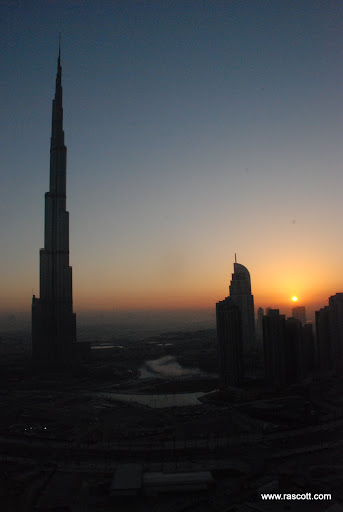
The battle for
Thailand
Political chaos
beckons—unless there is an election and an honest discussion about the
monarchy’s future
Mar 18th 2010 | From The Economist print edition
This article should also be read - but is not republished here.
"For decades Thai
politics suffered from a surfeit of pragmatism. Indeed, grimy compromises
were dignified as “Thai solutions”. Parties tussled over the perks of
office, without letting policies or principles get in the way. When the
bickering became too intense, the army would step in—18 times since the
advent of constitutional monarchy in 1932. Presiding over a messy but
largely functioning polity has been a revered king, Bhumibol Adulyadej,
whose admirers have no difficulty in reconciling the contradictory ideas
that he is both “above politics” and also the guarantor of stability.
These days,
pragmatism has given way to dogmatic intransigence. Huge demonstrations on
the streets of Bangkok this week by red-shirted anti-government protesters
have produced few hints of compromise. Contributing to this febrile
atmosphere is an unspoken fear. King Bhumibol, 82, has been hospitalised for
several months. Although he is reportedly in better health now, Thailand
needs to start thinking about what will come when his reign ends. That the
succession may be rocky only adds to the threat from the political
stand-off. Thailand urgently needs to rediscover its lost flair for
pragmatism and to rebuild a functioning political system.
Looking on the
bright side
As a red-shirted
sea flooded Bangkok this week, the government’s supporters played down the
tumult. At least it was mostly peaceful, as The Economist went to
press, unlike the street battles seen in late 2008 and last April. The
stockmarket actually rose. Rather than the 1m demonstrators the organisers
had promised, “only” 100,000-150,000 took part. And they, sneered government
supporters, were probably all paid to turn up by the fugitive billionaire
and former prime minister they support, Thaksin Shinawatra. The mass blood
donations for supplies to splatter on the office of the prime minister,
Abhisit Vejjajiva, was a creepy stunt. Under this reasoning, the calm,
resolute Mr Abhisit was right to defy mob rule and the demand for the
dissolution of parliament, and wait to unveil an orderly, slow electoral
timetable.
This complacent
analysis flatters Mr Abhisit (the staunch democrat actually scurried to take
refuge in an army barracks). It also understates Thailand’s difficulties in
four ways. First, the red shirts do enjoy considerable popular support, and
not just in the poor north-east from which so many hail. Mr Thaksin was a
high-handed leader convicted of corruption. But his policies, such as
affordable health care, helped the poor. “Populism”, sniff his critics. But
popularity is what competitive politics is about, and the present government
has shamelessly borrowed his policies. Second, whatever Mr Thaksin’s faults,
his supporters have a point. He was ousted by a coup in 2006 and the present
government was installed, with the backing of the army, by a parliamentary
fix, not an election.
Third, the
political system has all but broken down, as the government itself tacitly
admits when it argues that an election would not solve Thailand’s problems.
It may well be right. Democracy works only when the parties that lose an
election accept the outcome. And if, as might well happen, Mr Abhisit’s
government lost an election to proxies for Mr Thaksin, the same alliance of
military and civilian elites that toppled him in 2006 and his allies in 2008
might again reject the popular verdict. Instability would persist.
Fourth, and
perhaps most important, the backdrop to this week’s street theatre is the
looming royal succession. The king, who has reigned for six decades, is
widely revered. His anointed successor, the crown prince, is not. Indeed, he
is widely disliked and already shows signs of meddling in politics.
Although, in theory, the monarchy inhabits a realm far above the murk of
daily government, it has been an important source of legitimacy for the
unelected prime minister. The king accepted the coup that overthrew Mr
Thaksin in 2006. His senior advisers blessed it. And he never publicly
repudiated the yellow-shirted “royalists”, whose revolt in late 2008 led to
the downfall of a government led by Mr Thaksin’s proxies.
The sound of
silence
The fear is not
just that the present government relies on tacit royal endorsement for its
legitimacy. It is that the king’s death will remove a moderating influence
that has kept irreconcilable political differences in check. Heightening
fears is the almost total silence on the issue in Thai public life. Harsh
laws against lèse-majesté ensure that the future of the monarchy is
a matter of private gossip, not public debate. This leader, and
our article considering the succession in some detail, could not appear
in Thailand. Indeed they will cause great hurt and offence in some quarters
there. We regret this. But to discuss Thailand’s future without considering
its monarchy is itself to belittle an important national institution.
That discussion
needs above all to happen in Thailand—as it did in the period up to 1932.
The country’s present political quagmire seems impassable partly because
debate over what to do is so stunted. But there is a way out. It would
involve an early election, producing a government with popular legitimacy.
It would probably also entail a decentralisation of power away from Bangkok
so that citizens of regions such as the north-east feel less alienated from
their rulers—a sense of alienation that, more than ethnic or religious
tensions, underpins the long-running, bloody insurgency in the
Muslim-majority southern provinces. And a true “Thai solution” would also
imply a monarchy genuinely above political meddling or manipulation.
This would be in
the royal family’s own interest. Republicans lurk in the wings, but a
majority still respects the king. The monarchies in Malaysia and Cambodia
have painfully lost influence to populist commoners. By the time Nepal’s
princelings woke up they were citizens of a republic. Hence, to endure, the
monarchy has to win a debate, not suppress one. And it would surely be
better for Thailand to discuss all this under a monarch trusted by many to
have their interests at heart. Difficult and distressing today, Thailand’s
national soul-searching will only grow harder."
Thailand watch - 17 and 18 March 2010
Prime Minister Abhisit Vejjajiva's
personal spokesman Thepthai quoted in Prachatai - "Therefore, I want to
raise the suspicion that the blood that was poured was real or fake and it
is not possible to separate whether it was blood from humans or from animals
because the blood from the red shirt leaders and blood from animals is not
able to be separated."
No wonder the reds think the yellow
shirts are arrogant.
It is the constant need that the
Democrats have to say something - even if it means making something up which
is palpably and clearly not true.
It is like this insistence from
Democrat ministers that Thaksin has been nabbed from Dubai. Every indication
is that he and his family are still able to come to the UAE.
*************************
Pitch Pongsawat, a well-known
political scientist with Chulalongkorn University
quoted in GlobalPost - this is an interesting academic prespective.
"This message of coming to the city and giving blood, it's very powerful.
Rightness is abstract. But blood is very real. It's very sentimental, very
spiritual as well.
See, they've hurt themselves, not taken blood from other people. This shows
their audience that they're actually serious about fighting the government
peacefully.
The big myth in Thailand is that the Red Shirts represent a small number of
people. This is what the government and the media want to communicate. But
the Red Shirts on the streets now, they're just small from this large
population who're watching (the Red Shirts' satellite TV network) at home.
They have millions of subscribers.
The media has not picked up on this issue. They only focus on the
possibility of violence. They haven't listened to the millions of people who
would give up their blood."
*************************
More nonsense from The Nation:
"Intelligence organs have
warned of an assassination plot against Prime Minister Abhisit Vejjajiva,
which is why he had to take cover inside the 11th Infantry Regiment base,
PM's Office Minister Satit Wongnongtaey said yesterday.
Metropolitan Police spokesman Maj Gen Piya Uthayo also said police obtained
a tip-off the premier and some other heavyweights were targets of death
squads.
Up to six groups known for violence and inciting chaos in the country are
being monitored for possible attacks, he said.
Abhisit dodged a question from reporters about the assassination plan,
leaving in his armoured vehicle without responding."
Emirates to order more airplanes
17 March 2010
Emirates, the biggest Arab airline,
plans to order more than 12 planes to meet rising demand, Chairman Sheikh
Ahmed bin Saeed al-Maktoum said.
Passenger traffic at Dubai Airport surged 17 percent in January after
growing by 9.2 percent in 2009, which “will push us to buy more aircraft,”
Sheikh Ahmed said adding that “I know that we announced something like 10 to
12 aircraft, but we are maybe looking at more than that number.”
Emirates said in November it would order about 11 new planes and was looking
at models from Boeing Co. and Airbus SAS.
The carrier, the biggest customer for Airbus’ A380 superjumbo with an
original order of 58, has also ordered 70 A350s. The airline’s fleet has
risen from 131 to 145 since March last year, including eight A380s, it said
March 9.
Air traffic in the Middle East grew 11.2 percent in 2009, one of only two
regions to post growth amid the industry’s worst slump, the International
Air Transport Association said. Latin American passenger traffic grew 0.3
percent.
Emirates will sell shares in an initial public offering “one day,” although
the timing of the sale will be decided by the government and subject to
market conditions, Sheikh Ahmed said. It will take the carrier about nine to
12 months to complete preparations for an IPO when the government decides to
sell shares in the company, he said.
EK crew jailed for lewd texting
17 March 2010
Be very careful what you text. The
National is reporting today that two Emirates Airline cabin crew have been
jailed for three months for exchanging lewd text messages.
The National newspaper is reporting today that RS, 42, a flight attendant,
and EB, 47, a cabin services supervisor, were convicted of “coercion to
commit sin” after sending each other sexually themed SMS messages, according
to court documents released yesterday. This is all part of a nasty divorce
case. And the ex husband's behaviour is pretty miserable.
A quick note here - RS is not me!
The pair, both Indian, were sentenced to six months in prison and
deportation by the Dubai Court of Misdemeanors in December. Just a thought
but what would the sentence have been if the couple were British crew
members?
The court said the texts “fulfilled all the necessary angles of coercion to
the commitment of sin”.
The Appeals Court upheld that decision last week. But it halved their jail
sentences and scrapped the deportation orders.
There was not enough evidence to prove that the pair had extramarital
relations, it added.
The flight attendant’s sister, BM, 25, was also convicted of perjury and
sentenced to three months and deportation by the lower court. Her
deportation order was withdrawn on appeal.
The case first went to court after the flight attendant’s husband, SG, filed
a lawsuit against his wife in March 2009 claiming that she was involved in
an illicit relationship with the supervisor. He must have known what would
happen to his wife. Adultery is a criminal offense in the UAE.
The couple had been embroiled in a divorce battle since 2007.
SG has now gained sole custody of their four-year-old son, although it was
not clear when the couple divorced.
During the divorce proceedings, SG requested that the courts order Etisalat
to produce copies of his wife’s text messages, which, he said, proved the
illicit relationship.
The telecoms provider turned them over to the court in October 2008.
Five months later, the flight attendant’s husband filed a criminal complaint
against her, charging her with having an affair and saying her text messages
were an insult to Islam.
She told police that her sister sent the messages to the supervisor, who
also denied any relationship with RS.
He told officers that he had been seeing her sister for the past four years.
Prosecutors decided that was untrue, however, leading to the perjury charge
against the sister.
Red Shirts need leadership
17 March 2010
The
red shirt protest is going no where. Their rally has so far been peaceful
and decently organised. There have been rousing speeches, a phone-in from
their exiled leader and a bizarre bloodletting ritual. But Thailand's United
Front for Democracy Against Dictatorship (UDD) ultimately lacks the means
and legitimacy to force Prime Minister Abhisit Vejjajiva's 15-month-old
coalition government from power.
Thaksin is not the solution to their leadership void. His own record is
anti-democratic record, marked by his efforts to bypass parliamentary
processes, undermine checking and balancing institutions and pressure the
free press. He also used his close relations with the bureaucratic elite to
benefit his own businesses, including the privileged state-granted telecom
concessions he leveraged into a multi-billion dollar personal fortune.
So who would run a red shirt supported
givernment. Controversial Peua Thai politician, Chalerm Yoobamrung, would
most likely run as the party's prime ministerial candidate. His son,
Duangchalerm, was accused of murdering an off-duty police officer in 2001
and many say Chalerm epitomizes the double standards that favor the powerful
over the poor. Duangchalerm was acquitted due to insufficient evidence in
2004 and is now a father-propelled, political figure.
So the UDD's self-styled pro-democracy agenda looks rather lame given the
people behind the scenes. At its worst Thailand's political conflict is best
understood as a power struggle between competing elite camps with divergent
visions for the country's post-Bhumibol future.
The red shirts themselves seem to be
falling apart into factions. The socialists; the people who want real
change; empowerment and an end of privilege have relied on Thaksin's money
to support their goals. Any political campaign in Thailand is expensive. But
these people are no fans of Thaksin. But have no obvious statesman like
leader of their own.
Magic spells, voodoo rituals,
blood-spilling and fish-throwing will not solve Thailand's immediate
problems. Lobbying one of the smaller parties to switch sides so as to shift
the balance of power is the longer term solution.
Amazing Thailand... and its
vulgarities
Bangkok Post 17 March 2010 -
This is an article that gives me
hope for Thailand - there really are people who do understand what the
issues are and do care about them deeply.
"I must declare that the more I learn about what it means to be Thai, the
more it amazes me. Thailand is not what it seems, and so it follows that to
truly understand Thailand requires the patience of a Dalai Lama and the
observation capacity of a Hubble telescope.
Because there are certain things that Thais will simply not discuss, even
among close friends; instead, we choose either to deny its existence, or
employ a tactic which I call the "Siamese Whisper", to talk about the things
we're not supposed to talk about!
So how can a nation address its problems when certain topics are permanently
off the menu and meaningful truths are purposely hidden from view or wrapped
in Thailand's convoluted culture of code? Therefore, I will attempt to
discuss some of the issues that are "permitted" and explain to you why I
think Thailand is so amazing.
It is truly amazing where Thailand finds its leaders. There are bits of
lemon peel floating in the Chao Phraya River that would make better members
of Parliament than some of the MPs we have. The level of debate we have to
put up with in Parliament is simply atrocious, that's if they even bother to
turn up in the first place. Ape creatures of the Indus have shown more signs
of intelligence than some of our representatives - and to think these are
the people we have chosen to make laws on our behalf is terribly upsetting.
In my view, Thai MPs can be placed in one of four groups.
First, we have the entrepreneurial gangsters, who enter Parliament with the
sole purpose of feathering their own nests and are usually very influential
provincial figureheads. These guys are generally very smart but have decided
to use their God-given talent to pursue ungodly gains. You'll be able to
find many of these characters in the Puea Thai and Bhumjaithai parties and
they are not difficult to spot - just look for the oversized shades and
distasteful Versace neckties.
Second, there are the professional politicians, who have dedicated a
lifetime to being in Parliament and have forgotten what it's like to be an
ordinary citizen. These are the legislators who have never faced the sharp
end of the law and are so detached from reality they end up writing laws
that citizens even with a law degree from Harvard will find difficult to
comprehend.
Third, this group I've named "Daddy's Boys" because the only reason they
made it into Parliament is due to the powerful dad who wanted it, arranged
for it and eventually probably paid for it. These men or women are usually
under the age of 40, have never achieved anything of great significance in
life so Dad decided to reward them (and punish us) with a comfortable seat
in Parliament. Every party has their fair share of Daddy's Boys but the
Democrats seem to be doing particularly well lately in this department.
Last, we have the people who are there just to fill in the seats. In order
to be in this group you are not permitted to have any thoughts of your own
and are expected to vote the way your paymaster commands. I call this group
"Avatars" because although they seem to be able to move around
independently, the person behind the controls pulls all the strings and
calls the tune. Avatars are very easy to recognise in parliamentary debates
because they are the ones responsible for interrupting debates and
contributing to proceedings by making idiotic remarks to annoy everyone
else.
I confess I am not a religious expert but in my view it's amazing how
organised religion has distorted the teachings and intentions of the Lord
Buddha. The organisation, politicisation, commercialisation has resulted in
a huge misinterpretation of Buddhist philosophy. And, yes, Buddhism is said
to be a philosophy and not a religion because Buddhists do not believe in a
supernatural being called God like other religions, but we believe in a real
living human being who revealed to us one of the most enlightening
philosophies to living a peaceful and happy life. Therefore, it's very sad
to see monks marching in political protests with the People's Alliance for
Democracy (PAD) or the United Front for Democracy against Dictatorship (UDD).
It's even more troubling when we witness the creation of "celebrity monks"
who spend more time on television game shows than in their temples.
I have nothing against spreading the good word of the Lord Buddha, but doing
so by commercialising Buddhism through the disturbingly lucrative sales of
amulets and necklaces, not to mention books and DVDs, is likely to transform
Buddhism into what the evangelicals are doing to Christianity in the United
States. Therefore, with all due respect to all the monks deserving of our
trust and praise, I always thought that it was us that should be seeking
enlightenment and not enlightenment seeking us. So, to all those game-show
monks, palm-reading abbots with all their fickle, phony followers - don't
bother knocking on my door asking for a donation!
It never ceases to amaze me how this administration can avoid seeing the
whole truth regarding Thailand's current political and social stalemate.
What Mr Abhisit and the ruling elite seem to wrongly believe is that the
fight we are now witnessing is between the government and Thaksin Shinawatra.
"The red shirts are marching to the tune of Thaksin with the sole aim of
bringing him back as prime minister" is the story we're asked to swallow.
But, the truth is much more sinister. I believe the UDD with its
"million-man march" began as a political movement to counter the
machinations of the PAD and the Democrats, but I'm afraid it has now
snowballed into an all-out class war. Essentially, the war is now between
the haves and the have-nots. Instead of blaming it all on Thaksin, we should
start to reflect and ask the right questions. Why have the poor chosen a
morally compromised billionaire to be the leader of their movement? What
have we done as a nation to cause these people from the rural provinces so
much pain and suffering that they need to march on the capital to demand
that their voices be heard? And have these people in the past been treated
with the respect and fairness that all human beings deserve?
I don't claim to know the answers to these questions and will leave it to
those more capable and qualified than myself. But I do know that the
attitude displayed by Korn Chatikavanij in his article, "Personal
Reflections on the Assets Seizure," published in the Bangkok Post is not the
way forward, if reconciliation is to be achieved. The Finance Minister is
someone I'm respectful of and very familiar with, but as a citizen and
commentator, I must admit I was disappointed with the tone of his reasoning
and thought that his rhetoric was amazingly condescending to the poor and
tinged with supreme arrogance, unique only to those who believe themselves
ordained by God to be the rightful rulers of a grateful and subservient
nation.
My retort is simple: great rulers are not born, they are made and moulded by
the long years of living the virtues, such as courage, temperance, justice
and, most important of all, kindness and compassion."
Songkran Grachangnetara is an entrepreneur. He graduated from The London
School of Economics and Columbia University.
Desperate and impotent red shirts
16 April 2010
The red shirts look increasingly
desperate and impotent.
The blood letting is gross. It does
not look good on the international media. And as soon as it is thrown it is
cleaned up.
Back in 2008 the yellow shirts were
only successful in forcing the court to issue its ruling quickly to dissolve
PPP once the PAD seized the airports. It needed a huge crisis and potential
economic meltdown to bring down the government.
Unless the red shirts want to emulate
the PAD, then they are mainly limited to stunts to gain attention. They dont
have the numbers, organisation or element of surprise that would let them
take over the airport or government house.
So what will they do next. Some have
already gone home. ere to now for the red shirts? They can't stay in their
current location forever.
Protesters plan to head to the PM's
house in Soi Sukhumvit31 at 9am tomorrow. Check the traffic on Sukhumvit
area if you need to go there. I do not like this move. I may not approve of
Abhisit but his young family do not deserve to see their home drenched in
red blood.
Can Thaksin return to Dubai?
16 April 2010
I do think that the Thai Foreign
Ministry makes this up as they go along. The Nation is reporting that
the United Arab Emirates has promised not to allow fugitive ex-premier
Thaksin Shinawatra back into the country because he had been using the UAE
as a base for his campaign against the Thai government, a senior Foreign
Ministry official said yesterday.
"The UAE will lose face if they allow
Thaksin to return. They may arrest him, as has been requested by us," Vice
Foreign Minister Panich Vikitsreth said. "I don't think Thaksin will be
allowed to enter the UAE."
Thai diplomats and other officials in the UAE have been instructed to be
ready should Thaksin be arrested, Panich said, adding he would coordinate
with the concerned UAE minister.
He said authorities had told their UAE counterparts Thaksin had posted a
message on Twitter saying he would return to Dubai, the UAE city where he
has been living in exile, on Friday.
Thaksin has important friends in the
UAE. I think he will be back in Dubai by the end of the week.
Snogging in Dubai
16 April 2010
The new Mirdif City Centre mall opened
today in Dubai. Yes - I hear you - why do we need another mall?
That said, this one had an unusual
opening - as at least 80% of the mall is actually open on opening day; the
car parks are all signed and working; and their was no sign of the usual
hundreds of workers still on site.
There are a number of new brands. Most
bizarrely a frozen yoghurt store called Snog.
Now to most English speakers a snog is
fairly juvenile slang for a kiss, usually romantic or sexual in nature, in
which one participant's tongue touches the other's tongue and usually enters
his or her mouth.
It is also something best not done in
public in Dubai; see the story below - Was this Necessary - dated 13 March.
Which makes the opening of this store
in the new mall truly bizarre.

The company's web site - advertised here in Dubai - has these bold
headlines.
"You'll never forget your first snog"
"Less talk, more snogging"
"I can't wait for my first snog"
"You can never have too many snogs"
Did no one tell this company that the
name and marketing might be inappropriate. Bizarre.
Open Letter from Thailand to
Thaksin
16 March 2010
This letter was wriiten by a Thai
resident of Bangkok and may sum up the feelings of many.
Dear
Mr Thaksin,
Let me be upfront, we have not always seen eye to eye. I have not always
agreed with your policies, I have gone so far as to criticize many of them.
That is not to say that you are all bad, in a world where the word ‘hate’ is
thrown around much too often, I see the good side of you as well.
That said there is a situation in Thailand that is partly of your doing. The
world’s eyes are cast upon Thailand be it for better or for worse. There is
much that is wrong in the country which we both call home, so much divide
and misunderstanding. I do not blame you wholly for what has happened.
For too long the lower classes of this nation has been marginalized and trod
upon. For too long has the brunt of our success been built on the brute of
their back. For too long has the upper class enjoyed privileges that
burdened on slavery. If we wrong them, we call our connections and the mess
goes away. If we need them we merely beckon and they come. They are our
maids who live in tiny rooms in the back that no guests see. They are the
drivers that wait for our children for hours on end. They are our gardeners
who deal with manure and filth so that we don’t have to. They never needed
education, or political votes, or rights. Why would they? We can pay for
their voice.
But you have changed all that and for the first time in a long time the
people who would rule this country are scared. Scared of change, scared of
dealing with how their servants live. We are scared of facing reality.
Yes we have to thank you for all that but I believe the time has come for
you to show your true colours. You say your best interest is the plight of
the people. Well the time for you has come to prove it. I understand that
you feel that you have been wronged, that the powers that be conspire
against you in every direction.
I think you may have legitimate grievances but the birth pains of democracy
require sacrifice and labour. You have an opportunity to become one of the
greatest heroes of Thailand if you would only do one thing…Walk away.
Walk away, because the reds would gain immediate credibility if you do. Walk
away, because you have enough money to live a rather comfortable life, your
children too. Walk away because if you do you are no longer the corrupt,
power hungry dictator that we all think you are.
If you walk away the infrastructure is in place that new leadership will
spring up. The people’s eyes are open now. Your situation makes their
struggle inaccessible to some, myself included. Let the thousands and
thousands become millions and millions with just one simple act. Walk away.
In utmost regard
Thanarith Satrusayang
AC catches a cold over Emirates
16 March 2010
The war of words between Emirates Airline and Air Canada continues to
escalate.
This issue to Emirates in simple. Canada has the world’s 10th-largest
economy, but Emirates is allowed only three flights to the country per week
– something one official at the airline described as the equivalent of
running a corner store but being allowed to open only on Mondays, Wednesdays
and Saturdays.
Emirates serves only Toronto and uses its Airbus A380 superjumbos to balance
the high demand with its limited slots. It would like to fly daily to the
city, and to Vancouver and Calgary as well.
But despite a two-year campaign by Emirates to win more access, Transport
Canada, the government authority, has consistently said no.
Transport Canada is a government agency. But it is protecting Air Canada not
supporting the ordinary Canadian traveler, who would be able to fly to the
Middle East and beyond from more Canadian cities, more often, and with
shorter transit times than under their current options.
Why? Well Air Canada has 25,000 employees.
It is also ailing. AC complains about Emirates being government owned. But
AC took a C$1.02
billion (Dh3.68bn) loan package from the government last summer.
Air Canada portarys itself as the home team underdog. Yet the real issue is
consumer choice.
Some twenty years ago Dubai recognised that it sat at the halfway point
between Europe and Asia. It invested in airport infrastructure and in
Emirates Airline, buying state-of-the-art aircraft to span continents.
Canada meanwhile is not in a half way point between anywhere. It's airports
can serve as regional but not international hubs.
Calin Rovinescu, the chief executive of Air Canada says that Emirates’s
wants to “scoop up travellers going elsewhere in the world and funnel them
through Dubai, further strengthening Dubai as a global flow hub”. And why
not? Other airlines have had exactly the same strategy.
“Emirates’ real
aim is to dump its excess capacity resulting from too many wide-body
aircraft commitments, including A-380s, into the Canadian market, just as it
has elsewhere in the world,” Mr. Rovinescu said in a speech to a business
audience at the Canadian Club of Montreal. “As a state-owned carrier with
access to virtually unlimited capital, it would siphon passengers from other
carriers who are making connections en route and connect them through its
Dubai hub instead.”
Yet Emirates received some US$10 million in start up capital over 20 years
ago and has been profitable every year since its second year. It has never
had to recourse to the Dubai/UAE authorities for additional funding. Its new
airplanes are financed by cash or through commercial loan arrangements with
global banks.
What Air Canada does not accept is that air travel is a commodity. Customers
really care about the price and the ease of travel. Ideally they want more
flight options and shorter trips. The reality is that the airline that
happens to be sitting halfway between two points is much more attractive
than one at either end.
Sheikh Ahmed bin Saeed Al Maktoum, the chief executive and chairman of
Emirates, takes a gentler approach than his AC counterpart at least in
public. “I’m sure there will be progress,” he said. “Bilaterals sometimes
take some time.”
Australia offers a useful comparison with Canada as an aviation (and
tourism) market. The two countries have a roughly comparable airline system,
equally widely spread across a large land mass, albeit Australia has a
considerably smaller population.
There are other parallels. Like Canada, one of the country’s two major
legacy airlines collapsed about a decade ago (Ansett Airlines, which was
bankrupted shortly after the failing Canadian Airlines was folded into Air
Canada).
Today Australia enjoys service from Qantas, a successful full service
airline with an equally successful low cost subsidiary, Jetstar; at home it
competes mainly with the evolving low cost carrier, Virgin Blue.
Canada now has a similar major airline profile, with Air Canada, its Jazz
subsidiary and a gradually evolving WestJet, which, like Virgin Blue, moved
in to fill part of the gap left by the failed legacy airline.
Australia's domestic market also has foreign-owned Tiger Airways, allowed
in, as foreign-owned Virgin Blue had been, under Australia’s relaxed
ownership rules.
There are however some major differences: Qantas’ low cost subsidiary also
operates internationally, as does Virgin Blue, under the Pacific Blue and V
Australia brands.
Also, unlike Canada, Australia’s liberal entry regime means it enjoys a very
high level of competing international service – not only to the main
gateway, Sydney, but also to several other smaller cities.
And again, by contrast with Canada, Australia has not needed to bail out a
failing national airline. Although Qantas went close to privatisation (ie
delisting and purchase by private equity) in 2008 – which could have led to
a potentially fatal debt burden and divestment of its best assets, as
happened with Air Canada – it remains intact as a single group entity.
This has proved vital to its continued profitability, as the full service
international airline part of the group has stumbled since premium traffic
dried up in 2009. But Qantas’ frequent flyer programme is generating
hundreds of millions of dollars in profits, as is Jetstar.
Another big difference is the role of Gulf airlines in Australia’s
international market. Not only Emirates Airline, but also Etihad and Qatar
Airways operate there. And the UAE carriers don’t just operate to one
Australian port.
Emirates flies to Sydney (three times daily), to Melbourne (three times
daily), to Brisbane (twice daily) and to Perth (twice daily). Several of
these services also extend across to New Zealand and return, where, apart
from passengers, the carrier uplifts good loads of freight which had been
stranded since all other airlines on the very busy three hour sector market
went narrow-body.
Then there is Etihad. The other large UAE airline also operates to Sydney
(twice daily), to Melbourne (daily) and to Brisbane (daily). Additionally,
Qatar Airways operates a daily service to Melbourne.
Between them, they operate almost 40,000 seats weekly into Australia. The
bulk of these seats do not carry end-to-end Australia-Gulf passengers
(although inbound tourism from the Middle East to Australia is consequently
the country’s fastest growing market). Most travel to and from European,
other Middle East and African points, as well as carrying New Zealand origin
and destination passengers.
Canada’s Transport Minister would be shocked with this level of foreign
seats invading his country. At the moment he has six flights a week from the
UAE bringing some 1,800 seats weekly.
And it is not just Middle east airlines that fly into Australia. Other
“sixth freedom’ airline activity into Australia. includes Singapore Airlines
which does nearly a quarter of its business carrying Australia-Europe and
Asia traffic. Very little of that originates in, or is destined for
Singapore. Numerous others also participate in what today is recognised as a
legitimate – and valuable – aviation service. Malaysian and Cathay Pacific,
both have extensive connecting traffic.
Minister Charrette (at Transport Canada) last week said of his portfolio,
"officials continuously monitor the Canada-UAE market to ensure it is not
underserved, as this would not be in the commercial interest of either
country….The rights under the current Canada-UAE air transport agreement
meet the market demands of travellers whose origin or final destination is
either Canada or the UAE."
And Air Canada’s pilot union head, Captain Paul Strachan, also adheres to
the old aviation trade mantra, maintaining Emirates "has a tactic to break
into markets and expand aggressively, but free trade in aviation has to be
fair trade. In this instance, it's a lopsided proposal by Emirates." (There
is actually nothing in the definition of free trade to require that it be
“fair”, if that simply means protecting a weaker competitor against a
supplier providing a commercially viable service.)
Then of course, Air Canada itself is categorical about the need to protect
it from the new world of air travel. In a lengthy diatribe directed at
Emirates last week, Air Canada CEO, Calin Rovinescu further elaborated this
reactionary theme: “Competition for international traffic flows must exist
on a level playing field that provides equal opportunities for all. Any
trade agreement – and that is what an air bilateral agreement is – must be
fair, balanced and mutually beneficial.” What he meant was mutually
beneficial for the airlines – not for consumers.
Mr Rovinescu argued that access restrictions “remain for good reasons. The
bilateral agreement between Canada and the United Arab Emirates is a case in
point. Simply put, the market between Canada and the UAE has not developed
to the point where more capacity is warranted. Period. Full stop. There are
already more airline seats being flown between Dubai and Canada than there
are people to fill them. No adjustments to the Canada-UAE bilateral are
warranted at this time and in our view it would be short-sighted on the
Canadian Government’s part to yield to the massive lobby effort underway by
Emirates and the UAE.”
These are attitudes that fitted comfortably in the 1960s, but they become
sadly out of place in the 21st century. As the Australian comparison shows.
Even if this were an appropriate stance in a world where everyone else is
going in the opposite direction, it is intriguing to examine precisely where
the vaguely defined threat to Air Canada exists. What exactly is the flag
carrier being protected from?
Mr Rovinescu argues, “What Emirates wants to do is flood the Canadian market
with capacity. Its strategy is to scoop up travelers going elsewhere in the
world and funnel them through Dubai, further strengthening Dubai as a global
flow hub. This would have the effect of severely damaging our hubs in Canada
and our network in Europe and elsewhere.”
But there is surely not a lot for the foreign carriers to “scoop up” on
Europe services; few passengers will be prepared to backtrack all the way
from Dubai to western Europe en route from Canada, so there is hardly any
threat of diversion away from Air Canada’s UK and continental European
services. More relevant, there are carriers like British Airways, Air France
and Lufthansa who all use their hubs to beef up their end-to-end traffic
flows (in what Mr Rovinescu might call unfair ways), consolidating traffic
and distributing it to and from Canada.
And, beyond the key European gateways, the simple fact is that Air Canada’s
network is skeletal at best (and almost all virtual). This helps make Canada
one of the more inaccessible (and higher priced) destinations for most
travellers. Even more challenging for Canadians and would-be visitors is
that there is currently only one global alliance – Star – effectively
serving the Canadian market. So most of Air Canada’s European travellers
must rely on the Lufthansa network to access European, Indian and Middle
East destinations. This is enormously valuable to Lufthansa and its own
subsidiaries. Which leaves Transport Canada protecting Lufthansa. Weird.
What about India? Despite Canada’s large Indian expatriate population, there
is not even a through service on Air Canada. From Toronto, Air Canada only
operates a one-stop daily service to Delhi, relying entirely on Lufthansa
and Jet Airways to provide connections (and codeshares), over London, Zurich
and Frankfurt. From Montreal, Calgary and Vancouver, service is so limited
that Air Canada’s own schedule does not bother even to list connections.
Yet, in 2008 there were around 350,000 passengers flying roundtrip between
India and Canada[3] – some 2,000 pax daily on average, meaning that in peak
periods this could be a lucrative trade for airlines, given the limited
capacity. But Air Canada’s own metal only flies across the Atlantic to
primary European gateways. So, much of the benefit of all this flow would be
to the Canadian carrier’s codeshare partners, as it is on all of the
European connections, as well as to other European competitors.
From Vancouver too, as with the eastbound routes, it is hard to see exactly
how Emirates and others directly threaten Air Canada, or even its partners,
heading west into Asia. The carrier has chosen to consolidate its operations
on Toronto, reflecting the economics of a lower yielding Vancouver gateway
and the value of focussing on a single hub. Air Canada simply doesn’t have
the scale to manage two major airport hubs at this stage. So the argument
against Emirates had to be more carefully constructed for Vancouver
consumption.
The result was intriguing. Rovinescu without a hint of irony suggested that
Air Canada could “scoop up (USA) travellers going elsewhere in the world and
funnel them through (Vancouver)” – the very strategy that he so disapproves
of at Emirates.
Reality check - no one in their right minds will fly from Vancouver to the
Far East via Dubai.
Last year the Canadian government stepped in to prevent a second bankruptcy
in five years for Air Canada. The political fallout of large job losses, at
the depths of the 2009 recession and with the Vancouver Olympic Games just
around the corner, was clearly too big a risk for a fragile government to
confront.
The effect of the bailout, involving substantial taxpayer-funded loans
(considered even then as high risk), was to save Air Canada. This has left
the company with a large debt overhang - although it was able to raise
CAD260 million in an equity issue later in the year.
Turning around Air Canada is a huge challenge. But it wont succeed if it
does so because of protectionism.
Air Canada has to survive on its own in a
hugely competitive industry.
It is always hard to prove what economic value is being lost in this type of
regime. But examples like the parallel one of Australia suggest that the
danger of opening the floodgates to competition is nowhere as threatening as
is being made out.
In Australia’s case, despite a 50% increase in Gulf airline capacity since
2005, Qantas’ international market share is almost identical to its level
back then – just under 30%.
The big change, because Qantas has to be competitive in its own right, is
that Jetstar, with its lower cost base, has replaced Qantas on several
marginally economic routes, maintaining the group’s place in the market. In
other words, unable to rely on government protection, Qantas has
successfully adapted to a more competitive international environment. This
will stand it in good stead for the long term.
Meanwhile, airline capacity to Australia’s smaller airports has blossomed.
As has tourism and business into Australia.
Canada is fortunate. Unlike Australia Canada has readily available market to
the south; the USA. But in 2009 with recession hitting the USA the heavy
reliance on the US inbound market saw visitor numbers to Canada almost
halved.
Despite Canada’s having a population nearly 60% greater, with a vastly
superior range of tourism attractions, Australia welcomed just over 5
million inbound tourists by air last year. If American travellers are
removed from Canada’s inbound numbers, a mere 3.5 million foreign tourists
visited the country by air in 2009.
Air Canada says that it currently has about 35% of the Canada-Europe market
and 29% of the Canada-Middle East market. The ME traffic is all on code
shares. It is not on AC airplanes.
So for Air Canada the future is its relationships with other carriers in the
Star Alliance, a partnership of 26 carriers in different parts of the world
who hand off passengers to one another.
Brussels Airlines, a Belgian carrier operating 51 airliners joined the Star
Alliance in December. It operates 200 daily flights to 55 European airports
and 14 African terminals. Mr. Rovinescu said with the addition of the
Brussels Airlines network connecting through Brussels, Air Canada will be a
more attractive travel option to African cities like Abidjan, Dakar and
Douala. But it will not be an Air Canada crew or airplane that takes
passengers to Africa. It will be Brussels airline which grew a few years ago
from the remnants of Sabena; the old Air Canada-like national carrier that
went bankrupt because it could not change. Pilots and crew were then
re-hired based on new contracts and a much lower cost base.
And as a proud Canadian living
overseas I would love to have more options at competitive fares to take me
home.
Transport Canada has this all wrong.
It needs to look at the Australian model and recognise that tourism and the
aviation sector benefit from far more open access rather than the protection
of its unloved non-competitive national carrier.
Arabian Business and Thaksin
15 March 2010
There is a laughable article in
Arabian Business today - written by Thaksin Shinawatra.
The title is "Politicians can learn
from CEOs"
A link
to the article is here:
A couple of quotes from the article:
"So I had no doubt that the day I came into power, I would launch a total
restructuring of the way our political system operated and introduce the
concept of CEO-style governors. My supporters and critics both called it the
“big bang”, and I guess it was a shock — though a much needed and welcome
shock — to the country."
"So I went back to basics, and my experience as a CEO myself. Being a CEO
means you need a strategy and you must own that strategy to drive it
forward, and be responsible for all the functions under you."
"This feeling of responsibility and accountability was practically
non-existent before I came to power."
"I wanted people to be more
accountable...I think in the end the results spoke for themselves...People
did become more accountable."
"All I will say is that leadership is everything, both in business and
politics. If what you are doing doesn’t work, then change your style of
leadership."
Thaksin Shinawatra is the former prime minister of Thailand. He is also a
convicted criminal.
Arabian Business will not publish my
comments saying that : only comments relevant to the story will be
published. Any containing personal insults or inappropriate language will
not be approved.
So here are my comments - just to try
and strike a fair balance.
"Thaksin Shinawatra is a convicted
criminal living in self imposed exile in Dubai in order to avoid a two year
jail sentence.
Last month the Thai Supreme Court found found Thaksin guilty of four out of
five counts of policy corruption (whil PM), and ordered that 46 billion in
his assets be seized.
Arabian Business has already refused to print my comment alerting readers to
these facts.
But the are relevant to the article and to the credibility of its author.
The article has also been published on the day that red shirt protestors in
Thailand, largely financed by Mr. Thaksin are calling for the resignation of
the Thai Prime Minister and for new elections.
His British and German Visas have been revoked. He has been using Dubai as a
base to organise his supporters in Thailand.
His article says that "leadership is everything, both in business and
politics" - so is honesty."
Of course Thaksin is friends with Anil
Bhoyrul - who works at Arabian Business and who assisted in the writing and
publication of Thaksin's Dubai published book - Tackling Poverty.
Bhoyrul is a former Daily Mirror
financial journalist who was found guilty in 2005 of manipulating the
stock market through his newspaper column. They go well together?
Thailand update - 15 March 2010 - The
Brutus Conspiracy
TV Vijesti of Montenegro reported that
Thaksin was seen in coastal Budva's medieval old town on Sunday. He enjoyed
sipping coffee and cakes in one of the area's posh hotel with his entourage.
*******************************************
The Thai government will not dissolve
the lower House as demanded by the red-shirts, Prime Minister Abhisit
Vejjajiva said in a press conference at the 11th Infantry Regiment which was
broadcast live by all TV stations at about 10am on Monday.
He stressed that his government was
democratically formed and the red-shirts’ demands (for him to step down or
dissolve the House) were not in line with democratic principle.
(Oh the irony)
At the press conference, the prime minister was accompanied by Chartthai
Pattana leader and Tourism and Sports Minister Chumpol Silpa-archa, Puea
Pandin leader and Industry Minister Charnchai Chairungruang and other key
figures of political parties in the coalition.
(But no sign of Newin Chidchob).
So what is House Speaker Chai Chidchob up to? Chai Chidchob has called for a
joint parliamentary session on March 16, 2010. The agenda is not clear.
The Nation speculates that Chai could stuff in an amendment of the
Constitution, replacing the current 2007 Constitution with the 1997
Constitution, which the Red Shirts have been demanding.
The Nation goes further and says "it is now certain that Newin
Chidchob of Bhumjai Thai has stabbed Abhisit Vejjajiva, the prime minister,
at the back. He has jumped ship and joined the Red Shirts."
"Newin has betrayed Abhisit. This is one million per cent for sure. It is
time that Abhisit dumps all the coalition partners to take the helm at this
moment," said a very reliable source.
"Newin is now in London, saying that he needs to visit his children studying
at the UK schools. It is an open secret that Newin has been in contact with
former Prime Minister Thaksin Shinawatra."
"The only way out for Abhisit now is to dump all the coalition partners to
form a minority government. Strangely enough, Abhisit does not feel that he
is bleeding."
"If Abhisit fails to block the "Brutus" conspiracy in Parliament, he will,
like Julius Caesar, be stabbed to death on the steps of Parliament."
(I am not convinced that Newin is switching. I suspect he is simply
maximising his bargaining position. Both sides need him now. He is the
kingmaker who wants to be king.)
The reds arrived without a plan. The
call for Abhisit to resign was always going to fall on deaf ears.
So in a final futile gesture the red
shirt core leader Natthawut Saikua has announced that they will take one
thousand litres of blood donated by protesters and spill it around
Government House on Tuesday, in retaliation for the government's decision
not to dissolve the House.
Symbolic yes. But pointless. Hopefully
it will be mainly red paint.
The drawing of blood will begin about 8am on Tuesday, Mr Natthawut said.
What a waste - the Red Cross would
make more use of the blood.
Red shirt futility
14 March 2010
On stage at the red shirt rally red
Shirt leader Veera Musikapong read a statement demanding PM Abhisit dissolve
parliament, waiting premier's response within 24 hours.
What a waste of breath. Abhisit will
not resign. Nor will he be told to.
The army and government if they are
sensible will simply sit this one out; not provoke; and wait for the red
shirts to drift home.
The red shirts will be out of funds,
hope and ambition.
Time and authority are on the side of
the establishment. They need not do anything to emerge as the winners in
this latest round of Thailand's political drama.
And what if Abhisit does resign and
call an election.
Assume that Puea Thai do win a
majority, They have no obvious leader as Prime Minister. Thaksin would still
be in exile. The yellow shirts would be the next to protest. The courts
would probably find electoral irregularities and disqualify Puea Thai and we
are back to the starting point again.
Swiss roll
13 March 2010
Fugitive, ousted premier Thaksin
Shinawatra has left Dubai and is expected to join his daughters in
Switzerland, said Panich Vikitsreth, Vice Minister for Foreign Affairs, on
Saturday.
Mr Panich said in a telephone interview with the Thai News Agency that Mr
Thaksin was not travelling to Cambodia as reported. He said the United Arab
Emirates (UAE) government has informed Thailand that Mr Thaksin had left
Dubai.
He added the UAE had acknowledged Thailand's request to ban Mr Thaksin from
using the UAE as a springboard in attacking the Thai government.
Acknowledging the request is very different from claiming that Thaksin had
actually been expelled - which was Panich's line yesterday.
“It’s still unclear which country Mr Thaksin is heading,” said Mr Panich,
noting that the ousted premier was using Montenegro and Nicaraguan
passports. It is believed that he would join his daughters who have
travelled to Switzerland. Even though Thaksin said they are in Germany.
Thailand update - 13 March 2010

Thaksin - expelled on not ??
13 March 2010
According to
the Bangkok Post, which does not appear to have checked facts with the UAE
authorities, former prime minister Thaksin Shinawatra has been asked to
leave the United Arab Emirates.
“High ranking government official of
the UAE had confirmed that the fugitive ex-premier has been asked to leave
UAE for having violated an agreement that he will not use the country as
base for his political activities”, assistant to the foreign affairs
minister Phanich Wikitseth said on Saturday afternoon.
The UAE has sent signal to Thaksin to
stop using it as his political base and cause problem to Thailand and to
leave the country, Mr Phanich added.
Very confusing; the UAE has told him
not to use the country as a political base or has expelled him?
Phanich said he has no idea when
Thaksin would leave the UAE and where his destination was. But if his
ministry learns his where about and if Thaksin uses that particular country
as political base again, the government of that country will be asked to do
the same as the UAE had done.
Thaksin had early this morning denied
via his Twitter page that he was not expelled by the UAE as was reported by
the media, and that he would today go to meet his two daughters in Europe.
Very confusing?
Was this
necessary?
13 March 2010
A British couple have been handed jail terms in Dubai after
being reported to the Dubai police for kissing in a restaurant. Pretty
tourist Charlotte Lewis, 25, and marketing executive Ayman Najafi, 24, say
all he did was peck her on the cheek.
Whether is was a peck on the cheek or more the sentence does
not seem to fit the crime.
The scene was a restaurant at the Walk in very touristy Jumairah Beach
Residences. An
Emirati woman claims she and her children saw the couple kissing on the lips
and stroking each other's backs. She called the police.
It was 2am. You have to ask why was she out
with her children at 2am?
The stunned pair were arrested at packed Bob's Restaurant (a US style burger
diner) and accused of breaching the Muslim state's strict honour and modesty
laws. They were each sentenced to a month in prison followed by deportation.
Blood tests were taken and they
were also fined £180 (AED1,000) for drinking, despite being only a quarter
of the British driving limit. A forensic laboratory report showed that
the defendants had 22mg/dl of alcohol in their blood.
The woman told Dubai's Misdemeanours Court: "My daughter told me that the
accused were kissing on the mouth. "Then I spotted them doing so myself."
She also claimed their hands went underneath their shirts to stroke each
other's backs.
Judge Ebrahim Khalil Abu Shamma threw out the couple's claims that Ayman
just kissed Charlotte's cheek.
Both have been bailed and could appeal as early as tomorrow. But they were
banned from leaving Dubai and were told to expect to spend time in prison.
It is thought they will seek a reduced sentence that would let them fly out
immediately.
Ayman moved to Dubai to work for marketing firm Hay Group. Charlotte is
thought to have been on holiday.
You have been warned. If someone is offended by your behaviour and you are
reported for what might seem non-offences to foreigners in Dubai you are
putting yourself at risk of expensive and life changing litigation. Even at
2am!
If you do want to
have some fun; then do not do so in a public place that is open to
foreigners and Emiratis. Go instead to private bars and clubs. There are
plenty of them; and by all accounts they are very open minded.
Meanwhile certain people will be breaking
every law on the roads at speeds that are insane risking their lives and the
lives of other road users and pedsetrians. With a nod to the clowns who were
driving at crazy speeds down the EMAAR road from the Old Town to Sheihk
Zayeed Rd past Millennium Tower. I bet you didn't even see people walking at
the side of the road.
Has Thaksin left
the UAE?
12 March 2010
The simple answer
is that he is probably still in Dubai.
The Thai Foreign
Ministry has apparently submitted a complaint to the United Arab Emirates,
demanding that the country cease allowing convicted ex-PM Thaksin Shinawatra
to use it as a base for criticising Thailand.
I hope it was not
"demanding." No government likes foreigners to demand anything.
This did not stop
Vice Foreign Minister Panich Vikitsreth saying on Friday that the UAE will
likely ask ex-premier Thaksin Shinawatra to find a new home on the ground
that he has abused his exile to attack on Thailand.
The Nation ran
with this story but it appears to be little more that a government official
making something up and throwing it to the gullible media who will reprint
anything without checking.
The suggestion was
that Thaksin had flown to Cambodia in his private jet.
The report was
quickly denied by Thaksin's close aide Noppadon Pattama.
Mr Noppadon said
the report was not true. Thaksin was still in Dubai and had no plan
travel to Cambodia during this time, he said.
He said Khunying
Potjaman na Pombejra, Thaksin's ex-wife, was now in Hong Kong, not in Dubai
as reported, and that his two daughters, Pinthongta and Praethongtan, were
in Germany.
Mr Noppadon said
Yingluck Shinawatra, Thaksin's younger sister, had also travelled abroad,
but did not mention the country.
Thaksin meanwhile
used Twitter this morning to say that he had not been expelled from the UAE,
that he is still staying in Dubai but will later today go to Europe to meet
his two daughters.
He said his daughters, Pinthongta and Paethongtan, had gone to Germany to
see a hotel sales exhibition.
The question is
where in Europe can Thaksin go? He needs a visa for most European countries;
and some like the UK and Germany have allegedly banned him already. He also
needs a location where he can set up phone and video links to call the red
shirt rallies over the weekend.
Thailand update -
12 March 2010 - The battle of Bangkok?
12 March 2010
“Our aim is to
topple the government, force them to make a choice between suppressing us
and stepping down,” a protest leader, Jaran Ditsatapichai, said this week.
Meanwhile Thai authorities are deploying 50,000 troops on the streets of
Bangkok ahead of rallies by anti-government protesters that they fear could
turn violent. Deputy prime minister Suthep Thaugsuban, who is overseeing the
security operation, said "full deployment" began Thursday of 30,000
soldiers, 10,000 police and 10,000 civilian volunteer forces.
(The civilian
volunteers are the blue shirts who created havoc in Pattaya at last years
ASEAN summit. Even military dictatorships did not have as many soldiers on
the street as the Thai government. Does it remind anyone of Burma?).
All the Thai
television stations are reporting the huge efforts to block red shirt
protesters from entering Bangkok. It seems that relatively few have made it
to Bangkok on Friday, although there are lots of reports of people moving
along the highways in the direction of the capital and many will not travel
until Saturday. None of the television reports on blocking the red shirts
make any mention of this infringement of basic rights.
The Nation
reported that Foreign Minister Kasit Piromya spoke to foreign diplomats and
stated: “Thai people have freedom of expression – but toppling the
government in an undemocratic way is against the law and hurts Thai
society…”.
(That is funny
from Kasit who was and is a great supporter of the yellow-shirted People’s
Alliance for Democracy. Kasit was a part of the yellow shirt occupation of
the airports and has called for political changes that would do away with
many of the basic principles of democratic representation.)
The Bangkok Post reports that Red shirts in Ayutthaya
are packing pla ra (fermented fish) stink bombs and have been urged to bring
bags of faeces as standby weapons in case authorities attack them during the
mass rally in Bangkok this weekend.
Thai Business
channel reports that PTT will close all gas stations in Bangkok on
Friday & suspend deliveries to & around the city during the rally.
It would be nice
to think that the weekend will pass peacefully. If it does then that is a
big win for the government. It is unlikely that the red shirts can afford
another rally of this size in the near future.
But here is the
big fear and it is an old story: has the government delliberately scared the
people senseless to justify the harshest repression?
Tensions are high and given the recent
history of violent clashes it will not take much to bring the crowds into
violent conflict.
The government
media claims that the yellow shirt protest was peaceful & calm. They have
have poor memories The yellows raised the bar for political protest in
Bangkok when they seized Government House and both of the airports.
And the red shirt
sense of injustice is that not one yellow shirt has been punished. Some have
even made their way into government. If Abhisit wanted to win the borad
support of Thai people he would have ensured that there was a serious
prosecution of yellow shirt leaders.
My preference
would be to see Abhisit call a general election - but that really will not
solve anything. It would just bring the yellow shirts back onto the streets.
There are many
within the Democrat Party-led government of Prime Minister Abhisit Vejjajiva
who see this weekend as a "once and for all" chance to "clean out" its
political arch-enemy. They will use the slightest provocation to justify the
arrest of and repression of red shirted protestors. That part of the
etsablishment/givernment/yellow shirt leadership looks more like the Burmese
junta than the leadership of a young democracy.
The most sensible thing this government can do is sit back; avoid
provocation; let the weekend pass; let the red shirts run short of money and
enthusiasm. The red shirts will drift home and will not have the resources
or leadership to rally again. For the red shirts this weekend is make or
break. But time is on the government's side. The Battle of Bangkok may just
be a war of words and not actions.
Thailand Update -
Fortress Bangkok
10 March 2010
Entertaining stuff
in The Nation - with its so called plea for peace - "We invite our
friends to send in your comments, photos or graphics - whatever represents
your idea to promote peace ahead of the red-shirted rally." Its not a plea
for peace - just for the status quo.
***********************************
Translation from BP on Twitter: Police are apparently saying that all
pick-ups, e-tans with non-BKK license plates will not be allowed into city.
***********************************
Absolutely Bangkok: Speculation is that the government will issue a
curfew from Friday onwards. I doubt it. It would show that they don’t have
the ability to control the masses.
************************************
The Nation: The authorities will set up the Peace-keeping Operations
Command, also known as the government's war room, at the 11th Infantry
Regiment in Bangkhen, Deputy Prime Minister Suthep Thuagsuban said on
Wednesday.
(Now that is too
funny - the peace keeping operations center is also know as the war room -
very 1984. And where did the author of 1984 live for many years - Burma.
This sounds like something you would hear from the Junta.)
**************************************
The Thai newspapers yesterday published a photo whose significance only
Thais can truly feel and understand: Prime Minister Abhisit Vejjajiva is
seen not only briefing His Majesty the King, but with the prime minister at
the same head height as the king. A very clear message.

********************************************
PPT: Abhisit saids that
unnamed “people” have been calling him – who has his number apart from
colleagues and friends? – and “told me a lot of military fatigues were
bought at the Chatuchak Market and bullets at gun shops in the Phahurat area
were sold out. Water pipes were also bought to make guns…”.
(It may be true, but Abhhisit is guilty of spreading
rumour to create fear without any supporting evidence on a number of
occasions this week)
Meanwhile Deputy Prime Minister Suthep Thaugsuban states:
“Our intelligence shows that many of the [red shirt] groups show a tendency
to use violence…”. He also claimed that “some of the red shirts planned to
besiege government offices and residences of important figures, like Privy
Council President Prem Tinsulanonda.” He added that “many groups were likely
to ‘operate’ … [and] threaten normal life and the welfare of city
residents.”
Deputy Prime Minister Suthep is reported in The Nation
(10 March 2010) as referring to protesters wanting to “paralyse Bangkok
traffic and some may even carry out violent actions, throwing grenades or
burning down government buildings in a bid to provoke the use of force.”
**********************************************
Bangkok Post: headlines as “Shinawatras flee country before rally”
and “Family said to fear being held hostage.”
**********************************************
Meanwhile - and this is a bit bizarre - The Nation reports that Dusit
Zoo has relocated 14 animals to provincial zoos ahead of the mass rally by
the red-shirt movement on Friday.
Dusit Zoo director Kanchanachai Saenwong said 3 elephants, 2 cranes, six red
kangaroos, and three wallabies have been relocated from the Bangkok zoo. The
elephants have been moved to the Songkhla Zoo and the rest to other zoos, he
said.
MCOT:
Thailand has sought the cooperation of the United Arab Emirates in not
habouring ousted Thai prime minister Thaksin
Shinawatra as he has been using its soil as his political base to topple the
Thai government, according to an aide to the Thai foreign minister .
Chavanont Intarakomalsut said the Thai foreign ministry has established
facts to prove that Mr Thaksin has been using the UAE as his base for
political activities aiming to overthrow the Thai government. Foreign
Minister Kasit Piromya therefore asked the UAE ambassador to Thailand
Mohammed Ali Omran Al Shamsi to report the fact to his government.
AFP:
Thailand's main airport, which was besieged by protesters in 2008, said
Wednesday it had made contingency plans for protests this weekend, as
ex-premier Thaksin Shinawatra rallied supporters by text message.
AC blowing cold over Emirates
10 March 2010
That is one of my better headlines.
And it is apt as the
fight to limit Emirates Airline’s access to the Canadian market escalated on
Tuesday with Calin Rovinescu, Air Canada’s chief executive, accused the UAE
airline of telling “fairy tales” about the economic benefits greater access
would create here.
“Simply put, the market between Canada and the UAE has not developed to the
point where more capacity is warranted. Period. Full stop,” Mr. Rovinescu
told the Vancouver Board of Trade in a speech.
We know that. What EK wants is the connecting
traffic. And to be honest why not?
“There are already more airline seats being flown between Dubai and Canada
than there are people to fill them,” he said. Not really true. Every EK
flight is overbooked at the moment; overbooked with passengers from Africa,
the Middle East and South Asia heading to Canada.
But Emirates has been aggressively lobbying for greater access to the
Canadian market in recent years. Under federal regulations, it is currently
limited to sharing six flights a week with Abu Dhabi carrier, Etihad
Airways.
The Dubai-based carrier claims that if it were allowed to increase its
flights to daily service to Toronto and add flights to markets like
Vancouver and Calgary, it could potentially create 2,800 jobs across the
country and generate up to $480-million in additional economic activity.
Those claims have caught the attention of the premiers of both B.C. and
Alberta, who support the plan.
More recently, the Dubai government has stepped up its own efforts to
improve access for Emirates by linking the successful outcome of those talks
to the continuation of Canada’s lease on its base in the Middle East, “Camp
Mirage”, when it comes up for renewal in June.
But Transport Canada (the Canadian Conservative, free trade supporting
government!) and Air Canada (the bankrupt, bailed out national carrier which
has digested any attempt at creating a competitive second international
airline out of Canada - Wardair, Canada 3000, Canadian International) oppose
the plan. Mr. Rovinescu said Emirates plans to simply fly passengers through
its base in Dubai en route to destinations in Asia, the Middle East, and
Africa, eroding Air Canada’s international business and those of its Star
Alliance partners.
But why should the Canadian government
protect the like of Lufthansa.
EK will not impact Air Canada's European
business. Who in their right minds would fly from Toronto or Vancouver to
Dubai and then head back to Europe?
“Those who understand airline traffic flows will see through this sort of
subterfuge,” Mr. Rovinesu said, “no matter how much confusion is created
around linking Open Skies with the UAE to military bases necessary for our
country’s operation in Afghanistan.”
What this is all about is protecting the Star
Alliance - so that Indian and African passengers fly to Frankfurt to connect
to an Air Canada flight to Canada. The argument is therefore that the AC's
European routes are not self sustaining without this connecting traffic.
Such a move by the Dubai government-owned airline would be "severely
damaging" to airports and airlines operating in Canada as it would steal
away the connecting passengers they depend on to make their routes
profitable, Rovinescu said.
"While its argument may be seductive, what Emirates' strategy will do is
constrain the growth of Canadian airports by turning them from hubs into
stubs at the end of a spoke that leads only to Emirates' hub in Dubai,"
Rovinescu said in a speech in Vancouver.
There are no hubs in Canada other than for
regional feeder traffic. The international hubs are in Europe, the Middle
East and Asia (primarily Singapore).
A study, commissioned by Emirates and released two weeks ago, concluded that
Canada could reap economic benefits of C$480 million ($466 million) a year
and create 2,800 jobs if the Mideast airline was given more flying slots.
"It is well known in the industry that Emirates is trying to push hard to
divert as much global flow traffic via Dubai in order to deploy its massive
fleet of wide-body aircraft, including (Airbus (EAD.PA)) A380s it has
purchased or has on order," Rovinescu said.
Good. Let the passengers decide. I would take
an EK A380 with decent entertainment and food over an old AC 767 any day !
He said statistics showed that the number of people traveling daily to Dubai
from Canada last year was "barely enough to fill a mid-size, 213-seat Boeing
767". Apples and oranges. Rovinesu has already admitted that this is about
connecting traffic not O&D.
Last month Emirates' senior vice-president of international affairs, Andrew
Parker, told Toronto's Globe and Mail newspaper that Air Canada and its Star
Alliance partner, Deutsche Lufthansa AG, were unnecessarily worried about
losing passengers to Emirates. He said Emirates' Toronto-Dubai flights have
been more than 90 percent full.
Meanwhile in his own fantasly land Rovinescu said Vancouver airport is a key
to Air Canada's expansion plans into the Asian market. He sees Vancouver as
a gateway capturing global flow by connecting the Asia-Pacific region, North
America, Europe and Latin America.
Why would someone fly to from Europe to Asia
via Vancouver. Wrong direction. Almost double the distance. Why would
someone fly from Africa to Asia via Vancouver. Someone needs to buy this man
a globe.
The airline is expanding into China with daily flights to Beijing and
Shanghai this summer, Rovinescu said. ie AC is re-instating the flights that
it took off firstly after SARS and secondly in the 2008/9 economic crisis.
Quick to get in and also first to leave. That's AC.
China's recent granting of approved-destination status to Canada (which has
also been granted to the UAE) will boost Chinese travel, much of it through
Vancouver, he said. And Air Canada is bringing new Boeing 787s to deliver
service to secondary Asian cities. Not until 2013 or later.
But if Emirates flies into Vancouver, says Rovinescu, Dubai will become the
hub for foreign travellers into Canada, and Vancouver will be marginalized.
Vancouver Airport Authority CEO Larry Berg agreed that
Emirates Airline may draw Asia-bound traffic to Dubai. This makes no sense.
Europe to Asia already goes through Dubai. North America to Asia goes non
stop from Chicago, JKF, LAX, SFO, YVR, and others. If you want to go from
Whitehorse to Asis you go via Vancouver. That's about it.
Quicksand?
Australian
Broadcasting Corp - 9 March 2010
The
Accompanying Video is here.
ABC - Australian
Broadcasting sent one of its reporters (Eric Campbell) to the UAE to examine
Dubai and the UAE after the global financial crisis. And to ask - can
Dubai recover? Will it be able to win back the hopes, dreams and investments
from the rest of the world?
His report was
broadcast today.
I do not think
there is anything new in the report. It is 24 minutes of mud slinging
without really looking for any positive news from the Emirate. Rather
different from Rupert Murdoch's speech delivered in Abu Dhabi earlier today.
Even I am a bit
tired of the Dubai mud slinging. Yes the excesses were egregious. But they
were the minority. There were and still are an awful lot of people who have
come here simply to work hard. they are not in the nightclubs; they shop in
Carrefour and not Gucci; they drive their kids to school; they run sports
clubs; work in charities; send money home. The list is endless. But these
people are not the news story that ABC and others have been seeking out.
It may just be
that Dubai and Abu Dhabi remain the cities that many in the Arab World
aspire to come to and that many countries aspire to emulate.
Emirates riding
on economic recovery
9 March 2010
Dubai
government-owned airline Emirates said on Tuesday it planned to recruit
2,000 cabin crew in 2010 as it expands its fleet and routes.
The Arab world's largest airline has hired around 660 cabin crew and more
than 60 pilots since March 2009, a statement said. The airline's total cabin
crew stands at 11,000.
"More aircraft and flights mean more staff," the carrier said. "It is
expected that a further 2,000 cabin crew will be hired this year."
The company has
grown its fleet of planes from 131 to 145, since March 2009, including eight
Airbus A380s superjumbos.
Middle Eastern airlines saw the highest growth rate of 11.2 percent in air
passenger traffic globally for 2009 as carriers snapped up long-haul
connecting traffic, international air traffic body IATA said on Jan. 27.
Emirates, the largest customer for the Airbus A380 superjumbo, said in
February funding its aircraft purchases was not an issue and that it would
post solid results for 2009
The airline, which has $55 billion worth of orders with Airbus and Boeing <BA.N>,
expects to take delivery of 11 aircraft in 2010 as it presses ahead with
expansion into Europe.
One of Dubai's prize assets, Emirates in December raised $1.13 billion from
Citibank <C.N>, backed by a guarantee from the European Export Credit
Agencies, and a second loan from Doric Asset to finance six aircraft.
The Murdoch in
Abu Dhabi
Rupert Murdoch
gave the opening address today to the inaugural Abu Dhabi Media Summit, The
highlights (in bold italics) are mine.
“Each time I visit this part of the world, I experience your fabled
hospitality. Making guests feel at home is a long and honored tradition in
your culture – and you have happily shown that the best traditions are fully
compatible with a modern skyline. Nowhere is this wisdom more clear than in
your plans for Abu Dhabi 2030 – a capital city for the 21st century.
I have looked at your plan, and it is visionary. Your new capital district
will be built on four guiding principles – cultural heritage, economic
development, social cohesion, and the natural environment. You will have
state-of-the-art transportation. Architecture that draws from the past while
pointing to the future. Great new universities, medical research facilities,
museums and the like. And a sense of community that will make this city not
just a showcase for visitors – but a home for your people.
You have set a high bar for your ambitions. Today I hope to use this
conference on the media to share my thoughts about the contributions that a
thriving creative sector might make – to your society, to your economy, and
to your future.
In this I am mindful of the Arab proverb: “if a wind blows, ride it.” As I
speak, there is a powerful wind blowing through this region. This wind
is the creative energies of your people, who are aching to make their own
mark on the world around them. Without this creative spirit, the
museums, universities, and other fabulous buildings you have planned will be
empty shells. But ride this wind and you will raise from these desert sands
something extraordinary: a capital of creativity that is modern … that is
global … and that is fully Arab.
These days our homes and offices are cluttered with the latest electronic
devices. It is easy to be dazzled by this new technology. But the bright and
shiny wonders that technology gives us can be like the desert sun – they can
blind us to what is real and valuable. Amid the digital dazzle, we risk
missing the magic: the creative content that brings these devices to life.
That is the point I wish to discuss with you today. What is a Kindle
or an e-reader worth without books or newspapers or magazines to read on
them? What is a cell phone without the access to e-mail, the photos of your
children or your favorite websites? What is the most advanced
high-definition TV without the dramas and comedies and news and sport to
watch on it?
The answer is this: Without creative content, these electronic devices are
merely expensive playthings.
Your citizens know this, because they are among the earth’s most
sophisticated consumers. They watch films from all parts of the world. And
they own all the best and latest gadgets.
That is a good thing. Your citizens should be free to take full advantage of
human creativity wherever they find it. But they also deserve the
opportunity to add their own creative contributions to our vast and growing
media world.
Left alone, these creative talents remain constrained by arbitrary
boundaries. To make this talent bloom, you need businesses willing to invest
in creativity, to nurture talent, and to build audiences that will buy and
enjoy the fruits of this enterprise. That takes the right incentives. By
unlocking the creativity of your people, you can diversify your economy …
provide millions of jobs for a rising generation … and give the Arab people
a global voice and influence commensurate with your importance.
A few months ago, I spoke in Beijing about the critical importance of having
good copyright laws that protect the value people create. Today I wish to
speak more broadly about values, competition, and incentives.
In particular, I
wish to emphasize the incentives that will help money flow to those who
invest in creativity … the need for global competition to help make local
media companies strong … and the reminder that a creative sector
flourishes best in societies where governments intervene with a light hand.
With these incentives in place, you will build a creative sector worthy of
the great capital you have planned.
Let me start with
content. Right now the world does not think of the Middle East when it
thinks of creative content. Even your own citizens often look
elsewhere for a film or television show or news site. As a result, many of
your own citizens prefer Hollywood movies or American television shows to
local production.
You can change this. Recently I had dinner with the trade minister from
another Muslim country, Indonesia. We started talking about the economic
value of a creative sector. She told me that the creative sector now
accounts for more than 5.4 million jobs and 6% of the Indonesian economy –
and is the country’s fifth largest source of exports. She also told me her
government set a target that would nearly double the contribution to GDP by
2025. Think of the millions of stimulating new jobs that would mean for the
Indonesian people.
Now think what a growing creative sector would mean here. A recent Arab
Human Development Report suggests that this region must create 50 million
new jobs in the next ten years. A thriving creative industry would
contribute many of these jobs – most of them environmentally friendly, well
paying, and contributing to a better quality of life for all.
The good news is that the geographic borders that once limited your
potential are today largely irrelevant. Let me give you an example that you
might know about. It’s a film called My Name Is Khan … it is the story of a
Muslim boy in San Francisco after the September 11 attacks … and it made its
international debut in this city last month.
In all its aspects, this film speaks to the cross-border soul of the
creative industry. The film is a joint venture between an Indian company and
an American company. It is a story told from the point of view of a Muslim.
It was financed in part from Abu Dhabi. It features Indian stars who are
popular in this region. It is attracting huge audiences here in the Middle
East … in India … in the U.K. … in the United States. The popularity of My
Name Is Khan reminds us that no nation has a monopoly on creative content.
If you tell a good story, people will respond.
Let me give you an example from the business end. One of our company’s
biggest films right now is Avatar. It’s playing all over the world. It’s
already grossed two and a half billion dollars and is on its way to three
billion. Those of you who have seen it – if you have not, ask your children
– know that Avatar has revolutionized 3-D and film animation. What many of
you may not know is that a good part of this remarkable film was produced in
New Zealand.
That’s right. Each night, when the lights went out at the production studios
in Los Angeles, their collaborators in Wellington were starting up a new day
– using their computers to generate the film’s jungle environment. If a
visual-effects company in a faraway island like New Zealand can find its
niche in the most technologically advanced film of our time, you can be sure
that the Arab people are fully capable of making their own contributions to
this fast-growing global industry.
So what do you
need to encourage your creative sector? Obviously you need money.
High-quality content is expensive. The simple fact is that if you want
quality content, you need to encourage a marketplace where money flows to
those who invest in and create that content.
Take television.
Right now television is still a young market in this part of the world. The
potential, however, is huge. If you want higher-quality television, you need
a transparent market that helps ensure that people receive a fair price for
the value they create.
A more transparent advertising market means having effective tools to
measure who and what people are watching. Advertisers and creators need
metrics that tell them who they are reaching and how effective their message
is – or else they are simply throwing money in the dark.
A more transparent
advertising market will also encourage media buyers and sellers to compete
for business. By contrast, opaque markets tend to be unfairly dominated by
one or two players. This can be a cozy arrangement for those players. But a
nation pays a very high price for this cozy arrangement – because it takes
away the financial engine needed to drive investment in local content.
Advertising is only one part of this financial engine. In many parts of the
world, we are finding that the best way to finance quality content is by
having a balance of advertising and subscription revenue. So a thriving
creative sector also needs to be open to new business models that allow
companies to know their customers better. The stronger the relationship
between media companies and their customers, the more they will cater to
local tastes – and invest in the technology that makes for a better
experience. That’s exactly what we are doing with our Sky pay-television
businesses in the U.K., Italy, and now Germany and India.
Some people will say that you cannot build a creative sector here. I do not
believe that for a moment. The beauty of creativity is that the raw
materials are all in the human mind. With the right economic incentives, you
will find creative Arab enterprises rising higher and faster than your most
modern buildings.
Another critical ingredient for a vibrant creative sector is global
competition. Our company operates in almost every media market in the world.
Everywhere I have been, one thing is clear: the local companies that
are in the best position to challenge us are those whose home markets are
open to foreign competition.
Sometimes nations seek to promote their own creative industries by limiting
foreign participation and protecting local producers. And sometimes these
restrictions and protections do keep us from entering such a market – or
limit us to a tiny share.
Unfortunately, when that happens you are also making your market smaller and
less competitive. Japan is a good example of a modern nation with a
protected – and limited – creative sector. As a result, Japanese citizens
pay higher prices for more limited fare. The Japanese economy has
fewer jobs for its workers. And Japanese culture is denied the global voice
that a nation which boasts the world’s second largest economy ought to have.
In short, creative protectionism is as destructive as other types of
protectionism. It is expensive … it is unfair … and it guarantees that local
companies coddled by protection will never be strong enough to compete
outside their own borders.
By contrast, if you open your creative market up to competition, your
companies can challenge the biggest players. I have seen it done. Most of
you probably think of News Corporation as an American company, because we
are now based in New York. But we did not start out this way.
We started in a
provincial Australian city called Adelaide. When I brought our company to
America, we were still a small Australian firm. We had a few media
properties in Britain – and a single newspaper in San Antonio, Texas.
We succeeded because the open American economy let us compete on our
talents. So we grew. And as we grew, we expanded our reach and influence to
other parts of the world – and created thousands of jobs. Today News
Corporation has 64,000 people working for us across the globe – and many
thousands more working for us indirectly.
I have every
confidence that Arab companies can do the same – and more. I also believe
that Abu Dhabi can lead the way. In two decades, your plans will transform
this desert city into a gleaming capital of the future. By welcoming foreign
competition, you will call your people to their best – and cultivate a
world-class industry on par with the finance and oil giants that now
dominate this region.
Finally, I’d like
to say a word about freedom and regulation. This city is the capital of one
of the Middle East’s most cosmopolitan societies. Your people have one of
the highest GDP’s per capita in the world. And every day you continue to
grow – in size, in sophistication, in wealth, and in the attention of the
global press.
With this
increased global attention comes the occasional inconvenient or unwelcome
story. Again, I speak from some personal experience. Throughout my life, I
have endured my share of blistering newspaper attacks … unflattering
television coverage … and books that grossly distort my views or my
businesses or both.
I have learned that this kind of coverage is a fact of life in a modern
media society. I have learned too that it is the price one pays for success.
For a nation, the stakes are even higher. In face of an inconvenient
story, it can be tempting to resort to censorship or civil or criminal laws
to try to bury it. This is not only a problem here: In France a criminal
defamation law remains in place. In the long run, this is counterproductive.
Markets that distort their media end up promoting the very panic and
distrust that they had hoped to control.
Certainly each
nation and culture has the right to insist that the people they allow into
their countries to do business respect their national values and traditions.
This is best administered, however, with a gentle touch. Human creativity
flourishes in freedom. By making the decision for greater openness, you
will signal the importance you have assigned to creativity in your plans for
the future – and declare your confidence in your people.
Now, I’m sure there is no shortage of experts who fly in here and give you
nice words. It’s very easy to chatter on about talent and creativity. For
our company, this is more than talk. We’ve been here for some time. And we
are expanding our presence at a moment when others are paring back.
Our presence here cuts across many different forms of media. We’ve had
reporters for the Times of London and the Australian and the Wall Street
Journal and Dow Jones Newswires for decades. We opened up a branch of
HarperCollins. We’ve also been broadcasting some of our Fox International
Channels.
More recently, we took another step by investing in a local media company
that also is the world’s largest producer of Arab music. The company is
called Rotana. To be frank, Rotana does not really need our financing. We
are partnering with Rotana for something more ambitious: To tap into Arab
talent and ultimately produce original Arab content for markets both here
and abroad.
Yesterday we further extended our presence by announcing a strategic
partnership between Fox International Channels and Abu Dhabi’s twofour54.
First, we will move some of our satellite channels from Hong Kong to here.
Second, we will establish a production office here for one of our
documentary filmmaking companies. And third, we will headquarter the Middle
Eastern operations for our global online advertising network business in Abu
Dhabi as well.
I mention these partnerships only to emphasize that my words are backed up
by my investments. With these new partnerships, we are sending a message.
When we look to the future, News Corporation is betting on the creative
potential of the more than 335 million people who make up the Arab world.
Ladies and gentlemen, you know your history better than I do. You know of
your contributions to global knowledge and wealth. The West rediscovered
Aristotle through Arab translations and Arab commentaries. We owe much of
our mathematics, science, and medicine to discoveries by your scholars.
Europe traded with Asia via routes pioneered and developed by Muslim
merchants. And the leading economies of our world would grind to a halt
without your oil.
While oil is undeniably vital to our world, the untapped creativity in this
region represents a resource infinitely more precious. In this bright new
century, the most advanced societies will be those that are most creative.
Creativity is a resource that excites the imagination … expands jobs and
opportunity … and improves our quality of life. It is clean, and it is
high-value. Most of all, because it is rooted in the human mind, creativity
is the one economic resource that is truly inexhaustible.
Your people are eager, talented, and young. They have aspirations in
common with their peers in other parts of the world – yet they hold fast to
the traditions that make them unique. Give them a society that rewards
creativity. When you do, you will breathe life into your blueprints
– and build a future worthy of your grand boulevards and glistening
skyscrapers.
Thank you for listening."
Road misery in
Dubai
9 March 2010
The Gulf New is
all excited today announcing that motorists will have free flow of traffic
in all directions on the First Interchange at Shaikh Zayed Road once it is
completed later this year.
This junction has
been work in progress for over three years. And has been a complete misery.
It is particularly bad it you have to leave Business Bay onto Sheikh Zayeed
Rd and then u - turn for Abu Dhabi or even down to the Mall of the Emirates
and beyond.
Construction on the three-tier interchange on the First Interchange commonly
known as Defence Roundabout is due for completion by the end of this year at
the cost of around Dh618 million.
Italian company Salini Constructions was given the contract for the project
in 2006 and the construction work started in the last quarter of that year.
The project aims at easing traffic flow from Shaikh Zayed Road to Burj
Khalifa, Business Bay and the Dubai Mall areas through free flow flyover for
motorists driving in the direction of Abu Dhabi, and to the district of
Dubai Financial Market.
The project includes the construction of a tunnel to link the service road
behind Mazaya Centre with the service road behind Shangri-La Hotel on Shaikh
Zayed Road. The total length of bridges and ramps, which will be part of the
intersection, would be more than 3km while the tunnel would be 850 metres.
According to an RTA spokesperson, the project was originally scheduled for
completion in March 2009, but it was rescheduled to meet the changing needs
in the area. Or plans kept changing or there was not enough money. Or it
simply got delayed along with everything else. But it will now have taken
four years to complete one road junction as it is now expected to open by
the end of this year.
Thailand update -
the watermelon army!
9 March 2010
(updated)
Matichon:
This may explain the UK reference below. Chalerm says that a source
telephoned to tell him that a war room has been setup in London to destroy
Thaksin, but it is not the government. They have 3 plans:
1. There will be an incident at Ratchawithi in order to suppress the
protestors.
2. Get people to wear red shirts to run across the Pinklao bridge to Siriraj
Hospital
3. Get 7 fake red-shirts teams of 20 to shoot at mosques to create confusion
around the world.
At all 3 places, the events will be videoed.
In response, Supachai, the Bhum Jai Thai spokesman stated that if Chalerm
was referring to war room in London, he was saying this to discredit Newin.
Supachai also stated that Newin was in London and had authorized him to file
charges against Chalerm as Thai society will believe Chalerm was referring
to Newin.
(Newin is
widely assumed to have bankrolled the Blue Shirts in Pattaya last year).
The Nation:
The red-shirt movement, in its last ditch effort to topple Abhisit
Vejjajiva's government and its back-up forces, are mobilising a huge protest
march from four regions to paralyse the capital on Friday. With Maoist
tactics of the "forest surrounding the town", protesters from the provinces
will move from their home towns to the capital by farm and pickup trucks,
plus buses to put pressure on the government.
Nattawut Saikua, another key DAAD member, said low-rank military officers
from the lower class and grass-roots would work to help the red shirts
topple the aristocrat-backed government.
"We call it the watermelon army - meaning they wear a green uniform but have
a red heart inside. They will come out to help us," he said.
The red-shirts hope to deliver a knock-out punch to the government by
Sunday, a source close to the group's inner circle said but declined to go
into details. Hardcore members of the group aim to create chaos in Bangkok
with violence and perhaps explosions in many locations, the source said.
They would use the farm trucks to block traffic and mass outside military
bases and state offices to force them to stop functioning.
The red shirts did not rule out the possibility of copying the yellow-shirt
group's tactics, including seizing government offices as well as
Suvarnabhumi Airport, the source said.
The bottom line was to stir a chaotic situation until the government loses
control, he said.
The Nation
(again !): Authorities in Bangkok began bracing yesterday for possible
grenade attacks in many areas of the city during a rally by the red shirts,
a source said.
Police expected
the rally to last three to seven days, with the tendency of "worse violence
than before", the spokesman said.
In a related development, rumours of a severe riot were spread among
university students yesterday.
An Assumption University student said they got messages via forwarded emails
and mobile phone SMS telling them to stock up on food and to withdraw money
from banks.
(Note that
if the Nation's so called sources are correct no one should be visiting
Bangkok from the 12th.)
The Nation:
The prime minister said the street protests would start this Friday, not on
Sunday as had been announced by the red shirt leaders, according to the
source.
"People called and told me a lot of military fatigues were bought at the
Chatuchak Market and bullets at gun shops in the Phahurat area were sold
out. Water pipes were also bought to make guns," Abhisit was quoted as
saying.
"Intelligence shows that there are no exact plans for this upcoming rally.
And there's no unity. There's even an idea to harm some fellow red-shirt
leaders to create an incident. The government insists on enforcing the law
and avoiding use of force," the prime minister told the top bureaucrats.
He said that the government would enforce three laws to keep order during
the protest period: a law for the prevention and relief of public disasters,
the Internal Security Act, and the emergency decree. "I hope we don't need
to impose martial law," he added.
The Nation:
The People's Alliance for Democracy on Tuesday issued a statement accusing
ex-premier Thaksin Shinawatra and his army of red shirts of trying to incite
insurrection. "The upcoming mass rally, mobilised by Thaksin, the red-shirt
leaders and the Pheu Thai Party, is a direct violation of Article 68 of the
Constitution because the protests are designed to grab power via
non-constitutional means," the PAD said in its statement.
Thaksin and the red shirts are not just trying to overthrow the government
but judging by their preparations, aim at grabbing power and changing the
political system, according to the statement. The PAD warned about mayhem
due to street fight between the residents and the red shirts.
The red shirts plan to cause a paralysis to Bangkok traffic and have also
targetted to attack key government installations located in the capital.
This will likely cause huge inconveniences and tempers might flare up to
trigger riots.
The PAD called on the government to strictly enforce the law in order to
thwart violence. It urged members of the public not to fall prey to the
propaganda war. It also said law-abiding citizens should cooperate with the
authorities in safeguarding peace.
The yellow shirts pledged to suspend their activities which might inflame
the situation.
It looks like The Nation wrote the statement for the PAD!
Bangkok
Post: The tourism industry has lost more than a billion baht in
bookings because of cancellations ahead of this weekend's anti-government
rally, Association of Thai Travel Agents (ATTA)chairman Aphichart
Sangka-aree said on Tuesday.
Bangkok Post:
Fahngam Kham-asoke, a 63-years-old woman, has on Tuesday afternoon started
walking from Chiang Mai to Bangkok to call on all parties to refrain from
using violent means to end political conflicts, reports said.
She said she will keep on walking until she reaches the capital city to call
for peaceful settling over political disputes. She wishes Chiang Mai to be
set as a violence-free area.
She received moral support from people along the way she passed by.
The Nation -
again !: Pheu Thai MP Chalerm Yoobamrung on Tuesday claimed that a
political group set up its command centre in London to stir up trouble
coinciding with the red-shirt rally. "Targets for disturbance include
Siriraj Hospital, Rajvithi Hospital and Islamic mosques located in Bangkok,"
he said.
Chalerm did not give the details of the group nor its plans but said the
planned disturbances would be blamed on the red shirts.
Venice watercoloured
8 March 2010

EK to Dakar from
1 September
8 March 2010
Emirates Airline
on Monday unveiled plans to launch direct services to Senegal – its 106th
international destination.
Dakar is the airline’s third new African destination in less than 12 months,
after Durban and Luanda joined the network in late 2009 and follows new
route announcements to Tokyo, Amsterdam, Prague and Madrid, also launching
in 2010.
Starting September 1, Emirates will fly non-stop to Dakar five times a week
on every Tuesday, Wednesday, Friday, Saturday and Sunday.
EK797 will depart
Dubai at 09:55 and touch down at Dakar's Léopold Sédar Senghor International
Airport at 16:00 the same day. The return flight departs Dakar at 17:40,
arriving in Dubai at 07:15 the following morning.
The service will be operated by an Airbus A340-300 aircraft, offering a
three-class configuration of 12 First Class, 42 Business and 213 Economy
Class seats.
The announcement of the Senegal service comes as economic activity between
the two nations continues to grow.
Dubai’s non-oil trade with Senegal has increased significantly in recent
years – from $61.9m per year in 2005 to $130.2m per year in 2008 – an
average annual growth of 28 percent.
DP World was recently awarded the concession to develop and operate the
existing container terminal at Dakar and invest in a new container terminal
at the city’s Port du Futur, while the Jebel Ali Free Zone is developing a
special economic free zone connected to Senegal’s new Blaise Diagne Airport,
which is currently under construction.
Thailand watch
8 March 2010
The Nation:
Prime Minister Abhisit Vejjajiva decides to cancel his trip to Australia as
red shirts plan to hold a mass rally this weekend. No, I'm not going," the
prime minister said when asked whether he would go to Australia scheduled
between March 13 and 17.
************************************
The Nation: His Majesty the King will be giving a briefing by the prime
minister on Monday on current affairs amid concern of a possible outbreak of
violence at the upcoming red shirts' mass rally.
************************************
The Nation - editorial: The Pheu Thai Party now plans to submit a
no-confidence motion on March 16 to further weaken the government. We have
heard that Newin Chidchob of the Bhumjai Thai party and Banharn Silapa-Archa
of the Chat Thai Pattana Party might jump ship to bring down the government
at that most critical moment. The Pheu Thai, Bhum Jai Thai and Chat Thai
Pattana have agreed to tentatively form the next government. This new
alliance appears to have agreed on support for Maj-General Sanan
Khachonprasat as the new prime minister.
*************************************
Bangkok Post: The security monitoring committee has agreed that the
Internal Security Act (ISA) should be enforced in Bangkok from March 11 to
23.
What does the
ISA mean - it means that the head of the army is in charge - and not the PM
or his Cabinet: The following powers are among those which the Army
Commander-in-Chief, in his capacity as the Director of ISOC, is able to
exercise: (source- Thai Visa)
1. Take command of "state agencies" – which, undefined and unlimited, may in
effect mean the full civil service apparatus [Article 24];
2. Impose restrictions on freedom of movement, assembly and information
[Articles 25(2), 25(3) and 25(6)];
3. Order "the use of military force" in accordance with Martial law [Article
25(8)];
4. Arrest and detain a person, on the basis of a court warrant, for seven
days initially, with extensions of up to 30 days in total [Article 26(1)];
5.” Suppress” groups, individual and organizations perceived by him as
posing a threat to national security [Article 26(2)];
6. Compel any person to issue statements; appear in person or hand in "any
documents or evidence" [Article 26(3)];
7. Search individuals, vehicles and buildings [Articles 26(4)] – while this
section states that such searches must be carried out according to the
Criminal Procedure Code, under the terms of which court authorisation is
usually necessary, there is no clear statement in this Act that a court
warrant is required;
8. Enter and search homes [Article 26(5)] – the terms of this section are
contradictory and appear to suggest that such searches generally do not
require a court warrant;
9. Seize or freeze assets, document or other evidence [Article 26(6)]
10. Order the "training at a special location" of suspects, in lieu of
pressing charges against them, for up to six months (Article 31) – such
training apparently requires the "consent" of the suspect, but with the
threat of criminal procedures as alternative, the voluntariness of consent
to such "training" is doubtful. In the absence of freely given consent, such
training is therefore likely to amount to arbitrary detention.
Unless otherwise stated, none of the above provisions requires court
authorisation for the powers to be exercised.
Generally speaking, Thailand’s ISA gives the Director of ISOC almost
limitless powers in respect to Freedom of movement, assembly, arbitrary
detention, the right to fair trial procedures, and the right to privacy.
****************************************
AFP: Deputy Prime Minister Suthep Thaugsuban said the (ISA) law would be
enforced across Bangkok and in some districts of nearby provinces from March
11 to 23, "for the safety of the people from unexpected incidents".
The decision came following a meeting with security agencies on Monday
morning, after intelligence reports indicated threats of violence from
protesters, Suthep said.
Senior Reds insist they will protest peacefully, but Suthep said the maximum
level of security forces would be deployed as the government was not
confident protest leaders could control the movement, which contains several
factions.
*******************************************
The Red Shirt view: A MESSAGE TO THE GOOD PEOPLE OF BANGKOK AND
INTERNATIONAL COMMUNITIES
On Friday the 12th of March, a campaign aimed at ending the age of the Thai
military dictatorship and restoring freedom, democracy and justice to our
beautiful nation will begin. At this very moment, hundreds of thousands of
people from all across our country not already in Bangkok are preparing to
make their way to the capital, in defiance of a regime that has proven its
willingness to commit violence and strip away the human rights of those who
speak against it.
These people have peace in their hearts, but change also. Some wear red
shirts, and some do not. Some of them march in support of a democratically
elected leader who, for good or evil, was brought down by design of the
military, not the will of the people. And yet others come too, some of whom
used to wear yellow, who marched against what they perceived to be an
authoritarian regime but have since witnessed far worse injustices.
These people are united by a few key beliefs. The belief in our
constitutional monarchy. The belief in the power of non-violent change. The
belief in double-standards-free justice. And the belief that, as Thai
citizens, they deserve to have their voices heard and their concerns
addressed. These people are united under the banner of the United front for
Democracy against Dictatorship, or the UDD. And they are not to be feared-
because if you believe in these things, then you are one of them as well.
This campaign will be the largest ever seen in Thai history. It is aimed at
forcing the Abhisit regime (and the shadow government that supports it) to
recognise what they are doing to our country and respond by dissolving
parliament and calling for free and fair, internationally monitored
elections- nothing more, nothing less. You might be forgiven for your
scepticism that a non-violent campaign could achieve what we are seeking,
but I would ask you to consider how the Indian nation was born. It was
thanks to a peaceful struggle led by a man called Mahatma Gandhi, and was
successful in liberating the Indian nation from the rule of the British
Empire.
We are convinced that for the coming struggle we need no guns, bullets or
blades, but only solidarity and sincerity in our hearts. We have learned
from the mistakes of the past, and will allow no repeat of them. We will
stand together, we will remain vigilant against troublemakers, and we will
take care to ensure that no foreigner is harmed or intimidated. We will
stare defiantly down the barrels of the guns of the soldiers who remain
loyal to the men who wish us to remain silent and submissive, and we will
embrace with open arms those who wish to put down their weapons and join us.
We will make the Abhisit government make a final choice between democracy
and dictatorship.
The junta knows that it will not survive a fair election, and it fears our
demands, and wants you to fear us too. It wants you to ignore us, prevent
us, or worse- stand by as we are arrested or cut down for exercising our
democratic rights. But you should not. Because beneath every red shirt is a
Thai citizen, and within their chests beats a heart that, like every other
Thai, wants prosperity, wants freedom, wants respect and wants to see
Thailand become the nation its citizens deserve.
On the 12th of March, the peaceful struggle for Thailand’s future will
begin. The UDD calls for every person in Bangkok who has realised what our
nation is in danger of becoming to welcome us as friends, to come onto the
street and to join us in our call for change in Thailand.
Thailand watch
7 March 2010
With the red shirt
rally only 5 days away it is time to start a daily record of some of the
more outrageous claims being made by all sides of Thailand's political mess.
The trouble is it
is hard to believe anything that is said by either the government news
agenceis of spokesmen or by the red shirts and their prime sponsor, Thaksin
In the end we will
see what happens in 5 days. In the meantime the good folks of Bangkok are
going to be assaulted with propaganda from all sides.
The following are
all potentially fiction published as fact:
MCOT: Two
suspects in the Bangkok Bank grenade attack confessed to the Thai
authorities Sunday, admitting their link to a member of the Red Shirt United
Front for Democracy against Dictatorship (UDD) protest movement.
Ekkachai Moolket and Sawai Yangsanteer, the former a nephew of the latter,
confessed to police that they were involved in the grenade attack at the
Bangkok Bank Silom branch last weekend.
****************************************
The Nation: Abhisit denied reports that the Interior Ministry would
mobilize blue-shirt people to confront the red-shirt people. He said the
Interior Ministry would only deploy its volunteers to help police keep
orderThe Nation:
(Which means
that Blue Shirts are on standby....)
*****************************************
The Nation: Prime Minister Abhisit Vejjajiva said Saturday that recent
intelligence reports pointed to the possibility of sabotage taking place on
March 14....He admitted that the government's Security Related Situation
Monitoring Committee had received information indicating that possible acts
of sabotage aimed at creating chaos in the country.
He did not supply further details about the nature of the possible sabotage
or who might be behind such a plot.
(But we all
know who he means!)
********************************************
The Nation: The Department of Special Investigation will probe the
suspicious Bt1 billion wired from the Middle East to a number of Thai
offices, DSI chief Tharit Pendit said Saturday. The Anti-Money Laundering
Office (AMLO) found that the sum had been transferred over the past six
months, he said.
A special task force looked into the recipients and found that many of them
were located in commercial buildings or row houses, which seemed too small
to justify the amount of money wired.
However, the authorities were unable to establish whether the financial
activity was illegal.
(The timing
says everything - at least I know I did not send it !)
**********************************************
TNA: An investigation into massive losses of weapons and explosives
stolen from an arms depot of a military camp in the southern province of
Phatthalung is underway, according to Panitan Wattanayagorn, acting
government spokesman.
The incident was reported to police and concerned officials last Thursday,
said Dr Panitan, adding that investigators were checking whether the stolen
weapons and explosives were secretly transported within the
insurgency-affected southern provinces or to Bangkok where anti-government
protesters from the United Front for Democracy against Dictatorship (UDD)
plan to hold a mass demonstration next Sunday aimed at ousting the
government.
UDD activists nationwide will begin moving to Bangkok March 12 and will
gather at Sanam Luang in the morning of March 14.
Asked whether the Fourth Army Region which is responsible for security in
the South should be held accountable for the loss of the materiel, Dr
Panitan said the probe is focusing on whether it was an inside job.
(Have to love
the way that the loss of fire arms in the troubled south is immediately
linked to the red shirt protestors in Bangkok simply by innuendo. No
evidence at all to support the claim!)
*************************************************
Bangkok Post: The government whipped up the scare factor again, placing
thousands of security forces on the streets and highways in at least half
the country.
*************************************************
Source: Bangkok Pundit: Abhisit’s own spokesman, Thepthai Senpong
claimed “Thaksin [Shinawatra] has given red-shirt leaders Bt50 million. He
said the leadership had first asked for Bt100 million, but was only given
half the sum to organise the rally and was now seeking an additional Bt20
million.”
*************************************************
rascott.com tagboard: Thaksin said on Friday night that a man who was
treated for heart disease under his government's universal healthcare
programme had offered to carry out a suicide bombing. However, he turned
down the offer because he did not want to endanger anyone's life.
I cannot find a
source for this and it is not on Thaksin's twitter feed.
Dubai PR firm
blows hot air
7 March 2010
Readers can only
hope that the head of Asda'a Burson Marsteller in Dubai does not believe his
own press. This really should be written in a comic not published in serious
newspapers.
But
founder and CEO of Asda’a
Burson-Marsteller public relations firm Sunil John said on Sunday that
public relations
firms have done more to encourage political and corporate transparency in
the UAE than any other form of media,
“What is not really understood here is that the role of PR companies is not
just about being a barrier and making stories go away – we have very quietly
but very effectively played a role with the government sector, with family
companies, with listed companies, to make them understand the need to
communicate openly... I think that is a role that is least appreciated. I
think we play a much bigger role (in transparency) than even the media,” he
said.
If he really thinks he has been playing that
role then clearly no one is listening. His clients include Emaar and
Etisalat. It was Emaar that last month issued a statement "denying" there
was a leak in the Dubai Mall aquarium. It is Emaar that a month on has still
failed to explain why the viewing gallery on the Burj Khalifa was and
remains closed.
John said the UAE’s media had become markedly more open over the last
decade, but added it “still operates within a censorship environment.”
“I think the fact that in the UAE the media can operate in pretty much a
free environment… I mean you can criticise probably any company listed on
the stockmarket. You can write pretty much about non-delivery on certain
things. Nobody is stopping you doing that. The fact that that happens in an
environment of self-censorship, that you don’t cross the line on certain
things, is a mark of the openness and wisdom of the rulers of this country,”
he said.
Isn't that the line taken by journalists in all censored
states? China, Iran, Burma, even Thailand. We can write what we like -
within the limits of our own editorial self censorship.
Not all journalists would agree with John’s assessment of the role of PR
firms in the development the UAE’s culture of transparency. Asked about
censorship in 2008, Gulf News Editor-in-Chief Abdul Hamid Ahmad said: "Every
company now, even the government, they hire these PR companies. And they
control the news. The PR companies control the news, they control the
information. So the struggle is there. We hope one day these PR companies
will do their role in a different way, not to control the information."
The trouble with
the PR companies is that their idea of controlling the news is simply to say
nothing. And the media here is then powerless to dig deeper into any new
story.
This was slow news
day in Dubai which is probably why this story got published in the first
place; but it needs to be shot down for the hot air that it is.
In Thailand it's
not 'Rule of Law' but 'Law of Rule'
6 March 2010 -
Bangkok Post
Interesting
guest column in the Bangkok Post - which is taking a slightly more moderate
line than the vitriolic Nation.
"In light of the recent verdict on Thaksin Shinawatra's assets, I think I
will for the moment leave that topic to professional political pundits, and
focus instead on injustices in society, which are in my view the cause of
many of the ghastly symptoms apparent in this deeply divided country we call
home.
Moreover, I believe that if some of these injustices persist then whatever
verdict or fate awaits Thaksin in the various following cases against him,
our society will never find its way back towards the path of reconciliation.
Here are some of the injustices in Thai society that I can think of which
warrant our undivided attention.
- In my opinion, Thailand would be a dry and barren land without our women,
not just because I'm lucky enough to be married to a beautiful and loving
one but because I steadfastly believe the most important institution in
Thailand is not Parliament, the Courts or the Military, but it is the
Family, and the most vital part of that Family is the role our mothers play.
Therefore, it is rather deplorable and a colossal injustice when I see so
few women in Parliament, Cabinet and the justice system, or especially when
drafting the highest law of the land where quotas seem to be freely given to
the business elite, crusty academics and blabbering bureaucrats; but somehow
women, more specifically mothers, seem to always be under-represented in
such important matters of state.
So find me a capable Thai female to run for prime minister and I state for
the record, I'm all for "one man, one vote", but given the chance this man
is going to vote for a woman!
- Thai farmers have also had the short end of the stick for far too long.
Farmers are the vast majority of this country but seem to be overlooked by
politicians until election time looms.
In Thailand, farming is not just a profession but a way of life.
Unfortunately, in order for them to sustain this already subsistence level
of living, farmers in my view are subject to so much risk with the promise
of such meagre gain.
Entire harvests can be wiped out by disease or drought, subjecting their
families to enormous financial and social duress. But even in a successful
harvest, the upside is nothing to write home about.
Thailand has a huge comparative advantage against our neighbouring countries
when it comes to farming, because we are able grow some of most valuable and
flavourful farm produce on earth.
With all due respect to Indonesians (I know I'm going to be heckled here),
but have you tried the mangos from Indonesia? They come in the size of a
football and usually taste like one too!
So let us embrace our farmers and show them that they are as precious to us
as the fruits that they grow, and demand that every government should
undertake to redress this risk-versus-reward imbalance and tilt the scales
away from the middlemen, who are usually rolling in it, and towards the
millions of small farms that are constantly being rolled over.
- Ironically, the most abominable source of injustice in our society comes
from the very people we pay to protect us, namely the Army. We may have the
illusion of civilian rule but in reality the most influential and powerful
seat in Thailand is not occupied by the Prime Minister but by the
Commander-in-Chief of the Army.
PM Abhisit Vejjajiva constantly reminds us that everyone has to play by the
rules. But when the rules - in this case the 1997 charter affectionately
called "The People's Constitution" - can be torn up in broad daylight by the
2006 coup d'etat and rewritten to suit the purposes of the military junta,
you don't have to be Sherlock Holmes to figure out why the "Rule of Law" has
ceased to exist and in its place is Thailand's own special brand of "Law of
Rule".
The "Law of Rule" makes it very clear that in this Kingdom the military has
absolute power and is above the law because it appoints its own generals to
positions of strategic importance, allocates its own overblown budget for
military spending and answers to nobody.
I am in agreement with the prime minister when he constantly asks every
citizen wearing a red or yellow shirt to adhere to "The Rule of Law". But in
this case it is the law itself that is perceived by many Thais to be unjust,
because there seems to be one set of rules for the general public and an
entirely different set of rules for the Army.
Glaringly obvious double standards when it comes to the law and its
implementation has me wondering why Mr Abhisit unrelentingly refers to the
"Rule of Law" with the conviction and faith of an orthodox Jew praying on
the Temple Mount.
The GT200 scandal is a clear example of how the Army can blatantly ignore
the concerns of a nation and defy the will of a prime minister.
In my view, the 76-billion-baht question is why Mr Abhisit is forcing the
"Rule of Law" down our throats when real and meaningful justice is actually
very easy to swallow and can be perceived and embraced in the hearts and
minds of the public.
I'm afraid justice will never be perceived in Thaksin's 76-billion-baht case
because it was tainted by the degenerate deliverance of the Army and its
construction of a shoddy toll-free expressway to justice, called the Assets
Scrutiny Committee.
To be honest, I disagreed and abhorred many things the Thaksin
administration was involved with, but getting rid of an unlawful person -
however gruesome that individual might be - by using unlawful means is
simply not just and should be condemned in a nation of laws.So therein lies
the problem: where does society go from here? What rules and whose laws do
we obey?
Even if Thaksin is one day caught and thrown in Thailand's darkest and most
decadent dungeons, our journey back to being a nation of laws is a long and
winding road, because regrettably in Thailand some of those that we have
entrusted to protect and enforce the "Rule of Law" seem to think that they
need not observe the "Rule of Law.""
Songkran Grachangnetara is an entrepreneur. He graduated from The London
School of Economics and Columbia University.
Divided loyalties
5 March 2010 -
The Economist
"In Thailand politics has long been about compromise rather
than conviction. Political parties run on expediency, not ideology, which
makes it possible to cobble together all manner of oddball coalitions. But
in recent years pragmatism has given way to more rigid loyalties. Rival
camps rally their base with fiery talk of an all-out struggle for the
nation’s soul, all the while tugging relentlessly at its seams.
Might compromise yet make a comeback? Some scented a whiff of detente on
February 26th, when the Supreme Court ruled on the family fortune of the
former prime minister, Thaksin Shinawatra. But that still seems wishful
thinking. The nine judges found Mr Thaksin guilty of abusing his powers
while in office to favour Shin Corp, his family-owned telecoms group, which
was sold in January 2006 to Temasek, a Singaporean sovereign-wealth fund.
The court decided to seize $1.4 billion of the $2.3 billion in proceeds from
that sale, which had been frozen after the army deposed Mr Thaksin in
September 2006.
In theory that leaves a tidy sum for Mr Thaksin to live it up in self-exile
in Dubai. The remaining $900m represents the value of the family’s stake in
Shin Corp before Mr Thaksin became prime minister in 2001. But that money is
unlikely to be returned soon, if at all. A large tax bill has to be paid.
The court’s verdict exposes Mr Thaksin and his family to a range of civil
and criminal charges. Prosecutors may go after members of his cabinet and
officials accused of helping Shin Corp. The government can also try to claw
back lost revenue from Shin Corp, and particularly its lucrative
mobile-phone unit, AIS.
Mr Thaksin lost no time in attacking the verdict and urging his red-shirt
supporters to seek justice. Political life is “really tough”, he moaned. A
mass rally in Bangkok is planned on March 14th, with the aim of unseating
the prime minister, Abhisit Vejjajiva, and forcing fresh elections.
Red-shirt leaders claim that 1m people will converge on the capital, by road
and river, to join a “people’s war against the elite” over several days. The
actual crowds are likely to be more modest, admit rally organisers, but the
incendiary rhetoric is menacing, as are the drumbeats from the army as it
prepares for a possible repeat of last April, when troops battled
red-shirted protesters for control of Bangkok.
That bout of anarchy went down poorly with Bangkokians, including the
so-called silent majority. This is the group that Mr Abhisit probably had in
mind when he urged Thais to pay close attention to the Supreme Court’s
fine-grained verdict, which took more than six hours to read aloud. By
exhibiting to this group Mr Thaksin’s corruption and greed, the government
hopes to discredit his legacy and hurt his proxies in a future election. It
has also indulged in fear-mongering over disruptive red-shirt rallies. A
spate of mysterious after-hours grenade attacks on banks and government
buildings has stoked a sense of unease over what lies ahead.
Unsurprisingly, the court ruling failed to change the minds of many reds,
who believe that the legal system is rigged. But this movement has long
outgrown its casus belli, Mr Thaksin’s downfall. It now sees injustice
behind every door. Alarmingly for those still hoping for a quietly
stitched-up compromise, it is infused with revolutionary bile. In recent
months it has snapped at the heels of advisers to King Bhumibol Adulyadej
and framed its fight as a long-overdue reckoning for Thailand’s elite. “Our
time is coming…and their power is weakening more and more,” says Somyos
Prueksakasemsuk, a leftist red leader.
Last September King Bhumibol was admitted to hospital with a lung infection
and other ailments. A day after the court ruling, he briefly left for a
palace function. He has begun to resume some duties from hospital, but a
royal succession looms as the unspoken backdrop to Thailand’s crisis. Any
compromise that pacifies Mr Thaksin needs the blessing of the revered
monarch. None seems forthcoming. Instead, says a palace source, the Supreme
Court verdict sent its own clear message: “Here’s some money, now go away.”"
The Last Four
Minutes of Air France Flight 447
By Gerald Traufetter from Der Spiegel on 25 February
2010.
Warning -
this is a long article. And it is inevitably speculative as the flight data
recorders have never been recovered. But there does appear to be a consensus
that the pitot tubes failed and the airspeed display was unavailable -
remember this was in a storm at night.
What we
know for sure:
The flight lost airspeed data. Losing airspeed data should only be a major
inconvenience which severely increases flight crew workload. But it should
not compromise flight safety, unless something else goes terribly wrong.
There was
a very telling note from a contributor to Airways magazine this month
writing about transatlantic crossings on a A330. And he noted almost as an
aside that when things go wrong on an Airbus they do go wrong quickly.
The other speculation on
AF447 is that the captain was resting and it was the less experienced crew
members that were flying the airplane.
From Der Speigel :
"The crash of Air France
flight 447 from Rio to Paris last year is one of the most mysterious
accidents in the history of aviation. After months of investigation, a clear
picture has emerged of what went wrong. The reconstruction of the horrific
final four minutes reveal continuing safety problems in civil aviation.
One tiny technical failure heralded the impending disaster. But the
measurement error was so inconspicuous that the pilots in the cockpit of the
Airbus A330 probably hardly noticed it.
Air France flight 447 had been in the air for three hours and 40 minutes
since taking off from Rio de Janeiro on the evening of May 31, 2009. Strong
turbulence had been shaking the plane for half an hour, and all but the
hardiest frequent flyers were awake.
Suddenly the gauge indicating the external temperature rose by several
degrees, even though the plane was flying at an altitude of 11 kilometers
(36,000 feet) and it hadn't got any warmer outside. The false reading was
caused by thick ice crystals forming on the sensor on the outside of the
plane. These crystals had the effect of insulating the detector. It now
appears that this is when things started going disastrously wrong.
Flying through thunderclouds over the Atlantic, more and more ice was hurled
at the aircraft. In the process, it knocked out other, far more important,
sensors: the pencil-shaped airspeed gauges known as pitot tubes.
One alarm after another lit up the cockpit monitors. One after another, the
autopilot, the automatic engine control system, and the flight computers
shut themselves off. "It was like the plane was having a stroke," says
Gérard Arnoux, the head of the French pilots union SPAF.
The final minutes of flight AF 447 had begun. Four minutes after the
airspeed indicator failed, the plane plunged into the ocean, killing all 228
people on board.
Few airline crashes in recent years have subsequently unnerved passengers to
quite the same extent. "How was it possible that an Airbus from such an
apparently safe airline could simply disappear?" they wondered.
Passengers on the Rio-Paris route are still uneasy as they board their
plane. After the accident, the flight number was changed to AF 445. Many
frequent flyers have since opted for daytime flights across the Atlantic
because pilots can recognize storm fronts more easily during the day.
Another large-scale search for the stricken plane's "black box" flight
recorders is due to begin in the coming weeks. Once again some 2,000 square
kilometers (800 square miles) of mountainous ocean floor will be swept, some
of it by a submarine from from the northern German city of Kiel. "We
shouldn't speculate about the causes of the accident until the search has
been completed," says Jean-Paul Troadec, the director of the French air
crash investigation agency BEA.
Other experts are less guarded in their comments. "We know pretty well why
the accident happened," says union boss Arnoux.
'An Accident Like This Could Happen Again'
Over the course of several months of investigation, experts have gathered
evidence that allows them to reconstruct with relative accuracy what
happened on board during those last four minutes. It has also brought to
light a safety flaw that affects all jet airplanes currently in service. "An
accident like this could happen again at any time," Arnoux predicts.
Experts reconstructed dozens of incidents involving Airbus planes to try to
piece together the puzzle of this particular disaster. Plane wreckage and
body parts give crucial clues as to what brought the plane down. Crash
investigators also conducted detailed analyses of the 24 automatic fault
messages that the aircraft sent to Air France headquarters by satellite in
the run-up to the accident. One particular message -- the very last one
transmitted before impact -- could solve the mystery surrounding flight AF
447.
A half moon lit up the Atlantic Ocean on the night of May 31, offering
reasonably favorable conditions for a flight through the dangerous
intertropical convergence zone. That's where violent thunderstorms rage and
columns of thick clouds bar the way like an aerial obstacle course. In
addition to the on-board radar, the moon helps pilots identify dangerous
cloud formations and take appropriate measures.
On the night of the tragedy, other planes diverted their flight paths and
took a detour around the danger zone.
Why then did flight AF 447 head straight into the deadly storm system? Is it
possible that the tragedy began even before the plane took off?
Galeão Airport, Rio de Janeiro, 6pm local time: Preparation for takeoff
Captain Marc Dubois, 58, goes through the flight plan of AF 447: He enters a
starting weight of 232.757 tons into the on-board computer, 243 kilograms
less than the maximum permissible weight for the A330. As well as the
passengers' luggage, the ground crews load 10 tons of freight into the cargo
bay. Dubois has more than 70 tons of kerosene pumped into the fuel tanks.
That sounds a lot more than it actually is, because the plane consumes up to
100 kilograms of kerosene every minute. The fuel reserves don't give much
leeway.
It's only by means of a trick that the captain can even reach Paris without
going under the legally required minimum reserves of kerosene that must
still be in the plane's tanks upon arrival in the French capital. A loophole
allows him to enter Bordeaux -- which lies several hundred kilometers closer
than Paris -- as the fictitious destination for his fuel calculations.
"Major deviation would therefore no longer have been possible anymore," says
Gerhard Hüttig, an Airbus pilot and professor at the Berlin Technical
University's Aerospace Institute. If worse came to worst, the pilot would
have to stop and refuel in Bordeaux, or maybe even in Lisbon. "But pilots
are very reluctant to do something like that," Hüttig adds. After all, it
makes the flight more expensive, causes delays and is frowned upon by
airline bosses.
After takeoff, Dubois quickly takes the plane up to a cruising altitude of
35,000 feet (10.6 kilometers), an altitude known as "flight level 350."
According to his kerosene calculations, he has to climb far further, to
above 11 kilometers, where the thin air reduces his fuel consumption.
It's not known whether he actually reached this altitude. Three hours after
leaving Rio, Captain Dubois contacted Brazilian air traffic control for the
last time. "Flight level 350," he reported. It was to be his last
communication with the outside world.
Minute One: The Sensors Fail
It's hard to imagine a more precarious situation, even for pilots with
nerves of steel: Flying through a violent thunderstorm that shakes the
entire plane as the master warning lamp starts blinking on the instrument
panel in front of you. An earsplitting alarm rings out, and a whole series
of error messages suddenly flash up on the flight motor.
The crew immediately recognized that the three airspeed indicators all gave
different readings. "A situation like that goes well a hundred times and
badly once," says Arnoux, who flies an Airbus A320 himself.
The responsible pilot now had very little time to choose the correct flight
angle and the correct engine thrust. This is the only way he could be
certain to keep flying on a stable course and maintain steady airflow across
the wings if he didn't know the plane's actual speed. The co-pilot must
therefore look up the two safe values in a table in the relevant handbook --
at least that's the theory.
"In practice, the plane is shaken about so badly that you have difficulty
finding the right page in the handbook, let alone being able to decipher
what it says," says Arnoux. "In situations like that, mistakes are
impossible to rule out."
Danger of Icing Up
Aerospace experts have long known how dangerous it can be if the airspeed
indicators fail because the pitot tubes ice up. In 1998, for example, a
Lufthansa Airbus circling over Frankfurt Airport lost its airspeed
indicator, and a potential tragedy was only averted when the ice melted as
the plane descended. At the time, German air accident investigators at the
German Federal Bureau of Aircraft Accident Investigation (BFU) in
Braunschweig demanded that the specifications of the pitot tubes be changed
to enable "unrestricted flight in severely icy conditions."
As early as 2005, the French aerospace company Thales, which manufactures
the pitot tubes used on flight AF 447, set up a project group called Adeline
to search for new technical solutions to the problem. According to a Thales
document, loss of the airspeed indicators "could cause aircraft crashes,
especially in cases in which the sensors ice up."
Aircraft manufacturer Airbus was well aware of the shortcomings of the
Thales pitot tubes. An internal list kept by the airline manufacturer shows
there were nine incidents involving them between May and October 2008 alone.
More than two months before the Air France crash, the issue had been raised
at a meeting between Airbus and the European Aviation Safety Agency.
However, the EASA decided against banning the particularly error-prone pitot
tubes made by Thales.
In fact, the problem with the airspeed indicators lies far deeper. To this
day, the relevant licensing bodies still only test pitot tubes down to
temperatures of minus 40 degrees Celsius (minus 40 degrees Fahrenheit) and
an altitude of about 9,000 meters (30,000 feet). These completely antiquated
specifications date back to 1947 -- before the introduction of jet planes.
What's more, most of the incidents of recent years, including that involving
the ill-fated flight AF 447, occurred at altitudes above 10,000 meters
(33,000 feet).
Minute Two: Loss of Control
Did the pilots on flight AF 447 know about the airspeed indicator failures
experienced by colleagues on nine other aircraft belonging to their own
airline? Air France had indeed distributed a note about this to all its
pilots, albeit as part of several hundred pages of information that pilots
find in their inbox every week. One thing is certain: The pilots on flight
AF 447 had never trained in a flight simulator for a high-altitude breakdown
of the airspeed indicator.
The situation in the cockpit was made even more difficult by the fact that
the flight computer of the A330 put itself into a kind of emergency program.
The plane's digital brain usually supervises all activity by its pilots --
at least, as long as its sensors provide reliable data. Without a speed
reading, the computer more or -less throws in the towel, which doesn't make
things easier for the pilots.
"The controls suddenly feel completely different to the pilot," says flight
expert Hüttig. The sheer complexity of the Airbus' systems makes it
difficult to control in critical phases of the flight. It would be easier
for pilots if they could simply switch the computer off in critical
situations, as is possible on Boeing planes.
Pitot tubes sometimes also fail on Boeing aircraft. When SPIEGEL contacted
the American Federal Aviation Administration, the body which oversees
civilian flight in the US, the FAA confirmed that there had been eight such
incidents on a Boeing 777, three on a 767, and one each on a 757 and a
Jumbo. Boeing is currently conducting a study on the safety effects of
"high-altitude pitot icing on all models in its product line," says FAA
spokeswoman Alison Duquette. The FAA did not, however, identify "any safety
issues arising" during these incidents.
Could it therefore be that the flight computer, which is hard to manage in
emergencies, actually contributed to the loss of control by the Airbus
pilots? Air-safety experts Hüttig and Arnoux are demanding an immediate
investigation into how the Airbus system reacts to a failure of its airspeed
sensors.
Unexpected Reaction
In early March, the BFU in Germany is due to publish the findings of its
investigation into the near-crash of a Lufthansa A320 two years ago at
Fuhlsbüttel Airport in Hamburg, a report that will undoubtedly prove
uncomfortable reading for Airbus. In that incident, an unexpected reaction
by the flight computer caused the jet's left wing to scrape along the runway
while landing. The BFU is due to issue 12 safety recommendations, some of
which concern Airbus' computer programs.
So far, it's unclear who was controlling the Air France plane in its final
minutes. Was it the experienced flight captain, Dubois, or one of his two
first officers? Typically, a captain retreats to his cabin to rest a while
after takeoff. Indeed, there's corroborative evidence to suggest that the
captain was not sitting in the cockpit at the time of the crash: His body
was recovered from the Atlantic, whereas those of his two copilots sank to
the bottom of the ocean still attached to their seats. This would suggest
that Dubois was not wearing a seatbelt.
In contrast to many other airlines, it is standard practice at Air France
for the less experienced of the two copilots to take the captain's seat when
the latter is not there. The experienced copilot remains in his seat on the
right-hand side of the cockpit. Under normal circumstances, that is not a
problem, but in emergencies it can increase the likelihood of a crash.
As a consequence, it was probably the plane's third pilot, Pierre-Cédric
Bonin, a dashing amateur yachtsman, who steered the aircraft to its doom.
Bonin's wife was also on board, while their two children were at home with
their grandfather.
Minute Three: Freefall
Not long after the airspeed indicator failed, the plane went out of control
and stalled. Presumably the airflow over the wings failed to provide lift.
Arnoux, from the pilots' union, estimates that the plane fell toward the sea
at about 42 meters per second (95 mph) -- almost the same speed as a
freefalling parachutist.
Arnoux's version of events is based in part on the timing of a transmitted
error message about the equalization of pressure between the cabin and the
outside of the plane, which usually happens at 2,000 meters (7,000 feet)
above sea level. Had the airplane nosedived, this alarm would have been
triggered earlier. "It takes almost exactly four minutes to freefall from
cruising altitude to sea level," Arnoux says.
According to this scenario, the pilots would have been forced to watch
helplessly as their plane lost its lift. That theory is supported by the
fact that the airplane remained intact to the very end. Given all the
turbulence, it is therefore possible that the passengers remained oblivious
to what was happening. After all, the oxygen masks that have been recovered
had not dropped down from the ceiling because of a loss of pressure. What's
more, the stewardesses weren't sitting on their emergency seats, and the
lifejackets remained untouched. "There is no evidence whatsoever that the
passengers in the cabin had been prepared for an emergency landing," says
BEA boss Jean-Paul Troadec.
Two seemingly insignificant lines from the warning reports transmitted by
the aircraft show how desperately the pilots fought to keep control. They
read "F/CTL PRIM 1 FAULT" and "F/CTL SEC 1 FAULT".
This somewhat cryptic shorthand suggest the pilots tried desperately to
restart the flight computer. "It's like trying to turn your car engine off
and then on again while driving along the motorway at night at 180
kilometers an hour (110mph)," says Arnoux.
The attempt to resuscitate the on-board computer proved unsuccessful. For
the last 600 meters (2,000 feet) before impact, the pilots' efforts would
have been accompanied by the chilling calls of an automated male voice:
"Terrain! Terrain! Pull up! Pull up!"
Minute Four: Impact
More than 200 tons of metal, plastic, kerosene and human bodies smashed into
the sea. The sheer force of the impact is described in the forensic report,
which lists in graphic detail how lungs were torn apart and bones were
shredded end to end. Some of the passengers were sliced in half by their
seatbelt.
Much of the debris that has been recovered is no larger than a square meter
(10 square feet). The shear-lines run at a conspicuous angle. This shows
that the plane did not plunge vertically into the sea, but rather hit the
water like a flat hand, with the nose of the aircraft pointing upwards at a
five-degree angle. Of particular interest is the large tailfin that was
recovered from the ocean by the Brazilian navy. This was ripped from its
anchoring and catapulted forwards. From this, it can be deduced that the
A330 was brought to a halt with a force more than 36 times that of normal
gravity: 36g.
Although Airbus continues to play down the significance of the pitot tubes
in the crash of its A330, the company's engineers have since developed new
technologies that will detect the breakdown of airspeed sensors even before
takeoff. Airbus registered a patent for this technology in the US on Dec. 3,
2009. In the words of the patent application, errors in speed measurements
"can have catastrophic consequences."
For several years now, Airbus has offered its customers a special safety
program - called "Buss" -- at a cost of €300,000 per aircraft. If the
airspeed indicator fails, this software shows pilots the angle at which they
must point the plane.
Up to now, Air France has chosen not to invest in this optional extra for
its fleet."

BKK rail link delayed again
5 March 2010
Somehow this will
also have to be blamed on Thaksin. As the
The State Railway of Thailand
again delayed the opening of its Airport Rail Link after it found the
developer Siemens would be unable to finish the railway on time. Can the
German connection be blamed?
No one seems to
want to ask a Siemens spokesperson to comment on the delay.
SRT governor Yutthana Thapcharoen yesterday said his agency had planned to
start commercial services between inner Bangkok and Suvarnabhumi airport
next month, but Siemens was not ready to hand over the system.
The opening would be put off for at least a few more months. Indefinately !
Mr Yutthana said Siemens had not installed all 70 surveillance cameras
required along the railway. Radio communications do not cover the link's
tunnel at the airport and the power supply for the railway was not yet
stable. The installation of the cameras should be finished next week, and
Siemens would then turn its attention to the radio communications and put in
place a back-up power supply.
"The power supply is a big problem," Mr Yuthana said. "It must pass tests.
Trains will stop if the service starts and encounters a blackout."
Given the trains
run off overhead electric cables this would seem to be stating the obvious.
He said there were also other smaller problems. He had ordered staff to
report any problems so he could alert the SRT board, which would then find
ways to solve them, or more likely to blame someone else for them.
Mr Yuthana said it would take three more months to test the 28km, 26 billion
baht system after Siemens handed it over to the SRT. The agency will seek
compensation from the German company for the delays, Mr Yutthana said, while
busily clutching at straws.
As transparent as
a foggy day
5 March 2010
The ratings agency Standard and Poor's (S&P) says that Dubai
World officials prevented the ratings agency from a proper assessment of
conditions at the holding company.
The regional head of Standard & Poor’s (S&P) has criticised
the handling of the Dubai World debt restructuring, claiming that “there was
no transparency whatsoever” in dealings with his ratings agency.
“We were trying to speak with everyone [Dubai World officials] from high to
low – at the low level they were just as surprised as we were,” Jan Willem
Plantagie, S&P’s managing director and regional manager Middle East told
Arabian Business.
“At the high level, we couldn’t reach people. Some people wouldn’t comment –
and it’s on that basis that you have to make your assessments.”
The executive also admitted that S&P could have changed its assumptions on
the level of government support to Dubai World prior to the latter’s debt
announcement in November.
“With the benefit of hindsight many things could have been viewed
differently, including assumptions on government support,” Plantagie said.
“Having said that, clear statements from the top never gave rise to the
suspicion that support would not be forthcoming.”
But Plantagie also claimed that the agency had constantly highlighted the
potential problems linked to Dubai World property subsidiary Nakheel.
“We actually published a credit FAQ in October last year highlighting what
would happen if this [government support] was not coming forward,” the S&P
boss stated.
“So while at the time we assumed this support would be forthcoming, and that
was based on comments of the highest officials here in Dubai, we had
outlined scenarios about how to proceed if support was not there.”
“When you talk about general processes here in Dubai with Dubai World, yes,
there is no transparency whatsoever,” Plantagie commented.
Dubai World declined to comment.
Back on 25 January Dubai Holding Commercial Operations Group
announced that it had dropped S&P as its rating agency due to S&P's
lack of understanding of the Dubai Holding's business, its operations and
relationship with the Government of Dubai.
Dubai Holdings said that it had been engaging with S&P and
sharing adequate information frequently and in a transparent manner, yet S&P
had nevertheless issued inaccurate statements coupled with factual errors
that are misleading.
Dubai Holdings assured the investor community that it would
continue to work closely with other rating agencies and directly with
investors in full transparency. Which must be why when you look at teh
company web site the last annual report the Dubai Holding Commercial
Operations Group 2007 annual report.
Markets move based
upon information and rumour. In Dubai's case there is no information.
In the financial industry "no news is
bad news!" Dubai's state directed companies do need to understand how to
respond to the media and related agencies if Dubai is to salvage
international investor confidence and its reputation.
Space Twitterer
3 March 2010
Tweeting from
space is something that few of us will ever get to do. And there is
something rather remarkable about being able to send an instant note or
picture to thouasands of people from orbit some 200 miles above the Earth,
Soichi Noguchi is
a Japanese astronaut on the International Space station.
And he is the
first astronaut to take twitter and youtube into space and let us all share
in what he sees.
His
twitter account is here.
The
ISS web
site is here. Soichi-san is one of five astonauts on board the space
station.
He has posted some
fabulous pictures from all around the world. Worth a look!
Is Dubai
attracting illegal trade?
3 March 2010 -
Al-Jazeera
"Dubai, with its glamour and glitz, is often described as Las
Vegas without the gambling.
But the Middle East's answer to "sin city" has a sinister side rarely found
in Nevada.
Afghan drug runners, Russian mafia and Somali pirates are just a few of the
shady groups believed to be contributing to a reputation that most in Dubai
prefer to ignore.
An assassination, suspected to be the work of the Mossad Israeli spy agency,
may be what is making news at the moment but one does not have to dig deep
to unearth many more examples of Dubai's secret seedy underbelly.
Although occurrence of petty crime is negligible and it is much safer to
walk around at night than many cities of similar size, Dubai is gaining a
reputation as a place to exterminate one's enemies - and get away with it.
The murder in January of top Hamas commander Mahmoud al-Mabhouh was not the
first time Dubai was chosen as the venue for assassination.
In March 2009, a former Chechen rebel-turned-Russian-war-hero was killed at
another luxurious Dubai address.
Sulim Yamadayev was shot in the back of the head with a gold-plated gun in
the basement of the Jumeirah Beach Residences where he lived with his wife
and six children.
At the time, Dubai's Police Chief Lieutenant-General Dhahi Khalfan Tamim
said his city would not become a venue for "Chechen dirty payback" and
demanded that Russia "control these killers from Chechnya".
Two men are currently facing trial for aiding and abetting the assassination
but Yamadayev's killers are still free.
The Kremlin refuses to extradite seven Russian citizens - one of whom is a
member of the Russian Parliament - wanted for questioning in the case. It is
a scenario likely to be faced again if the 26 suspects in the al-Mabhouh
murder are ever found, ensuring that Dubai's reputation for liquidations
remains intact.
"There is an image problem definitely and I think its part of what I would
call celebratory tax," says Habib al-Mulla, one of the United Arab Emirates
top lawyers well-versed in Dubai's criminal history, and a former government
spokesperson.
"When you become a superstar it's obvious that you will have
critics," he adds in reference
to the harsh treatment his home city receives from many corners of the
media, especially in British tabloids where truth apparently does not get in
the way of some good old-fashioned "Dubai bashing."
In 2001, US media cited Washington reports that much of the money spent to
finance the September 11 attacks had transited from Pakistan via Dubai.
The following year, the UAE passed a restrictive anti-money laundering law
which would impose prison sentences and hefty fines.
Nevertheless, reports surfaced in 2008 that Somali pirates had laundered
ransom money for seized ships in the Gulf of Aden through Dubai.
UAE authorities are often tight-lipped about such cases, which does little
to aid their cause.
The UAE Central Bank vehemently denies that Dubai is a haven for money
laundering.
Despite months of requests to film or interview anyone associated with its
anti-money laundering unit, the UAE has never granted Al Jazeera access.
But al-Mulla believes that Dubai's decision to make public, comprehensive
surveillance footage of the 26 European and Australian passport holders in
the Mabhouh investigation may be a step in the right direction.
"The action Dubai police have taken is a very clear example that Dubai is
becoming mature, they are learning how to deal with these issues," he said.
"The fact that they have revealed and exposed all the facts before the
international media is a strong and great achievement and will lift the
level of security here because people will think twice before they commit a
crime in Dubai anymore."
But it's not just assassinations and money laundering affecting Dubai's
reputation.
Afghanistan's opium kings, Somalia's pirates and Iranian and Indian mafia
are all believed to use Dubai as a key staging post for their illicit
activities.
In a report on Afghanistan's opium trade, a senior UN official in Kabul said
"the favourite hidey-hole for money was Dubai."
The report, which was commissioned by the US Senate's Committee on Foreign
Relations, also states that UAE authorities have intercepted couriers
arriving at Dubai airport from Afghanistan with "millions of dollars in
suitcases".
The general policy in Dubai, however, has been that "couriers are simply
required to declare the cash and allowed to move on."
Titled Afghanistan's narco war: Breaking the link between drug traffickers
and insurgents, the report goes on to say the US offered help in training
inspectors at Dubai airport to "spot suspicious couriers but the effort was
blocked by the UAE Central Bank".
Christopher Davidson, a policy expert on Gulf monarchies and the author of
four books on the UAE, says Dubai's historical role as the Middle East's
free port opens it up to a raft of shady dealings.
"With scarce natural resources and no hinterland, Dubai has survived as
being the most open and attractive place to do business," Davidson said.
"And that means all kinds of business, from the smuggling of goods into
India in the 1950s to full blown Mafia activity and money-laundering today."
According to Davidson, the Dubai World debt debacle and plunging real estate
prices will bring its traditional role as a free port back to the fore.
"Despite recent protests about passport security, the emirate will continue
to be the easiest place in the region to clean dirty laundry," he said."
Tea, coffee or my uniform
3 March 2010
Since its
humiliating bankruptcy in January, Japan Airlines has faced mass layoffs,
customer fury and national shame, but its worst nightmare may yet lie ahead:
a potentially thriving black market for the uniforms worn by its air
stewardesses.
With 1,300 stewardesses' jobs going by the end of March, JAL is taking steps
to discourage employees from looking to boost their income by selling off
their uniforms. The message has gone out that the airline will prosecute in
cases of theft.
 For
decades, the crisp, no-nonsense outfits have appealed to male Japanese
tastes. New Japan Airlines (JAL) uniforms have long been in demand in the
local sex industry for customers keen on role-playing fantasies, while rare
specimens that have actually been worn are hugely sought after by fetishists
and are worth their weight in gold.
For
decades, the crisp, no-nonsense outfits have appealed to male Japanese
tastes. New Japan Airlines (JAL) uniforms have long been in demand in the
local sex industry for customers keen on role-playing fantasies, while rare
specimens that have actually been worn are hugely sought after by fetishists
and are worth their weight in gold.
Countless shops will sell a very credible imitation for a few thousand yen,
but the real thing can fetch a fortune. Historically, says Yu Teramoto, the
owner of a specialist costumier in the Akihabara district of Tokyo, real JAL
outfits have been virtually impossible for buyers to lay their hands on.
However, the post-bankruptcy prospect of huge layoffs at JAL - especially
among uniform-wearing air-crew - raises the prospect that former staff will
attempt to sell their outfits for a profit.
JAL has long been aware of the uniform's mysterious power and has been at
great pains to ensure that none of the real ones ever get on to the black
market. Efforts have included putting a serial number into each item of
clothing, and keeping meticulous records of the exact whereabouts of
garments all around the world.
The risk of a new flood of uniforms on to the black market has raised the
stakes for the airlines. All Nippon Airways (ANA) - which has the same
problem - has begun sewing computer chips into its stewardess uniforms so
that errant skirts, jackets and hats can be tracked from space. JAL is
understood to be installing a similar system.
A spokesperson for JAL described a series of measures that meant that it was
"virtually impossible for an individual to hold on to their uniform after
they have left their job". He admitted that a uniform of the sort worn by
staff in the business-class lounge had been stolen a few years ago and had
appeared on an internet auction site. JAL paid pounds 1,500 for the uniform
to keep it off the market.
 Mr
Teramoto told The Times, however, that there had always been a few that
escaped the JAL dragnet and which had found their way into specialist shops.
In a notorious incident five years ago, twelve ANA uniforms were stolen
during an advertising shoot. Eight were returned after a nationwide amnesty
but four are still at large. Mr Teramoto claims to know of one uniform from
that famous haul that sold for pounds 11,000.
Mr
Teramoto told The Times, however, that there had always been a few that
escaped the JAL dragnet and which had found their way into specialist shops.
In a notorious incident five years ago, twelve ANA uniforms were stolen
during an advertising shoot. Eight were returned after a nationwide amnesty
but four are still at large. Mr Teramoto claims to know of one uniform from
that famous haul that sold for pounds 11,000.
Now no self
respecting uniform fetishist would want an Emirates uniform; and they may
find it difficult to get a Japan Air or ANA uniform. So choose another
favorite. Korean Air or Air Asia?
Am I on Emirates?
2 March 2010
Dubai’s Emirates
Airline recently suffered an embarrassing glitch concerning its in-flight
entertainment system. According to a report by Bloomberg, a film playing on
flights last month had the logo of Emirates’ rival, the Abu Dhabi carrier
Etihad, playing intermittently in the background.
A spokesperson from the airline clarified this was due to a mere “technical
error.” A bit like the same error that caused the Dubai aquarium to crack or
the Burj Khalifa elevators to stop working.
“Emirates can confirm that a technical error occurred with security markings
on one film,” a company spokeswoman told Bloomberg. “This error occurred
during film encoding by a third-party supplier in the US and as a result has
also affected a number of other airlines.”
But the timing is
interesting! After all the rumors circulating about how Abu Dhabi is taking
over Emirates, and all the denying by the airline’s officials, the timing of
this “error” certainly seems unfortunate.
And considering
the high levels of media monitoring in the UAE to ensure that films are
edited and sanitized for the Emirates audience, it does seem surprising that
the entertainment shown on the airline was not scrutinized more thoroughly.
As Bloomberg noted at the end of their article: “Oil-rich Abu Dhabi has
provided Dubai companies with $20bn to help them weather the financial
crisis. Emirates has raised more than $1.13 billion to fund new planes.”
flydubai expands GCC network
2 March 2010
flydubai, Dubai’s
first low-cost airline, is expanding its GCC network to include Kuwait City
and Muscat.
Flights to Muscat will begin on March 28 and services to Kuwait will
commence on March 30.
Both services will operates twice a day. This takes flydubai’s network to 13
destinations.
The airline's existing 11 destinations are: Beirut, Amman, Damascus and
Aleppo, Alexandria, Djibouti, Doha, Khartoum, Baku, Bahrain and Kathmandu.
The ceiling of press freedom in UAE is falling
2 March 2010 -
The Gulf News - Abdullah Rasheed, Abu Dhabi Editor
It is rare for
the local UAE newspapers to be self critical or critical of the overall
direction of the UAE so when there is such an article it is worth noting.
How does the media develop in the UAE and take on a more responsible and
critical role. The answer lies in dialogue, progressive argument and gradual
creeping of editorial boldness. This article is the first step on a long
road. But there is a long way to go and without a bold media then there
remains little need for government agencies and corporates to adopt sound
media policies and sensible media relations.
"At long last, the
Federal National Council (FNC) will finally hold a session [today] to
discuss the media, having postponed four consecutive sessions for no
apparent reason.
Despite the significance of the media especially with regard to the status
of journalism, their plight is not given the attention it deserves. Press
freedom is deteriorating and freedom of expression is in increasing danger.
Journalists are no longer doing their duty, meaning that the press is no
longer monitoring the performance of government. The issues that face media
professionals are numerous and cannot be resolved in one session, or in a
confrontation between the FNC and the National Media Council (NMC) the body
tasked with defending the media in the UAE.
Of course, the issue of Emiratising the media in general and newspapers in
particular should be discussed. But the media is faced with two major
challenges. The first is the unregulated media openness, represented by the
huge flow of information in the foreign media. The second is the inability
of the national media to compete due to the restrictions imposed on them.
This situation has led to the lack of a national methodology in management
and co-ordination as well as in making use of information. There is also an
inconsistency between the status of the UAE as a modern state as a result of
economic development, the construction boom and social change and the clear
failure of the media to cope with this progress and create a clear national
identity that is capable of challenging the foreign media. The question
raised on several occasions is: Do our local media enjoy a minimum degree of
freedom? However, not many people have the courage to answer it and
acknowledge that the ceiling of press freedom is low. Our newspapers are
hardly given the freedom to tackle most issues and bring to light social,
political, economic and even sports stories.
There isn't enough protection provided to journalists and self-censorship is
practised by our newspapers to avoid angering official bodies and to please
the government. Some newspapers even indulge in hypocrisy to please
officials and the bodies they represent, and there is also full
subordination to advertisers. Between all these issues, the main causes,
such as freedom and Emiratisation of the media, were lost.
Take up the challenge
The FNC is requested to raise its voice in defence of press freedom and the
rights of Emirati journalists, and to hold an honest and clear dialogue with
official bodies responsible for the media to set things straight. It is no
secret that one of the main obstacles facing the media and journalists is
the total inability of the FNC to protect journalists from the mistreatment
they face. Mismanagement and confusion abound in most media outlets, as a
result of the lack of experience of the people running them, from editors to
editors-in-chief. Some newspapers are run by people who care only about
their own interests, at the expense of the public interest. As a result,
most local newspapers have become unattractive employers for national
journalists, whether young or experienced. Only about 10 per cent of jour
nalists working in the country are Emiratis. A few years ago, the figure at
some newspapers was over 40 per cent. This sharp decline in the numbe r of
Emirati journalists means there has been an exodus from local newspapers.
Another point is that many veteran journalists have retired early. While
most countries take pride in their veteran journalists, our media outlets
pension them off when they are at the height of their powers. It is well
known that the value of a journalist increases as he gets older. But here,
this does not seem to be the case.
Adding to their woes, journalists battle to get even the simplest
information due to the non-co-operation of most official bodies which is
another issue that the NMC did nothing about. On this issue, the NMC has
taken the side of the government bodies, as if it is totally unconcerned
with media affairs. No official is ready to respond to a journalist, and no
spokesperson provides information for any ministry or government body. The
title of official spokesperson means nothing, because the spokesperson
thinks he is a high-ranking official and that journalists are inferior to
him, and accordingly declines to co-operate with them. As a result, most
local newspapers have become carbon copies of one another, dependent on the
Emirates News Agency (WAM).
Standards have declined such that newspapers carry a little news,
advertisements and a few shallow words. They have also lost their role as a
watchdog. The NMC and editors of newspapers ignore the fact that today's
reader has changed and does not look for official statements in newspapers,
because he can turn to internet news sites and forums for the information he
wants. However, the most critical issue is that the government has become
much more aggressive with the media and its people. The list of banned
subjects is growing, and there are more instructions not to publish certain
stories. Furthermore, editors-in-chief are used to applying pressure on
journalists, which has turned some of these editors into representatives of
the government, practising vicious censorship of their own newspapers.
As a result, the ceiling of press freedom has become lower than ever, while
newspaper standards have declined due to the disappearance of articles that
reveal violations and show the facts as they are. Simply put, newspapers
satisfy only the advertisers. Where is the role of the NMC in protecting
journalists, obliging official bodies to provide information and promoting
the Emiratisation of the media? How is it possible that the Media College in
the UAE is more than three decades old, but the editors-in-chief, managing
editors and deputy editors of most newspapers are still non-Emiratis? We
wonder."
The Games that
changed a nation
1 March 2010 - The
National
"It's all so big,"
said Manfred Oettl Reyes, a 16-year-old boy among men during these Olympic
Games, "and I'm so small." He was an alpine skier from Peru, a fragment of
the whole. Say it again, out loud. It's all so big, and I'm so small.
And that, in a way, sums up the 2010 Winter Olympics. It was an elephantine
endeavour, a great work, a wonder. And it is not easy to wrestle with what
it meant, precisely, to Vancouver, to Canada, to the world. If you lived
through it, you felt something. You felt something new.
But then, not everyone lived through it. The money, the accounting -- that
will be added up later. Accountants will make the numbers dance on the head
of a pin, but we'll know the fiscal price.
But the real costs are counted, the ledger must begin with Nodar
Kumaritashvili, the 21-year-old luger from Georgia who died before the
Opening Ceremony, hurtling down a dangerous track at Whistler faster than he
could manage. No matter the successes of these Olympics, his death is
inseparable from this, and ever should be.
"It will be part of the Games," said International Olympic Committee
president Jacques Rogge. "Just like what happened in Munich is part of the
Games. What happened in Atlanta is part of the Games."
These Games, however, continued to blossom, and they encompassed more than
only an athlete dying young. It was, in the fullness of it, a Games of
contradictions.
It was a Winter Olympics that could have taken place, in large part, in
short sleeves. It was a Games where some of us flagellated ourselves for
trying to be the best, and then we were, in a way.
And it was a moment where Canadians seemed to transform themselves. The
flags worn as capes, the maple leaf face paint, the red and white riot of
good feelings -- it felt, in this country, like something new.
"What's happened, for me, is all of these things together have caused a
different kind of patriotism to break out here, and it's beautiful to look
at, and that as a whole for me is the prize," said Vancouver Organizing
Committee CEO John Furlong. "There has been a euphoria here, and a change.
Something has happened, and it's not just in Vancouver, it's all over the
country.
"I think the country has taken a different position around these Games. They
have not been spectators, they have lived every moment with us. And I think
that is something that we can be proud of. I'm not sure how you describe
that in a banner headline, but I'd like to think that this has been a great
human occasion for the country."
Some called it a new Canadian patriotism, and perhaps that was part of it.
These Games were certainly embraced on a staggering scale, from the flood of
happy humanity in Vancouver's streets, to the crowds that lined up for hours
to experience anything that had to do with the Olympics, to the millions of
people across this country huddled around their televisions like they were
prehistoric fires.
At its core, it was about our athletes. They started slowly, crashed out,
and then closed with a roar, and Canada finished with more gold medals than
any Winter Olympics nation in history. Sure, the USSR won 13 in Innsbruck in
1976, when there were just 37 golds awarded, as opposed to 86 here. But it's
still a victory, an achievement.
And so these Games were about triumph. These Games were about Alex Bilodeau,
winning and sharing gold with his brother Frederic, who has cerebral palsy;
they were about Maëlle Ricker, who won gold four years after being airlifted
off the course in a coma; they were about Tessa Virtue and Scott Moir, the
most perfect love story that Canadians have ever seen; they were about
Marianne St-Gelais nearly breaking with joy as she watched the love of her
life, Charles Hamelin, strike gold. They were about stuff that brought tears
to your eyes.
But these Games were also about the heartbreak of Paralympian Brian McKeever,
who skied his way here blind, triumphed over himself, and then never got to
compete, and wrote of it, "Olympic dream over. Don't think I've ever been so
sad."
They were about how Brian Burke laid his hand on the chest of his dead son
Brendan for the two-hour flight home from Indiana, buried his boy, and then
came to the Olympics and tried to cry a little less each day.
And these Games was about Joannie Rochette skating three days after her
mother, Thérèse, dropped dead of a heart attack. How could anybody skate
after that?
And yet somehow Joannie went out there and she held everything inside her
and she skated the best damned short program of her whole damned life, so
strong, so in the moment. And the second it was over her face crumpled, and
it was such raw and crippling grief that when the cameras zoomed in, you
almost wanted to look away, because it was too much.
But you couldn't. Because there was nothing more beautiful than what she
did. That was, in just under three minutes, the fullness of humanity.
And that is what this Olympic Games, as much as any Olympic Games, was
about; the human spirit being ignited, the human spirit enduring, and
sometimes, the human spirit being snuffed out, far too soon. Rochette said,
"I guess I inspired a lot of people, but ... "
But she'd trade it all to get her mom back. And she can't. In life, in
sports, some things are irrevocable. Every victory, every defeat, every
tragedy, every wonder, everything -- it is all done, and there is no going
back, for the athletes or the country. These Olympics may have changed us as
Canadians, but maybe it just reminded us who we are.
Patriotism is not about licensed apparel; one is a cause, and the other a
symptom, and I feel like saying this was a new patriotism is too simple. We
have always been proud of this grand experiment, proud to be Canadian, proud
of who exactly we were. I feel like this was not just a flowering of the
Canadian heart, but a revelation of it. It had always been there, beating
away. We just decided to let the world see it. And we let ourselves see it,
too.
"This," incoming Canadian Olympic Committee president Marcel Aubut said,
"was nation-building at its best."
In accepting the flag for the Closing Ceremony, Rochette said of the
Canadian Olympic team that it was "la plus belle famille que je peut avoir."
She could have been speaking for this nation, these past two weeks. We are
too often separate, a nation of two solitudes, or more than two.
But it felt good to be joined together, like this. The tapestry of Canada is
vast, but these Games fused our country's small people into something
bigger, something grander, something more. We were small, but we were made
so big. Rochette, before she carried our flag Sunday night, said, "I've been
carried by so many Canadians, so it's an honour for me to carry them into
that stadium."
That is what this was. It was us.
Chiang Mai's
Charm
1 March 2010
Chiang Mai is an
unlikely second city for a nation the size of Thailand. In many ways it
serves as a reminder of just how dominant Bangkok is to Thailand's economy,
industry and politics.
Chiang Mai is
quiet compared to the nation's capital. And their is a charm and a welcome
that do not exist in Bangkok. Chiang Mai is still traditionally Thai.
Bangkok has so many of the excesses and frustrations of any other Asian
capital city.
There are only a
handful of international flights - Korean comes twice a week and there are
flights from Laos and Taiwan. But the majority of flights are from Bangkok.
The airport remains very quiet and very provincial; Phuket is certainly a
busier airport now.
Yes Chiang Mai has
become busier. There are traffic jams; there is summer pollution when the
heat and fumes get stuck over the city. But in February the days are warm
and the evenings are cool.
There are few
better ways to spend the evening than to eat a good meal by the river; have
a few drinks and listen to decent cover bands playing western or thai music.
Then after dinner walk back through the night market; which will start to
close up shop by midnight.
You can stay at
big international hotels. The Intercontinental hotel recently opened in the
night market. D2 is a trendier offshoot of its Dusit parent. We stayed at
the equally central Yaang Come Village where the rooms are in traditional
lanna houses around a central pool. The staff are thoroughly friendly and
efficient. The mosquitoes can be a pest anywhere in the city so use
repellant.
We went to the
temple at Doi Suthep. We went to the Zoo. That was a surprise. It is a huge
space and you are best to take the zoo bus to get around. How many zoos have
a 7-11 convenience store inside the zoo ! It is very green, set in trees and
hills. Yes we saw Lin Ping - Chiang Mai's most famous resident - the baby
panda is over 8 months old now. There is also a temple within the grounds.
We walked around
the old town. It was warm. And maybe we tried to walk too much. But it was
interesting to explore within the old moated city. And there is always
somewhere to stop for iced coffee or food.
We got up early on
the last morning to see the monks out gathering their food from the city's
residents. There is also an early morning market. No one will starve. And
again everyone was smiling and welcoming.
And we took some
pictures. Go to Chaiya Studio in the night market. We were all dressed up in
old style Thai clothing; we were made up as well. And standing in an old
style setting for the portraits our photographer took some 100 pictures. And
while he was taking the pictures he was singing old style Thai songs wired
with a microphone and with backing music playing. He loves his work and it
was a show!
For Baht 2000, we
have a cd of all the pictures, 6 12x10 inch pictures, a calendar and 15
postcard sized shots. Good fun.
While I was living
in Thailand I should have spent more time traveling to Chiang Mai. It is a
thoroughly enjoyable and rather timeless escape from the capiatl.
Global Village
accident
28 February 2010
The Gulf News is
reporting that one person was killed and 15 people were injured after a
partial collapse of the Indian pavilion at the Global Village on Saturday.
Police said the person killed was a woman, but they could not yet identify
her nationality.
The area was cordoned off after the incident, which authorities said was due
to extremely heavy rains that lashed Dubai and other emirates.
The rain on Saturday also caused traffic delays in Dubai, Abu Dhabi and
Sharjah due to low visibility and clustered waters on the roads.


